Master Blending Techniques: Paint A Glowing Candle With Acrylics | Kate Broadhurst | Skillshare

Playback Speed


1.0x


  • 0.5x
  • 0.75x
  • 1x (Normal)
  • 1.25x
  • 1.5x
  • 1.75x
  • 2x

Master Blending Techniques: Paint A Glowing Candle With Acrylics

teacher avatar Kate Broadhurst, Artist / Painter / Educator

Watch this class and thousands more

Get unlimited access to every class
Taught by industry leaders & working professionals
Topics include illustration, design, photography, and more

Watch this class and thousands more

Get unlimited access to every class
Taught by industry leaders & working professionals
Topics include illustration, design, photography, and more

Lessons in This Class

    • 1.

      Introduction

      0:41

    • 2.

      Step 1: Outline Sketch

      0:37

    • 3.

      Step 2: Mix your colours

      1:23

    • 4.

      Step 3: Blending technique for painting the 'glow'

      3:31

    • 5.

      Step 4: Fill the background

      1:56

    • 6.

      Step 5: Blending technique for painting the candlestick

      3:54

    • 7.

      Step 6: Flickering flame

      2:44

    • 8.

      Step 7: Finishing touches

      2:43

    • 9.

      Well Done!

      0:19

  • --
  • Beginner level
  • Intermediate level
  • Advanced level
  • All levels

Community Generated

The level is determined by a majority opinion of students who have reviewed this class. The teacher's recommendation is shown until at least 5 student responses are collected.

83

Students

6

Projects

About This Class

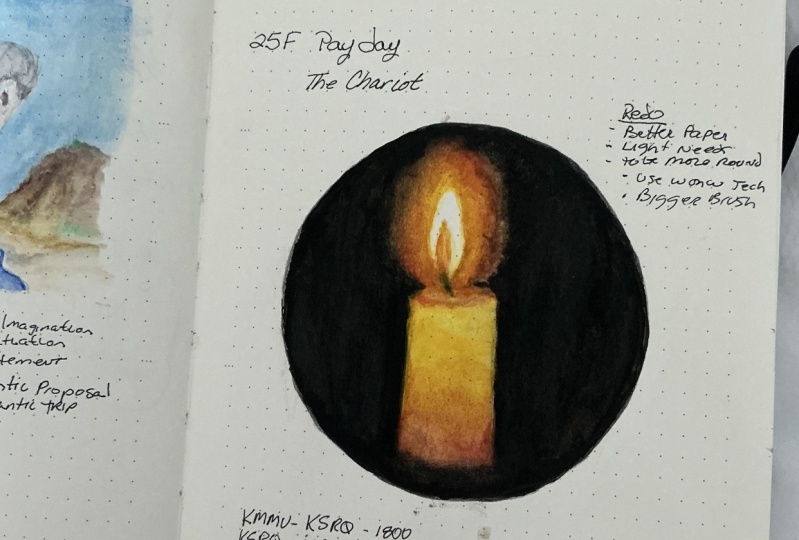
In this class I’ll guide you through the process of painting a beautiful glowing candle using acrylic paints. This project is a great one to practice your blending skills and the techniques you’ll learn in this class will come in handy again and again! 

I break down the process into simple steps so that you’ll soon be able to paint a glowing light effect with confidence. You’ll come away with a lovely painted candle to be proud of and new skills you can apply to your future masterpieces!

You’ll learn:

  • How to mix a gradient of colours
  • How to create soft blends with acrylic paint
  • How to blend ‘directionally’ for different results
  • How you can embrace ‘mistakes’ with acrylics and make adjustments to your paintings
  • How to finish your paintings with small touches that make you artwork feel more realistic.

Materials needed:

  • Acrylic Paints (Black, White, Yellow, Red and Brown)
  • Brushes:
    - Medium brush (I used a filbert brush but any mid-sized pointed or flat brush would work)
    - Small detail brush (with a point)
  • Acrylic paper/canvas or a sketchbook to work on
  • Waterpot & palette
  • Tissue / Rag for cleaning your brushes
  • Pencil & eraser

Happy Painting!

Meet Your Teacher

Teacher Profile Image

Kate Broadhurst

Artist / Painter / Educator

Teacher

Hello! I'm Kate.

I'm a professional artist and I love to share my passion for creativity with others. I've been running my own art school for adults for a number of years and in that time I've helped hundreds of people discover the joys of painting.

My style of teaching is peaceful, gentle and encouraging. I want you to relax into the process of painting and just enjoy every moment!

I'm best known for my vibrant and realistic acrylic paintings but am currently allowing myself some freedom to explore new styles. I sell my original paintings to collectors worldwide and teach in person from my studio in Cardiff, South Wales.

For more information, visit www.katebroadhurst.com or find me on Instagram @katebroadhurststudio

See full profile

Level: Beginner

Class Ratings

Expectations Met?
    Exceeded!
  • 0%
  • Yes
  • 0%
  • Somewhat
  • 0%
  • Not really
  • 0%

Why Join Skillshare?

Take award-winning Skillshare Original Classes

Each class has short lessons, hands-on projects

Your membership supports Skillshare teachers

Learn From Anywhere

Take classes on the go with the Skillshare app. Stream or download to watch on the plane, the subway, or wherever you learn best.

Transcripts

1. Introduction: Hello. In this class, you'll be painting this candle, capturing that nice glowing light. You can almost feel the warmth of that candle coming off the painting. This is a great little exercise to practice blending and it's lots of fun to paint. You'll need your paints in black, white, red, yellow, and brow. I used a size eight fill but brush and a size four round brush. If you don't have the field but brush, you can use a medium sized round brush instead. Make sure you're all set up with everything you need and then let's get painting. 2. Step 1: Outline Sketch: I've decided to work in a circle for this painting for no reason other than I thought it would look quite nice. Just draw around something circular if you'd like to do the same, but don't feel like you have to. You can paint your candle in whichever way you like. We'll begin just by loosely sketching in the shape of the candlestick and the flame. Be sure to make it large enough that it won't be too small and fiddly for you to paint. 3. Step 2: Mix your colours: Next we're going to mix a range of warm colors for our glow. Take some white, yellow, red, and brown onto your palette. The center of our glow is going to be the brightest. You'll want to mix a nice pale orange for this using mostly white, with just a touch of yellow and red. As the glow expands from the center of the flame, the colors will get darker. Next, we'll mix a stronger, more vibrant orange using the yellow and red. Finally, at the edges of the glow, just as it fades out into the darkness, you'll want to use a deeper reddish brown. I'm taking my red and just gently mixing in a couple of spots of my burnt umber in order to darken it. We're getting all three colors ready on the palette so we can blend them together easily in the next step. 4. Step 3: Blending technique for painting the 'glow': Starting with your lightest color at the center of the glow, paint outwards in a slight circular shape. I'm using my fill, but brush here because it's great for curves and blending. But a round brush would work well for this too. Without needing to wash your brush, dip into your next orange color, and we'll blend this directly into your first overlap the two colors. And then use your brush to softly blend the edge. This technique only works if your first color is still wet. If yours has dried out or you didn't apply enough to blend into it easily, then just go back and add more of the pale orange if you need to. You can keep adjusting this and blending those colors until you're happy if your brush starts to feel too dry. You can also dampen it with a little water, which will assist with the ending. Then we'll repeat that same process, this time blending our deep red into the orange with the red color. We'll just expand it out a little further to make space to then blend in the black, which is going to be quite powerful. Pick up some black on your brush and apply this all the way around the edge of your glow. Don't worry too much about blending it in just yet. Just get the color down because black is such a strong color. We'll wash our brush and use some water to help with the blending. I've just picked up a little water on my brush here and I'm using it to gently soften that edge. 5. Step 4: Fill the background: Next we'll just fill in the rest of the background in Bk. I'd advise working around the candlestick shape first ad the edges of your circle if you're using one. Once those more precise areas are done, you'll then be able to fill out the rest quickly and easily. Oh. Oh. 6. Step 5: Blending technique for painting the candlestick: Next, it's time to paint your candlestick. This is going to be lighter at the top, closest to the flame, and darker towards the bottom. We'll be using our blending skills again. Start with your pale orange, brushing it in at the top of the candlestick. Then pick up your brighter orange. And we're going to blend this into the pale color by using upward strokes. The direction of the brush strokes up and down rather than left to right, will help to convey the tall shape of the candlestick. My pale orange isn't quite wet enough for me to blend into it easily. I'm just going to add a little layer more of this back in, then go back over with the darker orange. This time I can feel there's more paint there to blend into, just like I did for the glow. I'll take my brush and just soften that edge between the two colors. Then just repeat that same step to blend your red into the orange. Oh, oh, oh, oh, finally pick up some black and blend this into your red as we did before, you may need to wet your brush with water in order to blend the edge here, because the black paint is so strong and it can easily overpower. At this point, I'm going to switch from my fit to a small d, which will be better for detail. I'm using just the point of the brush to add a slightly darker area of orange, just where the flame meets the top of the candlestick. Defining that top edge is really going to help it feel more three dimensional. 7. Step 6: Flickering flame: Now we're onto the flame, starting with your orange paint, a small area at the center of the flame. With that darker color, you can add a touch of the deep red just at the base of the flame too. We'll blend this out into a little black so it feels like the flame is emerging from that background. Next, you'll want to blend that darker orange into your pale color. As the flame gets brighter, you can be looser with your brush strokes here, flames have that dancing, flickering quality. See if you can reflect that feeling through the marks you're making. I'm adding a touch of the oranges to the very tip of the flame too. Then for the brightest area of your flame, we're going to use just pure white. Blending that into the orange. With those looser brush strokes, you can use your brush to just refine the edges of the flame, paying attention to that overall shape. Then you can just continue to tweak your flame until you're happy. 8. Step 7: Finishing touches: Just a couple of last details to finish off. First, I'm going to add a small highlight to the top edge of the candlestick where the light would be hitting it. I'm going to add one more bright layer of white to the flame. And then I'm going to use black to paint in the work. Put a touch of the dark red at the ends of the wick as well to show the heat. Now that the wick is in place, I can see that I went a bit high with the black in the center there. So I'm just going to lighten it up with some orange and paint over the top. I love that. Accredits give you the chance to paint over and correct mistakes like this. I'm glad I've made that adjustment because it now means that the WIC stands out much better. To finish, I'm just going to redefine some of the edges with the point of my brush and some black paint just so it feels nice and crisp 9. Well Done!: There we have this lovely glowing candle light created using those blending techniques. I hope you enjoyed painting yours and I'd love to see your version. Do share it with me in the comments. And as always, just let me know if you have any questions.