Transcripts
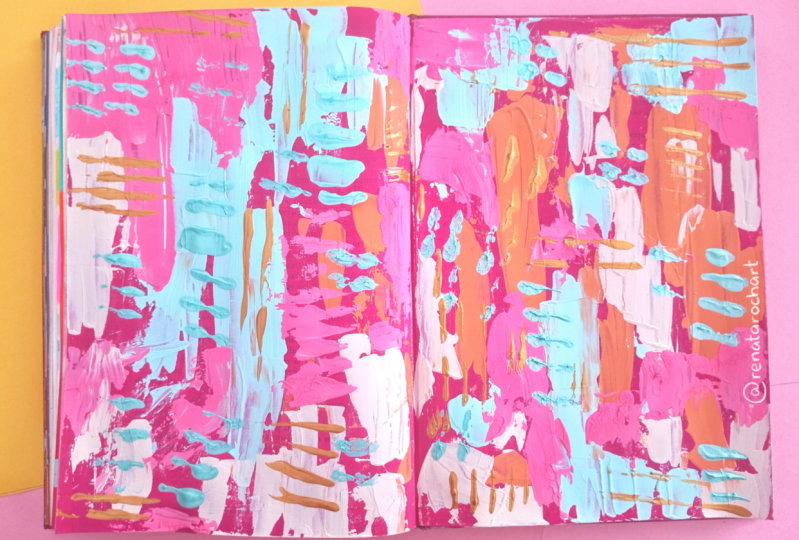
1. Loosen up Intro: Sometimes when we create, we have a plan of care or even a loose plan is
usually what I have. But what about creating
was a no particular plant, just being free and loose and letting
color be your guide. That's what we're gonna
do in this module, and the result will
probably surprise you. So I'm not going
to give too much away except that this is a good place to breathe, get a cup of tea, and take
all the pressure off. Just, we're just going
to get colors and create and see what happens.
2. Supplies: Okay, My idea is let's look
at supplies for this project. So I did not use any
sort of expensive paper. This is a watercolor pad from Hobby Lobby and a lot of times they'll
do the half off sale. So I picked us up for 750. This is just a 12 by 12, I would say no matter
what paper you use, don't go center than a £140. But we're going to cover it with gasoline paints so
it doesn't need to have a specific nice
watercolor tooth to it. So you're just going to get something like this
doesn't have to be squared. This is 12 by 12. And then also
speaking of Jericho, I put my Gesso in a
smaller container, but gestalt is a in case you don't know it's
a surface prep. So what it does is it keeps
the paint on the surface. So instead of if I were to
just put paint on this, actually, this is my little
kinda trial and scrapped. But you can see
here the paint goes right into the paper and doesn't sit on the
surface of the paper. That's why in my sketchbooks. And if I'm using acrylic
or even Apple gouache, if I'm doing this
kind of abstract, I will almost always just saw the paper
otherwise what happens is the paper seems to soak
it up and use more paint. It's almost like primer. Think of it. If you're painting your walls at home and the paint server
will tell you to prime it. Otherwise, you buy
your expensive color and you put it on and it soaks in and then you put it on and put it on and put it
on your waist, more pain. And it just gives
me that texture and layer that I like when I Jessup. All that to say why
I just saw which you can do either you can
use watercolor paper, you can use a mixed media paper. You can use really
any paper that, like I said, it's £140. Okay? Then we're going to
use acrylic paint. And you can use what you
have for this exercise. After all, it's about
being loose and free. I used Nova color. I like their pigments and I find the sum of the
colors to be amazing. And the pigment intensity and the paint is very
good for the price. When I compare it to even
like Liquitex basics. Or I've also compared it to have a YouTube comparing it to
the center LEA abstracts. And in fact, I think I might
have that page in here. It just didn't have the
same pigment as the record. It had better pigment because
what I'm trying to say, I don't know where
that went, but you could watch that YouTube. Anyway, the point is
that I like nobody. That's the bottom
line for acrylic. And I am I've got whatever paint you're
using and I should have nobody asked me to
put together a bundle. But funny enough, I guess
supply chain issues. I want fluorescent pink in the bundle and
fluorescent magenta. And because of
supply chain issues, the pigments have
been hard to get, but they're having to resource these so the
bundles not ready, but you can look for that
if you're interested. I've selected 14
colors plus white. However, whatever you have, just to get the range of colors. Basically, I think of the
traditional primaries, which we learned in elementary school that these
were the primary colors, red, blue, and yellow. Every I remember being taught every color can be
made with these three. Well, if you've ever tried that, it's not really true. You can get close
like you can kinda make a turquoise depending on if you have a light
enough yellow, like you have a Hansa
yellow or a lemon yellow, you can get a nice
turquoise with these two. But you can't get, you can't make a magenta. With these. You could try it until
you're blue in the face. No pun intended. So if you notice, if you look at your
printer cartridge, it will be what some people
call the modern primaries, which is a cyan,
yellow and magenta. And so you would want to have
these primaries as well. So you could just take these and these and mix
tons and tons of colors. So those are the essentials. I'm just turning them
over so you can see the colors instead
of the white cap. And then I have, like
I said, my favorites, so I have fluorescent
pink, magenta. And then this a couple
of other things. Payne's gray I use as my
dark or a navy indigo. It's they're very similar. So just grab some
acrylic colors. But at least have those. People will say, how do you
get those bright colors? It's because I'm using either
if I'm using my aqua brush, I'm using an opera pink or red, or I'm using a bit of
fluorescent in many colors, which gives us that pop. So I'm just trying to make sure you can
see some of these. So just a range of
acrylic colors. Blues, some magenta or pink
and some reds and yellows. And you'll be good,
some sort of turquoise. Then for brushes,
for this kind of work where I'm really
being loose and free. I'm not, I'm not using fancy brushes
that I would use for, say, my nicer brushes that I use for floral that I'm
being more precise with. These are assortment of GPS. This is also a Master's Touch. It's a chisel blender, number ten from Hobby Lobby. And this Creative Mark is an off-brand that you
can see at heart stores. And same with this one. Well, this is a Princeton, but it's not a nice
person and you can see how it's a cheapy. I think I have a
link to these on my website. Under supplies. In my website you'll
go Suzanne our.com, then Resources, and then
you'll see books and supplies. And I have links to most
of the stuff there. I don't have the
Nova in there yet because the bundles
not by the way, just in case you don't
know about Nova color, that you can't buy
them in stores. You have to buy them online. They're made in California. So you can go to their
website and find out, okay, Then I love to
use gold markers, gold paint pens rather. And I do have links to
these on my website. I have three thicknesses, these i've I've just tested
a lot of gold markers for how long they last and that nice gold quality that I want. And these are the three
I've ended up with. The Pentel for the
same marks and then the pilot for the
medium and the large. Of course you want
something for your water. This is like really
liking this plastic jar lately It's a peanut
or almond butter jar, but it doesn't make as much
noise people have told me in my classes when I'm
teaching and then I, rooms in the glass is sometimes makes a lot
of noise in the ear. Sometimes I'll use inks. Gold ink is one
of my favorite to spray on liquid
texts is very nice. Then I will also sometimes embellish or decorate
my paintings. Sometimes I call it putting
jewelry on with posca pens. These are three of
my favorite colors. They come in different
thicknesses. And if you haven't worked
with paint pounds, you just have to remember
that you have to shake them before you
choose and then you, This is already used, but if it's new, you
will have to prime it. You're pumping to
get the ink out. And these are fantastic. There are cheaper ones. But most of my students, when they try the cheaper
ones, come back to these. It's better to have fewer
colors of these just because paint pens are
really temperamental anyway. And I'm not saying that
particles are perfect. But you can put
them on just about any surface and they behave
better than most paint pens. A couple of other supplies I use sometimes are the woody seeds, are these fat pencils? There's 31. So like a colored pencil
and a wax crayon. And I can't remember what the
three, the third thing is, but I did a whole
video on YouTube, but I use them sometimes for texture and
they're water-soluble. Then the other water-soluble
thing I'll use sometimes is the
Neil color crayons. And they'll just kind
of bright pops of color on top of
abstracts or florals. And just give me a
definition and texture. I used quite a few oil
pastels in this project. I really liked this set. It came in a nice
big wooden box. I think I do have a link to it. Yeah, I do. Because I love it.
It's the Mongo from Amazon and they've been really nice quality,
really rich colors. You can see the turquoise
gets used the most. But I've had these
well over a year and they're holding
up really well. There's just nothing like
the color intensity and nice for the later stages. So the other thing that I use, there's a variety of
pallets you can use. You can use pallet paper, which is a paper that
one side of it is very shiny and the paint
won't soak into it. Or sometimes, especially
if I'm traveling, but I'll just have a piece of pallet paper.
This is cut in half. They come in pads. I'll show you the pad,
which I do have homing to come and pads like this. And it's just handy. Third, inexpensive, this
is $5 for 40 sheets. You can use the whole sheet
and then just toss it. And sometimes your palette paper ends up looking really pretty. Why I've been using also in the studio is a piece of glass at either a piece like this from a photo frame or I have
a larger one and my easel, which is a glass cutting
board that I found on Amazon. And this whole setup I did put links to because I had
so many questions about it, but it's my sprayer, my blade, and my glass. And so all I do is
spray and actually, I think this is the last time we use this with
just regular wash, so it will come
up really easily. And then when I'm
ready to paint, I just scrape it up and clean it off and
I have a clean palette. I've been doing that lately more in the studio then
on the pallet paper. But the pallet paper
when I'm cleaning, as I often do at night. See this is not coming up, scraping up the way acrylic does because this
is regular gouache. So it's more like a watercolor. So all I really had to do with
this was wet paper towel. But I wanted to show you
how I get the acrylic up. But when I'm painting in
front of the TV at night, I have a little
sort of lap desk. I need to do a video about that. People asked me about how do
I set up in front of the TV. But one of my things is
just these half sheets. Palette paper is what I use. So that will get you started. Remember it's a loose
and free class. So if you've, you know, whatever pants you God
will work for this. You could even use watercolors. Okay, Well, let's get
started creating. This is gonna be fun.
3. Prep and Layer 1: Alright, so let's
just so our paper, I've got a twelv by 12
sheet of watercolor paper. This is, you know, I I think it's Master's Touch which is available
at Hobby Lobby, sometimes half off
if you're in the US. But the point is that it's, it's not a super nice paper and it's fine though it's £140. I would never use anything
thinner than that. But we're gonna just to lift. So we're not looking for a
coke quality of water paper, watercolor paper
that's going to help our watercolor flow because
we're not using watercolor. And jostling is pretty simple. We especially if depending on how much texture you like
and I like a lot of texture. I'm gonna get a scrap piece
of paper just because I keep knocking on my
plastic underneath here. And then I have to
clean my plastic, which make a lot of sense because that's why
I have plastic. There's not worry about it, but anyway, um, so, yeah, you're just working the JSON to the paper and you can see
I have a little bit of paint and my jaw which is fine. I don't care for this. When you're jostling paper. What we're doing is
it's like a primer we're at when we
put Joseph on top, that means that
the paint that we apply afterwards is
not going to soak into the paper and there's nothing wrong with
it soaking in it. But if I want more
texture and I want that feeling of
layers building up, then I use gesso. When I'm using acrylic
or acrylic scrub wash. If I'm using gouache, then I usually don't gesso,
but it just depends. It just depends on what kind of effect I'm doing. Am I doing? Okay, where I don't
want lots of layers. I want the paper a
bit smoother and I want the paint to soak in, can bleed and so forth. Then of course I
would not use gesso. So the thing that just so does for this kind
of exercise where we're just being free and loose
is it adds texture and I can put scratches in
it and things like that. Even before starting
the painting, I can do things like this. I can take my hands if I've got gloves on and make, you know, lift up marks, I can
do stuff like that. The back of my brush, I can
take something thinner, like a paperclip
and scratch in it. It just it just kinda depends
on what you're doing. It is definitely not
going to bleed the way. If you're used to
watercolor paper and you put gouache or watercolor
on it or even acrylic. And you see that kind
of pretty effect where the paint flows into the
paper and into each other. Well, that won't happen
if we put Jason, I'm gonna so just knowing, experimenting with what
you were thinking about, am I doing kind of
a textured painting here and exercise or am I doing the kind where
I just want to see how the paint goes on
the paper and flows. So pretty much done here. I'll add a few little. Use a palette knife. Then you can rush
through some of it. You can take the brush
and just showing you different ways of
adding texture. If you wanted to, you could take a paper towel and
do some splashing. Remember let that dry. Right? Are you ready for some
complete freedom? I've got just a piece
of 12 by 12 here. And some acrylic
colors to start with. These are our ANOVA colors, which you can order through their website
if you're interested. But acrylic, they're
just a good quality for a really good price. You can't buy them
in stores. You have to buy them on their website. And but the price
is good anyway. I'm actually looking at
picking some favorite colors with them and making a
bundle with their pain. So we're going to
just start with, I'm putting some colors
here on the palette. And really being free with
color and hair brush, I'm gonna get white, which this is my Gesso. I just put it in a smaller jar. I'm gonna get a little
bit a yellow palette. Let's see here. Use this knife. You can see that I've been
double-dipping. Can't help myself.
Sometimes I get so excited. And where's my paper towels? Use this. Actually, I'll just clean my
palette knife on my paper. Let's get a little bit. I've got this new fluorescent
red is very exciting. Little goes a long way, but it's great also to mix, you'll see to make other colors. Gloves are fine and good for this kind of color everywhere. And same with this
fluorescent magenta. Beautiful. You can do this if
you want with your, you're getting your
pains out or you can apply a color with a brush. But you can see I'm trying
to be really random, at least especially
for this first layer. And then here's some blue. And what else do I want on? Something dark, I'm going
to grab some Payne's gray. I like a dark blue
or Payne's gray, which Payne's gray is a
dark blue for my dark. But I ran out of it
in Manila color. So I've got to Liquitex basics Payne's gray, which is fine. Whoops, I didn't eat that much. Alright, so I just have
a few colors here. Oh, I know one more color. More. We're going to
do this blue-green, which is gorgeous and
mixes up beautifully. Okay. Wash her way above this palette knife so the
paint doesn't dry on it. And I'm going to
wipe off some of the thicker paint just because I don't need so much and I don't want to
wait for it to dry. Okay. I think this is a
dry pretty quickly. Air. All right. So got a really bright I've got
dark crescent, got white. I use white more than anything. And we can make a lot
of colors with these. So the first thing, so what I'm looking at doing is getting just a
square shape brush. This is a, they're
called brights, but I just like
comScore shape, right? Doesn't describe it very well. I don't think so. Got several of these
in different sizes. This is a four and these
are not good brushes. This is a, this was a decent brush Princeton
summit, but I've wrecked it. So I don't use my I do have rights that are nicer like for my floral work or if I want
to do something more precise, but I don't use that for
these because I tend to like to take the corner
of the brush and scrub. And, you know, that's just not going
to make the brush last. So I separate out, what I do is I keep
my scrubber brushes and one jar like this. He's an old pickle jar and
then my brushes that are still decent or in another
jar over by the ys. And you do want, I mean, you can use a watercolor
brush for this, but you're just gonna get, you're gonna get acrylic
paint on it and so forth. Unless you're doing
this technique with watercolors,
which would work too. Okay, so let's start by
grabbing some white, and I will put a
little bit of white on my palette so that I don't muck up my
white completely. And this is this particular
type of abstract. The hardest thing is loosening up is just
getting yourself in the frame of mind
of not thinking. Do some great quotes
by Monet and Gauguin and says on the impressionists, the ones that were
really innovating. And they talk about how they paint better when
they don t think. That's, it's hard to do. So that's what this is just
going to help us practice. We're not going to worry
about the outcomes of painting and whether it turns
into a masterpiece or not. We are going to use this as an exercise to loosen
up, play with color. Try not to overthink
and more feel. So. When you're creating like this, you're thinking about
the feeling that you have with whatever
makes your heart sing. So for me, I'm thinking about when I go into
a botanical garden like the one in
Naples or the one in Sarasota that I
went to last year. And just, it just makes
my soul gets happy. Even just looking at Bloom are some interesting
leaves makes me happy. So when you think about for you, what do you find beautiful? Maybe it's the pattern on
some bark on a tree or some moss or a scene,
a landscape scene. There's, I can get excited
by the texture on a, on an old wall in a Island. The way that the
wall texture looks, the painted, crumbled and so, but whatever you
enjoy looking at, you're going to think
about that feeling as you're doing this
expressive style painting. So you're not thinking about trying to do anything
in particular other than some color and
shapes that you may like, but you can use. You'll see there's not a
lot of specific shapes. But you're thinking
about that feeling. Is it excitement as a column? How do you feel when you see
things that you really love? And then choosing colors that you like and making
colors that you like. So that's what this is
really an exercise in, just loosening up and it's going to take layers
of us letting it dry. But it'll be an adventure. So I'm just grabbing a couple of leaves and mixing them to make
it like a peach. And I'm just going to
start applying some color. Like I said, for
some reason I like to hold the brush sideways, but then later when I
want more coverage, I'll probably hold it
straight up and down. And I kind of stir with
the side of the brush and just explore color so I can get very excited
about color like that color. It's pretty and I'm
just going to put it on various places. And being playful,
discovering color. And the only, the only
I would say not rule, but if you start mixing
complimentary colors, meaning colors across from each other on the color wheel,
you're going to get mud. So in this first
layer, I'm just, I'm not overlapping
too much or at all. And then we'll let let it dry. And what can help you
stay away from mud is sticking with obviously
letting colors dry in between, but also sticking
with cool colors, and then doing warm
colors or vice versa. And a great way to remember that is there on the side of
the color color wheel. You have, you're looking for
macro level to show you. I'll put it up on the screen. But on one side you
have your cool colors. And on the other side you'd
have your warm colors. I really like this green. And it seems like I'm mostly
scrubbing the painting. I don't wash my brush. So washing brush, it depends
on again, when I'm mixing. So if the brushes
pretty dry now, it has some paint, but more than washing it, I'll wipe it with this
technique because I want a little bit of
that color in there to kinda make the
whole thing cohesive. So if I grab some of
this magenta and I have the tiniest bit of
green on my brush. Who doesn't matter.
In fact, I want a little bit to kind of tone it down and make the color
more interesting. Plus then I've made it my own. I don't use the
colors right out of the bottle except when
we cleaned our brush. Occasionally you will see we will have to clean the brush. You know, when you're
going from say dark blue or blue to yellow. Well, if I didn't
want any green, then I definitely want to watch my brush because I
would've made green. I'm just falling in
love with color, playing with it, scratching
it in various places. And, you know, this fluorescent, how like I said,
it's great to mix. I'm just going to grab some. And it makes it makes a variety of colors
when you mix it with things. So it's just fun to play with. And I'm also thinking about, I'm always adding white
or the color so that I can get lighter colors
and darker colors. I think I want to put some dark sand before
I get too far along. So here's an example again, I'll probably just wipe this
brush. It's already cut. Oh my gosh. Just scrubbing the size of
it is rough on a bridge. My grabs onto my Payne's
gray and it's going to mix a little bit with the
the pink I have in here, which is just fine with me. I'm just, you know, when I work with darks, really what I'm thinking
about as, you know, how if you see anything really, but everything had the shadows. If you think about flowers, if you look at a
bouquet, even her, if you look at things
in a botanical garden, they're going to have
shadows obviously. And so that's how I think about applying darks and
lights, is I don't, I don't even have objects
here particularly, but I'm thinking that a
shadow would be along it if it were an object. So it just kind of doing
something like that. And let's do some light yellow. So you saw that I
didn't even wash my brush and the Payne's gray, but I wiped it out
with a paper towel. There you can see that
I got close to making mud because the purple
on my brush mixed. But that's a nice
neutral and you know, all the colors can't be
the star of the show. So I don't mind.
4. Letting color be your guide: Alright, so I've got
some color here and I'm actually liking
looking at so far. I'm thinking about one of
the colors I love is just taking this pretty much
all forms of turquoise. But I still got some yellow
and pink on my brush. But you're taking
that blue-green. I think it should be cool. It really is a jade
color and adding a bit of white and then whatever's
in my brush to soften it. And I'm doing a mixture of Marx. And I can do some shapes or outlines just as
much as you can. Trying not to analyze. Because what's the
worst that can happen? The worst that happens is that
we learn about some colors and brushes and paper
and we have fun. And the painting is no good, like nothing that you'd
want to hang on your wall. That's the worst
that can happen. It's pretty funny. We get scared, but creating when that's the
worst that can happen. There's not many
places in life where the worst that can happen
is not bad at all, right, so let's enjoy it and
let's just enjoy playing. And tried to get
out of our own way. I at least get out of our
Only when it comes to fun. I'm going to change
brushes because that one's just really mucked up with stuff and I
just put it in water. I can deal with it later. That's why it's nice to
have a few brushes going. And now I'm just
looking at color and feeling like I want some,
maybe like an orange. So I'm going to mix some of this yellow with
this fluorescent. And some of the
white. See what kind of orange we can make. Already needing more weight. It's amazing how much
weight you go through. One other shapes I
like to make is a pot, you know, like flower pots. Try not to make it in
the middle though. And I love like
this on my patio, I have five or six pots
with flowers on them. Can I just loved
the shape of hot. So sometimes I just come through and make sort of a pot shape. So for your shapes, you know, think about what do you like. What's even in your
home that you like? Is there a particular shape
of a piece of furniture? Or maybe there's a shape or a design on a road
that you have, or a throw pillow, or a color. Maybe it's a color
that you love. Now I'm just it's
actually good to talk and paint like this because it's keeping
me from overthinking. That's why sometimes I do. I've done, I've created some pretty cool paintings
while being live, you know, on Instagram
or something, or while watching
TV with my husband. Because I'm not able to overthink that color is
a bit. I don't know. It's not very exciting, but I always remind myself, not every color can be
the star of the show. And let's see how
about some light. Maybe with a thinner brush. Well, first I want to do some
kind of chunks of white. So let me stay with
a thicker one. And I'm just again, I kind of just go in the
late we're shining on it. Would it be kind of on the outside of
some of these shapes? That's the extent of my thinking because I'm trying to think. One of the other shapes
I love is arches. Like I grew up in South America. And the homes, they're sort
of Spanish colonial style, has all those pretty arches. So I tend to like some of
those here in there as well. Now I'm thinking I want
to make a cobalt blue, which is just a, well, this is cobalt blue but then I like to mix
white with it. Just get a really like
a lapis lazuli color. And why is tough? Because I have to get another
clean brush because it doesn't you have to make several coats to get it
to show up as weight. So just know that about weight. If you want, if you
want it to be sort of a a light bit of white, then you don't need
to worry about it. So even though I've
made pots, shapes, I'm not necessarily going
to put plants in them, but I have done that before. And these, I've said, Well, I'm gonna put some
leaf coming out of there. I don't think it's kinda fun
to have something realistic in a painting that is
not representational. I think it's kinda interesting
to have, have that. What I love about these
fluorescence is you just, you don't know what color is going to emerge
because they're just so powerful that
when you mix them, it's just a surprise. It's funny that that
magenta streak that I made at the beginning
by cleaning my palette and life is, has arrived. I think it will mostly survive. I like it. It's certainly a focal point. Can't
miss it, can you? I'm just kinda well now I'm thinking I've filled
the paper with color. We've got some interesting
shapes and colors. And I'd like the, this, I just want
this blue to be a little lighter, those cobalt. So I'm just going to grab a brush and take that same
cobalt and more weight. And one of the things I
really liked the effect of if for some reason
that's interesting to me, adds depth is to take a lighter version
of the same color. Put it on top so it's
barely noticeable, but it just adds
dimension and texture. So that's what I'm
thinking about now. These are things
that I've discovered by lots of painting. You know, that's what I mean
by this kind of activity because your goal
is, rather than say, I've got to produce a gorgeous
painting that will come is more for you to figure out
what you like and don't like. And what you think is
interesting and what you like, how you'd like to create
it and all of that. And that's just doesn't come unless you do it,
right. Make sense? Yes. If you can do
it with a spirit of fun and excitement, then you want to
jump out of bed. There's people in my
Facebook group going. I can't wait to get out of bed in the morning and go in and paint or I couldn't fall asleep and it was
three in the morning. And I'm painting because there's there I'm so proud
of them. It's hard to do. They're staying with the
feeling of fun with it. Instead of, you know, the, the voice that it takes away our phone and
says things like that, terrible or blah, blah, blah. I've got a smaller brush here. And as I'm talking, I'm
just taking some of the ongoing over some of
the elements that I did. I like what I have, so I don't think I need
to add a lot more. I just want to add
some dimension. So I'm going through,
like I said, there's some later, so
here's my turquoise. I'm going to go over
that with some, with a lighter version of it. It can be lighter
or even different. So you've got a little
bit of yellow or something to make it just be a slightly
different version of that same color,
monochromatic. And I'm going to need more white there to make it show up. It can be darker too. So it doesn't necessarily
need to be lighter. If you're trying to do
this, it can be darker. So let's do that. Let's go over here and
make it dark green. But you can see how
many colors I'm getting with just what
did I start with? 1234567, including the
white and the Payne's gray. Now I'm going to make
a lighter green. Make some scratches
on my pot over there. Only you and I know that these
are pads underneath there. And I love the bits of
fluorescent peeking through. So remember also to stand back. And at some point, you know, this is a good point
to stand back and just kinda go, alright. Where do I feel like it? Do I feel like a color is
missing or do I feel like something needs to change? And what's jumping out at
me now is that this is, I want some of that brightness, but it's a little, a
little too much for me. So I'm going to let's take some white and what's
on my brushes, I turquoise. And just cover some of it. Now and see how that goes. When you have this many bright
colors on your palette, you're gonna get a lot of
bright colors on your paper. And so you might have
to let yourself get a little bit of mud and your paint mix just to calm it down. Like I've already got
all kinds of things in my little brush because
I haven't watched it. And with this yellow it's
made a nice mustard. So that's what happens to me. I like blue, I
like that mustard. I'm going to use
it somewhere else. That was from the
original palette and I've cleaning there. I like that. But really I could stop at any point
because I think this is, you know, this, this
met our objective. I think it's interesting. I played with color. I had fun. But I can't so hard to stop because every time
I get my brush into the paint over here and
a different color comes out. I'll let just go ahead
and put a big leaf here. Why not make a leaf
coming out of this pot? This is also good
for letting go of, you know, well that
doesn't make sense. Why is there one leaf
coming out of a pot? Who cares? We're just playing here. I like that light color. So I might come over
here and do some. Again, I'm using that
side of a flat shader. I like these little marks
that funny the things that we say blue, I like that. I have some bits
that are trying. Yeah. Alright, so I'm going to do something
else that I'll show you something
else I'd like to do. I'm going to take you could
use paint or maybe I will use I use the Payne's gray and just get a
very small brush. So I'm gonna get this as a
tool and just make some little dark that type of things within
one of my lighter shapes. So that's probably
going to be here and just fill it all up. There's always to me, basically black and white adds
interest to anything. So this is a way to get, like I'm white and
I'm not making these shapes a random
size and shape. You can do stripes. But you'll see how
once we do this, your eye will go right there. And I'm going to do it
somewhere else too. I see another spot. Let's do it up here. I'm doing it on
the lighter spots. I'm just so it shows up more. It's funny because if you
get learning to do this, but if you tell me to paint a realistic looking flower
are kind of my version, they're still pretty abstract. Now that is a much easier task in a way than a
painting like this, because it is, I've got a
reference I'm looking at. I'm basically just kinda
copying with my eye. I mean. But when you're doing
something like this, where you're just painting
with a feeling and then you're letting shape
and color guide you. Challenging but also very free and I am feeling like I want
to lighten that right there. So now I'm just looking
at color going IN value. Where do I, where do I want
it to be lighter or darker? This is good practice for thinking about how to
lighten and darken. Going back over some
of those areas. And my magenta
fluorescent magenta is definitely really
bright, which I love. But I am going to just
take a little bit of a dry brush with some
of that off-white and get a little bit just a little pelvic
tone down so that it doesn't dominate so much. So I'm going to
grab some of this. My wife that I'm
using, which is Jesu. Yeah, just here and there. Like that dark there though. I'm going to bet you
should act doesn't anyway. That's the Payne's gray mixed
in with a little white. And the other thing that's fun about Payne's
gray is that you, when you want to do a
smaller version of it, you just get a pencil because it's really the
same color of the pencil. So speaking of which, it's a good time
to grab a pencil and maybe if there's
some dry areas, do some little things. Just some I like swirly
lines. Let's see here. Where might align
be interesting. You write in here. So this is the exercise, you know, to just, and you can do these
since they're fast, you just kinda do
one after the other. And just like I've got
all these paints out, I could go start another one now and just practice, practice, practice, and discover
things you like, things you don't like how your materials work
on your paperwork. You look at your pattern
and shape library, try out new things. All that good stuff. Because I could, even from here, I could grab some oil
pastel and do bits of that. Purple and green. Looks so fun. So now it's okay to say I was going to stop and
look at me now see, this is what happens. Sometimes just a chunk of oil pastel in a color you like is just makes you so happy. Like let's see, Let's
words my turquoise. It's the one that's
the most worn-out. Here it is. I don't know what I'm
gonna do when it runs out because I bought a whole set, so I don't know how to
get just the this one. But that's doing the same color, but it brought out a little bit. I'm going to force myself
to stop here soon. But it's so fun. Kilo. So if I want to keep going, I mentioned this, but I don't want to alter
the colors too much. I do what I'm doing now, which is taking the same
color that was a light green. You can see a little bit, but it's not overpowering. Keeps me from going too crazy. Here's a peach color. And every time you add this, it adds texture and interest. I can go get him. Wait, lighten that up
a little bit more. I can play with line. Maybe you've already
done that here and rub it in if I want. Okay. I hope that this helped
you with the idea of enjoying the
experience rather than the outcome and
getting your paints out and then just doing a bunch of these and just
trying to be free. Maybe even either listen to something for
some reason for me, when I listened to a podcast or a class on an online class, I just have it running
in the background and I might get some ideas, but also it's just keeps my
brain from overthinking. So That's a tip tool
is just maybe for you, it's music for whatever reason, music doesn't work for me. I'm not sure why, but it
just ends up distracting me, which doesn't really make sense, but it is what it is. Whereas a podcast or
verbal stuff ends up occupying the part of my brain that
allows me to create, just like apparently
talking to us. You would think it'd
be the opposite. But anyway, alright,
I am going to stop, go forth and create.
5. Fooled You!: Now, what if I told you, What if I fooled us into
not overthinking pan, just creating for
fun and you know, trying to let go of the outcome. And then we have our, our result of that. And we say, well, what if I tried to make this
more of a finished painting? You know, what's, what's
the harm in that? Well, absolutely nothing. And you learn a lot by
taking something like this, which has some good stuff, and then figuring out how
you would go about fixing any issues and maybe making
it something that you like better or the
fields for more finished in layers are, are always, you know, you could, you could just layer and layer and layer and
keep learning on the same painting if you
wanted. So let's try that. Let's take this to the next
level and just look at it and talk about it
and maybe play with it. So when I stand back, I left it overnight
and I look at it. This dominates. I feel like too much. Even though there's some
other cool things going on. It's kinda all I
see when I look at the painting. So
that's one issue. I see there are some
areas that I really like. I like kinda what's
going on over here. I like, Let's see. I kinda like this in here. I like some of this over here. And do that exercise. I was telling you
about where you take a picture of it and look at it and said, you know, from a fire or further away with
the perspective. And the other thing
I noticed that for some reason most of
it is going this way, which is there's no
problem with that, but I keep wanting
to balance it. So maybe we'll do
something with that. And some of the
marks to me aren't doing anything like
these two here and this. And so I'm just going to kind of play and not talk
through this part and then I'll talk afterwards
about what shows up. But i'm, I'm going to work intuitively and
then I'll explain it and whatever there is to
explain afterwards. Okay. Let's have a chat about
what I've done so far. So I covered up, you know, you saw me cover
up some of this mark and just see what that does. Then I brought some lights and to balance it a little bit. And I'm making some marks
that are going that way slowly to straighten it out. And then these little sort of
flowers started to appear. And I like how those look. And let's see what else. I haven't done
anything about those, but I probably will. And I brought some
of this correlation. Kind of the color there wasn't, you know, we had
just thrown it on there and so it
needed more layers. It still needs more
layers, I think, but we can do that
with oil pastel two. So now, um, so this is obviously a focal point because
it's so bright. But I feel like to
a little too much. So I might do something there, some oil pastel or something. So let's see where the
rest of this goes. Okay, So let's chat. This is, you know, that was talking about that process of color discovery. And when I add
something and say, I'd like this color
I fell in love with. So I did the dots here and took them in that direction because you will still try to
balance it out. And then I put them
here and here. And these little, then the artist came
to look like these could be almost like stems to, you know, these red flowers. So kind of loosely
playing with fat as good. Same thing here, makes it
show up a little better and outline those
leaves a little bit. Added this to the pot shape so that it's not leaning that way and covered up
those a little bit, which either I can
leave the way it is or I can put
something else on it. The other thing I
think needs to be done is just this white thing here. Isn't doing anything for me. But I'm at the point where
I would have improved it. And I would pretty soon
stop again and give it distance and decide if there's
anything else I wanna do. I do want to put
one more dark and these flowers, Let's see here. So let's think about
what to do for now. I think probably what I'll
do with that white spot is just take your color over it and let it
dry and then decide, once it's dry, if I wanna
do something else to it. You've got pink on my brush, just going to wipe it off
and grab some of that color. Sometimes that's all it
takes is just a little bit of a layer underneath or on top. And then it gives you, you know, something to look at
differently and decide if you want to do
anything else to it. I think I will
given how it looks, but it'll at least get coverage. And we'll play with
this area too. But that's the
process. You know, it was something like this
is giving yourself distance. The other thing we
could do different ways to cover up or tone down
something like that up. Of course I could
take some paint, a light wash of paint, you know, something like this
and tone it down. Or I'm just, I show
you a couple of ways. Even rub it off at already, toned it down or it
could put dots in it. I don't want to cover it. I definitely like how how
it's still bright behind it. But that kinda did it. I could put lines through it. I do want maybe
for some balance, some tiny dots in this area because I'm
looking here, we have this. That are AI comes up to here, over to here, down to here, and just something tiny in
here which we could actually, it's dry so we could go ahead and start with our
metallic gold. I haven't done a lot of
oil pastel on this yet. So we'll do a few
spots for that. And then we'll put it away and I'll see how we feel
about it tomorrow. So let's do these little guys. Okay, So I've got, you tell it the metallic gold here, here. So that my eye moves around. And now let's just do some oil pastel and
then we'll let it dry. I'm gonna be looking at kind of the same color on the
same color a little bit. So here's a pale green. Okay, So I took the same color, similar colored oil pastels and just kinda went over
some of the painted areas. And, you know, probably you can't even see it
from where you are. But when you look at it live, you can see the bits of texture
showing up and interests. When you have the pastel,
especially the texture. Then I still wanted to
soften some bits of this. So I did some oil pastel on it. I just wanted the bits of
the brightness showing through and not for it
to be overwhelming. And I feel like I've done that. This mark here is a bit garish and that's what oil
pastel they're so great for. They can instantly cool
something down or add texture. So definitely improved it. And now I feel like it's
something that I can work with. You know, I could say it's
done now or I can like I said, come back tomorrow or another day and see something else
I might want to play with. I encourage you to do
that kind of thing, to just experiment, play. Trick yourself, like we
did in this painting. You know, trick yourself into not feeling like it's
too precious to be free. And you'll be surprised that the result, when you do that, it'll just for you, you know, you won't feel as restricted or as precious
about the creating. And as I said, the worst that happens
is that you learn something not a bad,
worst outcome rate. You can see that I can
kinda play like this for forever and
that's what's so fun. Mixing and blending oil
pastels blend really well. If you have a color
you want to make and you don't have that color, you can blend other colors. And I do that. I'd see him having
trouble stopping. This is what happens. Look at that texture you get
on the watercolor paper, even though we just wrote it, it's still, I love that with an oil pastel.
How you get that? Okay. I promise this last
bit I'm doing. It's so fun though, isn't it?
6. Examples and Varnish: Well, I hope you have as much
fun doing these as I do. They're incredibly freeing. You just have to remember. And it takes, it
does take practice. It sounds crazy, but
it takes practice to at least for me, it does, to be loose. I think. I think of I'm Steven Tyler on
American Idol when he said, it takes a lot of money
to look this cheap. And I think it takes a lot of time and effort
to be this loose. It's just kinda
the same concept. So anyway, I wanted to kinda talk about
the finished painting, the different things
we did to it. And just give you some reminders on the thinking about composition, thinking
about variety. In terms of elements. We've got here some little ones, some larger ones,
and some lines. And I'm thinking about moving the eye around
with color and shape. But also trying not to
direct the eye away. We fixed that, you know, that thing that was
going off to the side. Which I think started
by me cleaning my brush at the very
beginning, remember? And so what we ended up because of the
way we started solace, we ended up with these just
delightful little pops of color that we left alone. And I, I'm just
really happy with it. I like all the bits of texture. And I just wanted to show you, once you're in
this kind of mode, you can just keep going. And so here are some that
I've just done the same way, the first version
of color and shape. And this is one layer and
we'll see what comes next. And then you can even do too. I think I did these two, I laid them how and because
they're such similar colors, so there'll be a nice
pair when they're done and whatever they
end up being right. But I hit with the same goal once I have
the color on my brush. And then I did another layer where I'm starting to
add some elements. And then who knows where
I'll take them from there. But I probably will
keep working on them together because they're
a nice little pair. And all of these were
Nova color paints. Just so you know what
the brightness is. And then this one is probably midway through like we did
on the class paintings. Same with this one. And there's just, it's
just a lot of font. That's what they give you
something to work with. Here's another one
that I think has done. Probably. So I hope you can play with them in
any size, shapes and arm. You can make them to your liking and the color
palette that you like. I always try to teach
people have really my goal is to help you get
in touch with your unique. I hate to use the word
style because people get so wrapped up about what is my
style, what is my style? But really for you to
express what you like, you're obviously
drawn in my classes because there's something you
like maybe like the colors, maybe like my style of teaching. But at some point, you will develop and play with your own colors and your
own Marx and shapes. And it's, and it's
really what you like. That's, that's what the deaf, That's how you narrow it by deciding and learning
what you like. I did want to talk a little
bit about varnish options. The completely
nontoxic holder free. How unnatural is
this guy a fixative? And I do have links to
these on my website. This one, it definitely works. I had sprayed it on. So the hardest
thing to get fixed, our dry pastels, which we
didn't use them or not, the oil pastels put
the powdery ones, but I have used this stuff on the powdery pastels and it
did take several coats. But it worked. I mean, you can't
rub off the pasta. So this is nice because I can sit here and
do it right in my studio. It'll look wet though. So I wouldn't use this on any, I would definitely not
use it on watercolor. I would only use it on
things that are acrylic, fixed pesto, nothing
that's going to hit liquid and then run. So not regular gouache
and watercolor. Other than that though,
for anything like this, this will work just fine. In fact, you know what? Since we're here, I'm
going to go ahead and spray this and you'll see then how it has a
because I haven't well, now, it might be I
haven't used in awhile, so it might be oh, yeah. It is clogged. I'll have to wash that out. It's cosine. Let's see. The ingredient is kerosene. I don't know what that
is, but it does work. It's just that a teeny
tiny little hole here. So I'm going to, I've had this happen before now I think of it. I'm going to have to soak, take this off and soak this in warm water and then maybe
take a toothbrush to it. So I guess I can't show
you that planned on it, but I thought I'd try.
Doesn't want to come out. Okay. So when I'm most of
the time though I'm spraying outside and if I'm
still going to work on something where I think I
might I'll use workable, fixative by cry lawn. It allows you to rework
so you could spray it. And it'll kinda capture
everything you've done so far, but allow you to
continue to work on it. And then when I'm all done, I'll use one of these two, the liquid texts, matte varnish or the crown matte varnish. I like a matte finish. I some people like gloss. It's totally
personal preference. I feel like for me that allows me to see
the painting better. Gloss, throws light off. And it just, I just
feel like I can't see visually touch
the painting as well. But I use both of these. The only thing about this one is that it also gets gummed up and they tell you right on the count to when
you're done spraying, turn it upside down and spray
till nothing comes out. And I ignored that. And because I thought it
would waste some product. But then it gets gummed up
and then that's no good. So don't ignore it like I did. So anyway, have fun being free and exploring and you can do these
in the sketchbook, of course, they're really
geared towards that as well. And check out all my other
classes on Skillshare. And I'm trying to do a new
class at least once a month. I enjoy it so much and it
seems like you all do too. So thanks for joining
me, get creating.
 Suzanne Allard, Landscape, Floral, Abstract Painting Teacher