Loose Watercolor Landscapes
 Paul Cheney, Teaching watercolour and digital painting
Watch this class and thousands more
Watch this class and thousands more
Lessons in This Class
-
-
1.
Introduction
2:02
-
2.
Materials
4:09
-
3.
Preparing your painting and sketching2
2:07
-
4.
Painting the sky
2:30
-
5.
Painting the meadow
2:37
-
6.
Painting the flower
3:07
-
7.
Removing the tape and wrapping up
1:15
-
-
- --
- Beginner level
- Intermediate level
- Advanced level
- All levels
Community Generated
The level is determined by a majority opinion of students who have reviewed this class. The teacher's recommendation is shown until at least 5 student responses are collected.
51
Students
20
Projects
About This Class
Paint a Wildflower Meadow with Soft Skies
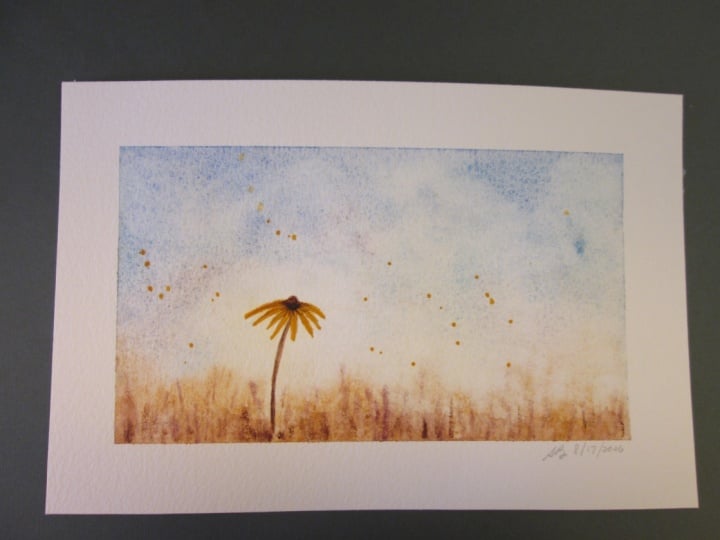
Learn to paint a loose watercolor landscape — a soft sky over a field with a single yellow wildflower — using nothing more complicated than water, a few colours, and the patience to let each layer dry.
This is a fun, fast class, and the painting you end up with looks far harder than it was. If you have never picked up a brush in your life, you can do this one.
It also has a bit of history. I painted this scene in oil over a decade ago, loved it, sold it, and regretted selling it more or less immediately. So I rebuilt it in watercolour.
The Idea Behind This Class
Here's the thing about this painting: almost none of it is brushwork. It's water.
Every value in it — the pale washes low in the sky, the deeper blues along the top, the warm field, the dark centre of the flower — comes from the same small handful of colours. What changes is how much water is riding in the brush. A very wet mix goes down thin and sits back. A drier, stronger mix comes forward. Stack those in the right order, letting each one dry, and you get depth without ever having to draw it.
That's the whole class. Not more colours, not better brush control — just paying attention to how much water you're carrying.
It's also why this painting is quick to make and slow to finish. The painting part takes very little time. The waiting between layers takes the rest.
What You'll Learn
- Paint-to-water ratios: how much water to carry for a soft pale wash, a mid tone, and a rich dark — all from the same few colours.
- Loading your brush: how to tell what's actually in the brush before it touches the paper, which is where most beginner trouble starts.
- Building depth in layers: thin, watery mixes first, stronger mixes on top, and how that simple order creates distance.
- Letting layers dry: why the waiting is doing as much work as the painting, and how to tell when it's ready for the next pass.
- Painting a soft, atmospheric sky: a big loose wash that stays luminous instead of going flat and grey.
- Suggesting a field: how a band of warm colour and a few marks reads as an entire meadow.
- Painting one small flower well: the petals, the dark centre, and the single thin stem that holds the whole picture together.
- Knowing when to stop: the least glamorous skill in watercolour and the one that saves the most paintings.
Why Take This Class
Because it's quick, it's genuinely relaxing, and you end up with something worth putting on a wall. There's no drawing, no perspective, and no fiddly detail to get wrong.
And because water control is the thing that quietly separates watercolours that glow from watercolours that look muddy. Once you can judge what's in your brush, every painting you make afterwards gets easier — long after you've stopped thinking about this particular flower.
Being fast matters too. You can paint this twice in an evening, and nothing teaches loose watercolour faster than repeating a small painting while you still remember what you'd change.
If you've ever wanted to:
- Paint a loose watercolor landscape in one sitting
- Understand how much water should be in your brush
- Stop your colours turning muddy
- Paint a soft, believable sky
- Build depth with layers instead of drawing it in
…then this class is for you.
Materials
Please don't go out and buy anything for this class. I walk through everything I'm using in the materials chapter, including what to swap in if you don't have it, and this painting works perfectly well with whatever is already in your paintbox.
Some watercolour paper, a large brush and a smaller one, a couple of jars of water and a paper towel will get you through it.
Who This Class Is For
Complete beginners who want a finished painting today rather than a long project. Anyone whose skies keep going flat or whose colours keep turning muddy. Anyone who loves wildflowers, meadows, or nature journaling. No drawing experience required — there's a traceable outline in Projects & Resources.
When you are finished your painting be sure to upload it to the Projects and Resources section for feedback
Meet Your Teacher

Put ten people in front of me for a weekend and by Sunday afternoon they are painting, properly, and most of them are surprised by it. That is not because I am a magician. It is because almost everyone arrives carrying the same weight: the belief that every sheet has to turn into something. Put that down and the learning starts almost at once.
Watercolour has a reputation for being difficult and unforgiving, and I think that reputation is mostly earned by bad information. There is a great deal of received wisdom in this craft that nobody has checked in fifty years, and plenty of it is simply wrong. So I teach the way I wish someone had taught me: plainly, with the reasons attached, and with the honest answer even when it is the dull one. I will tell you when a technique i... See full profile
Hands-on Class Project
Project Description
PASTE THIS INTO THE PROJECT FIELD
Your project is to paint one loose watercolor meadow — soft sky, simple field, one yellow wildflower — and post it in the gallery below.
Watch the class all the way through before you pick up a brush. It's a short class and it moves along, so one watch-through costs you very little and makes the whole thing easier.
Then set your paints out, fill both water jars, and paint along with me. Don't aim for a copy of mine — aim for a painting where the pale washes stay pale and the darks go in last.
What You'll Need
Whatever you already own. I go through my materials in the materials chapter and explain what to substitute, so there's nothing to buy before you start. Paper, a large brush and a small one, two jars of water and a paper towel. There's a traceable outline in Projects & Resources, so there's no drawing to do.
Steps
- Watch the class through once. All the way to the end before you paint anything.
- Watch the materials chapter and set up. Trace the outline, tape your paper down, rewet your palette, and fill both jars. Use what you have — I explain the substitutions.
- Start thin and watery. Your first washes carry far more water than pigment.
- Lay in the sky. Keep it loose and let the colours meet on the paper rather than mixing them into one flat tone. Plenty of water in the brush here.
- Build the field. Warm colours along the bottom, still fairly watery, with no attempt to paint individual blades of grass.
- Strengthen your mixes as you go. Less water, more pigment. The stronger marks come forward and the thin early washes fall back, and that's what creates the depth.
- Paint the flower. Yellow petals, dark centre, one thin stem. It's small, it goes in late, and everything else in the painting points at it.
- Stop. Put the brush down while you're still pleased with it. One more layer is almost never the answer.
- Post your finished meadow in the project gallery. Upload a photo below, and tell me which paints and paper you used. Shoot it straight on in daylight if you can — window light on an overcast day keeps your colours true.
Make It Your Own
It's a quick painting, so the best thing you can do is paint it more than once:
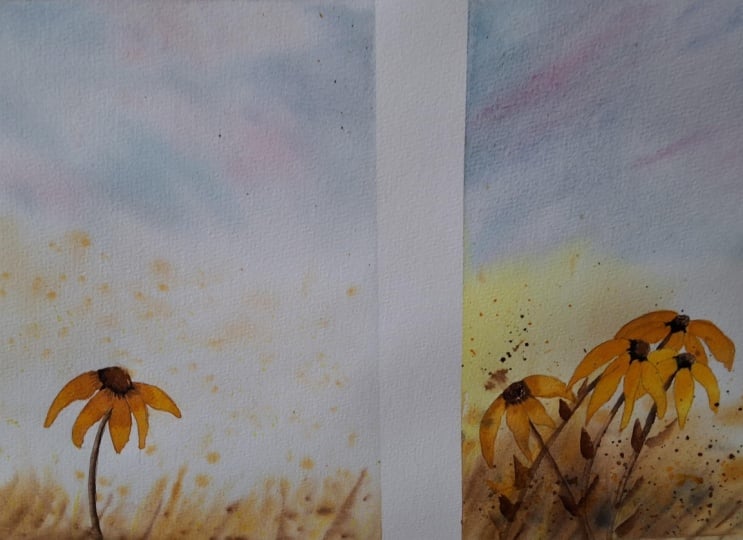
- Paint it twice in one sitting. The second will be better and you'll know exactly why. Post both — seeing your own two attempts side by side teaches more than anything I can say.
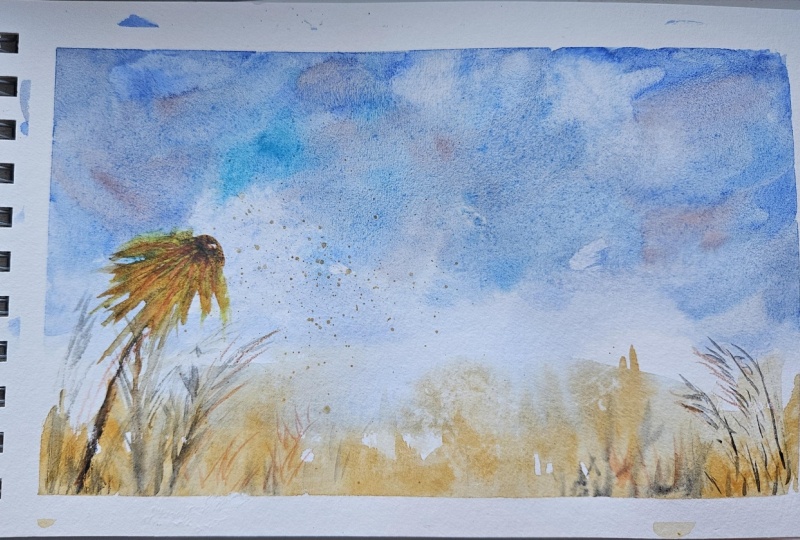
- Try it with more water than feels sensible, then again with less. Understanding what water does is the whole game, and the fastest way to learn it is to push it too far in both directions.
- Paint it once letting every layer dry properly, and once rushing into a damp layer. Post both. The difference will tell you more about drying time than I can.
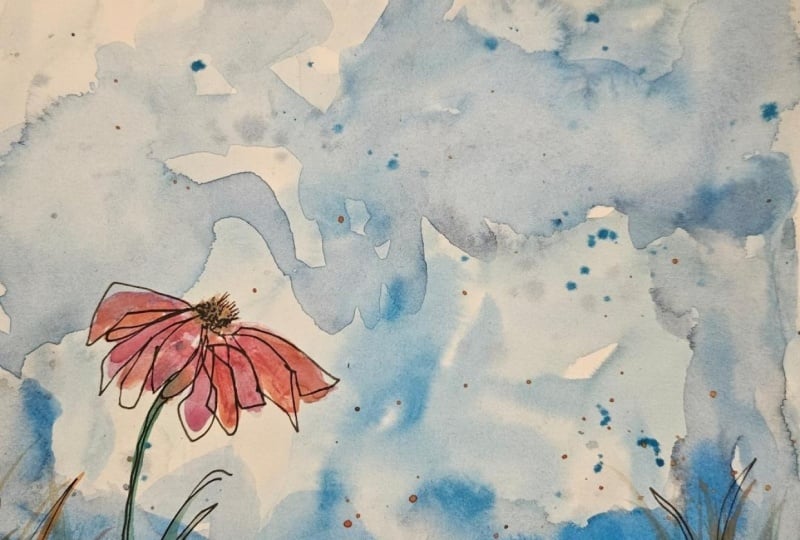
- Swap in a wildflower that grows near you, and tell us what it is.
Share Your Project
Post your finished meadow in the project gallery so I can see it. I look at and respond to every project, and I'll give you specific feedback on what's working and what to try next.
Please include the paints and paper you used — even just the brand and the weight. Watercolour is unusually sensitive to materials, and knowing what was under your brush is often the difference between me guessing and me being able to tell you "that's the paper, not you."
And take a few minutes to look through what everyone else has posted. Ten people painting the same sky produce ten completely different skies, which is the best argument for loose watercolour I know.
Class Ratings
Why Join Skillshare?
Take award-winning Skillshare Original Classes
Each class has short lessons, hands-on projects
Your membership supports Skillshare teachers
Learn From Anywhere
Take classes on the go with the Skillshare app. Stream or download to watch on the plane, the subway, or wherever you learn best.