Transcripts
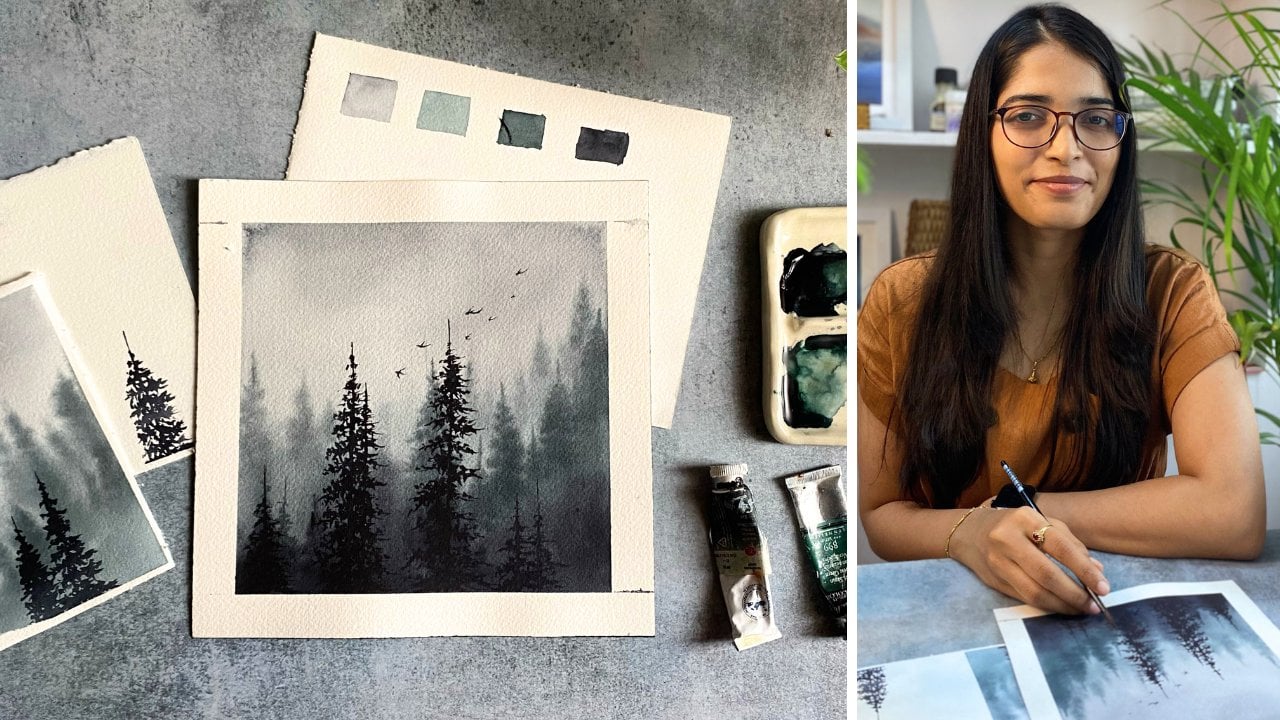
1. Hello, Welcome !: Hi guys, welcome back to my class. Always wanted to paint an experiment with bright colors. But my low for monochrome has kept me from it. Since the past two years. I have been experimenting and painting secretly and silently for the past one month or one of the best things that came out of it are these bright and colorful don't escapes. And I thought why not share it with you guys? So here we are. Join me for the next seven days and we're going to explore the plastic windows beauty of painting, old European dose. Combined with traditional watercolor techniques, like a wet-on-wet and layering. Spent 20 minutes with me every day for the next seven days. And I'm sure you're not going to regret when you have seven bright colorful landscapes on your gallery wall. This is an intermediate to advanced level class, but I explain every technique required in a step-by-step way. So even weakness can give it a try. Hello, I'm sacred, our watercolor artist and Beecher. I hope this subject interests you. And I'm looking very much forward to have you all in my glass.
2. Art Supplies: Let's quickly check what are the supplies that you're going to need. Coming to papers. I have used Fabriano, a 100 percent gotten 300 GSM paper. And I have got them up into rough edges by hand. And I don't recommend it because my fingertips to the swollen for two days straight. But I bend the glass projects look beautiful. So yeah, I felt good or dead end. But if you don't want to go for the glitches, you can paint on normal paper. Just make sure it is 100 percent cotton and 300 GSM. Coming to the pains, I will explain about the brands, but I will not tell you what are the colors we're going to need because for each class project we are going to be needing different color palette. Only use three brands. This is donors and the other is Sennelier. Different colors from Sennelier, but mostly my Payne's gray and red. And the remaining colors that I've used are from White Knight. And then though, it doesn't matter what the brands that we are going to be using, just make sure the shirts match perfectly. Coming to the brushes, I have used only four of them. First one is Bristow hockey brush. I usually use hockey brush to read the paper initially, so the water gets coated evenly. And this is silver black velvet number 14. It's the most used brush. And this is silver black velvet, number six brush. It's quite smaller compared to 14. So I usually use this for bending details. And this is Princeton Neptune number 4. This is also for details. I use this on very rare occasions when I want TIN lines are very small details. And yeah, those are the brushes I used. Among other supplies. Tissues. Those are very important. And masking tape. And pilot, of course. I usually keep two pallets with me and then a water jar to keep the water. These are the supplies that I have used. Use whatever you have. It doesn't have to be the same ones that I have used. Yeah. Let's proceed to the next video. Thank you for watching.
3. About The Class: Let me start by saying this class is from intermediate level to advanced. But bigness, do not close this class. It give me a few minutes and let's see if I can convince you to give this class a dry. To be fair, there are only two techniques that are going to be tough for you guys. For beginners, I mean, one is wet-on-wet technique, the other is a riveting and layering. Unlike all in my classes, I have given step-by-step instructions for these two techniques. Other than these two, I have also talked about the sketching tips and tricks, as well as shadows. Let me briefly talk about the techniques that we're going to practice in this class. First would be sketching. And even though they're not heavy sketching in this class, there are doors as well as steps. I found steps to be a little bit difficult and confusing. So I have added my own tips and tricks for that. The second technique is wet on wet flavors. In this door scapes. We're going to have to paint flowers and trees and branches in wet-on-wet technique. And I have explained about it as well. The next technique is a riveting and layering. We're going to have to constantly revert the paper at least once or twice in each door escape. And we're going to have to add a few more layers of colors after riveting. And it is a very tricky technique. Trust me, practice. And you're gonna get data have explained very clearly in my techniques video. Last technique is shadows. There are particular colors to use. When you are painting shadows, you should not use binds gray or indigo colors. And we're going to talk about that in shadows techniques video. And I will also explain how to paint the shadows for those gaps as well. Starting from today, this class goes for seven days, one week. And each day we are going to be in one class project, one door escape. Each day. The difficulty level of these landscapes will move one step ahead. For the first-class project, I have chosen very simple and very easy class project. You're going to have to paint only the door, the flowers, and just a few shadows. And for the second class projects, we're going to move one step forward. And we're gonna make a very detailed door, including the sunlight and the shadows. And these are the next two class projects. One step ahead, like I said. So yeah, this is going to be a fun ride. And I really hope you guys join me. Especially the bigness. I think you have done enough testing the waters. I think it's time to dive deep into the world of watercolors. If you're still with me, you again move to the next video. That is the first one of the techniques, sketching tips and tricks. And thank you for watching this video. See you in the next one.
4. Techniques 1) - Sketching - Tips & Tricks: Let's briefly talk about sketching. To be honest, in this class there is no heavy pencil woke. But what is important is the lines. So whatever the lines that you draw in this class should be straight. So always use a scale. There's also only one subject to sketch and paint in this entire class. That is those. Hence, I'm just trying to show you guys my way of sketching the doors. There are two things that are important to be expressed while painting these doors. One is the area under the door. It should always be in a shade darker. Then the rest of the rest of the painting, because that is where the shadows will be shut off the door, shut off the wall about are just the shot off the trees that are covering the doors. So yeah, remember that? Then the technique of painting the steps. Some reason sketching the steps used to be very difficult for me and it took a little time to get the hang of it. So if you have someone who get confused, are finding it difficult to sketch the steps. This video is for you and just follow whatever I'm doing right here and you're good to go. There'll be a separate video about shadowing and don't worry about charging. Just make sure you get the sketch right in the first step. And now that we are done with the door under steps, next will be the placement of the trees. So it's completely your wish. Our discussion. Wherever our variable decide you want them, you can draw them up. And this is my small video about how to go on with the sketching of doors. I hope you guys found this useful. And I'll see you guys in the next video. Thank you for watching.
5. Techniques 2) - Wet On Wet Flowers: The second technique is about how to paint flowers in wet-on-wet. First step would be to wet the paper with water. Of course. Once the paper is evenly coated with clean water, take your favorite brush and just start applying the paint onto the paper. And you guys can absorb the paint spreading so fast at on the paper, right? And that is the beauty that we are going for. In this entire class. We are not going to paint flowers are tree leaves in a realistic way. We're just going to paint them wet-on-wet. Just like you're seeing right here. There are two things you need to remember while going for wet-on-wet. One is you have to work faster because you can't afford to let the paper dry. And the second is to show the shadow specifically because those are the only details that we're going to add for these flowers in wet-on-wet. I'm going to have to add one tiny detail to these flowers. That is, I'm dragging these branches out of the cluster of flowers. And as you can see, the tiny little step helps to make these flowers look more realistic. And continue adding those branches of flowers throughout the cluster. I'm just phosphorylating this process because it's just same. And I don't want to waste your time. And once that is done, Let's proceed for one last step to complete painting the flowers that is flattering of color. I'm using dishes so that I don't spoil the rest of the paper. Remember, this process is not only to paint the flowers, you can also paint trees and branches, leaves with this, just like I have done in a few of glass projects, as you can see here. And I hope you enjoyed painting this wet-on-wet travels with me and we can proceed to the next technique. And thank you so much for watching.
6. Techniques 3) - Rewetting & Layering: Practice riveting and layering for a little bit. I admit it's one of the toughest techniques in watercolor. In fact, it is considered as most advanced technique, one of the most advanced in watercolor. In order to get the result that we want our, in order to get the result that we see in the image, you need to add layer after layer to get the right result. I mean. And you can add as many layers as you want, leaders of color. And one thing that you always have to remember is that before adding a layer of paint, make sure the first layer has completely dried up. And that is it. That's all you need to remember before going for the layering technique and what is reverting it. When you win before adding the layer, you need to read the paper once again because you kept it for drying. And once the paper is wet, you can add another layer. And this is the first layer. Hence, I have kept it in fastforward motion because my aim is to show the rivet and layering technique. And like I said before, you need to let the first layer dry. Before adding another layer of paint, you can use a dryer if you wish. Now consider this the first layer. Now let's go for the second layer. And for that, we're going to have good Even the paper and my paper that is first layer is completely dried up. So I'm going to take water, clean water, and very lightly brush the paper with it. Do not put pressure on the paper with your brush. That is a chance the colors will come off. Even the paper is dry. So GFR already light strokes. And now I'm going to take the shadow color. And I'm gonna just draw a few shadows with it. No surprises there. And this one is considered as adding only do layers because we have only re-read the people ones. Just like this. You can add as many layers as you want. And yeah, that's it. I hope you practice this technique enough before getting started with class projects. And yeah, thank you for watching. I'm gonna see you guys in the next video.
7. Techniques 4) - Shadows - Tips & Tricks: Let's talk about shadows now. Remember, shadows should always be very subtle and do not paint them with a dark color. There are specific colors to use. Whenever you paint the shadows. And those two colors are pink and blue. The careful mix of these two colors will give you a light shade of violet. And that is the color you need to use to paint the shadows. Here, I have used blue color from white knight and windrows, also from White Nights. And I'm mixing them in equal amounts. I would say, until I get that violet shade. And I usually add lots and lots of water to dilute the paint so that I can get the light color. Remember not to paint the dark colors, only light colors. And let me show you how this color looks. You can see it is a very light shade of violet. And I will also swatch the blue and pink that I've used before. So that if you guys don't have the exact colors that I have, you can use the ones that are similar to the shirts. This is not just for these class projects renewed, you are painting a cityscape. Are anything with shadows, use this color in or do not use by n squared or indigo colors. The shadow should always be painted with these mix of these two colors, pink and blue. And I'm going to keep this ballot separately to paint the shadows. And this is my small demo tutorial to show you guys how I usually paint shadows in the coming class projects. Don't have to be very detail. At least here in this class projects when you're painting the shadows, decide in which direction that you have to paint the shadows. And just paint them with this violet shade, light, violet shade. And also make sure you're painting the shadow. All of the shadows in one side. Do not paint them in the opposite side. And these are all the tips that I can think of to paint the shadows. Please keep a separate palette for the shadows if you can. And yeah, see you guys in the next video. Thank you for watching.
8. Class Project 1 - Magic In Blue: Let's start our first class project, which is very simple with a very simple sketch. I have already discussed about tips and tricks and what all the things you need to take care of while sketching these doors in one of our previous videos. If you haven't seen it yet. It's a very small video, three minutes tops. Please go watch it. So the, even though the sketching part is very less, it'll be very easy for you. We're going to sketch a door and a couple of steps for this class project. And like I said, I have discussed about tips and tricks to draw the steps, especially because I think they're very confused. I'm going to keep the final picture of this class project at the top of this video. So it'll be easier for you to understand what I am actually sketching here. That I have sketched the door. I'm going to just lightly place the trees and flowers. I'm not gonna go into the details sketch here. Let's sketch the steps. I'm going to sketch only a couple of them. Now I'm going to once again go Andrey and draw those trees and leaves section. Again, I'm not gonna go into detail. I'm just going to mark the space where I'm going to have to, you know, later paint with colors. And yeah, of course, I am going to have to write down the colors as well. This is my personal practice. If you think it'll be helpful for you, you can proceed with that as well. Let's see the colors that we're going to need. Burnt sienna and green, blue, pink, and violet. This is sap green from White Knight, and blue from White Nights as well. And that is windrows, that is from White Nights as well. And violet color is from Sennelier. I have taken all of these colors on my palette. Let me start by letting the paper with clean water. And I'm using my brushstroke, hockey brush. And we're going to start painting a very beautiful and bright colorful door right now. And I'm excited. I hope you are too. And I'm going to start with the burnt sienna. And I'm going to paint the wall beside the door on both sides. I mean, using the very diluted shade of burnt sienna here. I'm not going with the dark shared because the door should be very light in color. And the flowers, as well as the color of a door, should dominate the painting here. Paint the entire paper with burnt sienna except adore area. I'm going to start painting the flowers while the paper is still wet. Please remember you have to walk faster or else the paper will get dried and we cannot paint. Flowers are trees and leaves. I'm going to take windrows color. I'm not taking the violet it. Since the paper is wet, you don't have to do much of anything. You just have to let the paint and water do the work. As you can see, the vein tests already started to spread. Just show the direction with your brush. Like we have talked in one of our previous videos, you have to add shadows. And shadow should be in darker color. So I'm taking violet color and I'm going to add the shadows. I'm done adding the shadows for these flowers. It's time for me to add the branches. Since the leaves will also be having shadows, It's only fair to mix this sap green, which is very light, with a bit of a darker blue. And remember, you have to walk faster because by this time the paper will already be drying. And we don't we definitely don't want that. As you can see, the paint is still spreading across the paper. That means the paper is still wet. So I think we are good for another two minutes. So well cluster. And I'm putting up the final picture about for your reference. The most difficult part of class project one is now complete. That is wet-on-wet technique. Now we're going to give this for drying and we'll come back once it's dried. And yeah, my buddies completely dried up. I'm gonna take my silver black velvet number 14 brush. And I'm going to mix sap green with the blue color that I have taken earlier. And I'm going to mix it very carefully so that I get more bluish green than greenish blue. And let's paint the door. Paint over the flowers. That's right. So when you paint over the flowers, it naturally acts as a shadow falling onto the roof, sorry, falling onto the door. Finish the door using the same color. And make sure you're not been going outside. The lines that we have drawn. Drop of water from my brush has fallen on the door. So I'm going to add just a little bit. If we ask look, uniform, you don't have to, you know, go through the steps again. So I'm gonna just add the color evenly. And then I'm going to use a dryer to dry up this door, but I'm going to take the shadow color now. In one of our previous videos, we have talked about chat. We had talked all about shadowing, what colors to use and how much to use. So if you haven't seen it, please go back and watch it. I'm going to add a small layer of the shadow beside the door, beside that white space. And as you can see these, the shadow of the door that is falling onto the wall. And while I'm at it, I'm going to use burnt sienna. Do you know dark and the wall a little bit as well as add the step Spark as well. Washed my brush and with a bit of water. I'm going to wet this side of the wall and I'm going to add burnt sienna to it just a little bit and not too much. And I'm going to drag this color down Towards the step. The main reason that have been derived trait of the world is because I want to drag that down towards the steps where we are. The steps are. If I hadn't painted the writer of the door with burnt sienna once again, the wall, as well as the steps that I'm building now will be looking very weird because I did not see the color contrast before. And now I think it's perfect at the same details to the steps on that side as well. And so far, I have used only been Sierra Nevadas. Now I'm using my silver black velvet number 6 brush, quite small brush. And I'm going to add a few details to the steps using the shadow color. And now with the same brush and the same shadow color, we're going to add a few details to the door as well. I hope you guys enjoying painting this class project. And I just Lau how we are building this class project in a very step-by-step manner. And this is what is my favorite in watercolor painting. It's brick after break and you get a house it then just, that's just how I see it at the final stasis of this painting. And I'm going to be using my number 6 brush, the smaller one. And I'm going to paint a few branches. These are already random. You can bend these branches anywhere we want. And if you just have to paint them very, very thin lines. The trick is to not overdoing it. It's always good when a painting is very simple. We are done with the branches. Now, let's move on to adding details. At the bottom of this painting. I'm using my number 14 silver black velvet brush and using the shadow color. I'm just going to add one layer and do not been anything or the straps. And add a few drops of Bingen green paint. While it is still wet. It shows the flowers and leaves have fallen under those step hand. It's just a beautiful way. Delta iPad. And we have one last step remaining. For that, you need a tissue paper and splatter, a lot of green as well as being colors. But first I'm going to be using green so that I can cover the brand trees and branches. And later I'm going to be using the pink color. It covers the flowers as well. All right, we're done. And I absolutely loved bending this colorful and bright landscape because you guys know, I don't usually go for these colors. And I hope you guys enjoyed painting the skeletal landscape with me. And I'm gonna see you guys in my next video with the whole new dog Skip. And thank you so much for joining me.
9. Class Project - 2 - Sunlit Door: Hello paper. I hope you enjoyed today's class project. I think it's time to start the new one. I also think it's time for us to upgrade our dose. Go with a very simple sketch here. But while painting the door, I'm going to be adding a lot of details combined to yesterday's class project. I've added the final sketch in Resources tab. With that, I have also added the reference picture and final picture. Please do check it out. Before starting with the banding. I'm done with the sketch. Now I'm just placing where the flowers and leaves should be decided. The direction of flowers and leaves, they will lean towards my left wing to the colors. This is bone and a low from terminals. If you don't have this color, you can use gamboge, yellow from any of the brand. And the next color is golden deep. You can use orange color if you don't have golden deep. And this one is from White Nights. And sap green. This is from White Nights as well. Few other colors that you might need. Our bones we are now binds gray and red. I already had them on my palette, so I did not show them. Let's start by wetting the paper with clean water. And for this, I'm using my restaurant hockey brush. Can you see that? Walks small box on my left. I have sketched it, but I did not paint it later. So you don't have to sketch that 1 third of burnt sienna, like in previous class project. Here, the walls will be in fines gray color. Interesting right? Now as you can see, I have in-order my board, so it gets easier for the paint to just flow down. Only on the both sides of the door. The paint will be ticker finds great. As it come down. It doesn't have to be darker in color. You just have to blend it with the rest of the paper. Because the orange and red flowers will be at the top of the door. It's perfect right now. Take orange. In my case, I'm using golden deep color. And let's get started with painting the flowers. You have to walk faster here because this is wet-on-wet technique and you should not let the paper dry. This is why I don't like to sketch. Because whenever I am painting, I don't follow through the sketch. I usually go with what feels right to me. But for this class project, I'm trying very hard to stick with the sketch because I have already made a sketch and I have already showed you guys, so I don't want to confuse you. I'm done with the orange now. I'm going to take sap green color and I will keep adding onto the orange. Beside the orange and a 100 orange, because these are the leaves and they'll be everywhere. Seen. A lot of beginners Jining in. Even though this is not a beginner friendly. And I do understand the wet-on-dry technique can be overwhelming at times, but do not keep any expectations. You're just wasting your paper if you think you're failing. And that is perfectly okay. We have lots of papers. Can be a magical medium, but you have to class a few bridges to get there. The paper has started to dry, some going to work even faster. I'm using red color right now. I'm going to add a few dots here and there. That is done. I'm going to take months Yana, I'm going to add that much needed contrasting color. So we are going for a darker shade here. Getting that looks dull here is the green color. So I'm going to add a darker shade of green. So I'm mixing pines gray with the green. And I'm going to just add a few dots. We are done adding flowers and leaves. So it's time to give this for drying. And we can come back. Once it's dried. I'll let it dry. I'm going to take yellow color and I'm going to get started with painting the door. Remember, we are going to be adding a lot of details to the door this time. I don't get worried. It's just adding a lot of shades than just one color. Here. For the first layer, I'm going to be covering the door with a local law. I'm going to layer it up with a mix of yellow and burnt sienna. You can see I did not wait until their door is dried. I'm just painting while the paper is still wet. Now I'm going to make one shade darker. So I'm mixing burnt sienna with pines gray. Do not make it into black color. Chocolate color would be good. Smoothly. Blend this dark burnt sienna color with the rest of the door. As you can see, I'm not adding this dark color to the whole door. I'm just adding it to the end. Only taught part of it. This time I have taken more bind screen and less bronchi and also it is a bit darker, but not too black. Interior still on the darker shades of brown. We are not going into complete pines gray color. One way I did this color on one side of the door. Now I'm going to take a smaller brush and add a few details to the door. Are these lines very lightly In brush and the same color. I'm going to add few more details to the door. I'm done with the Doria, but let's take a small break and work on the splattering of colors, but make sure to use the tissues. This is the fun part, right? A drink, I'm using orange, green, and red color. Let's add a few branches. I'm using binds gray and my Princeton brush. I actually removed the masking tape and then I remembered to add details to the door. So here we are. And I'm using right now, and I'm not mixing it with any color. Like on our previous shadings. Iran, this one should be added only on one side. Now painting these type of things, the shadings and shadows, you have to go with your gut. You have to stop when it feels right to you. And you have to keep going. If you are not feeling right. Now, the line of shared with fine screen on the left side as well and the door handle. And with this, we are done with the class project today. And I really hope you enjoyed painting this detailed adore. We're going to see you guys tomorrow. And thank you so much for joining me today.
10. Class Project - 3 - Bright Day: Hello guys, welcome to Class Project 3. As always, let's start with the sketching. So I have included the final sketch and final painting and reference image in the resources tab. If you have less time to spare, you can directly move forward to the final sketch and you can sketch from there. You don't have to watch this video. But if you guys want to sketch with me, you can do so as well by watching this video. And this is the main class project from where we will start exploring completely about shadows. Get to your shadow shapes. And we're going to have a lot of fun going thorough, very detailed or here as well. But my main concentration for this class project would be adding the shadows. Briefly, place where the trees and flowers will be. And even mark could the colors on the paper. But that was a mistake. That's why I did not show you guys because at the end it was very difficult for me to erase them. So I would not recommend that. Though these are the colors I have used for this class project. I have all of them mostly are already on my palette, so I did not show them separately. So let's get started by wetting the paper with clean water. And I'm using my Bristow hockey brush. I'm going to get started with the burnt sienna. And I'm going to add it everywhere except for the door. So as you guys can see, I'm using a very, very light color. Not go for dark color here. Just stick with the light shared. To get the light shared, add lots of water and less paint. I'm adding a very tiny details and mixing burnt sienna with the violet. I'm just adding a little bit of paint in order to show the shadows on the wall. My paper is still wet, so the colors are blending just perfectly. And I'm going to take a dryer and dry the baby. The paper is dry it enough. Let's work on the door. For this. I'm using burnt sienna, darker shade. Make sure to paint within the sketch of the door frame. 0, I'm using the dryer. I'm going to dry up this door frame part. Take the shadow color palette. We are not painting the shadows now. We're going to paint the glass in-between that door frame. There also in the color of violet shade. To a carefully and paint within the sketch. Faint. Only the four of them do not paint the last two. Dry up now using the hairdryer. Now take the shadow color again. And we're going to paint the in-between their door frame under Windows using the shadow color. But notice the shadow color is a bit darker. You can add a little bit of blue to it to get that darker shade. We got going for detail the shadows. We're going to just drag that paint into that Windows now. So this is, this is where I was rocking the boat. This class project being, being totally about the shadows. Going to coat one more layer, Ricciardo color to the door frame. Dry up using the hairdryer once more. Now we have talked about riveting and layering technique. So this is where we are going to go with three rating and layering here. So I'm rewriting the paper using my silver black velvet brush. But if you are comfortable with using a hockey brush, you can do so. Give it 10 dark paper accepted or area. Take windrows color, and it's time to add flowers. I've talked about painting, wet-on-wet travels, right? In one of our previous techniques videos. So whenever you paint the flowers in wet-on-wet, you have to add shadows as well. So that's what I'm doing here. So I'm using a violet color on top of windrows. Time to add green color. I'm using sap green. I'm going to add darker green color. For that. I'm going to make sap green with blue. It is not definitely to pain. The wet-on-wet flowers, you have the start and stop until you feel right. So always go with your gut feeling here. My gut bacteria and we raised a lot of favors that 90, so did not go as I suppose, add flowers and leaves on this side as well. This is wet-on-wet. You have to remember to work faster. As you can see, I'm reading the bottom part of the paper as well. It's time to add details to the road in front of the door. Okay. A shadow color and paint the road with it. So we'll add blue shadow color to the bottom window on the door. You take burnt sienna. And I'm going to add a few more details. Add a few dots using windrows and green. So it shows that those flowers and leaves have fallen down. Going to use my Princeton number four brush. And I'm going to add a few details to the door using the shadow color. So I'm going to add a little bit of blue to the shadow color to make it darker so I can finish up painting those two rest of the windows. I'm going to use burnt sienna and I will add those lines between those windows. Initially, I wanted to add a very light color, but I did not see fit. So I'm just using burnt sienna. Now I'm going to use fine screen. And I'm going to get started with painting those Clemson branches. It's time to paint the star of the show. Shadows. Shadow color, and slowly start adding the shadows under those flower trees. Hope you guys remember painting this when runoff or previous techniques videos. I'll paint the shadows of those stems and venture says, Well, you don't have to be very detail here. I could not find the tissues, so I'm using the paper instead, covering the main area. I'm going to splatter. A lot of paint. Splattering. I am using pink and green color and fine screen. I'm going to paint a few details at the bottom of the page. And that is all for today's class project. I hope you enjoyed painting this with me. And I'm gonna see you guys tomorrow. And thank you so much for joining.
11. Class Project - 4 - Its A Beautiful Day: Hello guys, welcome to class project four. We are taking the shadows to a whole new level in this class project. But first things first, I'm going to get started with sketching. You can directly download the final sketch image from resources tab. But if you want to sketch with me, you can proceed with this video. We are going for a very simple sketch here. As you can see. What I'm drawing right now is not the tree branch, It's the shadow of the tree ran studies about I'm going to go with only one step here. If you have any difficulties in a drawing the steps, you can watch one of my previous videos called Techniques for sketching. And I have also included a lot of tips and tricks, especially for painting steps. Now already almost done with the sketching, I'm going to just draw a few details on the door. The most important part of this class project, the shadow line, which will fall on the wall, on the door as well as on the ground. So I have listed down all the comments I have used for this class project. There are no new colors. These are the same colors that I have used so far in all of the class projects. And they're all on my palette. So once you have taken down your colors on your palette gets tattered by wetting the paper with clean water. And I'm using my hockey brush from restaurant. And as you can see, I'm wetting the entire paper except the door area. And now we're going to make an interesting color by mixing golden deep, that is orange. And windrows. Mix these two colors until you get beat shared, which you are seeing right here. Now. Before the paper gets dry it up. Add this color to the entire Afterpay by accept the door area. Make sure you're not getting the paint inside that door sketch. I am trying to apply an even coat Hill, going to use a hairdryer to dry up this area. And I am hoping this will dry up evenly because there is a lot of water on my paper right now. And guys, I got lucky. The paper has dried up evenly. And now I'm taking blue color and I'm going to add it to the door. Let us sketch, paint the door completely with the blue color. And my suggestion would be, take the lightest color. That is, add more water. Do not go for the dark color just to add. The sort of blue that I'm using from white light is actually light in color. It's naturally light. But I understand if you don't have this particular shared. So I told you to use a light color, light blue instead, you can add more water to it. Oh, with a smaller brush, we're going to add the details. That is, we're going to draw a few lines on it like we did in Australia and they are low door. I'm going to take the sap green color. I'm going to start adding the leaves. We have already drawn the sketch for this. Remember? As you can see, I'm not going for very detailed leaves or anything. I'm just drawing. I'm just randomly adding a dot with my smaller brush using the sap green color. That light burnt sienna. I'm going to add the branches now, lay down. I'm going to highlight it with indigo to indicate the shadow you will see now, I'm taking indigo and I'm going to add the shadows. I'm going to add it only at the bottom of this branch because that's where the shadows will be. Also, there will be shadows in the list. Remember, and we're going to add a few dots and those green colored leaves as well. Katya, shadow color. It's time to add the shadows for those branches and leaves. We have already done the sketch of the shadow. And I'm just falling that you're painting the shadows, right? I mean, the position of the list, the position of the branches are all should be in the right place. I think by adding shadows, this painting looks so alive. Let's take indigo color and we're going to add a few shadows on the door as well. After they leave guys, we have to revert then their paper in the next step at that stays. This will probably go away. But while painting the details, we can still add the shadows once again. So don't worry, if you see the shadows under door disappear completely once we revert the paper, it's time to blend the color with the rest of the door. Make sure you're not passing that dark color to the middle of the door. It should be light in color. I forgot to paint the shadow for this one right here. Now I'm going to use the shadow color, and I'm going to paint the stem. Then I use hairdryer and I'm going to completely dry up the paper. It's important that we have to dry the paper completely because we're going to have to redo it now. Using my hockey brush, I'm going to gently add a wash of water. In one of our previous techniques videos, I have discussed everything about riveting and layering. If you haven't seen it, please go back and watch it. It's another very important techniques. But before adding the shadow color, I'm going to add a little bit of burnt sienna mixed with green. And I got this brownish color. Now I'm going to take the shadow color and I will add it in a diagonal shape. We have already drawn pencil sketch. Remember, this is riveting and layering technique that we had talked about in techniques video. Make sure you're not putting too much pressure on your paper with your brush and you'll be good to go. I'm going to take indigo color and I'm going to add a few details this up completely using a hairdryer. That process of rewriting and layering, we have lost two things. One is this little branch on my left and I'm going to repaint it. The other is the shadows under door. Like I have said before. They're going to have to redo it as well. Take doc is to shade of indigo. And let's add the details of the door. One of the few shadows, those alleles on the door as well. Now add a layer on the step as a layer of shadow color. I think this class looks advance to because I have included everything that is in bending dose. And I hope you enjoyed painting this class with me. Thank you so much for joining. I'm gonna see you guys tomorrow.
12. Bonus Class - Window: Hello friends, welcome to today's class. And this is not one of the class projects. This is one of the bonuses. I have taught everything there is to know about painting the dose. Starting from a simple door and simple flowers and leveling up from there to painting detailed adores and flowers and their shadows. And yesterday and we have entered a very advanced to those get. And I think that is all you need to learn in painting the doors. Going for a landscape like this, you don't usually paint only those. You'll paint a lot of things with it. One of them is Windows. And today's bonus class is about that. There is not much difference in bending windows and doors, except a few things which I will explain as we move further. Gently placing where the three should be. This is all the sketch that I'm going to be going for and coming to the colors. The first one will be burnt sienna, which I will use to paint the wall. And blue color, to paint the window. Blue and windrows to paint the shadows. And sap green to paint the leaves. And I have already taken these colors on my palette. So I'm going to get started by wetting the paper with clean water. And I'm using my restaurant hockey brush than dark paper except the window area. The first color I'll be using is MSN. And I'm going to use it to paint the wall. And I'm going to be using a very light shade. Paint very carefully. Do not let the paint get into that window area. Gotten a lot of messages saying that you guys are loving this class projects and that they are very colorful. And it, it actually, it actually is very new to me because I always go for monochrome colors. And I, once I having a lot of hundred-year guys, tomorrow, I'm going to be posting one more bonus class. And I'd like to give it a secret. And while the paper is still wet, stack painting with the green color. Since the burnt sienna in the background is quite light color, it will not affect the green color. Otherwise, the burnt sienna will get mixed up if it is dark and use brown color. I'm going to mix this sap green color with the blue color that is already there on my palette. And I would get the dark green color, which is good because we have more recently to a different place and I have lost a lot of paint tubes. I'm going to have to buy new ones right now. Moving on, we're going to be adding the dark green color onto the light color, like I've discussed before in techniques video. This is the this is how we paint the shadows. I use a hair dryer to dry the paper. I'm going to read the window area. I'm going to use the blue color to paint the window. While the paper is still wet. I'm going to take sap green. And I'm going to paint the leaves in the window area. You have to go back and forth between light and dark color. Now we are done with the right light, green color. It's time to go for dark. I said, Now I'm going to take the darker color. I'm going to paint on the light shape that we are seeing in the murder. They use smaller brush and I'm going to take a darker sap green color. And I'm going to just keep on adding those leaves. Just have to go for random strokes using your brush and you'll get the Lias. We are not going for the detailed detailed leaf here, as you can see. Me paint the leaves on top side of the window as well. Once we're done with that, we're going to go for one more layer of painting the window with a blue color. Now, I'm going to add a few details to the windows. And for that, I'm going to be using the shadow color. Once we are done bartering the window, I'm going to be using the same shadow color and the same brush. And I'm going to be adding a few more details to the window. And your hairdryer. I'm going to dry this up really quickly. We have learned how to remove it in one of our previous techniques videos. So using those techniques within a river, this paper very gently lands that is done. It's time to add shadows and I'm using the shadow color. And this is wet-on-wet technique. So the shadows will not be very detailed. Immediately. Use a hair dryer to dry the paper up and decided to splatter some paint shadow pain when the paper is still wet. You can go ahead with this step if you wish. I've heard some more paint, green color, but paper is not wet anymore. I take burnt sienna and I'm going to take a very dark shade. And I'm going to add the boss on the window. Surprisingly, my paper has dried up in an instant. So I did not use hairdryer. I have directly either the shadows. But if you are born CNI still wet, you can wait and then add the shadows. Think shadow color to paint the shadows. And I'm using my silver black velvet number 6. That is a small brush. I'm going to splatter some shadow pain because why not tissue and cover up the window area. I'm going to splatter some green paint. One last date in is remaining. And I already removed the masking tape. I'm using dark blue color. And I'm going to add the shadow from the window. And this is just like how we've been. Did the door sturdy? The shadow should be added only on one side and the rest of the paper should be, sorry, rest of the window should be light in color. You have to blend the extra paint away using a damp brush. I hope you enjoyed painting this window. Bonus class with me, and I hope to see you guys tomorrow. Thank you so much for joining.
13. Bonus Class - Flower Pots: Hello friends. Welcome to another bonus class. Today we are going to learn how to paint flowerpot. Let's start with a simple sketch. I'm currently drawing is a perspective line. So it is very important to get the placement right. And now I'm going for the flower Bot. And I'm going to be drawing three of them, each in different sizes. There is a final sketchy maze available in the resources tab. You can go ahead and use it, or else you can continue this video and sketch with me. The Bose spectacle thing is quite difficult for you. You can, as a practice, you can just draw these flower pots and paint with me. Later when you have time, you can go ahead with the perspective sketch. What you are seeing on my left are the small sketches. A sturdy, I have done a lot of them. Out of all those, I had I had chosen only one for us today because even this one, He's 18 minutes long. And this the, this is the one that we're going to paint. Now, I hope you guys are excited. Colors arise same as we have vendor. So far. This is one Tiana and I'm going to be using one new color today. Who I let it from Sennelier. It's very good to add the shadows, dark shadows, I mean. And the next two colors are sap green and indigo. I'm going to be using sap green for the leaves. That'll be on the flowering part. There will be no flowers. And this is indigo. So I'm going to keep it on my palette and I'll see window. And this is shadow color, which I have prepared using blue and windrows. Let's get started by wetting the part. So I'm going to be using my silver black velvet number 14 brush. And I'm going to use burnt sienna to apply the first layer of the beam. This is the first layer. We're going to have to add the shadows laid down. And we're gonna repeat the same process and bring the rest of the flowering part after work faster because we're going to still have to add the shadows. And for the shadows, I'm going to be mixing burnt sienna, bit of indigo that was already on my palette. I'll get this chocolate color. And I'm going to add that to paint the shadows. The shadows very lightly and blend them very properly. They use a hairdryer and I'm going to dry this flooding parts. The next step would be riveting. So get your hockey brush ready. Remember, we have learned about riveting technique in one of our techniques videos, rewriting and layering. That's what we're gonna do now. So first I'm going to gently and a layer of clean water. Now I'm going to mix. Sienna with a little bit of purple and windrows. And I get this purplish shadow color. And we're going to fill them in their paper up with that color. Now when the paper is still wet, I'm going to take sap green and I'm going to start painting the leaves and the flower pot. Can see how the paint is spreading because the paper is wet. And we're going to have to take advantage of that. We take indigo and I'm going to add the first layer of shadows on these green color and use, I hope you guys remember how we have painted the flowers and leaves in those escapes. We're going to do exactly that. And for that we're going to be needing a smaller brush. And to do that, the paper has to be dry. So I'm going to be using hairdryer to dry this up very quickly. Let's start adding the leaves using indigo mixed with a little bit of sap green. And I'm using my smaller silver black velvet number 6 brush for this. And I would suggest you guys do use smaller brush as well. It could be synthetic or natural, but a smaller brush is important. Again, perfect. Now I'm going to drag this up very quickly because we're going to have to read it one more time. Now this is an interesting technique. I'm going to reverse my board and I'm going to use a masking tape to cover up their perspective area. We're going to have to add a few details to the background of that perspective line. Now I'm wetting the paper using my silver black or like number 14 brush. Now I'm going to take that shadow mixture of burnt sienna, windrows and y. Let. Now let's add the shadow color to that inside of this perspective line. Now remove the masking tape and slowly drag the color down. How can see there are few blooms that are formed in that flowering part areas. We're going to just remove that color using the tissue. I'm adding this color evenly in the foreground. It fill it with color off using a brush so the perspective line is visible. Dry this area using the hairdryer. And this is my favorite part. I'm going to be taking the shadow color and I'm going to start adding the shadows of these three flowering parts. I'm adding the shadows, just like the leaves that are there above. They're very uneven as you can see. Quality flowerpot, the middle one is the biggest. So make sure glad the biggest shadow. And this is the small one. So the smaller shadow, the shadow color. On the foreground. I do shop using the hairdryer. And there are a few last minute details that are remaining. And for that I'm going to be using a needle and my number 6 brush. Add a few details to the flowerpot. So I'm going to be using my silver black velvet number 14 brush. I'm going to quickly switch the brush. I'm going to take the smaller one and I'm going to splatter some green, as well as the shadow color, flowerpot, our runoff accessories if you are going for those and Windows. So I thought I'd include this one as well. I hope you enjoyed painting this with me. Thank you so much guys. I'm gonna see you tomorrow.
14. Final Thoughts: Hello friends. This video is not about learning any class project and not even the bonus class. Right from the introduction video, I have been seeing that this video is not for beginners. It's from intermediate to advanced. Eta has seen a lot of bigness joining in. I really appreciate it. And let's quickly see what we have learned so far in this six days. First day, we have learned a simple lower with simple flowers. On the second day, we have learned a little bit more about the doors, details on the laws, including the shadows. And in the third class project, we have learned retina clovers and we have learned how to paint the shadows as well, which is the most important part if you think about it. For each class project, we have been leveling up from a simple door to flowers and the shadows. And for the fourth class project, we have gone all out. And this is the most advanced to do escape. You can paint. It's got the door with the shadows, the detailed adore, the stems, that even the stem has the shadows if you are absorbed and the leaves. And of course, the final important thing is that the sunlight from the wall to the door. We are going for a door scape. You have to paint a few accessories, I would say, like windows and flowerpot. So we have learned those as well in bonus classes. Now comes the interesting part of this video. I want to give you guys a challenge. I have this sketch. It includes door and flowers, and flowerpot steps and a beautiful foreground. Now also included this interesting street lantern, complete with the shadow. Now, you can either pause this video and sketch this one or else I have included the sketch picture of the sketch in the Resources tab. Now there is no time limit to paint this sketch. You can do it whenever you have time. And, but please do it because this sketch has everything you need to step up your game. If you guys had seen me on Instagram, you know that I always go for monochrome and these colorful and bright colors are not my thing. But I have stepped out of my comfort zone for this class. I don't know about you guys, but I have learned a lot. Main thing is to not compare yourself with anybody. Please learn on your own pace and in your own time. That is it, That is the trick to explore watercolors to its full potential? I hope this class helped you guys in some way. And please do not forget about the challenge. Find the sketch in Resources tab and please attempt it. I'm gonna see you guys in my next class. Thank you so much for joining.
 Sukrutha Jagirdhar, Watercolor Artist I Creative Entrepreneur