Transcripts
1. Introduction: As students, we spend thousands of hours of our
lives studying for exams. But somehow we're never
actually taught how to study. We're expected to just kind of figure it out even
though there's a whole body of research
which shows that some methods are just
better than others. Hi everyone, My name
is Jade Bowler and I'm here to teach you how to study based on the science
of learning. I'm a final year undergraduate
student studying cognitive science and I wrote the number one best
selling book in education, the only study guide
you'll ever need. I started a Youtube
channel back in 2017 after getting all stars in
my GCCs and A levels, because I really
just wanted to help other students improve
their study methods. I'm a bit of a nerd when
it comes to this stuff, and I have poured
through hundreds of different academic papers
all about how to learn. I'm the oldest child and my parents didn't
go to university. So these are all the tips that I wish someone
had taught me, and today I'm here to teach you. Today we're going
to learn how to study smarter not harder. This course is divided
into three chapters. First, what makes a
good study technique? How can I ensure that every time I'm studying it's
actually effective? I'm going to introduce
you to the life changing evidence based
framework of sad or AD. Secondly, we're going
to look at how do I use the most effective
study techniques? We'll dig into five of the most important
study techniques and I'll teach you how to practically apply
them to any work. And finally, motivation. There is no point learning
how to learn if you can't even sustain your
motivation to continue, we'll learn why we
might not be motivated, what to do about it, and how to sustain our motivation
over the long term. By the end of this class, you should be equipped with
a multitude of methods to help you in whatever you're studying at any
point of your life. So if you're ready, let's do it. Grab a pen, some paper, anything to take notes on, and I hope you find
this valuable.
2. Why Should You Learn How to Learn?: Why should you bother learning
how to learn when you already have so much content
to memorize, so much to do? You clicked on this
course for a reason. And firstly, I just want to persuade you why this
is a good choice. Three reasons why it's so important to
learn how to learn. Firstly, to save you
time and reduce stress, there's this amazing quote from Abraham Lincoln which says, give me 6 hours to chop down
a tree and I will spend the first 4 hours
sharpening the at this course is sharpening
the at spending time now, learning how to study
will make chopping down those exams so much easier in the future and just
reduce a lot of stress. Secondly, we actually
have a lot of biases. We think we're using
our time effectively. We think our studying is amazing when in reality it's
kind of a waste of time. For example, in a study
conducted by Cornell and Sun, they asked all of their subjects to learn this list of words. They were given a choice. Subjects could either
choose to restudy the same words by looking at
them over and over again, or they could choose
to be tested. Most people chose to just restudy and look at
them again and again, when in reality, the people who chose testing were far better. At the end of the study,
the researchers asked the students which technique they thought would
be more effective. And almost all the students said restudying this echoes
the conclusions of so many studies, which show that the
techniques we think will work aren't often the ones
which are more effective. Again, another study was conducted where
students were given the choice of passive
learning methods like highlighting and rereading, or using active testing methods. Students overwhelmingly chose
the passive techniques, which just shows we
can't trust ourselves. We think we're doing the work, we think we're doing something effective and it might not
actually be working for us. So this is why it's
really important to take the time to actually
learn how we learn. And thirdly, to give you the best chances to get the grades that you are
capable of achieving. So get the notepad ready, get the phone on airplane mode. Let's get into it.
3. Chapter 1: The 3 Stages of Studying: Hello and welcome
to chapter one. So doing well in an exam requires three main
stages of studying. Today, we're going to talk
about these three stages. Discuss why they're important, and use them as a framework to shape the whole
rest of the course. To learn anything
ready for an exam, the process is understand, learn, and then apply. First, we need to
understand the content. There's no point in
trying to apply a fact in a test if you literally don't
even really understand it. You need to ask questions
like why and how to conceptually get why
something is the way that it is. In this stage, you
might watch videos, you might speak to your teacher, speak to classmates until
you start to get it. Secondly, you need to learn how many times
have you been reading your textbook and
you're looking at some information and you're nodding your head
and you're like, yeah, this makes sense. But the next day,
when someone asks you a question about
what's in that textbook, you realize that you don't
actually remember any of it. That's because you
understood it, but you didn't learn it. This stage can also be thought of as memorization
consolidation. And it's so important to do this before moving into an
exam or test situation. Most people skip
from understanding in class to then going into an exam without this really crucial
studying bit in the middle. And so this is where
we're going to focus most of our
time in this course. And finally, once you've understood the content,
you've learned it, it's in your head,
then you can start to apply it to a test scenario. You can try more
difficult questions. You can try past papers. You can even use
your knowledge to create new questions
and problems. So here's a little example. Imagine you're trying to learn the process of
respiration in biology. First, you need to
understand that process. What is respiration? Why does it happen? Why
does it need to happen? Secondly, you need to learn it. You need to get it in your head, and you need to keep it there. The idea of respiration made sense to you
in the classroom. But now what are
you going to do? This is where our study
techniques starts to come in. Now that you know
what respiration is, you can go, you can try
your test questions, you can apply it in the exam, and that is the
process of studying. It is worth noticing that
in recent literature, this has been shown not
to just be a hierarchy, but to have some overlap. For example, you can
actually help yourself understand something
through starting to memorize it equally. You can help yourself learn
something by doing testing. But generally, when you're
thinking about your studying, it is useful to remember these stages just to make sure that you're actually
covering them all. In the next few videos, let's dive a little bit into
how we do this middle part. How do we learn? How do we remember stuff?
Let's get into it.
4. Why Rote Memorisation Isn't a Waste of Time: Maybe you're so frustrated
with school because you feel like a robot having to memorize all
this information. Why would I need to memorize
this equation if I'll always have Google or
Chat GPT in the future, Even Einstein said imagination is more important
than knowledge. But in this mini episode, I want to challenge
that in the book, why don't students like school Willingham
actually looks into why rote memorization and learning is so essential
to everything else. And why is that?
Because knowledge is a prerequisite imagination. You can only imagine as far
as your knowledge allows. How can you dream of space without knowing
that space exists? How can you imagine a
certain life for yourself without the knowledge and representation that
it's even possible? Memorization is necessary
for skills like analysis, synthesis,
critical thinking. All of our reasoning
and problem solving is intimately intertwined
with facts that are stored in our memory. So I hope you can
see that this is a useful skill for
your whole life. It is not just for that exam. Before we move on,
can you remember the three stages
of studying that we talked about in
the last episode? Maybe just take a second. You can cause this video. What were those three stages? Amazing. So just to refresh, we have understanding
the content, we have the learning, and we have the application and all of this
memorization stuff. All of it and how
essential it is, comes under this learning phase. So let's learn how to learn.
5. What Makes a Good Learning Technique? SAAD: We know we need to learn
and memorize content. But what makes a good
study technique? How do we know for sure that whatever we're doing
is effective and will help us slay the exam after reading so many
papers on this topic. I boiled it down
to four questions. You can always ask yourself to determine whether
it's effective or not. Today, we're turning our depressing, sad
revision techniques into sad techniques. Ad S stands for space, repetition A is
for active recall, the other A is associations, and D is desirable. Difficulty. Get your
notebook ready. The exercises are
beginning from now.
6. SAAD: Spaced Repetition: So how do we turn sad, useless study techniques into
effective sad techniques? The first question is
S spaced repetition. You know, when you have these random bursts
of inspiration. Where suddenly you want to
study for 10 hours a day, and then you don't study for another two weeks and suddenly forget literally everything
you learn on that first day. To study smarter, not harder, we need to turn to science
in cognitive psychology. There's this famous guy
called Herman Ebbing House. Some call him the father of
memory because he was one of the first people to make big advances about
human retention. He would sit in a room alone and force himself to memorize thousands of nonsense words and measure his ability to
recall them over time. As I said, he was a cool guy
with a lot of free time. But he discovered something revolutionary called
the forgetting curve. This paved the way for how
we think about human memory. As you can see, your
memory starts strong, you revise a concept, you understand it, it's
there in your brain. You've got it 100% memory. But your memory decays exponentially over just seven
days of not revising it. You probably can't recall the
concept anymore, honestly. This is so sad. I remember like having my days feeling
like a revision queen. I'm like, you know
what, I'm gonna put 10 hours in of studying
at the library, but I wouldn't
have the system in place to keep going over
the same information. So after about a week,
I would go back to that knowledge and it would
literally be out of my head. And when that happens, you feel like you're studying
is for nothing. You feel like you're
wasting your time. So how can you use
your knowledge of this human memory curve to
stop that from happening? Thankfully, there is a solution. Welcome to space repetition. The idea is that you review
the same information again multiple times
at regular intervals. Here is our new curve. After you first learn
the information, you review it again
the next day. Because every time you
review this information, you're resetting
your memory back up to 100% The idea is you're catching your memory just
as you're about to forget it when you've gone
over it after one day, you know you can wait two days until you then go over it again. Then after you've revised it, you can wait four days after. And the idea is
slowly over time, it gets harder to forget this information because
you keep resetting your memory back to 100% And this is the beauty
of space repetition. The more you review something, the more time you can then leave before reviewing it again. Eventually the
information is so in your long term memory that you can review it once a month, once every six
months, even a year. And this is how we
really build up that long term memory
ready for an exam. So the secret is not cramming
10 hours on a random day. It's not even about
working harder at all, it's about working less. But at strategic intervals. I promise you that
reviewing concepts for just 5 minutes a day or every few days with this space repetition curve
is the secret to good grades. The exercise that I would love you to do for today's video is to take a look at the spreadsheet linked in
the resources section. In this spreadsheet, you
can put all your topics in. You can write down
everything that you need to study when you need
to get it studied by. And this will help you make
sure that you're going over the same information
at these regular intervals. So take five to 10 minutes, download the spreadsheet,
put your topics in, and then make sure you upload
it as a resource on here, just so that we can all get
inspired by your timetable.
7. SAAD: Active Recall: Before we jump in, my
question to you is, can you find Tajikistan on
this map? How about now? Can you still find Tajikistan? We're bumping it
up a little bit. Can you find Tajikistan now? Now find Tajikistan yourself. The likelihood is in
the first few images, you probably didn't pay
that much attention to where Tajikistan
is unless you're really good at geography
and you already have a great knowledge of
where this country is. You probably nodded
your head and felt like you learned it
because it made sense. It was labeled right
there and easy. And this is what we
do when we look at a textbook or when
we highlight text, we have the illusion that the information is
going in our heads. This is called passive learning. It's easy, it feels good, but it's also very ineffective. We're expecting the knowledge to just enter our heads
without much effort. But normally, when you
take away those cues, you realize you didn't
know the information quite as well as you
thought you did. The second step to turning
our sad, miserable, useless techniques into our sad techniques
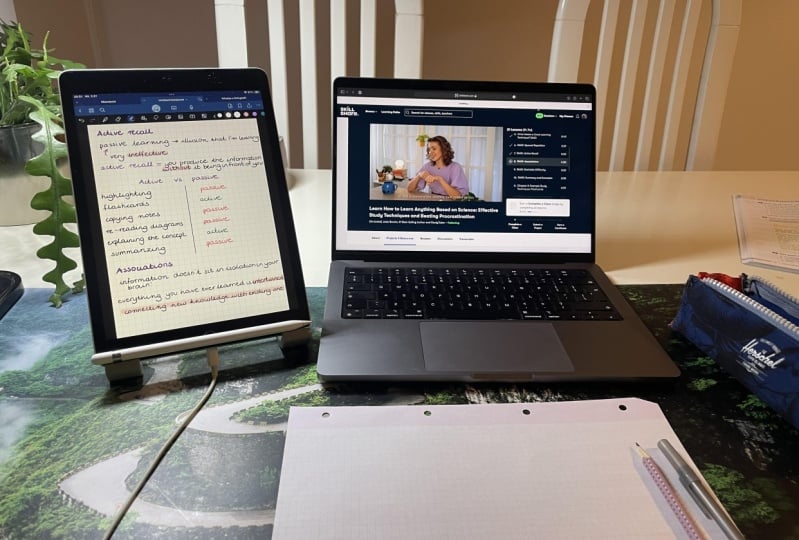
is active recall. Active recall is any
study technique where you produce the information without
it being in front of you. It's active because you are actively pulling this
information out of your brain. You are forcing yourself
to see what you know. A little neuro science lesson. So in the brain, the way
that we learn to store knowledge is through a process called the long
term potentiation. The idea is that when
you're learning something, you are building connections between all the
neurons in your brain. Every time you ask
yourself to think this thought or go
over this knowledge, again, you are making
the same neurons fire. The more they fire, the more connections are built
between them so that it's actually even easier for them to fire again
in the future. Literally, the more you make yourself think
about something, the easier it is to think
about it next time. There's this amazing
metaphor which says that your brain is
like an open field. Initially, it's kind of hard
to tread your way through any path on this field because there's just
all this tall grass. But eventually as you start to walk the same path
again and again, you're treading
down this grass and you're making it an
easier path to walk. Your brain is the same. The more you force the same
neurons to fire again, the easier it is to make them fire in the same
pathway the next time. So if a revision
technique is hard, if it's making you think, if it's making you pull
out this knowledge, then you are strengthening these neurons needed to
access this information. You're making it even
easier to access next time. But what is an active versus a passive
revision technique? I'm going to go through some of the common study techniques. And every time I want you to pause the video
and ask yourself, is this active or passive, and why highlighting
the textbook? This technique is
passive because you're not having to actively pull
information from your brain. All the information
is just given to you asking yourself
questions from flashcards. This is active
because you're using a prompt to help you generate
the answer from your brain. What about copying
notes from class? This is passive because
you're not really thinking, you might be listening
to the teacher, but you're just being given
information and you're mindlessly copying
rereading diagrams. This is generally passive because it doesn't
require you to pull information from your brain
unless it's a graph where you have to fill in the blanks explaining the
concept to a friend. This is definitely an active technique because
you're relying on your existing knowledge and understanding to explain
it to your friend. And you might even
have to tailor your explanation based
on that knowledge level. This is a great way to study and we're going to look into
it a bit more later. A comprehensive 58 page
meta analysis investigating the efficacy of different
study techniques concluded that these
passive methods, like highlighting, rereading, are all low utility methods. This means you can
still use them, but it's really important to be aware that they're not the most effective and that
you shouldn't be putting all your study time
into these techniques. Hopefully, you're starting to
see the distinction between a passive learning technique and active learning technique. And also starting to reflect on your own study methods and maybe how you
can improve them. Today's exercise is for you to do a bit of
self reflection. Spend just 10 minutes looking back at all the study methods
you've used recently. Have you been rereading, have you been using flashcards? Have you not really had a
strategy at all which is okay, Take the time to
write out a list of every technique that you think you've used to learn
something recently. Go through and mark them with passive or active
with a highlighter. And then step back and
look at your list. Are most of your study
techniques passive or active? This is incredibly
useful to understand where you're at right now
And also to look back, hopefully, at the
end of the course and realize how much
you've improved. Make sure to upload your
list to help inspire others. Ideally, you want to be using as many active
techniques as possible, even if they feel hard, they're just more effective
as hard as they are. Techniques which are taking
information out of your brain rather than cramming it
in are always preferable.
8. SAAD: Associations: Imagine you're at a party, your friend introduces
someone new, You smile at them, you nod and you get ready for the
make or break question. What is your name?
You're mentally cursing yourself because
as soon as you ask this, you've entered into
this invisible contract to try and remember their name. But you're horrible
at remembering names. Charlotte, they say,
you can already feel yourself mentally
repeating this in your head. Charlotte. Charlotte.
Charlotte, Charlott, Charlotte. It's Charlotte. This
person's name is Charlotte. How hard can it be to
remember the name Charlotte? But before you know it,
you're enjoying yourself. You're swayed into the crowds. You're enjoying your night. You're not engaging in
your mental relay anymore. You're getting to
know other people. But then the party ends and
you bump into her again, and you realize for
the life of you, you literally cannot
remember her name. Was it Catherine? Oh,
Claire or Chantelle or Lou. You realize that you
have absolutely no idea and you know what
the solution is. Welcome to the second. In sad revision
techniques, associations. So in your brain information
doesn't sit in isolation. You don't have a section
of your brain which is reserved for
historical dates, a section of your brain
reserved to maths, equations, or a bunch of nerves labeled over here with
inorganic chemistry. Instead, everything
you've ever learned is intertwined in one ingenious
mess of knowledge. Some people think that
learning knowledge, which is distinctly different from what you've
already looked at, will save you from
getting confused, when in reality the
most powerful thing you can do is to connect this new knowledge
to what you already know to make associations
between them. So let's reverse to the party. When the girl at the party
reveals her name to you, You have maybe 3 seconds in your mind to try and associate her name to
something that you do know. Do you know any Charlotte? Is there a famous person that
you know called Charlotte? Does Charlotte make you think of your neighbor? Of your dog? What does Charlotte mean to you? Whatever it is, make a
conscious association. Spend that tiny moment
really thinking about the fact that this person looks like your
neighbor Charlotte. Or think to yourself, oh yeah, this name really suits her. You're creating a
rich retrieval cue through connecting
something new, like a new person, a new name to something that
you do already know. If you do this,
then at the end of the party when you come
back to this person, yes, the name might not
come to you instantly. But suddenly maybe you're thinking how their
hair color is a little bit different
to your neighbor, your neighbor Charlotte. And very retrieval
cue you chose. It would just help jumpstart your memory to get that name. The association was a success. So what does this little
party tangent show you? It shows you that
memory requires a base. You can't expect to learn
a brand new concept without some kind of
foundation to support it. Foundational
material is actually the backbone of any new content because it helps you have a mental organizational
structure in your brain. But it is also worth noting that the association
you choose matters. You don't want to suddenly
call that person the name of your dog because you thought that they had similar
looking hair. Just like you don't
want to be in an exam thinking about Shrek. If you were really trying
to think about evolution, make sure you spent some time trying to make the best links possible between
existing classes, notes in your textbook, and really help enrich your base every time you
learn new knowledge. The best way you can do
this every single day at school is that when you're
learning new knowledge, scribble down in your book
what this reminds you of. Does today's topic connect with something you've
already learned? Does it remind you of a class that you had like a year ago? I try and do this
at university all the time thinking
about other courses. This relates to other classes, something that I remember
my teacher saying, and this really helps
put something new in the context of everything
else that you already know. Today's exercise
is to do this for a piece of homework or study
material that you have. Rather than directly learning it or directly completing
the activity, take some time to scribble all around the paper things
that this reminds you of. Make some links
between this topic and other topics
that you've learned. Have you seen a documentary on a similar topic or had a conversation recently
that relates to this? Good luck making
your associations. And remember to
upload your resource as soon as you finish it. So just to recap, our miserable little revision is starting to look a
bit more spaced, a little bit more
active and associated. Right, we're getting there, in the next episode
we'll look at the final letter of the sad
revision technique framework.
9. SAAD: Desirable Difficulty: We all know the feeling of
opening an exam paper and realizing that we know the
answers to nothing equally. We all know what it feels like when we fully
understand a topic. And going over it kind of feels like a waste of time
because you know it. And what is so much harder is to find a sweet
spot in the middle. To take on topics that
are challenging and that force us to learn while
not overwhelming us. And forcing us to crack the final part of
the sad framework to test whether your
study techniques are effective or not is desirable. Difficulty. It's about doing activities which are hard
enough that they challenge you, but not so hard that you break. Picture your studies
like this elastic band, the way to study smarter, not harder to always have the elastic band stretched
as much as possible. If you're always doing
something too easy, the elastic band
is kind of weak. You're wasting your
time to relax. It's not getting anywhere
but stretch it too much. Skip the learned phase. Go straight to the apply
phase and it snaps. So you've got to look
for the sweet spot, the desirable difficulty. We don't want any burnout. When I was doing my level exams, I absolutely hated
organic chemistry. I hated it because
I found it so hard. I was the most professional procrastinator that
you can imagine. I would convince myself
that I needed to revise biology more,
which was a lie. Or I'd say that I'd always get round to studying the
harder topics later. So it would be closer
to the exam, You know, more effective siler, that time would never
come Desirable. Difficulty is about
self awareness. It's a check in moment with
yourself whenever you're studying to ask how am I
actually finding this? If it's too easy, amazing, dare yourself to try
the harder stuff. Maybe you're ready to move from the understanding phase of
learning to applying it. Or if you're trying
that past paper and it's so bloody hard, then take a step back. Maybe you're not ready for it
yet, ask a friend for help. Watch a video to help you understand. Go ask your teacher. But just notice that that
was not desirably difficult. It was just too difficult. The point is to just spend your revision time as
effectively as possible. And that means tailoring it
to the level that you're at. Today's exercise is a
journaling activity, and you can find the questions linked in the resources
for the course. I want you to get honest with yourself about
your study habits. Do you tend to avoid
subjects which are hard? If so, why do you
only tend to study the subjects which you
find easy or enjoy? And if so, why? How does it make
you feel when you have to study something
really challenging? How does it make you feel when you don't
understand something? Do you keep going at it or
do you just want to stop? How can you come up
with strategies to seek help when you're in that
really challenged phase, such as asking friends for help or speaking
to your teachers. I know it's so easy to just
listen to these questions and not actually take the time to do the journaling exercise. But I promise you this is
just so helpful to understand your own study habits
and become more aware of what you tend to
do when things get hard. This will help you stay in that zone of
desirable difficulty. So there we have it. Here are four questions you can ask yourself every single
time you're studying. Are we doing miserable
revision or are we doing sad revision
that is spaced, that is active, that is associated to your
foundational knowledge, and that is desirably difficult?
10. SAAD: Summary and Examples: Guys, you made it. You now know the basics of what makes the study
technique effective, or not based on the
science of learning. Before you watch the
rest of the video, stop for a second
and ask yourself, can you remember what
S A AD stands for? Hopefully you can
remember them all. But if not, here they are. Again, you've got
space repetition. You've got active recall, association and
desirable difficulty. Before we jump into
the next section, where we're going to dig into some amazing example
study techniques. First, we're going to look
at an example student. And look at their study plan. And basically ask
ourselves, is this sad? Is it fulfilling all of these four elements that make a study technique
effective or not? Give it a lesson,
and see if he's working smarter or just harder. Hi everyone, My name is Gabriel, and today I'm going
to walk you through and how I'm studying
for my history M. So I have a lot of historical dates to
learn for my SXM, and it feels a little bit overwhelming to remember
all these different facts. So I decided to make it easier
for myself, start early, and also break it
down so it's easier to remember all the
different dates and events. My main strategy is
to make flash cards. I have a question on one side and the
answer on the other. For example, this one says, when did World War Two end? And if I turn around, it has
a date, September 2, 1945. I'm going to use them to test myself until I've realized
that I've actually learned. And don't need to keep
repeating the questions. I'm feeling super
motivated today, so I want to study
the entire day, but I know that's not
the most productive way. So instead of just
studying the entire day, I'm going to study
for a little bit. But use the rest of my
motivation to actually make a timetable for how my study is going to
go for the next weeks. How I'm going to
go about this is that I'm going to
schedule time on my calendar to go over the deck with all my
flash card questions. I know that unfortunately, I'm not going to be motivated all the time. And
that's normal, right? So I'm going to
plan ahead and help future Gabriel in how
to properly study. So I'm slotting all
these different times so I don't have to
count on my motivation. I can also count on my
planning and go over my deck. I know that studying
a little bit consistently is better than trying to do everything I want. So I study my flash card today. I'm going to spend 15
minutes doing them tomorrow. I'll do it again in
four days a week. And then in two weeks,
hopefully in two weeks, I have learned the
important facts and dates and I'll start
writing practice exams. I'll try to link it
all together using the prompt and tied together all the information
that I've learned. And that's my study plan
for my history exam.
11. Chapter 2: Example Study Techniques: Flashcards: Hello everyone. Welcome back and welcome to chapter
two. You made it. In this section, we're looking at the real study techniques that you can apply from today onwards to improve
your study life. But before we get into it, can you remember
the three stages of studying from chapter one? Just pause this
video for a second. Remember them to yourself,
so we have understanding, we have remembering or learning. And then applying
today's study technique gets at this middle
part of remembering. We're going to be
learning how to use flash cards before we jump in. What was the name of the
four letter acronym we used to evaluate whether study techniques are
effective or not? Today we're not only going to look at what flash cards are, but also why they are. Definitely a sad
revision technique. So what are flash cards? Flash cards are small
little note cards. They can be physical or digital, and they're used to help
you memorize content. One side of the flash card
has a question or a prompt, and the other side
has the answer. It's as simple as that. For example, if I wanted
to learn what are the three types of ATP
synthesis reactions, then I could write this on the one side of the flash cards. Maybe even draw myself little things to visualize
and help give me a cue. I can answer that
question to myself in my head and then turn it around and I've
got the answer there. So how do you make flash cards? Flash cards are
super easy to make and there are two main
ways you can do it. Firstly, you have
physical flash cards. This is an opportunity for my guilty pleasure,
stationary shopping. You get to go to
the shop and buy yourself these cute
pocket sized cards. Or if you can't find
any in the shop, you can make them
with paper or card. You can just cut them
into little rectangles. And then you take
your class notes or your mark scheme
or your textbook, and you summarize just the essential information
onto these cards. The more effort you put
into forming the questions, the more your brain
is working and the more effective
your revision will be. Or the second way is you can
make digital flash cards. There are so many
amazing apps nowadays, but I really like Thanke or Quizlet the same as with
your physical flash cards. You write down questions or things that you want
to test yourself on. But the beauty of
digital platforms is they'll often have space
repetition built into it. The platform will track whether you get a question
right or wrong, and then time when
it should show you it again based on
space repetition. So if you get something wrong, it knows, okay, cool. I've got to show her
this question again maybe tomorrow or as
soon as possible to get her memory back up to 100% But if you keep getting
the question right, then you don't need
to review it for maybe a week or two weeks. So using these tools is really effective to
make sure you're reviewing the information at the crucial moments
of your forgetting, but the real tea. So flashcards are one of
the most commonly used, but commonly abused, study
techniques possible. I remember the first few
years that I used them, I would just copy
up my class notes. Like my pretty class notes, I would just spend time writing them again
on my flash cards. Flash cards shouldn't
be an opportunity just to write up notes
that you already have, because this becomes
passive learning. Instead, flash cards
should be three things. Short, meaningful,
and connected. Short as in short. Short as in a few words, maximum on a flash card, as in no long sentences. No big explanations. Not something that you could
just get in your textbook. Otherwise you might as well
just go reread your notes. Secondly, flashcards are all
about active engagement. There should be an opportunity
for you to fill in the blanks or ask
yourself a question, but just really be trying to drag information
from your brain. And thirdly, they should
be connected so you can use diagrams from
previous classes. You can make links
to pass information. And especially if you're drawing yourself these
pictures and diagrams. It should make it more engaging to both make my flashcards shorter and to involve more of these active filling
in the blanks. I adopted a flash card language made of various
intuitive symbols. Doing something like this
is a great way to force your brain to say aloud
what the symbols mean. And generally increases
the active recall element. For example, rather
than saying increases, you can draw an arrow up. Rather than saying decreases, you can draw an arrow
down bigger than, less than you have
these symbols. And I stole this
thing from maths. Where when you say therefore you do these three dots
in a triangle shape, you can literally come up
with whatever you want to, to have your own
flash card language. But the more effort you're
putting into personalizing it, the more effective it will be. So why are flash
cards so effective? Let's look at the sad framework. So firstly, space repetition. Flash cards are one of
the easiest ways to review information at
set intervals over time. And especially if
you're using one of the digital platforms
like Anke or Quizlet. Then it'll actually let you know when you should
be going over it. Again, active recall why
are flash cards so much better than passively rereading your notes or going
over the textbook? It's because you're actively
having to answer questions and drag that information
from your brain association. Especially when you're asking yourself questions which link topics or make associations
between past classes. Then you're really leveraging
this idea of building on your foundational knowledge
and desirable difficulty. Generally, with flash cards
you have to actively think. You have to be
answering questions. You have to be forcing yourself to remember
these answers, which can be quite hard. And a lot of the time, this is a desirably difficult technique. The questions should be
challenging enough that you really have to think
in order to complete them. But accessible enough so that
you can actually get them done before advancing
to the next video. Your exercise for today
is to try and turn the points from today's
video into flash cards. What questions can
you ask yourself to summarize the main
points from today? You have to ask yourself, what do you want to remember? How can you use the fewest words possible on your flashcards? Can you set up an anche
or a quizlet account? How can you practice creating flash card language to simplify everything
as much as possible? Be sure to upload some
photos of your flashcards or a link to your
flash card deck to help out other students. See for the next technique,
self explanation.
12. Self-Explanation and Teaching: If you've ever found yourself
talking to yourself, then this one is for
you, my friends. Maybe you're not just crazy,
you're actually smart. So self explanation or teaching a friend is basically where you explain a topic to prove
that you understand it. Be able to take a
topic and summarize all the steps in between is
such a good way to realize. If you actually understand it, you so quickly realize the
gaps in your knowledge, especially if a friend
is asking you questions or pointing out these
gaps. So how do you do it? Self explanation is
mainly a verbal activity. One easy way to do this
every day is after reading a page in your textbook or after finishing a lesson. Just take 5 minutes to explain out loud what
you just learned. You can even record yourself
so that you can play it back and notice if
there were any gaps. You can correct yourself
when necessary. This process is brutal
because it forces you to summarize just the key information you have
to ask yourself, clarifying questions to make sure that you
understand it enough, but it is one of the quickest
ways to work out what you actually know and then
improve on what you don't. For example, if I was learning how to make effective
flash cards, maybe I could explain to myself what I learned from
the previous episode. I could take a few
minutes and just talk to myself in
my room being like, okay, yeah, flash
cards are this thing. I have a piece of
paper on one side, I'm writing myself a question. On the other side, I'm
writing down the answer, and I'm making sure that it's sure it's meaningful,
it's connected. And if I can't really explain
how to make a flash card, then maybe I can go back and
I can rewatch the video. As for teaching others, this is as simple as it sounds. Find a friend, or
a family member, or even your dog and just try and teach them whatever
concept you've been learning. The beauty of this compared
to just self explanation is that the other person might
ask clarifying questions. For example, your
classmate may have very different
existing knowledge to your six year old sister. And being able to break down
the core of the subject for different audiences really
proves that you understand it. So how can you practically implement this in your
day to day study life? Firstly, anytime you
read a new resource, a new bit of the textbook, you go over your notes, Just stop for a second
and try and re, explain it back to yourself. And if you're struggling
to put it into words, then it probably means you
don't really know it yet. That means you can
go back over it. You can ask questions, you can rewatch the video, doing whatever you can until you can flawlessly say it out loud. And secondly, just tell your parents and your friends what kind of things
you're learning. Force yourself to explain what you did at school that day. It might sound really overkill. It might sound kind of boring. But I promise you these things, like making them part of
your habits, your routine, will help you with your
learning before we move on, it's so important to keep coming back to this sad framework. To really just compound. Why are these techniques
effective or not? Take a moment, pause the video, and go back to that framework
and just have a think. Why might self
explanation or teaching be a beneficial technique? We've got space repetition. This activity can be easily
repeated again and again. For example, I could explain
the same concept for myself the day that I've
learnt it in two days, four days after a week after. I can explain the same concept
to my dog in another week. Why not? This is
an amazing example of active recall because you're really having
to pull it out your brain without cues
as you're explaining, You'll probably be
building on a lot of existing knowledge or even making links to the knowledge
of the other person. This will really strengthen the concept via all
the connections. And finally, the
ability to explain a topic to all sorts of people. Whether it's your
friend or a parent that makes this a
desirably difficult task. You can always challenge
yourself more with someone who has less
prior knowledge. When was the last time you
assumed you knew something? And the second someone
asked you to explain it, you realized that you didn't
really know it at all. Hopefully, now you can see the
value of self explanation. I dare you to end this video and before
you do anything else, to stop for a second and
explain it back to yourself. To explain the key ideas. And just ask why is this
valuable to my study process? See you in the next episode.
13. Blurting and Active Recall: Welcome to blurting, which is my personal
favorite study technique, to not only test
my understanding, but also to help me
remember new content. So if you thought that
blurting was your bestie entering the room and
revealing some hot gossip, then I'm afraid you're wrong. Blurting is a study technique
which mainly uses the second in sad revision techniques
which is active recall. The idea is that
rather than stuffing your head full of as much
information as possible, you are actively trying to take that information out of your
brain and put it on paper. And that helps you
remember it more. So how do you do it As you take a topic that
you're trying to learn, such as to one
available biology, you write down a few prompts of many topics that you
need to remember. These can be questions or subheadings,
processes, or diagram. You then take a blank piece of paper and you use
your prompts to write down as much as you can remember from the
topic as possible. All from memory. Every diagram, every process, every
argument, even book quotes. If you're studying
English literature, the prompts are there to
help guide your thinking. But most of the knowledge should be pulled
from your brain. Without too much
help, you can go into as much detail as possible
and literally just write and write and
write for a few minutes until you cannot remember
anything else that's relevant. When you've blurted out as
much knowledge as possible, get out your class notes
or your textbook again and cross compare what did you get right, what
did you get wrong? You can use a highlighter to go through and make a note
of what you got wrong. And then you can use all of these highlighted points
to make new flashcards. Or you can even make a study plan to spend more time going over these points in the
space of just a few minutes. You've not only tested your whole knowledge
on the subject, but you also know exactly which areas you need
to focus on more. This is why blurting is just one of my
favorite techniques. It is so time effective. Spending literally
just 10 minutes, blurting is so much
more effective than passively highlighting
for 10 hours. So why is it effective? Again, take a moment,
pause the video, and really question yourself
using this sad framework. Why does blurting work?
Space repetition? Just like with self
explanation and teaching, you can easily do blurting at regular intervals to make sure
you're getting your memory back up to 100% Active recall is the foundation
of this technique, no answers are given to you, so you have to actively take that information
out of your brain. When blurting,
you're often making associations between that
topic or that chapter, and that's helping you
better understand it. And honestly blurting
is not easy. It takes so much. However,
because it's so difficult, it is so effective. It's such a good way to
work smarter or harder. For today's activity, look at all the subjects that you want to improve
the knowledge of. Maybe you have an end of
chapter test coming up. Maybe you know that
your knowledge of this chapter isn't that good. Spend 5 minutes creating clear
prompts for that subject. Then spend 10 minutes blurting. Use these cues to
write down as much as you can from that topic
that you can remember. And then go through and see
the gaps in your knowledge. Upload your blurt
here as evidence and inspire others to go find
the gaps in their knowledge.
14. Past Papers and Testing: What the best way to learn
about exam format is to steal the exam papers just to
do past exam questions. This study technique is so over, you don't even really think
of it as a study technique, right, Like oh, doing
past paper questions. But it's so useful, it is the best way to practice the apply stage of studying. After you've understood the
content, you've memorized it, you should be applying
it to questions, because that's what's going
to happen in your exam. To use this study technique, you can go on websites like your exam board and
download your past papers, such as the QA, a level biology paper from 2022. You can print the paper or do the questions
from your device, but in order to do the past
papers most effectively, I recommend doing a few things. So to be using past papers
as natural study technique, I recommend breaking down the process into before
you do the question, during the questions, after, before you start the question, pay attention to the action word that they're asking of you. You can annotate the past paper. So are they asking
you to compare, to analyze, to
describe, or explain? Start noticing how
these action words affect what the examiner
is looking for. And then before you
answer the question, take the time to write down in the margins any topic that you think might be
relevant to the question. This is especially useful when the question is trying to
hide what it's asking. For example, I
remember they used to do this all the
time in biology, it would be a question about some new enzyme you've never heard before with
a super long name. But they weren't actually
asking you about enzymes, they were asking you protein. And there's like a
whole chapter in a level biology about protein, just making that extra
effort before you fall into the trap of looking more broadly at all the topics
you know and thinking, okay, what actually
might apply here? For example, if it's an
English literature question about a certain character, then really questioning
what other themes are relevant to this character
might also be helpful. Now we've taken the time to get familiar
with the question. We kind of get what
they want from us. We know the topics
we should apply. We've looked at the action word, We've thought about what kind
of answer that might need. Now it's time to get into the
habit of an exam mindset. I really recommend
timing yourself to get into the habit of
working under pressure. Do your best not to look at
your notes or to get out too many other resources so that you're actually testing
your real knowledge. The idea is to make the most similar conditions to
how you would be in an exam and now after you've
answered the questions. This stage to me is one of
the defining features of students who do really well in exams versus those that don't. Is taking the time to go
through that mark scheme, to really question why you got things wrong and then
do something about it. Why was it you lost marks? Was it an issue with how
you worded your answer? Did you just not know the
content well enough or were you actually not
specific and detailed enough? All of these are so okay, right. Like it's so fine to lose
marks and especially when you're just studying in
your room doing questions, if anything, it's better
to lose marks now so that you can know how
to improve the later. Take the time to
write down next to every single question that you got wrong, why it went wrong. And then tally it up at the end. Look for patterns in
your general paper. Do you generally lose marks because you don't understand
the content enough? Or do you lose marks
because you're not specific enough to what
the mark scheme needs? Whatever predominant
pattern there is, you can take a different
course of action to remedy it. For example, one of
my teachers at school actually made us do this
for every single paper. I found this that
she's so tedious. I hated doing it so much. But it was through this process that I
realized there were some mini topics I just
did not understand at all. And I think if I hadn't taken the time to go back
through that paper, I never would have
realized that. I then set up these meetings
with my teacher once a week where I would just go through topics that
I didn't understand, that I kept losing marks on. And that really
increased my confidence when I went into those exams. Because I knew that all these questions I got
wrong in the past, I eventually have worked through and gotten
right in the end. So take the time. Do your past papers, but treat them as
a study technique. Don't just do the
question really think. How can I make this process
the most effective for me? Once again, pause this
video and have a think. Why is this an effective
technique based off of the sad framework
space repetition? You can easily do this
at repeated intervals. And especially with papers, you can actually
do the same paper at different points
across the year, especially questions
you got wrong, like keep doing them until
eventually you get them right. Hopefully you're not
using your notes, which really means
you have to engage your memory and
use active recall. You're making constant
links between the given question and
your past knowledge. So this is a great way
to use association. And finally, past
papers can be hard, but they can also be
the perfect level of desirable difficulty that you need at this stage of
your learning process.
15. How to Beat Procrastination: So what if you
know how to study, you know what you need to do. But somehow every single time you bring yourself
to do the work, you just find something
better to do. You find yourself
replying to e mails. Or suddenly you feel the need
to check in on your friend, Or suddenly you're just
finding 1 million other tasks which are now more
important than studying. In this episode,
we're talking about the evil genius, that
is procrastination. Sometimes starting work
is the hardest part. Here are five
practical tips to beat procrastination and
Ashley get studying. Number one, leave out all your study resources ready to use before
you go to bed. Whichever space that you
normally use to study, just try and tidy it away. And leave out
whichever resources you need to get
started the next day. Leave out just the essentials like textbooks or flashcards, and try and tidy away anything which could be a distraction, like a video game
controller or your phone. Suddenly you've reduced
a lot of friction. Your work set up is
exactly how you need it, and it's a lot harder to say no when it's laid
out in front of you. Secondly, welcome to
the Pomadori Technique. This literally saves my life on a daily basis at university. This is one of the best known
productivity techniques. All you have to do is commit
to studying for 25 minutes, not a whole day of studying, Not an hour, just 25 minutes. You set yourself a
timer for 25 minutes. And you commit to just doing
one task with full focus. So whether that is going over a flash card deck or going
over your class notes, all you have to do is
do it for 25 minutes. After that, you get a five
minute break guaranteed. And the beauty of this
technique is that often the hardest part is just
starting most of the time. Once you've gotten to
that 25 minute mark, it's not that hard
to keep going. If you find yourself
constantly procrastinating, try dividing your time up into these 25 minute
intervals and keep giving yourself breaks
will make to keep going. Number three, create a
schedule for your time. I can't emphasize enough how absolutely life
changing this is. Sometimes when you give yourself too much freedom in a day, you don't really know what
to do with your time. It can feel so stressful and so overwhelming
when you know that you have a lot of things
that you need to do and you don't really
know how to fit them in. But whether it's on
your Google calendar, or in a journal,
or in a notebook, write down a time to time
plan of what you'll do when and try and make it as
specific as possible to, rather than just
study geography, write which topic,
which question, which revision
method you'll use. How will you study it? Where will you study
it? Suddenly when 11:00 A.M. rolls around, you actually know
exactly what you're doing and all that
choice fatigue is gone none before
accountability partners choose someone who
ideally you like, but don't get fully
distracted by ideally, even choose someone
who you respect and maybe seek approval of
and then study with them. I was avoiding writing my
university dissertation for so long and I had this crisis
moment and I was like, Jade, you are just
procrastinating. You actually need
to get this done. And so what I did
was I went down, I scrolled through the list of people in my class
and I was like, who can I choose to be my
accountability partner? Who can I commit to studying with that's gonna help
me get this done? I chose a classmate who
I don't know super well, but who I really respect. And now once a week, we go and study
for about 4 hours, purely on our dissertations. And I just dread coming to these sessions if I
haven't completed anything, because I really respect
his opinion of me. And this has changed my life in terms of staying
accountable to my goals. If you're heavily influenced
by the opinions of others, then you can hack that and actually use it
as a tool to beat propascination and finally
set yourself mini deadlines. Some people are only motivated
by external sources, which is amazing. That's fine. Especially a lot of my
neurodivergent friends, they literally will only be motivated by that deadline and do it when they
have to do it. If you're someone who
normally crams for an exam, how can you create
that same sense of urgency before the exam itself? Set yourself these
mini deadlines and get people to hold you
accountable to them. For example, every time that you have an end of
chapter test at school, treat it like something that
matters. Study hard for it. Do your best. Breaking
down these big, scary exam deadlines into much smaller mini deadlines makes it so much
more manageable. So if you're watching
this video today and you know that you need to
get some schoolwork done, then this is your invitation
to go get it done. The more you practice the
study skills in this course, including beating
procrastination, the easier it will get. But at the start, when
it's really hard, you just have to
choose to do it.
16. Chapter 3: Motivation: Well hey guys, and welcome back. And you made it to the final
chapter of the course. I'm honestly so proud of
you. You're smashing it. And now we're getting into the nitty gritty
stuff of motivation. Damn it, is one thing
to know how to study, it is another thing
to want to study. We all know that
feeling of having an exam in a week and knowing
that we should be studying, and yet feeling absolutely
zero motivation to do anything other than
watch Youtube videos. In this mini chapter,
we're going to talk about that essential bridge between you and getting the
grades that you want. Motivation and how are
we going to do this? First, we're going to break down motivation into the two types, intrinsic and
extrinsic motivation. Secondly, we're going to look at some of the main reasons why you might not be motivated
according to research. And then we're going to work out what motivates you to study. And maybe consider how we can create systems and habits in your life to help you sustain that motivation even
when it starts to fade. Seeing as you're
watching this and you got to this
point of the course, I have a pretty good
feeling that you're more motivated than
the average person. So I think it's a good sign.
17. Intrinsic vs Extrinsic Motivation: Extrinsic motivation
is attached to an external goal or a reward
outside of ourselves. For example, I want to get good grades because I want to
get into Oxford University, even though they actually
rejected me. But it's fine. We move, I want to get good grades because I want
to make my parents happy. No matter what you're looking at a reward outside yourself. And you're really motivated to complete this task in
order to get that. However, intrinsic
motivation comes from this internal desire
to do the work itself. You love the process, You actually like studying
this thing to you. Studying this subject might
be inherently interesting. For example, some sources of intrinsic motivation
may include, I want to spend time
studying because I genuinely love
learning about this. I want to study hard things because I love the
feeling of challenging myself and proving to myself that I'm capable
of doing these things. I want to go study because I actually really
enjoy putting on my low fi playlist and just sitting there with my
beats and my herbal tea. And generally, this intrinsic motivation is what
we're striving for. We want to like the process. It's proven to be a better
motivator in the long run. To help you get to your goals, we're going to have a look at a student's
motivations to study. And I would love you
to think to yourself. Try and categorize
his motivations into intrinsic or
extrinsic motivations. Okay, I want to study my data
science model really well, because I want to get a well paid job in software
engineering. I want you to study
psychology really well because I love learning about my relationship
with my friends. I want to study
geography because it's so much fun just
listening to my teacher. I want to study
entrepreneurship. So my parents will be proud
of me for being successful. Oh my God, you smash that. Okay, So now that
you're more clear on the distinction
between intrinsic and extrinsic motivation, it's time to apply
it to yourself. What motivates you and what
kind of motivation is it? For today's exercise, write down ten things that
motivate you to study. I know ten might
sound like a lot, but I promise you really getting clear on why you're
studying certain subjects, why you want to get
to these goals. It's super helpful
to keep you going in these moments where it
might get challenging. Are you striving to be
a Dr. in the future? Can you identify a topic within this subject that
you genuinely enjoy? Once you've written
down this list of ten things that
motivates you, try and categorize them into intrinsic versus
extrinsic motivation. And if you notice that most of your sources of
motivation are extrinsic, can you maybe question how you can enjoy the process
of studying more? Maybe you can create
a ritual out of it, like always having
a certain drink. Maybe you can try studying with friends or in a new setting. Hopefully, this whole
process makes you more self aware about why you're
trying so hard.
18. Why Aren't You Motivated?: Can I ask you a question? What do you think is
the biggest predictor of whether a student will do
well in a subject or not? Based on all this cognitive
science research, what is the linchpin
of student success? Self belief? Can you believe students self concepts about
their attainment in a subject are the
most important predictor of academic success, even more than
existing achievement. In all these incredible
theories of motivation, the absolute core of it is whether or not you think
that you will be successful. The underlying feature of success is students
self concept, which is informed
by self belief. Which basically means
we want to work hard when we perceive
ourselves as capable. We want to work hard when
we care less about failure. We want to work hard when
we think we can do well. So why are we
sometimes unmotivated? All of the motivation
literature points to these main three reasons as to why you might be
unmotivated to study. The first is our
fear of failure. This is called
failure avoidance. I swear there is nothing
scarier in this world than trying really hard at
something and then failing. It can often feel
like that failure is indicative of our self
worth and our abilities. It's so much easier not to try. When we don't try, we kind of
give ourselves this excuse. Oh yeah, of course
I didn't do well on result day because I just
didn't really try that hard. It kind of lets us
off the hook and makes us believe that
if we had tried harder, then maybe we would
have done better. So maybe if you're really
unmotivated to learn, I dare you to ask yourself, are you just scared of failing? Are you not trying
because you're terrified? That caring about school will make failure
hurt even more. The second reason we often feel unmotivated is something
called learned helplessness. It's when we don't want
to engage in tasks because we believe that
our effort is futile. Like no matter what we
do, failure is imminent. You literally believe that the outcomes are
beyond your control. That no matter how
hard you study, no matter how hard you try, the outcome will be the same. We'll dig more into this
mindset in the next episode. But generally, if you
believe that you're just naturally not good at something,
then you'll try less. Do you think it's futile?
The first step to moving beyond learned helplessness is to become aware of your beliefs. The beauty of this
is that you can then start to write
down things like, I am in control of my education. It is up to me to improve. I can improve, I am
capable of improving. And thirdly, conformity, our social life and our friends really
affect how we work. There's so much research
into the power of social environments to motivate us or to prevent us from trying. When I was at school
around year nine, I had a group of friends
who really weren't that interested in studying
or doing well at school. They generally
preferred to spend class chatting or like
not really focusing, catching up about the
weekend, whatever. And obviously, they were amazing people and
I don't blame them. But I realized that I generally
started to study less. I just paid less
attention in class. I really wanted to be like them. So I thought it was
cooler to try less, to care less about school. Over time, I realized that that's not
really what I wanted. My values and beliefs
with regards to studying were being changed by my friends
values and beliefs. If that resonates
with you as a reason why you might generally be
unmotivated about school, then I invite you to just question your
social environments. I invite you to question what you want to achieve and why. And maybe you have
a think about how the people in your life play into that and how they help
it, or maybe hinder it. And finally, one of
the main reasons you might be unmotivated that all the literature doesn't
talk about is circumstances. I really think this needs
to be talked about. More mental health hardship, navigating your social life with friends, relationships
with stress. There are family.
Things happening, like being a young person
can be so exhausting. Whether you need to earn
money to support your family, whether you're
trying to work out what you want to
do with your life. There are 1 million other
pressures beyond just school. Sometimes school
just doesn't feel like a priority and that's okay. It's important to recognize that you might be juggling a lot and to be proud of yourself no matter how you're
approaching school. Sounds like you. I just want to remind you that you can
always reach out to your school for things
like extenuating circumstances or extra
support if you need. Sometimes being unmotivated
is really justified. Now that we've looked at some of the suggested reasons why you might not be
motivated to study, it's time to reflect
on yourself, for today's exercise, really question why you might
not be motivated. Does it fit into any
of these reasons? Is it for other reasons? How can you both have
empathy with yourself and perhaps try and find new sources of motivation to keep you going? Feel free to upload your reflections if
you think it could be helpful for other students who are in a similar situation.
19. How to Cultivate a Growth Mindset: So apparently, the most
important factor to becoming motivated
is self belief. But maybe that sucks to here. If you actually don't believe
that you're good enough, maybe you've felt
yourself giving up on a question because you're just naturally not
a maths person. Maybe you've looked
at a science question and before you even try it, you're like, yeah, I would
just never get that. So rather than
putting in more work, you just blissfully
decide not to try. Welcome to the fixed
versus growth mindset. Revolutionary theory
was popularized by Carol Dweck in her book Mindset. A Fixed mindset is when you believe that your
abilities are fixed, you believe that some people are just naturally good at science, and if you aren't,
you just might as well not even bother. A fixed mindset is a recipe
for this low self belief. Of course, you just don't think you're going to do as well if you believe that you
have no chance For a while. I had a really fixed
mindset about maths. I just thought I
wasn't a math person. I would say it all the time. It would be silly
things like I'd go out to a restaurant and I'd get
the bill, and I'd be like, well, obviously I'm
using the calculator because my brain just doesn't work for
these kind of things. Even though if I really
wanted to and put, I probably could have
done that maths. Whenever a problem
came up in daily life, I would just give
it to someone else. But because of this, I
just wouldn't work as hard at maths because I felt
like it was hopeless. I was literally choosing not to improve because I
felt like I couldn't. What I want this
course to move you towards is something
called a growth mindset. This is the idea that everyone's competencies
are flexible. Anyone can be good at anything. I know it's hard to believe. Like Einstein said, it's
not that I'm so smart. It's just that I stay
with problems longer. The most powerful
insight to take away from growth
mindset is the word. Yet I am not good at this yet. I don't understand this yet. I haven't achieved
what I want to yet. But I can, and I
will, if I want to. Using the word yet changes
your mistakes from a part of your identity to just something that you can work
on and improve it, changes it to something active
and within your control. For today's exercise,
I'd love you to write down some of these
fixed beliefs you might have. Have you ever noticed yourself
saying something like, I'm just not naturally
good at this? Or wow, this person is
just such a wordy person. Write down as many of these
occasions as you can and then consciously write down five
phrases which combat it. Write down phrases using the
word yet so things like, I don't understand
flashbold memory yet, I don't really find
maths that easy yet. Taking the time to do this
on a regular basis is such a good way to start moving a fixed mindset to more
of a growth mindset. And why is this important? Little review question. What is the biggest factor
underlying motivation? The biggest factor underlying
motivation is self belief. The more self belief you have, the more growth
mindset you have, the more likely you
are to succeed.
20. What Motivates YOU to Study and Why?: Wow guys, you did such a
deep dive of motivation. We've looked at some
types of motivation, we've looked at reasons why
you might not be motivated. And finally, it's time to really interrogate what gets
you out of bed to study. Why'd you care? Why
are you trying? There's so much evidence to suggest that writing
down your motivations, writing down your goals, makes them so much more
likely to come true. So for today's episode, I want you to get
clear on your why. Why do you see yourself
in the future? How does studying and grades
play into that future? How can studying hard
now help you get there? One of my biggest goals as a teenager was to become a vet. I would spend literally
all my holidays and free time volunteering
in animal rescues, in kennels, in
cateries, in stables. I even volunteered at
London Zoo for two months, but I knew that becoming a vet required quite high grades. I knew that I would
have to study subjects which classically are difficult, like chemistry, math, biology. But what I did was I made
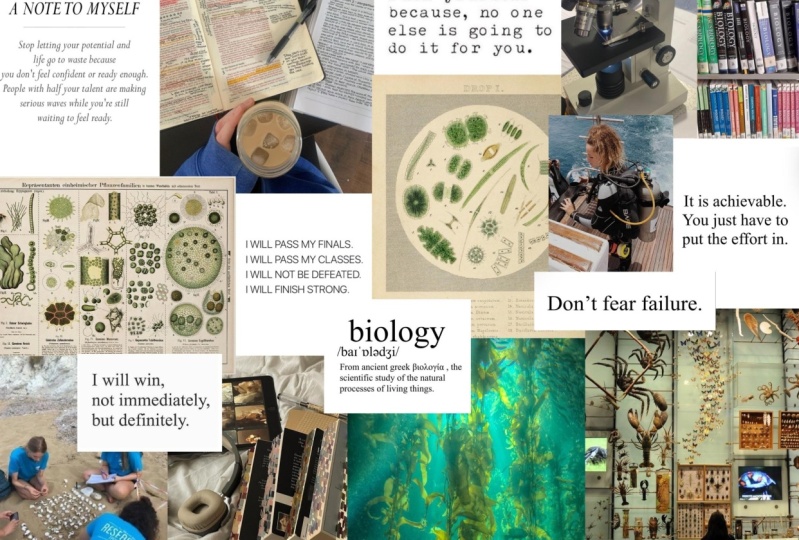
myself a vision board on my wall of everything
to do with being a vet. I wrote motivational quotes, I would affirm these
to my every day I got little post at notes
and wrote things like I am capable of
getting the grades, I need to become a vet. This really helped
work on my self belief to increase my motivation, especially because I came from a family where my parents
didn't go to university. If you don't necessarily
have this representation, then you have to be
part of working on your self belief and therefore increasing your motivation
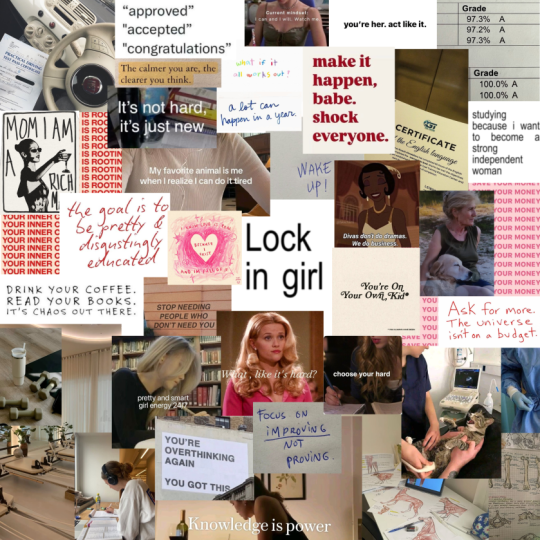
for your goals. So today's activity is to
make yourself a vision board. Include whatever
motivates you most, whether that is a career goal, you, when you're
looking really happy, you when you felt less
stressed because you were on top of your work
and didn't have to cram, Whatever is something that
you will look at and it'll help make you feel good about
the process of studying. Put it there. Put it somewhere where you can see it every day. Some of the affirmations
that I would repeat to myself when I was doing my
GCSEs were things like, I am worthy of being
successful and happy. I am capable of achieving
whatever I want to. I am so grateful
for my education and all the opportunities
presented to me. I am capable of becoming a vet. I am capable of completing my exams and not
getting too stressed. I used to write these
on posted notes and put them around my room. So if that helps you, I highly
recommend doing that too. If you make a pretty vision
board, please upload it. I would let you
die to see some of your dreams on your
walls or posted notes. Just please upload them. I'm so sure it's gonna help
us all stay motivated.
21. You Made It! Closing Moment: Wow, can you believe you
made it to this point? I just need to take a
moment to congratulate you for your dedication to your
own learning and growth. If you've been paying
attention the whole time, completing the exercises, showing up as you have been, you should be
feeling a little bit more confident in
your study journey. Studying takes practice,
it takes effort. And honestly, it might be worth returning to parts
of this course. If you ever feel like you need
to refresh your knowledge, make sure to upload as many of your resources
as possible to help motivate and inspire other students on
their study journey. You are an inspiration and I'm gladly proud of you
for making it this far. I just want to say that no
matter what grade you get, no matter what the future
holds, you are in love. Your grades don't
define who you are. Your work ethic and
your self belief does keep being your
proactive, wonderful self. The kind of person who makes it to the end of this course, and I'm so sure it'll work
out for you. You've got this. Good luck with it
all. For more advice, check out my book, the only
study guide you'll ever need, and my Youtube channel. And Jade of Jade,
you've got this guys. Bye.
 (UnJaded) Jade Bowler, #1 Best-Selling Author and StudyTuber