Transcripts
1. Introduction: If you've ever wanted
to learn about the 2 thousand year Art, Japanese calligraphy
and how it ties into being more mindful and
intentional in our data. Then this class is, are you Nice to meet you all? My name is Oreo cutoff. I've had the pleasure of being a student of Japanese
calligraphy for over 15 years and have been gifted that
calligraphy name, say SEM. I have learned that
survive practice and understanding of the principles
of Japanese calligraphy. It can teach us how to be more mindful and present
in the moment. In this class, we'll first
explore the history of Japanese calligraphy and how it ties into Japan's
three traditional arts. Well then go over the
five main principles of Japanese calligraphy
and understand how it guides us in
understanding how to be more present through a practice of
writing calligraphy. From there, we'll explore the creative flow state of Japanese calligraphy
called machine, which is mind and no mind. And then we'll wrap up with
understanding how Japanese calligraphy ties into
our overall lifestyle. For your class project, we move on to the
practice portion of Japanese calligraphy, where you will be
tasked with writing one of my favorite
Japanese characters that I think really
connects us with ourselves. Which means to feel. This five-day Japanese
calligraphy challenge, which is your class project. You will be writing every
single day for five days. And this will really serve
as a foundation of starting your Japanese
calligraphy journey. I hope to see you there.
2. Japan's Three Traditional Arts: Welcome to your class on Japanese calligraphy for
mindfulness and relaxation. Let's first start this class by exploring the traditional
Japanese arts. Japan has what we call the sun, which translates to Japan's
three traditional arts. These arts are rooted in 2
thousand years of practice. The principles of each art are said to show us how to
connect with ourselves. And concepts that you may have
heard such as Bobby Sabi, which equal each year
all parts of these arts. And it's through
these practices. Now we can understand what it means to understand
these concepts. So what are they? So you may be able to guess, because the three pictures here connect to the three arts. But they are Japanese
calligraphy, flower arrangements,
and tea ceremony. So these are what we
call Japan's three traditional arts or
dental son-in-law. What's really interesting about
these traditional arts is that we can see what it means by looking at how it's said
and written in Japanese. So here on this slide, you'll see that the three
traditional arts are listed. So calligraphy and Japanese is shoudl, flower arrangement. The second one is cuddle. And tea ceremony is subtle. And you'll see here that even if you don't
understand Japanese, the way that you write it, there's two characters
for each art, and the second
character is the same. So if you look, this isn't Deloitte in Japanese. And it's a really important
japanese character. Because what it means is it
means path, way, and journey. And so if we translate that, these arts actually mean the way of writing
is what shuttle is. And that's because
the first character, HSL, is the word for writing. And so this means that Japanese calligraphy
is the way of writing. Pharm arrangement or caudal, which is the second one. You'll see is the
way of flowers. And this is because COP, which is the first
character here, is the Japanese
character or flowers. And last but not least, saddle. It is the way of t because SOP, which is the first
character here, means T. I want everyone to take a moment to take a look at
these three arts. I always find it so fascinating how even within these words, if you take a look at
the meaning behind it, I feel as though it gives it a deeper sense of
what this art is. Like I mentioned though, is a really important
character in Japan. Because this character,
which means way and path, is something that reminds us that it is a journey
to understand, to practice, and to live a
life practicing these arts. And so it said that these
arts can provide us with the opportunity to understand how we want to shape
our life's journey.
3. Japanese Calligraphy Overview: So let's take a deep dive
into understanding shuttle, which is calligraphy, or as we just learned
the way of writing. There are three main components when it comes to calligraphy. There is a piece of paper, we have a brush and
you have sweet ink. And so at a very high level, Japanese calligraphy
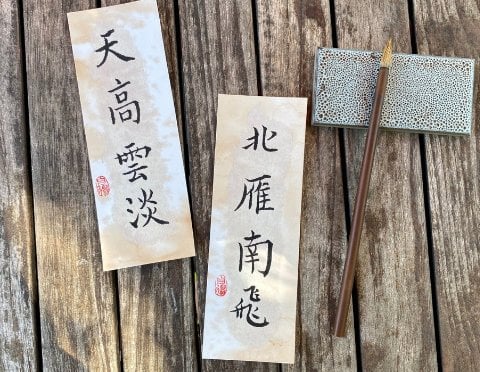
is the art of writing. Calligraphy. Using a Japanese
calligraphy brush, dipping it in ink and
writing it on paper.
4. Principle 1: No Double Dipping: So let's dive deeper into the Japanese
calligraphy principles. And what I mean by
principles is that they are various rules that we want to be able to understand when we are practicing
Japanese calligraphy. The first shuttle principle
is no double-dipping. So what we mean by
this is that one must finish each character with the ink that they
have on their brush. So Japanese calligraphy
has different characters. Each character has a set of strokes that are included
within each character. When you are practicing Japanese
calligraphy, typically, you can't go back and double
dip for each character. And so what this means is
that you are respecting your past decision and
adopting your art accordingly. You know, it's interesting
because the natural notion is probably trying to go back and dip in more ink to
finish your character. However, what
Japanese calligraphy is trying to teach us is that there is no such
thing as being able to go back to the past
and change your decision. What you can do, however, is except this decision and
learn to adapt your art. And through practicing
this principle. What's really fascinating is that you'll learn that there's so much ability in adopting your art through changing the pace
of your strokes, through changing the
way you use your brush. And it actually creates something that you wouldn't
have been able to if you did go back and try to put on more ink
to finish the character.
5. Principle 2: One Stroke Only: The second shadow
principle is one stroke. Only. Know same stroke can be repeated when you are
writing a certain character. Once you write as
character stroke, it cannot be repeated. The significance of this
is that it shows us of life's impermanence
and moving nature. I will share that. When I was practicing Japanese
calligraphy growing up, this one was very hard for me. Sometimes you have certain
strokes that you aren't necessarily the biggest fan of, and you wish you
could do it again because it ruined the balance. It doesn't look as
though you wanted it to. There are an infinite
amount of reasons why you want to redo a stroke. And sometimes I will even say, I will be honest and shared that I tried going
back and doing it again. And I thought that no
one would notice or my teacher wouldn't
be able to tell. And I would go about it and
trying to do another stroke. But what's interesting is
that what you learn over time is that one, it is. You can definitely tell that it has been repeated and
there is a sense of inauthenticity that
comes to life when you observe a piece that has had, had multiple strokes
for the same stroke. Second, you'll see that even though you
initially may have thought that it would
have looked better, it does ruin the
piece in many ways. And you will see that if you
move past the struggle of and desire wanting
to go back in time to repeat a stroke and let go. You will often be surprised
by the pieces that you are able to complete when you
accept this task decision. And you learn how to
complete your piece. With this principle.
6. Principle 3: Character Flow: So the third shoudl
principle is character flow. So each character
that you write has a flow or order of strokes
that we want to follow. And these are created when the words originally
came to place. And this is because there is oh, order of process within
the strokes that align with the character
dynamics, with the balance. And it's really created
in a way so that it's most natural when you are
writing these characters. And what does this teach us? So this teaches us not. There is an importance
of process and order. I think it's a really
interesting time that we're in where there seems
to be this notion that you want to get to
0 to a 100 overnight. And it's almost an expectation that you want to
do more as better, you want to jump to
achieve certain things. But I remember having this natural inclination
when I was younger as well. But I am reminded
through this principle, not there is a process and
there isn't important to appreciating and taking time to learn about these processes, to go through it,
to appreciate it. And so this principle of character flow
reminds us that it is okay to appreciate the beauty and taking our time to understanding
the process, to learning the steps. And really almost it's a way of giving ourselves permission
to enjoy the slow, enjoy the process,
and enjoy the order.
7. Principle 4: Perfection is an Illusion: Shadow principle for
perfection is an illusion. And Japanese calligraphy,
the concept of a perfect piece does not exist. When you're practicing
calligraphy, you do use your teachers
piece as a guide and example. However, you are not meant
to simply copy their work. This is really interesting
because it touches on the concept of lobby Sophie. While Hobbes, hobbes is often
used in the design world, if you take a look at
the deeper meaning, it's something
that you could use in the way of
approaching your life. Will be savvy. Is
this idea that to be authentic is
to follow nature. And nature has three
main properties. One that is imperfect, one that is impermanent, and one that is incomplete. So you will see that the principles of
calligraphy aligned with this principle number four, that there's no such
thing as perfect is very much an example of this. What you will find is
that by letting go of this notion of
trying to be perfect, it allows our mind to be calm. And it gives us a moment
to be mindful and understand that it is not that we are going
for perfection, but it is going for creating a unique piece that
aligns with your craft.
8. Principle 5: Calligraphy Name: The fifth principle
of shovel is Google. Goggle is your calligraphy name, is gifted to you by your
calligraphy teacher. When he, she or they believe your calligraphy
speaks its own truths. When you are learning
Japanese calligraphy, you are training under
a specific teacher. And so I trained under Kurosawa since it up
north in Sendai, Japan. And what's interesting is
that there's not necessarily a set year or years
of experience or certain level that
you are given a Goggle. It's actually given to you
once your teacher believes your calligraphy has a language
or character of its own. We explored in the
last principle that perfection is an
illusion and we're not meant to simply create a copy of what our
teacher is writing. You are meant to use it as a guide and create
your own piece. So how do I know this? I have had the pleasure of practicing calligraphy
ever since I was a child and over 20 years of experience being a
shadow students. And my calligraphy name that
was given to me is say set. C is the character for stars. And saying means to rinse, to cleanse and purify. And so he gifted me
this name because he saw and also wanted to remind me that he hoped that
my writing would illuminate the dark sky with the brightness
of shining stars. This is a really
important moment within Japanese calligraphy. And this principle
reminds us that it is not at a certain point
that is externally validated of whether it's
years of experience or a certain rank that you are
given a calligraphy name. It is more when you're writing
has a life of its own. You're writing speaks your truth and is a reflection
of your inner world.
9. Calligraphy Flow State: Mushin: Using and practicing
these principles, the ultimate state that
you want to achieve while practicing calligraphy
is a state called machine, which
is written here. Machine translates
to mind of no mind. And it is a mental state where you are free of all thoughts, all desires, and
all assumptions, and you are fully present. And in the moment. Let's take a look at this word. So the first part of this word means nothingness and shrink, which is the second
character here, is the character for your
heart and your soul. So here it's telling
us that the state is where our heart and our
soul is completely empty. There's nothing. This you may be
thinking right now is harder to achieve than
it looks on paper. Because if you are thinking
about being in machine, you're actually not in machine. So in calligraphy, this idea is that instead of focusing on achieving the state which would be not beneficial to the state, what we wanna do is through the practice of calligraphy
achieved such a state. This may be similar to the
flow state where, you know, in psychology it refers
to this idea where you're completely in the moment
and you lose track of time.
10. Japanese Calligraphy x Mindfulness: So how does calligraphy
tie in with mindfulness? Let's take a look at the
principles that we've reviewed. The first no double-dipping
and one strip only. This principle is
said to teach us that while we can't
go back in time, we can accept and learn
how to adapt our art of now to create something
truly unique. Is this idea that we
cannot go back in time. That is the same
with calligraphy, but also in life. And it is said that
through the practice of this principle
in calligraphy, we're able to understand
how to be more present, how to accept and appreciate
our past decisions, and work to be flexible
and adapt our art. I remember when I was
practicing calligraphy, these two principles were
really challenging for me. I didn't know why. We couldn't go back and put on my ink or
repeat the same step. But it was through the years of practice that I would
then reflect on the pieces that I have
wrote to see that it is one not as authentic. You could see that
it no longer holds than a natural movement
of time within the piece. But also, you learn that once you accept the fact that you
can't go back in time, you can create the
most stunning pieces of changing the pace of learning how to work
with the brush. You're able to express and create something that
you wouldn't have been able to if you were caught up in the moment of your
past decisions. Here, this helps us
to be mindful because it reminds us that we
can't go back in time. But what we can do is accept our past decisions
and learn how to then make different decisions based on respecting what
you've done in the past. The second is character flow. Here we explored how Japanese calligraphy
characters have a order and process
to each character. This is to really respect the natural process
and order of things. How does this tie
in to mindfulness? Sometimes right now
in this day and age, there's this notion that we
want to get to 0 to 100. And I click of a second, or we want to be able to
achieve a certain level of mastery in five times quicker than what the
average person does. Or there's almost
this expectation that faster is always better. And the more quicker you're
able to achieve something, it means that we are better. However, I think that
Japanese calligraphy helps us to understand and really accept that we all have our
own way of doing things. And there's beauty in understanding that
things take time. There is an order to things, and mastery is not something that you cannot cheat
your way into doing. And I think that's
also said in life where you don't have
to always go so fast. There's so much beauty
that you perhaps would not be able to recognize if you didn't take
your time in life. And so I think that
this principle of character flow
reminds us of this. The next one, letting
go of perfectionism. We explore that in
Japanese calligraphy. There's no such thing as
a perfect piece per se. It's more about learning
how to be able to create something that
speaks about who you are while using your teachers. Pieces as a guide. This one was really important for me in my
mindfulness journey. I really struggled with
perfectionism growing up. And I will say it led me to short-term
excellence in many ways. But inside, I was
always very stressed. I was really scared. I thought that if
I wasn't perfect, I wasn't good enough. And it really was a
constant stressor for me. Through understanding
this principle of Japanese
calligraphy, however, it allows us to let go of this notion that there is such
thing as a perfect piece. And calligraphy
there really isn't. And so what we will
find is that allowing yourself to not be perfect
is what will help us relax. Take a few deep
breaths and being more Kong and in the moment. Next, a tool to check
in with ourselves. It is said in Japanese
calligraphy that are light, are writing does not lie. While our mind may trick us sometimes to say everything
is fine or I'm not stressed. It is said that if you look at your pieces that
you've written, it will tell you the truth. There are many times where I thought I was
completely in machine. I was very present and I
thought I did a great job. Only two. After finishing my piece, take a look at what I've written and you could see that
I was distracted. My writing is not smooth, clear, It seems confused
and it actually has helped me throughout
my years to be able to check in what's
going on inside me through seeing the pieces
that I have created. So taking a look at Japanese calligraphy and how
it ties into mindfulness, what we want to
do is take a step back because Japanese
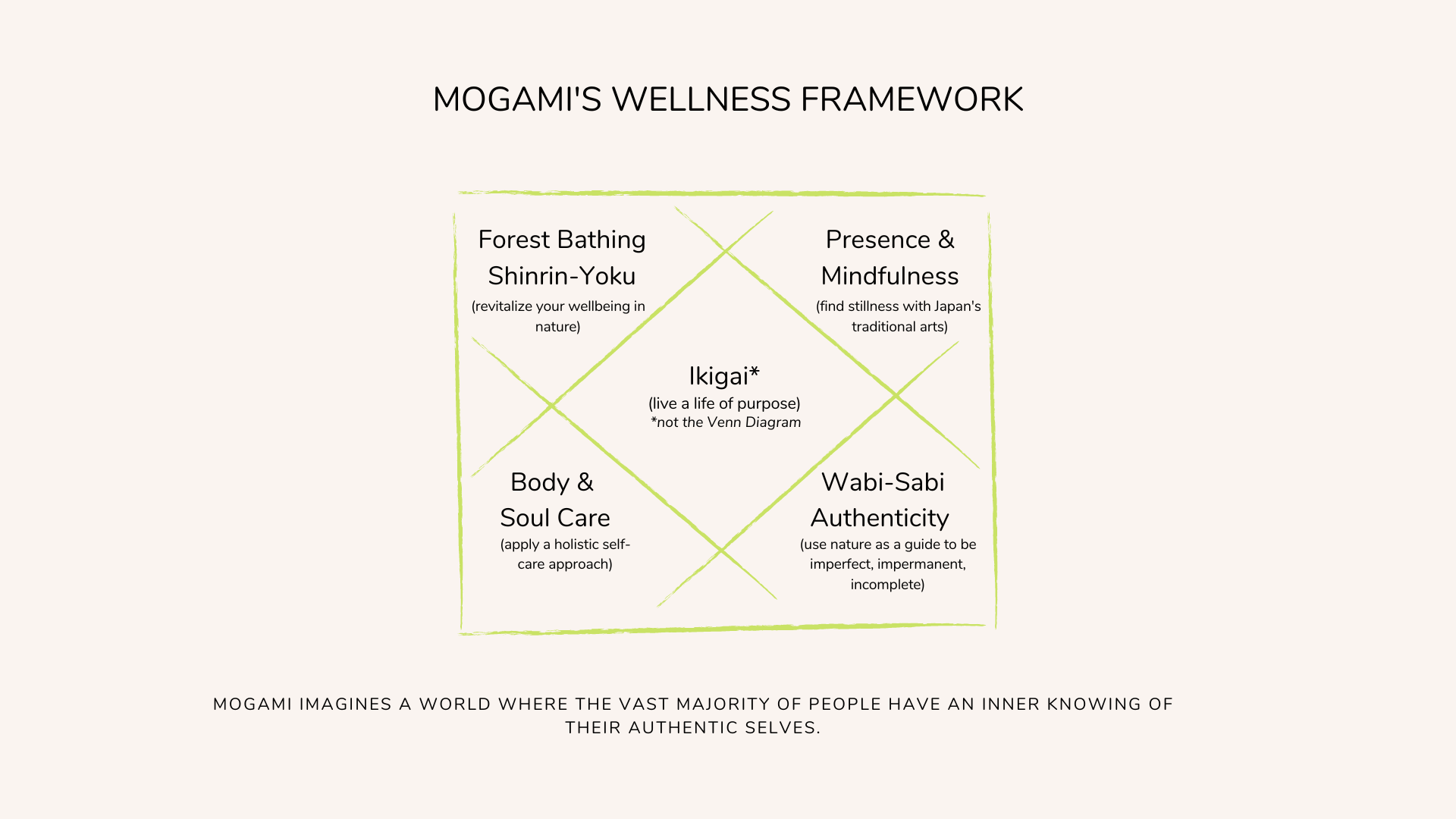
calligraphy is an expression of how we want to take care of our well-being. Here we have the
wellness framework that's inspired by
Japanese culture. There are four main
aspects of this. Let's talk through each one. The first one, presence
and mindfulness. This is the one
where we have been exploring in this class
where we talk about the traditional Japanese
arts and how it's Principles teach
us how to be more present and mindful today. Next, authenticity
and lobbies, albedo. So here we are understanding what it means to be
authentic and how to be authentic by appreciating
lobbies, Hobby, Lobby. Sabi has three main principles. We accept and
appreciate that we are imperfect, incomplete,
and impermanent. By understanding these
three principles and applying it to
our authentic self. It gives us a
framework and way of thinking how to be
our true selves. Next, body and soul care. This is this idea that for holistic self-care and to
really have a lifestyle where you are taking care of
yourself in its entirety is to take a look at your
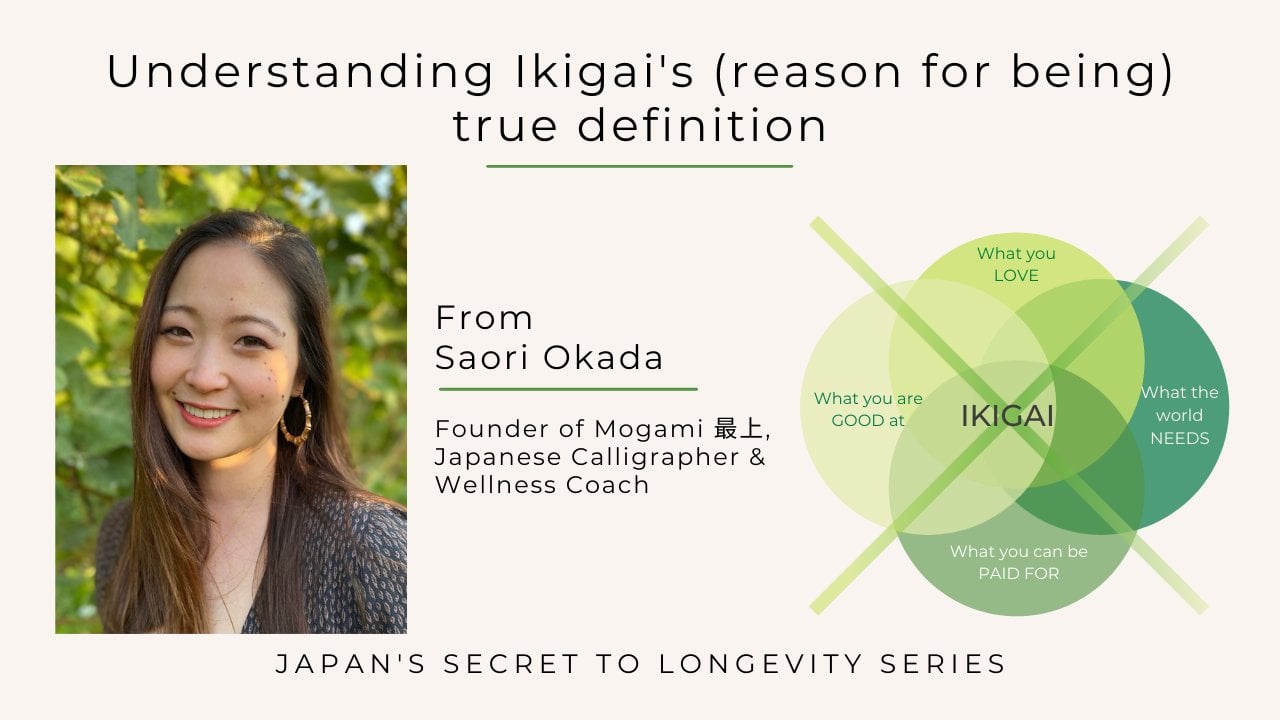
body as well as your soul. Last but not least, if you guy, guy is the Japanese concept that refers to reason for being, unfortunately, it has
been mistranslated and miscommunicated as
the AQI Venn diagram. But this is not accurate. In Japanese culture. There's no such thing
as a Venn diagram. And this Venn diagram was created by a Spanish astrologer. Name Andrews is an Aga, irrespective of the CQI concept. Guy is much more
about how you can be your authentic self every
day and take action accordingly that aligns
with who you are.
11. Class Project: 5-Day Calligraphy Challenge: So now that we have
been able to explore the principles and how it
ties into mindfulness. Let's jump into
your class project where you get to practice. What we've learned today. Class Project is a five-day Japanese
calligraphy challenge. What I would love everyone
to do is first go to the class resource
section of this class. And you will find a
PDF that's called the five-day Japanese
calligraphy challenge. Here it's going to
include a workbook that includes the instructions that
I'm going to go over now, as well as the accompanying
self-reflection questions. This workbook is to be completed over the
course of five days. And each day there is a Japanese calligraphy
practice section along with the
reflection questions. So for the calligraphy
writing piece, while I did share that, it's typically done in with
a calligraphy brush and ink. What you can do is actually
have a calligraphy pen. If you have one, if
you don't, no worries. You could use a drawing pen, a marker, a pencil. Really whatever you
have available. And I will share that these are the Japanese
calligraphy pens that I typically use when I
practiced calligraphy. And so I will provide that
in the class description. If you are curious about
those pens as well. Each day has a
calligraphy practice page and a reflection page
in the workbook. You can be able to find which day is appropriate by
looking at the title section. So for example, for
your first day, please kindly compete
the day one pages. Please make sure to read
the daily reminders page before completing your daily calligraphy
practice and reflection. These are reminders
that you want to read before you do each calligraphy
practice and reflection. And they're really
serving as reminders for us to check in with ourselves, to slow down, to
really help create a moment of presence for
you before you practice. For day five, which is the last day of
your class project, there is an additional
page that will serve as the wrap-up
of your project. Please kindly take a
photo of this page and upload it to the class project
section of this course. That would love to see
everyone's pieces as well as what the piece means to them, which is a part of the last exercise for
wrapping up this project. And lastly, if you
have the time, I would love it if
people can leave a comment on one other project. Building a sense of community is really part of self-care. And going back to the
holistic body and soul care, community is in a central
connection that the soul seeks. And so this really helps us and reminds us that we are
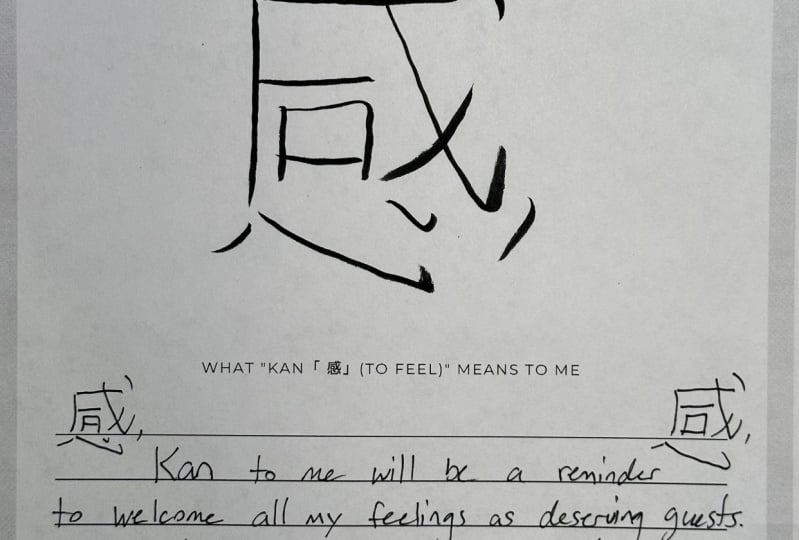
all on this journey together. For the five-day exercise, we are going to be writing
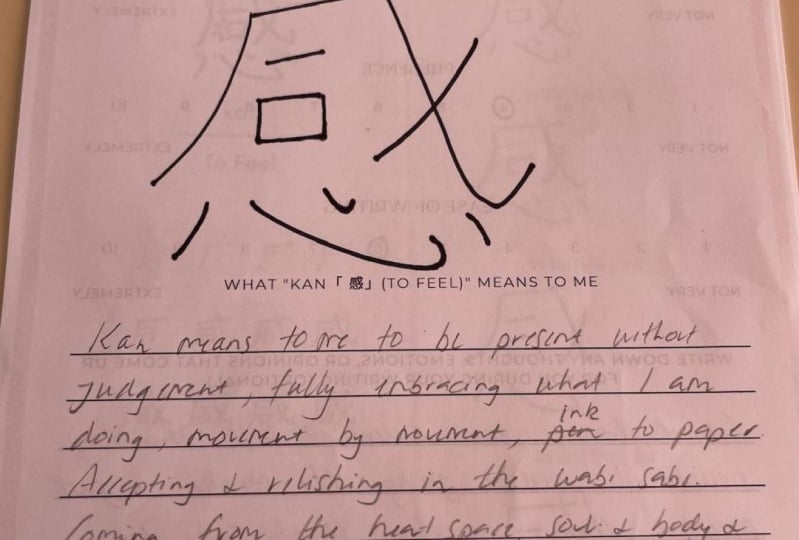
the character count, which means to feel
every single day. And this is going to be really interesting because
you will find that now that we have a base of writing the same character, you're able to explore
your practice even further every day by
observing your experience. So let's now take a look at
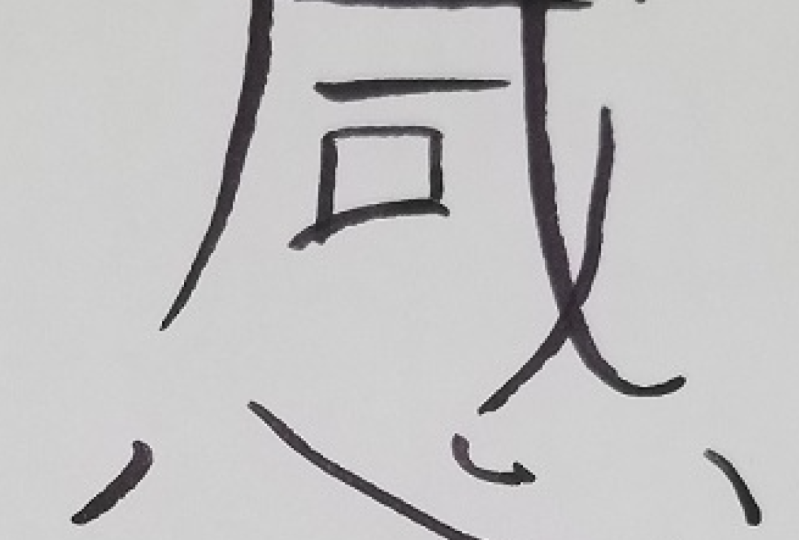
what KM or to feel means. This is a Japanese character
for two feel, which is red. And what's really
interesting about Japanese characters is
that it is pictorial. Meaning the word
and the way it was formed can help us
understand what it is trying to tell us is made out of a top section
and a bottom section. You'll see on the top-left, there is a box and this
represents your mouth here. And on the right-hand side, this is the character for AKS. So the first part is
telling us that you are gasping from the
movement of a large ax. And then the second part, which is the bottom in green, is the character Cocoa. Cocoa is the character. That means your
heart and your soul. This is telling us that to
feel comes from our heart. So combining that to
feel means that it is the interactions
that move your heart and soul that make
you feel something. And second, to no one's feeling
through your five senses. This is such a powerful insight. I believe tells us about what
it means to feel something, is telling us that one, to feel something comes from
your heart and your soul, your mind, but your
soul and your heart. The second part is
saying that it is through what we see in this
world where our senses, for example, our mouth is gasping from an outside
incident of an ax. To feel is to know your feelings through
the five senses that your body is telling us. I wanted to go over the character flow as we
learned in this class. And Japanese calligraphy has
an order for each character. And here is the order
that you want to follow from one to 13. And to ensure that you are respecting the character float. You will find that
within each day, this character count
and the order is available on the workbook so you don't have to print
it out here or how this course available while you're practicing
the workbook. And lastly, like I mentioned, there's going to be some
self-reflection questions included within the workbook. And this is a great moment
to check in with yourself and really find that
relaxation and calm. So here we have a self-reflection section that's going to be included
within each day. And there's three
areas for focus, presence and ease of writing. And what I would love everyone
to do is write themselves from one to ten in terms
of their experience. There is an additional section for writing down any thoughts, emotions, or feelings
that may come up for you as you're writing your
daily calligraphy piece. Keep in mind that the intention is to be in a
complete flow state. However, because this is most probably your
first time trying it. There will be thoughts, there will be emotions, there might be some hesitation, some nerves that
come off for you. I would love everyone to understand that this
is completely normal. And what we wanna do
is through practice. Really see our progress on how our inner world is
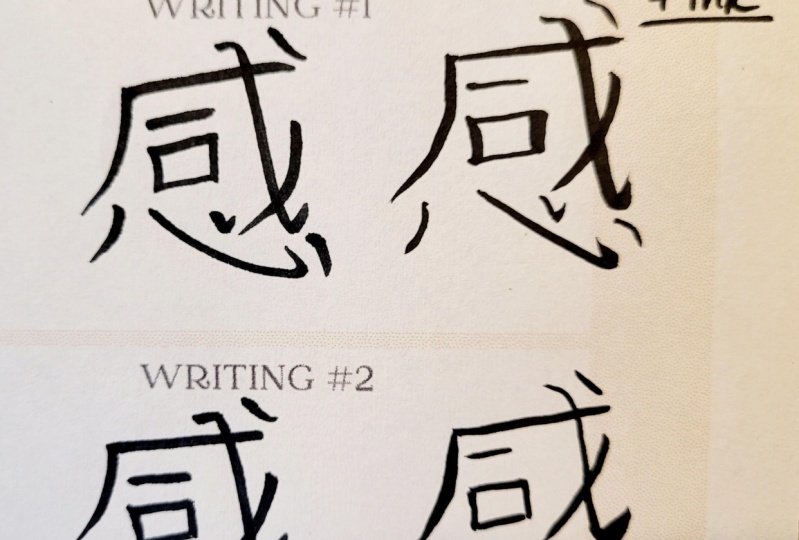
reflected in our writing. So each day you'll have four practices for each
column that you write. And the intention is that
every day you're going to have four opportunities
to write com. Then you're going to then
move on to the reflection. How was your experience writing
these calligraphy pieces? Did you find yourself
having a lot of presence, focus, ease of writing? What other thoughts, emotions, and opinions came up for you. These are all really important and insightful
things that you can observe while you are practicing
Japanese calligraphy.
12. Wrap-Up: This wraps up our
class on understanding Japanese calligraphy for
mindfulness and relaxation. I hope that this class was interesting and informative
and learning about this 2 thousand year art and how its principles can teach us how to be more present and mindful. In this moment.
I'm so excited to see everyone's class projects
and see everyone's count, which is one of my favorite
Japanese characters because it's a visual
representation and word that really helps us understand
that to feel something is to understand that we both have a body and soul and
hard to take care of. Like I mentioned, Japanese calligraphy
ties in with this overall approach
to well-being. I am the founder of monogamy, which is a Japanese
wellness company with the mission to empower individuals to achieve sustainable
personal wellness lives. And it is our vision that
we imagine a world where the vast majority
of people will have a inner knowing of
their authentic selves. And it is my belief that when we create
moments of presence, creates moments of mindfulness. For our inner world to come
out in the form of art. We can have moments
where we understand how to be ourselves. Here. We didn't show this earlier
in the class, but to wrap up, I really wanted to take
a step back and really tie into how Japanese
calligraphy is a representation. How you can create a sustainable lifestyle
round yourself. And so there's
four main aspects, presence and mindfulness,
authenticity, and while we soppy, understanding your reason
for being and taking care of herself holistically
for your body and soul.
 Saori O., Founder, Author, & Wellness Coach