Transcripts
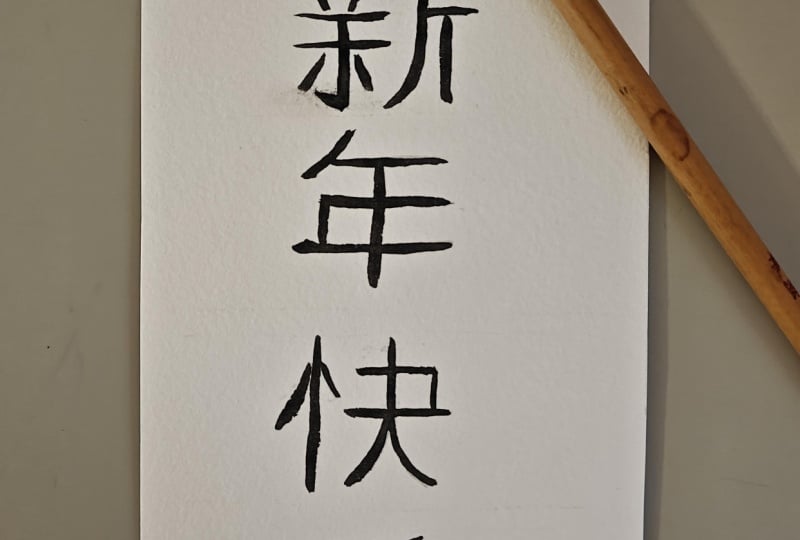
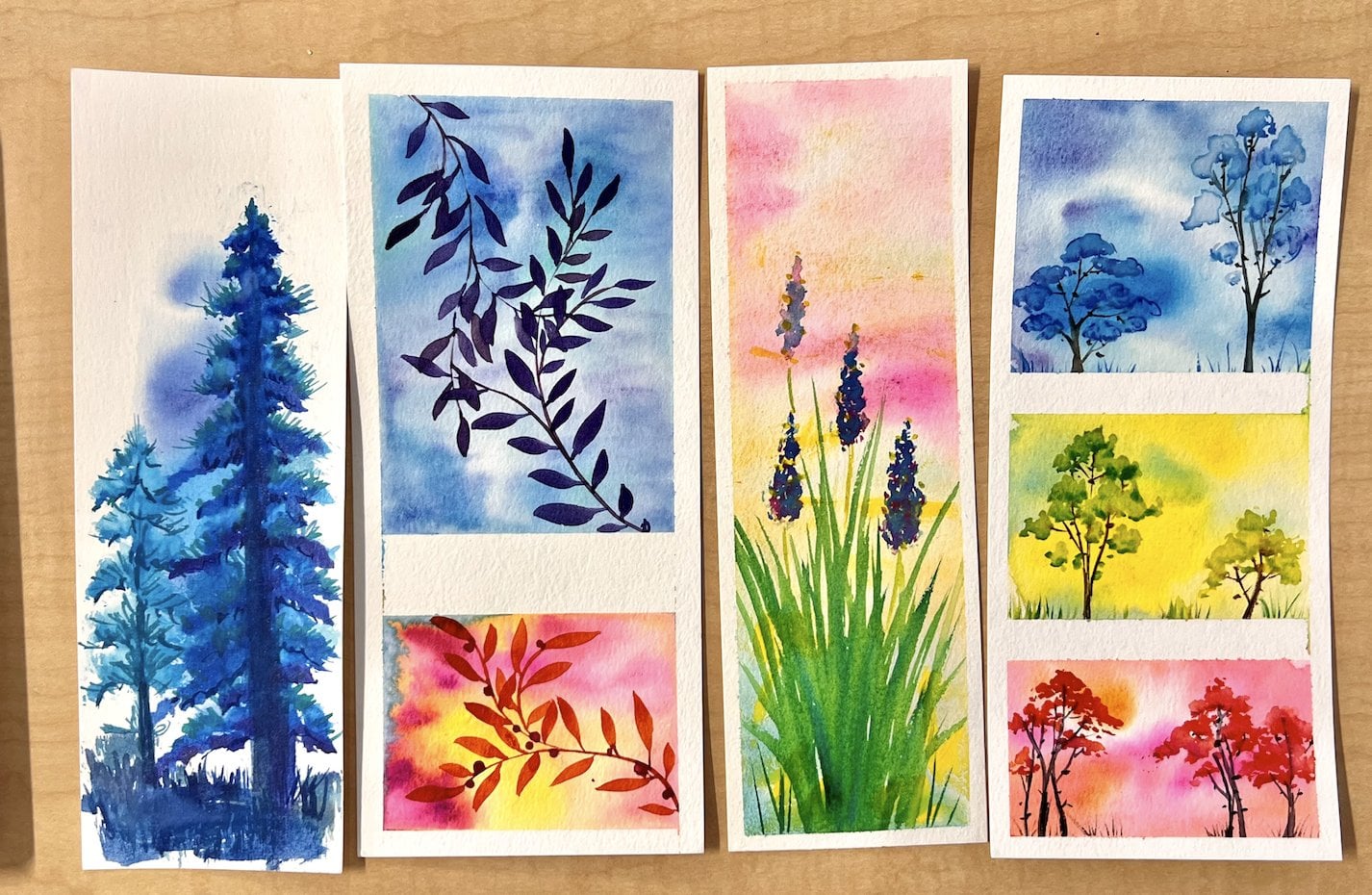
1. Class Outline: Hello, friends, welcome to my class. Today we learn Chinese calligraphy. This is such a beautiful and a unique art form. Our class is an introductory class. So the class will be composed of five main parts. The very first, we learn about the spirit of Chinese calligraphy, the practice, the dedication, and the serenity and relaxation. The second part, we talk about the materials when finance in Chinese we call it. So this is the four treasures of Chinese calligraphy. And be more yen, which means B is the brush, more is the ink, is paper. Yen is ink stone. We learn how to take care of them, how to open at the brush when we first receive it. And the served part will be a demonstration. I will show you how we stand, how we said the poster, how we hold a brush, how we ride elegantly, and how we ride to smoothly, and how rewrite freely, but still very ligand and strengths. And then the force part, we will start to do some practice. We learned a basic strokes and some, some wars which connect to you, such as thing cure, such as blessing, such as have you enjoy a live, whichever word you sync, let me know we will practice together. And at the very end, at the very end, we can make some products out of what we have learned. We can make bookmarks, we can make greeting cards or scrolls, or just practice. Because practice by itself is such a meditative action. Thank you very much. Let's get started.
2. The Posture: Ok. Hello dear friends. So this video is about the poster, how we hold the brush, how we stand. And it's so beautiful outside. And why not doing it under the Zangxiang? Make sure when you do calligraphy, when you do any activity, you are comfortable, you are happy. You get to see the same shape and you enjoy the beds. Best condition nature can provide us, right? So this one is about spending massive. Okay, here I stand. I make sure I am very comfortable. Stand. You can have a pair law for flat shoes that see, this is a flat shrews. I wear a pair of flat shrews and you stand there. Here, you will have your brush in your hand. Okay, now we are good. Stand comfortably. And your two feeds just relaxed. And all your weight is on your feet. Your way through some of your feed and the energy from the earth is lifting you up, you sponging you back. Do not need to be pretend or do not need to be making too much intention very comfortably. Standing here, hold the brush. Two fingers holding it. This one used to pull. This one is to push. And do you feel the energy coming up? And it's uplifting. And you feel Street. And you do not need to read too much. Stressed up, just very comfortable. Very relaxed. Okay. Now I am sitting here. You choose a chair that is not too low, not too tall. If it is too tall, for example, if I stand up, this is too long. I am not comfortable. If I sit too low. I do not hold the space. I am not overseeing the space. I had become a small, tiny part of the space. You want to hold the space. Look at everything comfortable, lay, and control everything. Now I see everything is under my control. I am the boss. Okay. You hold the brush and Street. Your back is straight. This is a good activity for you to, to have a beautiful poster. Under your feet is comfortable. Can put a chair under or note here and there, but you are very comfortable. You are very relaxed. This chair is just the right height. You can feel it. Ok. Do not laugh a paper. This is a kitchen towel I bought from from big janitorial supply or a god from a big retail store. And the good thing is that it is a seek and it absorbs the water. Now, I will start with a lead off.
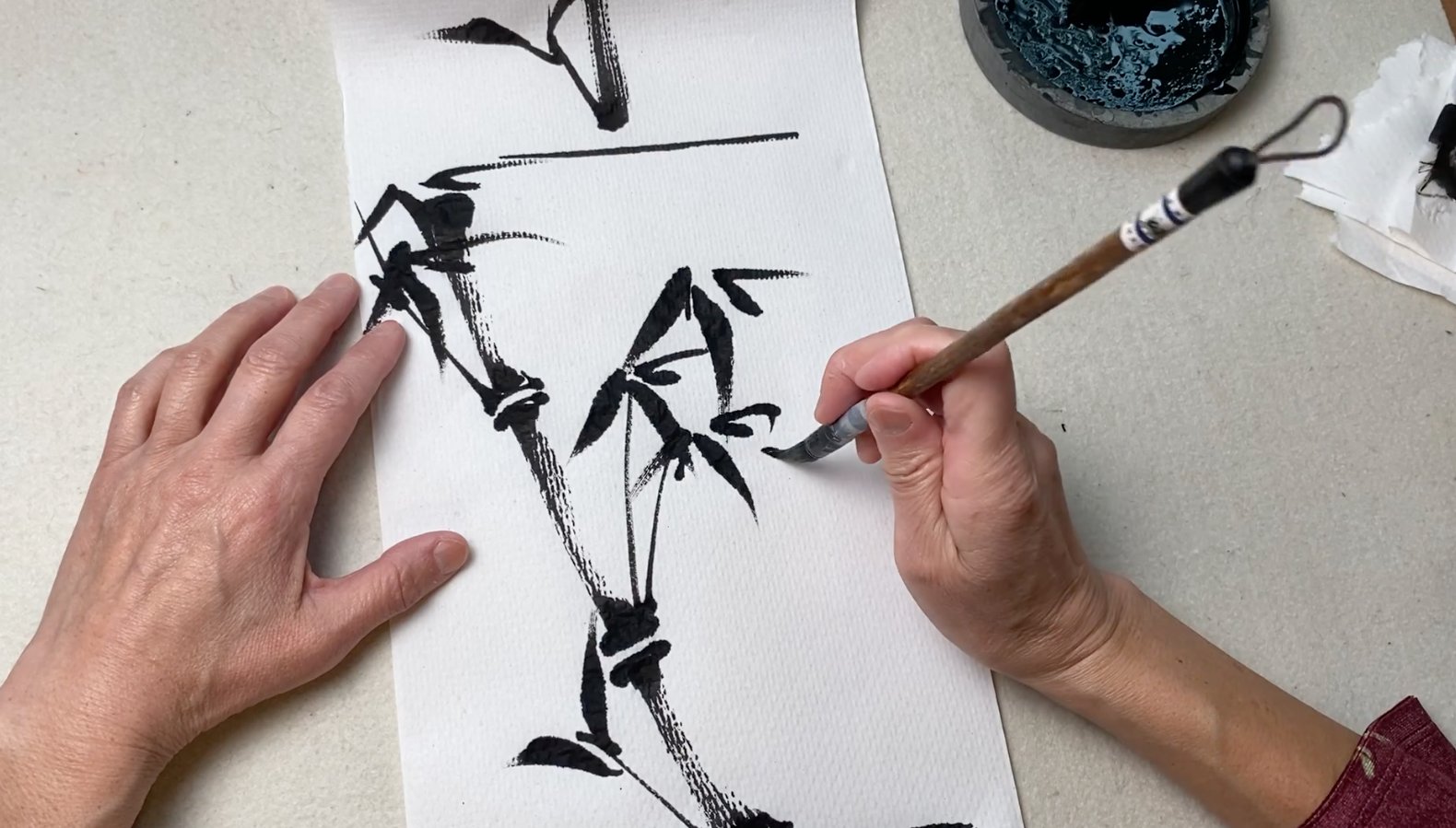
3. How to Hold the Brush: Okay, hello the friends. Now I am sitting here comfortably and we learn to hold the brush. This is the way I do calligraphy, I do writing. And when I do calligraphy, I do not talk because it's a very holy thing. But thesis to do a demo. So I talk, you see window here is long. Put your hand and to help you guide your movement support. So you will see how to hold a brush in several angles. So this is the way when you are right in front of me, this two fingers, no matter left hand or right hand. Your index finger and the are some hold it so this will not fall, fall, fall down will not disappear. You are holding it quite strongly, but not so, not so strong. And this finger is too poor. So it can move. This finger is to push. And the baby finger has nothing to do. Come here to do ballet. Some people like to, to use the small finger, the baby finger as support. You can do it also. You can do it also, but this one is rarely relatively relaxed. The whole hand need to be relaxed. And this way you can move comfortably. See, you are very comfortable to move it. Okay. I stand at your kids. And especially when you do Chinese painting, sometimes you do the side brash, sometimes you do this top straight brush, the pointed brush. Sometimes you push in a different way of alpha, of strokes, different strokes. These allow you to move comfortably. Okay, let's see. On this side you can see holding it poorly, push out and the Lady Finger baby feeding her baby finger can do some movement. Okay. Just to make you okay. This way. This way. I think you are seeing all the angle, right? That's it.
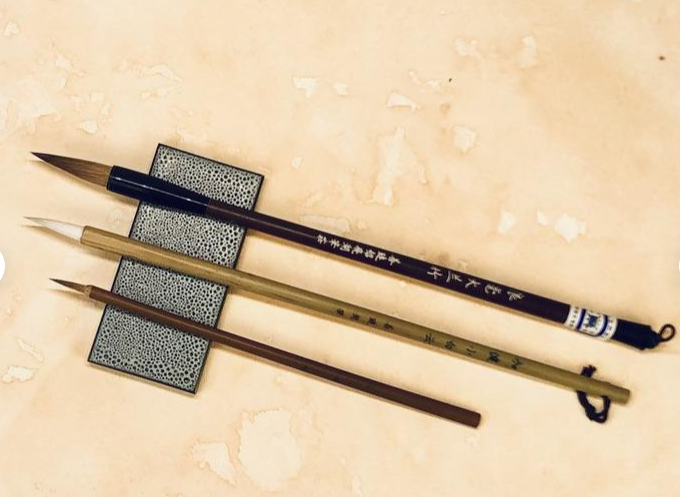
4. THE Brushes: Kate, Hello dear friends. So in this video we will, we will talk about the materials for us to get started with Chinese calligraphy. It's not fancy, it's not those expensive things. It's something basic and simple. You fish and under sufficient for us to enjoy this beautiful art for. So in Chinese culture, in our cultural heritage. For Chinese calligraphy, there is a word for it. When funds VM file is due do sub-par for treasures 12344, treasures BE more yen. We start with B in Chinese is rush. This paint brush. There are different kinds of paintbrushes for different size and different texture of the hair and different sickness for different size. It allows us to write, I'm seeing in, in appropriate paper. And these here, long or short, allow us to do the movement. Jurist, perfect jurists the right for different and a particular style. And usually when we start learning Chinese calligraphy, you get a smaller here. In China, students start from wide. Cloud is, uh, not too long, about the side. Wide here, soft. So it absorb a lot of water and relatively saw soft so that it trains you to have to have a better control of your hand. It is very sensitive and deduce very, very, also very expressive. But mostly it is a basic tool for you to get stat. This is roughly the shape of that particular brush. When it is opened up, it is very fluffy. When you first get it. Very, very Steve. Okay, hello the friends. Here. I have a new brush. How do I open it up? It looks so pointed. And so Steve, you will be afraid to open it, right? Do not just abandoned it integral. Break their hair. What I do. And if I buy a brush or from me, I know I have seen this manufacturer, the brush artist, how he opens up this brush. So what he will do, oh, sorry, my hair. Hosa, my finger has this. Okay. This is using a kind of a very light starch or glue to glue it together. So what you can do when you get a new brush, you can use your hand, your finger to pinch it. She impinging it. Now I can feel it is open. Nap. Do not bend to not bend. Pinch it opener. And do some of these movement. Then it is opened up. See, use open app. And you can feel that inside and outside is actually different. That you inside is relatively Steve. Do some movement or its interval. Okay? And then you soak it in water. You do not have to have a fancy blue and white ceramic ball. And very often I just to use a recycled plastic from food delivery or from the Shah. Okay. Now it's opened up like this. Get it completely moist, gets the water go completely in. But when you put him in ink, you do not need to soak the complete a brush with or brush lens into the ink. You soak only a little bit of it day by day into. Eventually it will be all goes up to here. But the very first, just to use the top of it, let's say 1.5 third of it. When you use the brush completely, you are overusing this brush. Use only only the tip is the movement. There is a lot of potential energy from the, from the body part and the tip is just a, is just the tip of the iceberg is just the little show off part. The little small demonstration of the strengths of these brush. This brush is already used. You can see, okay, now I will open up a browser so that you can see what brush is made of and how it looks. So let me use these barrage or we use this brush just to use this brush. Okay, so the outside is wide here, relatively soft. The inside is dark. Here is another kind of here. And the inside, you can see very gently open it up. The inside is relatively Steve. Can you see it? The inside is relatively stiff so that the purpose, the outside can take the ink and the inside can keep the strengths of your stroke. So there is a soft and, and had a mixture. They are the same kind of hair but different part of the natural body of hair. Do I make sense? This is my name.
5. The Ink: Now let's talk about ink. And you can see this is not a very beautiful ink, but ink stick, but it is actually a very good quality because after temperature change, because of the moisture news change, it has this ink stick has been with me more than ten years and it breaks up because sometimes the weather is where sometimes the weather is a dry, so it cracks and becomes quieter. Bristol. But the it does not diminish any of the quality of the ink stick. How do you use it? First? Put some water in your ink stone. And the sulk. This ink stick. If you do not socket, you can hear the son is not pleasant. Make it softer a little bit. Five minutes, ten minutes. I use cold water. It may take longer time. Five minutes, ten minutes. If you use hot water, it may take shorter time one minute or something, but try to avoid something to extreme. Tried to avoid very hot water. Boiling water is never good. Uses some lukewarm water. Use. Ok. Now we soak it. Hears the ink stone. It does not have to be fancy. This is a student level inks Dong relatively RAF, relatively rough, a good ink stone. It. When you touch it, it's like in Chinese way of saying it is like a baby's belly. It's so smooth, so tender. It's like jade. Very comfortable. Touch. This one is a student level. So because it's a little bit tough, but still you do not even feel the toughness and it's a little bit tough. So when you grinded, that ink comes out faster and easier. Still, it makes it a wonderful Inc. after grinding. Okay, still. Ok here the boo, boo Daddy's not good. I can still hear the the hardness of the ink stick, so we wait a little. Okay, as for ink, you do not have to be always use ink, ink, stone, and grind your ink. You can buy these already made ink, liquid ink. But actually the best way to use 0s combining these two, the liquid ink may get you something sometimes to scene. Sometimes too sick. And if you have an ink stone, if it is too sick, not easy to ride. You can add a little bit of water. If it is too scene. Peep on, grinding a little bit, we'll make it just a perfect. Ok. Now, my ink, stone and ink, Steve, I think they are walking quite well. Now I start to grind. And I like to grind ink, stone grind Inc.. And I YouTube, I have made some ink grinding and people love it and enjoy it. It's it's relaxing and the movement. Salary for the airplane sound. We are outside. Sometimes when you want to enjoy outside, you'll have to pay the price of heavy noise, right? Life is never perfect. Okay, so make sure you are relaxed. There are some people grind the ink, just come force, come 4s. One way. Imagine if you do a mathematical calculation, you do one circle. It does not take much longer time than these. But the radius and the, the parameter is much longer than the straight line, right? And another thing, you grind the ink, your hand has DCIS circular movement. It helps to warm up your body and your head from a very Steve state into a more relaxed, prepared, warmed up. Stay. Now let's just enjoy the process of grinding. Later on it becomes very flat. You feel, Oh, the ink stick is sucked into the ink stone. So you can do some side movement to make the bottom not too flat and easier to use. Ok. I will keep on enjoy and even you do enjoy it. Trusts to turn off the camera, turn off the video, and enjoy grinding the ink. Okay, let's have a try of this. Ok. Now I have my brush. Brush. Yes. This branch does not have Inc. And when you have excess ink, leak, nick it on the side, gets some more on this side. Now let's see. Oh, see. It's very, very dispersing, so it's not yet good. We need to keep on grinding. Keep grinding. And also we are outside. There is a wind. There is sunshine, warms, and wind will evaporate these ink. So just let it be there. We'll save a lot of your work and do not over grind ink to not grind ink to march. I know it's addicting. I know it's fun. But if you're over grind the ink, ink too much, you leave it for the next day. It is not fresh. Some artists to particularly like to use the old Inc overnight IQ, but majority still. It's just to leave it to today's ink. Finish it today. Oh, it's better because of the moisture and a little bit extra. So this is a pigeon tower paper. I really enjoyed this kitchen tower paper. I clean the house with it, clean table with it, do practice with it. And it's just perfect. And some people store it. If you choose to store it, I do not recommend, but you can store it. And what I do, I finish this Y2K, the left over of it. I will just to use this tissue paper write layer after layer, layer after layer until I almost finish. This way when I wash this, usually I do not wash. But if you do want to keep a clean one, Just just absorb with this paper. A suit. Just just the dry it with your with your already used many times paper. And this way, you will damage less. You will not die. You will not die. Your kitchen sink too much. Make sense.
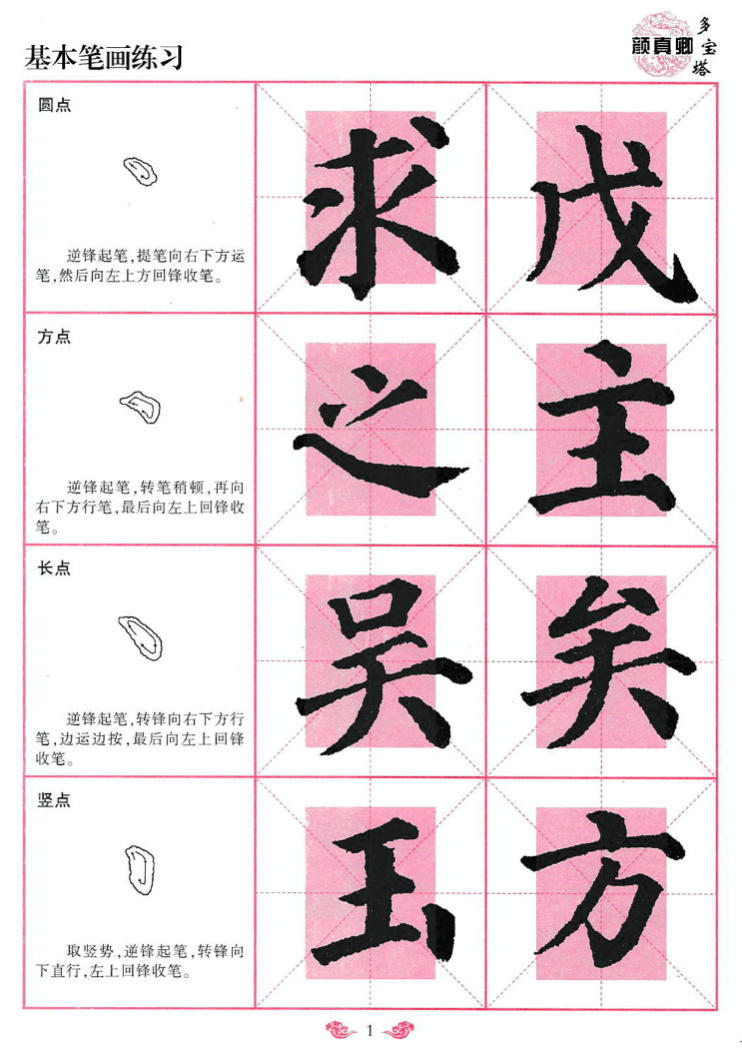
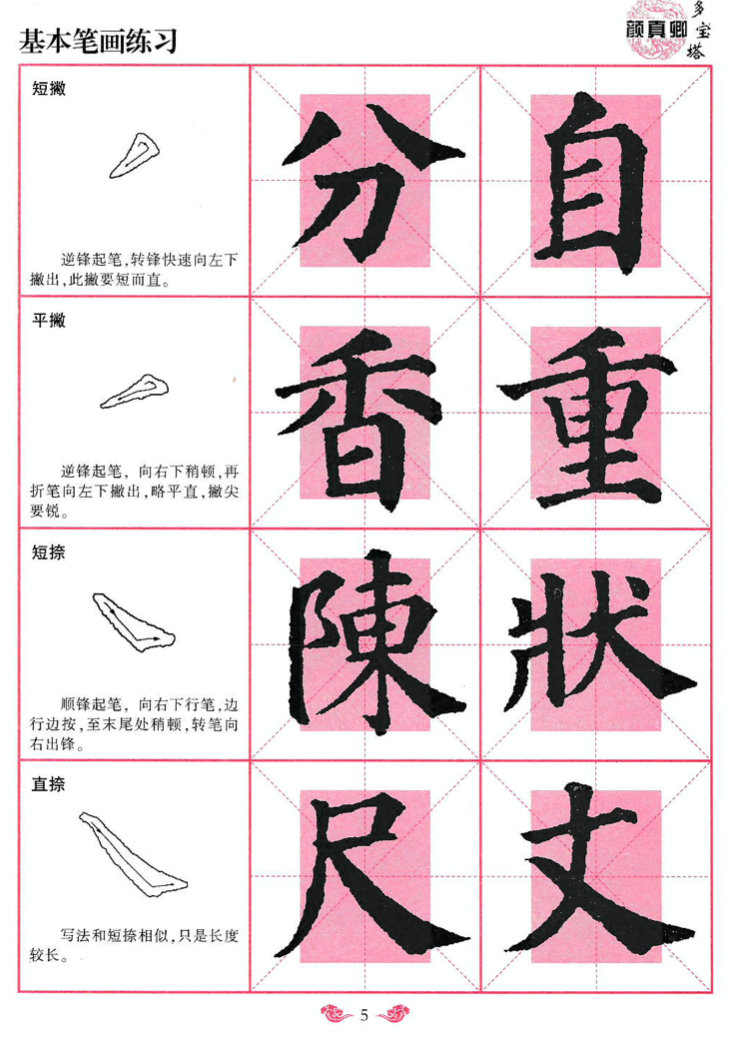
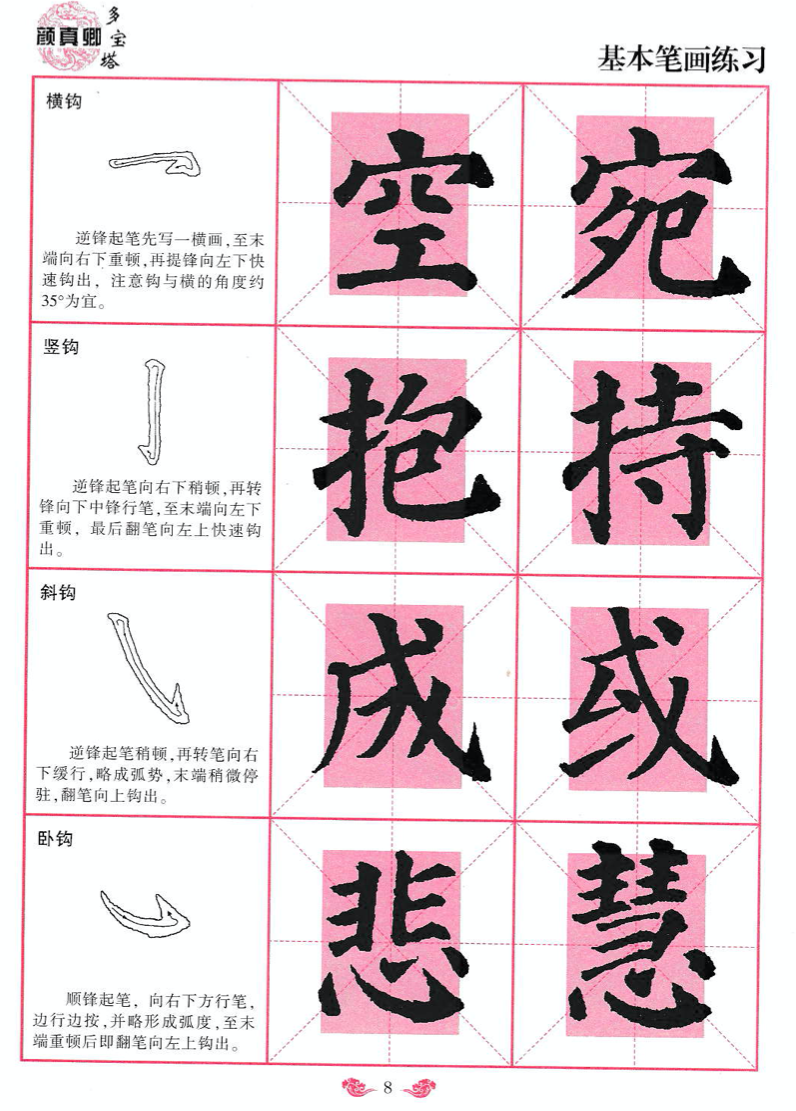
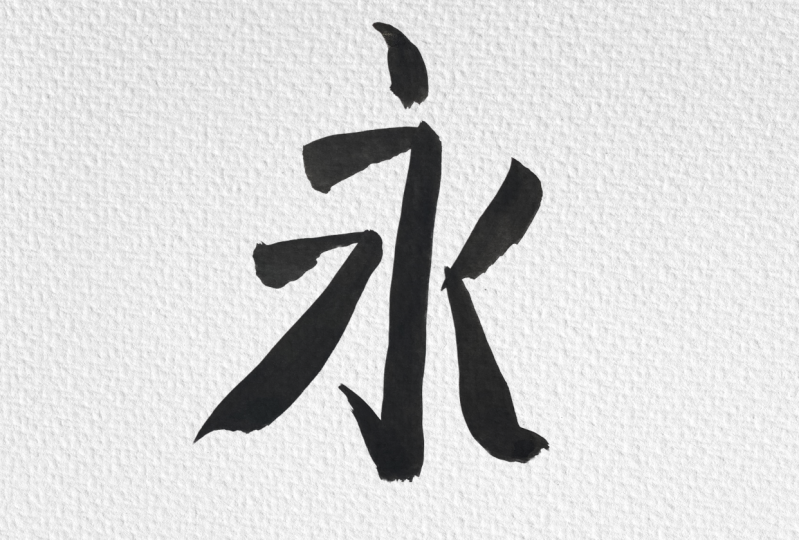
6. Basic strokes: Okay, hello the year friends. So let's take a look at a Chinese calligraphy book. And this book, my husband bought me from Taiwan when he visited Taiwan. So there are different styles. Look at these, how beautiful these characters. As you keep on learning calligraphy, you will, you will appreciate more and more these exercise, practice and hard work of many, many, many years to accumulate into this skill and do some mastery. Each style is different. Everyone has his own carry TAR whose own strands has a unique way of expressing oneself. Some are more rigid, modeled it some more free and, and expressive. Okay, this is one book and this is my mothers broke, one of my most cherished. Thank she use her indexes system. So what we can see here is that there are so many Chinese characters. There are more than 60 thousand Chinese characters and each at different, different Chinese characters. So how do we learn so many in our lifetime? So today we are going to talk about some basic and the reduce all these different variation into eight most basic. Calligraphy. Basic skills. Your strokes. Yes. This is, it is. There is the hen shrew. Pa. Now. Go Sheol. Now. We'll add some more water and grind it until it is totally UD. And at the same time, I start to prepare my spirit. I need to be relaxed. This is a class, but it's an Exercise and I in droid to improve my skills. And I enjoy the action of putting my hand into CMC. I mean droid. To see AI progress. I do better and better. Each time, each stroke, each of my action cons, cons into my future success and future self expression. Okay, now I will prepare my brush. No need to be complicated. You'll get a felt or a piece of paper, old newspaper to protect your table. That he's oh, okay. So I have several different brushes. I will choose one that I like. I wanted to use not to make the brush, the connection point get broken, but it will not damage. Here. You can still use it. I can still use it. Totally soak it in water. And then you can use your hand to press a little bit so that you will sign gets the water also. Because this is natural hair that sum all your inlet, the natural all your formula. Anymore body. So press it so it soak into it. Okay. Yeah, totally good. Now, I mean, the ink you can see ink goes the ink by itself goes up. Because because the density is not the same, right? And if I have extra ink on the side, now, we will write how to do those strokes. Okay, so I have written two of these. Y4 is one of the most famous Chinese word in practicing calligraphy. The first one, I did, not talking about the strokes, just the structure of it. You'll feel the weight is too heavy and it's just not so balanced, it does not look good. The second one, I have improved a little bit. There's one seems too long and it makes the world loves bulky. There's one, raise up little bit, sinner a little bit, it spread out a bit more, so much better. Now, let's practice. Our very first stroke is the hand. Adopt.
7. 點 Dot: Now let's practice. Our very first stroke is the very oftenly used the ok. We will keep on through on the same space. So you start very, very light, very pointed, and then press down. Stay here, go back. So that, so there is a reason in Chinese calligraphy, we will just keep on fuel into completing. Yeah. Ok. Press. Turn. Teeny-tiny little bit. It's almost not visible. This is the thought.
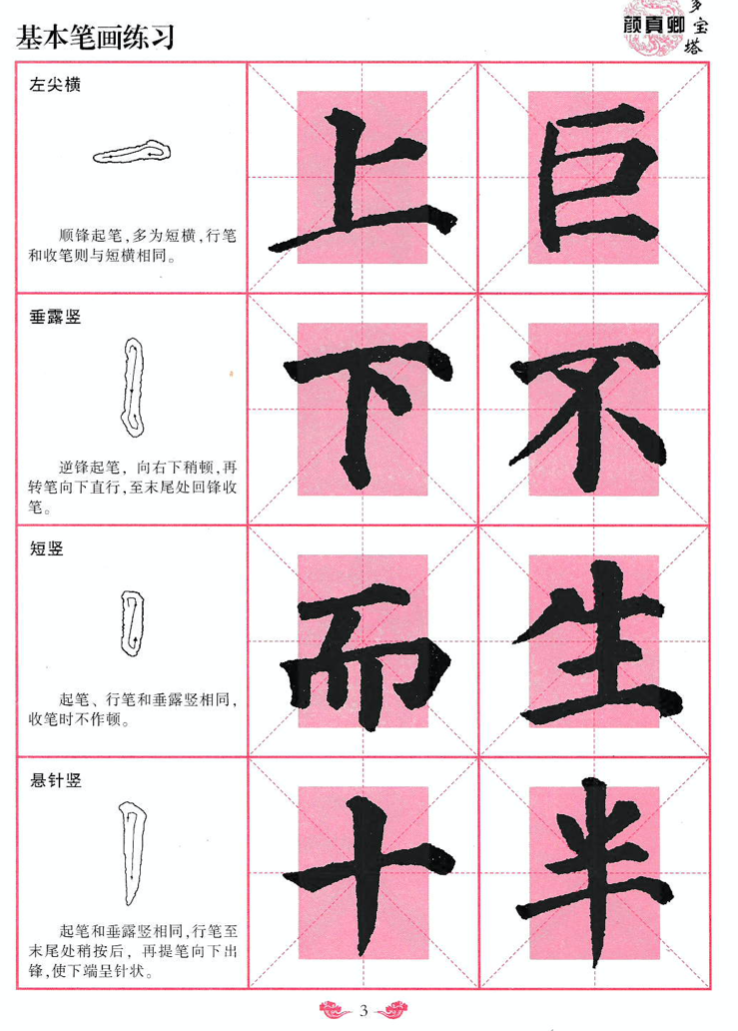
8. 橫 Horizontal Stroke: The second one, we will do its horizontal stroke. You can do stat line. Prayers. Go, stop. Come back. If I write it, is the stroke order. It's like achievable. It's like a bomb actor. So star parades. Go, come back. So the speed is different, right? Each stroke has, each movement has its own reason in that. So I start, light. Go, stop. Come back. Okay. Each movement hold on. Not in a rush to it nicely. And ok, here you can see the ink is a little bit or watery, right? When the ink is water, It is easy to run. Your brush is easy to move, but it, it has these disperse of color. It's not good. So you may want to grind a little bit and and the chimp on doing and get the excess water out. Okay, let's do again the same stroke. I put my camera a little bit on this side so that you can see my hand movement better. Right? Okay. Stop. Stop. Go. Come back. Some people rights, more soft and rounded. Some people write more shaft. It's different style and you cannot, it's very hard to make it uniform because it's a hand written. It's every day you exercise until you find your way of expressing. Ok, so this is a hormone. Horizontal stroke.
9. 豎 Vertical Stroke: Now we will do shrew vertical stroke. It's like this, go like this. The movement of your head that C star, Perez. Stay here. Come back. Okay. I press stop. Come back. Prayers. Go. Come back. Okay, this is the vertical stroke. And then we will do ps. Left falling stroke.
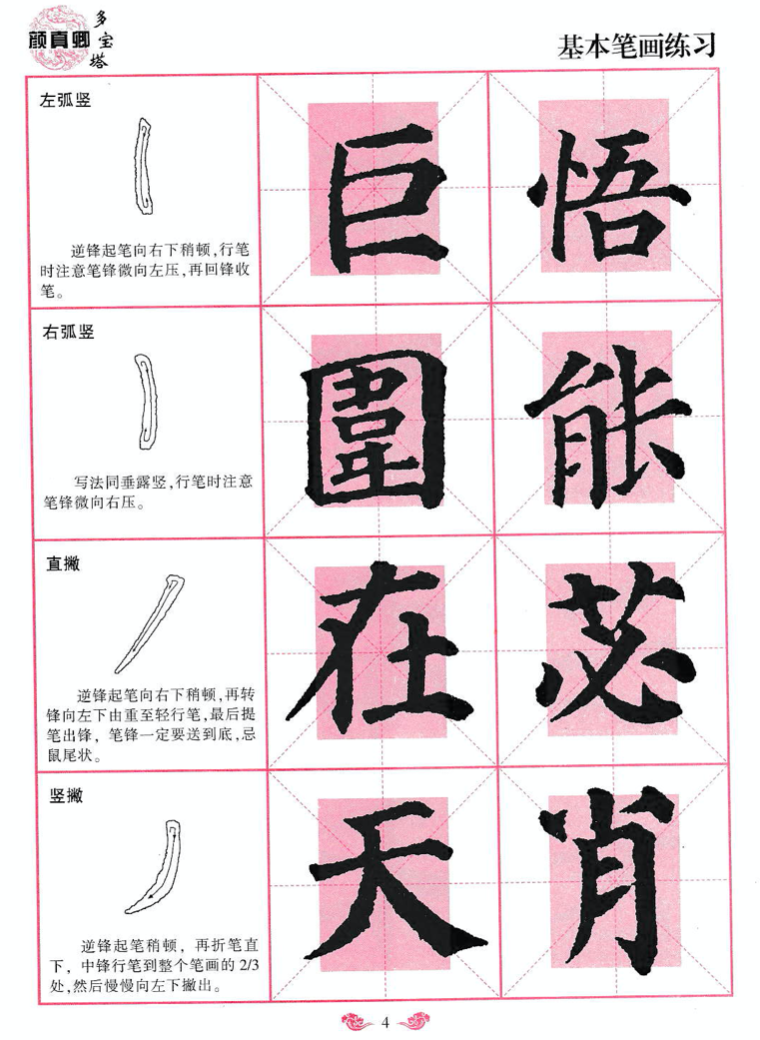
10. 撇 Left Falling Stroke: Okay, the force stroke is left falling stroke. The shape is like See, when the paper is not flat. Sometimes you do not do a beauty for stroke. You can make it flat. So there are different way of starting some sinner, starting from some star, sicker study, whichever way there are different, there are many different ways. But the point is that you press go lift up and becoming lighter and lighter and lighter your PPE. While your hand very smoothly leaf that. Now the fifth stroke is not right for being struck.
11. 捺 Right falling Stroke: Okay, the force stroke is left falling stroke. The shape is like See, when the paper is not flat. Sometimes you do not do a beauty for stroke. You can make it flat. So there are different way of starting some sinner, starting from some star, sicker study, whichever way there are different, there are many different ways. But the point is that you press go lift up and becoming lighter and lighter and lighter your PPE. While your hand very smoothly leaf that. Now the fifth stroke is not right for being struck.
12. 鈎 Hook: Okay. Number six is a hole, is hope. Job, go, go down and then hook up. Stay. Strong, stay. So at the beginning is the shoe is a vertical stroke. At the end. Stay. Leaf staff. Vertigo stroke. The end, stain, lift up. It becomes even better. Your movement fast. The stroke is even more at a good and unique, right? Yes. Oh, I love it. Do not make it like this. North. No, that's not right. Okay. Now you go. Go. Go. Sometimes your brush change shape. You can see here my brush change shape is not straight thought very, just to keep on with it, you change the direction of the branch, then you can keep on use the existing energy from the brush, right? Ok. This is the number six. Number seven.
13. 提 Rising Stroke: Okay, this is the number six, number seven, rising stroke. Job. Varchar, cheap. So I go down, press, press. Lift up, slowly, leaf tap. No. Lift up. So when you need to turn around, right, or the strokes connect together. Okay, the last one.
14. 折 Turn: The last one is draw, is turned around. It actually connected with this t. So you lift it up and turn. So we are talking about this path. Let's just do it together. I will show you all these in turn in the course material. Okay, we do not need to go so much further. We just work on the time to stop, growth. See, stop. So it's like you go from here and stop here. Make a turn. Go down. C. Press, go from here. Press, go from here. Keep on practice. I enjoy it. You can write different courage. Je, Oh, OK. Keep on practice this. I will put this information in the course material part. Okay, thank you very, very much.
15. Ending: Okay, hello dear friends. We, yes, we concluded our introduction class. And I hope this gets you started. Get you familiar with these unique style of art and get you practice overlay. They write. Thank you very, very much. I hope to see you in the following classes. By, by friends.
 Haiying Yang, Artist, Educator