Transcripts
1. The Problem: Do you need help breaking in a brand new sketchbook
or journal? This bite size class empowers you past the mental
obstacles and inspires you to get started with a whole
bunch of creative ideas. Because the beginning is
the most important part, and you have ideas that you
need to get down on paper. Don't let fear of the
blank page or being too precious and
perfectionist limit your creative potential. The project for this class
is to try at least three of the techniques that we cover
on a brand new sketchbook. You will need a new sketchbook, preferably one you
bought a long time ago and have been avoiding
using basic drawing tools, basic mixed media, and
basic collage tools. For more in depth list, see the supplies list in the
projects and resources section. Alright, let's dive
in because we've got a lot of creative
techniques to cover.
2. 27 Solutions: The first thing we're
going to do to break in the blank page is a couple
different types of borders. This is the way I
use my fingers to make it straight
around the edges. And I like to use a
Tambo brushpin or, in this case, a favorite Castel aqua brushpin.
These are perfect. This is a really fun
way to add some color, choose whatever colors you want. The next way to do borders, and you can do this over the brush pin or by
itself is hatching. Hatching is really fun. Here I'm using a
fountain pin with some nice colored
ink that leaves a really beautiful appearance. Look at that hatching
is really fun. Hatching also works really
well with paint pins. These are pasca paint pins. The metallic ones are
a classic choice. This is silver,
and in this case, a black sketchbook
really makes it pop. So try this hatching technique. And see how you like it. Another one I like
to do is clouds or vegetation as a border. You can see here it works
on gray tone paper, and also with the silver pins, it will work just really nice
on black paper, as well. Oops, I made a mistake there, but I'm trying to have fun and not get OCD or perfectionist
at the beginning. So Next, this one didn't
come out that well, but these are boxes. Boxes is another way
to do Some borders. Okay, now we're going
to trace leaves. Tracing leaves is a really good, easy way to get started with
some drawing on the page. You can also try sun prints. That makes it a lot easier. Here I'm going to fill
in the traced leaf with a watercolor wash. That'll get some color early
on on the page. And the last technique
that I like to use on the inside or back cover
is these ink circles. It's decorative and it's
a fun drawing warmup. When you're starting
a new sketchbook, don't forget about the cover. It's a great place to decorate, especially with paint pins. One thing you can do that's very simple is just
write the number. How many sketchbooks
do you have? For me, it's number 72. And I also like to
sometimes draw a symbol. What is the symbol that
represents that sketchbook? You can also do the hatching
and different types of borders on the covers, and it works really well. Look at how the silver pin just glides smoothly onto
that black surface. Another thing you can
do is you can write sort of affirmations or give
a name to your sketchbook. This one's my Franken Journal. You can also cut out pieces of paper and write inspirational
quotes on them. This is a quote
from Frankenstein, and I'm going to use Moje
Podge to paint it on. Moje podge works as a glue
and also as a sealant. So I will put it
underneath to glue this piece of paper on with
my Frankenstein quote, and then I will paint over it
to seal it in really nice. This is the Matt Moje podge because I like matt
better than Glossy. Look at that. That
is fun and unique. Another thing that I
like to mage page, glue onto my cover
is sticky notes. So here I've ripped one up in a sort of weird and
ornamental way. And this kind of just gets
your creative juices flowing. Here I'm going to put a
piece of scrap paper from the inside showing that
this is tone paper. So you could just glue
a piece of paper on the front showing what the
inside paper looks like. Can also cut up a library book, find cool drawings inside of it, and glue those onto
your front cover and put some mag podge
over them when you're done so that it stays
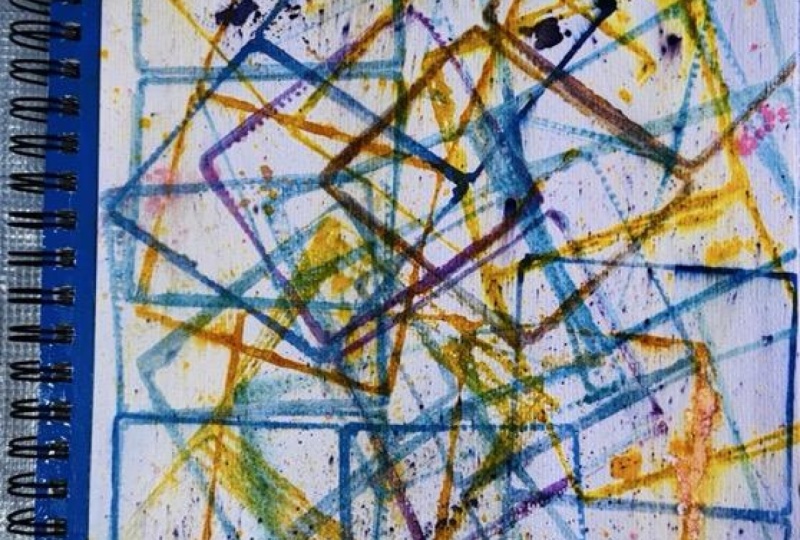
nice and sealed. Now that we covered the cover, we're going to get wet and wild and go back on the inside. The easiest thing to
do is just a big wash. So mix your color up and
then use a wide brush like this hake brush to just paint a solid wash
on the inside cover. If that's not fun enough, you can do some wet on wet by dropping in ink
while it's still wet. Whoops. Didn't want that to
look like a smiley face. Now I just took my
partner's toothbrush. You can borrow yours. Don't ask and say sorry later, and just use it to
flick on color. This is really fun. There's so many ways
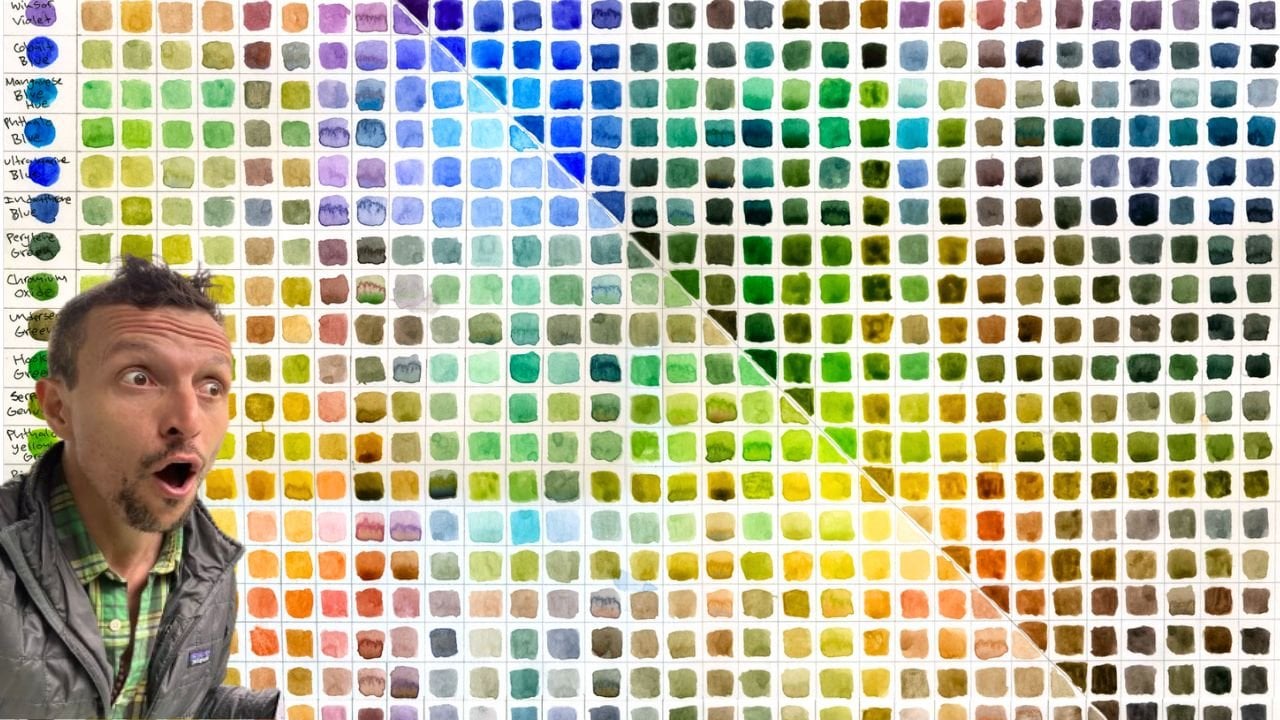
you can use this. Doing some color swatches
just to test out your watercolor palette can be ornamental and you
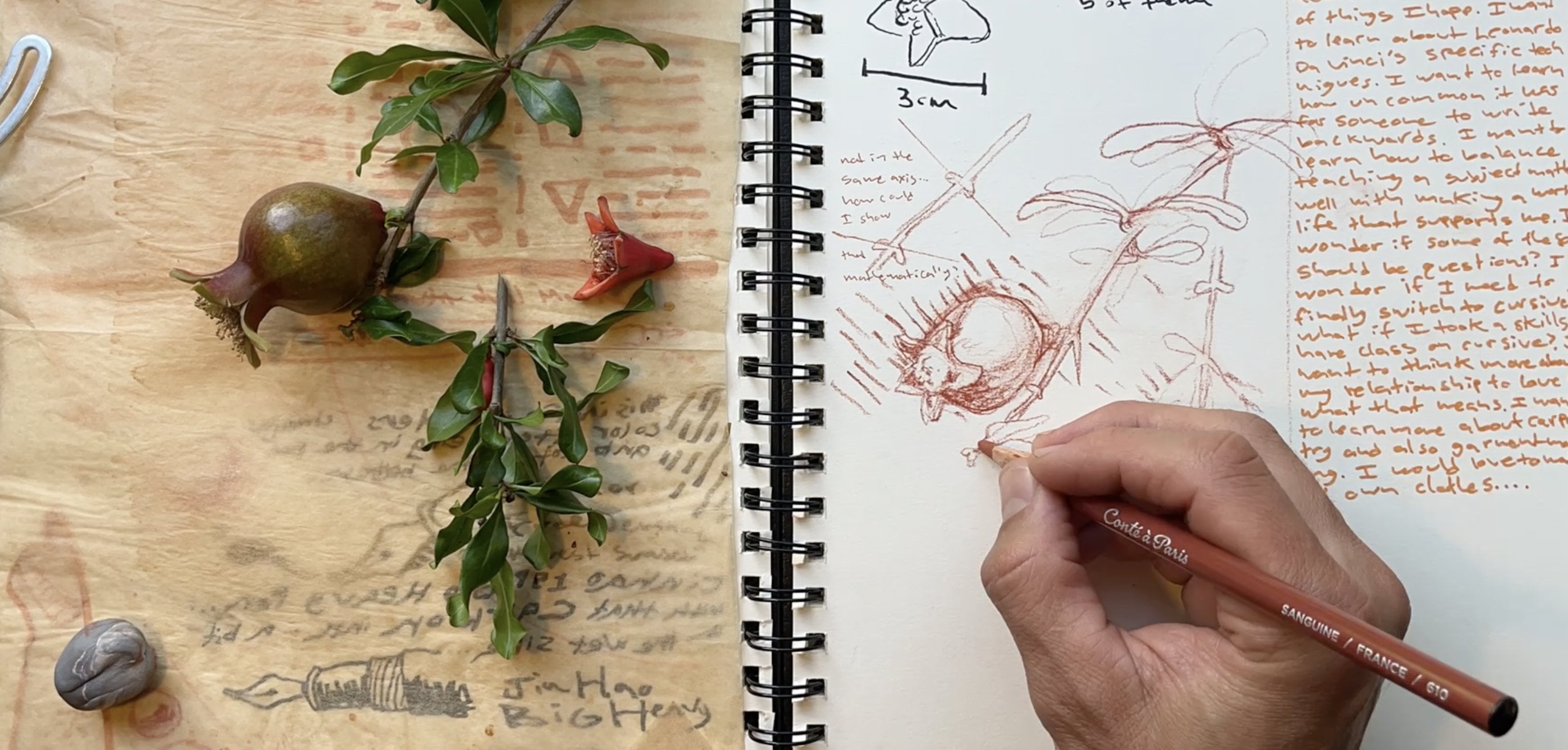
can fill pages. Now I'm gonna take some tea. Coffee wine can also work and just paint some with
those can be really fun. Mine didn't come out as
strong as I would like, but it's another decorative
thing you can do. Try boiling it down for a stronger version or
use wine or coffee. Get your glue ready because
now we're going to do some fun gluing stuff,
starting with a pocket. Look at how this triangle
just makes a perfect pocket in the back inside
cover of a sketchbook. So take a piece of
construction paper. It helps if it's a
little bit stiff. Regular paper can work, too, and cut it into more
or less a triangle. Now I just glue only along the edges and then put
it down into the corner. I'm going to put a little bit of this wax paper or tracing paper inside to make
sure it doesn't glue in places that I don't
want. And look at that. I can also make a smaller
triangular pocket for ethema stamps, things like that,
and I'm going to put it right on top
of that purple one. So let me just rip this paper. And this was a scrap paper where I was testing out colors, but just look how
ornamental that looks, and it gives me another place to stick things in my journal. Pockets are really fun. This would work for sticky
notes could fit into that small pocket or little scraps of paper,
things like that. So that is a great way to
break in a new journal. If you don't want to
make your own pocket, you could also just
get an envelope and just glue that in, and that will work as
a pocket, as well. Look at that. Now I have
sticky notes and all kinds of ephemera that I can just carry with me in my sketchbook. Next is just a collage. This is a great way to
break in a new sketchbook. Collage feels very liberating
for a lot of people. So if you haven't tried
collage since kindergarten, this would be a good
time to try it. A lot of this is
just scrap paper and other random
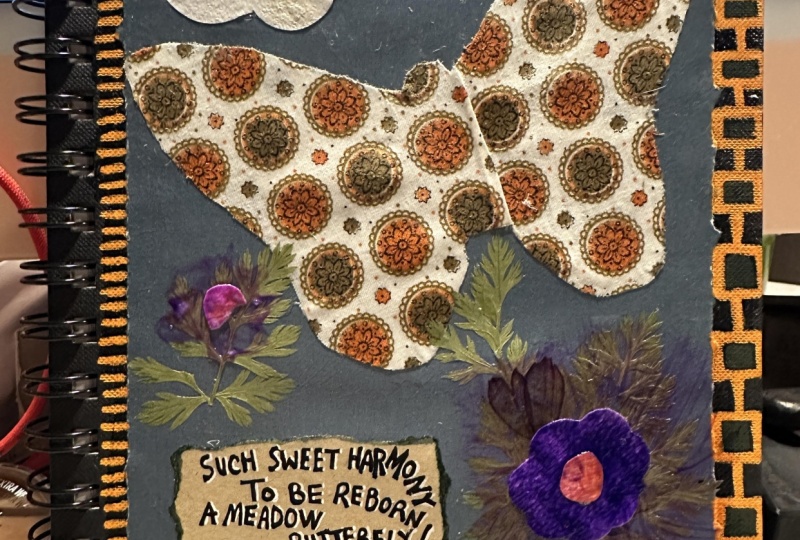
ephemera that I found. You can use whatever you want. And last for this one
is a pressed plant. I love pressing
flowers and plants, and then I glue them
onto this paper, then cut them out, and
then now I glue it into the back cover
of my sketchbook. What a great way to
break in a sketchbook. Feels like I could put down
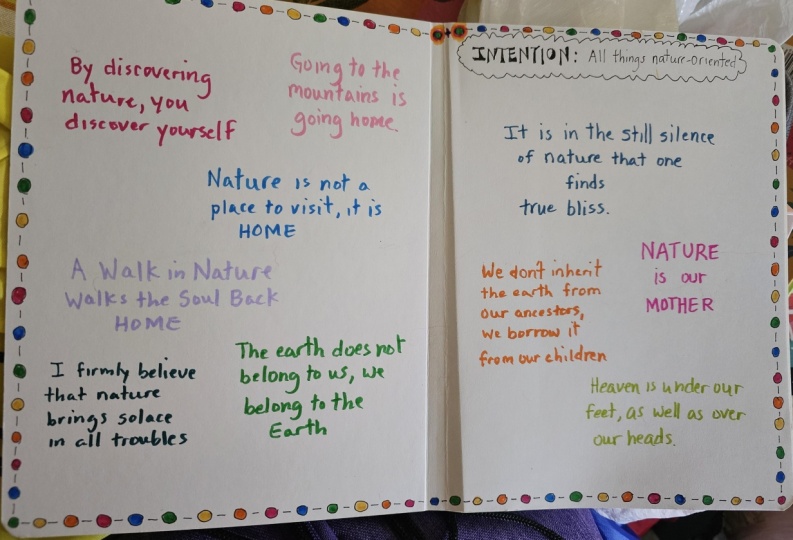
some good ideas in here now. Data. Last but not least, you can break in
a new sketchbook by writing down your intentions. What are your goals
with this sketchbook? What do you want
to get out of it? Sometimes just brainstorming and filling that inside
cover or that first page with a bunch of your
goals and ideas and aspirations is
really liberating. So, for me, I put in how important it is
for me to practice, experiment, and have fun. It's sort of like a mantra. You could write your mantra
to break in a new sketchbook. And here is my mantra, right? This one is going to be
about experimentation and play one of the best
things you can write to break in the beginning
of a sketchbook and set the tone is an
inspirational quote. And here's the one I like.
Whatever you can do or dream, you can begin it. Boldness has genius,
power, and magic in it. Begin it now. Now
it's your turn. Have fun with it.
 Marley Peifer, Journal for Life