Transcripts
1. Introduction to the Class: Hello and welcome. My name is carried on and today we are going to be discovering what makes a good book for an altered book. In this class, you're going to learn how to select a book. You'll discover what kind of books that you'll want to avoid and what kind of books that you will want to look for. I will also be sharing with you how you can find these books. I've been dabbling in altered books for a couple years now, but I've been doing art journaling for over six. And when I made the transition from a professional grade art book that I could do my, my art journaling in. I was really challenged with the quality of the books that I was finding and I ran into a lot of different things. So in this class, I'm going to get to share with you what you are going to want to look for in an altered buck. Let's get started.
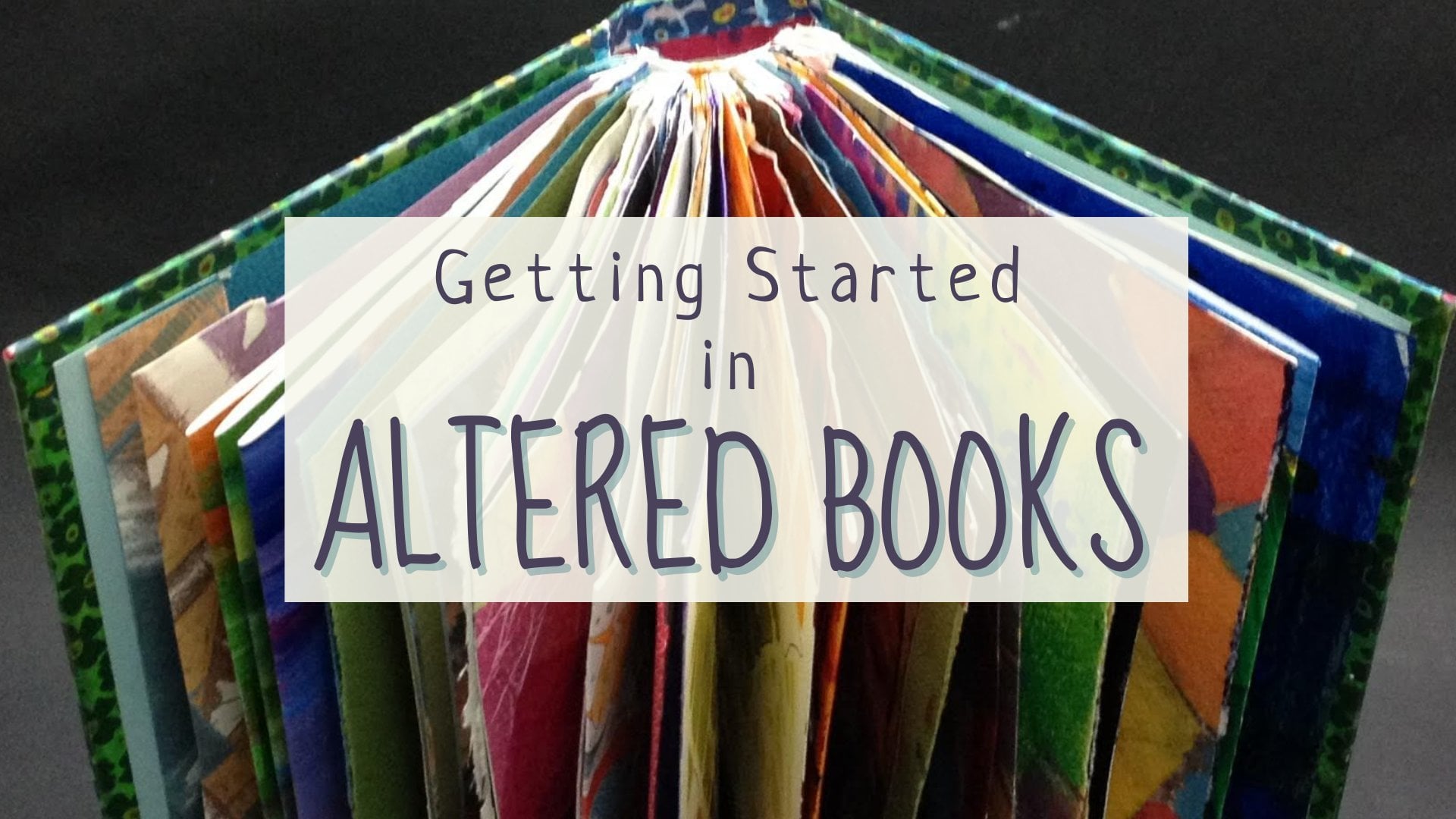
2. Selecting Books to Alter: As you can see here, I have a wide variety of books that I've selected to show you. Now some of these books I did handpick to do altered books with, and some of them are just books that I grabbed off of my shelf. The first book that I'm going to show you is one that I picked out and I may still do something with this, but I don't think it's gonna make a good altered book. This is one of those books that you can pick up. That is Catholic inactivity book where you can do all kinds of fun things in it. And the content of these pages make it really great, altered book because it already kind of gives you some starter content to go with. But the problem with this book is the binding on it. The binding on this book is glued, so there's no stitching. You don't see any individual signatures. And I'm going to show you what those signatures look like in another book, so don't worry about it. If you don't know what that means. What you're looking at, what you're looking at here is a binding that the pages have been just cut and glued. And what happens with books like this is they will fall apart. And you've probably experienced this before where, you know, when you first get the book, all the pages are kinda springy like this, right? But then you break the spine and what happens? Some pages can start falling out because you've broken it. When working in an altered book. One of the things that's going to happen is you're going to want to lay your pages flat so you can actually work in them. You don't want them springing up on you like this. But what happens with this type of binding is you break the spine in order to make it lie flat. Now that doesn't mean that this kind of book is not going to be usable. Because I can take these pages out and I can use them in an altered book. The next books that I'm going to show you is a book that's some age. And this book I originally picked up to do an altered book with, but what I found was the pages are just a little too old. Some of the telltale signs of pages that are a little old and brutal are yellowing, which you will notice around the edges. This means that this book is just going to get more and more brittle with age. Now this book does have the kind of binding on it that you want, where the pages are going to lie fairly flat without breaking the spine. This is actually stitched with signatures, but I have a better example that I'm going to show you for that. This has its possibilities. I can use the pages book and glue them into my other altered books. As for like collage and things like that. And the paper, the paper will work just fine for that. And now I'm going to show you an example of the signatures because I think you can really see them in this get this right up there. So what you can see in here, you can see that that curve in the spine where these I think there's like one there's just like for signatures in here. So you've got four main sections. It's like the papers have been folded in half and then bound together. And another thing that you can, that you're looking for is the stitching. This book has been stitched together with signatures that are folded. So this is not going to come apart like that first book that I showed you. And the pages are going to lie nice and flat. This right here is an ideal book. It's ideal for more than one reason. It's ideal because it's got the right kind of binding. It's not going to fall apart when I fly my pages flat. It's ideal because of the size, at least for me. I loved the size of this. It's not going to be too heavy him work. If you start off with something that's too big, it can be too intimidating and too much work to do. And this book has got some of the most interesting images in it. I mean, I could really do a lot with just the content in this book. But there's another thing that makes this book very, very useful, and it's the kind of paper that it's made of. It is made with paper that has a matte finish on it or a no finish at all. So it's not glossy, It's not shiny. It doesn't have any anything that's going to wrinkle up and cause problems. The paper itself is fairly heavy, so it's not too thin. It's just right. I'm really looking forward to using this book. Ideal, but, okay, so here's another one that has a binding that is not what you want. This is a hardback book like this one, but the pages have been glued. So just because it's a hardback doesn't make doesn't mean that it's been made with signatures that had been sewn in and can lie flat. This book also has the problem of yellowing pages, and this book is not that old, which means that it's age really badly. I'm, I could probably get away with using this book as an altered book right now. But I don't think it's ideal mainly because it just it doesn't it doesn't lie flat. It's all. It's too, too curved. Old children's books. I pick these up on purpose because they are, they make really wonderful altered books. They not only have great imagery in them, but the older children's books like this one, little golden books have the kind of finished paper that you want. Nothing shiny allowing the new, newer children's books have these great glossy pages and they are just horrible to work with. At least that is what I have found. Also working in an old children's book like this could be a it's for me. It's a book that I read as a child, so it can really be great. Now this book has a very different kind of binding in it. It does not have the signatures. It's but but it's not glue. Okay. It actually has some stitching that run through it. Let me see if I can try to show you how this is done. So the stitching in this book goes through this. So it's a little different walls, quite a bit different than the binding that I showed you before. Where when you open it up this way, you can see the stitching in here. In this book. You can't see the stitching because it is really in there. It's it's actually going back and forth along this spine and you can you can actually feel the stitching. There's stitch there and there's a stitch there. So it's a really simple stitching, but it's really, really sturdy. The pages in this, even though it's bound like that, do live fairly flat. So I think this is a great book to be working in. Another thing that makes this a great book is very small. There's not that many pages. And when you're working in an altar book, a lot of times you'll take two pages and you will glue them together, or sometimes three pages to put them together to add a little bit more weight to your pages. And the, if you have too many pages, you end up with a book that is a lot to have to work with. But this book, if I include together every three pages, I would have a really nice small altered book. Could be very ideal. Okay, I have another book here and I really, really, really, really wanted to make this book work as an altar book. The paper itself is not like super glossy, but it still has a bit of a finish on it. And you can see that here on the dark page. It's still kinda shiny. And this is not ideal for an altar book, although this could work. It's not that super heavy, glossy ones is just kinda got a little bit of a shine to it and it could possibly work. The binding is good. I can see the individual signatures and how they are paid. The signatures are folded. Signatures are basically just several sheets of paper that had been folded and put into a book. The books order to in order to make the binding. And this is also a sewed binding. I can see where the stitching is and the pages don't lie is flat is I'd want them to, but I think it's still, it's flat and I can make this work, especially if I take things like clips and clip the edges, I can work with it. So while not ideal, this is a great book. Another thing to look for in a book is The cover. A lot of covers of books are really super glossy and shiny. You can have a really hard time getting materials to stick to that. What I have found is that no matter how much I tried to prep that, those glossy covers, my paint just wants to scrape right off. So this has a nice paper finish on it that is not finished. It's a paper. It's just like raw paper. So I really like that about this book. As opposed to this one which is the super shiny example that I wanted to show you this kind of book. I am yet to find a way to cover these books that really, really works. This book does have signatures in it that are sown and the pages like nice and flat. So in that respect, this could possibly work, but the pages do have a bit of a finish on them that will probably make this book challenging to work with. Still, I think that this is a good book to recycle because it's got a lot of really great content and interesting imagery and things that you can recycle in to an, a different journal. There may be some parts of this book that's like, yeah, I really want to remember that. But I don't need, you know, all of this. I just want these few pages. So I might take some of these pages out and put them into a different book and make an altered book for this topic. Another kind of book that it can be really great to turn into an altered book is a book that's designed for you to work in. So this is like a workbook. And the pages in this book are perfect. They don't have any shiny stuff on them. They're nice, matte finish. It's got lots of interesting images in it. It's already a workbook. So I could just take this and work in it as a workbook or I could turn it into an altered book. Why would I want to turn this into an Ultrabook? Well, like I said, with the altered book, generally, you take pages and you glue them together. Or you can remove pages to reduce the bulk of when you add like collage and things like that. But this book right here has, it has all of the qualities except for the cover itself. While it's not super shiny, I might have a hard time working with this. And yet the cover of this book in itself is just, it's just gorgeous. And I might not want to change the cover of this book. And one more book that I want to show you. This is a book that is a hardbound book. It has the ideal bindings so you can see the individual signatures in there. And it is they are sown in there. It's got minimal finish on the pages. It does have some finished to the pages, but it's not bad. I think that this could be very usable. It's got great imagery to start with and a lot of content that I can already work with. I love the idea of using this in an altered book.
3. Where to Find Books: Okay, I've shown you several different kinds of books that you can use in your altered books, why you would want to use certain ones and why you will want to avoid other ones. Now I want to talk a little bit about where you can find these books. A lot of books that I have picked up. I've picked up at libraries sales. Some libraries will have a shelf where you can just buy used books off of them might be used library books. People donate books to the libraries also. And used bookstores are an excellent place to find books to alter. I have a half-price books near me and they actually have a special aisle. Super, super discounted price or a lot less than half price. So there's a lot of books in there that I pick up for a dollar. And these are just kinda books that they are just, they know that they probably have some value, but they're, they're not worth that half-price. One of the books that I picked up there was this one. And so you can find a lot of old books in that section. And I've picked up several other unique books that worked very well for altered books. So this is one that I bought brand new. And I've read the book, It's a great book. And I want to give it a new life. In a way it's kind of like diving into the material a little deeper, doing some art journaling in it, and really letting the content marinate. So don't be afraid to take a book that you absolutely love and turn that into an altered book. One thing that I would hesitate to not do is buy books online because you really can't get a feel for the book. If you're buying it online, you won't know what's a cover looks like. So a lot of hardback books have a dust cover on it and those are going to be super shiny. What you need to get beyond the dust cover and find out what's underneath it. And you can't do that when you buy a used on line. And one more resource so they want to share with you. And there are several of the books that I picked up that I showed you, including this one. I picked up this these books. I've got three of them today. I got these at one of those little local neighborhood libraries. You know, the little boxes that people buy them. They make these little public libraries for people to come in and get books for free and put books in them. I love that. I have about six of them in my neighborhood so I can go out walking and find great books to alter.
4. Class Assignment: And now that we have explored books to alter, your assignment for this class is to find a book to alter and share it in the classroom. I would love to hear where you found the book, why you picked the book, and what makes it a great book for altering. All right. Thank you. Bye.
 Karen Dawn, Creative Soul Journeys