Transcripts
1. Introduction and Project: Hello, and welcome to How
to read a knitting chart. My name is Madeleine from
Knitting House Square, and I've been creating
knitting tutorials for over five years. Here on Skillshare, I have
many classes available, including how to
knit socks that fit and how to knit Brioche
just to name a few. In today's video, we're
going to be going through how to read
a knitting chart. Knitting charts can be one of the most intimidating skills
to learn as a new knitter, but they can be
incredibly useful. What they are, is there
a different way to display what stitches
you should be working. For example, we're going to be working through
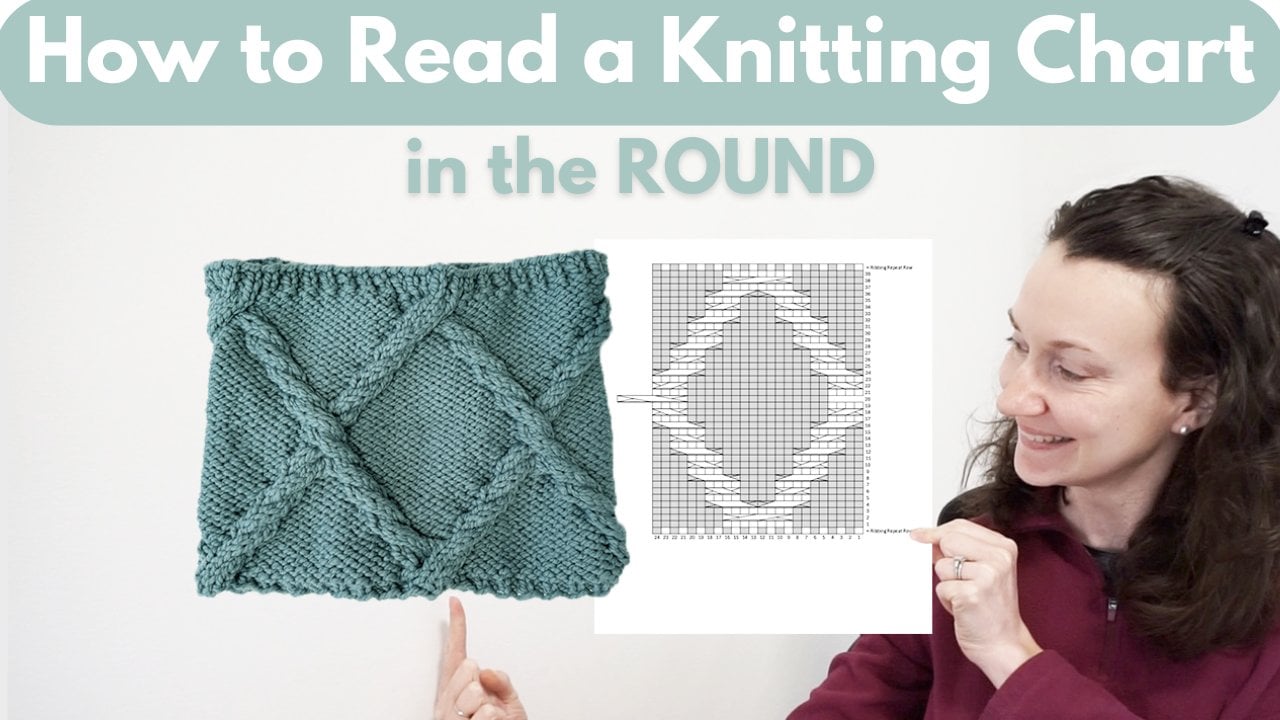
this chart shown here. In this course, I'm going
to walk you through a simple and intuitive
way to figure out exactly what your stitches should end up looking like. Hopefully, by the
end of this course, you're going to be a pro and how to read any knitting chart. Our project is going to take us all the way
through this chart, and the only skills
you need to come into this class with are you need
to know how to cast on. You need to know how to knit, how to pearl, and
how to cast off. Anything else I'm going to
teach you along the way. The different skills we're
going to go through is first, we're going to start off with
some simple stitch patterns that you may have seen before. We're just going to
be thinking about. First, how do we read it
chart? Where do I start? Do I start in the top corner? Do I start in the bottom
corner? What's happening here? We're going to figure
out where to start, what each box means, and what our work should
look like so that we can check ourselves as
we're knitting across. Some basic stitch patterns
that we're going to work through include
garter stitch, stock inet stitch,
ribbing, and seed stitch. Now, once we've gotten through those four different
stitch patterns, you'll have a great basis of
how to read knitting charts, specifically when
they're talking about knitting and pearling. Do we alternate across rows? Are we alternating one
stitch to the next? Then at the end of this class, we're going to add
in a fun challenge. The challenge we're adding in
is how to read cables now. So Cable knitting patterns
are almost always charted because they give you a nice visual view of what
your work should look like. So I'm going to go through how you would read a cable chart. And specifically, we're going to think about how
could we look at the symbol and know exactly
what that symbol means. How many stitches
are in the cable? Should we hold that cable needle in the front or the
back of our work? So we're going to go
through all of those. So hopefully, by the
end of this class, you can read a chart without ever even needing the legend. As always, also, if you ever have any questions
along the way, feel free to leave them in the discussion tab
of this course, and I'll be sure to get back
to you as soon as possible. I hope you enjoy. Down in the description tab
or the project tab, you're going to find this
PDF downloads that you can follow along across
the different videos. And first, before we
get into the knitting, we're going to go through the
materials in the project, and also the basics
of a knitting chart. So let's get started.
2. Materials and Cast On: The materials you're going
to want to have to make this project are first off. You're going to want to
print out one of the charts. That makes it really easy to
follow along with the video, and along with the chart, you're going to want
to highlighter. That way as we finish each row, we can highlight
and keep track of exactly where we are
in the knitted chart. Then you're going to
want one stitch marker, and you do want a stitch marker that can clip onto your work. This one opens and you can thread it through
your work and then you can close it again. A pair of scissors,
a cable needle. I like metal cable needles. This one specifically
is by Cocoa knits, and it's called the
curved cable needle. Then lastly, we need the yarn
and the knitting needles. For this project, I
would recommend using either a decay weight or
a worsted weight yarn. These two that I'm
showing right here are both going to be dec weight. Another name for dec weight is this three symbol or sometimes
called Light worsted. That'll make a nice
stitch texture and your stitches
will also be large enough to be able to easily and clearly see where you
are along the pattern. If you are using one of these number three DK or
light worsted weight yarns, use the knitting
needle it recommends. Here, this yarn recommends
a US five knitting needle. Right here, I have a US
five knitting needle. Now, this project is knit flat. You can use either
straight knitting needles, or you can use circular
knitting needles and just instead of
knitting it around, use them to knit flat. The other option,
if you like to use a bit bulk here of yarn is
you can use a worsted weight. This swatch here, I knit
using worsted weight yarn. Worsted weight yarn,
sometimes it's also called medium
or number four. Typically, if you're using
worsted weight yarn, it'll recommend a size US eight or five millimeter
knitting needle. Your swatch will just end
up being slightly larger. The exact yardage requirements for each of the different
weights of yarn, I have listed in the project
description for this class. Once you've gathered
all the materials you need for this project, you'll be all ready to cast on. Now, the first thing
we're going to want to do is cast on 32 stitches. It doesn't matter what weight of yarn using anything like that. We're all going to cast on
the same number of stitches. The way I know how
many stitches to cast on is if I look across this
bottom row of my chart, it counts all the way up to two. That is my total number of
stitches. I want to cast on. I'm just going to use a
really simple cast on method. You can really use
anyone you'd like. The one I'm using is going to
be called the backward loop cast on where you start
off with a slip knot. Place the slip not on
your knitting needle. Then you just
create little loops around your pointer finger and slide them onto
your knitting needle. I'm going to do that until
I have 32 stitches cast on. Other good cast on
methods you could use. You could use something
like the long tail cast on, the German twisted cast on, really anything you'd like or that you're comfortable with. Okay, so I now have my
32 stitches cast on. And for right now,
I'm just going to put my knitting needle and
my yarn to the side. And first, we're going to talk about how
knitting charts work.
3. Introduction to Reading a Cable Chart: Now, in the next
part of this course, I'm going to be going through
how to read a cable chart. Now, cable charts
can be pretty tricky because there are a lot of
symbols and colors going on. But what you want to keep in mind and remember is that if you ever get confused about what you're reading
on the cable chart, I provided a full legend. The legend walks you through exactly what each one of those
different stitches means, either on two key terms here, the right side or the
wrong side of your work. So right side abbreviated RS, that is going to be the
front side of your work. The side that you're typically viewing when you want to
look at your project. Then the opposite to that is WS, which stands for wrong side. This is the back
side of your work. So because we're reading
cable charts flat, there's a big difference on
how we read a cable chart, whether we're on that
right side or wrong side. Now, to start off, before we get into this
chart specifically, I want to emphasize
that this video is how to read knitting
charts for flat knitting. If you were working on a chart
for knitting in the round, you would read it
slightly differently. Now, for charts overall, each one of these little
squares represents one stitch, and the color of the
stitch identifies what the stitch should look like on the front side of your work. Typically, a white
box like this would be one knit stitch if you were to view your
work from the front. A gray box would be one pearl stitch if you were viewing your
work from the front. If we look at a quick example here and I set my work
next to this chart. What I can see here is that basically I have a row
of white stitches. That's saying from
the front of my work, which I'm currently looking
at the front of my work, this should appear all
as flat knit stitches. The work does like to
curl up a little bit. But you can see in between the cast on edge and that
first set of Pearl bumps, I have one flat row. Then after that, I have
one row of gray bumps. That's saying from the
front side of my work, it should appear as a
row of pearl stitches. Then next up, I have one
row of white stitches. We go back to the
flat portion of our work in between
the pearl bumps. That row in between
is knit stitches. Then we go back to
pearl, then knit, then pearl bumps, then
knit, then pearl bumps. That takes me all
the way up through this first portion
of the pattern. Then this next portion of this chart shows
only white boxes. That's saying that all the way across the front
side of our work, we should only be viewing
those flat knit stitches. If I look over here, all the way across my work in
this whole portion, I just have the
flat knit stitches. This first section would be garter, then we
have stock in it. If I move up a little bit, now I'm alternating across
a row between knitting or having the flat stitch and pearling to create
that pearl bump. Then I'm knitting
for the flat stitch, then I have a bump,
the pearl stitch. It's staying the same
row after row after row. Across the front of my work, it's always alternating
between knitting and pearling. If I go up again here, I have something
called sat stitch. For sat stitch, now we're alternating
knitting and pearling, and we're alternating
it row after row. All of those pearl bumps should essentially be
offset from each other. You can see each one of
these pearl bumps is offset. Essentially what we're trying
to do when we're reading a chart is we're
trying to figure out what should be a knit
stitch on the front side of our work and what should be a pearl stitch on the
front side of our work. This is a nice visual
representation of seeing exactly where each one of those pearl bumps is and seeing exactly where each one
of those it stitches are. Now in this tutorial, we'll
also do a cable portion. We're going to save the cable
portion to the very end. It does follow the same rules. Anywhere that's out, you'll
see those are all going to be the pearl bumps and
anywhere the white boxes are, those are the nit stitches. But you can see we've added in extra symbols and that's where the different cable patterns
go where we're moving our stitches across our work
and layering our stitches. Now that we've gone
through some of the things that a
knitting chart shows, Let's talk about what exactly each one of the
different colors means. If you look at the legend, if it shows a white box, that says knit on the right side or pearl
on the wrong side. Now, why that is the case is
anytime there's a white box, I wanted to show up as a knit stitch on the
front side of my work. But the trick is that
I'm knitting flat. Because I'm knitting
flat, one row, I'm going to be going across the front side of my work or
the right side of my work. If I want it to appear as a knit stitch on the
right side of my work, I need to knit that stitch. But when I turn my work
to go back across, I'm looking at the
wrong side of my work. I actually need to pearl
on the wrong side of my work to get the right side to show
up as a knit stitch. Now, if you didn't catch
that, don't worry. I'm going to go through
that over and over again as we go through
the different videos, but let's think about the
opposite here for a second. If we think about one
of these gray boxes, the gray boxes say perl on the right side or knit
on the wrong side. What we're saying there is now let's think about
one of these rows of pearl bumps is if I'm going across one of these rows and I want a pearl
bump to show up. If I'm knitting across
the right side, I would just pearl to get
the pearl bump to show up. If I'm going across the
wrong side of my work, and I want a pearl bump to
show up on the other side, I would actually
need to knit across this side of my work
or the wrong side. It's exactly the opposite
as the white box. Now the last thing
I want to talk about on knitting charts, especially for flat knitting is how you actually go
about reading the robes. As I was pointing to this chart, how did I know to
keep on pointing down here to this
bottom right most box? Why wasn't I pointing
to the box up here at the top left as if you were reading a piece of paper
or something like that. The way knitting charts work is you actually read them
from the bottom corner, bottom right most corner, and then you read them up. If you think about this
chart being a piece of work, let me put my piece of
work next to this here. The way I would actually knit this piece is I have
my cast on edge. This is actually
where I'm starting. I work row after row
all the way up through my work until I cast
off across the top. I'm knitting from the
bottom of this chart, the cast on, all the way up through the
top for the cast off. Now the next point is important
for flat knitting charts. When I'm actually
knitting this piece, I'm going to work across
the front side of my work and then turn my work and work
across the back side. What that actually
corresponds to on the chart is the first row, I'm knitting across
this direction, going from right to left. This first row, you'll notice
the little arrow there. You're reading from right
over towards the left. Then We'll think about
it on this piece. I just worked all
the way across. Where I am is
currently right here. Now when I turn my work, I'm going in the
opposite direction. I'm starting just above the stitch I just worked
and going across. On the chart, what that actually looks like is I
go right to left, across the first row. Then across the second row. I'm going to go up
and then I'm going to go left to right
all the way across. Then for the next row, going up here to three, three, I am again going to
go right to left. Each one of these odd rows, I'm going right to left
as I'm reading it. Each one of these even rows, I'm reading those from left
over towards the right. So now that we've
gone through some of the basics of knitting charts, such as one box equals one stitch that we start in
the bottom right corner, and the importance of paying
attention to whether you're on the right side or the
wrong side of your work, we're all ready to begin
our first stitch patterns. So grab your cast on edge, and in the next video, we'll be walking
through garter stitch and stock ande stitch.
4. Garter and Stockinette: Now, where we want
to start off is again the bottom right
hand corner of our chart. If I look at row one and box
one down here in the corner, I can see that this
is a solid white box, and this row one is part of the right side of our
work, so the front side. Now, a white box on the right side of our work
tells us we want to knit. Each one of these white
boxes going all the way across are all going
to be knit stitches. The first thing I want to do is take my little piece
that I've cast on here, and I'm going to knit all
the way across this row. Okay. Now I finish knitting across
the right side of my work. The first thing I
want to do here, even before I turn
my work is I'm going to take my removable
stitch marker, and I want to clip it onto one of these stitches on
the right side of my work. This just tells me keep
track that this is the front side and the other
side is the back side. So I've clipped it on, and now
I'm going to turn my work. First thing and something I would always get in the
habit of doing before you start the next
row is I would highlight or somehow mark off the row that
you just finished. We just went right
over towards left, all the way across row one. Now, when I went across row one, the last stitch I
finished with here was stitch 32 over
here on this side. Now when I turn my work to start beginning working
across the other side, this stitch on the end
is still stitch two. I want to look just above
that because now I'm working across the back side to
see what I should do here. This second row, I'm going to be working in the
opposite direction. I'm going to work
this second row going from left over
towards the right. Now, each one of
these are grayed out. There's a couple of
different ways to think of those gray boxes that
I've mentioned before. First option is you can look
at the legend and it says, if you're on the right
side of your work, gray means to pearl, and if you're on the
wrong side of your work, gray means to knit. That tells me I am on the wrong side of my work.
Now I'm on the back side. I'm not on the side
with the stitch marker. I would want to knit all
the way across here. Another way that you
could think about that, if you didn't want to use the
legend is that this row is saying that I should
see a bump or a pearl side bump on the
right side of my work. How do I get a pearl bump to show up on the opposite side? The way I do that is
to knit a stitch. I need to knit all the
way across this row. So I just knit all
the way across. And now, I'm going
to turn my work, and I'm going to highlight
across the row I just did. So I'm going to try and keep on highlighting in the
direction that I knit. So I just knit from over here on the left,
towards the right, all the way across. Row two. Now when I look at my work, I can see that my stitches are following exactly what
the chart says to do. I should have all
those white boxes, which should appear
as knit stitches. That's this bottom flatter row. Then I have the row of gray, which should appear as a pearl bump on the
right side of my work. I have all those pearl bumps just below my knitting needle. Again, I have my stitch marker marking that this that
I'm about to work across is now the right side or the front side of my work. Because I just went left
towards right across row two. Now the first stitch
I'm starting with on row three is going to be
that right most stitch. I am again going to be going
right over towards the left. I'm on the right
side of my work. I want to think
about what's going to happen on the right side. Each one of these
are white boxes. That's telling me I want to have knit stitches showing on
the right side of my work. How do I do that? If I
am on the right side? I'm just going to knit
all the way across. I knit across. Now I'm
going to turn my work and highlight across row three, I went from right over
towards the left. Now I just finished
with the second stitch. When I go up to the next row, I'm going to be starting
with the second stitch and going over
towards the right. This is now again, I'm going to mark it as
WS for wrong side. I can also tell it's the
wrong side when I look at my work because my stitch
marker is on the opposite side. I'm on the back side or
the wrong side of my work. But if I think
about, this gray row should show up as a pearl
bump on my right side. How do I get a pearl bump to show up on the opposite
side of my work? I knit all the way across. When I knit across, the pearl bump goes
to the opposite side. I'm going to turn my
work and highlight across the row that I just did. Now, you want to keep on working through the
next four rows here. Again, things to keep in mind, each one of these
odd number rows, five and seven, you're going
to be working from right, over towards the left, across the right
side of your work. Then each one of
these e number rows, you want to be
working from left, over towards the right, across the wrong side of your work. You probably notice that
across these first four rows, even though they show
up as different colors, we're actually just knitting
each one of these rows. The reason they show
up as different colors is because if I knit
across the wrong side row, it actually shows up as a
pearl bump on the right side. This picture is an image of
the right side of our work. We're alternating
between knitting on the right side and knitting
on the wrong side, creating that pearl bump. On the right side of our work, it shows up as knit pearl, knit pearl, knit
pearl, knit pearl. I hope that made sense. If it ever doesn't,
feel free to leave a comment in the discussion
post for this course, and I'll definitely try and explain it a different
way as well. Continue working all
the way up through Row eight and be sure to continue highlighting
as you go along. Then next s, I'm
going to come back and I'm going to
show you how to do this stock net portion in
between row nine and Row 16. Once you finish that
garter stitch portion, your work should look
something like this. Across the bottom
of my cast on edge. Then I have the
flat knit stitches. Those are always a
little tricky to see because they
like to hide a bit. I have a row of pearl bumps. Then in between, I have those flat knit stitches,
a row of bumps, flat knit stitches, P bumps, knit stitches, P bumps. Those bumps should be just
below the knitting needle. As I begin row nine, I should have the right
side of my work facing up. Row nine, we're going to be working from right
over towards the left. Row nine all the
way through row 16, you see this fully appears as white boxes. What
does that mean? That means that when we look at the front side of our work, we want it all to be
flat knit stitches. If we look at our finish
sample right here, we want to go from alternating between those Pearl bump rows to essentially just having those flat knit rows
continuously going. The way we accomplish this is actually our right side
row is exactly the same. If we look at row
nine versus row one, row three, row five, or row seven, it's all just white rows going
all the way across. We are just knitting all of those stitches when we're on
the right side of our work. What we want to
think about doing differently though is what happens when we're working across the wrong
side of our work. Something like row ten
across the wrong side. If I'm working across the
wrong side of my work, but I want the right side
to have a knit stitch, I need to work the opposite. I actually need to
purl all the way across each one of
these wrong side rows. Although it appears as if we're doing the exact same
stitch all the way across. This huge block of white
boxes actually represents knitting across the right side and purling across
the wrong side. So that when you look at the
right side of your work, all you're seeing are
those flat knit stitches. Let's work these
first two rows here. First, row nine, row nine again is a duplicate of
what we've done down below. It's a white box that tells me I want a knit stitch on the
right side of my work. I'm just knitting all
the way across this row. Again, I know I'm on
the right side of my work because my
stitch marker is facing I go to turn my work
and highlight across. And now across row ten. Again, I'm starting at
stitch 32 here because it's on the wrong side.
It's a white box. If you use just the legend, the white box says to knit on the right side or pearl
on the wrong side. Because this is a
wrong side row, we would be purling
all the way across. The other way to
think about that is the way I described before, where because you're
purling on the wrong side, what's actually going to end up showing up is it's going to look like a knit stitch on
the right side of your work. Let me pearl a few here so I can show you what
this will look like. If I turn my work, we can see how the front side of
my work is all just flat. Pling on the wrong side creates that flat stitch it stitch
pattern on the right side. We want this whole portion
to look like that. I'm going to keep on
pling across this row. Turn my work again.
Highlight across. Now row 11. That's
again a right side row. Across the right side,
it's a white box, so I would knit all
the way across. Then when I turn my work for row 12 across the
wrong side row, the white box on the wrong
side row is a pearl stitch, so I'm going to pl
all the way across. I'm going to keep on
alternating between knitting the right side rows
and p the wrong side rows all the way up row 16 to create the stock
int stitch pattern. Now that we've worked through garter stitch and
stockinette stitch, we're going to add on
a level of difficulty. So for garter stitch
and stockinette stitch, our stitch patterns were only changing from one
row to the next. We were thinking about,
do we knit across the full row or do we perl
across the first row? So to add on that challenge, in the next lesson,
we're going to be going through two
stitch patterns. We not only do you alter
from one row to the next, but you alter from one
stitch to the next. So we're going to
be going through a riving pattern and a
seed stitch pattern.
5. Ribbing and Seed: Now, this next portion
of the course, we a switch from just
alternating one row to the next, what we're working to actually alternating
stitch by stitch. If we look first
at row 17 to 24, we can see that across each row, we're alternating between the white boxes and
the gray boxes. The white box, row 17 is odd. Again, that's a right side row. We're alternating
between knitting and pearling as we go
all the way across. If we look at the front
side of our work, thinking about
these rows overall, the front side of
our work should show a column of knit stitches, followed by a column
of pearl stitches. It stitches, pearl stitches. Looking at what it'll
look like in our swatch. You can see exactly that. Let me just work in a little
bit here from the side. Right here, I have a
column of pearl stitches, that would be one of
these gray columns. Then next to it, I have a
column of knit stitches. That would be one of
these white columns. They keep on alternating between pearl columns
and n columns, Par columns, n columns
all the way across. Now, let's start with row 17 because that is
a right side row, so it's a little
bit easier to think about what each one of these
stitches are going to be. Again, the first box is white, and this is a right side
row. It's an odd number. White means that we knit
on the right side because we want to knit stitch to show up on the
front of our work. I'm going to knit
the first stitch. Then next up on a
right side row, we have a gray box. I want there to be a pearl bump on the front side of my work. That means I'm going to
pearl the next stitch. Then again, it goes back to a white stitch.
I'm going to knit. Then we have gray, so
I'm going to p. I'm going to keep on
alternating between that knitting and pearling all the way across this row 17. Finish with that
final pearl stitch. I'm going to turn my work. And I'm going to highlight
across what I just did. Now, row 18, we're working
across the wrong side. If we look at what
this first stitch should look like,
it's grade out. On the front side of our work, we need there to
be a pearl bump. That tells us that if we want the front side to
be a pearl bump, then on the back side,
we have to knit. I start off with knitting. Then I have a white box. The white box means that on the right side or the
front side of my work, I want it to be a
flat knit stitch. The way I get a
flat knit stitch on the front is I
pearl on the back. Then again, it goes
back to a gray box. I want it to be a pearl bump on the right side or the
front side of my work. The way I get a pearl
bump on the front side, or right side of my work is I knit on the wrong side or
the back side of my work. Then again, it goes
back to a white box. I want to knit
stitch on the front. How do I get that? I
pearl on the back. I'm going to keep on alternating between knitting and pearling all the way across this row. Now I finish off with
that final pearl stitch. Turn my work, and
again, high it. Now Row 19 is odd. Again, we're going to
be working right to left across the right
side of our work. One way that you can check
that everything you did is lining up is when you look at the front
side of your work, you should be able to see
the column starting to form. You should have a column
of knit stitches, followed by a column
of pearl stitches, the knit, then pearl. I can see that I have two knit stitches right on
top of each other. Then two Pearl bumps right
on top of each other. Then two knit stitches
on top of each other, then two pearls on top of each other. Go all the way across. That is how I can make sure that this pattern in here is
lining up correctly. This is also an
example of ribbing. This is one by one ribbing while you're alternating between
knit one and pearl one. Now, I'm going to continue
doing the next six rows here. Again, across the right
side, I have a white box, so I want the front side
have my stitch marker here. The front side to appear as
knit, so I'm going to knit, then I have a gray box,
the front side that I'm on should appear as the
pearl, I'm going to pearl. White knit, pearl knit, pearl knit, all the way across. Then when I work the other side, or the wrong side of my work. I want to think about making a pearl bump on the
front side of my work. The way I do that is I
knit on the wrong side. Then for the next one, I want to knit on the right
side of my work. The way I do that is I
pearl on the wrong side. I'm going to continue
working rows 19 through 24 to create this
ribbing pattern. Then when I come
back, I will show you this fun seed
stitch pattern up here, where now we're alternating stitch by stitch and row by row. The last pattern we have to try before the cables
is the seed stitch. With the seed stitch, again, we're alternating between
stitches and across rows. Basically what we
wanted to look like on the front side of
our work is we want there to be a little pearl bumps creating a checkered pattern. If I look at my swatch here, you can see that where
the pearl bump is is alternating across rows. Now, how this works on
the chart is first, let's start with our
first right side row of this pattern,
which is row 25. First, I have a grade out box. I want a pearl bump on the
right side of my work, followed by a white box or a knit stitch on the
right side of my work. Because I am working
across a right side row, I have my little stitch marker
there down at the bottom. I'm just going to be
alternating between Pearl one, one, per one, knit one. Repeating those two stitches all the way across
this first row. You may also be noticing
as you're working across that you should be doing the exact opposite
of the stitch below it. For example, below it, I have a pearl stitch here, but I actually need to knit it. That shows up in my pattern. If you look at row 24 in
comparison to row 25, we want basically the exact
opposite to show up on the right side of our work for each one of those
different stitches. Now I'm going to
turn my work. So I have the wrong side facing up. Real quick, I'm going
to highlight row 25. Now going across my first
wrong side row or row 26, I'm starting off with a gray s. On the front side of my work, I want there to be a pearl bump. I'm going to start
off by knitting. Then next to that,
I want there to be a knit stitch on the
front side of my work. On the back side of my work that I'm currently
working across, I want to pearl. I'm going to bring my arm
to the front and pearl. Now I'm just alternating
between knitting and pearling all the way across
the wrong side of my work. And now I'm finishing
off with that white box, which should be a pearl on my wrong side so that a it
shows up on my right side. Now turn my work. I'm
going to highlight across. Now when we look at our work
to check what we're doing, it sh look like those
pearl bumps are staggered. You have one down below, then one up above, then one down below, then one up above. That's exactly what
we want to happen. If you look at where the
pearl bumps are located, they're offset by one each time. Now as we continue
working through the rows. For instance, row 27 here, worked across the right side. We're going to start off
with the pearl stitch. We're going to
pearl one knit one, pearl one knit one
all the way across. Then again, we'll work the exact same wrong side
row we just did. We want a pearl bump to show up on the right
side of our work. We would knit, then p, the knit, then pearl all the
way across the wrong side. We're going to work those
two rows three more times to get all the
way up through row 32. Once you finish Row 32, you're all ready to come
back for the final lesson, which is where we
add on kind of like the final fun challenge
of this course. So one of my favorite things to knit in general are cables, and cable patterns are
almost always charted. So I'm going to be teaching
you a method to reading cable charts where you just look at the stitch pattern
that it creates, and you're able to tell exactly how many stitches
are in the cable, how many stitches to put
on your cable needle, and whether to hold that cable needle in the front
or the back of your work without ever
needing to use a legend. Now, of course, if
you ever want to, the legend is fully available. But I find it's very easy and intuitive to read cables once
you learn the basic tricks. So let's get started
with cables.
6. Cables Part 1: We've now arrived at
the cable portion. What's fun about
cables is you'll see that these symbols take
up more than one box. I'm going to walk
through exactly how you figure out
what to do with all these boxes when they have all the diagonal lines inside
of them along the way. We have a few different
combinations. You can see the first few
rows have repeats here. Then they start getting a
bit different as we go up the chart and they take up
different numbers of stitches. First, like two
things to note here. First is that we have
to work two set up rows before we actually
introduce in the cables. I'm going to work
rows 33 and 34 first. Then I'll get into the
explanation of the cables. The other thing I
want to note is that all of these cable rows, if you look at the
rows they happen in, it's 35, 39, 41, and so on. They're all odd rows. All of the cable rows essentially take place on
the right side of our work. We're only ever
inserting a cable when we're working across the
front side of our work. We aren't ever
doing that as we're working across a wrong side row. Wrong side rows are just
combinations of knitting and pearling depending on what the row tells you to
do as you go across. First, starting with
rows 33 and 34, we're just setting up where the cables are eventually
going to be. So we're setting up
where the pearl stitches are and where the
knit stitches are. Row 33, if we look at what
it's showing us here, it's an odd row, so
it's a right side row. We're working from
right to left. We have two pearls,
then four nits. Then two p, four nits, continuing across, finishing
up with two pearls. Then when we turn our work
and we work across, row 34. We're now working across
the back of our work, but we want the front
to have pearl bumps. We're doing the opposite.
We would knit knit, then do four pearls. To nits, four pearls. Two knits, four pearls, all the way across, finishing
up with two knit stitches. I'm going to work that
row 33 and 34 first, and then I'll get into the
explanation of cable stitches on row 35. Okay. So now we're up to the cables, which are my favorite part. First up, we just have
two boxes that are gray, and again, this is an odd row, so we're working
across the right side. So first, I'm going to
the first two stitches. Now next up, you're
going to want to get your cable needle out
because we'll need it. The way it can tell
us is a cable stitch is because it takes
up more than one box. If I count the number of
stitches this box takes up, it takes up one, two,
three, four boxes. That's the first thing
you want to check. This cable is going to
be four stitches total. The next thing you
want to check is the whole box white or there are portions
that are grade out. In this case, the
whole box is white, so all of the stitches involved in this cable
are going to be knit. Example where they
aren't all white would be something like this
up here on Row 41, where the background
is grade out. In that case, the whole cable and all of those
stitches involved are not n. But for now,
they are all it. Then next up, what you want
to do is you want to look at the bottom right most
corner of this box, and you want to see the
line coming out of that. The line coming out of the bottom right most
corner of this box is a diagonal line that goes in front of this other diagonal. We have this shape that's going in front of this
background diagonal. What you want to see is
this front most shape. How many stitches
does that take up? In this case, it takes
up two stitches, it's carrying those
two stitches in front and over towards the left. I'm essentially trying to move the first two stitches towards the left and have them end up two stitches
over to the side. How do I do that? I do that. By again, taking the two stitches that
I know are involved, and I'm moving
them in the front. I'm going to take the
next two stitches and slide them onto
my cable needle, B I'm holding them in the front, they're going to move
in the front across. Now, it's a four
stitch cable in total. The other two stitches
are going behind. They're going behind and
over towards the right. Again, they're white,
I want to knit them. I'm going to knit the
next two stitches. From my left hand
knitting needle. I just moved these two stitches that started out over here on the left over towards the right because I
worked them first. Now I'm going to work
the two stitches that I'm holding on
my cable needle. Now they're going
to be placed after the other two stitches involved. I want to knit the two stitches that are being held
on my cable needle. If I look at my work
and what I just did, I took two stitches
behind towards the right, and two stitches in
front, towards the left. If I look at my
cable pattern here, let me erase some
of this so I can draw it a little bit
more clearly again. I took the first two stitches, and I move them in the front
over towards the left, and then I took the
next two stitches, and I move them behind
over towards the right. That is what this cable
stitch pattern is showing. Now, of course, if
you don't like to use the pictures to figure
out each cable, you can also use the
legend of this pattern. The legend will describe
to you exactly what to do. I'll say slip the first two stitches onto the cable needle, hold it in the
front of your work, knit the next two stitches
from your left hand needle, then knit the two stitches being held on your cable needle. Now, after this cable, I
have two pearl stitches. I'm going to bring
my art to the front, and I'm going to pearl two. It is very common to pearl
in between cable stitches. One of the things
it does is it makes your cable stitches pop
out more in your work, so they look more emphasized. Now, I have the exact
same cable pattern again. If I look down here at
the bottom right corner, I have two stitches
that are going in front over towards the left, and the other two
stitches that are part of this cable are going
over towards the right. I want to put all
my cable needle, whatever's happening over here down in the bottom right corner. I have two stitches
in the front. Slide the first two to the cable needle,
hold it in the front. Then I knit the two
that are going behind. Then I knit the two being
held on my cable needle. Now when I look at
my work, and it's almost like you can look at
the top part of the stitch. I now have the two stitches that I'm starting out with are
the ones that went behind. Then the next two
stitches that I have in my knitting needle are the ones that were
carried in front. Then again, I have Pearl two. I have that exact same
cable pattern repeated three more times with the
two pearl stitches in between each time going
across the rest of this row. I'm going to work on that cable pattern all the way across. Now, once I work that
final pearl stitch, I'm going to turn my work and highlight the
row I just did. And now I'm all ready
to work across row six, which is even, so it's a wrong side row or
the back of our work. These next three rows are all similar stitches to you've seen before all the way in the
bottom part of the chart. For example, in row 36, we need pearl bumps on the
front side of our work. Get that, we're going to start off by knitting the
first two stitches. Then we want knit stitches on
the front side of our work. We're going to par the next, knit two, pearl four
right continuing across. Then we go right
back into 37 and 38, which is another again,
right side and wrong side, just knitting and pearling. Row 39 is exactly
the same as 35. As you work this row 39, make sure you're
thinking about how this cable stitch
works and focusing on that bottom right corner
and how many to put on the cable needle and whether to hold that cable
needle in the front, which it is in this case, or the back, which
we don't want here. Continue to work all the
way up through Row 40, which is a wrong side row, and then we'll come back
and rejoin at row 41, or we'll talk through
some of these cables, where now they aren't four
stitch cables anymore, and we also have the
grade out background. What do we do in that case?
7. Cables Part 2: Now, so far, what I have is I have the two cables
that I've worked, and every one of
the cables has been the exact same size and twisting the exact
same direction. Looking at Row 41, these symbols are significantly different than the ones
we've seen previously. Let's think about how we
would work these instead. Starting off the first block, that is just a
solid colored gray, so that one is just going
to be one pearl stitch. Then if we move over, we have a new cable
stitch and this one takes up 123 boxes. This is a three stitch cable. Now, if I look in the
bottom right corner, I can see that there's
just a bar coming out of there and that bar is carried
behind to the other side. Now, if I look at the
size of that bar there, that bar is really only
taking up one box. It's also going behind
this white box. This is telling me
it's one stitch and I'm going to hold
it behind my work. It's also grade out, that tells me it's
going to be pearled. Then if I look at the
next two stitches, I have two stitches
and it's a white box, those are both going
to be knit stitches. How would I actually
work this cable? Using the bottom right corner, I'm going to take one stitch on my cable needle and hold
it in the back of my work. Then I'm going to knit
the next two stitches for my left hand
knitting needle. Then I want to go back to that stitch that's
being held behind my work and because it's
grade out, I want to purl it. That would be how you would
read this stitch right here. Working that one, let me first purl the first stitch
for that solid box there. I'm now going to slip one
stitch to the back of my work. Again, I know what's
being held behind because if I look at the bottom right corner of
this cable stitch, it's just one line
coming out of it, and that one line is going
behind the main solid box. I'm going to take one stitch, hold it behind my work. Then I have the solid white box. Te are both knit
stitches and it's two stitches that that takes
up. I'm looking right here. That is two stitches. Bring my work to the back or yarn to the back,
knit the next two. Then the one being held
behind is grade out, that tells me to purl the one stitch being held
on the cable needle. I bring my arm to the front
and parl that one stitch. So far, we've worked this
first little portion of Now if I look at the next cable stitch and I look at that bottom
right hand corner. The bottom right
hand corner is tied to essentially this main
portion that's going in front. Again, this whole box for the cable takes
up three stitches, and this portion coming out of the bottom right corner is a box that takes
up two stitches. Those two stitches
are going in front. That tells me, I want to take two stitches and hold them
in the front of my work. Then if I look at what's
going on behind it, back portion is grade out. I want to p th stitch. I'm bringing the third stitch now over to the first position. I'm going to purl
the next stitch on my left hand knitting needle. And now I'm going to knit the two stitches being
held on my cable needle. Now let me highlight
that real quick. What did we actually do there? First, we purled one stitch.
That's our first one. Then we worked a three
stitch cable where we were bringing the first stitch
behind the next two. If I look at the next
three stitches here, I took these two stitches
over to the right. There's one stitch
that goes behind, you see it tilted there. That stitch originally
started out here and it over to this location. Then if I look at the
next cable stitch here, I took two stitches in the
front towards the left. The way I did that was by moving this one pearl stitch
over towards the ray. Now I have move that
R out of the way. O pearl stitch. You can see that diagonalon, going all the way over
towards the right, and then I have the two
knit stitches there. Now across the rest of this row, you're going to see repeats
of those two patterns. Again, next up, if I look at the bottom right hand corner,
it's tied to the bar, going behind, and that portion
makes up just one stitch. I'm going behind and
it's one stitch. I'm going to take one stitch on my cable needle, hold it
in the back of my work. Then the next portion of
this cable is two stitches, going in front, and
they're both knit. I'm going to knit two stitches for my left hand
knitting needle. Then we come back to the
one being held behind. This is essentially
the same stitch, these diagonal lines. This one is now
going to be placed and this one is a pearl stitch. Then let me highlight
that one again, so it's easier to follow along. If we go over to the next cable, look at the bottom right corner. We have two stitches
coming out of the bottom right corner and they're being held in the front. Because they're going in front of that back diagonal line. I'm going to take two stitches, hold them in the
front of my work. Then we have the one
going back behind, and that one is grade out, so that one is going
to be pearled. I'm going to purl my next stitch for my left hand
knitting needle. Then go back and knit the two stitches being
held on the cable needle. Again, I moved going through
both of these cables. I moved two stitches
over towards the right and the one pearl over towards the left for
the first cable. Then for this one over here, I moved two nit stitches
over towards the left, and the one pearl stitch over
towards the right behind. Now I'm going to
continue working all the way across this row, repeating those two cables. After this row, again, you'll see we go back to just combinations of
knitting and purling. The next place I'm
going to rejoin with you is going
to be at row 45. Or again, we'll look
at some new cables. I've worked up through row 44 and I'm ready to look
at some new cables. First in row 45, I just have my pearl stitch. I'm going to pearl
the first stitch. Then next up, I have a
very tiny cable here. If you look at the
whole cable pattern, it only takes up two blocks. The whole thing is
white. It's all. If I look at the bottom
right hand corner, the portion associated with this diagonal line
only takes up one box. I'm going to take one stitch
and hold it behind my work. Then I have the main diagonal
portion that goes in front. That takes up one stitch. I am going to knit
the next stitch for my left hand
knitting needle. Now we come back to the diagonal bar being held
behind, and that one is kit. I'm going to knit the one stitch being held on my cable needle. This small cable pattern
was just taking the left most stitch and moving it in front over
towards the right. Thus, what went behind was the right stitch went behind,
over towards the left. Now I have two pearls. I'm going to highlight up
to where I am right now. And now we have a cable that
looks somewhat familiar. At a quick glance, this cable could look just like
this one down here, but they're actually
exact opposite. The one down here,
both of these, in the bottom right
corner came out of that was the main
box going in front. Whereas if we look
at this one up here, coming out of that
bottom right corner is the bar going behind. They are both four
stitch cables. Just in this one up here,
the first two stitches are being held on the cable needle in
the back of the work. Whereas down here, the
first two stitches were being held on the cable needle in
the front of the work. Do work this one.
Two stitches because that diagonal line
portion takes up two boxes, are going to
be held in the back. Then the next two
stitches are knit. They move across the front. Then I'm going to go back to the two being held on
the cable needle, and those two, again, it's a white background,
those are both knit. Now I'm going to pearl two. Next up, we have that
exact same cable again. There's two stitches
going behind. First two, going behind. Then I'm going to
knit two stitches. Then I'm going to
knit the two stitches being held on a cable needle. Again, pearl two in between. That took me all the way
through this portion. Now on the opposite
side of this row, the cable pattern is switched. It's switched to look exactly like what we had down below. I want to take the
first two stitches coming out of the
bottom right corner. They're moving in front. I'm going to take two stitches, hold them in the
front of my work. Then the next two
stitches are going behind and they're
both knit stitches. I'm going to knit the next two. Then I'm going to
knit the two stitches being held on the cable needle. Perl two. Then again, I have that exact same cable. Two stitches being
held in the front. It the next two. Kit the
two from the cable needle. Perl two. Currently in my row, I am all the way up until the
last three stitches here. Again, if you looked at
this last one quickly, you may think it's actually the same thing as the beginning, but in reality,
they're the opposite. In this first stitch
we did in the row, we held one stitch behind. Over here though if we look
at the bottom right corner, associated with that
bottom right corner is one stitch being
held in the ft. I'm going to hold one
stitch in the front. Then going behind it
is one knit stitch. I'm going to knit one stitch from my left knitting needle. Then I'm going to knit the
one stitch being held. Then I'm going to
knit the one stitch being held on my cable needle. Lastly, pearl the final
stitch in the ra. Now highlight, the
variant there. Now you've worked
through a whole variety of cable stitches. Now as a fun challenge, go through the rest
of the pattern all the way up through Row 58 and test out your knowledge of all
the different cables. Be sure to pay
attention right to that bottom right corner to figure out how many
stitches you want to put on the cable
needle and whether you want to hold that cable needle
in the front or the back. And be sure to pay attention
to that background color. The background color is gray. Whatever that portion
is that's grade out, whether it's on the cable needle or art isn't on
the cable needle. You want to purl those
grade out stitches. Once you go all the
way up through Row 58, you're going to
want to cast off. The cast off method I use
is a really simple cast off where you start by knitting
the first two stitches, then you're going to slip the previous stitch up over and off. Then it begins a repeat, so knit one more stitch, then pass the previous
stitch up over and off. Again, knit the next stitch, previous stitch,
up over and off. Continue this until you've
cast off that full top edge. That final stitch, you
just stretch it out. Take it off your needle,
cut your yarn tail, and then thread the
yarn tail through that final stitch. O.
8. Finishing Your Project!: Now that we've
finished our project, and you've cast off
all your stitches, one final thing that
I recommend you do with all your
network is block it. So blocking it really helps
all those stitches lay flat, and it really just gives your
work a nice finished look. The way I block my work is
first, I take my piece, and I get a bowl of lukewarm water with a
little bit of soap in it. I soak my piece in that lukewarm water
for about 15 minutes. Once the 15 minutes are up, I'm going to gently squeeze my knitting piece so that
the excess water comes out, and then I'm going to
lay it in a towel and roll up the towel to get even more of that
excess water out. Lastly, with this piece, I find it's really
useful to block it with some pins if you
have them available. So I'm taking a foam mat here, and I'm just pinning
the piece out so that it lays really
nice and flat, and it also will
straighten out a few of those cables
across the top. L ast up. Once you've had it all pinned out, just let it dry. And then usually it
takes about a day or so. Unpin it, and you have a beautifully blocked
finished piece. I hope you've enjoyed today as we work through a
knitting chart, and that you picked up some
useful tools along the way. I'm thinking about
doing a chart, knitting in the round video. So if you're interested in
that, be sure to let me know. Also, be sure to upload a picture of your
finished project. That way we can all see how
everyone samples turned out. Again, I'm Madeline from
Denney House Square, and I hope you enjoy this
video. I'll see you next time.
 KnittingHouseSquare, Knit / Craft / Sew