Transcripts
1. Class Introduction : Hello and welcome. I am Sunit and I'll
be helping guide throughout this amazing journey towards bringing out the
best in you with doodling In this course. You'll
learn about doodling from groundup And at the end of this course, you will be able
to make your own Doodles You'll be able to express your inner self with
your hands and imagination Every lesson in this course is especially designed to unlock your full creative
potential, will start this journey by doing
some creative exercises, which will help you open up and will boost your
visual language skills. Moving forward, we'll
create a doodle library We'll make some
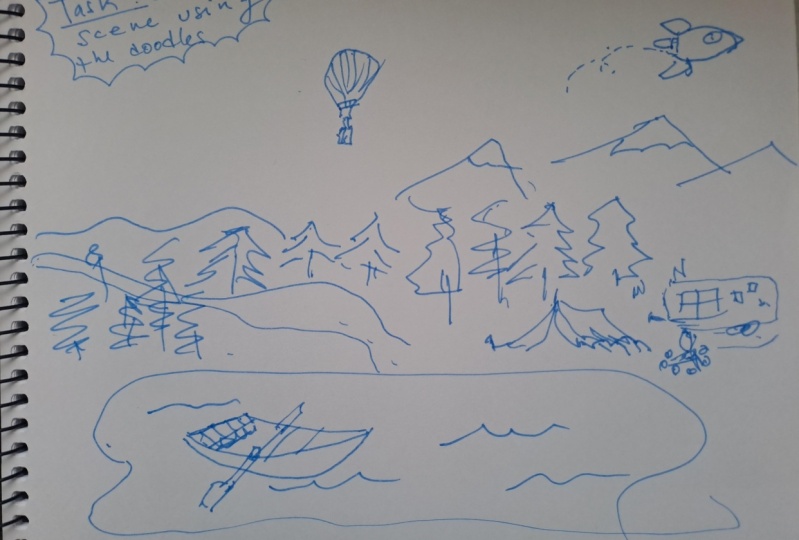
quick portraits scene combining our doodles
most importantly, will break our block
of making mistakes and wrap up this course
by creating a full page Doodle Doodling has opened
up a whole world of opportunity creativity
and excitement. I never thought possible. And it can do the same for you. So whether You are a student,
working professional, graphic designer or just to Hobbyist
no matter what your age is Doodling is the first pedestal and climbing it will lead you
you to endless possibilities To follow along this course. You are not required to
any specific skills, not even drawing skills. So bring out some
Markers. few papers and willingness to explore yourself. And let's doodle the stairs to climb this pedestal together.
See you in the course.
2. Introduction of Doodling: Hello. Before starting
out this amazing journey, first, let's learn
what exactly is included and why the heck they want each one of
the two factors. So, what exactly
is the root node? Is this something
that you do or have done in class during a lecture? Maybe you scribble your name in different fashions or made
some abstract shapes. Some of you even meet funny figures resembling
your professor. But at that time,
just subconsciously. That is true. Drawing something subconsciously
without any problems. And the beauty of goo lingers. It is supposed to be an
expression of the inner cell. And in a way it represents
what your mind. So when it is channelized
and it brings rhythm to r. In other words,
doodling and help you understand your thought
to bring up the pace. Even research have
shown that doodling has many benefits, such as visual. Which means seeing what's
his mental picture? Thinking in pictures. Foundation for art. Art forms such as
drawing and painting, takes place when you start
giving purpose to our doodles. When he started
refining my doodles, it becomes, in other words, boolean is a very
fundamental and foundational in the art of creativity. People who do, do never
short of ideas, improves. Concentration. Doodling
engages multiple parts of your brain at
the same time and helps you focus more by making the process and enhances memory. Shown that people who do the posting more information
than people who don't. As it's just doodling helps
in processing emotions better and goodly also stimulates parts of the brain which
usually remains dominant, which can be really relaxing. And at the same time can
give you some feeling. And I believe
anything interesting. So now I think you have enough
information about them. So see you then.
3. Lets Do Some Creative Exercises: Hello. So I know each one of you have a
lot of surreal ideas. Anyone to communicate
those ideas. But your hands feel stuck and you don't know how to start
putting out your ideas. I totally understand. Getting Started can feel
difficult. Others not. We just need to start
with the right. Do you remember the time when you were learning
to ride a bicycle? When you start it, you must
have fallen many times. Although you must have
been very conscious about pedaling. But still you find. But once you learn
to ride it, now, one of the easiest
thing you can do, you can just sit
on any bicycling and start reading it right away. Even you can dilute it
with your eyes closed part with your
both hands folded. I think you've got what happened is initially when you
were learning to write it. At that time, it was
a conscious activity. But along the way, it became
and subconscious activity. And now it's part of use. And similarly, doodling and exploding herself
is just like a bicycle. With some exercises,
we can start right? So in this lesson, we're going to do some simple yet very effective
creative exercises. These exercises are
great for getting started and will help you enter the amazing
world of gardening. So get comfortable, relax, loosen up, and let's move to the first
create and exercise. In this exercise, what we
have to do is we have to take a blank sheet of
paper like this NMR. Now the exercise is to fill
it completely from top to bottom by just doing
anything. I hope you got. So let's start. We can do anything from random letters,
two random shapes. But I'm going to start by
making zigzag kind of Pareto. You just make what
you feel like. Just follow, just
back-and-forth, shading kind of pattern, spiral. And it's no compulsion either
to only make patterns. We can make random things like polka dots mixed
with maybe a line, some zigzag, zigzag,
zigzag kind of thing. Okay. Doodle, anything? Just final line. Don't you think this looks nice? So this is my version. Okay, So this was our
first creative exercise. This exercise is good for warm-up and can
help you lose them. Most importantly, it
will make your hands. Dad's on the beautiful tunes. Now, let's move to the
second creative exercise. But before they exercise, I want you to close your eyes and just follow my voice. Okay. Now, close your eyes and think of a car. Can you see your car? Can you hear a voice describing
details about a car? Now? Just think of
a white building. Just try to focus on things like how many
windows are there? Now? Slowly. So you saw a car and a white
building, odd herds. Voice, I think you did. That. My friend is a
mental picture and your mind is like a camera. It captures picture
of things we have seen and puts it inside
our subconscious mind. And if you didn't saw
or heard anything. So that's totally fine. Initially, it can be difficult to access
different mental pictures, but this exercise will
help you achieve that. So in this exercise, while doodling these images, don't focus much on how you
doodle is going to look. Rather, try to see mental
picture and whatever you see, just do it as we are
just starting out. For some of you, mental picture can be blurry, but that's totally fine. And after seeing
reference image, either see my version and then pause the video or
just pause the video. Close your eyes and do. Okay, I think we are at it. So here is our first
reference image. Now let me close my eyes. And next to it. So this is my version. I think it turned
out pretty nice. I know during this exercise, you may have failed
a temptation to open your eyes and see what
exactly you are making. I do have that temptation is also just control
that temptation and just close your eyes. And if you are finding
it difficult than use some cloth or
something like that to make a blindfold
for your eyes. Okay, now let's move to
the next reference image. Nice. I like it. So this is, I was telling you the truth. This exercise always
makes me feel like the lags and very calm. Okay, now let's move to the last reference. Let's do this. So this is my version. It looks kind of cute. So this exercise is best for many reasons, such as enhancers, which will language
skills enhances memory, calming, and grade foresee in the reflections
of your thoughts. And trust me, these are these these are
priceless artwork. Because they are true
deflections of your thought. Okay, so now let's move
to our last exercise. See, this isn't my
hand with which I do. Andrew writes and stuff. And this is my week ahead. So in this exercise, we see some user. Okay, so let's get started. And here is our first problem. Don't focus much on the dock. It's gonna look bad
or good. Just shy. Okay, so here is my doodle. So now let's move to
the next problem. Here it is. No. Next move to our last time. Students. And done. So, how did it say noodles to TV to hack kind of
a new experience? While doing so. You must have read the
restricted which seed. That's the point
of this exercise. Dominant parts of your green. Congratulations. You
have successfully completed three very
important creative exercises. These exercises, this can take
to the point where you can just hold a motto and
start doing right away. But to get there, you have to integrate these exercises
into your daily routine. And for assignments,
please be sure to share all of the doodles
which you made during this. Again. Congratulations. And soon.
4. Doodle Library of Household objects : Hello and welcome.
In this lesson, we're going to create our
very own doodle leptin. So why do we need a
doodle laboratory? See, once will make feudal
of different objects, you will have a
mental picture of that object as the dude. Next time when you are
required to doodle object. This time, you don't have
to see a reference image. Just try to recall it's mental picture and
doodle that I know. Currently it all
sounds difficult. But when you'll use your doodle
laboratory for few times, then you don't even
need to recall them. They'll come straight to you. So in this lesson, we will see some
reference images and we'll try to make doodle
versions of them. You can either follow me or
just feel free to experiment. Keep in mind, it's no obligation for our doodles
to look artistically. So let's start by doodling
some household objects. I'll first object is just see the reference image and try making cup like that. Okay? It is a cup. I think it looks nice. So now let's move to our
next reference image. Alarm clock. Here is my alarm clock. I think it looks good. So now let's move
to the next step. So this is our television. So now let's move to the
next reference. A sofa. So this is my sofa. This reminds me of show Friends. If you have seen
the show Friends, then you may know this so far. Now, let's move to the next
reference image, applying. And now let's move
to the next a free. So this is a picture frame. Now, let's move to
the next curtains. Let's move to the
next reference image. The telephone. This is a telephone. Now, let's move to the
second last rootedness. So this is address. Or you can also say
magical carpet. Now, let's move to
the last image. David. Congrats. Now you have successfully created
your very first doodle. They're pretty awesome
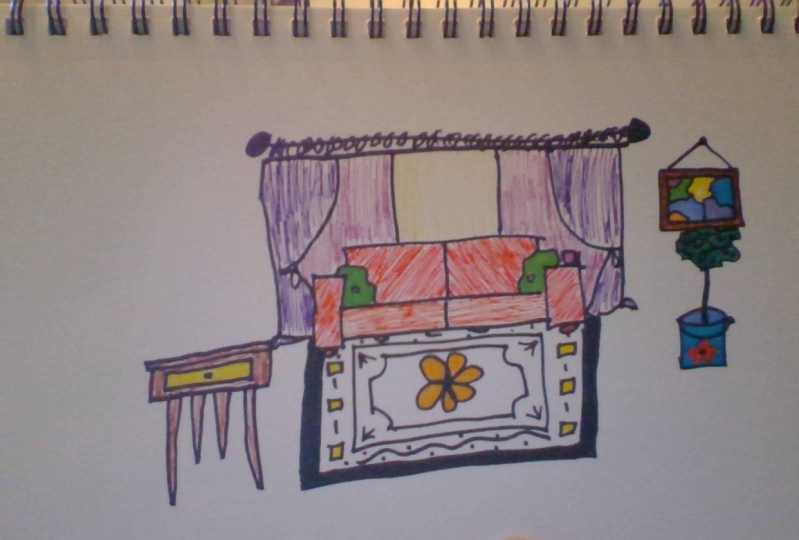
household objects. So now let me show
you how you can use these doodles to create a scene
by simply combining them. Okay, so we'll use
these doodles and we'll make a combination,
and we'll pharmacy. So as these are mostly
oodles of household objects. So I'm going to make
a living rooms. And I highly suggest you to
play with different colors. Okay, so let's try to combine
these doodles into a scene. So we have a TV. Let's just keep it
as a sofa, a drug. So what we can do is
we can put so far on the rug, just like this. Okay. And behind the sofa, we can put these curtains. Let me show you. So
curtains and above that, a sofa. And under it. Let's put this aside. And after that, we can
put this plan, the site, the sofa, and this alarm clock. Let's just see where
we can put it. We can put this cup on the
table or on the sofa handle. This frame will go on the wall. This will have on the table. So far. So let's try to
form the whole scene. And I suggest you to use different colors for
different elements to have separation between them. For reference, see
the household duties, which we made in this lesson. So let's start with the curtains Moving next. Let's make the sofa on right, so far handle. We're going to put the cup. So let's put that. Okay. And on the one hand, the frame, Let's just make the
table on this side. Okay. And on the table, we have a telephone. Let me just see the
telephone doodle. How does it look? But they were on one side. I want this plant so
fast. Let's make it. And below the sofa,
I wanted hug. So let's make it. Okay. Now, let's find the telephone. And so here is our telephone. I wanted this telephone
on this table. So let's just make it okay. So this is the living rooms formed using these
household duties. We have used almost
all the doodles in forming this living
room scene. I think. We only missed this TV2. Other than that,
we used every day. Just like this. You can create any C. First, create the elements, then
combine them in a way. Okay? I hope you got the point. I hope you understood
and enjoyed making this. So in this lesson, we made a doodle every
n sin combining R2. And in upcoming lesson, we're going to make
a doodle Aborigine for big outdoor objects. And for your assignment, may do the LD50. So light. Again. Congratulations, and
see you in the next lesson.
5. Doodle of Outdoor Objects: Hello and welcome. In previous lesson,
we created a level of household objects and a scene
combining those students. Now, in this lesson, we are going to create a doodle leveraging big outer objects. Okay? So without any further
ado, let's move first. This looks nice. Now. Next
move to the next step. All right. Nice. Now, next move to the next step. Great. Rocks from deep. And this is our next move to the next one. It looks nice. Next move to the next step. So now let's move
to the next step. All right, excellent strategy games. You can either add, I'll just leave it like this. It looks nice way the
acute lock it. I like it. All right, now, let's move to the next step. Now. Next move to
the next video. Now, let's move
to the next step. So I definitely
shows that wrong. But still look nice. Congratulations. You have successfully created a celebrity of big
outdoor objects. And for your assignment, what do you have to
do is you have to use this doodle laboratory and combine this
to create a scene. Okay? So use this dude
celebrity and create a scene. Okay? So see you in the next lesson.
6. Let Doodle Some quick Potraits: Hello. So far we have done some creative exercises and
created a doodle library. In this lesson, we are going to make some quick portraits, will see some reference images. And we have to doodle that
without putting any thoughts. So let me explain. For example, I showed
you a picture of a dog. Just see the image and start
dueling it right away. Don't worry about anything, whether it's gonna look
bad, look different. Everything's okay. So why the heck I want you
to do, do quickly. Once you see an image, your brain starts to
observe details about it. And it also starts figuring out, it is difficult or
easy for you to make. If during this reaction time your brain feels
it is difficult, then it will start restricting yourself. We don't want that. That's why I wanted to
start dueling, right? Once you have started doodling. Now, in this scenario, your brain will start
supporting you. It will start figuring
out mysteries. To accomplish that goal. During this process, just try to observe the portrait doodling
pipeline of your brain. So what does it mean? It means by default, some people start creating portraits by doodling
the forms first, then the eyes and other parts. There's the unique
pipeline. You may have. Different pipeline for creating
a portrait. So just I. Okay, we're ready. So let's see at first
reference image. So let's go to just see the reference image and start doodling in
whatever order you like. And don't put lot of thought on how it's going to look
or how is it looking. Okay. Now let's make the news. Now let's make hills. And now let's move
to the next student. And here is our
second week voting. So now let's move to
the next student. So if you are willing to
become a caricature artist, portrait artist, this exercise
is great for warm up. Just to tell a subject
for few times. You will start seeing Portrait
Gallery kitchen, right? So now let's move
to our next step, which is good. And now here it is. I hope you enjoy.
So now there's two. And this is our last week. So I'm gonna actually, we have created some
quick portraits. This exercise have benefits
such as enhances focus, drawing, memory, and
observational skills. So be sure to practice this exercise and share
your conversions, but I would love to see them. Again. Congratulations.
See you soon.
7. Full Page Doodle: Hello and welcome.
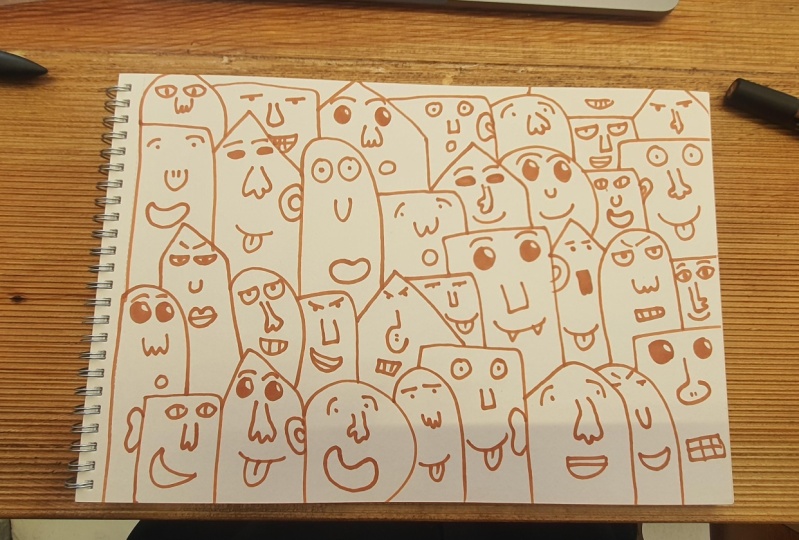
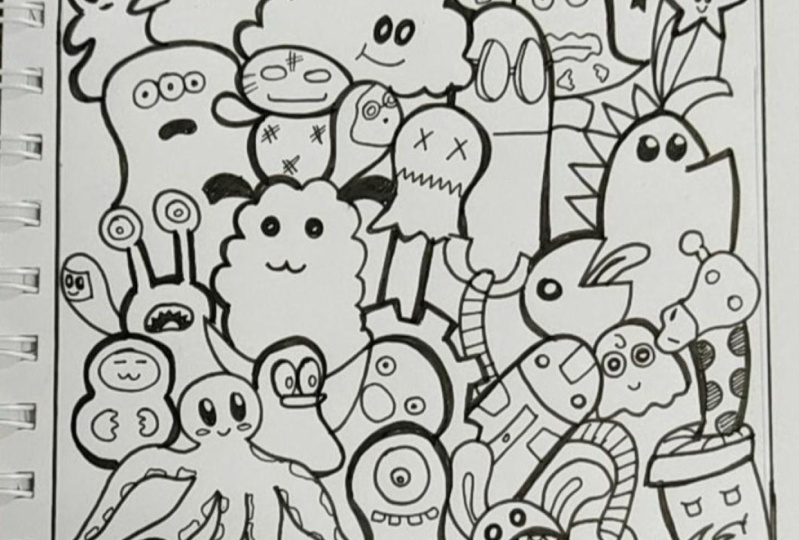
In this lesson, we are going to create
a full-page doodle filled with different
characters. But before diving right in, I want you to take you through the approach and
thought processes behind creating a
full piece today. So I'm going to break down the whole process
into simple steps. One is to creating a guide, to follow that guide in
creating a full page. But before that, let's
start with the step 0, which is to decide which kind of doodles we want to
fill the whole page. For example, in this case, we are going to fill the
whole page character too. But definitely you can create full-page doodle filled with
anything you can think of. So as we have already
decided the kind of doodles. Now, Let's move to the step one, which is to create
a reference guide. So what is it if it is a guide filled with different
elements or doodles, which we can either combine or use directly to fill the page. In this case, it is safe to say a reference guide as
character reference guide. For our character
reference guide, we're going to create different character elements
such as ice sheets, noses, and much more. So let's start building the
character reference page. So for our first element, Let's start by creating
different style of ice. You can just follow me, but definitely feel
free to experiment. I'm just going to make
different pairs of I. So he had at few ice. Now let's make a
few different ears. So I'm just going to make a
few different layers of year. Okay? Now, let's make some loses. Some mounts. Okay, and the last
element, fishing. Draw any shape, whatever
comes in your mind. Draw them. Can be square,
triangle, soap, good. Hexagon, Beckman
kind of shape maybe. Okay. So here are a few sheets. The next step, we're
going to combine these elements to
form various due to. And then we'll combine those doodles, will
get a full page. Let me just show you an example. Let's take this set of eyes. These years. This
nose, the mouth. And let's put together
all selected elements. Pandas, Batman kind of shape. So let's do that. So let's start by
drawing the eyes, linda, ears, nose,
and last the block. So this is how we can combine different elements
to form a doodle. So this is a
character reference. So now let's move those second step where
we're going to use the reference guide to fill the whole page.
So let's do that. First. We'll use
this reference guide to fill the whole
page with shapes. Then we'll start creating eyes. And so don't worry, all these elements combined together will form
an amazing dude. Without any further ado. Let's use this
difference rain to fill the whole page using different shapes in
different combinations. So this is our first shape. Let's make this shape
behind that sheep. Now. The other. So I just do another sheep in front of
the shape. Behind that. That's why I created that
balloon kind of cheap, fast, then bad kind of shape. Fill the gaps using the shapes. So we just started from the bottom and we're just
filling layer by layer. Then we'll start
filling the gaps. And this is how we're going
to move from bottom to top by filling the whole
page with different shapes. I hope you understood. So I'm just going to
fast-forward this bit. Three. Now, we have to fill the shape
with character elements. We can just fill all the
shapes with eyes first, then knows, and so on. But just to make
things interesting, I am going to draw
elements in very random. So for this shape first,
create the mouth, then the nose, ears, and eyes. Okay, I hope you about it. So let's do the same
with each shape. Three, three, 3333, extra blank spaces, the gaps. You can either
leave it like that, but I'm just going
to shade them. So congratulations. And this is very
first full page too. Congratulations. We have
created our very first, we'll paste to do.
For your assignment. Create your own difference
guide and a full-page. I'm looking forward to see
what you have created. So be sure to share
them with me. Again. Congratulations. And see
you in the next week.
8. Closing Thoughts : Hello, and welcome to the
last video of this course. I know you want to
skip this video, but please stay till the last. Firstly, I want to congratulate you for completing
this course successfully. I hope you had fun and you enjoy doodling as much as I did. So on the right hand bottom of your Skillshare
app or website, you'll find the project section. So please be sure to share all the doodles which you
made during this course. I would love to see them to enjoy all the
benefits of doodling Try integrating it in
your daily routine. At least try to do one
creative exercise a day. And I have a small
request for you if you found this course and if you learn something
from this course. So please be sure to read this. It will definitely help. And I would love to see your
feedback about this course. Rather, positive feedback,
constructive feedback. So be sure to read and give you feedback
about this course. So I have good news for you. We'll be soon coming up with more amazing and helpful classes related to creative section. So be sure to follow
me so that you will be the first tune to get notified when I post
upload something. Again. Congratulations and thank you for joining me in
this amazing journey. All the best and get subdued.
 Sunit Kumar, Artist and Animator