Transcripts
1. Welcome to Class!: Welcome to the watercolor
painting class you've been waiting for. I already did dive into the magical world of
watercolors and create stunning artwork
effortlessly while you're in the right
place. Hi there. I'm Elina, a passionate watercolor artist
based in Bulgaria. Feel painting with watercolors
for five wonderful years. I absolutely adore creating beautiful and easy projects with gorgeous colors and
Mesmerizing Blends. Today, I'm thrilled to
introduce it to a class that will unlock your creativity
and show you just have FUN, enjoyable watercolor
painting can be. In this class, I'll guide you step-by-step sharing my
simple techniques for mixing colors to achieve those
effortless blends and captivating
color transitions. I will also draw in some
of my best tips and tricks to make your
painting journey smooth and enjoyable. Feast your eyes on
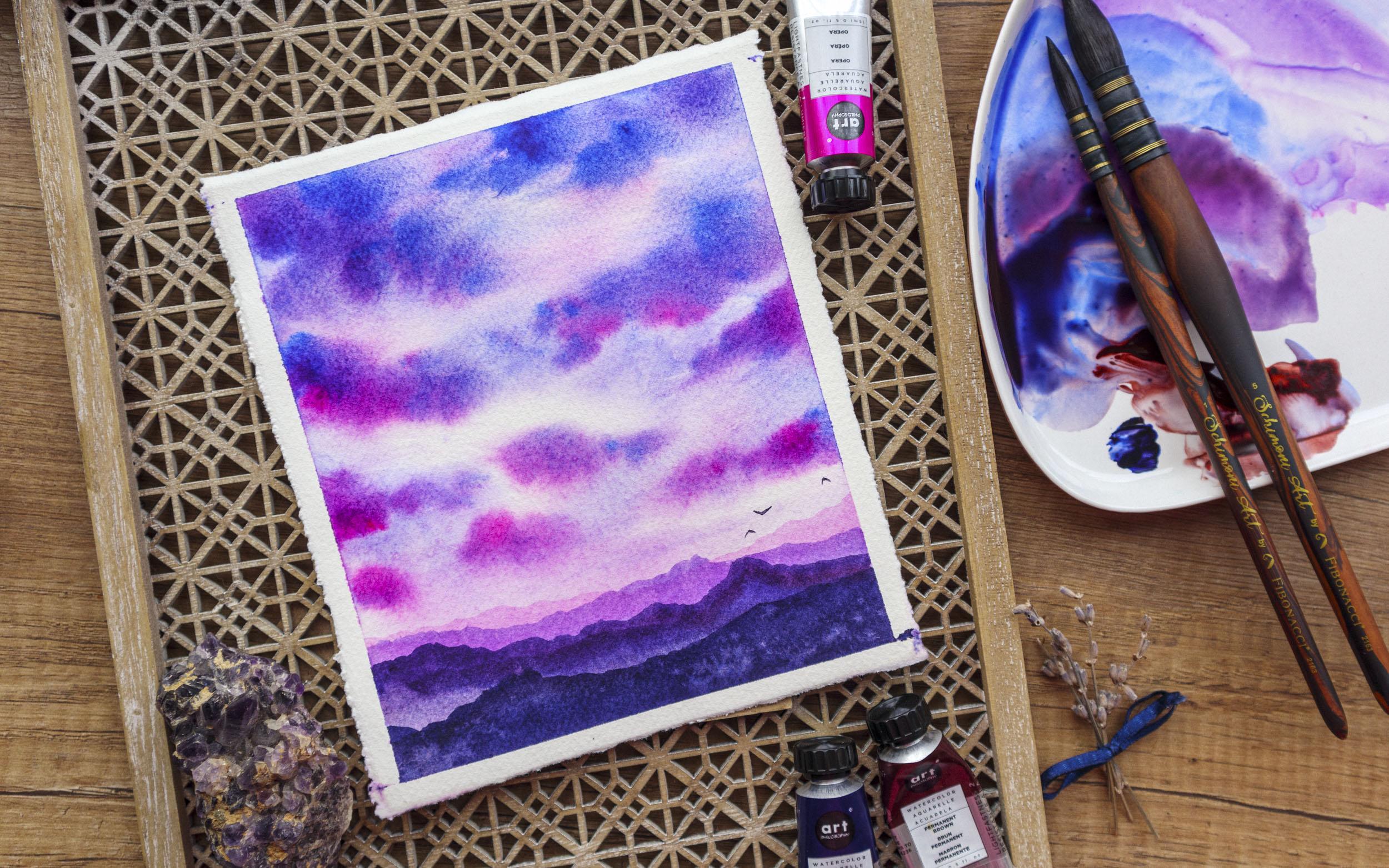
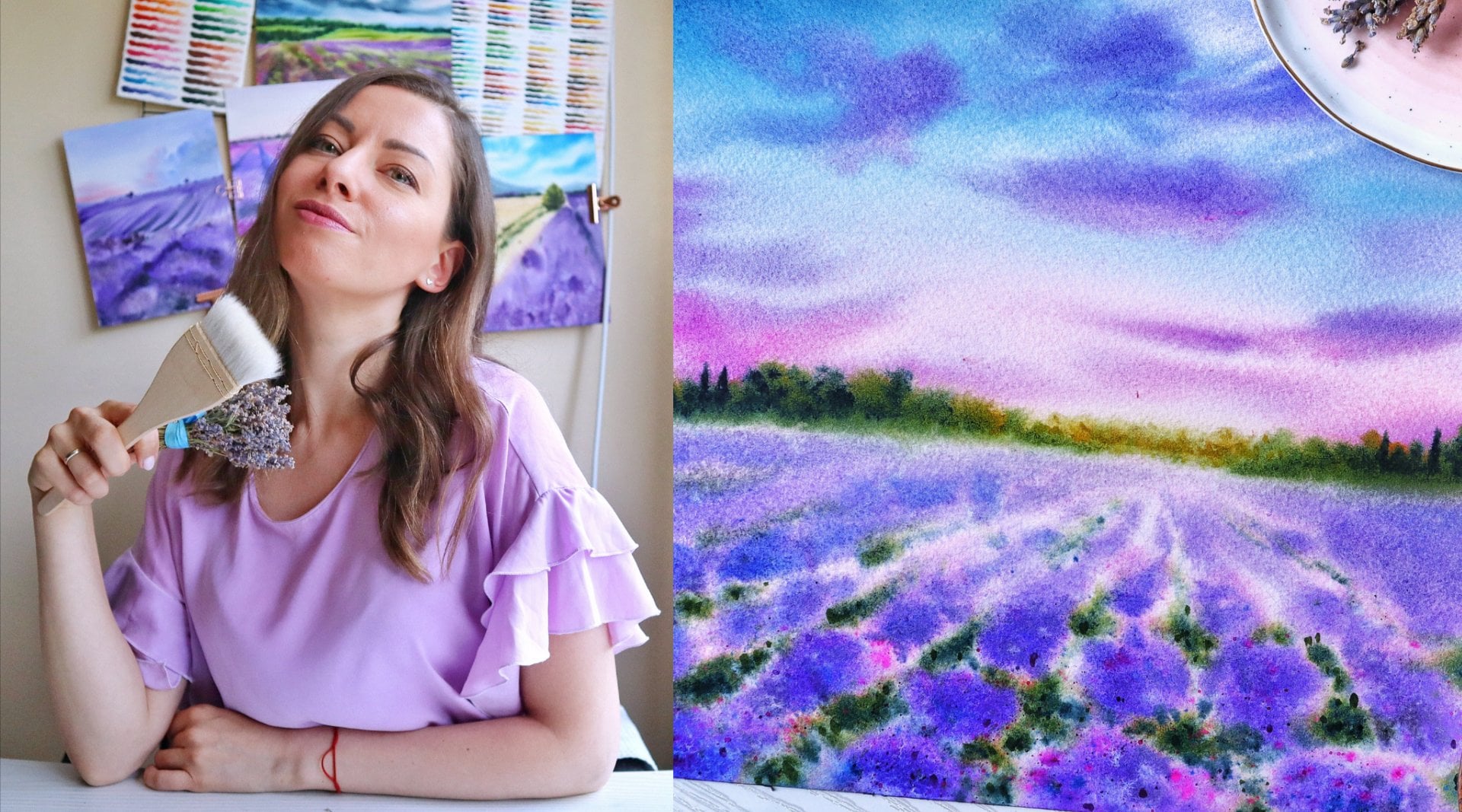
our final project and dreamy purple sunset with gorgeous clouds
achieved effortlessly. Yes, you heard this right? With just three colors. You'll be able to create such harmonious and
balanced artwork. And guess what's in
the final project is not only stunning, whether it's also designed
to be a brief paint. I promise you'll be amazed
at what You can achieve with the little guidance, anything
creative inspiration. So if you ever wanted
to embrace Watercolors or you're simply looking to
expand your artistic skills. This class is
tailor-made for you. Now let's dive in. In the next video, we'll
have more detailed look at the class structure and final
project. See you there.
2. Class + Project Overview: Welcome back. Let's take a more detailed
look at what we have in store for these
watercolor painting class. First things first,
we'll go through the essential materials you'll need for this creative journey. Don't worry, it's
nothing complicated. I'll recommend some
excellent watercolor paints, brushes, and paper to get you
started on the right foot. Next step, we'll
talk about colors, the heartbeat of every
watercolor painting. I'll show you how to
choose colors that makes harmoniously together and provide a bit full
range of shades and values and they're standing
color mixing is crucial. A new songs see how it can
make your artwork shine. Then we'll dive into the
heart of our project. I'll guide you through each
step of the painting process. Together we'll explore various
watercolor techniques, ensuring you have
a solid foundation for your artistic journey. By the end of this class, you'll have not already created a breathtaking purple sunset
with beautiful clouds, but you'll also have
gain the confidence to create your own
watercolor wonders. Once you complete
your masterpiece, take a photo of it and upload it to the projects
section of the class. This way you can share your beautiful artwork with the entire community
and inspire others. So let's get those
creative juices flowing and embark on this
watercolor adventure together, I promise you'll
have a blast and create something
truly extraordinary. In the next video,
we'll go through the material that you'll
need for this class. You there
3. Materials: In this video, are
going to go over the materials you'll
need for this class. Don't worry if you don't have
everything I show you here. I will also provide suggestions for substitutional
along the way. In this class, I will be
using three colors from Art, Philosophy or para, ultramarine, deep and permanent brown. These colors are
rich and intense and I have already tested
there mixing capabilities. However, if you don't have
these specific colors, don't worry, you can use whatever colors you
have available. In the next video,
I'll provide you with some alternative
color options and show you how to test the
Mixing possibilities. For the paper. I will be using Fabriano artistic
watercolor paper. It is 300 GSM and
made of 100% cotton. If you don't have cotton paper, you can try using cellulose
paper as a substitute. Just keep in mind that there's
a significant difference between the two and the
results may vary accordingly. To secure my paper, I will be using a plastic board
and paper tape. However, any 3D surface and tape you have on hand will work
just fine. For the brushes. I will be using two
brushes from Germany Art. They are both made of synthetic
hair and are very soft. You'll need at least one
larger brush for washes and a smaller one for detail work like painting the
clouds and Mountains. To mix my paints, I will
be using ceramic palette. However, any palette
to have will work additionally to remove excess
moisture from my brushes, I will be using cotton
and paper towels. Plotly, I have two jars of water here for rinsing my brushes. You can use any
containers you have at home for this purpose.
And that's it. These are all the materials
you'll need for this class. In the next video, we'll dive
deeper into color details
4. Colors: In this video, let's
take a closer look at the colors we'll be
using for this class. You'll need three
colors, maybe even to. Once again, I'll be using
D3 colors from Art, Philosophy, opera, ultramarine,
and permanent brown. Let's examine each of
them so you can get a better idea of how they look. Asquith some of each
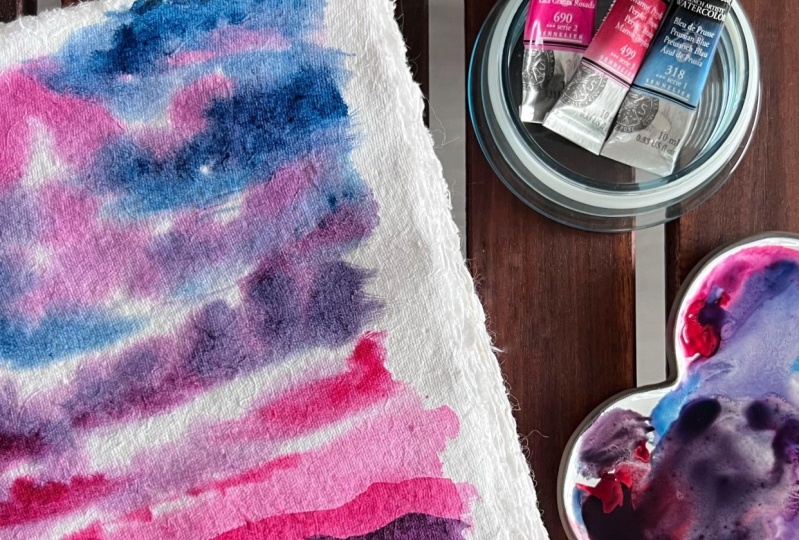
DuPont my palette. First is opera. It's a very bright
and luminous pink, almost neon white in color. I like it because it
creates brilliant mixes. If you don't have operon, you can use any pink or
cold rates that you have, such as magenta, quinacridone,
red, permanent rose, or even try carmine
or alizarin crimson. Next is ultramarine. This color is very
popular in fountain, almost all basic palettes. In case you don't have it, you can use coupled
pool person blue, indenter and blue or
tail blue I substitute. Lastly, we have permanent brown. This is one of my
favorite colors, it to return warm brown while it may be
harder to substitute. Don't worry too much because
it's not that important. Then I'll show you
why in a moment. Now, let me show you the mixing
these colors can create. For this painting. It was important
for me to use pink and blue as their
beautiful on their own, but also create a vibrant
purple when mixed. These two colors always
give me gorgeous shades of purple and are my
favorite combination. The key here is to
find the rate that leans more towards
the pinky side. The colder the rate, the more vibrant purple you'll achieve. If you use a warmer rate, you'll get more of
an aubergine tone. You can test the mixes between
your two colors like this. If you need more guidance, you can check out this video from my lavender genes class. There we explored the mixes different blues and
pink can create, which is a wonderful exercise to get you know,
your colors better. But let's return to our
three colors for today. Why did I say that permanent
brown is not that important. It's because I will
use it not only to darken and mute ultramarine. I love how they mix to create a dark, slightly purplish color. You can try the same effect
with any dark color you have. Suggest Payne's gray, sepia, indigo, or neutral tint. So basically you can even skip this color and you'll just
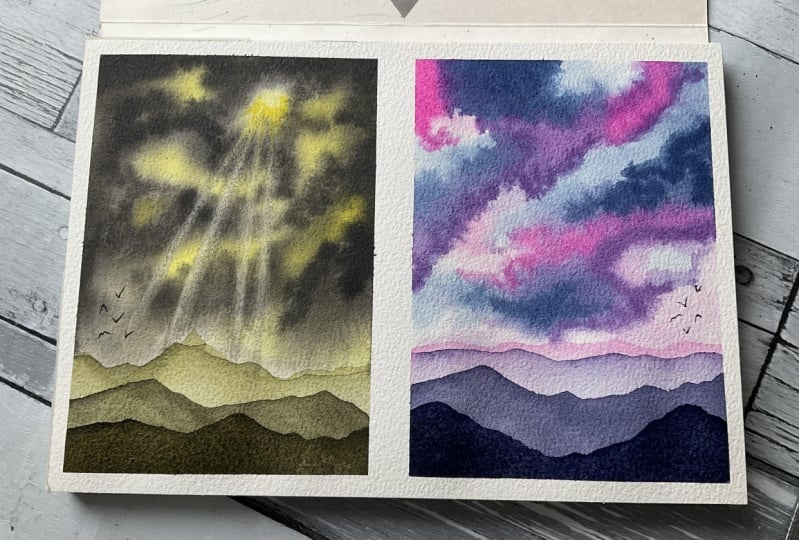
have a lighter version. Here's the similar painting
I painted a few years ago. I think here I use
just two colors, purple arrows from White Nights. So this is an option to, so these are the colors
that will using today, make sure to find the best
matches from your collection. In join me in the next video
where we'll start painting
5. First Wash: Welcome back. It's time
to start painting. Let's begin by taping
my paper to the board. The first step is to
wet the entire paper. We won't be making any sketches. This is one of my favorite
aspects of this painting. We'll paint the clouds and
Mountains spontaneously. However, if you don't feel
comfortable with that, you can always marketplace
to where the Mountains will be or even make
more detailed sketch. I wet my paper thoroughly, allow me to work within wait
for as long as possible. I am wiping away
any excess water and that has gathered
on the sides. Now I'll start by mixing opera with a little
bit of ultramarine. Notice that I didn't fully
mix them on my palette. Nice create colorful, an
interesting paint strokes. I'm painting some
shapeless spots with that mix N.
Now I'll add more blue to the mix by just wiping my brush across the blue
puddle on my palette. I continue this process until I covered the
entire sheet of paper alternating between more pinkish
or bluish mixtures. I'm leaving some white gaps
to preserve the light in the sky below will have
the mountain range. So I'm just covering it
with somewhat even color. I want to add more blue
to the upper part, just here and there, along with some last touches
of very diluted purple. I'm not sure why these tiny
bubbles appeared on my paper. This is definitely not normal. Probably the sizing in my paper has started
to deteriorate. Hopefully this won't affect
my plan for this painting, but for now, apart
from these bubbles, it doesn't seem that bad. At this point. If your
paper is listening, you can tilt your board
in different directions. This will encourage
the colors to flow and create beautiful
and natural blends. Now let's paint some
more substantial clouds. I'll switch to my smaller brush. For that, I take
the excess moisture of my brush before
picking up the paint. I want to have a very
thick mixtures so I don't need to introduce more water
to my little puddle here. Taking a thicker pigment
on my brush will ensure that the colors
won't flow too much, even though my paper
is still glistening. I mixed blue and pink
again on my brush without working the
mix on my palette, I repeat the same
process as before, but this time I'm
leaving larger gaps and focusing on achieving shapes
that resemble clouds. They should be
more blue, darker, and bigger in the upper part of the painting and gradually
becomes smaller, pinkish, and lighter as
we progress downward. And also add some pure
ultramarine OR operator here. And therefore an
interesting effect. I paint some smaller
spots around the clouds to make them
look more realistic. Throughout this process, I'm not mixing the paints on my palette. I just think the pigment with my brush and let the
results surprise me. We'll all we can paint
more pink clouds and even that some
stripes with opera. You can stop here. I'm definitely pleased
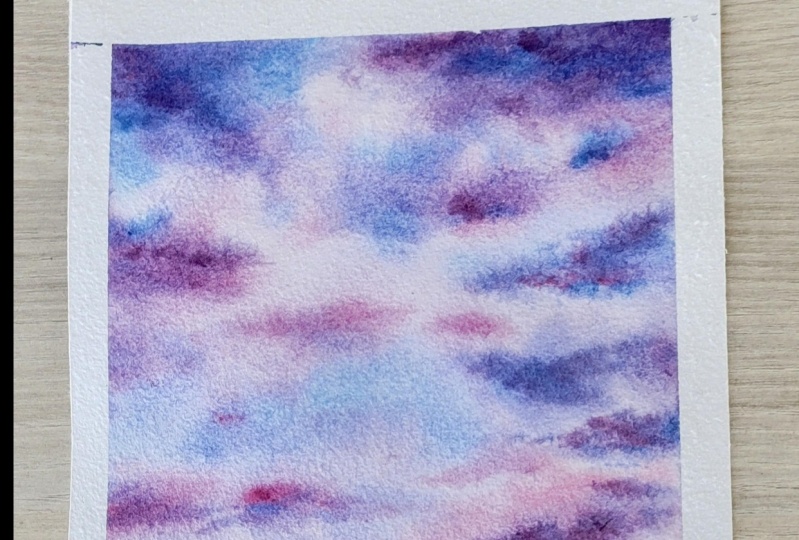
with how my sky looks. Another thing you can do
is tilt your board again. This will only have an effect if your paper is
still glistening. Tilting it will make the Clouds even softer and more natural. Adding a feeling of movement or Skype makes sure to keep the paper taped
clean of any liquid as it may go back to your
painting and create the mice. If your colors are
not flowing anymore, but they're still moisture
on the paper surface. You can try the following. Your biggest ends of this brush. Wash it in clean water and wipe it very well
on a clean towel. You can make some the hairs, the bits, so that's
the deepest spread. Instead of forming a nice point, then very lightly with the
very tip of the brush, you can move the paint a little. Creating software blends
between the colors and gain a sense of movement
and dynamism in the clouds. Either this, almost every
time I'm painting clouds, would that our first layer is done now we need to let it dry. And in the next video
we'll paint the Mountains
6. Painting the Mountains: Welcome back. Now
it's time to paint the Mountains and then our
artwork will be complete. Now take my big brush again and some of that pink color here. It's very diluted because I want the first mountain
to be very pale. So I painted while
holding my brush vertically to achieve a nice
and natural jagged edge. Then I washed my brush and use some water to drag
that color down. The goal is to get
rid of the hard edge. That's the first mountain
will paint three more. Drive this one
because I don't want to wait for it to
dry on its own. Now I'll add some
more blue to my mix. You can take your colors
and a separate sheet of paper before applying
them to your painting. The main goal is for
each mountain to be painted with a colder
and thicker mixture. Need more pink. Here I
have some what are marked, so I'll try to cover it. Again. I'll wash my brush
and Wash on discarded. The fact that it's not
happening confirms that there is indeed something
wrong with my paper. I've had it for more
than three years now and I live in a humid area. So it's not a big surprise. Never overstock with
paper as it can deteriorate over time
if not stored properly. Now let's mix a darker mixture. I'll use the brown
to make to blow more muted and dark,
something like that. This one turned out to be
darker than I expected. So if you can maybe
try to make it just a bit lighter
and more transparent. Finally, for the last mountain, I'm mixing a color
that looks at what's lacking to go and I paint
the last mountain with it. The last one you can sprinkle some clean water while it's still wet to
create a nice effect. Held right now. Once again, if you can make that second
to last Mountains bit paler, it will look better
because now they're too similar to the one
in the foreground. But I like it nevertheless. I like the overall
vibe, the painting. We can make this
scenario moral life and dynamic by adding
some small birds. I'm mixing a very dark color, almost black, way
too thick mixture. I paint the bird just by
making two strokes like that. You can practice now separate
sheet of paper first. Then if you want, you can use
a smaller brush for that. Let me paint a couple of birds. This one we'll have her wings
flapping down like that. And I'll paint one
more over here. And that's it. Our quick and easy purple
sunset is now complete. I'm very pleased with
how it's turned out. I'll remove the masking
tape and here's a close-up. Let's wrap up the class
in the next video.
7. Wrapping Up the Class: Congratulations on
completing the class. I hope you've enjoyed painting this beautiful
purple sunset with me and that you've learned
something new today. I'm truly excited to see
the incredible creation. You've come up with,
the colors you use, the spontaneous brushstrokes,
Nick mixes you've achieved. Don't forget to share your amazing projects in the projects section
on the class. I am eagerly looking forward
to admiring your artwork. If it said to showcase your
painting on Instagram, remember to tag me so
that I won't miss it. You're Art deserves to be
seen and celebrate it. If you have any questions
or need further guidance, please feel free to post them in the discussion
section of the class. I'll be more than happy to assist you and provide feedback. If you enjoyed this class and had a great time
painting together, I kindly ask you to live, review your feedback
is incredibly valuable and will help
others firing artist Fine and enjoy these creative
journey to thank you so much for joining me in this artistic adventure until we meet again. Keep painting, exploring and expressing your
creativity. Painting