Transcripts
1. Welcome!: Friends. I'm Olga Kes, watercolor artist,
and graphic designer. I'm an author of a book How to paint watercolor
transparent flowers. For today's lesson, I prepared something in
the same technique, but a little bit different. I invite you to
paint today three different Valentine's hot in
the transparent technique. That will give you
a nice opportunity to try out this technique, to train your hand, try to mix colors, try to have some water control, and also as a result, get beautiful
Valentine's card or cards which you can use as
a presents for newborns, wedding gifts, and
endless amounts of ideas.
2. Materials: Today's lesson, I will use hot press Arches
paper, 100% cotton. You can also paint the same lesson on a
smaller scale on postcards, on watercolor postcards,
when you paint on one side and the other side
is ready to send to someone. Painting hots, you can use any
of your red violet paints. Of course, you can add
some yellows oranges or if you will paint
in blue color group, it can be a nice greeting
card for a newborn, for example, no color
limits for this lesson.
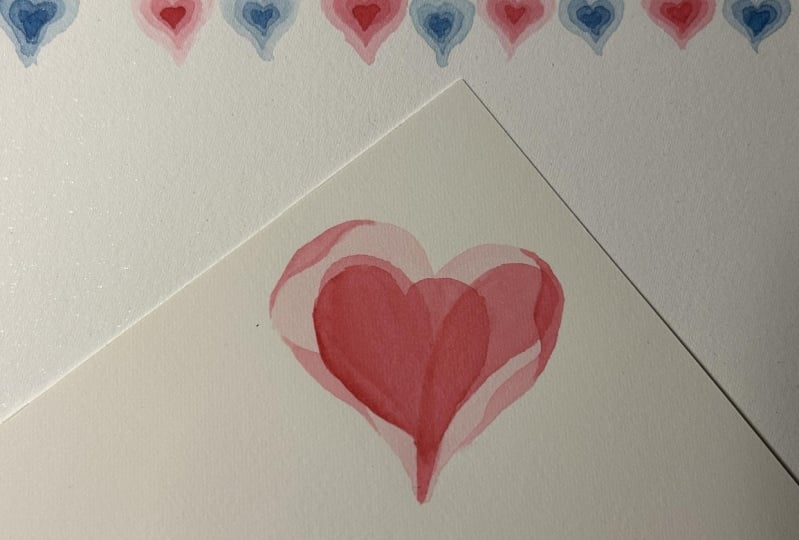
3. Heart 01: Firstly, let's draw hot shape, freehand, not necessarily
to be symmetrical. It will be our first hot. I wash my brush. I will start with very diluted hazarin
crimson, very diluted, you can see, I create
my first layer, first initial layer in
very transparent way. It's more water than
paints in this layer. When you make a complex
shape like hot, always start from the middle and then with the
tip of the brush, you distribute paints
towards the edges. Always try to create nice,
even accurate shape. And when you work
in small areas, make it with the
tip of your brush. Now first layers, I try, we can create something
inside the hots. One approach will be
to divide the hot. An approach will be to divide
the hot and arrange in a hots more or less
according to the middle. I use the same very diluted
mix as I did before. I gently distribute the mix
and with my tip of the brush, I can correct the shape. Right now, I would like
to paint just the middle, just let's paint a full hot, not half of the
hot just full hot, slightly smaller than
the previous shapes. Firstly, I outline the hot
with very watery mix and that will give me enough time to prevent this
outline from drying. Because once I
created the shape, I just drag down into the
shape of this watery mix. I can remove bottles, especially if you paint on hot press paper,
hot press paper, a little bit more
slippery than cold press and you need to be patient
with this type of paper. It takes time to soak water into the fibers of
the paper and to help it, we can remove excess water with the tip of the brush
like we are doing now. Hot, a little bit smaller. But for this heart, I try to keep things
relatively symmetrical and place all these
important points of a heart into one line. Same approach, watery outline, then you bring diluted paints into the middle and with
the tip of the brush, you correct shape
and remove bottles. In principle, this is a very nice exercise
four layering technique, especially if you
board from painting flowers and looking
for something new, something different,
that can be a thing. Pencil marks started
to disturb me, they take too much of attention. I just remove them with kneaded eraser like
this, kneadable eraser. They are very soft and This
already feels much better. Let's maybe add some
final touch for this hot. Small little one cute
hot in the middle. You can add a little
bit more of boldness in this one to make it
stand out a little bit. You can keep everything
clear and transparent.
4. Heart 02: Let's take cadmium red.
That's cadmium red. But of course, you
can paint with any of your favourite paints and create another wash. Just
wave red, very diluted red. For this lesson, you can
create some textures. For this lesson, you can create some textures and some bleeds, they would be very welcome
for today's painting, they will make your
hearts more unique, more handmade, feeling
something like this. For this heart, we will use a little bit different
approach and we will fill it in with different
shapes, so to say. I want to have my mix slightly
more diluted like this. When you paint hots, you can think about painting flowers and use
the same attitude. Just think about inner
shapes of hearts as petals and that will help you to imagine nice arrangements. And I would like to make
some shape on the side of the hot to make that, I create a C stroke around and connect it
with the edge of the hot. Always try to remove
puddles to remove puddles, use your dry brush as a sponge and write with a
paper towel, like this. Now let's paint our red hot. I would like to create
another asymmetrical shape. If you like pasteless, you can think about painting
some pasteles shape. All shapes are overlapping. But because we dried our layers very nicely
and this is cotton paper, 300 grams that allow
you to create a lot of layers and paint
over, like this. Let's add another nice detail on the opposite side
as we did right here, we can add another
nice bend area. If we were painting flowers, that can be a moment where
petal bends and petal bends. But why not to make the same
thing for flour for hearts. Red one is very creative one, let's place now hot
shape on top of all layers. Something like this. Try to correct the
edges with the tip of the brush, and
remove bottles. What I would like to do now, you see here is some
overlap of two shapes. I would like just to paint only the overlapping
area and that will emphasize the idea of
overlapping like this. I would like to add
I would like to add more of these bent areas, small little details,
for example, here. As we are painting abstract, there is no need to think
will it work in real or not. Just think about many
layers you arrange in the important thing that they play nicely
with each other. I can see one more shape here. And on the top. I like this fun very much. To emphasize the contrast, I will paint some outlines, and with my damp clean brush, I will go around this
line and soften the edge. And I try to distribute and
on the other shape, first, I create bold outline with
the tip of the brush, and then with clean damp brush, I go around and
with small steps, I soften that outline. Let's do it again on the bottom. I add just one extra
small layer to that pot. And the same at the other side, I would like to
emphasize a little bit this bend wavy area, so I add one extra layer
of my diluted red mix.
5. Heart 3: Now let's play around
with the other one. I would make the
middle with combos yellow or any yellow you like. Very transparent. Work from the middle towards the edges with the
tip of the brush, you correct the shape, fill in all the gaps, and try to remove podles. If for example, you have
a puddle in your wash, dry your brush with a
paper towel and use your brush as a sponge
to remove excess water. Like this. Now let's try. For this yellow hot, I suggest to try out layering
of different colors. For example, for the next layer, I will use orange, orange paint, cadmium orange, and I will create some
inner hot with orange. No need to be symmetrical, but that's all up to you how you organize hearts,
what's your vision. I would like to show you a little bit
different approaches. Remember that the inner layers, they also should be painted in very transparent diluted mix. Try to remove poodles and
with the tip of the brush, you can create nice shape I will use a rainbow approach, so my third layer will
be just read and I will please hot in a slightly
different position. I use the same principle. Firstly, I create outline
with very watery mix. You can see how much water I
have right here and then I connect this outline with the inner wash while
it is still wet. That approach very helpful when you paint
without pencil marks. We just made pencil marks
for the initial shape, but I think it's not necessary to draw
all the inner lines. I will destroy a little bit the delicate feeling
of the paints. We just use our watery
mix as our drawing tool. Now let's try everything. I actually would like to
create the other layer. Again, wave red, cadmium red. Let's think I like how it all ranges here and I
also like this one. Let's maybe bring something
asymmetrical here. For this hot, I
would like to make a small intersection
between layers overlapping. It will be even nicer. Let's add Let's add the second half. Now I would like to finish
this one with something pink. Just very simple. We created some very different shape here. I just finish it with
something pretty simple. And see how this middle heart
connect all these layers. Of course, you can
use this approach, these details and add them
to this heart or that hot, or you can keep a layers
into that hot here. Endless opportunities for you