Easy Tulips with Oil Pastels | Vishal Munshi | Skillshare

Playback Speed


1.0x


  • 0.5x
  • 0.75x
  • 1x (Normal)
  • 1.25x
  • 1.5x
  • 1.75x
  • 2x

Easy Tulips with Oil Pastels

teacher avatar Vishal Munshi

Watch this class and thousands more

Get unlimited access to every class
Taught by industry leaders & working professionals
Topics include illustration, design, photography, and more

Watch this class and thousands more

Get unlimited access to every class
Taught by industry leaders & working professionals
Topics include illustration, design, photography, and more

Lessons in This Class

    • 1.

      Introduction

      0:31

    • 2.

      Class project

      0:13

    • 3.

      Supplies

      0:28

    • 4.

      Sketching

      1:57

    • 5.

      Red and white tulip

      7:41

    • 6.

      Yellow tulip

      12:13

    • 7.

      Blue tulips

      10:06

    • 8.

      Conclusion and thank you

      0:27

  • --
  • Beginner level
  • Intermediate level
  • Advanced level
  • All levels

Community Generated

The level is determined by a majority opinion of students who have reviewed this class. The teacher's recommendation is shown until at least 5 student responses are collected.

198

Students

2

Projects

About This Class

Welcome to this class on Easy Tulips with Oil Pastels

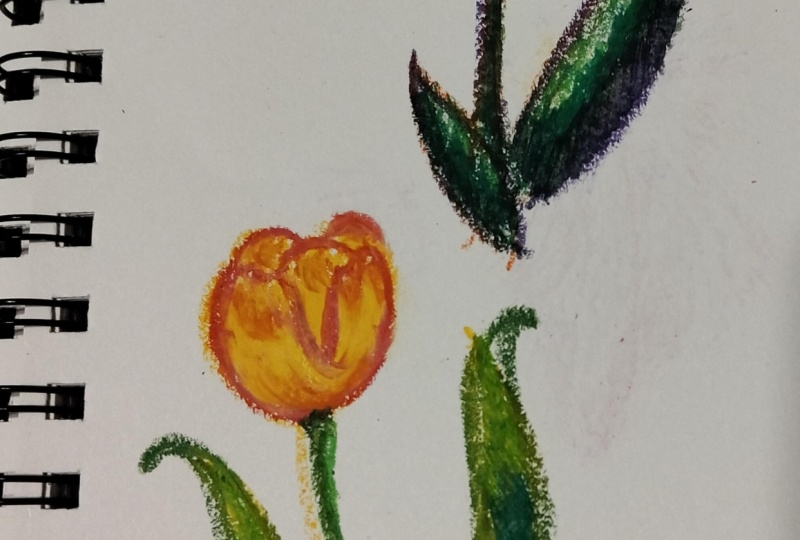
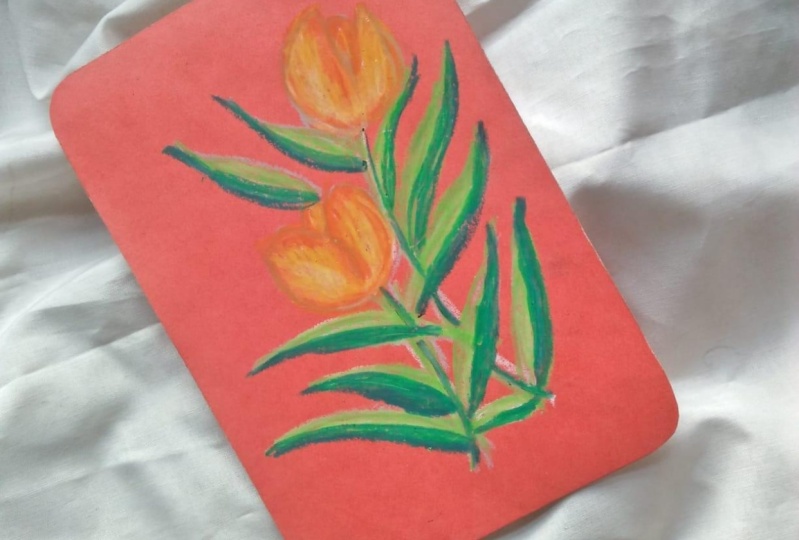
In this class I'll assist you in drawing simple and easy tulips of three different colors, the videos are in real time so you you can follow along.

So , if are interested in drawing simple and easy tulips in oil pastel then join me and let's paint.

Meet Your Teacher

Level: All Levels

Class Ratings

Expectations Met?
    Exceeded!
  • 0%
  • Yes
  • 0%
  • Somewhat
  • 0%
  • Not really
  • 0%

Why Join Skillshare?

Take award-winning Skillshare Original Classes

Each class has short lessons, hands-on projects

Your membership supports Skillshare teachers

Learn From Anywhere

Take classes on the go with the Skillshare app. Stream or download to watch on the plane, the subway, or wherever you learn best.

Transcripts

1. Introduction : Welcome to this class on EC2 lips with file-based. In this class, you will learn to draw these three beautiful tulips. I will show you how I approach drawing this tulips in real time. We will start with understanding the basic safe lab at your lip, then cholesterol used for the tulips. And finally, drawing this two lips in real time. So if you are interested in drawing this EC2 lifts, join me in this class. 2. Class project : For the class project, I would like you to drop any of these three tulips. 3. Supplies : For this class, you will need a cardboard to tape. The paper must be paid for securing the paper pad cell and emigration for sketching. For blending the colors. I'm using pastel paper for the painting. Ilp stills. 4. Sketching: Sketching that your lip, I'm starting with drawing a simple cup safe with pencil. Then I'll be using a black pen. Define the petals of the flower. Going in with the paint to add the petals of the flower. Generally tulips have six meters. I'll be drawing three petals in the front. And that is the petal behind this three main petals. For the desktop, the class, I'll be sketching the same tulip. I'll be making some tweaks here and there, but I'll be using the same tulip. That's for the leaves. I'll be adding two to three leaves. You can add more if you like. I mean, by paintings, I'll be wearing the side. These are the two lips and the leaves. 5. Red and white tulip : For this first painting, I'm starting with white to draw the guideline for the tulip lover. Getting that neoliberal, I'll be adding the stem and I'll be sketching the leaves. I am starting with that and filling the center of the petal, leaving some space where I'll be adding white building scene for that instead of that vitals. Now I'm going in with white me of the edges of the petal beside the center of the petal during the scene for the rest of the petals. Now for the center of the petal, I'm applying light lightly. Going in with the right again, don't define outputs of the petals. I think some more white on top of that. For the bottom part of the tulip, I'm adding some purple on top of that part, but I'll be adding mouth, what does stems and the leaves. I'll be using sap green, dark green, and light green. To add saddles. I'll be using black and what the blending all these colors, I'll be using light green. 6. Yellow tulip : For this yellow TO lips, I'm starting with this getting out that your lip. My pencil. Now for coloring the tulip, I am starting with light yellow to define the outline of the tulip. Using a seem like yellow to color the top and the bottom of the petals while leaving the center of the petals and touched, following the same steps for the second petal. Now defining the outlines of the rest of the petals that are behind this main petals. Failing in the weekend space that are left behind with a deep yellow. You think your tip to blend a light yellow with a deep yellow. Now I'm going to define the outer radius of that your lip. Using Q-tip to blend the red with a yellow by applying light pressure. Domain that tulip more vibrant, I'm adding more yellow on top of their head. Now let's add the stems and the leaves to the tulip. For this, I'll be using deep green. With yellow. I'm sketching the guidelines for the leaves. I am using yellow to represent a brighter section of the leaves. Now adding light green on top of that deep green for the stems. The leaves. I'm going in with a deep green. For the desktop, the painting, I'll be using light green to blend the deep green and photo saddles. I'll be using black. Now I'm blending the black wood that SAW using light green. The next part is optional. I'll be using dark pink to add background for the flower. 7. Blue tulips : For this bloat, your lips are the following, the same steps as I did earlier. I'll be starting with the sketching the main shape of that ellipse. In this case, I'll be drawing 32 lips. For the ellipse, I'll be using three colors. Light blue, dark blue, and white, and a little bit of deep pink. And that's what the leaves, I'll be using yellow, light green, and dark shadows on the leaves. I'm using black eye to blend all that collects on the leaves. I'm using light green. We do it in real time so you can follow along. 8. Conclusion and thank you : Thank you for enrolling in this class. I hope you learned something new. If you have any questions, ask me in the discussion section. And if you have drawn any of these paintings, please upload it in the project section. And that's for additional idea. You can attempt any of these paintings. If you enjoyed this class, please leave a review. Thank you.