Transcripts
1. Introduction: Hey, everyone. My
name is Alifya and I am an artist here in
San Jose, California. Welcome to my painting class where I will be
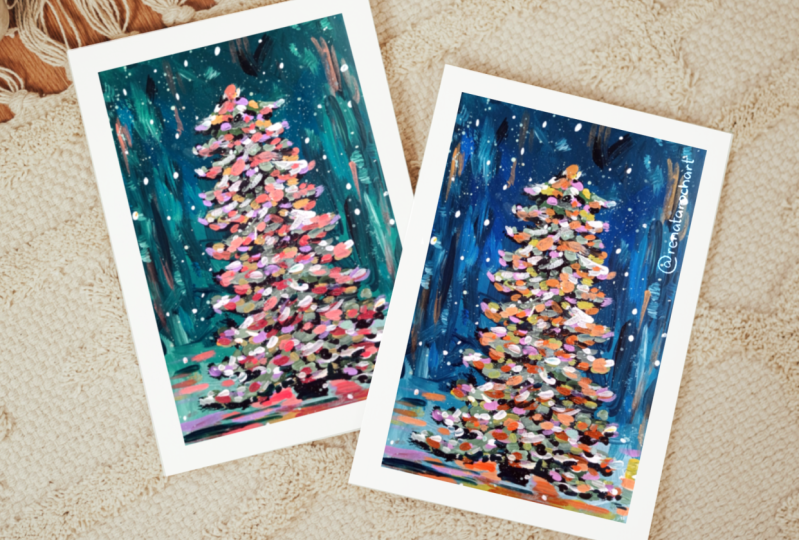
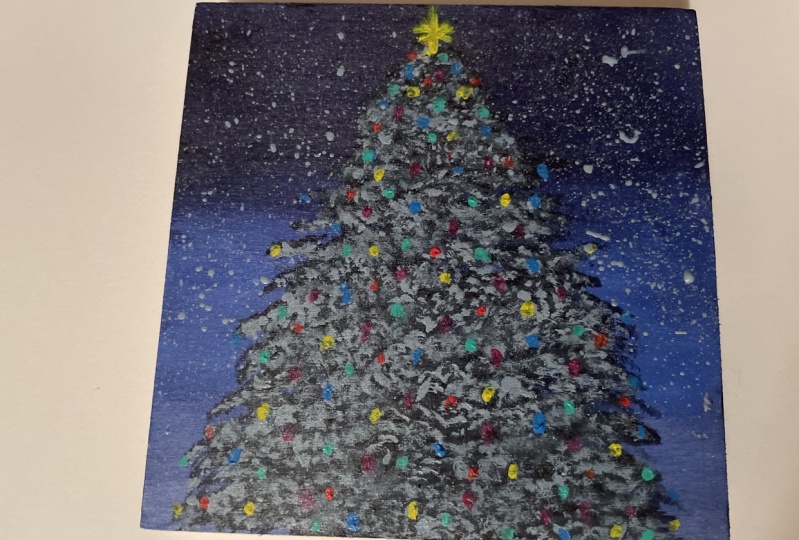
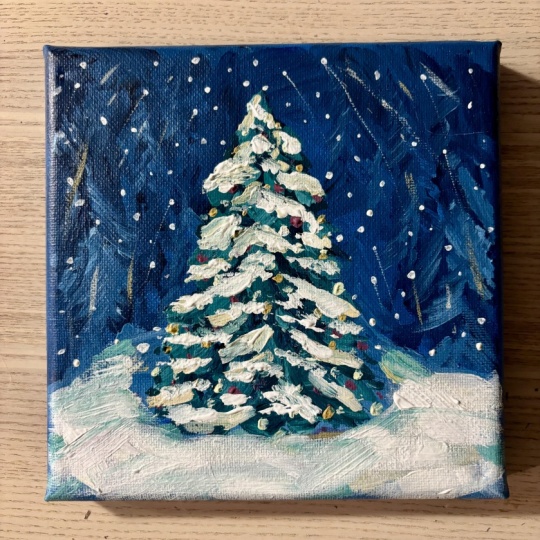
showing you how to paint this loose acrylic Christmas tree night
scene landscape. Super fun and easy, great for beginners
and beyond and I hope this puts you in
a cozy, festive mood. We are going to go
through materials, exercises on basic
brush techniques, and how to understand dimension
and form and then we'll walk you through painting
this winter scene. This lesson can make
great Christmas cards this season or gift a
painting to your loved ones. There's nothing more special than making something handmade, so I hope you give this a try. Make yourself a hot chocolate, and let's get started.
2. Materials: For this class, you will
need a paper napkin, a bowl full of water, and a
tape to tape down your edges. I also use gesso to prime
my canvas beforehand, and then these are all the
paints that I've used. Again, everything is listed
in the description below, so you can get the names of that along with white and black. For my brushes, I've used
three different kinds of flat brushes: a large, medium, and then a small. Then, I've used
two small brushes. One round brush and then one tiny filbert
brush. Then a rough brush. This is optional, but this is a rough brush that I use for splatter paint at the end. Then, this is the
Acrylic Strathmore paper that I always use and love. I cut by into a five
by seven inch and then a glass palette and then the scraper to
scrape off the paint.
3. Brushwork: [MUSIC] Now, let's dive right
into some brushwork. I'm going to show you the
different marks you can make with my most commonly
used brushes, and I'll show you how
I apply and use them. Let's first begin
with the flat brush. This one is super
basic and clean. I use this one for the sky, and you can get simple
flat washes with this one, but extremely thin lines if you use the tip
of it as well. Similarly, this
smaller flat brush works just the same and I use this for a simple flat
washes for my landscape, especially when I block off
colors in the first step. Like mentioned, these
next two brushes are my most used and amongst my favorite
to paint landscapes. They are very versatile
and are great for that loose style landscape
paintings which we love. You can get really great
clean flat strokes with this. I love painting this when I
am painting huge mountains or to block in shapes, I love using this brush to
block in the initial stages. This brush is also
great for layering paint on top of one
another as well. If you change the direction of the brush and hold
it vertically, you can get arch like shapes
that can be used for bushes, trees, and loose objects. Because of the brushes
arch like shape, it is great for bushes and hence will be great
for landscapes. Using the side of the brush or its tip can also
be very useful to paint faraway trees
or houses, etc. Overall, it's really
great for detailing. The smaller size
[inaudible] brush is great for smaller bushes
and objects far away. I use this long, thin brush in every
single painting, which I mostly bring up
at the end for detailing. Whether I'm painting
florals or landscapes, I always bring this
out at the end. This brush can really add
some visual interests, with little tiny marks. Today's painting, I use
this brush for the grass. I gave it some highlights and
little tiny marks far away. This can really also
signify and give impressions of little
objects far away, so maybe even houses or animals. I even actually sign my
art with this brush. If you are wondering
how I sign them, it's always with this
brush at the very end. [MUSIC]
4. Dimension & Form: In this lesson, I'm going to
go over dimension and form. A form is a
three-dimensional figure as opposed to a shape being flat. How would you add a
form to an object? Well, in painting, you can
do that by adding color. In this example here, we have dark tones, mid-tones, light
tones, and highlights. This is exactly what
you need to turn a flat object and give it
some dimension and form. I'm going to show you how. I'll be using red, black, and white to demonstrate this. First, I'm going to block in
the shape with just plain red so that we can have
a base to start from. This right here is an
example of a flat 2D object, which we will now turn into
a three-dimensional shape. Now, I'm going to start
adding in my mid-tones. I'm going to add
some black and white to the red to create that. To get my dark tones, I'm going to add some more
black and fill in that edge. Now we're going to
take these two colors and blend them in between. You can already see how
this is forming a shape. Now let's add in
some light tones by mixing in some white. Notice how I'm painting in
the direction of the ball. I'm not just painting
this up and down. Since this is a round shape, you want to paint in that curve. I'm just going to
go back and forth in between my dark
tones, mid-tones, and light tones until I'm satisfied and I feel
that this looks good. I am just giving it a
rough background so that it doesn't feel like
this is just floating around. Then, for the highlight, I'm going to take a lot more
white and a tiny dab of red. A quick recap. Dark tones are
achieved by mixing your original color
with some black. Then the more white you mix in, you will get a gradient. You can see how you can
move from a dark tone to a mid-tone to light tones
and then your highlights.
5. Painting Process 1 - Background: Like always, let's begin
with the background. I am using a Prussian
blue, black, and white. Using a flat brush, start from the very
top directly with the blue and then add some light to see it
as you move downwards. Change the direction of your brush
constantly by using both the sides to get
a rough background. I did not want this
to be very clean, but slightly messy, giving the impression of
some background of trees. We do not want the
background to be in focus, so do not give it
too many details, just impressions of objects. In this case, there are some
trees and some falling snow, which I will show you
how to do in a minute. Adding a bit of
black to my brush, I'm making sure to use
all sides to my brush to give a different brush strokes
and just variety of sizes. Using the corner of my brush, the side of the brush will
give you different textures. Also keeping in mind to add vertical strokes to
give impressions of far away trees that are
blurred out in the background. Using the tip of your brush and pulling it down can help
you make tree trunks. Again, doesn't have
to be perfect. Adding short, quick
strokes of some white to give impressions
of snow in the background. The bottom half of
this will be snow, so adding a lot more
white and a little blue and lay that out to
cover the ground here. I'm going to shake
this up a little bit and I'm taking in
some blue again and making it a bit messy to add some brush strokes here
as well to keep it loose. Going back in with some
more white and blue and adding some more snow
to the background trees. Keep this tone muted because we do not want this
to stand out too much, but just peek through the
Christmas tree in the front. Remember, short
and quick strokes using the corner of your brush.
6. Painting Process 2 - Tree Base: That is it for the
background for now. Let's add the Christmas
tree in the front. The part that is most exciting. Switch to a smaller flat brush
for this and let's begin. Taking black directly,
let's get the base of the tree first by
adding the trunk. Straight line across, keep it slightly wider at the bottom. Then here, I'm just dabbing
in little brush marks to create the
foliage of the tree. Hold the brush from the backend
to keep your marks loose. Keep turning your brush in
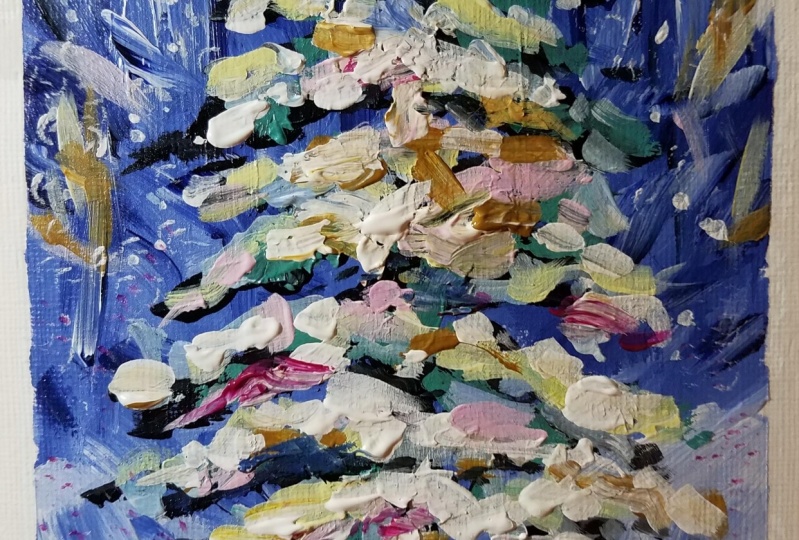
different directions to get different sizes and thickness So that I do not mess
up on the shape, I sometimes like to get
the top half and then I start from the base and then
fill in the gaps in between. It just helps me visualize the shape better so
that I know how much I need to extend my branches to get the full
triangular shape. Now, that we have
the base layer done, it is time to build up on
the colors layer by layer, and that's all it takes to
make this Christmas tree. Let's start with pale
green, using that color, mix it with some white and black to give it
a more muted color. Using the corner of the brush, I am adding in small specks
of this color to the tree, mainly at the top of each
foliage since snow would naturally gather the most on the top of the
branches and leaves. Be careful not to cover up the base black layer completely. Every single color that we add from now on should
be an addition, but not replace all the
existing colors completely. Be mindful of that. Now, once you move
down the tree with this color we will
add the next one, simple, right?
7. Painting Process 3 - Building Layers: Switch to a smaller brush
now for more control, and here I'm simply
adding some more white to the green
mixture we already have, but also adding the
slightest Prussian blue to mix the colors of the
sky to this highlight. Using the same exact method, add this color to the tree
to build up on the layers. But be careful of not covering up the previous
layers completely. Don't be afraid of adding
some bolder strokes at the bottom where snow
usually lies pretty heavy. Keep your brush stroke
smaller at the top, and then make them thicker
at the bottom of the tree. Switch up the direction to
make them more interesting, and always remember to
hold your brush from the back to keep it less. Add a brush marker to the foreground snow to make
it all blend together, so from now on, any color that you add to your tree
make sure to add a few couple of strokes
to the foreground base as well to keep the reflection from the tree falling
onto the ground. Now, let's add slightly
brighter colors to make this tree
more festive and fun. I'm taking in some
yellow and a lot of white to make this very
light pastel yellow, and adding a few marks and
specs to that to my tree. Again, same exact
method as before. Use the corner of
your brush and work your way from top and
slowly move downwards. Do not overdo it, make sure to leave room
for more colors and also remember to not cover up
all your previous layers. Do not forget to also add that same color at the
foreground snow as well.
8. Painting Process 4 - Layers & Dimension: At this point, feel
free to add in whatever colors you want to
make your Christmas tree fun. I wanted some
pinkish hue to this, so I am taking in
pink and white. I believe the artisan
pallet calls this rose. I'm adding this to
my tree as well. Getting a bit of that
pink to the background, just some few random marks to make this painting blend
and flow well together. Next color is raw sienna to
add in some more warmth. This time I'm also switching to a much smaller filbert brush so that I can just
change up some of my brushstrokes and thickness. I hope you're getting
the hang of this and realizing that this whole
process is very repetitive. Once you get the first
two layers down, it all becomes real easy. Let's go back to white this time to highlight
the snow a bit more. I've taken the
slightest amount of yellow and added
it to the white, but it's mostly just white. Add this color to a few places randomly down the
tree to make it pop. Remember to keep
your textures and brush marks slightly
thicker at the bottom of the tree and
smaller at the top to give it the right
perspective and fullness. [Just a recap, short, small, and quick brush marks to keep this
painting loose and contemporary. This also adds nice
juicy textures. Also making sure to always hold your brush from the
back handles so that you can allow your brush
marks to be more free and not uptight
or too controlled.
9. Painting Process 5 - Darks & Snow: Let's now pull in back some of those darker
layers we started off with. I'm taking in some
Prussian blue and black and bringing out some of those shadows that will allow us to break up some
of these shapes, and it will just look
visually pleasing overall. Just a bit of this and just
a few places here and there. Now, I'm using a small rounded brush to add some falling snow. Taking some whites,
simply add tiny dots to the sky and a few in
the foreground as well. To add smaller
splatter light paint, I like using a rough brash. Dip it in your water first
and then in your white paint, but you should have more of a water consistency
to get this effect. Afterwards, you simply flick off the bristles to get
the splatter paint. Some people even like
using an old toothbrush, but you do whatever
is easier for you.
10. Final Details & Class Project: The last and final color that I'm going to be adding
is this Indian yellow, which is basically an orange. I wanted that orange
light glow to this tree so I thought
of adding this to it. Adding some final shadows to the background and we are done. This completes our
loose and simple acrylic Christmas tree
painting for today. Hope this put you
in a festive mood and you learned
some fun techniques from today's acrylic
painting class. This can make a
great Christmas card or a gift to your loved
ones this season. If you do try this, do not forget to post
your projects in the Projects and
Resources tab below. I cannot wait to see what
you guys come up with. Happy holidays and I will
catch you very soon. Happy painting. To shop my arts, do visit my website where I sell my original landscapes
and florals, as well as prints in all
sizes and much more. To keep up with latest news, do follow me on
Instagram where you can stay up to date
with my new launches.