Transcripts
1. Introduction: Welcome to the class on
floral pattern touring. I'm so excited to have
you here and to share my love and passion for these unique and
beautiful art form. In this class, you will
learn how to create stunning floral patterns using only one color of watercolors. One color drawing, same as
floral pattern drawing, is a growing trend
in interior design. And it can add a sense of ligands and simplicity
to any space. So why don't we combine
them into one artwork? This technique is perfect
for those who are new to watercolor
painting as it allows you to focus on the composition
and patterns without getting overwhelmed by
different colors or details. And over this class, you
will have the skills to create your own one
color floral pattern. And you will be
able to use it in your own artworks and you will be able to decorate your
home that, those paintings. So are you ready to learn
something new and exciting? Let's get started.
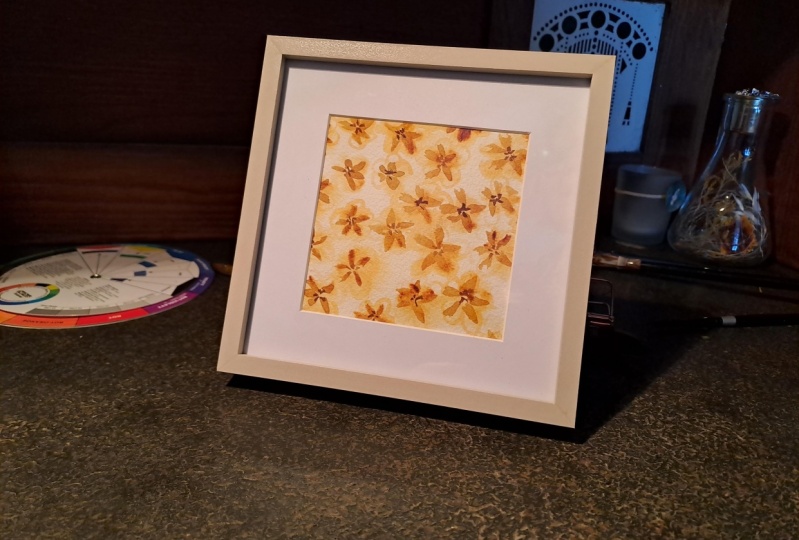
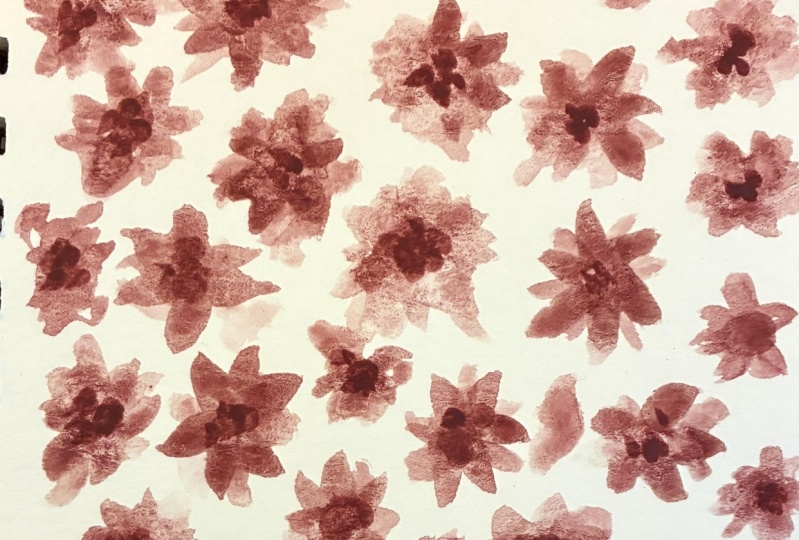
2. Your Project: For the class project, you will create a one-color floral pattern with watercolors. Using the techniques and inspiration learned
in this class, you will create your own
unique floral pattern and you will also explore the possibilities of using only one color
in your artwork. This class project is a perfect opportunity
to practice what you have learned to create something beautiful that
you can be proud of.
3. Materials Needed : For this class, you will
need watercolor paint, paint brushes, watercolor paper, just a little bit
of inspiration. Watercolor paints and brushes are the main materials you
will need for this class. But don't limit yourself
on watercolors only. There are tons of materials you can also use in this class. You can create your
project with oil, pastels, oils with acrylics. I can't wait to see what
you have to create. So please don't forget to share your project once it's finished.
4. What Makes Good Floral Pattern Design : Before we actually start working on the project
for this class, our floral pattern dropping. I think it will
be helpful to see what actually makes
a good pattern. A successful floral
pattern design is one that is
aesthetically pleasing. Of course. It's
also the one that effectively communicates the
intended message or mood. And in order to achieve it
in floral pattern design, there are a few key
considerations to keep in mind. So first is that the
understanding of principles and
elements of design. Understanding of principles and elements of design
is essential in creating harmonious and visually appealing for floral pattern. Don't worry, you don't have to make your own
research right now. Of course you can do it
like ten by yourself. But in the next lesson, I have prepared a
lesson for you on principles and elements
of floral pattern design. The flowers and foliage
chosen for the design should complement each
other in terms of color, form, texture, and line. So that you create
harmonious hook. Create imbalance. Whenever it's symmetrical
or asymmetrical. A good balance is
a key to creating a visual this table and harmonious design in
your floral pattern. Establishing a focal 0.1 can be created through
the use of a large lava or an arrangement of lover
that are positioned to draw the eye which lies
in the region and to petition by Robeson. Lms such as flowers and
leaves or stems from the drawing creates a sense
of rhythm and movement. And it also adds more interest
and flow to your design. It is also helpful to pay
attention to the proportions. Proportion first. So the relationship
between the size and placement of different
elements in the design, it's important to ensure
that the flowers and foliage in proportion to each other and to overall
design of your drawing. Selecting the right
color palette is also a powerful tool
in floral design. And choosing the right
color palette can greatly impact the mood and overall
feel of the design. Don't be afraid to
try new things and experiment with
different arrangements, different flowers and colors. This can lead to unexpected
and exciting results. By considering these factors, you can create a beautiful and amazing floral pattern
design that can help you communicate
your mood or the message that you want to
recreate in your drawing.
5. Principles And Elements Of Floral Pattern Design : Strong understanding of
principles and elements of floral pattern design is
essential in creating a harmonious and visually
appealing floral pattern. Let's vi, I believe it's
important that we go over the basics before we actually start creating our
floral pattern touring. The main principles of floral
design are imbalanced, proportion, focal point,
rhythm, and harmony. The elements of floral
design include color, form, texture, and light. Let's start by looking at the principles
of floral design. So the first one is balanced. Balanced refers to the visual
stability of the design. There are two types
of balance in floral design, symmetrical
and asymmetrical. I think you know this already, so it's really simple. Symmetrical balance is achieved
when elements are evenly distributed on either
side of the design. While a symmetrical
balance is achieved, then elements are
unevenly distributed, but they still create a
harmonious hook to the drawing. Next, we have proportion. Proportion refers to the
relationship between the size and placement of different
elements in the design. It's important to
ensure that flowers and foliage are in proportion to each other and to overall design of your
topic called point in plural pattern is the center of attention in the design, e.g. it can be a large, bold flavor or an arrangement. Flowers that are positioned
to draw the eye. Rhythm is something
more interesting that was new for me than
I was doing my research. It refers to the repetition
of elements such as flowers or leaves in the
pattern throughout the design. This repetition
creates a sense of movement and flow in design, what they call rhythm. And finally, harmony. Harmony refers to the
overall feeling of unity and cohesiveness in the
design of the floral pattern. This can be achieved through
the use of similar colors, shapes, and textures
in the design. And that's it. Now that you are familiar with the principles of floral design, we can go over the
elements of floral design. Like I have already mentioned, the main elements of
floral design or recolor, form, texture, and line. Why don't we look closer
at each of the elements of floral pattern design to have a better understanding how to create our own floral pattern. So the color is the key
elements of floral design, and it can be used
to create contrast, highlight focal points, and
set the mood to the design. The form, the first
to the shape of the flowers and foliage
use infant design. The texture refers to the field of the
elements in the design, such as the roughness of
a stem or smoothness of the petal texture can add depth and more interesting
to the design. Finally, the line refers to the direction and movement
of elements in the design. This can be achieved
through the use of curved and
straight stems, e.g. now that you have the
better understanding of the principles and elements
of a floral pattern design, it will be easier
for you to create a harmonious and visually appealing floral
patterns in the drawing.
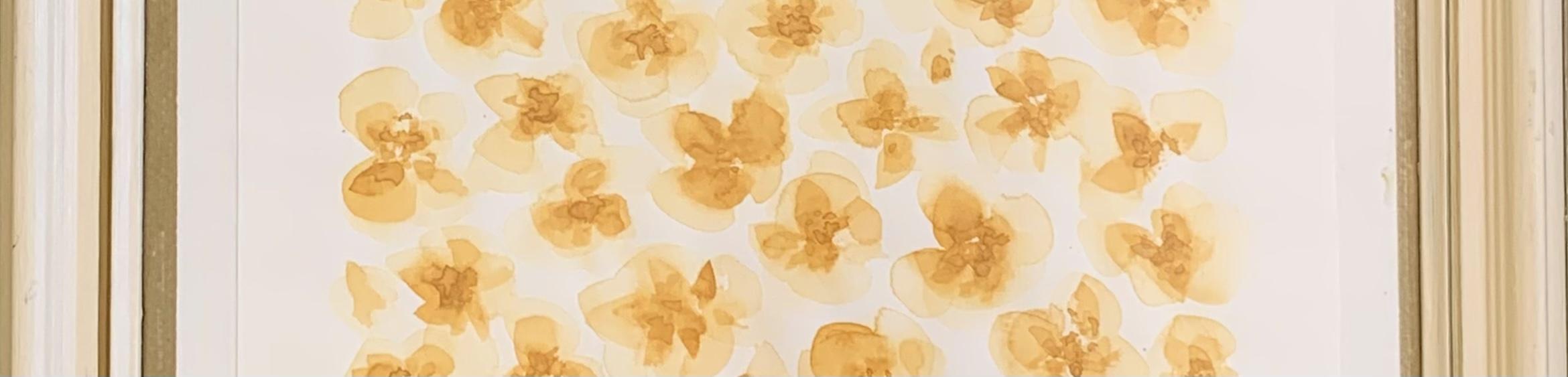
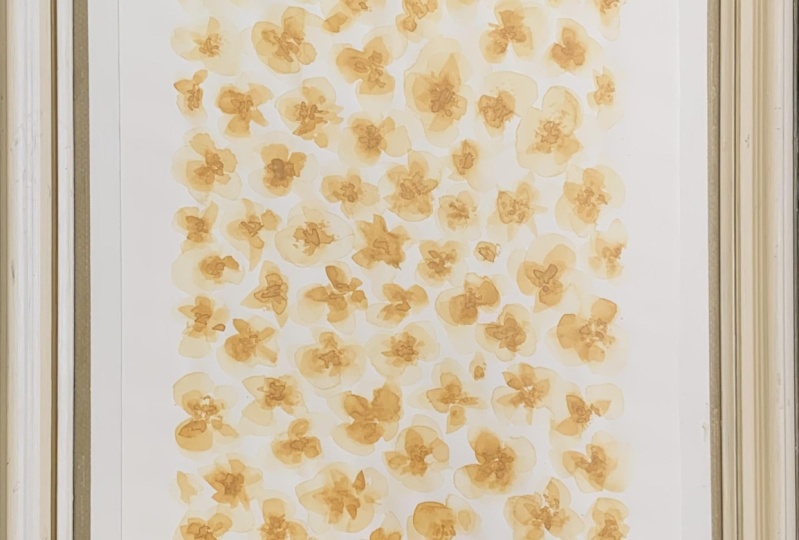
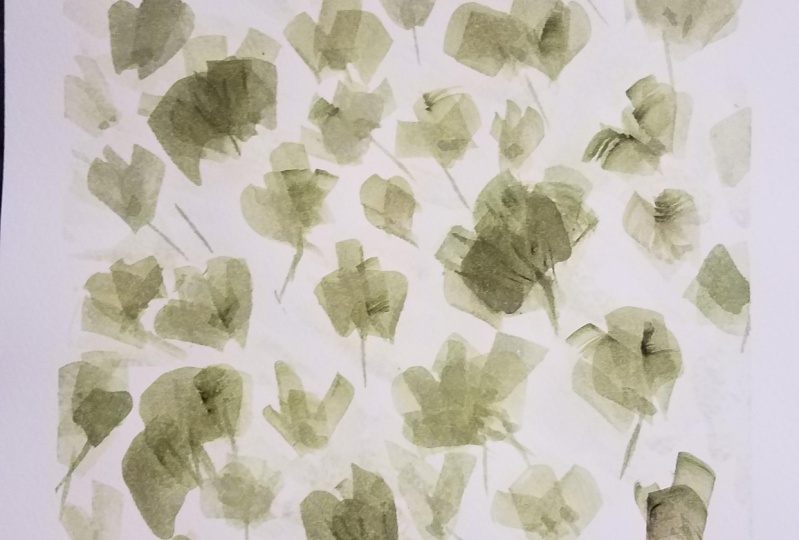
6. Defining Flowers: Today we will create a beautiful floral pattern using oil ocher,
watercolor paint. We have chosen to work
with just one color to allow us to focus on the shapes and composition
of the design. This will also allow us
to explore the range of tones and shades that can be achieved with one watercolor. To begin, we will
define the flowers with medium-size petals
in various shapes. Despite the difference
in petal shapes, we will strive to maintain
balance between them by keeping them roughly
the same size and of course, the same color. This balance is important in creating a harmonious
and cohesin design. By keeping the sizes
and colors consistent, your pattern will look well balanced and
aesthetically pleasing. It's important to use
different petal shapes to add interests and variation to your pattern while still
maintaining a cohesive look. Greater than floral
watercolor pattern with just one color, such as yellow ocher, like in our case, isn't effective way to focus on the elements of the design, such as the shapes,
balanced, and composition. By removing the distraction
of multiply colors, you can better see how the different petals
and shapes interact with each other and how they contribute to the
overall pattern. In addition, working with
just one color allows us to explore the range of tones and shades that can be
achieved with watercolor. And the amount of water
that is used with the paint can greatly affect
the color that is produced. More water will
dilute the pigment, resulting in a lighter and
more transparent color. Less water will produce a more vibrant and
saturated color. This allows you to
achieve a range of tones and shades all
with the same color. In the floral pattern. This variation of tone can add depth and dimension
to the petals, creating the appearance
of light and shadow. You could also create
a sense of movement as the Ryan shares can help to guide the eye
around the pattern. Overall using one color in the floral watercolor
pattern allows you to focus on the design
elements wildly. Variation in tone that can be
achieved through the use of water helps to create depth
and interests in the pattern. Okay.
7. Adding Center: Next, we will add centers to each flower to add more
contrast and depth. The center we'll act as a
focal point in the design. Drawing the viewer's eye to
the center of the flowers. This element will help to create the sense of movement and
direction in the pattern. So now we will be using a
darker shade of yellow ocher. To paint a center
of each flower. You can either use a small brush or a point over the same
big brush like I12. And you carefully paint
the center of each flower. By adding a center
to each father, You can bring more attention to the focal point
of your pattern. These creates visual
interests and draws the viewer's eye towards
the center of each flower. Darker shade of yellow
ocher in the center of each flower also creates
depth and dimension, making the flapper appear
more three dimensional. It's important to note
that the amount of water used in the paint greatly
affects resulting color. More water will
dilute the pigment, creating a lighter and
more transparent color. On the other hand, water will produce a more
vibrant and saturated color. They will experiment with
the amount of water for this class to achieve a
range of tones and shades, all with the same
color, yellow ocher.
8. Final Touch: Finally, let's use yellow
water in which we have washed out brush to add additional almost see-through
petals to each flower. This will make the flowers appear larger and more dynamic, while also adding an extra layer of depth and interests
to the design. You can add as many or as few petals and layers of
transparent petals as you like. So dip your brush
into the yellow water and use it to paint light and transparent petals
around each flower. Isn't see-through
petals, creates depth and texture
to your pattern. This step is great
way to add interests and dimension to
your floral drawing. The transparent battles at the sense of movement
to the pattern. As the flowers are
blowing in the wind. Color is an excellent medium for creating a floral
pattern like this. Because of its unique
ability to create soft, delicate, and
transparent effects. With the transparency
of watercolor allows for layering of colors, creating depth and
dimension in the painting. Watercolor is also
relatively easy to use, making it an ideal medium for beginners
to experiment with. As you can see, what
the colors are. A great medium to create a
floral pattern like these, because they have a unique
ability to create soft, delicate, and
transparent effects. In the case of floral pattern, this allows you to
create layers of petals that are transparent
and see-through, adding to the natural and
delicate appearance of flowers. Additionally, what's your color
paints are easy to blend, which allows for smooth
transition between colors and the range of
shading possibilities. All right? All right.
9. Final Thoughts : Welcome back. I hope this class
has provided you with the skills and knowledge to create your own one color floral pattern,
watercolor, drawing. While there's a lot,
you have learnt about the materials and tools needed
for this type of artwork. How to find inspiration
and reference images, and how to use those to
inform your own work. You have also learned on what
makes good floral pattern drawing and the main principles and elements
of floral patterns. Remember to keep practicing and experimenting with one
color and drawing. And you will be able to create more and more beautiful and
unique floral patterns. I hope you enjoyed this
class and you will continue to explore the world
of watercolor drawings. If you have any
questions or feedback, please don't hesitate
to reach out to me. I can't wait to see your
beautiful creations, so please share them
once they're finished. Thank you for joining
me in this class and I hope you had a great time
and learn something new. Also, don't forget that
I have a Patreon page where you can support me
and my future classes too. If you enjoyed
this class and you want to see more like it, I wouldn't be honored to have your support by
join me on Patreon, you will have access to exclusive content behind
the scenes updates. Enter the opportunity to help shape the future
of my classes. Thank you again
for joining me in this class and I will
see you in the next one.
 Alina Harvi, Ukrainian Artist