Transcripts
1. Intro: Hello everyone and welcome to this exciting online
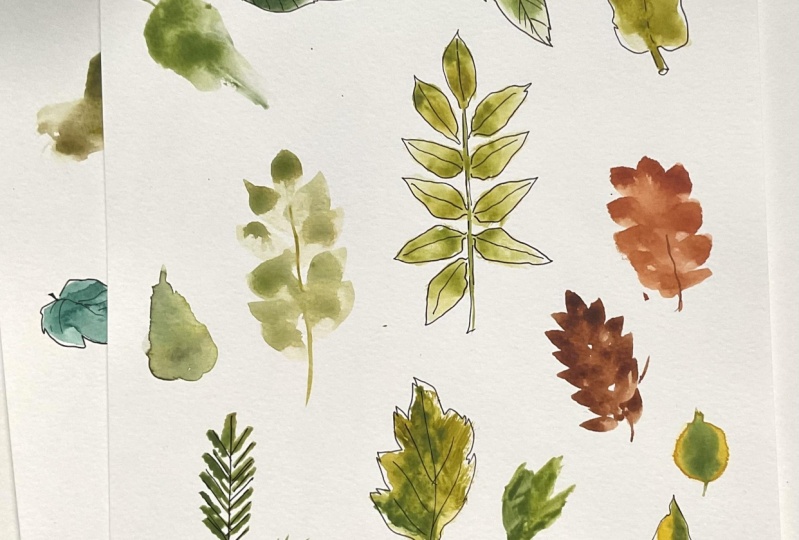
watercolor lesson and Natalie, and in today's session, we will explore the item draw when virus leaves
through Bright sketches, we will focus on a simple
and enjoyable approach to capture the sense or
this natural beauties. So let's grab our materials
and to get ready to create the brand and energetically sketches
wastewater color
2. Materials: Let's talk about
necessary materials. Of course, we will need to
schedule course sheet of watercolor paper and not
less than 200 g/m² density. A watercolor paints in tubes. So parents take Carlos
suitable for drove and leaves. Yellow, light green, dark
green, orange, maybe brown. If you have latent paint, you can take any street, but of course the
green would be better. We need several different
brushes and my own cell, which there should be
a soft round brush. I prefer scary squirrel brush, a wide flat brush, and brush for details. The rest is your choice. You will also need
tissues, water, and liner for the final touches. If possible, prepare a
piece of plastic card. If p's are formed and
construction or bakery scraper, I'll show what effects can
be obtained with them and you will decide whether to use
them in the future or not.
3. Watercolor drawing: Well, let's get started. This is a drain in section. So the lower this takes
as much as possible. We're going to lower
them and warm up. Now. I advise skipping error
seen as simple as possible. In fact, one of the main secrets of beautiful
sketches is lightness. Let's approach the
task with all these. To start with, I
suggest you to start with the silhouette or
the simplest leaves. Try to make beautiful
and confident purines. So somewhere as a
print is applied, as transparent as possible, and somewhere as small
puddle of paint is gathered. To do this, make a brush stroke and sharply
removed by pressing down. Again, I repeat. Start with the simplest leaves, with the simplest forms. You can make a monotonous feel. And after that, at
splashes of clean water, try using a plastic card
to make a few scratches. This way, you will add
details to the drama queen. You could try using a piece of sponge to worry the silhouette. Any sponge We'll do, not necessary or like mine. You can reverse the
process first to make this punch prints and then
gather them into a leaf. Especially beautiful, this effect will look
with brown color. When in the fall, the leaves dry up, becoming semi-transparent, leaving only a web
of Wayne is behind. Right now we're just trying different ways of
depicting leaf. The next tab. Let's proceed to
beautiful prints. We will try to draw a
leaf of a share or Owen. You can add water if
the paint is to seek. This will result in a
more transparent print. On the other side, you can make prints at a slight angle to make it
look more interesting. You can add a few details, but still tried to preserve this unique and
print of the brush. This will attract attention and Yoav euro will be
wondering how was it done. You can try draw
when a similar leave but with a different
brush this time. This way you'll get
more practice and familiarize your
battle with the tools. You can take less or more
water this time to experiment. You can rotate the leaf to
make it more convenient. Remember, don't go into
details, keep it light. Now, let's try to
draw a no Cleve. I suggest using yellow,
orange, or brown. Tried to minimize the brush strokes without
preliminary drawing. Start from the top
and make prints. I'm gradually narrowing the
Silhouette from both sides. Just add water in the
middle of the leaf to maintain lightness and
get watercolor overflows. Let's draw another
similar leaf next to eat. Dry, as many as you want. Train and practice Try to draw even more
transparently, even lighter. Bailey add in details. You can slightly
outline the veins, but keep the
original simplicity. The next method is to use
the tip of the brush to create an uneven edge like
raspberry leaves, for example. The brush should be semi
dry to achieve this effect. So remove the excess
moisture with a napkin and fluff Hobbes or brush on the palate and start
making prints. Here again, an interesting sketch was
made in such a simple way. For the next way of
depicting the leaf will need a flat brush
and wide flat brush. We'll be drawing a palm leaf. We can prince who is
a T pull the brush, will even such beautiful
and straight lines. I advise you to make
a few attempts. You can take more
water into the brush and observe how
the brain changes. It's so fun and easy. In my opinion, a very
effectively turned out. And the method is very simple. Because the next thing
I'd like to show is beautiful color mixing. Let's take a simple
leaf shape again. You can even make it similar to this one with simple movements. So we outline the shape, starting with green and
transitioning to yellow. Don't mix the paint
on the palette. Let ever seen mix
right on this sketch. It will look more
vibrant this way. The reason nozzle opportunity to achieve a beautiful effect. It's the use of
granulating paints. If you don't have such paint, just watch and get
one if possible. It's suddenly what
base you buffers. Again, I urge you to draw a simple leaf shape and let the watercolor complete
the drawing itself. The granulating paint to create beautiful overflows
without your faults. And finally, let's
have a little fun. Now I will show you how
you can use this tool. Also, you can replace
it with a hair. Come. First, I suggest draw when the
silhouette of a leaf, even from the side. Let it dry a little and
we will try to make scratches on it with
a scraper or a card. A lot also depends on
the paper you are using. Sound waves, the
effect will be more pronounced and somewhere less. You can also start with a scraper leaving
imprints on the paper. This effect is also suitable for the picture
and a palm leaf. You can add details with a thin brush live in
maximum lightness. Now I see a small free
area on the sheet. So let's try to draw a
eucalyptus leaf here. We semi-transparent paint two, we start drawing round leaves. One can be placed right
on the top of another. Now you can add dark
Princeton in some places to add heterogeneity
and details. Leaves are almost ready, but we have to live
in demo with a liner. Though they have already turned out brightened
interesting. Now we need to dry them and beautiful accents and
finalize our leaves. While they're dry. I will use a hairdryer to speed
up the process.
4. Details with liner: Let's take liner and walk out some details trying not to exactly replicate line of
the watercolor drawing, but to go beyond the
silhouette in some places. Don't hold it too
close to the TPP. Let your hand be free. This way the sketch
will look more lively. In some places secant line, let it be heterogeneous. Add details carefully,
don't overdo it. One of the main problem
is over walk in the artwork when you
simply don't stop in time. Our task is to simply
slightly live animal. The leaves try nor
terrain the walk, create uneven ages,
skipping a line in some places and leaving
gaps in the counter. We also try not to touch the places where beautiful
effects have been achieved. We start with a
eucalyptus branch. Especially carefully
draw with the counters. So this a reliefs. Such deallocate
wall can easily be spoiled by a role for
uniform outlines. Sarah for minimum details,
maximum lightness. Next, try not to reach the
end when outlining is to let, let some places just remain
with a watercolor edge, especially if it turned out, well, don't outline the
leaves from all sides. Let there be light
on the statement. Prompt in your view or to examine this catch more closely. In some places
deliberately second line, given more contrast
and unevenness. Let your lines be really alive. For example, in this leaf, this Teens don't
doubt, very beautiful. And I don't want to
overload it with details. Let's leave it as it tastes. The contour of the oak
leaves, chemo turmeric, Leah. Less outlining here to where it turned out
especially beautiful. We did not touch. We supplement and Mason pods. You can capture wide
areas of paper, perfecting the contour and creating an imitation
of a glare. This will only
enhance the sketch. And let's add a little waning. I practically don't want to
touch anything right here. I will just make
a slight hint at detailing and leave it as it is. We move on to the next leaf, making vault, even a fan, even lines here to wear a beautiful stains
have turned out. Try not to cover them up, but just slightly emphasize
the shape of the leaf. Let all attention be paid
to the granulation effects. For palm branches. Just lightly outline
the middle and add a few details
here and there. We've already achieved a harmonious and quite finished
picture with watercolor. So we will just
slightly place axons maintaining the purity and
lightness of the sketch. Let's add a few details
to the remaining leaves. There is just a little bit left. We will use the liner here to draw what we didn't
manage to scrape out. We need this tool
exactly to highlight a successful areas and hide
Zan, unsuccessful ones. Let's add details to the most, a relief that E, Let's take a look at
the result and leaves. If you miss Tennyson
and a final touches. And we will stop here. Because it's very important
to know when to stop. Praise yourself. This was a great practice. Try to do a similar lights
catches more often. It's easier to approach most
serious subjects after them. And then the next lessons, I will show how you can use the acquired skills and
confidently draw complex catches. And remember that draw
when it's easy and fun
5. Outro: As we conclude this lesson of sketch and do friends leaves. Remember, xij practice is essential for
honing your skills. Apply the techniques
we've covered today and create your own character waiting your leaves catches, share your work with others to inspire and showcase
your progress. Keeps getting out. Be sure to check out my other lessons to further develop your
artistic abilities. Goodbye
 Natalia Nikitiuk, Capturing Life's Beauty