Transcripts
1. Episode One: Introduction: Hustle culture age, the most important
thing is chasing an achievement,
running after a goal. But what's really key to important and valuable work
is intrinsic motivation. I when you do something simply
for the sake of doing it. It is this, which is the most effective way for
us to do good work. In this class, we will follow a research interest
simply for the sake. Following a research interest. As such, this class
seeks to offer a different way of thinking about work and approaching work, which is focused more on
curiosity than on outputs, which kind of turns
work into play, which is the thing that we should always be seeking to do. Because when work becomes play, it becomes so much
more enjoyable, it becomes easier to
motivate ourselves, and we're more likely
to actually follow through with our goals and
enjoy the process of doing it, which is always so integral. Through thinking about
work in this different, more curiosity driven way, hopefully you'll be able to
shift how you think about work into something which is kind of more related to play. Get started with
the class, though, I want to give you some
background about me. I just finished my masters in early modern English literature at the University of Oxford, and I love learning and reading more than anything else. It's
my favorite thing to do. And this love, this fascination, this interest predominantly comes from cultivated curiosity, a state of curiosity
which I have sought to grow and
increase and nurture. I also create educational
literature and study based content on YouTube and have done
for nine years now, which is kind of unbelievable. And on these platforms, I
seek to offer advice and motivation to get people
more excited about learning. And in this class, we're
doing a deep dive into that. Through the humble,
actually, is it even humble? Not so humble,
common place book. I started common
placing last year, and I will never look
back after starting. It's completely changed
the way that I think. But just to start,
I'm sure that you're familiar with Simon
Snex's Golden Circle. This is the why,
what, how model. This made a real
impression on me the first time that I came across
it and as really informed and shaped
the way that I now think about work
and the way that I intentionally approach
work projects. This model puts the
y at the center, the reason why you're doing it, intrinsic motivation at
the center of any task. And intrinsic
motivation will always be more powerful than
extrinsic motivation. But the first question always
is How do you find that hy? It's all very well wanting
to leave with the y, but where do those ideas? Where does that motivation
actually come from? And that is what we are going to be looking at in this class. The 17th century philosophers, Renee Descarte and John Locke, believed that ideas were the collective
product of objects, ideas, thoughts, things
that you'd read, Idas with the amalgamation. The manifestation of all
of this in the brain. Under this philosophical
model then, you can't have good ideas
and new ideas without first having fertile ground in your brain from which these
ideas can actually spawn. In this class, we will look at creating ideas. And
how do we do this? Curiosity. It is curiosity
which spawns creativity, and like creativity, curiosity is something that we can
foster and we can grow. Use the words cultivate and
grow very intentionally. I almost used hone and practice. Those words are on
the tip of my tongue, but it's not honing
and practicing. It's not like a
traditional skill because curiosity and what
we're trying to think about in this class is
more about thinking and approaching things just
for the sake of doing them, just for the intrinsic joy
and interest in that moment. It's more about approaching
it and just seeing what happens as opposed to you with a skill where you've got
something very final, like a final output
goal in mind. In this class, we are going to work towards
encouraging curiosity, encouraging creativity then
as an offshoot of that. It seeks to be an
antidote to this goal oriented Hussle culture model that I mentioned
at the beginning, and this can be
extraordinarily important for both our personal and
professional goals in life. And so how are we
going to do that? With the humble or maybe not so humble, practice
of commonplacing. Commonplacing
became very popular in the early modern period, which is the 16th
and 17th century, actually the period that my
master's degree focused on, and it's a way of cataloguing information, collecting
information. So during this class,
you will create a mini commonplace book,
learn about the process, the history of common placing, but also how you can use this practice to become
more curious and creative. You will walk away with
a new way of thinking.
2. Episode Two: A Method in Commonplacing: Second episode, we are going to delve into the practice of commonplacing and how you can set up your own
commonplace book. But of course, we want to start with the history
of commonplacing. Common placing
became particularly prevalent and popular in
the early modern period, which is the 16th
and 17th century. It was so popular that Professor Adam Smith goes as far as to say that Early Modern England was a commonplace book culture. By this, he means that
people going further than just keeping
commonplace books. He stresses that instead, it is the way that people
approach the act of reading. In a commonplace book culture, the reader is much more active, the reader and writer
in a symbiosis, as the reader interprets and takes out certain
parts of the book. My says that by deploying these collected quotations in spoken or written discourse, compilers will be led
to an eloquence of expression and through
this eloquence to a good moral life. Now, this early modern
commonplacing was very similar to the Flolagia of the
medieval period, which is the collection
of literary flowers, very, very beautiful pieces of literature that would all
be compiled together. Common placing is a way of organizing information
and retainer. Adam Smith says that
it makes reading an active interventionalist
practice. Now, over time, many thinkers have kept commonplace books, well beyond the 17th century. So for example, Oscar Wilds
kept a commonplacebook. Specifically, when
he was at Oxford, I read these Excellent. I would recommend.
And Ian Foster, who's famous for writing
Maurice and Howard's nd, similarly kept a
commonplace book. As you will see
over these classes, there is a reason why so
many people keep them. I guarantee that when you start, you will be hooked and
you will not look back. Indeed, recently, we have seen a resurgence in the popularity
of the commonplace book, video styled trending online, and also very famously in a series of unfortunate
events by Leoni Snicket. Klaus keeps and carries
a commonplace book. That's the first place I
personally heard about it. There are many different
styles of common placing. Adam Smith reminds us that commonplace books rarely
conform to such neat templates. Often, they are messy. They are eclectic because
it's people compiling information that's
not necessarily going to be a very
neat and orderly act. I guess I stress that because
in this particular class, we are going to be setting
up commonplace books, getting all of our
materials sorted, and I just want to stress that it doesn't
have to look perfect. Often also when
something looks perfect, we are much less
likely to use it. Now there are many different
types of common placing, but the one that we're
going to focus on now is the Lockyer method. So John Locke, the famous
moral philosopher, published a guide to
common placing in 16 76, which was highly influential, and this is the model
that I personally follow, so that's the one that I'm
going to introduce you to. Also the easiest one
to follow, I think. So John Locke developed
this method after having used it
himself for 25 years. Now with the Locker method, it's not done in any order. Just write headings as
and when they come up. If you read something
related to melancholy, you will create the
heading of melancholy as you read the quote
as you find the quote. It's an ongoing system
of cataloguing and you only add titles
when you need them. This is opposed to
other methods where you might write out, lots
of different headings, lots of different themes
ahead of time and then wait to populate the pages. The important thing then
is the index and having a very easy to follow
index because otherwise, you're not going to be
able to find anything, and the whole point
is that you have this kind of mini
encyclopedia in your pocket. Now common place books come
in all shapes and sizes. But the one that I'm
going to recommend for this particular class is
something akin to this. This is a Mogi
passport notebook. Anything of this
size kind of very, very thin would be ideal
for what we are going to be covering in this
particular class and as an introduction
to common placing. As you can see, I
always love to add a little gold foil title. So you might want
to do that, but obviously not necessary. The very first thing
to do is go through and number the pages if
they're not already numbered. This is just going to be
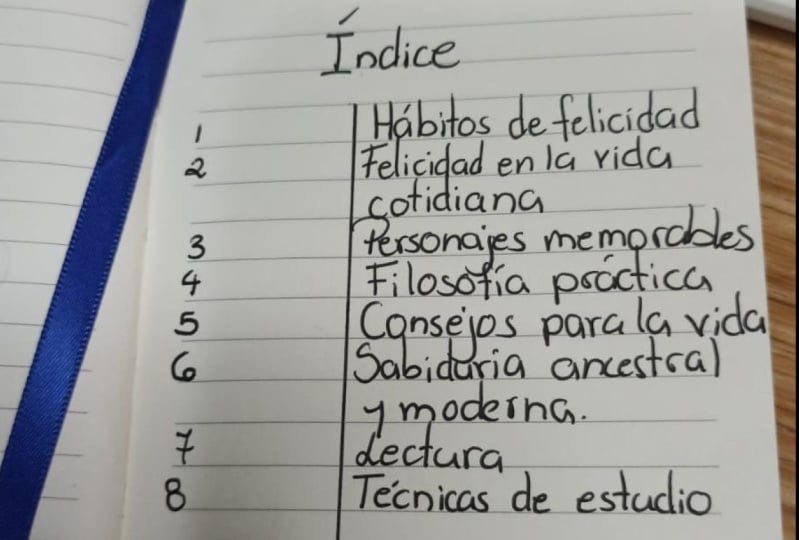
helpful for finding things and setting up an index,
and Fo index, you're going to want
to put the themes in one column and then the page
numbers in the other column. And then in that
first page column, you can just add in every page where that theme comes up
in your common place book. If For example, happiness
might come up on page two, but also page 29. If your notebook isn't lined, so for example, this
is just plain paper, then you might
just want to get a ruler as well and create a ruled page because
it will be much easier to keep track of
your index going forward. Then the third thing
we are going to do is actually choose our topic. You can keep a very
broad common Facebook, and I would recommend
you keeping a very broad common Facebook, but we are looking
at how common pacing can help apad thinking and with working on a project, with researching
something specific. For that reason, we
want to choose a topic as to what we are going
to be researching. This will be the theme
of the book, so it's very important
whatever you choose. And everything you read will in some way be related
back to this theme, but not necessarily in the
ways that you would expect. As we will see in
the next session, where we will be looking
at irresponsible reading. But in the meantime, before
proceeding with the class, make sure that you've set
up your common placebook, and that you've
chosen a theme of what you want to
research in this class.
3. Episode Three: Reading Without Purpose: Put your common
place book set up, and now we need to populate it. To do this, you want to
read without purpose. Read languidly, read variably, read widely, and don't read
with a specific goal in mind. It's not going to result in some sudden epistemic
breakthrough, but reading widely is really really important because
if we returned to that philosophical
model from Descarte and Locke mentioned
in the intro, when we have more
knowledge and information, we've got more
ground to draw on. Common placing is all
about connecting ideas, connecting things that
don't usually go together. So of course,
irresponsible reading is really, really important. When Nitch was writing
his book good and evil, he apparently read around 1,100 books that year, which
is unbelievable. When Net writes on
reading, he says, it teaches how to read
well, that is, slowly, profoundly, attentively,
prudently, with inner thoughts, with the mental doors ajar. And the key part there
is the final phrase. Mental doors ajar. This isn't about
reading with purpose. It's just about reading
and keeping an open mind, keeping those mental doors ajar. Daniel Whistler
is a philosopher. He's talking on the process
of doing philosophy. He says, Excitement,
seduction and rapture often emerge entwined with
those aha moments, IE epistemic breakthroughs,
which philosophers covet. But he argues, these moments are not the only important ones. The process of, as he says,
frustration, alienation, and the urge to quit when you don't instantly get
it are also really, really important for the
process of doing philosophy. Key thing to take
away from that is you don't always have to
have a massive success, and ha moment when
you're reading. It can be sufficient just to read and not understanding
it is also important. Hopefully, you will
have already chosen a topic in the previous lesson. Now you're going to want to find two or three subtopics within the topic
that you've chosen. These two to three, you're going to seek
out intentionally. You might even go to a page like Wikipedia or is
encycpeda Britannica, something where you
can get a sense of some pre research.
No actual research. Wikipedia is not
actual research, but it's good for pre research. It's good as a starting point. You just want to
find some basic, some introductory information
to populate the pages. Using this pre research, you can come up with
the main subtopics within the topic that
you're looking at, and you're going to want
to make your headings. Once you've done that,
you're going to put your commonplace
book in your Because commonplacing does
not depend on you going out and
looking for answers. It's not like you write
on your to do list. Find things for my
common placebook today. You keep your common
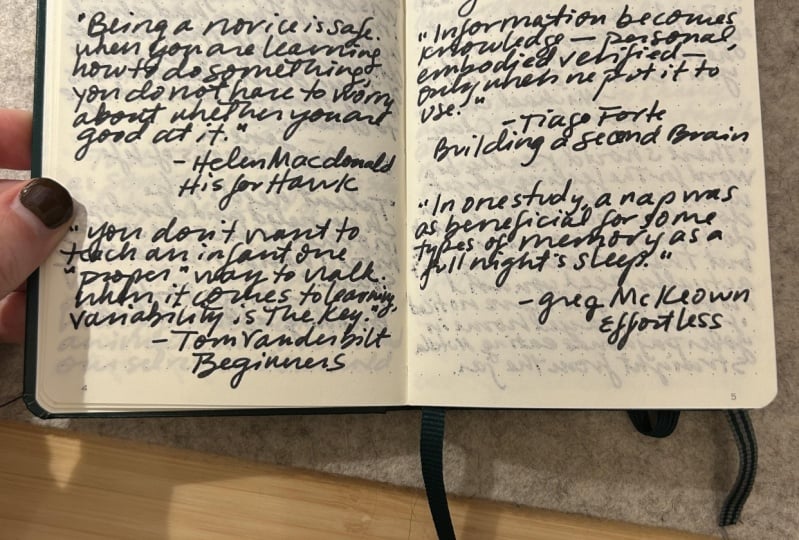
placebook on you, and then when you are
in a common situation and you hear something
which is relevant, you pull out your commonplace
book and you add to it. Commplacing does not want you looking for answers,
but coming across them. So keep this newbook
with you everywhere, and when you read
something, watch something, discuss something,
hear something, write it down under the
relevant topic heading. Don't even have to
know how it relates, but if you have that niggling
feeling that it does, it's a sign that it
should go in here. The key thing here
is consuming widely, consuming irresponsibly, and thus pairing things
that don't usually pair. The goal is to
synthesize knowledge. EO Wilson says, we are drowning in information
while starving for wisdom. The world henceforth will
be run by synthesizers. People able to put together the right information
at the right time, think critically about it and make important choices wisely. Pato similarly emphasizes
the importance of synoptic thinking men. George Dodson writes
of Plato's Republic, their knowledge being
necessarily a mass of unconnected and
unrelated fragments could not be embraced
in a unitary view. But when the synthetic
powers ripen, the time arrives to attempt an organization of the mental
content to put together the things that have been
and are being learned and comprehensiveness becomes
an ideal of the mind. We've also seen an increase in so called critical realism, which is a movement in the
philosophy of sociology, and it stresses the importance of meta theory and scholarship. By reading widely by having
this varied information. Then by connecting
it, that is how you come up with novel and
interesting ideas. Synoptic thinking is a
really important skill to develop for
creative thinking. Edward De Bono's book
on lateral thinking encourages us to think
unconventionally, not to think in the same
way as everyone else, but to connect things that
aren't usually connected. Tony Buzan argues that Leonardo Da vinci
was so successful. Skills and talented in the arts and science because
he had all of these varied interests
and he was able to bring them together in ways that
other people weren't doing. Einstein says, Imagination is more important than knowledge. So to practice this, to practice this unconventional
synoptic thinking. Now that you've
kind of got a topic chosen for your
common place book, I'd love you to go to the
discussion board and comment your topic and then look at the other topics that other
students are looking at, and then suggest links between your topic and
someone else's topic. You don't have to
give a very well explained link between the two. It's more about practicing this as a skill as
a way of thinking. There's no pressure for it to be a perfectly formulated link. It's more just about
learning and kind of practicing this as
a way of thinking.
4. Episode Four: Synthesis: By now, you should have a
book of common placing. But the next question is,
what do you do with it? The first and most
important thing to note is not necessarily anything. Common placing is progenic, and the more you do
it, the more you will strengthen your
synoptic thinking. It doesn't necessarily
need an end goal because things and ideas will spawn from it without you
even realizing. Francis Bacon, who
was the founder of the Royal Society in
the 17th century said, and I really love this.
I want to share it. Reading make it a
full man, conference, a ready man, and
writing an exact man. You'll be able to use this
as your own encyclopedia of themes and interests and ideas that you
can come back to. However, we for the
sake of this class, are going to create
something tangible. We're going to practice using a common place book as
a research tool for research in a way that can actually end up
having an end result. For this reason, if you're
keeping a commonplace book, it could be useful for
writing a university essay, doing an extended project. Any kind of creative
project actually, maybe for work or personal life, or just something that you're
interested in broadly. If we are wanting to use
our commonplace book as a research tool and as a source of ideas and a prompt for going further for
creating something, the first thing we
are going to do is read through our
commonplace book. Hopefully during week or two weeks that you've been
keeping this common facebook. You have found a lot of
stuff and you might not necessarily remember all of
that off top of your head. That's the point you wouldn't remember off the
top of your head, which is why you've
written it down here. Then after reading
through it once, go back, read it again, but
this time, jot down the things that
you find interesting. Just on a separate
piece of paper, little things that occur to you while you're
reading through it. These things don't have to be well articulated thoughts and things that make lots
of conceptual sense, things that occur to you because things
will occur to you. I guarantee things
will occur to you. Next, you're going to go through each of the headings that you've got and practice
the thinking skill. Practice that synoptic thinking, synthesize the information
that you've got. Hopefully as broad as you've
got an advertisement next to Plato next to something you've heard in a
conversation with a friend. All of these things
are next to each other all related
to the same theme. The thing that you're going to practice now is putting all of these things together,
how do they link? Because they are all disparate and they are all different. But all of these
things are still connected because you
have connected them, you are the connecting
force, which has brought all of
these things together, and why have you done that
under that one heading? In synthesizing this, the first thing that
I would recommend doing is free Jureling.
I'm a big free joler. I think free joling
is fantastic. Get a piece of paper and just sit there and write,
just write a single page. Doesn't take very long. I'll probably take you
five to 10 minutes. It doesn't have to be coherent, it doesn't have to
make any sense. You're just thinking on paper. You're thinking with your
pen. These things connected. Now, the trick is to not take your pen off the paper.
You can't pause. You just have to
keep on writing, it doesn't matter if
it's complete waffle, that's beside the point. Hopefully, what you'll
find is things coming out. Little like nuggets
of wisdom coming out. You'll get a sense of why you have connected
these things together. If you're not a big
fan of writing, if that's really not
your favorite thing, then the other thing you can
do is just speak it loud. Sit there by yourself
and just speak it loud. You might even put on
a like voice recording on your phone and You can listen back to it in case
you say something very astute that otherwise just
gets lost in the epa. This next thing which you're
going to do is going to get you to really hone that
synoptic thinking skill and really start drawing
connections between the different media
and materials, information quotes that
you've been reading and compiling all in
your commonplace book. You're going to go through
each page, each heading, and you're going to synthesize
it into just a 50 word, short paragraph about
What has come up? When you read all of
these things together, when you look under your
heading of happiness, and you see all of
these things laid out, all of these things connected,
what occurs to you? What are the similarities
between this material? What happens when you put
Plato's conception of happiness next to a quote that you saw
in a film the other day, How do these things relate? The key thing here
is synthesizing the information and
starting to understand. It's growing familiar with the information,
connecting to it. You're starting to ask questions and starting to see
what takes shape, which is actually what we
are going to be turning to. Now in the next class, where we are going
to be thinking about filling in these gaps. Just to further familiarize yourself with the information. You might also want to
make use of Cat GBT. The prompt that I
would personally use, which I'd recommend using is, please respond as if you
are a personal tutor who is wanting me to think more critically about this paragraph. Then put in your
50 word paragraph, the thing that
you've just written, synthesizing the information. And ask Shad DT to
ask me questions, which get me to think
more about the material. Then when you have
those questions, again, just follow the same pattern of either free journaling
or speaking out loud. But it's just getting yourself familiar
with the material. That is the crucial
takeaway from this class. It's allowing yourself
that space to think, which honestly, we rarely
give ourselves nowadays. We're constantly looking
for something to do like a way to
implement information. But we're focusing here on the actual process of
thinking, the joy of thinking, the joy of exploration,
discovery, and drawing these
new connections and just seeing
what takes shape.
5. Episode Five: Filling the Gaps: All right. Now it's time to
start filling in the gaps. We are going to flip
the notebook the other way and we're going to
start from the other side. Because we're focusing
on a specific topic, we want to keep it all
together in one notebook, and that's why I always
do it like one side, it's my common placing,
and the other side is for general thoughts. In this lesson, we are going
to think about filling in those gaps and asking
the right questions. Asking questions
and good questions at is such a valuable skill, one of the most
important skills. Voltaire says, judge a man by his questions rather
than by his answers. Albert Einstein says, the important thing is
not to stop questioning. Curiosity has its own
reason for existing. Thomas Berger says,
the art and science of asking questions is the
source of all knowledge. That is exactly what
we're going to do. We are going to ask questions, so many questions, and no
question is too silly. At the back of your
commonplace book, write down 50 questions. I know that is a ridiculous
number of questions, it sounds like a lot
and it is a lot, but that's the point because
once you get started, you'll find that
it's harder to stop. Plus there's a pressure
that comes with having to come up with
five quality questions. But if you write
those 50 questions, 10% of them, five of them are likely to
be good questions. Now, writing out these questions
is good for two reasons. Number one, it is
honing your curiosity. Getting you to just ask
questions, be curious, see where your interest lies, see what things you
find interesting, just naturally when you're
writing the questions. But number two, by writing
lots of questions, you're more likely to come
up with good questions. The more questions
that we're asking, the more familiar we
get with the material. In Hans George Gadamer's
work on Hermanutis, he stresses the importance of asking questions as a
way of understanding. The more questions
that we ask, the more familiar we get
with the material. More likely we are
to understand it? That is just so crucial
for research of any kind. Depending on what you're
researching as well, you might want to try
the five y method. Now, this was introduced
by Taichi Ono, who was a Japanese
industrial engineer. He recommends asking y questions until you
get to the root. When you have a problem,
you just ask why, why, why, y again and again and again until eventually
you get to the root. If you say, why am I so
tired all of the time? Because I'm not
getting enough sleep, why am I not getting
enough sleep? Because I'm checking
my phone before bed. Why am I checking my
phone before bed, because I haven't been letting myself go on my
phone during the day. Why am I not letting myself go on my phone
during the day? Because I feel like
it's a waste of time. Why do I feel like it's
a waste of time because I'm not consuming content, which I feel is valuable? What's the solution I need to be consuming content,
which I feel is valuable? That's just one that I've come up with the top of my head, but I hope that demonstrates
how that works. When you're
researching something, that is similarly a method
that you can use to really hone down your
focus to something you're interested in
and see the gaps. So if for example, you were looking at
Jane Lum's phigenia, you say, why did Jane Lumley choose to
translate ephogenia? That's your first y. Then the answer to
that might be, oh, because she had the Latin of phigenia in her family
library. Next why question. Well, why was that one of the only Euripides plays that she had in her family library? You can go through like that and get more
and more specific, which can help you
find a research focus. After you've got all of
these questions laid out, after you've got your
50 questions and maybe a few which has
circled and highlighted, which are particularly
interesting to you. You're sly going to
want to start answering these questions by
doing research. As you research is the way we're going to start to go deeper and think more critically
and fully about something. Just a few top research skills
that I would recommend. Now, research takes
many forms and your sources should
be variable in the same way that the
information that you've compiled from your commonplace
book has been variable. Going to be following these tangents and
following these things that you've been looking at
and commonplacing over time. When you're answering
a question, I would recommend
using Wikipedia. I feel like that's
controversial to say, but it shouldn't be as
long as you're using Wikipedia correctly, which
lots of people don't. Wikipedia is great
for pre research. Before you actually get
into real research, Wikipedia is a really
great place to go. You can familiarize yourself
with the key concepts, familiarize yourself with the
key debates, and material. And most importantly,
follow the footnotes and the references which you find at the bottom of the
Wikipedia page. Because these will take you to some of the most influential, some of the most important
sources and arguments that can start your
research journey. I would recommend that. Encyclopedias like
Britana Cronin and the Stanford encyclopedia
philosophy are similarly great places to start when you're just
starting out with the topic. You can find academic articles on JStOre like 23 per month, even if you're not a student or enrolled in academic
institution, which is really worth
bearing in mind. And I would recommend you
using those 23 articles. The other key thing
to be looking at is primary resources, which is basically anything
which is original, a book, a manuscript letter, something which you
would write about. Really look at these
as much as possible, mostly because
they're interesting, they're fascinating, but
get your first impressions on this before going
to secondary material. The whole goal here
is answering some of those questions
which you've written up and basically using your commonplace book
as a prompt book.
6. Episode Six: Thinking Critically: In this penultimate class, we are going to get critical. Now you've got questions. You've got answers,
you've done research, you've found quotes,
you've found sources. You have been observing and also synthesizing a bit as
you've been going along. By this point, your
commonplace book is fully populated as you've
been doing research and adding to your headings
and should be pretty familiar with this topic
because you've been asking so many good questions. But this is where
we turn inwards to what really sparks
your interest, and ideally, this should be
something very specific. Having done your
research, having used your common facebook
as a prompt book. You want to go through
your research, go through what you found, and write down the insufficiencies. What problems have
you encountered? What things do you think have not been covered by
current research? What problems still stand in whatever area you've
been researching? What things maybe
don't you agree with? This doesn't have to
be well formulated, but just think about what things have not been
considered adequately. Again, the key goal is just
training your thinking, so keep long and
very messy list. Then in response to
these insufficiencies, in response to these problems, go through your headings
and try and link them. Look between your subheadings, the things that you've
been considering and try and link them together. Just choose two
randomly to start with. Ask yourself, how do
these two things link? Try this for a couple
of different themes. Free writing again,
free journaling, or just speaking out loud,
can really help to tease out similarities, the overlap
between these subheadings. Key thing, again, here is just
as we sat there thinking. Using your common Facebook
as a prompt book, which is really kind of
like the running theme that we've seen in this class is something which has
ongoing use and is more there to help
spark your thinking, train your thinking, improve
your thinking as opposed to actually creating something
immediately tangible. Ideally, what you will find as you practice putting
one and two together, putting two things
together, which shouldn't really go
together usually. You will start to see how those insufficiencies
that you identified could be resolved
by incorporating something which we don't
usually think to incorporate. And you might not find anything. You might not find
something very specific which you
can pull out and use, but you might, and it's that
mit, which is important. As I say, there shouldn't
be an expectation, never be an expectation that you are going to find
the answer there. But it's training your brain
to try and see those things, try and see those connections
so that you will see them, and you can use them to fill in those gaps and resolve
those insufficiencies. Discussion board, I'd love for you to write down
some of the problems, some of the insufficiencies
that you found, and see if other students, people who have been looking at different things are able
to use their information, their ideas, their research, to offer something
tangible for you. This is about dialogue.
This is about conversation, crossover, seeing how things connect even when they don't initially seem
like they will.
7. Episode Seven: Application: The final lesson is not encouraging you to
follow a certain path or follow this information to a certain very
particular tangible end, but rather to think
about application. Think about it in
a creative way. How could this research be applied if you
wanted to apply it? It's important here
to think creatively. Think without bounds. We're
thinking about application. We're thinking about how
this could be pragmatic, how we could apply this information to the real
world to an actual project. So, my mapping is one of the
best things that we can do. Like, just get a piece
of paper and scroll off, all of these ideas, all of these possibilities of what this information
could be used for. Even better, you might have
a conversation with somebody because as we've stressed the whole way
through this class, dialogue and bouncing
off each other is one of the best ways to
think creatively and kind of thinking
new in different ways. It's like a very
active and, like, embodied way of commonplacing. You're not thinking
realistically, you're thinking creatively. It doesn't have to be linked to your particular skill set, to your background,
to what things you actually plausibly can do. It's just thinking about why and how information
can be used. It's about seeing
and understanding the implications
of your research. And I think that's
a really good idea whenever you learn
about anything. It's what we see in
so called hackathons, where people will
be locked in a room with a group of people
for a couple of hours, and they are given a problem, and they've got to find a solution to it
during that time. It's about concentrating
your brain power. Fact, I say, don't be realistic, but even further than that,
intentionally be unrealistic. Like, keep two lists, I would encourage you to be ridiculous with
your suggestions, so outloudish, so out there, so unbelievable,
because perfectionism doesn't help with creativity. Unfortunately,
Branni Brown says, perfectionism is a 20 ton
shield that we lug around, thinking it will protect
us, when, in fact, it's the thing that's really preventing us from
taking flight. You're focusing on the process
of coming up with an idea, which is similar to what
we see with Van Go, and his creative process. He says, and I
absolutely love this. If you hear a voice within you that says, you cannot paint, Then by all means, paint, and that voice will be silenced. Perfectionism will inhibit
you from thinking creatively. And actually, by writing all
of these ridiculous ideas, you get over that perfectionism and that realism
of this has to be something I can do because
it's not about coming out with an actual
tangible project. It's about thinking about how information has implications and how you can apply
research to the real world. You might want to
apply your research in a very pragmatic way and
make a creative project, which uses your research
to a tangible end. So just to give you
a few examples, if you were researching
the genre of tragedy, you might adapt one of your favorite novels
into a tragedy play. That look like? Secondly, if you were looking into
education models, maybe you would come up with
your own education model. What would an ideal school
look like in your head or what would be an amazing
alternative to GCS exams? If you've been
researching sanitation? What would your own new
sanitation system look like? Actually, as
inspiration, it can be useful to have a list of creative projects,
social projects. Schemes which you've
really admired, which you think are particularly impactful and write those down, just as kind of inspiration
because you could draw on that when you're
coming up with your own ideas. Keeping lists like this or even just one ongoing list
of possible projects, possible ways of applying your research and
things that you've been learning about is exciting. It's inspiring, but
it's also useful because you can use these
then as a launch pad. Even if it's not always
something plausible, it's something you
might return to later down the line and
follow through. And more than anything, again, it's helping you to think
in a different way.
8. Episode Eight: Outro & Goodbye: All right. So somehow we are
at the end of the class. I just want to say
thank you so much if you watched all
of these classes, or even if you just
watched a few of them, because in a way that actually feels quite like commonplacing, if you were to
watch some classes from a different person and
then watch one of mine. That feels really relevant to the way that we're thinking. Just as a final task
as a final ask, I would love if you
could share a page of your commonplace book that you've been keeping that you've been cultivating on the
discussion board for other people to see
and to engage with, or ultimately you
might want to share your summarizing paragraph
from Lesson five. That would also be so
interesting to read. I mean, the discussion board is such a wonderful space to
connect with other students, to just use that dialogue and that linking that
we've been talking about. I mean, of course,
there's no pressure too, but I really hope that
you will do that. More than anything, this class was a call to think
more creatively. To practice that
skill of leading with curiosity as opposed to
with a final goal in mind, nothing tangible,
nothing physical might come of the commonplace
book that you have kept. But you will have started to cultivate this
skill of curiosity, this different way of thinking, and maybe also become more conscious of that
process of thinking, and ultimately perhaps not
taking thinking for granted. Thank you again so much and I hope you have a wonderful day.
 Ruby Granger, Content Creator & Independent Learner