Transcripts
1. Intro: Hey there, kill here. Welcome to another
urban sketching course. And in this course,
I'm going to cover the storytelling aspect
of creating a sketch, how you can make your
sketches more meaningful. And I'm going to
give you some tips and techniques on
how you can start a sketch so as to
minimize the number of mistakes that you
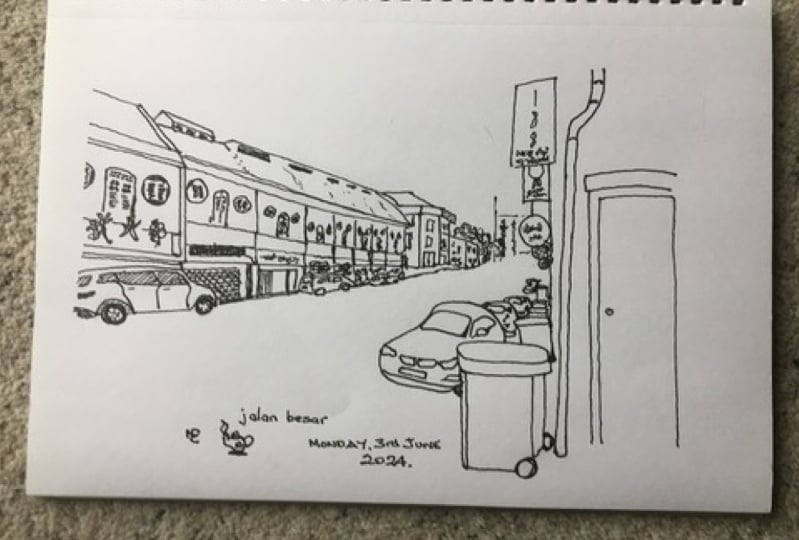
may make later on. This is L Road, which is part of Little India, and it's a pretty busy and popular neighborhood
here in Singapore. Starting your sketch
properly is important, and placing down
the first few lines accurately on paper
is important. Hopefully, after this course, you can remember the
techniques and utilize some of them in your sketches. Now, this course is
actually part of several urban
sketching courses that I have made over the years. If you find this course, do check out the other
courses that I have. All reference photos
are provided in this course and you can use them for your practice purposes. But I highly recommend you go
out on location and sketch. Instead, sketching on
location, in my opinion, is the best and
fastest way to improve your sketching techniques
and improve your awareness. If you have created
any sketches, either using the reference
photos or on location, feel free to share them
with me and I can give you some critics on how you
can improve your sketches. All right, before we
start the first lesson, I have a favor to ask of you. If you find this course useful, do leave this course
aview so that others can know whether
this course is any good. All right, let's go
with the first lesson. Let's talk about storytelling.
2. What is Storytelling: Welcome back. Storytelling for urban sketching is not an easy subject to
teach because there isn't any structure or system storytelling
for urban sketching is not the same as storytelling for graphic novels,
shows, or movies. Because there is
no start middle. And n what I can say
is when it comes to sketching and you want to have a story to go
with that sketch, there are certain
things that you can control and things
that you cannot control. For example, things that you can control would be your ideas, your composition, and
your subject matter. So you can choose what
you want to show, you can choose what
you want to sketch. Let me give you an example. Let's take a look at this
park that I'm at now. So it's deserted in the morning
because it's really hot. So let's imagine for a second
that this park is actually crowded with people who are exercising during
the evening time. And you are here to sketch. So you can make a
choice to sketch people who are exercising in the park. Or you can sketch the
scenery for the park, which is actually
quite beautiful. Or you can choose to sketch both the scenery and
people who are exercising. Or you can choose to create
a series of sketches just to show what's
happening around the park. You can choose what
to include and what not to include
in your sketch. Sometimes what you
chose not to include can be as important as the things that you choose
to include in your sketch. Determine the story. First, think about what you want to tell the person who's looking at your sketch and draw
what you want to show. Draw the story that
you want to tell. Now I want to show you some sketches from
this sketch book and talk about the
story behind them. Most of the sketches in the sketch book were drawn
on location, but not part. For example, this
was actually drawn with the help of
reference image, this was drawn
from Google Earth. There's no story
behind this sketch, as I was just drawing
or sketching for fun, this was drawn on location. So I was riding my bicycle past the pop up market and
it was quite busy, So I decided to sketch this because this looked
very interesting to me. This is unlike the other vegetable stores
from the building, because this is a pop up market. And I remember as
I was sketching, the sky was getting quite dark because it
was going to rain very soon and the wind was
really strong and I did not remember to bring my clips
to clip the sketch book. The pages were just flapping around while I was sketching. So it's not that
easy to sketch and paint with moving paper. That's what I remembered
from this sketch. This was also sketched
from a reference photo, and there is no
story behind this. I was actually at
this restaurant on the second floor to have
dinner with my wife, and it was dinner. So I did not want to
sketch during dinner. So I took a photo and
sketch this at home. Now, this sketch would be more memorable if I had actually sketched this dinner while
I was waiting for my food. This was sketched on location, but nothing interesting
happened that day. I remember sketching
at a street nearby, and someone worker actually
came along and gave me a cold can of Coca Cola because the boss
for the shop said, I was sweating too profusely. This was sketched while
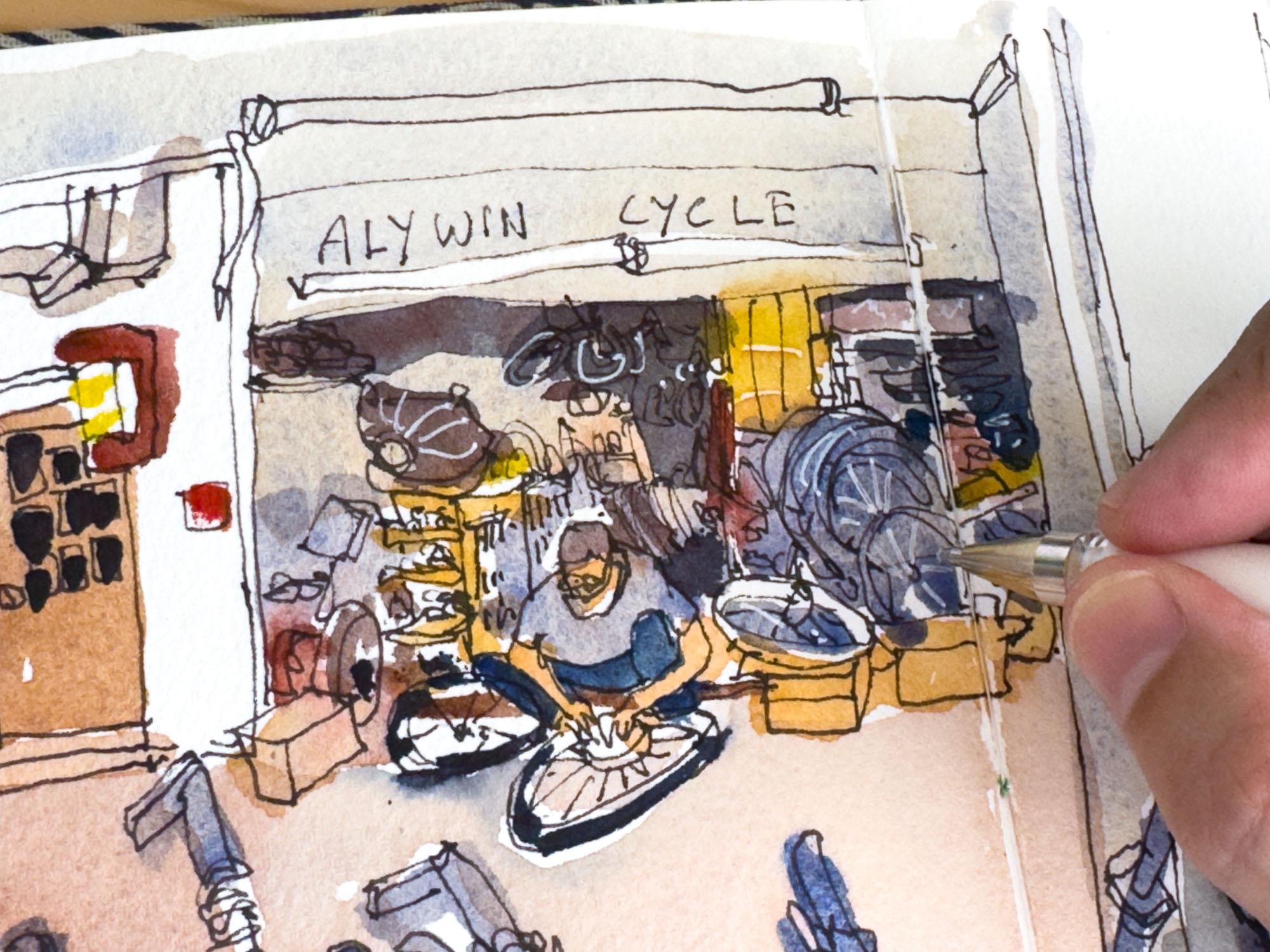
I was waiting for the uncle to repair my bicycle. And this guy has been repairing bicycles for a very long
time in this neighborhood. All the tools and
repair equipment in his shop looked really. Oh, this sketch took me 2
hours to draw and paint. The more time you spend
looking and sketching, the more you will
be able to observe and get a sense of the place. There was a clinic
beside the shop. There is this chair
hanging on the pillar. There are new
bicycles for sales, and for some reason this guy
actually sells old tires, or maybe the old tires are going to be
sent for recycling. And his wife manages
the other shop, which is also a bicycle shop that sells accessories
by the side. After I completed the sketch, I showed my sketch
to, to the couple. It was really fun
to sketch this. I remember sketching
this on a day when it was cloudy
and it was Grizzly, so I had to find a dry
spot to sketch this scene. While I was sketching, a van, came along and parked
right in front of me to unload some wine bottles. After the van left,
one of my friends, who is also an urban sketcher, just walked down the street and spotted me and we
started chatting. So that's the story
for this sketch. For this sketch, I
read a news article saying that there will be a tank on display in
front of the museum. So that's why I
went down to sketch this as well as make a video
of my sketching process. I remember there were many school children in front of the tank because it was actually a school excursion. So, one of the teachers came
up to me to tell me not to record the school children
due to privacy reasons. So I said okay. So I waited for the children to leave
and then sketch this. So when I posted
the video online, I received a lot of
negative feedback. Because you can see
the date here is 21st of February 2022. This date is very close to the date when Russia
invaded Ukraine. So when I posted the video, many people said I was
insensitive to post a sketch of a tank during the time when
Russia invaded Ukraine. I posted it because I didn't
really follow world news. So this sketch has nothing to do with the
war that's happening. It's just that I did
not follow Wl new. So I didn't know that
Russia has invaded Ukraine. These three sketches
were drawn on location. The story is I was trying to
go back to this place where there's a concrete slab
on the ground where I had left my watercolor box. And I forgot to pack
that box back in my bag. So the next day I had took the train at
the train station to rush down back to the same place to find
that the box is gone. Yeah, so that's
the train station and this is the
interior of the train. And this was not easy
to sketch because I was holding my sketchbook and
standing while sketching. And since I'm standing
and sketching, I am not able to
color this and this. So while I did not find
my watercolor box, I did not want my
trip to be wasted. So I sketched and
painted around the area, and this was the
sketch made that day. Here's another sketch book
that I want to show you. So these are some of the
stickers that I received from my friends while sketching. Once a month I will
join my friends to sketch some place in Singapore. So some of these
sketches were drawn during those
gatherings or outings. Okay, so this was sketched at Changi Airport terminal four
while waiting for my plane. So I was going to Hong
Kong to celebrate the tenth anniversary of the Urban Sketchers
Hong Kong Group. This was sketch at the hotel. So when you're going on a trip, you can bring along
your sketchbook and document your trip. The story will be of your trip. So these are some of
the sketches that I made while I was in Hong
Kong for a few days. That's the urban
sketches Hong Kong stamp for this sketch. I was sketching with my
friends and it's really fun. We visited all these places
and sketched together. We had really good memories because when you're
sketching with friends, it's always fun. And there is always
a lot to talk about. There's a lot of catching up. The story is the experience. This is Chencha, an
island of Hong Kong. There are many fishing boats. Too many for me to draw. This is one of the
fishing boats there. This was not easy to draw because it's not easy
to find a shaded spot. It was so hot and sunny and there weren't many
sheltered areas. When it comes to the technicality
of drawing this, yes, I can sketch this, but I need to find a comfortable spot to
be able to sketch this. This was grown at a cafe, and this was grown
at a cafe as well. This was grown during
another outing, urban sketching, outing
with my friends. This building at
Po's Hill Terrace will be torn down
for redevelopment. Me and my friends
were there to sketch and create some memories
for this building, which will be gone
in a few years time. And here is a sketch that I
will create a demo for later. Now, the story for
this sketch is not obvious because it's
just a straight sketch. But I was actually
sketching with my friends, catching up with my friends, and it was really fun talking, chatting, and painting,
sketching together. However, when you
look at the sketch, you don't really see that story
because that is my story. If you look at this
series of sketches, the one made at Changi
Airport terminal four, the sketch from the hotel, and the sketches of all the different
places in Hong Kong. You will know that the
story is one of traveling. But sometimes when you look
at the sketches like this, the story is not very apparent. It's not obvious. But for the person who is
making the sketch for you, who is making that
sketch for me, who is sketching movies, you will know the story and the experience of that day
from that day when you, when you make that sketch. Sometimes the story may not be obvious for another person
looking at your sketch. But what's more
important is you will remember the
experience of creating that sketch that in
my opinion is very meaningful and it really helps to make you remember the place, the scene, the
experience more vividly. When you're sketching
with the help of reference image or photo, you will not get the
experience compared to when you're
sketching on location because you're not
there on location. When you're on location,
many things can happen, the weather can change, or you may get kicked
off a certain property, you may be told to leave. Or you may be too hungry
to continue to sketch, and you have to
leave somewhere to eat first before
coming back to sketch. Many things can happen and
all of that will contribute to the story behind the
sketch that you make. That's the difference
between sketching from a reference photo versus sketching from location
or urban sketching. In the next lesson,
we will take a walk around a neighborhood
and I will talk about the things that I
will look out for when trying to find interesting
scenes to sketch.
3. The Easy Way to Tell a Story: In this lesson, I
want to show you a sketch walk that I
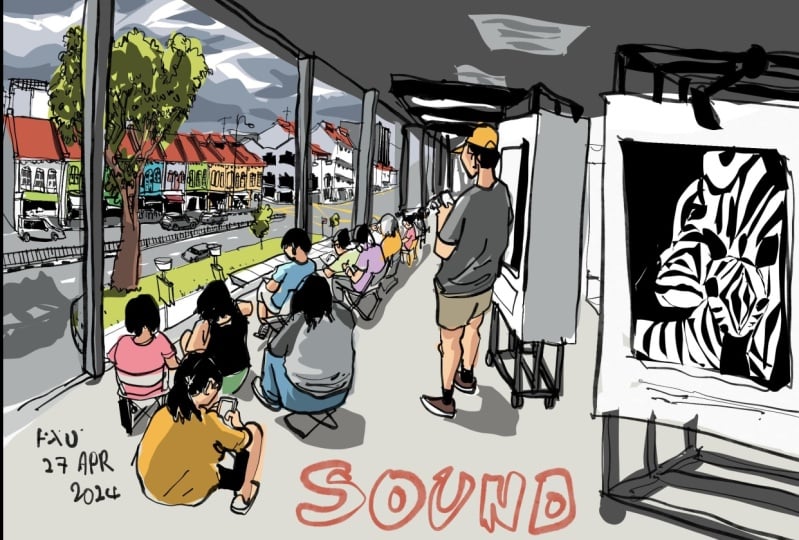
attended with my friends. We were invited to sketch in this gallery that's located on the second floor in
a shopping mall. Here we have a great view of the beautiful shop houses
across the street. As you can see, there are many sketches sketching
the same view. What I wanted to do is not
just sketch the shop houses, but also capture what
is actually happening. The main story
that I see here is of people sketching together, sketching the shop houses, and I want to
capture this moment. If I just draw the shop houses, the story is going to be
about the shop houses, but there are actually things happening outside of the page. Here we can see my friend who is actually sketching
the people sketching. He has created a collage
of the sketchers and also the scenes and the buildings that he has
sketched that morning. So this is his way
of storytelling. Just draw buildings, and
the story capture is not obvious because it's just
a stationary building. That's all right because
you can remember why you made that sketch even though the story is not
shown in the sketch. Now I'm going to show you a time lapse video of how
I created this sketch. I really love this sketch
because it shows a few things. It shows what the people are doing and they
are sketching, what they are sketching, and also where they are. I was actually using an iPad to create
this digital sketch. And I brought along
an iPad instead of my usual watercolor set
because I know that the space is going to be quite tight and it's going to be inconvenient to use
traditional media, in this case, watercolor. Using a tablet to draw is
going to be more convenient. And also, I was able
to stand and sketch. With watercolor, I will have
to sit down because I need to place my watercolor
palette on the ground. I had to stand and sketch this scene because if
I were to sit down, I will not be able to see the shop houses that my
friends were drawing. So when I stood up, I could see the shop
houses and I also could see my friends who were
sketching the shop houses. And I can also see
the gallery pieces, the artworks, the
paintings that were on display by the site. So this will give
me the context of where all my friends are
while they were sketching. I started this sketch by drawing the shop houses first
and you can see some light blue guidelines that I have already
drawn before I even started the sketch just to frame the composition and just to make sure that when I'm drawing, I can draw at the right proportion because
I know myself when I draw, I have a tendency to
draw bigger and bigger. By placing the guidelines
on the page first, it forces me to draw
within the guidelines. I drew the shop houses first because they
are in the background and now I'm drawing the people that are in the
foreground, closer to me. And they are overlapping
the shop houses. Since I'm using an iPad, I actually drew the people, my friends on a separate
layer on top of the shop houses which
are on the lower layer. Because later on, if I
need to erase something, it's easier for me to
erase certain lines. Now, when you're
drawing on paper, You can draw background elements first of foreground elements. First, it really depends
on personal preference. Now, if there are overlapping
elements in your scene. In this case, for example, the overlapping elements are the sketches and
the window frames, I would probably draw those overlapping elements
first before I draw the background because
these foreground elements are overlapping elements
in the background. And also by drawing some
foreground elements first, you can actually
use them to place other objects in
your scene later. On Now I'm just adding little details
to complete the sketch. For the details in
the background, I don't actually need to
add that much details. I just need to
suggest some details because when you draw
smaller and smaller, you will eventually run out of space to draw all the details. That's when you can stop
drawing the details. Now I'm drawing the painting, one of the paintings on display, just to provide context
as to what this place Is. Generally
speaking, if you can capture or show who, what, when, where, how of
a particular scene, there is going to be a lot
of story in your sketch. So who are in the scene? What's happening? When is this happening? Where is this happening
and how is this happening. For example, if you're
sketching in the market, when we how would be who are
the people in the market. Where is this place a market. What are the people doing? Shopping for vegetables, how are they shopping
for vegetables? They could be paying
the shop owners, paying money, putting
goods into plastic bags. If you're just
sketching buildings, then you may not be
able to show how. For buildings, you know
where the buildings are. If there are people
in the scene, you know who are the
people in the scene, they can be pedestrians. But you don't
really show what is happening or when it's happening unless you show the weather
or the shadows and there is no what happening. This gesture is almost complete, not just adding
colors to the scene. And also adding some shadows
to show the time of day. And also, it looks like
it's going to rain. There are lots of gray
clouds in the sky. By the way, it was an
exceedingly hot day. Being able to sketch in the comfort of an air
condition environment is something that I
will also remember when I look at this sketch. But that obviously is not
going to that part of the story sketching in
comfort is not going to be obvious to the person
looking at their sketch. That story that part of the story belongs
to you yourself. Now I'm just trying to
add some decorative texts for the name of this art studio. When sketching, try to
capture the scene as accurately as you can
with line art first. If the line art
doesn't look good, adding colors is not going
to improve the sketch. Try and focus on drawing from observation as
accurately as you can. With more experience over time, you will also learn
more about yourself, whether you're someone
who prefers to draw buildings or people or both and your
storytelling techniques will also evolve with time. With urban sketching, I don't
think you will ever stop learning because there are always new techniques to learn, places to discover and
experiences to experience. Just go out and
sketch and have fun. Who knows what stories you may discover and
remember for life.
4. Looking for Interesting Subjects: My first day for you when it comes to schedule on location, is to take some time to walk
around the neighborhood, take a look around and see
what catches your attention. Right now, it's still early
in the morning and some of the shops are just
starting to open, so there isn't
much activity yet. Now, generally speaking, when there are people
in your scene, the scene is going to
look more interesting. Naturally. Right now, you don't see many people
on the streets. There are some people eating at the restaurant
on the right side. So that can be one area
that you can draw. You sketch people eating. The story can be
about friends or family members catching
up during a meal. The story can also be about the food that is sold
in this neighborhood. Sketching people is actually
pretty good practice, especially when you
sketch people who are eating because they
are mostly stationary. So this can be good warm up for sketches that you
will draw later on, you can sketch the market and
see what types of fruits, vegetables, or meat that
are sold at the market. And this can give
you a good idea on the type of produce that is
sold in the neighborhood. It may be interesting
or useful to take down the prices of the foods so that you can have some information
on how much they cost, especially when compared to the same fruits in your country. When sketching people, try
to sketch action poses. Try to sketch people
doing something. So in this case, you can see
the fruit seller placing the oranges on the table. Capturing action poses
is going to make your sketches look
more lively instantly. For example, sketching
a person walking is more interesting compared to sketching a person
just standing around. When it comes to
urban sketching, drawing buildings is
almost unaffordable. Now, when you're in
the neighborhood, I highly recommend you sketch several scenes
so that you can capture the different types of architectural style
in that neighborhood. The more scenes you capture, the more information you will
have of the neighborhood. Here's another food center, and we have people having
breakfast here as well. Even back at this can be
quite interesting to sketch. If you take a look
at this building, you can see a plant
growing out from the wall. This tells me this
building is o, and along the street we have some very beautiful shophouses. And looking at the Chinese
works that are on the balcony, I can tell straight
away that these are Chinese shop houses in the
little indior neighborhood. The decorations on the buildings behind me are very detailed. So if you want to sketch
a scene like this, you can sketch the overall view. And on another page, you can zoom in to sketch
the details just to provide more information
regarding the buildings. Before you sketch a scene, I would recommend you anticipate
things that can happen. This shop is actually kind of interesting
because there is this green thing that is turning and there is
the shop owner that is, who is eating his breakfast. But you can see this
is a parking lot, so you have to anticipate
cars that will park in front of you before you can
complete your sketch. The timing is important as well. For example, markets are most busy in the
morning because that's the time where most people
will do their shopping. And during lunchtime, restaurants
will be the most busy. And if the area
has night markets, you may not even see
those stalls until during evening time when the store
owners set up their stores. So just by spending some time to walk around the neighborhood, you can get a lot of
information about the area, the culture of the people, the type of food they eat, what time they come out, and other interesting little
tippets of information. Before you even start sketching, this is not just an area only with shops, for
retail restaurant. There are many people living in this
neighborhood as well. Here's another side
or back alley, and this one has many rubbish
bins behind the restaurant. So this is where they
throw all the rubbish. There is some wood works here. Now, I don't like woodworks where it's happening
outside my home. But in this case, in this neighborhood, to sketch, and this be quite interesting to sketch
because people are working, so there is action. And you can also learn how
the workers repair roads. If you want to sketch
a scene like this, I recommend you spend some
time to observe the scene. First, find out where you
can stand or sit safely, and also notice the small
vehicle at the back. Now, this vehicle is
moving quite fast. It's going to be
challenging to sketch that you may want to sketch that vehicle
when it's stationary. Sketching machinery can be quite fun and it
will be good to take some notes as well on how this machine vehicle
actually works. The challenging thing
about sketching this is you have to anticipate
the vehicles moving away. So you have to sketch them very quickly, as much as possible. Try to sketch action. Try to sketch things that are happening when you're walking
around the neighborhood. Try and stay safe. Watch out for vehicles. And when you have found a place to stand or sit to sketch, look up to anticipate things
that may fall onto you. For example, this may look like a shady and comfortable
spot to sit and sketch. But if you look at the
pavement that's just beside, you can see there has
a lot of dropping. So this is definitely not
the place to sit. All right. I think I've done enough
walking around and now it's time for me to look for a spot, a scene to sketch. See you guys in the next lesson.
5. How to Start a Sketch: Welcome back. And just as I
was about to start sketching, it started drizzling even
though it's like really sunny. Yes, today I'm actually
out here to sketch with my friends from Urban
Sketches in Singapore. So, these are my friends who
are sketching with me today. So some are seated indoors, some are seated outside. So I actually wanted to sketch
on that table behind me, but I checked the
opening time of this restaurant and it's going to open in half an hour's time. So I'm not going to sketch that. So when you are
sketching in front of shops or businesses, I try to try not to
affect the business. So this place is where
I want to sketch, and from what I can see,
the sun is actually coming from behind me. So this role of shop houses
are actually in shape, which is not ideal for sketching if everything
is in shape. And now I'm on the
other side of the road. And you can see the cast
shadows on the shop houses. There are on the second floor and also on the ground floor. This is where you get
light and shadow and this is where you
can get contrast. When sketching, always
look for light and shadow. And this is the site where all the shop houses
are in shape. When there is no obvious
light and shadow, the contrast isn't really there. So when you're
sketching was try and look for light and shadow. Before you start sketching,
you have to decide on the composition you want
to put on your page. You can stand or to
determine your composition. In this case, I want to draw
the shophouses on the left, which is why I
across the street. So that I can see the details of those shophouses on the left, see that pair of legs there. That is not very safe because
the legs are on the road. So when I'm sketching
on the street, try and stay off the street, like don't have your
legs go out of the curb. I have decided to sketch this
scene and the first thing I want to do is to take
some measurements first. The way to take measurements is to have a pen or pencil in hand, stretch out your arm,
lock your elbows. It's very important to lock your elbows and
measure something. So in this case, I want to measure the
building at the back. So the top of my pencil we'll
align to the roof here. And the bottom of this pencil, where my thumb is, will align to the bottom of the building. This is considered one unit, and the width of this
building is half a unit. From the back of this car to
the edge of this building, this is considered one unit. Now it's very important
to lock your elbows. So make sure you
lock your elbows. Now we are looking at
one unit, half unit. This side here is also one unit. Now we are looking at one half, one. It's 2.5 units. If you are a beginner, you can always start
with a pencil first. Remember what we have
measured earlier? We have a half unit
here, this is one unit. We have one unit here. This is where the back
of the car will be. That's where the
back of the car is. We have one unit here as well. This will be the street. You will have to find out where the vanishing point is
pointing, the horizon. And the vanishing point
on the horizon is very helpful before you
sketch, so let's do that. This is my eye level and this
is going to be the horizon. When you see where the diagonal lines are
pointing or converging, that will be the
vanishing point. From what you can see, it's actually somewhere around here. The venting point
does not have to be very precise, but of course, if you can find out where
exactly that vishing point is, your sketch will be more
accurate for this scene. The vanishing point is
actually somewhere here, and I'm going to mark
that with a cross. Now if you're using pencil, you can draft out the
composition first. Once you get the composition and perspective
to look accurate, you can then ink and
add details later on. But if you get the
composition or the perspective wrong at the
start, it's going to affect. Your sketch. Later on, let me show you what
will happen if you get the perspective wrong at
the time of your sketch. So let's say you have
a wall like this, and you have drawn
the wall like this. Now, the perspective
of the windows must follow the
perspective of the wall, because the windows
are on the wall. If you draw the perspective
like this, again, same thing. The perspective of the windows must follow the
perspective of the wall. So if you draw the wall
like this and it's wrong, the perspective for
all your windows will be wrong later on. Making sure your perspective is accurate during the penciling
stage will help a lot. You will want to draft
in the big ships. Now, you can add
as many lines or details as you want during
the penciling stage. But the most important thing
here really is to get, make sure you draw the correct
and accurate perspective. Because if you get the perspective wrong
here at the start, the perspective for everything else is going to
look off later on. The more pencil lines
you put on the page, the more you will have
to erase later on. But sometimes I don't
actually erase the lines. I will just leave the
lines as they are. Now, if you want to
erase the lines, just remember that once you paint watercolor
over the pencil, the pencil will not erase anymore before you
paint watercolor. That's when you will
want to erase the lines. I have drawn this back building here and now I want to draw
the shop houses on the left. Remember the
vanishing point here. This is where you can
draw the diagon lines to the vanishing point. I'm just going to
draw it like this. Now to practice
perspective drawing, try not to draw
too many details. Just draw the big ships first. Because what you
really want is to make sure the big ships are accurate. Make sure the big ships
have accurate perspective. Now I'm joining the bottom here to the branching
point here. The lines can be loose because this is still the
penciling stage. It's all right. Next
we can divide this into this building
here into 1233 floors. We have another building
here by the side. This building also has diagonal lines that go
to the pension point. If you feel like your
perspective is off slightly, just look at your
sketch as a whole and see where it is off. All right. We have a tree here, we have a lamppost here. The lamppost is white
against the tree, which is green and dark. Just take note that because
later on we can use the white chip pant lamppost and we have the buildings here. We have some signs
here from this side of the building as a triangle
here holding up the sign. Another sign here. Right now, I'm using positioning techniques
to position the signs. There is this
rectangle at the top. I'm not too bothered
by the pencil marks here because this
is just a sketch. You can also create
a little thumbnails just to test out your
composition first. Before you draw up, I can
see many rubbish bins here. The rubbish bins
will become bigger and bigger as they are Mirror to this rubbish bin is about
two times the size of this. When you're drawing,
always compare what you are drawing with things
that you have already drawn. I'm going to have this
rubbish bin come out here. We have a car here. The lights will be here. That's the lights of the car, and this is the front
of the car tires, and we have the
windshield and Yup. So now we can draw the shop
house on the left side. I think this is pretty much it. Now, if I want to in the
sketch, I can do so. This is the very important stage during the penciling or
the blocking station. Make sure the perspective looks accurate during the
penciling station. Now, once you have
more experience, you can draw with
ink straight away. But for beginners, using
pencil is going to make it overwhelming when it comes to sketch and can help you
draw more accurately. Also when you make any mistakes during
the penciling stage, you know that mistake, so you can avoid making
the same mistake later on. Okay, so this is
what I have now. There are actually many cars on the street and there are
many moving vehicles. So it's kind of
difficult for me to actually draw some
of the vehicles. Now the vehicles are in
front of the building, so you will want to draw elements that are
in front first. Because we are using pencil, we can mark out the areas
for the vehicles here. So remember earlier, the
back of one vehicle is here. Yeah. And make sure
the vehicles overlap each other as they move
into the back room. And now it's time
to ink the sketch. Now, the most
important takeaway for this cost is to make sure your drafting
lines are accurate. Make sure your perspective
is accurate before you in. If the perspective
is not accurate, then inking doesn't matter because the perspective
is not accurate. That is the most
important thing you need to take away from this co, make sure the perspective is accurate during
the drafting stage. As for inking, just make
sure you close up the lines. If you have made any
mistakes earlier, this is where you can avoid
making the same mistakes. Again, my sketch is
going to be very loose. Just make sure you
close the lines and your sketch will
naturally look good. Now you can see
many pencil lines, so maybe I will want to
erase those lines later. When the ink is dry,
make sure the ink is completely dry before
you erase the lines, how much detail you want to add really comes down to
your personal preference. Yeah. So make sure to draw the elements that are in
the foreground first, elements that elements
in the background. For example, the car here. Yeah. Make sure to draw the vehicles that overlap
the building first. If you are not good with
our drawing vehicles again, you can use pencils to block out the general shape
of the vehicle first. Now your sketch can
look very luesome, but still look good as long as your
perspective is accurate. So you have many vehicles, I'm sketching like
really fast here. So once you have the big ships, you can divide the
big ships into smaller and smaller ships and just continue to
add details where details are needed during the inking stage
is where you can choose how accurate
you want to be. If you want to be very accurate, you just have to draw slowly. Spend more time observing
what you see and draw slowly. Always be comparing what you see to what you
have in the paper, but spend more time
looking at what's in front of you and that will make your
sketch look more accurate. How much detail you want to add, again, is up to you. If you are using a
big sketch book, you will have to
add more details. But if you're using
a small sketch book, for example, I'm using
a small sketch book, I don't have to add that
much details because I don't have the space to
add that many details. Okay, while you're sketching, I pay attention to the height of people in the scene and add people in the scene
because that's going to make the scene look
just more likely. Make sure the ink
is dry before you erase and now let's
paint the sketch. I will not talk too much
about painting because I have other courses that cover
water color painting. So all I want to
say is I'm using a limited color palette just to make the painting
process easier. I think the most important thing when it comes to sketching on location is you must
enjoy the process. And now I can use
the white job pen or Posca markers to add details. This is not dry yet, so make sure to have you paint. Try completely before you
use opaque medium such as white help pants acrylic
paint to add details. Okay, Make sure to write the
name of the roads as well. You don't always have to
erase all the pencil lines, because after you
apply water color, some of the pencil lines
may not be obvious anymore. And also the pencil
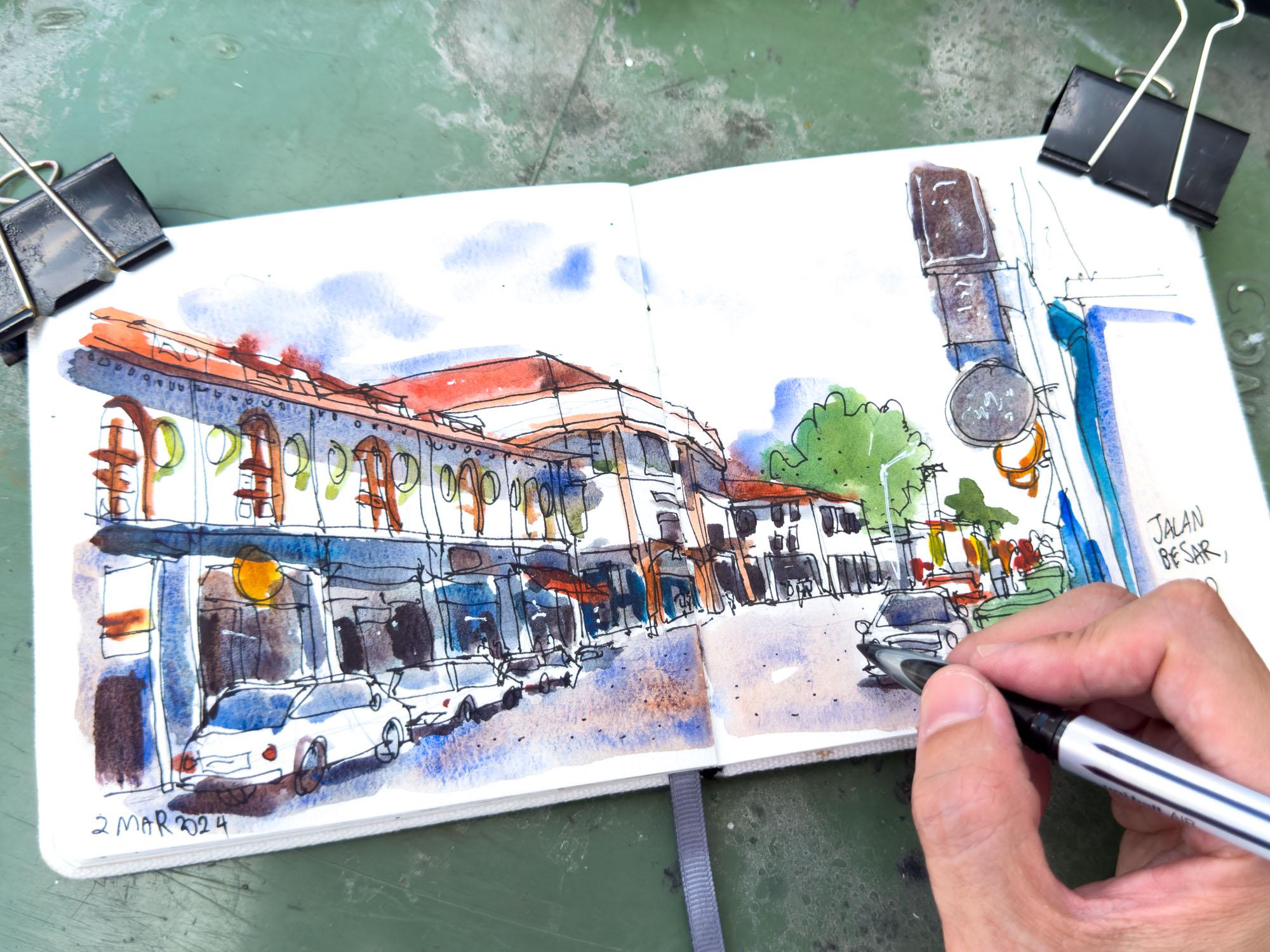
lines can also add texture or make your sketch
look more interesting. So this is my completed sketch. It may be very loose, it may not be very detailed. But I like this a lot. A sketch can still look
really good as long as you get the basic
perspective, right. The details are just
icing on top of the cake. But perspective and
the composition is really important at
the start of last sketch.
6. Sketching a Festive Season: In this lesson, we will hit into the market and see what
story we can find. So it's really bright
and hot right now, so let's just rush in. So it's good around
to walk around first to check out
the neighborhood. I have been here to sketch before and it's
always very crowded. We are here at right to
sketch the decorations. The bazaar for the end of
Ramadan, which is Hari Raya, Pisa Harry Ryan is the Malay
for a big day of rejoicing. And Ramadan is the ninth
month of the Islamic year. Ramadan is the month
for fasting, prayer, reflection, and
community for Muslims, this is quite a big building. One half of the building
has all the food stalls, and this half has all
the stores selling, as you can see, clothing. So in this case, it's good not to just sketch
the food stalls, but also to sketch
the clothing stores. Just to give an idea on the variety of shops that
are available In this, I've decided to sit
at the table there to sketch this scene
that is behind me, the food stalls, the ones that are open
as well as closed. The few things to take into consideration when
choosing a spot for sketching is choose a spot where people will
not block your view. I've chosen to sit at this table instead of the table
behind because it's less likely for people to sit at this table to block
my view from this table. That's why I'm here. And you can see the store
in front of me is actually selling some food
wrapped with Panda leaves. If I'm not worn and
the leaves are dark, so we have yellow boxes
and the dark leaves. So that's good contrast, but it's just these two colors. But if you take a look at
the store on the left side, the food items are
more colorful. So you can decide which
store you want to sketch. In this case, sketching
here can give you a sense of activity because we are not
only sketching the stores, but there's also this corridor where people are walking to. You can also sketch people
that are walking out to create a sense of movement, to capture the
sense of movement, to make your sketch and
scene look more lively. You can also sketch
people preparing food, which is always interesting. So as much as possible, try to sketch some
sort of activity so that your scene
can look more lively. That's my friend Andrew on the right side buying
his breakfast. You can also buy the food
and sketch the food. This is the pink sketch
before coloring, and I have managed to
capture the two stores. I have people walking, people in the background, people seated down, and
store owners preparing food. So there is a lot of activity. We can also see some
stores that are not open, such as this one
here and this one. Now I can change it. This schedule is
almost complete. I just need to wait for
the paint to dry before I add the finishing touches
with some opaque markers. As you can see, it's
a very busy scene. This scene is quite
challenging to draw, especially the
structures at the top, which I did not draw it with. Think I feel like it's
easier if I can just pin those structural beams with watercolor and it will
be faster as well. Let's take a closer look at the sketch from left to right. That's the store on the left. Here at the top, you
can see all the sites. They are to prevent the
birds from resting on top. And that's the store
on the right side. I have forgotten to
paint the food here. Let's have a look
at the wet market. Sketching in markets is probably the easiest
way to create an interesting sketch
because there is always so much
activity happening. You can sketch what the
stores are selling. So there are many
things you can sketch. One tip that I have for
you when it comes to sketching at the
market is practice at home first because it can
be quite intimidating to sketch at the market when there are so
many things going on. Another tip is to just focus on a specific small area to sketch. Because if you are going
to sketch like everything, again, it's going to
be quite intimidating. If you are a beginner, just maybe focus on one store. Drawing moving people
is very challenging. You can draw the produced
that are being soaked. It is blazing hot right now. If you want to
sketch in such heat, make sure you drink
a lot of water because dehydration can happen. That's just a quick lesson
on finding a story. In this case, sketching
during a festive season.
7. Outro: I hope this course is useful. And do send me your sketches because I would
love to have a look at them and give you some
ideas on how you can improve. All right, see you guys
in the next course. And don't forget to leave
this course a review, right?
 Teoh Yi Chie, Sketcher, watercolour lover