Transcripts
1. Introduction: Hello, I'm Alexandra Badza
and I'm your coach and host. Journaling is simple,
but it's not easy. You might find it sometimes
a little bit more difficult. You might find it uncomfortable. But it's really all about putting in the work
and being consistent. Now, if by this point you
are wondering, okay Alex, how can I take this
to the next level, then you are in the right place. In this module, we are
going to talk about turning the art of journaling
into a profession. How can you use your journal to help you boost your career? And how can you make this into a profitable way to
move you forward, whether you're looking
for an internship, for a profession, for a career, for getting a job interview, or for becoming a freelancer
or an entrepreneur. If your intention is to bring journaling in the next
stage of your life, then this is going to really
help you for creatives. We are going to look into different ways
in which you can use creative journaling and
boost your performance. Boost your ways of finding
different solutions and becoming creative with
different areas of your life. If you are a little
bit more pragmatic, then we're going to look at structures and
different approaches, such as mind mapping
that are going to help you and support
you in your career. For those of you
who are inclined towards freelancing
or personal branding, then you might find useful to talk about
storytelling and how sharing your story can be very powerful in building
that image for yourself, your brand, or for someone else's brand in
different career options. Last but not least,
if your dream is to get published and to see your name on a printed
or digital magazine or any of publication. Then we are going to cover the available options and
how you can be successful with different ways of bringing your journaling skills
into your work. No matter what path
you decide to follow, I do strongly advise you to start journaling sooner
rather than later because it will help you enhance your personal and
professional life and it will lead you to success. Even if you don't know exactly what you are
heading towards, then journaling in itself is going to give you the answer. You might find that purpose while you are writing
in your journal in the morning or perhaps when you are interpreting a
dream that you're having. Or when you start with a practice of gratitude
and you realize that you are so grateful for
some of the actions that you have been doing and
they really make you happy. These are going to be your
pointers for moving forward into the next stage of your life and for becoming successful. Now let's look at how you can turn the art of journalism
into a profession.
2. Creative Journaling: Creativity is a muscle. If you are inclined towards work that requires this muscle, then it's never too early to
start practicing creative. Journaling is not
just for writers. You don't need to become
the next Jane Austen or Mark Twain in order to test
and try creative journaling. You might have a
passion for drawing, or painting, or sculpting,
acting, singing. You might enjoy taming the elephants or taming the
numbers in a spreadsheet. No matter what your
hidden talent is and how much creativity
you need to bring into it, you will find benefits in the creative journaling
practice with your everyday intention
one way or another. I like to believe
that we all have a pinch of creativity
in ourselves. It always comes in handy
to have it with us. It's all about making decisions or finding
creative solutions, or even making a pro
and con argument. You want to be creative, you want to think
outside of the box, and you want to leave your
imagination outside and play. After all, creativity
can lead you in very wild directions
and it will help you to take off those lenses that only keep you
in the comfort zone. Creativity also means innovation when you are trying to bring something new that
makes an impact and is of service to the people and
makes a change in the world. Then you want to innovate. You want to be creative, You want to always be
ahead of the curve. Creativity is not
reserved only to those who use their
right side of the brain. Creativity also requires
your left side of the brain. You can think about this as a
spice or an ingredient that will add up a little bit more for anything that
you do in your work. Think, for instance
that you are going to code and develop
an app for mobile. This is something
that perhaps you think this is very strict
and very pragmatic. I will challenge
you on this because it requires a lot of creativity. You have to envision
the functions that will happen in the app in order
for you to code them. Creativity is in fact something that is required for
very many industries. Therefore, I encourage you
to use a creative journal. Maybe this is a practice
that you will not find very comfortable
to do on a daily basis. But you might try to do it
when you are actually in the middle of a creative project or when
you feel the need, practice more this muscle
and you want to make it part of your life by
using a creative journal. Just like any other tool
that we have discussed, you are going to practice
neuroplasticity. Your neurons will
become more used to the practice of finding
new words or language, or really seeing different
situations in a new light. This way they will
rewire and they will be ready for you to see new opportunities to
see new solutions and innovations whenever
that comes your way.
3. Writer's block: Let's say that you are in fact, someone who wants to write more. One of the biggest
obstacles that writers find is writer's block. This means that you sit down in front of your
laptop or in front of your journal and
you just stare at the blank piece of paper
and nothing happens. You feel blocked. You feel like your mind is frozen and there's literally
no word coming out. Or you are paralyzed by the fact that you
want it to be perfect. Nothing really sounds
perfect enough for you. That is what blocks you. This is when you want to
practice creative journaling, and this is when you want
to have different tools and techniques that will get
you out of this block. In his book, The World of Art, Stephen Presfield talks about his practice that helps him
beat this writer's block. For him, creativity is something that happens
when you are ready, it has to find you ready. What he does is
that for years he has been treating
writing as a job. He just practices it
with religiousness. No matter what the day is, he just goes and practices
the same routine. In the morning at
09:00 A.M. he sits down at his desk and
he starts writing. Some days the words and
sentences are good, some other days it's terrible. But he keeps writing, he keeps practicing this
muscle because he knows that creativity will hit him while he is in the
process of writing. It's not something that he just waits to be hit
in the head with. He is literally just
doing the work, doing all the heavy
lifting every single day when he will have that
creativity and inspiration, those words will
pour onto paper. It's something like the
stream of consciousness. But it will have to
find you writing, create the space for
creativity to find you. Otherwise you might miss it. Maybe you are just somewhere else doing something
completely different. Creativity is
trying to find you, but you are not open to it. You are right there in
front of the piece of paper writing for you. If you are not a
writer and perhaps you are j trying to
be more creative, some way to adjust this is to keep a
journal in your pocket. Maybe a mini journal, a mini notebook
that will help you. Whenever you have
some creative ideas, just write them down. Never wait until you will get to the desk or until
you get to your laptop. Because ideas come and go, brilliant ideas usually find us in the most
unexpected moments, just write it down
right then and there. Make sure that you don't
waste any creativity because it's such a precious
resource in my work. Whenever I encounter
writer's block, this is my three steps
process that I use. It involves mind,
body, and soul. This is how it works for me. First of all, step number
one is I just walk away from the laptop or from my desk and I start
moving my body. Whether it's through
walking through dancing, or just literally shaking
my body a little bit, it really makes a difference to engage my physical energy. Step number two is I try to engage my soul
and take care of my soul through a
short meditation or maybe a short visualization
or some breathing exercises. This helps me relax and bring my energy
back into my body. Number three is
engaging my mind. This means I sit
down again and I start writing about
something totally random. It's definitely not about what I was looking to write for, but it's something that, again, gives me that
practice of writing. Then I will be inspired to
write about the first task. This is what usually helps me, and I wanted to
share it with you because I found it useful. Just to recap, it means that you are involving your
body, mind and soul. And you are starting with
moving away from your desk and moving your body using
meditation or breathing. And going back and
starting to write. Putting your mind to work but
in a very different task, and starting to write about
something totally different. Then inspiration and
creativity will come.
4. Creative Exercises: Okay, are you ready to
practice your creative muscle? Let's do one exercise. I invite you to take
a piece of paper and write down one
name of a country, one name of a person, one color, one action,
and one number. Now, use these five random
words into a paragraph And keep writing for 5 minutes straight without taking
your pen off the paper. Set the timer, go. Feel free to share with us the paragraphs that
you have been writing. Otherwise, just go back
and repeat the exercise. Whenever you feel that
your mind is blocked, you can of course, change
the words that you're using. You can be more and more
creative every day. This is how you can
practice this muscle. It's important that you set
aside time for creativity, especially if it's
something that is part of your work or you are looking to get into
this kind of work. Write the story that starts
with then there was silence. Describe a room where there are only windows
instead of walls. Let your imagination go wild. These exercises are really just going to make
you feel light. Don't take them too seriously, just feel amused and let
your creativity blossom. There are no limits.
And I invite you to be just as
courageous as you want. And don't limit yourself.
5. Brainstorming: Another important part of
creativity is brainstorming. When it comes to the
practice of brainstorming, the main rule is that
there are no bad ideas. You just let everything
come in and you put it down and then
you start analyzing it. The process of brainstorming is literally just a matter of bringing forth anything that
really pops into your head. It's really a great way to be creative and to just find
the most outrageous, wild crazy ideas
that will really make whatever you're
working on different. You'll see this
happening usually in a meeting room
with a whiteboard. And a few people just
gathered around just discussing a topic and saying out loud different
ideas or words. And someone who is
writing them down on the whiteboard,
there is no judgment. They are not stopping
to say, well, this doesn't really sound good
or yes, I really love it. They just keep on going. They sometimes build upon each other's ideas and
they roll with it. It's a matter of really
just making your brain, creating a storm in your mind, and giving those ideas a
big boost of creativity. Now, when you are practicing
brainstorming with yourself, then you might find
this useful with two different
methods you can use, brain dump and just anything
that comes to your mind, literally just writing
down all the ideas. Maybe it's a list, maybe
it's a bullet pointed page. Any type of writing,
just free form, and putting down
anything that comes to your mind will be a brain dump. And it will also be a way of
brainstorming your ideas. If you are a little bit more structured and you prefer to see some very specific ways in which your ideas are
starting to come to life, then I recommend you the
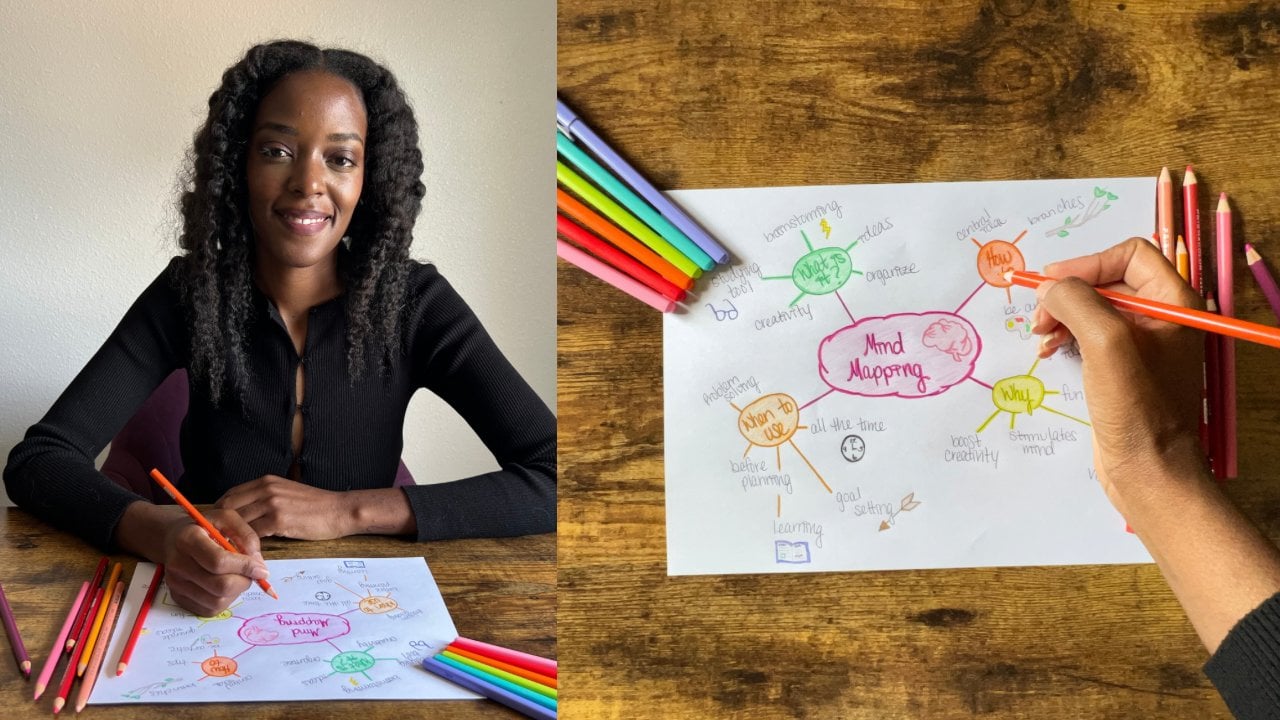
method of mind mapping. This is a tool that
can come in handy for many methods of
writing down ideas. Mind mapping looks more like an organizational
chart if you want. It's usually the main
topic in the center. And then it starts to build with different branches and ideas
that come out of that. It can be as big or
as small as you want. Mind mapping is literally focused on the topic
that you're talking to, that top of mind. Then from there,
you start creating different levels of ideas
starting from the main topic. It's really interesting
to see how this builds out when you are doing a
brainstorming session. Because at first, you might
feel that your ideas that are popping up in your mind are not really first level
related to your topic. But just stick with it and see how you can
build from there. After all, anything in this process of brainstorming
is not to be judged, is more a matter of just releasing all the
creativity onto paper, and then you can come back and structure it and
reorganize it accordingly.
6. Mindmapping: The truth is we've already agreed that our
minds are chaotic. We talked about how our thoughts can look
like different cars buzzing around in rush hour and making a lot of
noise in our head. That's why sometimes we need to structure and organize our mind. Of course, as we are all
unique and different, we have different tools that
we prefer when it comes to getting all analytical
about our thoughts and ideas. For instance, if you do
prefer mind mapping, then this is going to really help you when you
start a new project, when you write down the topic. Then from there
you start creating a beautiful
ramification of ideas. You can also use
mind mapping for therapeutic journaling
or for your well being. You can put in the center of the mind map the main feeling, your top of mind feeling. What is the most
powerful emotion that you are feeling right now? You write it down in the center. And then from there you start looking at the next
layers of emotions. For instance, you are
feeling confused, let's say. That is the top of mind. The next layers are going to be frustration,
anger, excitement. This means that, for instance, if you are feeling confused
about making a decision, then this thought might also
make you feel frustrated. It might make you feel
angry because you don't know what is the
right decision to make. But also it might give you
a feeling of excitement if it's perhaps some good news that you have been waiting for. But somehow it turned into this difficult decision
that you need to make. Mind mapping
structures, the ideas in layers from
central to periphery. You can ask yourself
questions such as why, how, what, or who in order to discover the next layers
and just go from there. Make it work in your own way. If you are finding
it difficult to uncover the main feeling, the top of mind feeling, then just explore and
see what comes up. Maybe there will be multiple
feelings that show up for you and you can put
them on the same level. Then from there you
can start building that mind map and
explore the next levels. Create a circular mode, or maybe you don't want to do that and you just
want to keep it as layers one after the other
or in the format of a table. It's totally up to you. You are the master
of your journal and you know what
works for you best. Let's see, when does mind
mapping come in very handy? For instance, you are part of a team who wants to
develop a new product. You want to come up with
some business ideas and product development and all of these things that will help
you launch this new product. This is when you're going to be using the mind mapping process. You are going to
start with the top of mind and everyone will
start contributing with different ideas around
the stages that need to happen in order for the launch of this product to
come to reality. You will also find this
very common in advertising, because when it comes to
creating different ads or creating strategies for
clients in advertising, there needs to be a
certain structure. There has to be a central
idea of the campaign. And then from there to see and
explore different ways and channels where this idea can
be converted and expanded. It's important that
you understand how this will apply in
practice because you might find yourself
in the face of using this and at least you'll
know what the mind map is. You can of course, use it for yourself in your
journal when you start practicing for setting up your goals and creating the plan of action
for your goals. You can also use mind mapping for any type
of content creation. Let's say, for instance,
that you want to start a podcast or you want to
write an article on a blog. You can start with
the main topic or the title in the middle, then start with the main ideas that you want to convey
to your audience, then move from there
to the next level. And each idea will have to respond to at least
three questions. Take it from there one step at a time and develop
that mind map. It will be so helpful for you and you will
start to understand the process and it will get you to be more
creative every time. After all, we are trying to bring the practices
of journalism into a more pragmatic way
so that they are useful for you in the next
stage of your profession. Stick with it and discover
how it works for you best.
7. Storytelling: Now let's move on to sharing our story and expressing
ourselves in a more public way. I personally love
sharing stories. This is something
that I've discovered when I was a little child and I started writing stories and poems and put them
in a notebook. Now I never got them published, but it's never too late. However, I did want to
publish my book and I did put a lot of personal
stories into my book. That was my way of
sharing my stories and sharing something that I wanted people to
find themselves in. Sharing your story is all
about inspiring other people. It takes a lot of courage. In many cases,
sharing your story is about taking ownership
of what has happened. And being really brave to step into the light and
share it with the world. Stories are meant to be told. Of course, when we talk about let's say keeping
a travel journal, then you want to share that. Maybe you want to create a
blog and share those stories. Or just by the simple act
of posting on social media, you are sharing that story
of you being on holiday, traveling, and building
memories for business purposes. If you decide to become an
entrepreneur, a freelancer, or an influencer, then you are going to use storytelling
on a regular basis. You are going to share your story first to build
your personal brand. It's important that you share
about why of your business. Why did you start doing
what you started to do? What is the mission and
the purpose of your work? This is what's going to build that relationship with people. Inspiring stories always
bring people together. It builds communities. It builds relationships. And bonds with the emotions that are hiding
behind those stories. Also, a very
important benefit of storytelling is to create
that bond with your audience. People buy from people
and they will always resonate with an inspiring
story or a touching story, rather than just talking about the specifics
of a product. Just think about
Apple for instance. They understood how
storytelling is important and they
use their tag line, think differently to
make you feel unique, different, and tell that story to everyone who is a customer. Yes, there is also an art to
storytelling, and of course, it will make a difference
if you start diving deeper into how to create stories and
be better at storytelling. But first and foremost, the main ingredient in storytelling is your
heart, your emotions. This is why I encourage you to keep a journal
with your memories, with different stories,
different moments that make an impact so that you can later use them in
your storytelling. You might even want to have
a separate notebook for your journal where you write
stories from your business. Something that can
later on be used. A project, in a case study on a website, or
in a social media. Post storytelling
is a huge component of any type of
communication nowadays, especially in the digital world. We are no longer excited to see the specifics of a product
or some boring descriptions. We want stories,
we want emotions. We want our hearts
to be touched. And this way we will
respond to those products. If you're going to work
in any department of an advertising agency or in
PR marketing communication, anything that has to do with creating content and
telling stories, then you will see how
important this is. You will also be using this, for instance, if you are going to work in human resources. Because telling stories will also attract talented candidates and they will make successful in finding the best people
for the right jobs. Sharing your story is about getting you out
of your comfort zone, because, yes, you
are going to be vulnerable when you share
something personal. But it's completely up to you how personal
you want to get. Your storytelling is your story. So you can decide which parts you're going to open and
share with the world. At the same time,
remember that you will be inspiring other people. Maybe you are breaking some barriers and you
are talking about some topics that haven't been discussed in public
for a very long time. For instance, there are
very many Ted Talks that cover subjects that are culturally and
socially sensitive, such as religion, sexual abuse, spirituality, or
sexual orientation. You don't need to
be controversial in your story to catch the
audience's attention. You do, however, want
to be authentic. This is the main
thing that will make people read your story
and empathize with you. If you are authentic, people
will feel that you will put all your emotions
into writing this way. When you share your story with the world and express yourself, they will feel connected to you. This is when that sense of
community is going to build around you and
around the idea or the product or the service
that you're offering. Also, if you are going to
do this for a company and you're going to work by
creating content for a company, then you are going
to use storytelling. And you can also get inspired from your
own personal stories. At the same time, you might
get more receptive at the stories and
different circumstances happening to people around you. You will practice the art of awareness with everything
that's around you so that you can start
picking up stories from different moments and share
them as part of your content. This is something
that will come to you naturally or with practice. It doesn't really matter. As long as you find that story and you start
sharing it with the world, you start seeing how
people get inspired, maybe to take action
or to feel connected. Building the sense of community means that people feel
they're not alone. They're not struggling
by themselves when they're going through
something very sensitive. This is why very many victims of different abuse types decide to come out and
share their stories. This will expose them and make them feel
vulnerable because maybe even close family members didn't know what
happened to them. But at the same time,
it will inspire others to open up and
speak about it as well. And it will help them
in the healing process. If you're sharing your
story in a public way, make sure that you are mindful of the people who are involved in the
initial stories, Keep their privacy and also be mindful of the people
who are in your audience. Storytelling is an art,
but at the same time, once you learn how
to tell your story, you will create magic
and you will see how you connect with people
in a much better way.
8. Getting published: The ultimate goal when it comes to becoming a writer and having your work shared with the world is getting published nowadays. It's not so difficult anymore
because you can also use self publishing as a way
to get your work known. You also have the digital space that is unlimited for
content creators. The truth is that you can
simply start with a blog. I started my first blog back in 2014 and it was for me a
way to express my emotions, express and share the
stories that were happening. I really wanted to
have a safe space for me to heal and write
about what was going on, but also for other people to come and read
and feel inspired, or at least learn some lessons from the
mistakes that I was making. It was a way to release emotions and also to
build the community. After that, I realized that
I wanted a little bit more. I wanted to get published
in a very different way. That is when I decided
to write the book. Now, having graduated
from journalism and having worked since my
second year in university, had already given me
the way to see how my name looks like attached to the pieces of writing
that I was sharing. I was already doing
web editing and writing my own articles on
different publications. It was time for me to
get to the next level. I remember the first
time when I saw my name printed on a magazine. It was a magazine about recipes and it was part of the publishing house
where I was working. But I never felt so
proud in my life at that point because
my name was there, printed in letters
on a magazine page. It was such a beautiful feeling. And I can totally understand if this is something
that you are looking to experience for
yourself in the digital world. Of course, if you want to
start a blog, it's very easy. You can of course,
start by sharing different stories and sharing content on your social
media accounts, which is, again, something
simple and free. Also by starting a blog
where you bring readers who are interested in following your journey and
reading your story. In this case, your journal is going to be your
source of inspiration. You are going to keep writing in your journal and putting
down those emotions. Because it's going to be your practice of
expressing yourself. Yes, your blog can become
your public journal, but it will not be as important as your personal journal where you can pour
out your heart. I write for a living, and still I have a journal because it's very
different when you get to share your emotions
with a piece of paper and to be very
vulnerable and honest, and know that you
will not be judged.
9. Becoming an Author: Coming back to the part where
you are getting published, I want you to know that there are various options for you. Let's say that you are
inclined to becoming a writer, a poet, or novelist. You like writing short
stories, novels. Maybe you want to write
a book or you want to contribute in a bigger
publishing project. Here again, you have
two different choices. You can publish a fiction book, for instance, if you like
to create characters, create stories and write
either drama or thrillers, or comedy, or even plays, Then you can go
through that path. If you decide to
write nonfiction, then you can start sharing about specific industry
or different ways that you feel you
have some knowledge. In either way, nowadays you have options
to get published. You can either go down the
traditional path and find the publishing house so that
you get your name out there. And this way you will get distributed to numerous
places and bookstores. Also, you have the
Self publishing path, where you need to make a
little bit of an investment to get your book
printed and edited. But then you have full control
over what's happening, where you market it and
who you sell it to. Plus you get to keep all
the profits from that book. Now I teach courses to
different participants about how to write a nonfiction book and
get self published. That was the way that
I used for my book. That is why I'm teaching
it in that sense. But I want you to
know that once again, there are no right
or wrong ways. It's really just about what
you want and be able to make a decision that suits
you in that specific moment. Of course, you
don't have to think about publishing
a book right now. You can perhaps start to contact different magazines and ask them if you can
contribute for them. You can try to start your own blog and get
your stories out there. Of course, you can simply go on your social media account and write your content in there. It's absolutely no
right or wrong path. It's completely up to
you where you feel most comfortable in
creating that content and sharing it with the world.
10. Freelancing as a Creative Writer: You can also get published, but not in the sense
of putting your word next to your work by
becoming a copywriter. If you work in advertising
or PR, or marketing, any of these places
where you need to promote different
services or products, then you are going to be very successful when it
comes to juggling with words and creating
exactly what needs to be done for that specific
product or service. With copyrighting of, there
are numerous ways and tools, and methods, and techniques. There is something that
you need to learn by doing and by also attending some additional
specialized courses. But it's important that
you have the inclination and that you feel attracted to that field before
you dive into it. Again, this will be when perhaps a creative journal
will come in handy. Because you will be able to
keep your creativity flowing. You will be able to
have a place for your ideas to be written down. And to make sure that whenever there is a need for
writing a story, promoting a product, or just
helping out the client, then you can do that
because you are inspired. You have all of your
ideas in a notebook. If you follow the
path of journalism, then you are also going
to be a master of words. You will need to understand that this is both an
art and a science. With journalism, you
have to be objective. It's less about expressing your emotions and more
about telling the facts. Of course, there is also
feature writing in journalism. You can also bring your
own take of things. It depends what kind of journalism you're
going to go for, Always be authentic
no matter what. Of course, if you're going to go down the very traditional way and you are going to
work in sharing the news, yes, you will have
to be objective. If you prefer to
be more expressive and maybe write features
or interview people, or perhaps you want to write for magazines and share
your opinion, then you can definitely
find ways to do so in the media, blogs, podcasts, digital
magazines are all ways of creating content
in the digital space. I'm sure that if you are
attracted to this field, you might already know that there are so many
options out there. Once again, your journal will be your source
of inspiration. You can always go back and revisit an old
journal and perhaps get inspired from a story
that you have written there, a memory that maybe you
have completely forgotten. But it brings something up that you want to use in a story, in an episode, in an article. You want your journal to be
a source of inspiration. And of course, that
will happen when you keep them and you go through
them with detachment. If you're still healing
from something, don't use that story to promote it or to share
it with the world. Ideally, you want to
share stories that are already healed and that
you feel detached from, so that it doesn't
trigger some emotion or make you feel
more subjective. Your audience always feels the
emotion behind that story. And if it's still
something heavy and you're still telling it
with anger and resentment, then people will feel it. They will see that you're
not healed yet and it will make it a little
bit difficult to swallow. Now, I know that I did this
in the past after a break up. I remember I wrote
down an article just to get revenge on my X. And I sent it to one of the
biggest publishing websites. That was at that time. I was so excited
just to put it out there and send it to him
to make him feel sorry. But of course, that
wasn't the case. A few years later, reading
back that article, I realized and I sensed how much anger and
frustration there was. And I'm pretty sure
everyone else felt it. Even if writing stays as a side passion and you will not turn it
into a profession, you can still use your journal for different ways
of creating content. For instance, you can become a freelancer and perhaps even have a side job by
being a copywriter. You can sign up for one of
the freelancing websites and advertise and promote your services there
as a copywriter. And get some extra
bucks on the side. Otherwise, you can start
by building your blog. You can start by
creating a lot of content and getting
your audience attracted to what
you have to say. This way you will
have a community that is going to be
engaged with you later on. Perhaps you can even
turn it into a business, find a way that is really personal and that speaks to you. Whatever resonates
with you is going to be the right path,
even if it's not. Just give it a try, if
it's an idea in your mind, even if maybe now it's not the right time,
revisit it later. Sometimes it's better
to just give it some time and see if it's still important for us later on. But at the same time, I want to encourage you to not
leave with what if, if it's something that is
really there in your heart and you know for sure that you
want to follow that passion, go for it, find a way to
integrate it in your life. Even if it's just as a passion
or as a hobby for now, then just do it. Maybe you want to practice
your creativity for later on while also going
for a job or studying. But at the same time, you're
not going to be sorry for all the lessons that you are going to learn
in the process. It's really going to
make a difference. Make sure that you are maybe
even tracking your progress, your performance, and see
what you learn along the way. I know I already
covered the part where you are deciding to
write your first book, but I want to make sure
that I bring it up again because this is a way
of expressing yourself. Of course, you want
to do this maybe later on in your career
or in your business, because a book is something that can also serve you
as a marketing tool. Once you gain more knowledge and expertise in
a certain field, you can write a book about your expertise in that
specific industry in order to show that you are an expert and that you are building authority
in that field. I love working with groups of clients where I teach
them how to write nonfiction books about their
area of expertise and to use them as promotional tools or marketing tools for what
they know best, How to do. This attracts a lot more people, people who get interested, people who then want to
buy what they're offering, their products or services. Keep in mind for later on that you might want to have
a book published, whether in a traditional
way or self published, that will reflect your expertise or knowledge in a
specific industry. This will help you to build
authority and show up as someone who knows
what they're talking about and wants to
help other people.
11. Conclusion and project: All you really need to do
is to keep practicing. Journaling is an art, but it's also a science and you can find
different methods that will serve you in turning journaling
into a profession. You are learning how to use
your personal stories and your emotions in order to create something that you want to share
with the world. This is going to be a
great way for you to practice how to express
yourself better, how to heal your past, how to be in your presence
and in your well being, and how to create that
vision and set those goals. It's been an honor to share
with you the tools and tips on how to use the art of journalism for a
successful life. And I can't wait to read your essays for
the final project.
 Alex Badita, Journaling & Storytelling Expert