Transcripts
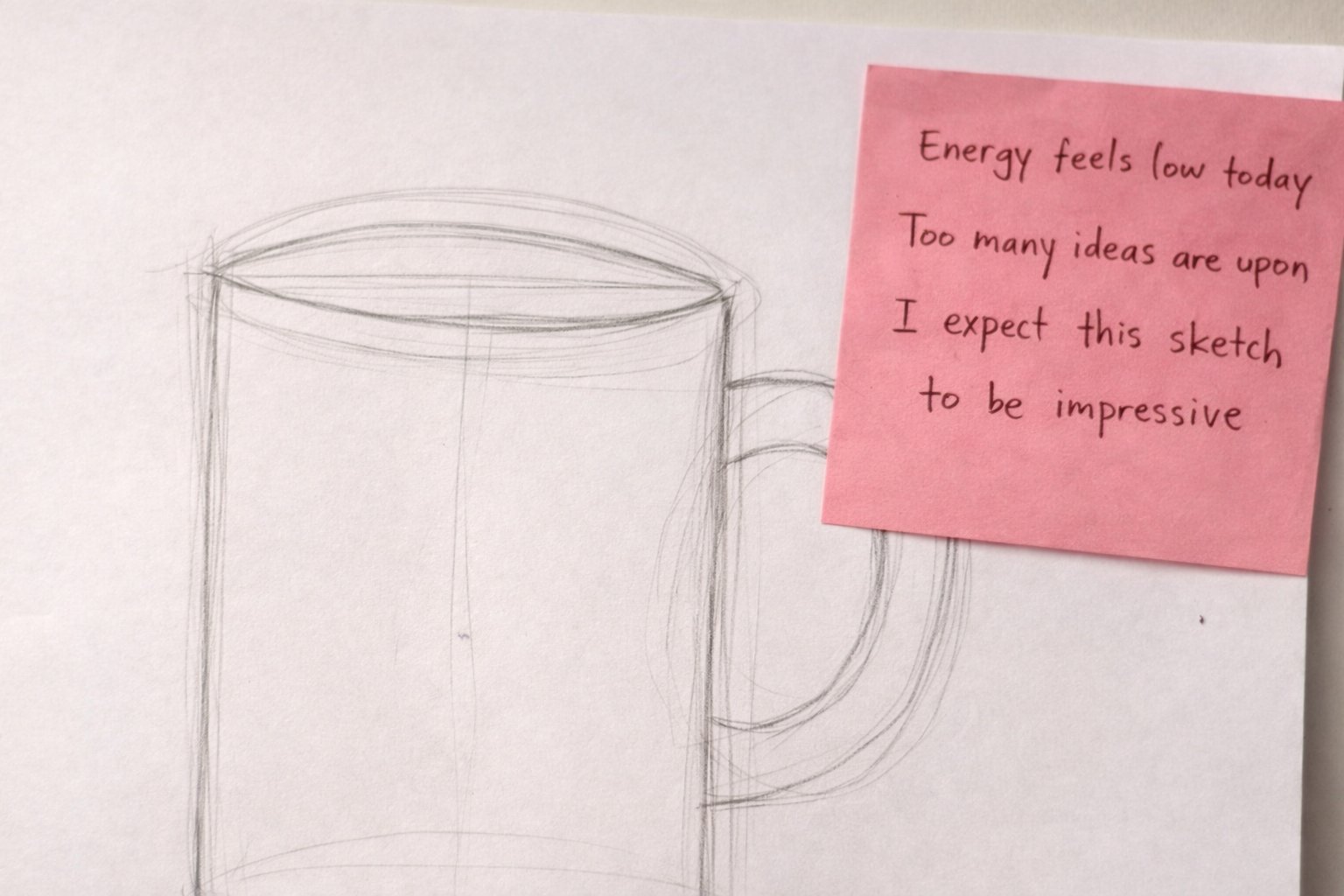
1. Feel unstuck by choosing one small area only : When a project feels huge, it can feel like your brain
just quietly backs away. You sit down, you look
at the whole thing, and suddenly you feel tired
before you even begin. If that's you, I want you to
know this is very normal. It does not mean you are lazy. It usually means the project is asking for your attention
to hold too much at once. So here's the next small, doable move we're going
to use while you're here. You are going to choose
one small area only, not the whole project,
not the full plan, not the full finish, just one small area. And if you can do that, you
already did something real. That is a win. I'm Paul. I help beginners do simple
creative work in a clear, calm way so you can feel safe starting even when
your brain is loud. I used to think
the only way to be serious was to work on the
whole project every time. But that was exactly why I would freeze because the moment
I look at the full thing, I would start hearing all
the question at once. Is this good? Is it
going to take too long? What if I messed up? And then I would do the classic move. I would prepare
instead of create. I'd fix folder, watch more
videos, rearrange tools, clean a desk, open tabs, close tabs, open tabs again. It looks productive
from the outside, but inside, you know what it is. It's avoiding the filling
of the whole project. What changed everything for me was not forcing more discipline. It was giving my brain
a smaller target. One small area only. When the target is small, your brain can relax. And when your brain relaxes, you can finally move. That's the one decision you will get clear about by the end. When you feel stuck, you
choose one small area only, not because you
can't do big things, but because this is how you get back into motion without
burning yourself out. As we go, I'll guide you through a simple project that trains this skill in a very real way. You'll see it start simple, then get clear, then get
finished in one small spot. This works on its own, and it also connects
naturally with other lessons you
might explore later because this is one
of those skills that helps almost everything
else feel lighter. If you're already
advanced and you love working in
long deep sessions, this will probably
feel very basic. But even then, it can
be useful reset when you're tired or when your
project starts feeling heavy. This is for you if you
do creative work in any form and you keep pausing because the project
feels too big. This can be drawing
painting, writing, design, video, music, or even refining
prompts for AI tools. You do not need
special supplies. You just need one ongoing creative project
you already have, even if it's messy finished or sitting in
the folder you avoid. Alright, let's set up the simple project
we'll build together. And then I'll show you exactly how to do this in a
calm, repeatable way.
2. Finish one small section and stop without guilt : If you've ever
opened a project and instantly felt behind,
you're not alone. Big projects create
a weird pressure. Your brain assumes you must
do a lot for it to count. So even a small attempts
feels pointless, and that's when you stop. Here's the next small step. We're going to create one tiny finish results
inside a big project, and we're going to treat
that as a complete win. You will build a project called
Finish One small section. The goal is simple. You will work on one
small area only. Then you will stop. That's it. The main material is your ongoing creative work. That can be a sketch you started a design file
you're building, a draft you wrote, a video timeline, a painting, a set of photos, or a prompt you've been
meaning to improve. You can use what
you already have. Even if it's something you
feel embarrassed about. In fact, those are often
the best ones to practice with because they carry
the most pressure. As we go, you'll
build this gradually. First, you'll see
the full project without trying to
fix everything. Then you'll choose and
name one small area only. Then you'll work only there until it feels complete
enough to count. By the end, your
project will look like one small section
that is clearly done. Maybe it's a short paragraph
that reads smoothly. Maybe it's one corner of a
drawing that's clean up. Maybe it's one small design area that finally looks right. Maybe it's one AI prom that
now gives better results. You upload one proof
of completion, one photo or screenshot that shows the small
section completed. You do not need to upload
the whole project. You are not trying to
impress anyone here. This space is for practice, not performance, and you're already doing the right thing. Just by showing up and trying. If you want, you can work along with me, pause
when you need to, rewind when you want, or you can just listen
first and do it later. Either way is fine. Now, let's
talk about why this works. So the next steps feel
natural instead of force.
3. Stop freezing by shrinking the target : When you feel stuck, it often looks like a
motivation problem. But most of the time,
it's a size problem. The project is too
wide in your mind. Your brain is trying to hold
the whole thing at once, and that creates pressure. Pressure creates avoiding. Avoiding creates guilt, and guilt makes the project
feel even bigger. So we're going to break
that loop in a simple way. We're going to
shrink the target. In plain words, this
topic is about making big Creative work feel
manageable again. Not by doing less forever, but by choosing a smaller place to put your attention right now. Here's the simple idea. A big project becomes
workable when you give your brain one
small place to land. I want to break that
into a few clear parts. First, your brain doesn't start when it
cannot see the end. If the work feels endless, your brain treats
it like danger. So it protects you by delaying. Second, the whole
project is not one task. It's many tiny task
wearing a trench coat, pretending to be one thing. When you look at
the whole project, you're actually looking at many different problems at once. Third, one finished small section changes how you
feel about the whole thing. It creates proof that
progress is possible, and that proof is what
lowers the pressure. Here's a simple
everyday example. If you walk into a
messy room and think, I need to clean everything.
You might do nothing. But if you think, I'll clear this one small
corner, you can begin. And once you begin, you
often keep going naturally. Creative work is the same. One small area is
your entry point. One small area is
your safe zone, one small area is
how you restart. I've noticed something
personal, too. When I choose one small area, I'm not just
choosing what to do. I'm also choosing what
I will ignore for now. And that is a relief
because the overwhelm usually comes from trying to
carry everything at once. So here's how we're going
to do it step by step. First, you look at
the full project with soft ice without
trying to fix it. Next, you choose one small
area only and name it clear. Then you work only
there until it feels complete enough
to count, and you stop. This works because it removes the biggest trigger
of Creative Block. The trigger is the
feeling that you must solve the whole project
today. You don't. You only need one
small section today. And once you practice
that a few times, starting becomes easier because your brain begins to
trust the process. All right, let's do it together.
4. See the whole project without trying to fix it : When a project is big, even opening it can
feel like a test. You might think, if I open this, I have to do a lot. That thought alone can make
you avoid it for days. So here's the next doable move. Open the project and
let it be unfinished. And if you do that, you already
stronger than the block. For this project,
the only thing you need is your ongoing
creative work. If you have it on
your phone, use that. If you have it on your
laptop, use that. If it's a sketchbook,
that's perfect, too. If you don't have
a project packed, use anything that
you've been avoiding. A draft you started, a design you didn't finish, a drawing you left halfway, a prom you keep meaning to
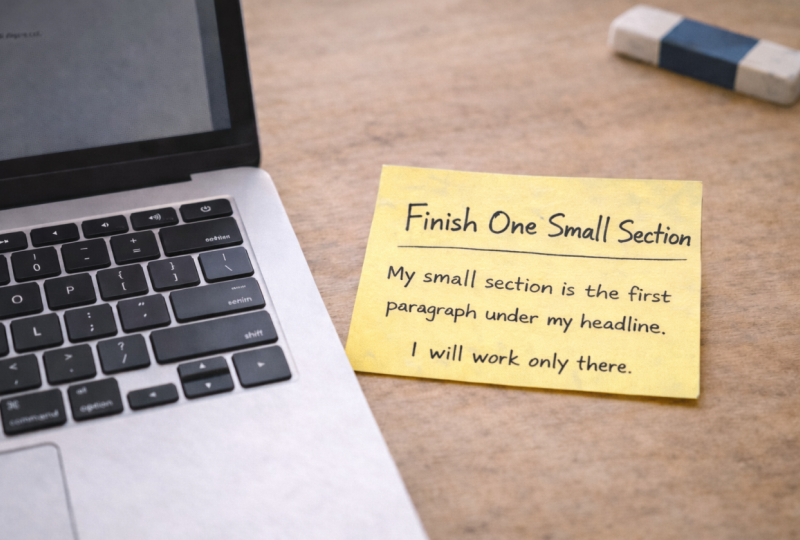
improve. Anything works. Now, before you change anything, add the project title at the top of wherever
you're working. Write this exactly.
Finish one small section. If you're working in a
drawing app or design app, you cannot write that
inside the project. Just write it in a
note beside you or as the file name because they
remind you what you're doing. You are not finishing
the whole thing. You are finishing
one small section. Now, let's walk
through this slowly. First, open the project
and take one breath, not a dramatic breath, a normal breath, like,
Okay, hello again. Next, look at the
whole project and describe what you see
in a simple sentence. This is not judging.
This is just naming. For example, I might say, This is about my page draft, and it's messy and unfinished. Then tell yourself one
permission sentence. Something like I am allowed
to work small today. Or I don't have to
solve everything. After that, just one gentle goal for this session,
not a big goal. I will find one small
place I can finish. That's all. Now, I'll share the example we'll
keep using as we go. In my example, my
ongoing creative work is a short about page draft. It has a deadline, it has a headline and a few paragraphs. It's not terrible but it
feels heavy because I keep thinking I have to rewrite the whole thing, so I avoid it. If this is you with any project, you're in the right place. In this first part, we're not choosing the small area yet. We are just getting
comfortable looking at the full project without
trying to rescue it. That alone reduces pressure. It's like telling your
brain, we're safe. We're just here. And
that's a real shift. You might notice a tiny left already because you
open the project without forcing yourself to finish everything
that is progress. The core idea here is simple. You are letting the project exist without making
it your whole day. In the next part, we'll
choose one small area only in a way that
feels clear and gentle.
5. Choose and name one small area only : Sometimes the hardest
part is not the work. It's choosing where to begin. When everything feels important,
nothing feels startable. If you've been stuck
there, I get it. So here's the next simple move. Pick one small area only and
name it in the plain words. And if you can do that, you
already reduce the over. Bring your ongoing creative
work back in front of you and keep the project
title where you can see it. Finish one small section. Now, instead of thinking,
what should I fix? Ask a smaller
question. Where could I finish something small? Not perfect, just finished
enough. Now, do this slowly. First, scan your project like you're looking for
the easiest doorway. Not the best doorway,
the easiest one. Next, just a small area that you can see clearly a small corner, a short paragraph, a small
design area, fun AI prom. Something that has edges. If it doesn't have edges, it will feel like the
whole project again. Then name the small area
in one simple sentence. This is the Mark one
small area moment, and we're going to do
it using plain words. In my example, I write this sentence directly
under the project title. My small section is the first paragraph under
my headline. That's it. That sentence is the boundary. Now, I stop scanning the
rest of the projects. I'm not pretending the
rest doesn't exist. I'm just choosing to
ignore it for now. That is the scale. If
your project is drawing, your sentence might
be my small section is the handle of the um. If your project is a design, your sentence might
be my small section is the tile area at the top. If your project is an AI prompt, your sentence might
be my small section is my first two
lines of the prompt. Notice how each one
is small and clear. Now, a quick personal note. I used to choose areas
that were too big because I wanted
the biggest impact. That was me trying
to earn progress, but the goal here is not impact. The goal here is motion. So choose the area that feels
the easiest to complete, even if it feels unimpressive. Unimpressive is often
the secret because unimpressive is doable and doable is how you restart trust. Before we move on, read your small section
sentence one more time. And at a second sentence
right after it, I will work only there. That sentence matters. It closes the door on the
rest of the project for now. It tells your brain
you don't need to carry everything.
That is a relief. And relief is what makes
action possible again. Let's recap in simple words. You didn't plan
the whole project. You didn't fix everything. You simply chose one
small place to land. In the next part,
we'll do the work only inside that small area, and we'll stop when
it's complete enough.
6. Work only there until it feels complete enough : This is the moment where
people often get nervous because even a small area
can bring up big feelings, you might think, What
if I do it wrong? Or what if I start, and I still feel stuck? If that's happening,
you're okay. You're not broken,
you're just human. So here's the next small step. Work only inside the
small area you've named. And when it feels
complete enough, stop. That stopping is
part of the skill. Bring your project back up. Keep these lines visible. Finish one small section. My small section is the first paragraph
under my headline. I will work only there.
Now, we will move slowly. First, look only at
the small section. Try not to look
above or below it. If you notice your
eyes drifting, gently bring them back. Next, decide what
complete enough means for this one small section, not perfect, just usable. For my paragraph,
complete enough means it reads clearly
and feels like me. Then make one small change
inside the section. In my example, I rewrite one
sentence to make it simpler. I'm not rewriting
the whole page. I'm not changing the headline. I'm changing one sentence. After that, read the
paragraph out loud quietly. If you cannot read out loud, just read it slowly
in your head. You're listening for one thing. Does it feel smoother
than before? If yes, that's progress, then make another small change, still only inside the section. In my example, I remove one extra phrase
that feels messy, and I replace it with
a simpler phrase. Now, I read it again, not to judge it,
just to feel it. Then I do something
very important. I stop. Even if I
could keep going. Even if the rest of the
page is still messy. Stopping is how you teach your brain that small
sessions are allowed. This is how you avoid the traff where every time you start, you accidentally turn it
into a long heavy session, and then you avoid
starting next time. Now, I want to bring everything together with a gentle contrast. Before, the whole project
felt like a mountain. Now you have a finished small
section you can point to. Before, your brain
saw endless work. Now, your brain sees proof, and proof creates calm. If you're thinking, but
it's only one paragraph, that's exactly the point. One paragraph done is better
than ten paragraphs avoided. One corner done is better than the whole drawing left opened. One small prompt improved is better than a perfect
prom stuck in your head. You just practice the decision. You choose one small area only, and you work only there, and that is enough. Take a moment and
let it count because this is how you build
momentum without pressure. Next, I'll show you the full finish example of
the project in one place. And I'll explain exactly what
to apload as your proof.
7. Upload proof that one small section is done : If big projects overwhelm you, this project gives you a
simple way to move again. You will create a
tiny finished result inside your larger work. The main material is your
ongoing creative work. It can be digital or on paper. And your project
title stays the same. Finish one small section. Your project description
can be short and simple. For example, you
can write I chose one small area only and
finish that section today. Now, here is the single
finish reference example. My small section is the first paragraph under my headline. I will work only there. First paragraph
after I revise it, I help beginners start creative
work without pressure. I like simple steps,
small progress, and the column
routines that make big projects feel manageable. And practicing finishing
one small session at a time so I can stay consistent
without burning out. That's the full project.
You can see how it evolved. At first, I simply opened
the full project and gave myself permission
to keep it and finish. Then I marked one small area by naming it in one sentence. Then I worked only there until
it felt complete enough. This simple project
works because it trades pressure for clarity. Instead of asking your brain
to carry the whole project, it gives your brain one
small place to succeed. And that success is what makes
starting easier next time. For your upload
proof, keep it easy. Upload one photo or screenshot showing the
small section completed. If your work is on paper, take a photo that clearly shows the finished
small section. If your work is digital, take a screenshot that clearly shows the finished
small section. When you apload, use the
project title and add one short sentence
describing what you finish. It can be as simple as I
finished the first paragraph, or I finish the
corner of the sketch, or I refine one prompt. The best time to create and
aplod is right after you finish the small section
while it still feels fresh. But if you want, you can also
do it later the same day. Try not to wait too long
because the longer you wait, the more your brain
starts turning it into a bigger
deal than it is. And remember, you are allowed
to keep it imperfect. Most people upload simple
imperfect projects. Even a quick version is enough. No one expects perfection here. This space is for practice, not performance, and you
now have the full process. Open the project gently, Joe one small area only, or only there, then
upload one proof. Now, let's answer a
few common questions. Question that pop up right after people do this
for the first time.
8. Keep going even when doubts show up : It's a real win that you made it through
the full process. You opened the project,
chose one small area only, and finish that section.
That's not tiny. That's the scale. And it's also normal if you have few
doubts, show up right after. So let's walk through a
few common questions. First question, what if I
pick the wrong small area? That worry makes sense, especially if you care
about the project. But here's the truth. There is no wrong small area when the
goal is getting unstuck. If you pick a small area
and it leads to movement, it was the right choice. If you pick one and
it feels heavy, then you can pick a
smaller one next time. Example, if you chose a whole paragraph and
it fell too much, then you can choose only the first two sentences because your brain needs a
smaller target right now. This is not failure. This is calibration. You're learning what size feels workable for you.
Second question. What if I finish
the small section and I still feel behind? That feeling is very
common because your brain is used to measuring
progress by volume. So even when you
finish something, it tries to compare it to
the whole project again. When that happens,
return to that decision. You choose one small area only, and you finished it.
That is the win. If you want a helpful
though, try this. If you finish one
small section today, you are no longer behind. You are in motion. And motion is what makes
the next session easier. If you feel behind, it usually means you're looking at
the whole mountain again. Bring your eyes back to the one finished spot you can
point to. Third question. What if I keep wanting to expand and fix
the whole project? That's actually a good sign. It means you have energy, but it can also
be a trap because if every session turns
into fixing everything, you might start avoiding again. So if you feel the
urge to expand, you can say not today. Finish the small section, then stop on purpose. If you want to continue, you can do another small section in a separate session later because your brain learns safety when
you keep session contained. Here's one pro tip that helps. If you notice your attention drifting to the rest
of the project, gently cover the rest
of the screen or page with your hand
or a piece of paper because reducing what you can
see makes it easier to stay inside the small section and one more simple mindset that
turns down into action. Treat your small section
like a proof stamp. You are not trying
to feel perfect. You are collecting proof that you can finish
something small. Proof beats pressure every time. Alright, let's
wrap everything up in a simple way
you can remember.
9. Finish one small section and build real momentum : You did it. You took
a big heavy feeling, and you turn it into
one clear, doable move. That deserves a real
moment of credit. As we go, you practice the full process from
start to finish. You open the project without
trying to fix everything. You chose one small area only. You work only there until
it felt complete enough. And you ended with one
clear proof you can upload. If there's one thing, I hope you take with
you, it's this. When a project feels too big, you don't need more force. You need a smaller target. I really believe small
progress done consistently is stronger than big effort that only happens
once in a while. And I want you to feel proud of the clarity you gained today because before you
might have thought I need to finish the whole
thing to feel better. Now you can see a calmer truth. One finished small section. Can be enough to
restart momentum. Here's a simple shortcut word you can remember for next time. Spot. You find a spot in
your project and stay there. S means see the whole project
gently without fixing it. P means pick one small area
only and name it clearly. O means only work there until
it feels complete enough. T means take one photo or
screenshot as your proof. A small real life observation
that always makes me smile is how our brains will
happily do a lot of work. When the task feels small, but will refuse to do even the simple work when
the task feels huge. So you're not weak.
You're just human. Thank you for being here today. And don't forget to
upload your project, upload one photo or screenshot showing the
small section completed. The best time to upload is right after you finish
the small section. Well, it still feels simple and real before your brain tries
to make it complicated. Also, please leave a review
after you finish because it helps me grow as a teacher and helps other beginners
find this lesson. And if you have any questions, that's totally normal,
feel free to ask. I'm genuinely proud
of you for taking a big heavy project
and making it smaller. That's a skill. And it's a kind of skill that
keeps paying you back. To close, I want to bring
you back to the start. When a big projects
trigger creative block, it usually means you're trying
to hold too much at once. Now you have a gentler option. Choose one small area only. Finish that small section. Let it count, and notice how clarity can
deepen over time, even when you're moving
in a tiny steps. Thank you for taking the class. I'll see you in the next lesson.
 Paul Nene, Helping beginners take action