Transcripts
1. Introduction: My travel sketches, my favorite souvenirs
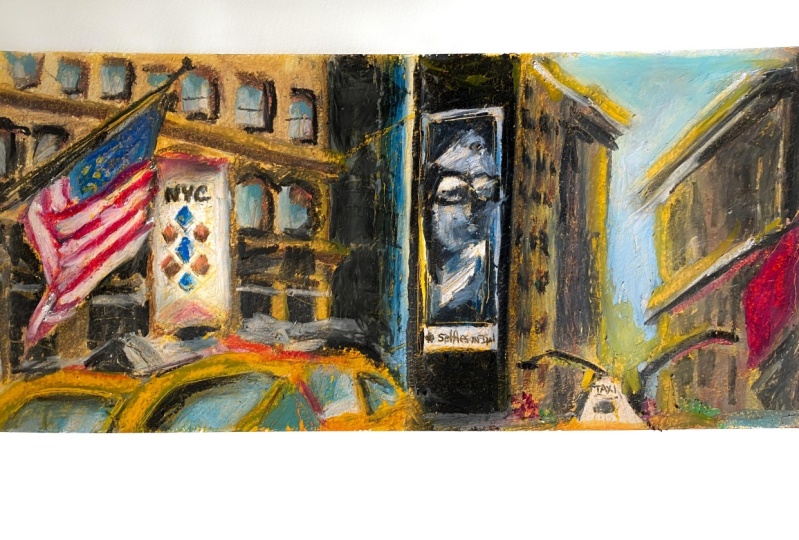
from my travels. Another, I embark
on a new journey. My thrust is sketchbook, is always by my side. Over the years, I have immerse myself in the world
of travel, sketching, constantly changing styles,
discovering new ways of sketching and experimenting
with different techniques. It has become a decent, personal and fulfilling
practice for me. And that's precisely
why I decided to share my knowledge and experience
with you in this class. Hello and welcome travelers and our enthusiasts to this cinematic
Travel Sketching class. I'm so delighted to have you all join me here on these
Creative Chairman. My name is Alina and I
will be your guide as we embark on captivating exploration
of travel, sketching. I firmly believe that our dismantle Musharraf
and this course, I hope to sharing my patient
for cinematic Travel, Sketching and inspire you to create your own
visual stories. In this class, we will uncover the Art of
cinematic Travel, Sketching, unique concept that the worlds of cinematography
and sketching. You will learn how to capture
the essence of a place, incorporating
Narrative Elements and embrace movement to bring
your sketches to life. But what exactly is
cinematic Travel Sketching? It's a great approach that
allows you to transform your travel sketches into
small visual stories. Hi Berlin techniques
from cinematography, we can infuse our drawings
with the same magic and emotion they experienced than watching a captivating film. Throughout this course, I will provide a step-by-step
demonstrations, practical exercises to help you refine your skills and
unleash your creativity. To make the most out of
this learning experience. I encourage you to actively engage in the course material, participate in discussion, and complete the class projects. Remember, learning is a journey and every stroke of your pencil, brush or Oil Pastel brings you one step
closer to mastery. By the end of this class, you will be able
to create sketches that go beyond mere
illustrations, transport and viewers to the heart of the
chosen location. So whether you're
a seasoned tires are just starting your grades. Which one? I wanted to join me in his class and embark on an adventure. And that will not only
enhance your artistic skills, but also bring a new dimension of storytelling to
your travel sketches
2. Your Class Project: The class project is to create your own cinematic
travels gauge, incorporating the knowledge and skills you have gained
throughout this class. This Project is an opportunity
for you to apply what you have learned and express
your unique artistic voice. Let's discuss the
guideline for the project. Cinematic travel sketch
should capture the essence of the flex location that
holds meaning for you. It could be a place
you've traveled to, a dream destination or even a local sports that
really resonates with you. The goal is to convey
the mood, atmosphere, and unique characteristics that place holder, real artwork. Or you can use the videos and photos I've talked in Paris, which we will use in the
demonstration part of the class. Remember, the purpose
for the projects capture the essence of the
place that resonates with you. It's not about
replicating, afford to, or redo frame-by-frame,
but about interpreting and expressing
your own unique perspective. Consider the elements we
will explore in this class. Think about how you can incorporate cinematic
techniques and elements. Don't enhance your
travel sketches. Consider compensation,
movements, storytelling, and the use of
Narrative Elements. Reflect on how you
can create a sense of energy and vitality. As you embark on
the class projects, I encourage you to
embrace the process. Take your time to plan, sketch, and refine your artwork. Allow yourself to
explore different ideas, composition and color palettes. And most importantly,
and Joanna journey of creating something
meaningful and personal to you. This project is an
opportunity for you to showcase your growth
and progress as Artists. Reflect on how far
you have gone, the techniques you have learned, and the unique style you've
developed through this class. This is your chance to celebrate your artistic journey and
share your vision with others. So once your class
project is finished, don't forget to share it
with your fellow students. And with me. I'm truly excited to see the amazing cinematic
travel sketches each of you will create. Your artwork, has the butler to transport us to new places, evoke emotions and
feelings, stories. So embrace the challenge, trust your abilities, and
let your creativity solver
3. Planning and Tools: Now, before we embark on
out sketching adventures, it's important to
be pinned back. Planning and gathering
the right materials can greatly enhance your
sketch and experience. So let's talk about
the essential tools and materials you
will need for travel, sketching, and for the project
of this class as well. A sketchbook is the foundation
of your artistic journey. Just an amount that's
Use your preferences. Whether it's a
compact pocket size, the sketchbook, like my
favorite font, or larger one. For detailed drawings. Experiment with
different paper textures and fades to find what
works best for you. The choice of medium for
travel sketches depends on personal preferences to the
effects you want to achieve. While I personally
prefer oil pastels for the vibrant colors
and versatility. There are other portable
media you can consider. I'm Pastels have been mind
medium of choice for years. And that's because of the reach in terms pigments
and creamy texture. They allowed me to
create bold strokes, blend colors seamlessly, add layers of depth
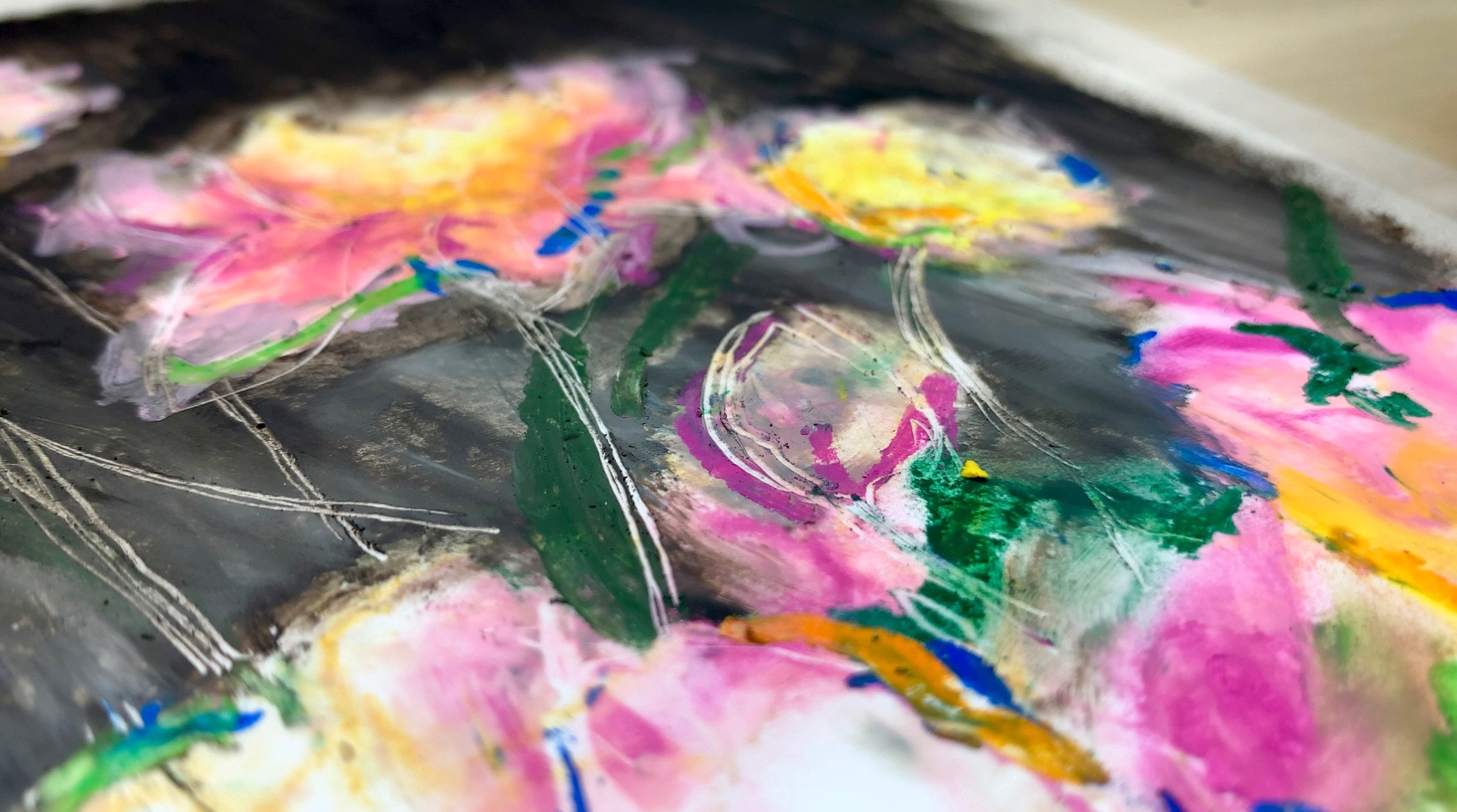
to my sketches. With Oil Pastels. You can achieve painterly effect that brings a unique visual
quality to your artwork. What's the colors are? Another popular medium
for travel sketching, portable mini watercolor sense. So cute the tiny, with their complex size and built-in palettes make it
convenient to carry around. Watercolors are
well-suited for capturing the delicacy of landscapes. Grey contents for it washes and portraying subtle
gradation of color. Besides oil pastels
and watercolors, there are other portable medium you can explore for
travel sketching. These include colored
pencils or markers or Ben, and each medium offers its own unique characteristics and allows for different
styles and techniques. I encourage you to
experiment with different mediums to find the one that resonates when you try out various techniques, store their capabilities, and discover how they can enhance
your terminal sketches. Don't be afraid to combine
videos in your sketches. For example, you can start with an underpainting
in watercolors and add details and texture with both pastels for
colored pencils. I, for one, sometimes use colored pencils
with my own bus sounds. Recently, I discovered a new way of preparing my
travel sketch book. The demonstration of this class. I will suggest you combine acrylics with Oil
Pastels to show you how it makes travel sketches so much more textured
and interesting. Portability isn't the key when it comes to
Travel Sketching. So consider assembling a compact and lightweight
Travel Sketching kit that includes your prefer
doing instruments, a sketchbook, and additional
tools you may need. Just those that you
feel comfortable using and let's use
your artistic style. I remember when I
first started out, I used to carry a bag, filled all of my
oil pastels sticks. I couldn't bear the thought
of live in any color behind because I was
afraid I might need them. I might need exactly this that
I'm leaving a hotel room. However, at the ends of the day, February advise
that I hardly used even half of the colors I
carried with me around. He took me time and practice for you to
understand the importance of choosing the minimal set of colors by learning to be
selective with colors. That's already, did it
make my bag lighter? But it also brought coherence and harmony
to my sketchbook. The limited palette
allowed me to focus on the essential elements of each scene and create sketches that
felt more balanced. So now I usually carry around like this small
box of oil pastels. Six to seven oil pastels
takes sometimes I can take two small
boxes like this, but no more bags filled with all of my
oil pastels know more. So when you gather your
materials for travel sketching, remember that can often be more. Embrace the challenge
of working with a limited selection
of colors and see how it enhances your
artistic process and the overall impact
on your sketches.
4. Introduction to Travel Sketching: In this lesson, we'll dive into the fascinating world of travel, sketching, and explore
the fundamentals that will set the stage for
our creative journey ahead. So today, we will
explore the reasons why create travel sketches
in the first place. How to prepare for your
travel sketching adventures, and what to keep in
mind vile Sketching. Travel sketching
is a wonderful way to capture the essence of experiences and
document our journeys. It's allows us to
connect with the place, but visit on a deeper level and to create lasting
memories for Art. But why don't we create
travel sketches? Thirsty? Travel sketches serve as a
personal visual diaries. They preserve the
unique moments, sides, and the emotions of our
travels in a way that photo cannot and enables us to immerse ourselves
in the present moment, taking in the details and
atmosphere of the place. Secondly, travel sketching is
a form of self-expression. It's allows us to interpret
the world through our own artistic lands and communicate our
experiences to others. It's a way to share our stories, our perspectives, and the beauty we
encounter along the way. We take a time to observe
and sketch our surroundings. We engage with the world
on a deeper level. You notice details, soak in the atmosphere and truly appreciate the beauty
of each location. Revisit the act of sketch
in a form of mindfulness, embarrassing us in
the present moment. Now let's discuss one of the most important skills
in Travel, Sketching. Observation.
Observation is the key to capturing the unique
characteristics of the Place. By training our eyes to notice details, shapes,
textures, colors. You will be able to translate the world around
you onto the paper. There are several
techniques you can use to enhance your
observation skills. Take your time to
truly the environment. Notice the play of
light and shadow, interactions between
people and objects. And the overall atmosphere. Started by observing
the basic shapes and proportions for the scene. Focus on capturing the
essence rather than getting caught up
in lots of detail. Identify the key elements of the scene. What makes it unique. What stands out to you, simplify the complexity or the scene into its
essential components. Adaptability is another key
skill for travel sketching. As you embark you travel
sketching journey. You will encounter
various circumstances that may require flexibility
in your approach. Personally, I have developed two distinct ways of sketching depending
on this round things. First, when I have
enough of time and I find myself in
a serene location, I of course preferred. So sketch on-site,
immersing myself in the atmosphere and capturing the details as they
unfold before me. These allows me to connect
me with the place and infuse via sketches with the energy and ambiance
of the moment. The other hand, when
time is limited or the environment is
passed in with activity, I hoped, to a
different approach. I quickly create a rough outline or gestures sketch on site, capturing the key
elements and composition. Later, they find a
quiet sports or return to my commendation to add
details and refine the sketch. This method gives me
the freedom to balance spontaneity with precision and create more interactive pieces. Additionally, I always
make it important to take a photo and the short video of the
place on sketching. These visual references serve as available resources when I'm
finishes the sketch later. They helped me to
recall the colors, lightning and
overall atmosphere, ensuring accuracy and
authenticity of my final sketch. Remember, the goal is to adapt your sketches all
to the circumstances. Allow yourself to capture the essence of the place
in the best possible by travel sketching is a
continuous learning process. It's an opportunity to practice, experiment, and explore
your creativity. Travel sketching is about creating perfect, highly
detailed tutorial. About captures the spirit of the moment and the
emotions you experienced, file Chamberlain and Bryce, the imperfections and enjoy the journey of discovering
your unique style. You may be wondering, where does list cinematography come into play in all of this? Well, now that we have covered the fundamentals
of terminal Sketching, time to take our sketches
to the next level and transport them into
cinematic experiences. In the next lesson, we will explore how to
infuse our sketches, storytelling, depth and Cinematic Elements
and techniques. And take our own travel
sketching beyond static image
5. Understanding Cinematic Elements: Welcome back. In this lesson, we'll dive into the world of cinematography
and explore hallux. Key elements can be applied to a travel sketches and
other artworks is that cinematography
is a powerful tool that creates visual
storytelling. Setting the mood and
walk and emotions. By understanding and depth and
cinematography techniques. To our drawings, we can create visually standing and
then negation artwork. So let's start with the basics. Cinematography has
several key elements that contribute to the
overall visual impact. Those are color, storytelling,
movement, composition. Just to name a few. Cinematography
primarily pertains to the Art of capturing
movement you mentioned so on a
film or a veto. Principles and techniques can still be applied to
the drawing end, terminal sketches in particular. So here's how we can incorporate those elements of cinematography into our terrible sketches. Composition. Just like an feel, composition is crucial
in Travel Sketching, consider using the rule of thirds to create a visually
pleasing arrangement of elements within your charming place
points of interests, or focal points along the intersections of the
grid to guide you your site. Perspective and
cinematography often uses different perspectives to create depth and
mutual interests. Experiment with different
angles and viewpoints. In your travel. Sketches. Incorporate foreground,
middle ground, and background elements
to give you artwork a sense of depth and to
make it more immersive. Movement. Now let's move on to movement. In film, movement plays
a crucial role in capturing the attention and creating a sense of ownership. We can translate
this concept into arch cerebral sketches by incorporating elements
that suggests movement. Yesterday one, make lines and falling strokes to suggest
movement in your drawings. The big people, vehicles or objects in motion to convey a sense of
energy and density. Storytelling. Just like in feel, terrible drawing
can tell stories. Consider incorporating Narrative Elements
into your artwork. You can include people
engaged in activities, landmarks that so story or scenes that evoke a
sense of place and sign. Let your drawings,
your sketches, evoke emotions and create a
connection than the viewer. Cinematography uses color
and atmosphere to set the tone and moved to as seen
in your travel sketches, experiment with
color palettes to capture a specific atmosphere
up on the location. Labor. Warm or cool tones, vibrant or muted colors to convey the feeling and ambiance
of the Place your story. Remember, the cinematic
travel sketch is a creative exploration. And you have the
freedom to adapt and interpret these elements
in your own unique way. Let's your imagination guide
you as you incorporating cinematography
techniques and elements into a terminal sketching. Bring it to them to live with death, movement and storytelling
6. Capturing the Essence of a Place: In this lesson,
we will dive into the fascinating
world of capturing the essence of the place
from our travel sketches, we will explore techniques
to convey the mood, atmosphere, and unique
characteristics of a location. Every place has its
own distinct qualities that make it special. As Artists, it's our task to observe and translate those
qualities onto paper. Let's begin by discussing more techniques for capturing
the essence of the Place. One technique is to pay close attention to the mood and atmosphere of the location. Consider the time of day, lighting conditions, and
the overall enhance. Is it a serene and
peaceful setting? Or does it excuse
energy and vibrancy? Tried to capture these
feeling in your sketches by utilizing appropriate colors,
strokes, and composition. Another crucial
aspect is honoring your observation skills
and attention to detail. Take the time to truly
absorb your surroundings. Notice the architectural
details, the natural elements, and the smaller new answers that give a place its character. These details can be
incorporated into your drawings to print
essence of authenticity. And it's super connection
with a location. While capturing the
essence of the Place. Feel free to explore different drawing
styles and approaches. You can experiment with. Realistic rendering,
impressionistic techniques, or even abstract interpretation. I love your creativity to flow and choose a style that best expresses your
vision and resonates with the atmosphere of
the place you capturing. Additionally, consider
the interplay between different elements
within your composition. Think about the relationship between foreground
and background. Light and shadow. The objects or figures that contribute to the
overall narrative. By carefully or guest
serene these elements, we can create drawings that not only capture
the visual aspects, but also evoke a sense of storytelling throughout
this exploration. Remember that capturing
the essence of the Place is a personal
interpretation. It's about with infuse into
your unique experience, that your unique perspective and emotion into your sketches. So allow yourself to be
inspired by the location, but also embrace your
individual artistic voice. So as we embark on our artistic journey of capturing the essence
of the Place, let's apply the techniques
we've discussed. Use your observational skills. Hey, attention to the details and experiment with
various drawing styles. Remember, your sketches are an opportunity to convey
not only what you see, but also what you feel. So now let's turn to grab our sketch books and viewers ourselves in
the world around us. Or like in my case, in the reference
photos and videos. To capture the essence
of the Place be encountered in gender process, and let your drawings reflect the beauty and uniqueness
of each location.
7. Project 1: Preparing Sketchbook: Welcome back. In this lesson, we will
explore the world of Sketchbook ratios and how they can shape our
sketches in unique ways. Mentioned having the power
to create sketches with different ratios
and compositions within the same sketchbook. By playing with ratios, we can add an extra layer of storytelling and visual
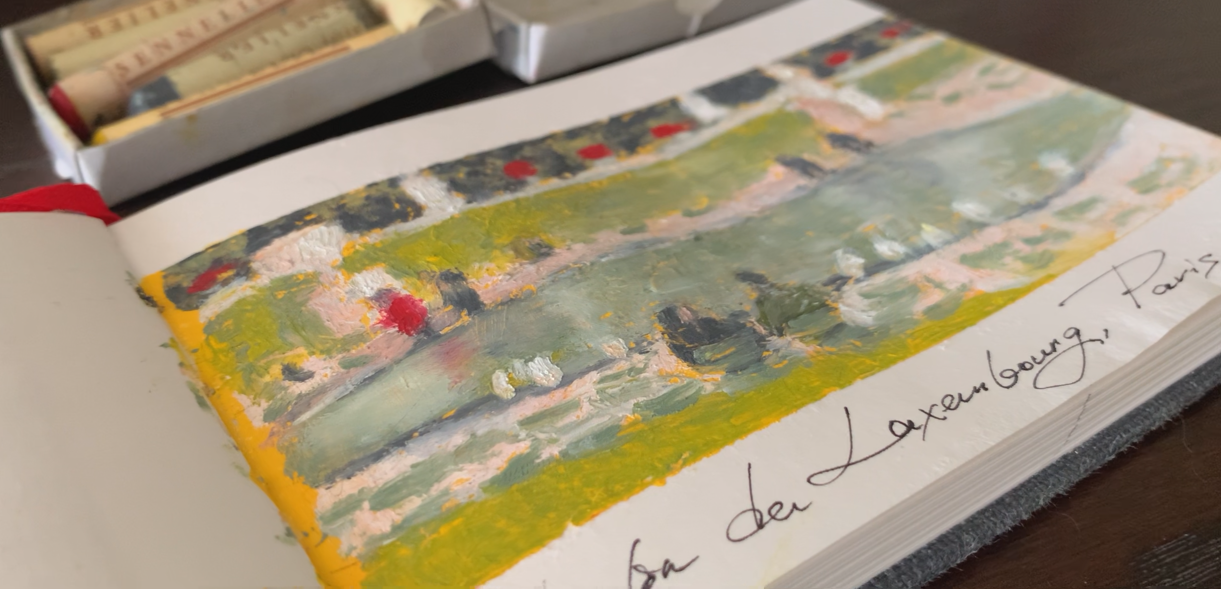
impact, two artworks. As you can see, I have experimented with different
ratios and formats, each bringing its own unique
effect to the sketch. Notice how some sketches
span across two pages, Creating a panoramic view that captures the vastness
of the scene. Others follow 16 to
nine cinematic ratio, reminiscent of a movie screens woke in a sense of storytelling. And then there are
rectangles, sketches. But in a balance and
contained composition. Each ratio brings
its own effects and potential to the
sketch. By showcase. In these examples, I
invite you to explore the possibilities and discover
your own preferred ratio. Remember, your choice of ratio can greatly
influence the visual, narrative and emotional
impact of your sketches. In this class, I will provide guidance and techniques for both 16 tonight and cinematic ratio and the
rectangular format. So you can experiment
and find the one that resonates with your
artistic style and the story you want to tell. Now, let's prepare
our sketchbook for the first projects of capturing
the essence of the Place. First, I recommend adding
some masking tape to create a rectangle ratio
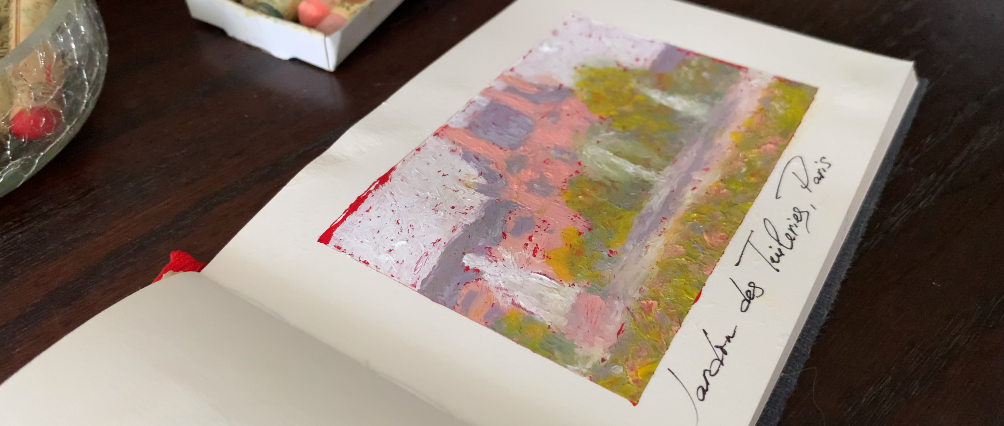
within your sketch book. This will serve as a visual guide for gradient
sketches in that format. Next, let's take our sketches
preparation further by adding a layer of acrylic paint or any
other suitable medium. Recently, I have been
experimenting with adding a layer of acrylic paint to
the pages of my sketchbook. It all started when I had some leftover paint from
working on a larger painting. And instead of letting
it go to waste, I've decided to use it to color the pages
of my Sketchbook, creating a vibrant background. The effect was remarkable. The colored background and the depth and dimension
to my sketches, instantly transforming them into visually captivating and scenes. The colors interacted with
my sketches in unique ways, enhancing the overall
cinematic feel and evoke in a sense
of atmosphere. In this class, I invite you to explore these
techniques as well. This technique will enhance the cinematic feel
of your sketches. Adding depth, atmosphere,
and attach of your own artistic style that we have explored. Sketchbook ratios and our
acrylic background is drying. Let's now select a color
palette for the sketch. As mentioned before,
I recommend choosing a limited color palette
of six to eight colors, maybe a little bit less, a little bit more to use
throughout your sketch book. This deliberate selection bring several advantages to
our artistic process. Firstly, and limited
color palette creates harmony and cohesiveness
in your sketches. By adding a select
range of colors, you establish a
visual consistency that dies your artwork together. Also, limited color
palette helps you capture the essence of the
Place more, more effectively. By focusing on a
specific set of colors. You can emphasize
the key elements, the mood and atmosphere, the to define a
location resulting in more impactful and
evoke do sketches. So I encourage you to embrace the concept of a limited
color palette and carefully chose
your parlors that resonates with your artistic
vision or your reference. Feel free to experiment
and mixed different shades to expand the range of possibilities within
your selected colors
8. Project 1: Creating Outline: In this lesson,
we will dive into the fascinating
process of grades and a pencil outline for
our future sketch. Now, I must mention
that for the project, I'm using a reference, a window I took of
a park in Paris. Yeah, more than welcome to
use the same reference which you can download
from the resources. Alternatively, feel free
to use your own reference. I will be using the
reference video of a beautiful park and barriers to guide our sketching process. The window that we will
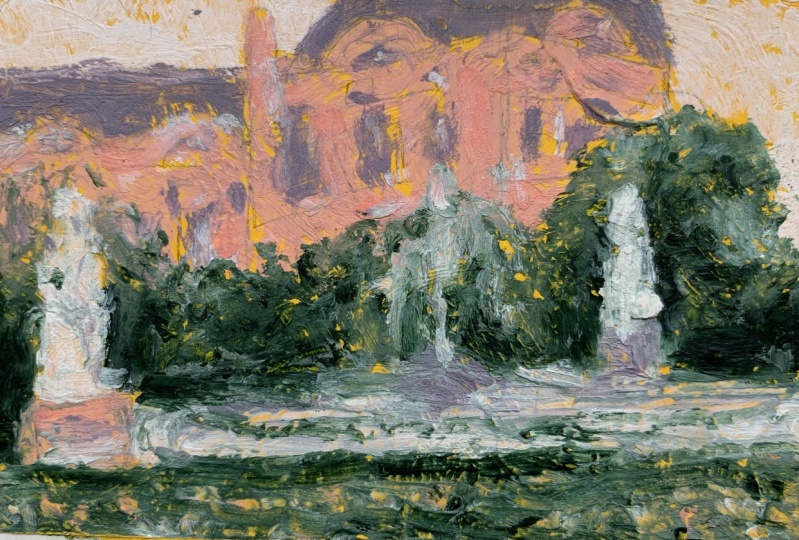
be working with in the first project showcases a breathtaking view of the park, is lush greenery
standing buildings, including a part of the Louver, a Fontan blooming flowers and people peacefully
strolling by. It truly captures
the essence with a serene and nature
of fields scenario. Having a reference can
provide the starting point and help you capture the essence of the place
he used to depict. It serves as a visual guide, inspires you to infuse your sketches with a unique
atmosphere and mood. Remember, your goal is not
to replicate every detail, but rather to convey the emotion and experiences
and key elements. Let's make this space special. Whether you use their provider's
preference or your own. Embrace the freedom to interpret and add
your personal touch. Let your creativity
flow and allow the essence of a place to
guide your artistic decisions. When working with Oil Pastels, we have the advantage
of their Opec nature, which means they will easily
cover the pencil lines. Therefore, create an elides. Pencil outline serves as a
helpful guide for drawing, allowing us to establish the
composition and placement of key elements greater than
your pencil outline. Remember to keep it simple and avoid getting stuck on
adding too many details. The purpose of the outline
is to serve as a guide, a framework that will
support your sketch. Focus on capturing the
basic shapes, proportions, and when elements that define the scene
you want to depict. Here, you can see me create
and a light Outline, really reasonable,
but present enough to guide me as I move
forward with my sketch. It tells me establish
the overall composition, the best mental,
the buildings of the trees and the floor
of the narrative. By having an Outline, you gain confidence and clarity in your
sketching process. It allows you to focus on
adding color, texture, and unique details that will bring a cinematic
travel sketch to life. Remember, the pencil
outline is not meant to be the final
artwork itself. So it's available to that empowers you to create a stronger foundation
for your touring. Embrace the simplicity
of the Outline and let your creativity flourish
in subsequent stages.
9. Project 1: Adding Oil Pastels: Welcome back. In this
highly anticipated lesson, we will finally bring our
travel sketch to life. So grip your sketchbook
and oil pastels, because it's time to embark on a creative journey of capturing
the essence of the place. Before we dive into
layering oil pastels, Let's take a moment
to understand and anticipate the place
we're about to sketch. Look closely at your reference and absorbed with the details. The vibrant green
trees and grass, their magnificent architecture
in the background. The gentle flow of the fountain and the
vibrant colors of flowers. Notice that from killer T and the harmonious blend of
nature and architecture, our goal is to
capture these essence of a place in our
sketch to transform the viewer into this
beautiful setting and evoke a sense of
tranquility and admiration. While they have already created two basic outline of his face. Now it's time to
truly connect with it and understand its
unique characteristics. So take a few moments
to closely observe your reference and reflect
on what draws you in. What elements resonate
with you the most. Is it a play of
light and shadow? The vibrant colors of
the flowers there? Textural details. Pay attention to the
emotions and sensations that arise as you immerse
yourself into the scene. Understanding this
place and it's Essence will guide your
artistic decision. As you layer your Oil Pastels. It will enable us to
infuse our sketch with the atmosphere and
unique character that make dislocation special. Once you feel a connection
with the place, we can proceed to layer in the oil pastels and
bring a sketch to life. Remember, our aim is not
to replicate every detail, but to capture the
essence and convey the emotions and experiences
that this scenery evokes. In the first stage
of our drawing, we begin by focusing on
the background elements. Using broad strokes
and light colors. We establish the
overall atmosphere and create a sense of depth. The initial layer sets the
stage for the entire sketch. So take your time to observe and capture the
essence of the Place. This technique
allows us to suggest the environment without
getting too detailed. We want the viewers to feel
the mood and atmosphere of the place rather than poor focusing on every
single element. So our first step was to create a sky using a light Oil Pastel. By obliging gentle strokes. They establish the vastness
and openness of the sky. Setting the background
for our sketch. By applying gentle strokes, we establish the vastness
and openness of this guy. Sat in the backdrop
for our sketch. The buildings in the background. We are using rose
ochre Oil Pastel, given them as solved
M, muted appearance. This color choice
as potential of char and elegance to
our travel sketch. As we layer the oil pastels, you will notice something
fascinating happening. The underlying the ground color, in this case red pigs through
the subsequent layers. This creates a sense
of warm and as a harmonious connection
throughout the sketch. When the background color
sadly reveals itself, it brings cohesiveness to
the overall composition. This technique allows us to create a harmonious
interplay between different elements and add a touch of depth and
complexity to the sketch. Moving forward, we will focus Moving forward, we will focus on the iconic Parisian rooftops. Using a violet, grey Oil Pastel. We carefully outline the
shapes of these rooftops, capturing a distinct
form and character. These rules are an integral part of the Parisian
architectural landscape. And by including them, we bring a sense of
authenticity to the sketch. Moving on to the next stage, let's add the
midground Elements. These are objects and teachers that occupy the middle
ground of our travel sketch. Use a combination of colors and textures to
bring them to life. Remember to pay attention
to the details that contribute to the unique
character of the place. So let's add the
vibrant green trees. They'll stand in
front of buildings. With a grey green Oil Pastel. We capture the lushness and
vibrancy of these trees, which contributes to the
parks tranquil atmosphere. By adding colors and textures
to the mid ground elements, we enhance their presence and bring them closer
to the viewer. This stage allows
us to emphasize the key elements that make the place memorable
and distinctive. As we move along, we'll focus on the working
space of the park. Using the rose ochre Oil Pastel, we define this area which will serve as a pathway
to our sketch. Later. We'll add the fountain
in this space as well. For now, let's include a wide statures in front of
the buildings and trees. These statutes
provide the sense of elegance and at
depth to our sketch. As we continue
layering oil pastels. Consider how each
stroke and color choice contributes to the overall
story of our sketch. Pay attention to the
interplay between colors. The contrast between
light and dark, and the texture you create. These elements will
bring your sketch to life and at depth to
your compensation. Moving on, we use yellow lake Oil Pastel to add depth and colorations
to the trees, give them a lively and
suddenly the appearance. Will also use the same
yellow Oil Pastel to blend with green and make the
loan brighter and hail. The overall vibrancy
of the scene. As you can see,
limited color palette doesn't mean restriction. In fact, it allows us to explore the new answers
and possibilities of blending colors together to create different
shades and tones. Work on depicting
the trees and grass. We can leverage the
blending technique to achieve a rich
variety of greens. So don't be afraid to experiment and find
the right balance of colors that resonates with this scene you're capturing. Remember, the nature is
full of variation and our goal is to recreate these organic field
in our sketch. By embracing variations of
color, texture, and intensity. We can bring our
artwork to life. Pay attention to the
subtle shifts of tones And shades as you blend
the colors together. These will add depth and realism to your depiction of
the trees and grass. Now, let's add darker shadows to the trees using violet
grey Oil Pastel. This step brings depth and
dimension to the foliage, and hence in the overall
rarely some of our sketch. Next, we focus on the
Fontan area using the same violet grey Pastel
to establish its presence. The fountain serves
as a focal point, and that's a touch of
tranquility to the scene. The wide Oil Pastel, we can fully draw
the water fountain, capturing its elegance and play of flights on its surface. Continuing our journey
throughout this Barak, we add another statue located
further behind the Fontan, but still in front of
the trees and buildings. This additional element adds visual interests and
that just sketch. Let's bring their own to live
by adding delicate flowers. Using coral, violet, grey
and divide Oil Pastels. We've carefully to pick
the blooming flowers and then color and sense
of joy to the scene. As we approach the
final touches, take a step back and evaluate
your sketch as a whole and, and elevate your
sketch as a whole. Other any additional details or refinements that would
enhance the overall impact. Use less time to add those
finishing touches and ensure that your sketch captures the essence
of the Place. It's essential to take
a moment to evaluate your sketch and make any
necessary adjustments. These critical
evaluation allows us to ensure that we have
effectively captured the essence of the
Place and conveyed the emotions and
experiences we intended. We're now approaching to the
final stages of our sketch. As if final step, we remove the masking tape, reel in the clean edges
of our travel sketch. And there you have it. The beautifully captured
cinematic travel sketch that transport us to
serene park in Paris. Additionally, it's a
good practice to write the name of the place and the date on your
travel sketches. This serves as a
visual record of your journey and helps you remember this specific locations and moments captured
in your artwork. It adds a sense of authenticity and contexts
to your sketches. Allow you to revisit those memories and
experiences later on. Plus, when you look back at
your sketches years later, the names and dates will
provide valuable information. So consider including
these details. Document your travel,
sketching, adventures
10. Incorporating Narrative Elements: Welcome back. In this section of the class, we will incorporate narrative
elements into our sketches. In this part of the class, we will explore the barber of storytelling in
Art and how we can use our sketches to Convey stories, emotions,
and experiences. Art has always been a need
to, for storytelling, allowing us to communicate complex ideas and the
emotions in a visual format. So let's begin by introducing the concept of
storytelling in Art. Storytelling in Art involves
creating a narrative or conveying a message
through your drawings. It's an opportunity
to engage with the viewer and evoke emotions
or provoke thoughts. Think of your travel sketches
as a visual storybook. There you have the
power to capture a moment and then feeling or communicate
a deeper meaning. One way to incorporate Narrative Elements
into your sketches is by focusing on emotions and experiences
you want to convey. Ask yourself, storage,
we're going to tell what feeling do I want
the viewer to experience? By understanding
the emotions and experiences you want to express. You can infuse
your drawings with a sense of depth and resonance. As artists, we have the ability to create
characters, objects, and scenes that invokes
narratives that evoke narratives. Consider anything characters
that interact with their environment or objects
that call symbolic meaning. These elements can help to tell a story or convey specific emotion in
your travel sketches. When incorporating
Narrative Elements, it's essential to think about compensation and visual
storytelling techniques. Consider placement of your
characters or objects, the use of gestures
and expressions, and the arrangement of elements
within your composition. These choices can enhance the narrative at guide
the viewer's attention. Remember, Narrative
Elements in ART provides an opportunity to personal expression
and its connection. Your travel sketches can speak Williams,
capturing moments, emotions, and experiences that boards have all my
struggle to convey
11. Project 2: Preparing Sketchbook: Welcome to the second project of our cinematic Travel
Sketching class. This time, we will
explore the Art of creating cinematic travel
sketches, route storytelling. Get ready to embark on a
visual journey where we infuse our sketches with
narratives and the emotions. Let's begin by preparing
our sketchbook. Just like in the
previous project, we will first focus on
preparing our sketchbook. However, this time, we will
use a different ratio, specifically 16 to nine, to create a more
cinematic effect. These elongated format, we'll enhance the storytelling
aspect of our sketch. So Sternberg, marking the boundaries
of your sketchbook using masking tape to achieve the
desired 16 to nine ratio. Next, Let's add a layer of yellow acrylic paint
as our background. Chose of yellow, symbolizes
warmth, energy, and optimism. Setting the tone to our
cinematic travel sketch. The 16 to nine ratio
allows us to explore a wider composition and create a more panoramic view
within the sketch. This format lends itself well to storytelling and provides a larger canvas to capture multiple elements and
depict a dynamic narrative. The yellow background adds vibrancy and energy
to ask sketches, amplify and the emotions and experiences we aimed to convey. As we apply the
yellow acrylic paint dried to cover the
entire beach evenly. This will serve as our base upon which we will build our
cinematic travel sketch. As new layer, these
really good ground. Feel free to experiment
with different techniques, such as brushstrokes, bonding, or even adding texture
to the acrylic layer. This personal touch,
its uniqueness to our sketchbook and sets the
stage to our storytelling. Jordan. Preparing
your sketchbook in this way not only enhances the visual appeal
of our artwork, but also sets the mood and contexts for our
cinematic travel sketch. It provides a cohesive
foundation for the narratives, the emotions you will
express, route, patrolling. Excellent. You have prepared your sketchbook with fixin to nine ratio and vibrant
yellow acrylic the ground. These sets the stage for our cinematic travel sketch and invites a storytelling
aspects to come alive.
12. Project 2: Creating Outline: Welcome back. In this
part of the project, we will continue our
exploration of storytelling. So get ready to add live and narrative to your
cinematic travel sketch. But first, let's begin by
creating a pencil outline. Just as in our previous project. We will start by creating
a pencil outline. Step, serves as a guide
for our drawing and helps us establish
the compensation and placement of elements. However, this time, our emphasis
will be on storytelling, specifically by depicting
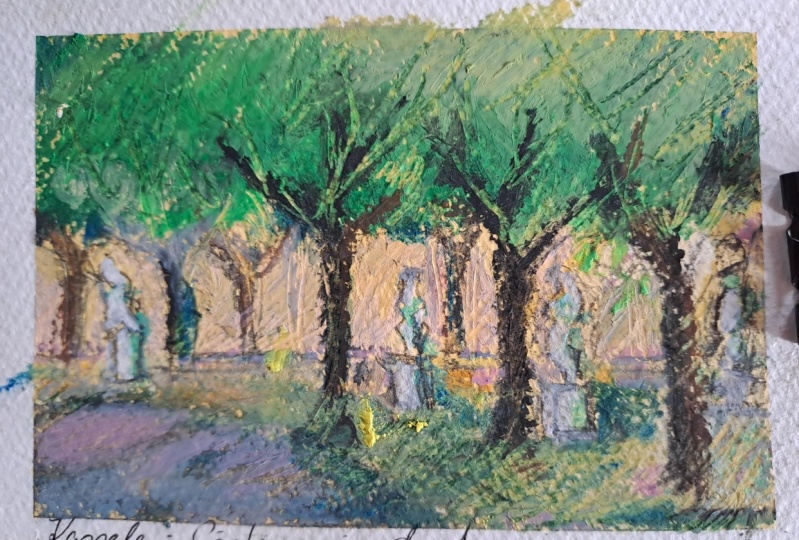
people in the scene. For this project,
we will be using a reference video that showcases
another park in Paris. In this video, we can
immerse ourselves in the peaceful scenery
field with greenery. We observe a beautiful
fountain at the center. Birds perched on
the its borders. Adding a touch of
nature is presence. Furthermore, we
see people walk in and sitting on the famous
green Paris chairs. In German, the parks and pans. As we dive into this project, keep in mind the significance of both nature and people
in this travel sketch. The vibrant greenery represents the tranquility and
vitality of the park. While the presence of
people as the sense of human connection and
narratives to our sketch. So take a moment to closely
observe the reference veto. Notice the movements, gestures, and interactions over
the people in the park. Observe how the greenery frames the scene and contributes
to the overall atmosphere. As we sketch. Let's
strive to capture these elements and tell
stories throughout our work. As we create our pencil outline, pay close attention
to the placement and posture of the
people in the scene. Consider their
relationships with the environment and each other. This will help us establish
a narrative within our sketches and bring our
cinematic drawing to life. Observing people in their
natural environment is crucial for capturing the essence and
convenient their stories. Well, it's important to capture the essence of the people
in the reference video. Remember that we are not only aiming for photographic
precision. Focus on capturing the gestures, the energy, and the emotions
that resonates with you. Great job. You have created the pencil outline for you
cinematic travel sketch with a particular emphasis on storytelling throughout
the depiction of people, observing and capturing
their presence, gestures and interactions. We are setting the stage for
Narrative fueled sketch. In the next book. In the next part of our project, we will dive into the
process of adding colors and bringing
all sketch to life. But before we dive into
the sketching forces, I invite you to choose your own. I invite you to choose your color palette
for the project. Again. Take a moment to
consider the emotions, mood, and narratives you want to convey
throughout the sketch. Reflect on the colors that resonates with the
essence of this parks in. Is it the vibrant greens, the subtle blue, or
perhaps form earth tones. Just like color palette
that speaks to you and aligns with the
stories you wish to tell. Selecting your own color
palette allows you to have creative control and as a
unique touch to your sketches. It enables you to convey
specific atmosphere, highlight certain elements, and evoke emotions in a
more intentional way. Your chosen colors become a powerful tool
for storytelling. Enhancing the essence and
narratives within your sketch
13. Project 2: Adding Oil Pastels: Now that we have our
Sketchbook prepared, the Outline created, and
our color palette chosen. It's time to bring all
travel sketch to life. In these parts of the class, we will focus on the creative
process of adding colors, textures, and details
to our sketch. So get ready to see your cinematic travel
sketch take shape. Let's dive into this step-by-step
process of gradient, our cinematic travel sketch. Remember, this is where the storytelling
elements come to life. Capture the essence of the place throughout
artistic choices. So we started our sketch by blocking in the color
for the ground. You started by selecting rose ochre Oil Pastel to
represent the ground. And we apply the color with broad strokes covering the
lower portions of the sketch. Then we blend in some Oil
Pastel to lighten the shade, Creating a softer and more enlightened
ground for the scene. These color sets the
foundation for sketch, providing a harmonious
backdrop for the parks. In. The next step is to define
the long head threes. Here I'm using grey
green Oil Pastel to define the loan in the foreground and the
trees in the background. Use short, quick strokes to capture the texture and
depth of the grass. The presence of lush greenery
suggests tranquility and the vibrant orange
energy of nature. And hence in the
storytelling aspect of our travel sketch. Here we can play
with color as well. We can combine yellow Oil
Pastel with the grey green. We previously used. Blending colors and creating
these color variations. Let's visual interests
and captures the playfulness and
vibrancy of the parks. By blend with color and
blending techniques, we enhance the
storytelling aspect of sketch as it works reliably and dynamic atmosphere
within the parks in ads, more air, more rent
to our sketch. Now it's time to add
depth to our sketch. Here, I'm using indigo
light oil pastels, and I layer it onto the
trees in the background. Concentrate the strokes
on the shaded areas, creating contrast and
the sense of depth. This technique
gives our sketch at 3-dimensional field as if the trees are resending
into the distance. By layering indigo
light on the trees and the background create a sense of depth and dimension
to our sketch. These shading
technique contributes to the overall narrative, as it suggests the play of light and shadow
within the park. Now let's draw the Fontan
of this park. For it. We can return to the grey green Oil Pastel and use it to draw
with the Fontan. As mu layer Oil Pastel
is how grey, green. It's a beautiful illusion of reflection on the water surface At an attached of
magic to our sketch. The depiction of the
Fontan as a focal point or sketch and symbolizes the
centerpiece of the park. It's a centerpiece for people, for birds, for trees, for us. It's flowing water and
the flexion illusion evokes a sense of tranquility
and natural beauty, enriching the storytelling
aspect of our work. Now, let's switch to
white Oil Pastel, and use it to draw the
fence in the background, as well as this little statue
is located near the Fontan. These elements provide contexts and establish the
setting of the park. Drawing the fence and such
as in the background, provides contextual
information and temperatures the
specific barks setting. These details contribute to the storytelling by
creating a sense of place and inviting the viewer
to imagine this rounding. To take our such as
to the next level, we can add shadows
and texture to them. And for that, we can layer rose ochre Oil Pastel on top of the statues
in the foreground. With gentle strokes, thick red shadows and textures
to bring them to live. Technique, depth and
realism, given the status, a three-dimensional quality that contributes to the storytelling
aspect of their sketch. Bi-layer in rose ochre Oil
Pastel on his statues. We create shadows and texture. These details not
only at really isn't, but also contribute to
the storytelling by adding depth and bringing the stack just to live
within the scene. As we work on our starches. Let's met for, but
let's not forget about the reflections they create
on the water or the Fontan. So we can use our
white Oil Pastel again and carefully
Creates reflections. So the statues on the
water surface use shirt light strokes to suggest the right bulls and play
of light on the Fontan. These ads movement and the sense of harmony
to our sketch. The reflection of statues on the water surface as a sense
of movement and harmony. These visual element
enhances the storytelling by greater than connection between statues and they
watery surroundings. Now, let's use grey
green Oil Pastel to draw the famous Parisian chairs on the foreground of our scene. Since we are working
on a smaller scale, worry too much about
Capturing details. Instead, focus on
capturing the essence of his chairs and they inviting
presence in the park. These chairs are important part of the bark of a
Parisian Barack. And they invite the
viewer to imagine themselves in this
scene and hence has a narrative and personal
connection to the park. So I think it's really
important for us, at least to try to depict them, even though the ratio is
a little bit too small. But even a suggestion will be great for
our travel sketch. Now let's move on to depicting people sit
in on both genders. Here, I'm using indigo
light, Oil Pastel These men and woman
sitting all the chairs, they become a focal point
for our travel sketch and contribute significantly to
the storytelling aspect. So pay attention to their
postures, gestures, and clothing, as they will add a sense of movement and
bring the scene to life. By drawing people sit
in on these chairs, reintroduced human presence
and activity to our sketch. These fingers become characters
in our storytelling, suggesting a moment of rest, interaction and adding relatable
elements to our artwork. They interact with
the surrounding, they interact with the Fontan, with chairs there,
the focal point. So it's really important
to depict them here. We start by using
eating indigo light or other darker Oil Pastel. But later, we can
brighten the fingers up by adding brighter
tones and Brian colors. We can highlight
the individuals to make them stand
out in the sketch. Remember to capture the
essence of people rather than striping the
perfect replicas as the emotion and narratives they convey
in that truly matter. The brighter colors
to those figures. Sitting on the chairs brings attention to the
presence and emotions. The variation in tones
and colors helps convey the mood and reaches the
narrative aspects of our sketch. It add shadows and
lights to the closest, showing the interaction
of people in the park. Now let's use the
same indigo light Oil Pastel to add silhouettes of
people in the background. This simplified fingers
at depth and the sense of bustling activities
to our sketch, rainforest and the narrative
of why brand parks in. Throughout these
creative process. Remember that each artistic
decision contributes to the storytelling aspect of
cinematic travel sketch. Like carefully selecting colors, capturing details, and infuse into the scene
with human presence. Your Grafton, a narrative
that transforms the viewer to the park and invokes
emotion and memories. One of the advantages
of working on a smaller scale for our
travel sketches is that it allows us to capture the
essence and Narrative of the scene without getting
bogged down in many details. While we may not have
the space to focus on individual facial expressions
or minute details. We can still create a
compelling narrative by capturing the overall atmosphere and movement within the sketch. Bio talus and broader strokes
and simplified forms. It can convey the energy and interactions of the
pupil in the scene, giving the viewer a sense
of the story unfolding. The emphasis shifts from individual features to
capturing the gestures, postures, and overall
mood of the figures. This approach allows us to create a narrative that engages the viewer's
imagination and advise them to connect with the scene
in their own unique way. Additionally, working on
smaller scale allows us to complete our sketch in a
more efficient manner, making it easier to capture multiplayer scenes are
moments here in our travels. It gives us the flexibility
to create a series of sketches that collectively
tell a larger story. The FREC, reflecting
different aspects and perspectives of the Place. Seven breaths. The
advantages of working on a smaller scale in
your travel sketches. Focus on broader narrative and the overall essence of the place and lead the viewer's
imagination. You live finer details This approach
allows us to create an emic and evocative sketches that transport others to the heart of our
travel experiences. Now, it's about time to place
our birds on a fountain with a wide Oil Pastel at small birds perched on the
edges of the fountain. These birds not only bring a touch of nature to our sketch, but also adds Narrative
Elements as well. That not only people. This suggests the presence
of wildlife in the bark. And then the overall
ambience and storytelling. The birds, birds down
the edges of the Fontan, add a touch of nature and further enhance
the storytelling. Suggests the moment
of tranquility and connection with the
natural surroundings, contributing to the
overall atmosphere of the parks scene. Take a moment to
review your sketch and make any final adjustments. Who finally details, ensuring that all
elements work together. Pay attention to the balance
of colors, textures, and proportions greater than the cohesive and visually
pleasing composition. Refining our sketch, insurance lead elements work together harmoniously to
tell a cohesive story. Attention to details and
overall composition. And hence is the storytelling
aspect by gradient, visually pleasing and balanced representation of the bark. Once you're satisfied
with your sketch, give it a final look and make
any necessary touch Apps. Center adding
additional details or adjusting colors to enhance
the overall impact. Lastly, carefully remove
the masking tape, revealing clean edges and given your sketch
abolished finish. Now that you have completed
these step-by-step process, take a moment to appreciate
your travel sketch. So let's take a moment to
appreciate our travel sketch. We have successfully incorporating
storytelling elements and captures the essence of the place, route
artistic choices. Remember to sign your work and proudly share
it with the class. Travel sketches, a testament of your creativity and
storytelling abilities. Take a moment to
appreciate the essence of the place you have captured senior cinematic travel sketch
14. Final Thoughts: Congrats everyone. We have reached the
final wrapping up less and off our cinematic
Travel Sketching course. It's been an incredible
journey of exploration, creativity, and personal growth. So let's reflect on what we have learned and celebrate
our achievements. Over this class. We have dive into the
world of cinematic Travel, Sketching, and
covering techniques to capture the
essence of the Place. Incorporating Narrative
Elements, embrace and movement and developing
personal styles. Remember, cinematic
Travel Sketching may not be able to
recognize term, but it's a concept that
combines the beauty of travel, the Art of cinematography, and the expression of drawing. You have explored how cinematography elements can
be applied to your sketches. Incorporating
storytelling as capturing the energy and the ability
of your surroundings. This is just the beginning
of your artistic journey. So keep exploring,
keep experimenting, and keep pushing the
boundaries of your creativity. Take the lessons you've
learned here and continued to apply them in
your artistic practice. Keep sketching, keeps traveling, and keep capturing the beauty of the world through
your unique lens. Your Art has the
power to inspire, to connect, and to
make a difference. Thank you so much again for
joining me in this class and congrats on completing these cinematic Travel
Sketching class.
 Alina Harvi, Ukrainian Artist