Transcripts
1. Intro: How would you like to be
able to turn your anger, frustration, fear,
conflicting feelings, etc, into works of abstract
art and at the same time, feel the release and
relieve that comes with it. This class, I will
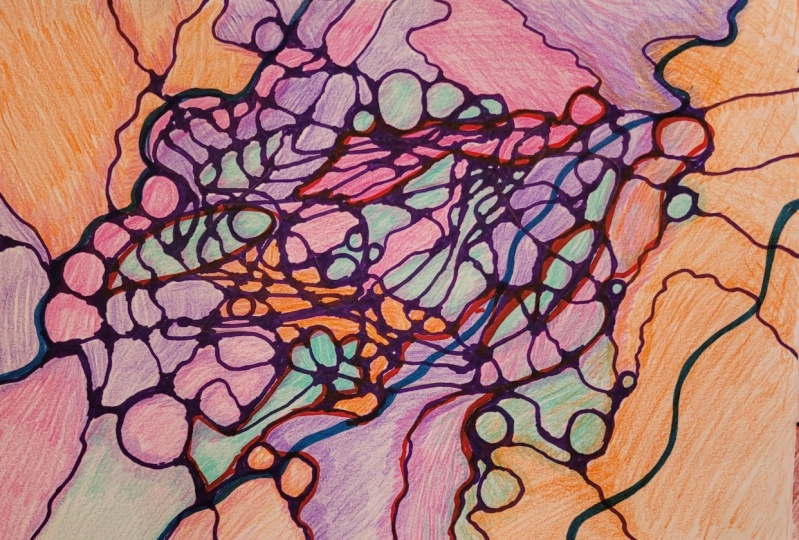
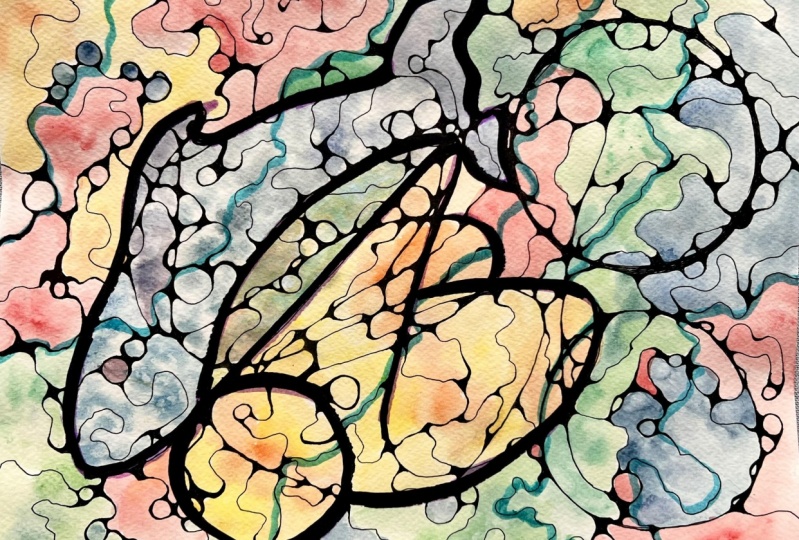
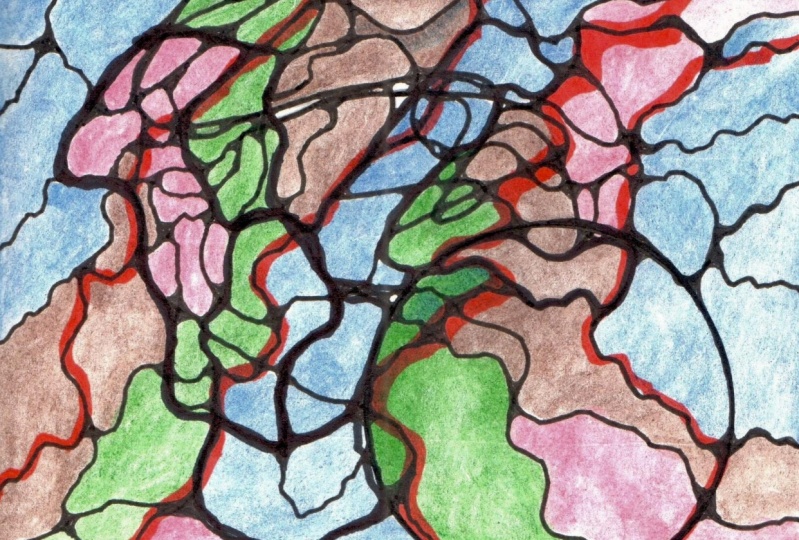
be teaching you a neural graphical
algorithm known as removing inner limitations. The best way to describe what it does is giving your
feelings of discomfort to the paper to hold onto what do you transform
into beautiful works of abstract art and
possibly gaining some insight into the entire
situation at the same time. This class assumes that you have the basic foundations
of neural graphic card. That means you know how
to draw your new lines, do rounding the
rules of coloring, as well as how to do fixation
and draw a few lines. You will be guided step-by-step
towards completing your own personal
abstract artwork as a project for this course. The following is
a list of topics that will be covered
in this class. The concept of neurotransmitter. Defining your personal
topic or theme. The basics of putting onto
paper your catharsis. How to dissolve the capacities, applying the coloring rules, doing your fixation and
drawing your field lines. And finally, how to gain insight into all
that you have done. If you think that all this is something that you
would like to try, come join me in this class and allow me to share all
this information with you so that you may
achieve some measure of self soothing
and self-coaching. The required materials
this class are as follows. At least an A4 or before size, thick art paper of about
a 180 GSM or higher. I recommend mixed media
paper of dimension week. You may use a larger piece
of paper if you wish. Coloring materials such
as colored pencils, art markers, highlighters,
watercolors, etc. Absolutely no wax crayons. Choose one type of
coloring materials to use. A relatively blend to
eight or HB pencil, medium or bullet point
permanent marker in either blue or black
color markers, or any type of marker. If you have opted to use markers as you're coloring material, then you mean if
this out a notebook, a journal book, or an exercise book will be very
important in this class. Writing instrument for your generally like a
pen or a pencil. Hello. My name is Charles lie. I am a certified neural
graphical specialists. I'm also a qualified
counselor where I live. I hold a Master's in guidance
and counseling and I'm trained in career counseling
and art therapy techniques. Additionally, I have
a bachelor's in psychology and a degree in math. The site I'm a certified
advanced practitioner of longitude tautology
and across artists.
2. What is a Neurotrack?: You are highly recommended to keep a little journal of your topic or theme statement or statements in a new book, journal book or exercise book. This little journal will also serve as a means of capturing your neural track. So what exactly is a newer track? The neurotropic is a term used amongst neural Graft got practitioners as a journal that comes about during the processing of performing neural graphical techniques. When doing neural graphic, you will notice that your mind starts wondering about, with many different thoughts. They may range from having relevance to what you may be doing at the moment, to completely no relevance to wherever you are doing at all. These thoughts are the results of your brain recruiting doormen neurons or doormen, cognitive processing capacities during the production of your neural graphical work in relation to your topic or theme. As these thoughts surface, you are highly encouraged to write them down. Thus, it is in your best interests to keep a notebook close by as you are making newer graphic arts. This little nodes you're making during your art-making session could unlock some insights upon completion of your art making process. It will also serve as a record or a description of the meaning of your artworks. Your neurotropic does not have to be a detailed account nor incomplete grammatically correct sentences or phrases. They can be in bullet point form or even keywords or key phrases. Thereafter all your personal notes. And as long as you can make sense out of it, it is good enough. And that is what a newer track is all about.
3. Your Topic/Theme Statement: So in the first step of this algorithm, what I need you, the listener to do is to write a statement for your topic in, for this algorithm. So what that is is you going to write a short and brief description of what you're going to do about the topic in question. Okay. The topic can be anything like anger issues or something that says some sadness in your lives and when you're anxious about. Or it could be some fear or were we or even some conflict. Like if you have a conflict with someone or you have internal conflicts, as in you don't know what to do about a certain something only you wanna feel better about it. That's the main thing. So whatever discomfort you are feeling, you can use this algorithm to let the paper hold on to it instead of letting you yourself hold onto it. So the very first step of this is to write a very short and brief description as part of your topic or your theme statement. And my best recommendation to you is to either get a notebook like this line or not. Or if you want to get like a journal, really, really nice hardcover journal like this. Okay? Ruled or not, it's up to you. So I'm showing you examples here, or you can just use a exercise book that offer similar size. Now, u1 to keep using this throughout this whole session, not only for the statement, because later on you're going to be writing your neuro track, incite the notebook, or the journal or the access book of your choice. Again. And this is going to help you to process through your issues. And maybe you can come up with a solution after you're done with the whole algorithm, Who knows? Okay? And if you don't, I will teach you another method of doing it. Alright, later on in this, in this class. So for now, I am going to write my statement in this notebook off-camera. And I will see you again in a little bit later. Oh, yes. Before I forget, how much time should you spend on this statement? I would say somewhere in the vicinity of five-minutes. And you don't have to be very detail. If you need to spend more time, please do otherwise. About five minutes or less around that area. If you finish in under five minutes, that's fine. The purpose of this little exercise of writing a statement is to help you get into the mindset so you can start this algorithm. Ok? Alright. I will talk to you again later.
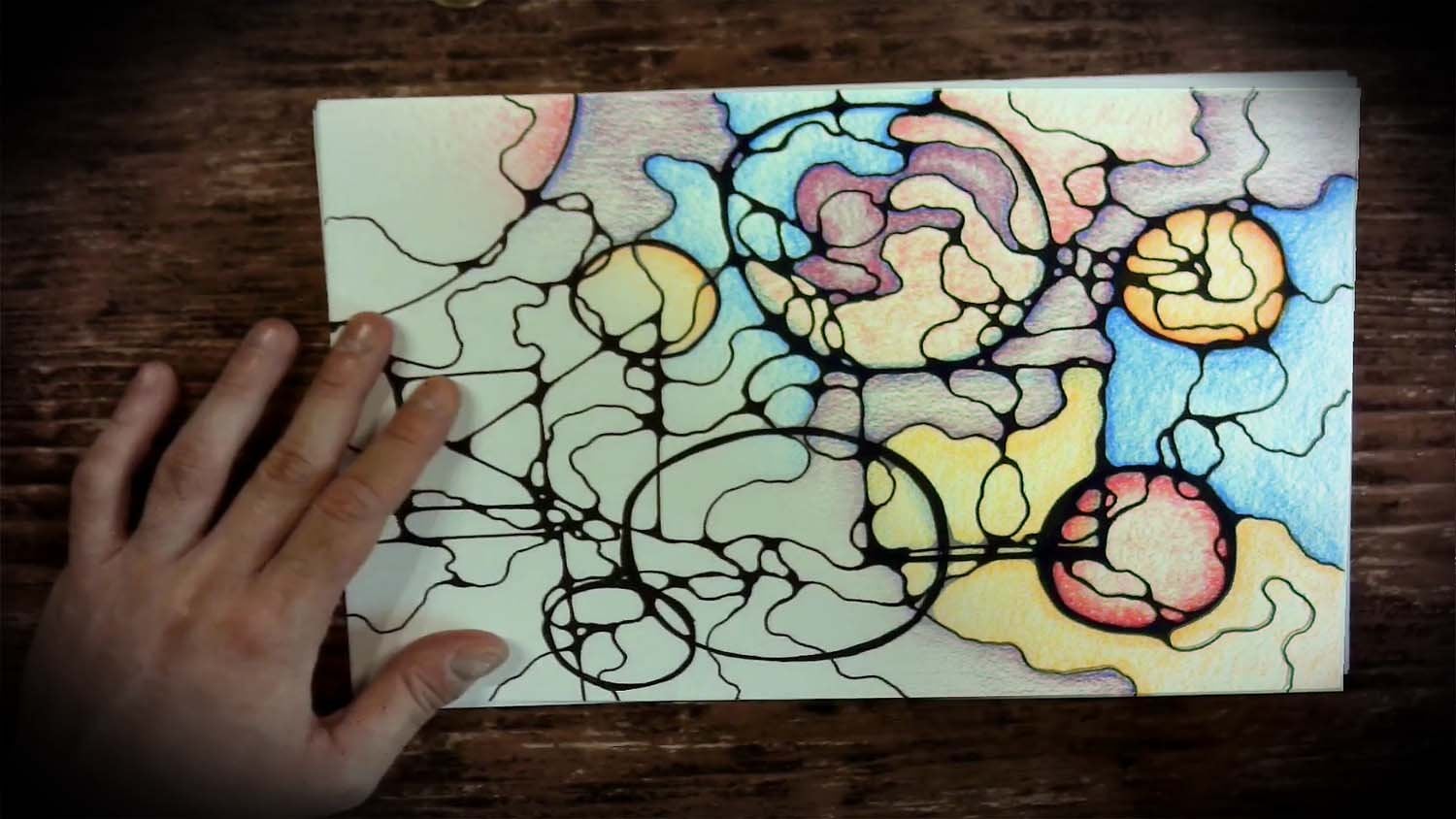
4. Putting your Catharsis on Paper and dissolving it.: Hello again. So in this next step, we're going to need is a blunt pencil. And the marker and thick piece of paper where you are going to be drawing this algorithm. So what you do is if your pencil is too sharp, it may tear the paper if it's not thick enough. In this case, I think this paper is kinda thick enough. It's like 200 gs m paper. But still, you don't want your pencil to be too sharp. Okay? So if it's too sharp, final way to blunted. And I'm using a 2H pencil here because to each pencil is lighter. You can use HBO whatever pencil you just use a light pencil. Don't use 6B pencils because there'll be too heavy, too dark. And they tend to wear down really fast. So what you do is after you've already written the statement, when you're writing the statement, a must have summoned up some really uncomfortable feelings about the whole thing. That is what we want. Okay? You have to have the courage to face that feeling first before you can let the paper hold onto it for you. Okay, so in this step is where what we do to let this piece of paper hold on to the uncomfortable feeling of what you are facing or I'm facing right now after writing this statement. So this step is what we call putting the cortices on paper. Ok, so what you do is you run your hand along the paper where you should start. So I am stopping right here. So I'm feeling, I'm feeling like start here. So what you do is just close your eyes for like five seconds. Summon up all that uncomfortable feeling that you are feeling doing when you're writing the statement as much as you can. And then on with the pencil. Just draw like this really fast. Okay? Like maybe about three to five seconds, I'd say and then let it go. Okay, so i will teach you how to look at if what if the tasks that you have put down is something that's good or you might have to redo it. Okay, so here we go. K, You see my paper here. So, but that's fine. So now catharsis may not, may not look like this, okay? And your catharsis should have many pointy tips. Okay? All this, all this signify strong emotions. Ok. So what you do next, okay. Now use your marker. See the reason why. I ask you to use a pencil first before using the marker to trace overs because a pencil is cheap. Okay? When I was first doing, when I was first learning how to use this algorithm, IQ probably two markers. In the first two sessions. Each session I kill one marker. And that's when I say, Okay, use a pencil first and go over it with marker. And that's why I advise you to use a pencil first. Because if you use a marker, that is a very high chance that you're going to kill the optimum marker. So here we go. You just trace now. It doesn't have to be perfect. Okay. As long as you're going over the lines. Somewhat good. And if perfectly like, I'm not being very precise here either. You can. What you can do is you can just grab whatever pencil lines that you see off later if you want to. So in few free to turn the paper around. Because in this algorithm, there is no need for you to lock your paper in place. I know of €1 graphical algorithm that locks your paper in place as you're drawing. That this is not the algorithm for that. Okay? Now that you've done your put your catharsis down, I'm sure you have felt some light moments as because you'll probably feel that if you litre once you put it down. Alright, now, this is the point where I say, if you need to take a short break, please do. Like if you have the go bathroom, Bray gets something or get something to drink. Before we continue. Before you continue, please do that. Alright. Pause the video and go. Go do that. Do take your short break. Do not leave this overnight or for long long periods of time, like an hour or whatever. That's too long because you want to do this while US DO feeling it. So even when you're doing your statement, immediately after your statement, you to come and sit down and do it because you need to be in the moment. After you write your steam and you shouldn't go take a break, or at least you shouldn't be taking a long break. Okay. Do whatever you need to do short 5-10 minutes or so or 15 minutes. And then when you come back, we read your statement, summing up that feeling. Come down, sit down to your catharsis. This is what we call a catharsis. Ok. And then do your tracing whatever name you want to take a break right now. Do it. All right? Because the next brick you can take is after you're done rounding. Okay? So what are we going to do next is we have to integrate this drawing. No sharp points. Remember in newer graphic, no hanging, low hanging bits. Ok, so this bits will have to be join, integrated to the edge of the paper like this. Alright, same thing, this one here. Or you can join up with another line here like this. I could do this. And this one. I can just do this. Okay, for now, don't worry about rounding, just integrate and hanging edges. Now this touched edge, so it's fine. Okay? So this one same thing. Don't worry about rounding here. We can do this. You can cross over the line, that's fine. Don't be afraid to do rounding. Ok. Do not be afraid to do more groundings. Even though intersections in neuro graphic means conflict. Do not be afraid to do two intersecting lines and do rounding slater. You will feel a difference. Alright? So next step is you wanna do some rounding. You can do it, but I'm not gonna do it because it's just going to take too much time. Right now. I will probably do it off camera. I want to teach you how to dissolve this catharsis. So what you're trying to do next is dissolve this catharsis. Make it so that it's not so obvious anymore. Okay? So like right now, it looks like this. So when I'm done with this, this abstract shape should not stick out like it is right now. Like disappear into a mess of lines. You will see how that happens. So I'm honest in what you can, how you do that is you start drawing lines everywhere from anywhere. No hanging lines. But you can draw neuro line starting from anywhere to start dissolving this image. Okay? You can do this. Do this like that, or you can do this, mixed it up like this. See how at this point the image is starting to dissolve into the drawing. Like it's not so obvious anymore. It doesn't stick out like it was before. The main. You do not want to emphasize this image. Now, you might notice that I am drawing the new rule lines pretty fast because I'm used to it. So you might want to slow down. Take your time. Take your time because you get more benefit of doing this slowly. So now, as you are drawing this and dissolving, you will notice that there are a lot of thought pair. A lot of thoughts are coming in. Please note that down in your neuro track in your notebook. Because no matter what kind of stray thoughts you are experiencing, they might become solutions to whatever issue you're having. You're hoping this piece of art help you resolve. So note that down. So now you see how well it's dissolved. Now, if you compare this portion to this portion, this is not as well dissolve as this area. So I'm going to have to do some more, some more work on here. Ok. So this looks pretty good. Maybe you compose more spots here. Alright. Okay, so this is very well-deserved now. So it's good. Alright? So now we're going to do rounding. Then after rounding you can take a break. So from here onwards, I'm going to quicken up and then I'm going to slow it back down again to teach you how to do circles here. Okay, let me do the rounding first.
5. Adding Circles: Okay, so rounding is done. Next step, circles, okay, the trick to adding circles. Look for areas where you have one circle, like example here. And it's how a circle forms this kind of drawing. Example. Sir. See anywhere else it needs a circle. Next step is look at the whole drawing scan. Which makes you draw circle. Being drawn to this area here. You're rounding to. Okay? So I think this is pretty much good. So at this point, if you want to take a long break before you start coloring in, go ahead. I don't leave don't leave this aside for too long. Because then you forget what you grow. Then you have to go back to your neurotrophic to read what is it that you were doing and why and all that stuff. So my recommendation to you can leave this aside for like a day or to do whatever you need to do, and then you can come back to do the coloring. So this is the second where you can take a break. And this one can be a long story, but not too long. Don't leave this aside for weeks and months and come back to it because you're going to lose the effect of what you saw about what this session is all about. So I will see you again in the next lesson, which is going to be coloring.
6. Brief recap on Colouring.: Okay, so we're done with this piece of artwork, or at least as we've done with the drawing part and the rounding. So the next step is coloring. Now there isn't much rules of this coloring except that you have to follow the normal neural graph coloring rules. That is coloring in groups of three or more in, you should have more than two areas of the same color on the drawing. And you're limited four colors. You can use maybe one or two more colors, but not too many. Main thing is to take note that you don't want to counter your drawing like a mosaic where you have different colors all over this way, all over the place. One individual shoe on the drawing, okay, you don't want that. The other way you can color is find a flowing color, the whole flow with the same color. I don't think I need to show you the coloring rules again because I've already done it before once. So I'm not gonna make you sit through it. So through the magic of prerecorded video, you shall see this coloring done within a few minutes. Just means mysteriously interference. Institutional needs to be, needs to be needs. And this is the distance between the two. This corresponds to positive integers. For instance, right.
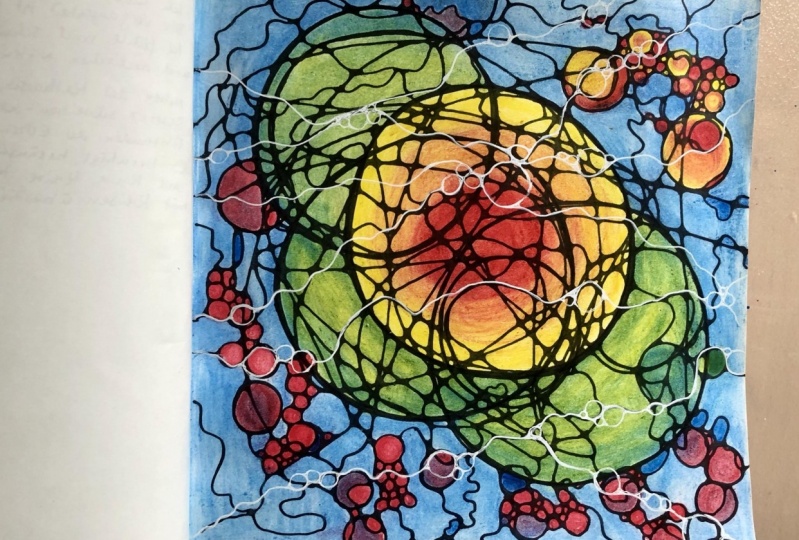
8. Connecting with Field Lines: Okay, so field lines, now, few lines only go one way. And they're all more or less the same. They are neural graphic lines, but they are straighter neural graphic lines. And it doesn't mean they're as much. It looks more or less straight, but they're still neural graphic line. So there's still some ban. And all, but not to a great extent. And what a few lines. Think of, few licensing. Explain this once before. As few lines as connection, the divine energy or the divine connection that divine energy. But you can think of few lines is another way. You can think of few lines as being a how religious you are. You know, the divine order of things, a flow of divine order. You can think of it that way. Or you can think of few lines as a flow of life. There's a flow of life where you just latching on to that floor is a River, is a river of flow of life. So think of it. Think of it this way. I have blue here somewhere. I think you can think of it this way. There is low have non-tone neuro graphic line here. There's a river flowing, your river of life flowing. You are about your wishes. What you like for it to happen is attached to it a certain point and you just latching onto the floor to let it flow downstream. So say this is from the source and this is going towards the future. Hey, so just letting it flow downstream. So if you think of it that way, the more of artwork you attach, the more that is going to flow downstream. And not the more. It's not about how many, few lines you draw. It's more about how many pieces of artwork you, alright? So in this case, I've mentioned for an A4 size paper, you probably between three to 55. And I've also mentioned three. We are drawing lines. I want to say that you should only pick one way and draw all your few lines. That we should pick different ways of drawing few lines and doing all the different ways. One way and stick with it. For that piece of drawing, you can try a different way of drawing few lines later in another piece of artwork. Ok, so now I'm going to pick one way and I try. I'm using a different color. Don't use the same color. Don't use the same color as the one that you draw. You draw your fixation, use a different color, something that will stand out. And the best markers for this are pigment markers. These are alcohol markers. So I don't have pigment markers on hand right now using alcohol markers. So I'm just gonna draw somewhere. Some don't. Because I'm using alcohol. A little bit more transparent in go over it again, but I'm not going to. Okay. So you've already seen how I do this. The other way is to just make the black colored lines thicker, which I chose not to do today. Because I like this better using a different color field lines. Alright.
9. Ending lesson and Reflective Questions.: Okay, so we've come to the final step of the process for our work. And the last of the process is a lot of processing on your part. K. Remember the neuro track that I recommend that you kept track of how you're doing your work, recording all the task no matter no matter how distant or unrelated to the topic of your work. It is, you have to write it down. This is where it comes in useful. You neurotropic is important because it will help you to gain more insight in your work. And it will help you achieve some level of self soothing and self-coaching therapeutic effect. And how does that work? So I have a few questions that you would have to answer or tried to answer. With respect to the whole process that you've just come through. Kay? Your New World Track can come into this, not to help you find answers, but in conjunction with your newer track. You can, you can use it to help you answer these questions that I have outlined. You may try to answer these questions in the new book origin, would you record your newer trek? I highly recommend that you try to answer these questions for a deeper learning experience. It will also serve as a means for self-serving and self-coaching. The questions are, how do you feel now after completing your artwork? How is it different from before you started this class? The next two questions that follows after this referred to any symbols are images which you may have uncovered during the graphical fixation phase of this class. If you did not see any images, then you may skip these two questions. So the two questions are, What do you think or feel each of the symbols mean? What do you think they could be trying to tell you? Next? Consider the colors are chosen for your artwork. What kind of significance to each of the colors have to you? For example, what feelings or meaning all memory does it evoke? Now, referring back to your newer track, if you could talk, what do you think is the story will be telling you? And finally, before I end this class, I would like to share with you that you can go through this process again with the same topic immediately after this, if you choose to. As with any new orographic algorithms, repetition is always your best friend. As it serves to reinforce subconsciously whatever new neuropathways that were formed after using the neural graph algorithm. For your first time. If you like to try this process again with another topic or theme, please give yourself a brick of at least a day before doing it again. A day here in this context, is defined as after you have had a full night's rest and woke up the next day. It does not need to be a 24 hours break. And you should never perform any new orographic algorithms again with a different topic or theme and to the day's break up. Otherwise, your mind will become confused and hence diminishing the benefits of the demographic technique. With that, we now have come to the end of this lesson.
10. Extra Lesson on Repetition: So let's say you've already done this algorithm a little bit better. You just want to feel better than what you've seen. So to that, I would suggest you do it again. Do it one more time. The first time you're doing. It will take another time. It will take a little bit more. And if that's not enough. Third and the fourth. All the same topic. The same topic. You repeat the same process four times in a row, can be on the same day, can be on different days. Has to be at the same time. What I'm describing. Now. Having said that, let's see, you've done this four times in a row on the same one. I have a fellow who's also a new program, has special America, USA. Oh, this is what she shared with us. Algorithm for times integral. The same with the top 34th time. She felt like she was on Cloud9. And on top of that very same night when she woke up in the middle of the night laughing. Like this has ever been. This is a real story that you share. Now, I'm not saying that you trying this. The same thing happens with every individual. Now if you think about, let's say for each of the drawing, you really pretty it'll take you a few hours each. So let's say it takes three hours per join or drawings at 12 hours. Let's have got four drawings is probably about math. Anyone can do unless drawing only takes you about two hours, then you probably wish. I doubt. Alright. You get what you put it. So spending a lot of time on your join to make it beautiful is always in your past. Because you witness for yourself how you can turn something very horrible or something that feels very uncomfortable and turn it into a beautiful work. This is what you're telling your mind, your brain. Okay, and I can share with you one thing for certain. We grow for non negative. It is from the challenges we face. That. But this is not very last lesson for this class. Because I wanted to share with you the technique that you're not feeling as good as we want to view. What I'm saying is do repetitions and doing the four joints. Are there additional sets? When I mentioned, when I say the OR-joins, I mean, you go through the whole process, the whole shebang of drawing, rounding, coloring, geographical fixation, lines, and writing your neural track for each and every drawing. So now you see why for drawing is, for drawings are probably than anybody probably do. Now, on top of that, what I'm about to share with you can be applied to our drawings. Drawings for drawings, or even 16 growing. Ok. So what you do is find a big open wall or big open space where you lay out all the drawings. You've done. How many drawings? It's really entirely up to you with one condition that has all got the same topic. It cannot be a different topic, must be the same, except the statement you write can be slightly different. But it has to be the same topic that you're working on. Over and over again. You still need your newer track. Your graph coloring algorithm. It is absolutely essential that groundings 100% because has to do with your mind, your emotions, and getting better and around that. So what do you do after this? After all, you first thing you should do is have a nice long look at each and every one that you can find. Similar. That's coming out. Picture, whether it's symbol or whatever or that you've been coming out drawing similar running through the drawings. It could save you did 16 drawings for this and do the same thing. Could be running 23 of them, two of them or all of it doesn't matter if the similar emerging from your drawings. Note that that is a similar running theme. I think it's highly improbable that the same thing will be running through all of your jobs. If it does, then is really something you should know. Now, after you've seen all that catch, after you catch, the user needs to look at the numeral track to see if there are any similar running through humor track. So you have catch all the similar themes in your drawing and you neurotropic. After that, you got to ask yourself questions. What are they trying to tell? And then how do you relate to a topic that you're working on? All? Ok? And then from there, you have to think about how do you use this information? How do you use this information that you know now to move on from that? Because all that, you will probably have to sit down and think. And then you can write all these down in your New York track. Ci told having a notebook or a very important lesson class. So with that, I will to try this out if you want to or you need. And then if you have any questions, please feel free to ask. I will try to answer them. And we will come to the end of this class. Thank you for joining.
 Charles Lai, Counsellor. Therapeutic Coach. Artist.