Transcripts
1. Introduction: Know the feeling
when someone says, I'm just not in the mood. We are constantly affected
by everything around us. Sometimes certain things
can make us feel relaxed. Others can make us
feel irritated, and other things can
evoke feelings of joy. While others can make us feel
really hungry, for example. So the same way certain
things can affect our moods is the same way
brands can be perceived. Brands can be so
much like people, which is why so much
of emotions and psychology play a big
role in branding. Hi. I'm Khazza, but
everybody calls me Dija. I'm a freelance graphic
designer based in Cairo Egypt, and a top teacher
here on Skillshare. I've worked for three years in a leading and award
winning brand agency. And ever since I took off solo, I've worked with brands
like Coca cola and clients from various
industries like F and B, linans, skincare, and tail. In this class, we are
going to be learning how to create a brand Mo board. This is one of the
very first steps in any branding project, and in my opinion, it is a vital skill that sets the entire tone for
the rest of the project. I'll be walking you through
what kind of questions to ask for clients to gather raw
information and data, setting up an air tight brief, where to look for references, how to build and fine
tune and moodboard. And finally, how to present it like a confident and
professional designer. This class is perfect for
any level of designers, whether you're just
starting or you're a seasoned designer looking to elevate or tweak your process. This is a
straightforward, simple, but powerful class
that will not just teach you how to create a
moodboard, but overall, it will leave you
feeling more confident, knowing how to communicate
better and how to make thoughtful
decisions as a designer. I'm so glad you're here. So whenever you're ready,
let's jump right in.
2. Why Moodboards Are Important: Okay. So first things first, what is a brand move board? Is it just me going
on Pinterest, layering a bunch of images
together and color palettes? Well, yes and no. A brand woodboard is a
succinct collection of visual assets that will represent a brand's
visual identity. It's like having a blueprint before constructing a building, a roadmap before you set
off to a destination, and it's one of my
non negotiables before starting
any brand project. Is it absolutely
necessary and important? Yes. And here's why. The first reason is clarity. It's your job as a designer to be able to take a brief and data and visualize it into
a clear visual direction. A client may or may not have a clear vision
for their brand. So it's up to you as a
designer to be able to refine this information and create a clear visual direction for them to envision their brand on. So you're basically
taking the driver's seat of this journey from
this very first step. The second thing is
that a brand mode board acts as your guide book. The beginning of any branding
project can honestly feel a little bit intimidating and overwhelming,
especially at first. And this happens to
me all the time. Nobody wants to stare all day on a blank
illustrator board, not knowing where to begin. This is where you start. A brand moodboard acts as your guide throughout the
whole design process. If you're ever stuck
at a certain point, refer back to your moodboard. If you're unsure about
your color combinations, refer back to your moodboard. Unsure how to defend
your design decisions, refer back to your moodboard, which brings me to
my third point. It's a communication
and time saver. A Bram moodboard is
a decision that you align on with your client
from the beginning. So this completely eliminates
any unwanted surprises, misalignments, or
endless decisions. Both parties are aligned
from the head start. And the last point is
consistency and coherence. The mood board ensures you are consistent with your design
decisions all throughout. Sometimes when we're designing, we can get carried away with unnecessary
design elements and decorations and
embellishments that aren't really relevant
to the brand. So a brand moodboard will help you to stay and
check and stay on brand and all the
elements together look cohesive and
under one family. Essentially, your final
brand presentation should look like it was directly inspired by your moodboard. And
think about it. This is the part
where you invite the client to be a
part of your process. You help to give them
ownership into their brand by inviting them into your moodboard process,
ask them what they like, what they don't like,
and this is the part where they get to share
their input with you, and you get to tweak
a lot of things before diving into
the design direction. At the end of the day,
you want to light your clients with
your design options, but you also want to eliminate
any unwelcome surprises. So the balance here is key. So whenever you're
ready, let's jump into this class to see how we
can create this mothboard, and I'm confident
by the end of it, you'll be able to
incorporate this into your own design process. M
3. Questionnaire: To get started right away, I've created a fictional brief and a brand for
this entire class, and it's going to be called Sal, which is a new Beach club that's going to open in
Vali, Indonesia. This is the brand that we'll be working on today together to see how we'll create the whole new boat process from
the very start. And at the very end, I'm going to assign
you a new brand and a new brief for
your class project. And the first place
where I direct clients to words is my brand
questionnaire form. I like to use type form to gather questions and
data for my clients. I just find it simple
and engaging enough. This is what I use to
build a brand proposal, a brief, and a brand strategy. So I just want to briefly walk
you through the questions, I typically ask my clients
in this questionnaire form. And it's usually just me asking them their name,
get to know their name, and introducing myself
a little bit of a purpose behind this
brand questionnaire, and their role in
their business, the name of their brand, the size of their business, what products and
services they offer, describing their brand
in one sentence. If their brand has a
unique origin story of why they started it, if they were inspired
by something, I want to get down to the roots and the emotion
behind this brand. What their long term goals are. Their target audience with specific questions
about age bracket, income, location,
so on and so forth. I'd like them to describe
their ideal customer in their own words and the
platform that they're going to use to create
touchpoints and how their customers will contact them and engage
with their brand. Their indirect and their
direct competitors, what sets them apart? Similar brands that inspire
them and adjectives they would use to describe
their brand as if it was a real person
and their personality. How they want their brand
to make people feel. So I really like hammer on the emotional part
of the brand here. If they have a
preferred color scheme or something they want
me to stay away from, I usually like to ask
that from the beginning. And then at a later stage, I will evaluate myself if that's a correct
decision or not, but usually I like to take their input on this
from the get go. And if they saw something
online that inspired them, this could be like a
Pinterest moodboard or something they say online from an
article or a website. I just like to get
a look and feel of the client's taste and, you know, what visually
they gravitate to. When they're hoping to launch, just to get a rough idea of a timeline and the
scope of the project, how long it will take, what
deliverables they need, and they can just pick here what they want
from my services, and they have a little
description next to it. And their budget, And if they have any more questions
before our call together, and then just like their
contact information. So this is just usually a
very quick run through of what I use for my brand
questionnaire questions, and it helps me gather a lot of data before we even
hop onto a call just so I can have a clear
understanding of the client's mind and where
they want their brand to be. Okay, so I'm just going to jump here to the responses page where I played both the client and the designer for
the sake of this class. So for their names, they're just going to
be John and Ann Smith, or are a couple who
are the founders of this Bach club called Sal. It's a sole on business, and it's gonna be a beach club
in Bali, like I mentioned. And here they're just describing the look and feel of the brand, describing it in one sentence. They're They want to create
a place that has and offers a unique experience to
people who vacation there, and they're really
big on hospitality, culinary experiences, the island life,
community, and culture. They traveled the world and
they're here explaining the emotional side and the inspiration behind why
they created this place. They want to stand out within
the array of beach clubs in Bali and to stand out from
the saturation in the market. And here they're describing
the target audience, all of which I'm going
to include in the brief, which you're going
to see shortly. And here they're describing
their ideal customer. And usually, when clients
answer these questions, it's not like perfectly broken
down and well articulated. So it's your job at a later
stage to be able to basically break it down and
clear bullet points and articulate exactly what
they're trying to tell you. And then here
they're just listing the platforms that
they want to use. So they're going to
have Instagram page, Facebook page website where people will eventually
enter bookings on it. And here they listed
beach clubs in Bali that they think they're
going to be competitive to. And here they're describing how they want to be set apart
from their competition. So they want to have a fusion of their experience in Spain, which is originally why they started the speech club
from their trip in Spain, mixed in with a rich
Balinese culture and offer a modern
blend of both. So this is really going to help me when I'm trying to find certain references that kind of encapsulates both
cultures together. And here are similar brands that inspire them from
all over the world, and this is something I can
check out in my research. And there are five
adjectives that describe their brands personality
are luscious, breezy, rich, flavorful,
and inviting. So this is a key question to ask because these keywords
are going to help you understand the direction of the images and the references
that you want to pull out. So they have to really demonstrate these
adjectives right here. And then how do you want people
to make your brand feel? They want people to walk in and feel immersed in a
different world, a world filled with rich colors,
textures, sound, tastes. And when they walk away
at the end of the day, they should feel
satisfied in every sense. So it's a very sensorial
experience to go to this place, and you're kind of experiencing all five senses at the same
time when you're there. This is something cool that you can include in your moodboard. You can include textures
and visual colors and things that imitates
sound, and so on so forth. They're open to exploring
any color theme. They just want to stay away from the typical coastal
white and blue vibe, which is important to take into consideration if a client
has like a certain request. It's important to
take their needs into consideration because it's their brand at the
end of the day, and you need to stay in a certain lane while offering also your
unique perspective. And that's it. They
just offered me, like, hypothetically, a link to a visual
reference that they liked, and they included a
date of launch and the services that they need and their budget and so forth. So this is just a typical
brand questionnaire Q&A that I usually ask before. And the next step would
usually be hopping onto a discovery call with
a client just to get to know them more and see if both them and I are
a good fit together. If that's all good to go, then the next step
would be jumping into the brief that I create
from this Q&A form. And that's pretty much it.
So in the next lesson, I'm going to quickly jump into the brief and
strategy part, which I've already prepared. I'd love to walk you through it, which will then take
us and lead us into the visual hunt for the
references for our new board.
4. Brief & Strategy: So after taking all
the answers and the data from the questionnaire
and the raw information. I start to create
an airtight brief and strategy for our clients. And this just doesn't help them like envision
a clear direction. It also helps me
when I started going on Pinterest or various websites that I'm
going to show you. It helps me have
a clear direction of what keywords I'm
going to put in. What exactly am I looking for? What color palettes
do I have in mind? I'm not just lost on the
realm of the Internet. So this is like a dual
benefit for both parties, which I think is very important, and this is why I wanted to
walk you through it as well. The brief is usually
a presentation I put together using keynote, but many others just
use Illustrator, and that's also fine. Here I have the opening slide, which includes the
brand name and a subtitle of what type
of document this is, which in this case, it's
brief and discovery, and the date of
submission down below. I then have slide sections
like this one that introduces each section
starting with the background, which is just general
information about the brand, it's offerings,
services and products, all of which is provided in
the questionnaire answers, but I make sure that
it's well articulated. And the primary objective of this project is to stand
out from the competition, have a distinctive branding with a personality that keeps people wanting to
return to this place, and to also create a sense of community that unites
people who love food, music, and the island
all under one roof. The third section is
competitive analysis, which involves a
brief overview on the competition provided
in the questionnaire. Here, I like to analyze the competition's
logos, their interior, if they have
distinctive branding, any patterns between them, their photography style,
and so on, so forth. The objective of this
section is not only to identify the strengths and
weaknesses of the competition, but to also find the edge and
positioning of our brand, where we can fill obvious gaps, or areas of opportunity, and this will really help us
know how to move forward. Likewise, we also have a
section of aspiring brands, which may not necessarily
be competition, but they're usually
brands with elements or certain things that the client
likes about these brands, so it's important to include
them even for yourself to know what kind of vibe and direction you want
to steer towards. Then we have the brand story, which is a
storytelling narrative about the brand's purpose, mission, objective,
origin story, and its products and services. It's a piece of
writing I always like to go back to or
refer to when I'm describing the brand or
when I'm trying to find the references that reflect
this piece of writing. Next section is brand pillars, which are basically
three key pieces that act like the
backbone of the brand. In this case, they are
unmatched hospitality, the Island life, and
culinary experience. So these are the
three main key points I want to try to emulate
in my brand moodboard, and this will basically be the building blocks
of the brand. Next up is target audience. In the questionnaire,
I've already been provided with the
age bracket, gender, geographic location, and some basic information about who this
place is targeting. But to go to the extra mile, I think it's important even for you as a designer
to really be able to visualize the people who are going to be walking
into this place, or if this brand was a product, then the type of people
who will be using it, which leads us to
consumer profiles. Consumer profiles allow you to paint a picture of
a guests lifestyle, their occupation, who they
are, and what they like to do. This really enables you as a designer to create a brand truly tailored
for the people. It also allows your client to understand their
customer even better. So I have here three
general consumer profiles. The first one is a
couple from Australia, who are called Ala and Oliver
and their content creators, and I try to imagine their life and why would they even
come to this place? Next are a group of men from the Netherlands called
Maxine Luke and Tavian, who are co founders
of a tech start up, and they travel around
a lot, and again, a bit about their background
and why they're here. And lastly, we have
Gabriel from the US, who was an ex
investment banker and took up a full time yoga
teacher training in Bali. So I try to include different group types like a
couple, a group of friends, and a solo traveler to see
how they can all fit in the same space and how they would each interact
differently with this brand. Then we have our tonality, which is basically the five adjectives I asked the client to describe their
brand as luscious, breezy, rich, flavorful
and inviting. So now that I have my
competitive analysis, my areas of opportunity, my brand story, my brand
pillars, my consumer profile, and my keywords, you should
feel a bit more confident and equipped now to start heading on to your
strategic visual search.
5. The Visual Hunt: So now that the technical stuff is done and well out of the way, we can finally jump
into the fun part, which is the visual hunt. Now, bear in mind,
this usually takes me about four to five days
in a real world project, just because I like to
take a lot of time. So bear in mind that this part is put up for the
purpose of this class, but I urge you in your own time to take as
much time as possible, and don't rush this process
because it does take time, it doesn't happen over a day. And just give yourself
room to build a really succinct and rich
move board. All right. When I'm typically sourcing images for my brand moodboard, I'm looking at five
different categories. Number one is typography,
look and feel. Number two is photography. Number three is
lifestyle, look and feel. Number four, our textures, illustrations, patterns,
and graphic elements. And number five is a
tentative color palette. So I'll get into
these one by one in more detail as I'm walking
you through the process. But this is generally
my guideline and my five points that are a must in every new board
because I feel like it encapsulates the
entirety of a brand, and it really hits all
the different points I want to be making when I'm
showing this to a client. And the last one, what I mean by a tentative color
palette is that usually when you're designing
or in a design process, you might want to tweak
colors a little bit, so I don't want to really box myself in a specific
color palette, but you'll see along the
process that I like to present a specific color
palette to a client, not a moodboard that just has an array or a rainbow of colors, because then it
doesn't really have that personality
and that dominance of character when
I'm presenting it. It's important to note that if you're working on, for example, a fashion moodboard, Try not to source fashion
brand references. Though it might seem
intuitive to do so, it actually sets you up
to be stuck in a box or fall into the trap of unintentionally
imitating the reference. So usually, I would
put references that are irrelevant
to the business, but close in visual essence. You will see what I mean when I move forward in the class. So now that I have my keywords, my data, my directions, and my five categories at hand, I'm going to start on
the visual head hunt. Okay, so the main
resources I usually go to, and I'm starting to collect visual references are Pinterest, B hands, Unsplash,
dribble, design spiration. It's nice that and Instagram. So the first place I'm going
to head onto is Pintras, just to get like a general look and feel for what I'm
trying to look for, and I start to put a
bunch of keywords down directly from our
brief and strategy, and I start to just get a
general look and feel and start generating an algorithm that will work for my brand. So the first thing I'm
going to search for is Spanish architecture.
Hacienda style. Because the Beach club
is going to infuse an Indonesian Spanish
architecture look and feel. And I really want to
get those rich, leafy, luscious colors and vibe into
our brand and the interior. So I'm going to start
from here to start really imagining and creating
the space for myself. And then I'm going
to start to go deeper into the
details of typography, textures, materials,
and graphic elements. So I usually like to start from the big picture and start
to zoom in as I go. So something I'm already
noticing as a pattern, are these arches in the specific kind of
architecture and interior, all throughout the
references I'm pulling out. So this is something
I would love to include in the
interior of the space, and you can also use
this as some sort of groundwork or foundation
to your brand identity, something that you're
building in your mind. And another thing are these
leafy palm trees that are inc mixed with these
arched doorways. And as I'm going through
these references, I'm starting to see a
repeated rough color palette that I want to infuse, which are these warm hues of
My gold and peach and brick. So these are all
certain elements that you're going to see
and patterns that you want to take note
of because this will add to the
authenticity of the brand. Okay. And then next,
I'm going to start to research in
Jenesian architecture. Okay, so, again, I'm
noticing the same hues and color palette between both, so they can work
really well together. And I'm also noticing,
like, a pattern with, like, checkered floors, so that can also
work really well. And I'm also noticing the usage of textures
like bamboo and wood and these natural materials
used in really modern ways infused into the
architecture and really soft lines and
curves like that. So I think that could
also really work well with the interior
of the place just to offer something a
bit more modern and different while still preserving the authenticity of the brand. Something else I noticed is that umbrellas are
really part of the Valley Beach
culture and they offer really rich and colorful and
playful side to the brand. I think we can
also include that, whether part of the
interior or part of the branding, Okay, so I'll basically just spend
a little bit more time in this interior realm
and category of the process just to feel like I got a good feeling
of the space, because it's important
for you also to imagine the space to be able to
design a brand for it, especially when it's
environmental branding like this project, for example. So I'm going to spend a
little bit more time here, and then I'm going
to dive deeper later on into more
branding elements, typography, and
graphic elements. Okay, and now to dive deeper
into the branding elements, I'm going to take an
example of a brand or a category of brands that I feel will reflect our own brand. So instead of researching
Beach club branding, because that's not really
going to get me anywhere, I'm going to instead research
boutique hotel branding. Because I want
something that looks similar to where I want
to take the brand, but it's not a
direct competitor, and it's not really in the
same category of Bach clubs, but it's in the same
category of hospitality. So I can see a visual of
where to take the brand, and I'll just take
it from there. And I'll also start researching restaurant
branding because this brand is really hammering on the culinary experience. So I want to try to bring references that
really emulate that, even though it's not
a restaurant brand, it's bigger than that. But you can find certain
elements or details in restaurant branding that will bring something
special to this brand. So I like to also delve
into that category as well. And as you're going through
these branding projects, you're already going
to start seeing and noticing different kind
of word marks and logos. And you're looking for something that
matches the keywords, and matches the
essence of the brand. So something that has
a very bold character, but that's still inviting. And you try to
imagine your picture how it would look
like on the word Sal. And here I'm just trying to see and collect
different types of word marks that I feel has certain character
that would fit the brand. And then during the
filtering process, I'll see which one really
suits the brand the best. And you don't have to stay
here just on Pinterest. I'm also using
websites like it's nice that to check out
different types of typography. Maybe it's on a
poster, for example. It doesn't have to be directly
from a branding project. Maybe you can find
it on dribble, for example, in the
typography section. So I just spend a
lot of time trying to see different
types of typography, what's trending, what's not? It doesn't have to be from a relevant branding project
that's relevant to the brand, but it can just be a certain
reference that you see that will reflect
the right keywords you have in your brief. Okay, so next up, I want to start grabbing
photography references. Remember the consumer
profiles of our brief. I want to start capturing photography of the type of
people who will be there. I want to capture
photography styles of the food and the ambience
and the lifestyle. They can be close ups of
certain details in the place. They can be
photographs of people, they can be photographs of food. You need certain photographs
to create the mood of the place and really help the
client imagine their brand. So, for instance, I'm
just going to write photography Bach
photography campaign. Because they can be campaign, certain magazines did or certain fashion brands
did on the beach, and you want to start grabbing our directed photos,
for example. So like this one, the
close up of the umbrellas, something that captures
the mood of the brand. And another thing is
you can start capturing different styles and moods
of people. So for example, This is a very joyful kind
of photography style. It's very warm,
it's very inviting. And it's a different mood than, for example, this
photography style. So this is a very art
directed and artistic kind of photography style of a
different kind of brand. So you just have to decide what kind of direction
you want to go with. If you're creating two
different kinds of moodboards, then one moodboard can
contain this type of photography where people are smiling and they're inviting, and they're very
natural element. And another type of moodboard
can include this type of photography where it's a little bit more directed and has, like, certain intention behind
it. It's not very natural. It's very staged,
not in a bad way, but just a different
kind of way. So another thing is
that I'm trying to include a variety of
different photography styles. For example, I'm going
to have a section or close up of this palm
tree against this wall, and then another type
of photography styles that I'm going to have
like people included. And another type of photography style can
include a close up of a certain element
that's happening at the beach club like
Bac gain, for example. So you want to try to include a diverse range of
photography styles and not just all people or all interior or all
close up details. So this really gives a cohesive look and
feel of the space. All right, so another thing
is I want to start grabbing close ups of certain
textures and materials. So in my search of architecture of Spanish and
Indonesian architecture, I saw a lot of bamboo and
natural earthy material. So I want to bring that into
our mood board as well, because that really sets the tone for what kind of materials are
going to be there, and it really gives a
tactile feel to the place. So something I noticed is that there was a lot
of bamboo material, not just for this brand, but across most brands
in the competition. So I think it's important
to include that as well. So you really want to try to pick nicely curated materials. So the mood board doesn't look too messy and too cluttered. Make sure that when you come to filter during
the next lesson, you're really picking
and choosing clean and well cured well
photographed references, just so the moodboard
can be easy to look at because you are including a variety of
different categories. So you want to pick
certain images that are just nicely
photographed, whether that's on Pinterest
or something like unsplash where you have high quality
images, for example. And when you're on a
search engine website like these ones, it really is about word play. There's no correct keywords to put into your search engine. You just have to keep
playing around with things. If, for example,
certain keywords are not getting me the
references I want. You can just tweak the
words a little bit because these images are really generated according
to the words you put. So if certain words
aren't working, just try replacing them with something that's
a little bit more detailed or broad and see
what ends up working for you. Whenever I'm pulling out
these images or references, whether they're from Internet or something lying
around at home. I'm already creating in my mind this cluster of images in
my head for the mow board, and I can already start
to imagine where it's going to be going and what direction I'm going
to be taking. Keep in mind that
you're also actively looking for images
and you're actively building it in your mind before you start building it on
your illustrator board. Then there comes a point
where I feel that I have enough material and
I feel like I have enough material to build
a moodboard on it. I'll stop the visual head hunt, and I'll start beginning
to build my moodboard. If at any point,
I feel stuck or I feel something is missing
or not quite right. You can always jump right
back in for one final head, but I feel like you will be
able to judge on your own when you have enough material to stop and start on
the building part. I usually have a brand
folder like this one where I categorize subfolders to
keep everything organized. For the brand folder, I have a folder for images, direction one and direction two. I just have images here in
the respective folders, which then I'll pull
out onto Illustrator. Stick around for the
next lesson where I'll start to really filter all of these images and references and really narrow it down to
have a clear way forward.
6. The Filtering Process: So you want to go ahead
and open Illustrator. And what I have in front of
me here is an artboard size of 1920 by 1080 pixels, which is the standard
presentation size, and this is the size I usually use for most of
my presentations. And this is what we're going to be using for the moodboard. I don't usually use the entire
space for my mood board. I use nine squares that I'm going to
put on this side of the artboard, and then
on the right side, I'm going to have some
description briefly describing the mood board so
that when I send it off to a client and
they can sleep on it, they have something
to read here to remind them of what I walk them through instead of just a bunch of images that they don't
remember anything about. So you can do it my way, or if you prefer
a different type of format, that's fine as well. There's no right and wrong. Please feel free and to go ahead and use whatever
you want to use. So I'm just going to put here my first square of
300 by 300 pixels, and I'm going to
create nine of them. All right, so this is
the general layout. So I have my nine squares here, which I'm going to put
my filtered references on and mask them. Remember when I said in the
beginning that I'm going to have a tentative color
palette in my moodboard. So these rectangles
here are going to be colors that are color picked from the
references directly, just to give the client
a general look and feel of what the color
palette might be. However, I will write
a disclaimer at the bottom here that the
colors the shades themselves, they might change along
the design process, so not to take this literally. But it's nice to show the client a general look and
feel instead of having 25 different shades of colors
here and you don't really know what kind of mood the
brand is trying to evoke. I like to have them here
next to my moodboard. Then on the right
hand side here, I have headlines
for descriptions. Here I'm going to write a very brief moodboard
description, describing its character and
the ambience that it gives. Then here I'm going to have a little small section
describing the imagery, the photography style, the lifestyle that I want
to include in the brand. Then here I'm going to
have a brief description of the typography and small stylistic details of what the logo or the wood
mark might contain, as well as the messaging that's going to be
used in the brand. And then I'm going
to be talking a little bit about textures,
if there are any, and then a little bit about
the tentative color palette and how it serves
the brand's purpose. So it's nice to include very
many descriptions here. I'm not talking about
slides and slides of text. I'm talking about literally two, three lines summarizing
exactly what you have in your moodboard. When you come to present
your mood board to a client, you will go into detail of each and every reference
and what it means and why it's there and how they all fit together
to make up the brand. But then, as I said
before, usually, clients like to sleep on things, so I would be sending
this off to them. So it's nice to have a
little description here as a brief reminder of what I
would have presented before. All right, so that's
the general layout. I'm going to be showing you here two different moodboards
for this brand. I usually present
around two to three directions maximum
of moodboards, but for the sake of this class, I'm going to show you two
different ones just so you can see how we can have two different directions
of moodboards, but they still fall
under the same brand, and they still follow
the same brief. Okay, so I'm just
going to head out onto my folder of
references and images, and I'm going to pull
out all the images from the folder of direction one
and put them all out on here. Let me just pause here
for a quick second. I know this can look super overwhelming and you don't know where to begin and you have so many different kinds
of references. But the way to get
started is to go back to your five categories
of typography, photography, lifestyle,
colors, and textures. And I will begin to be
categorizing and grouping these images to either sides
under these categories. At let I have things a
little bit organized, and then I'll go in and filter
each category on its own. All right. So I just
spent some time decluttering and sort of grouping all the references
into these categories. So here I have a
category of interior, and already, I'm sort of sensing like a pattern
of a color theme here. So we have like
the warm yellows, the woods, the terra cotta, the greens, from the palm trees. We have the arches, we have a pattern of
tiles or stripes, some sort of visual element
here, not solid colors. So I kind of like
what's going on here. And for the next category, we have people photography. So I kind of group
these in a way where people are sort of in
their natural elements, but still styled in some way. So this photography style
will go really well with this moodboard
because it is natural. People are enjoying their
time, but at the same time, it aligns with the brand's stylistic and curated approach. Next, we have the
culinary category, which is food photography. This brand really hammers
on a culinary experience, offering really unique
dishes to their guests. I really want to highlight
that through this photography. We have here two different
photography styles. We have the top
photography of the plates, and we have the
plate like an angle. Amongst like a table scape scene where you kind of see a little
bit of the table around. So I'm still going to decide as I'm building the mood board, which one I want to go for. But this is generally the type of photography
I want to showcase. I want to show that it's serious about the food that it offers its guests and that they have
a rich culinary background. Another thing is, I noticed that all the references I kind
of pulled out have this, like, very light and
airy feel to it. So it's not dark, it's not cluttered, it's very
light, it's very beachy, and that's important
to note that you want to group or find references especially in a specific
category that kind of all have the
same look and feel. Okay, next s, we have patterns, illustrations, and
graphic elements. This is not just limited to solid graphic elements
like the one here up top. You can find these
in anything really, fabric, clothing,
illustrations, plates, tiles. So I really like the richness that this category
brings to the table. That really hammers on the bold and luscious and rich element of the brief. And I think it really goes well with the Spanish culture as well that the founders want
to infuse in the space. I can suggest that we
can have these sort of elements in the cutlery
and tablewar or we can have them
illustrated on napkins or the uniform or outfits
that the staff wear. These are all really great
insights that you can pull into your brand. All right. And next we have the
lifestyle category. So the lifestyle
category is basically an aesthetic approach where I kind of zoom in
on certain details, whether it's part of a towel or a close up of an umbrella
or a close up of a cocktail or a close up of the detail of textures on
the walls and interior. They're basically just
directed images zoomed in close ups of moments that
will happen during the day. And when put together with
the other categories, I think that it will really make the mood board
come together. Then we have the typography
section of the moodboard. I leaned a little bit towards the word mark direction
just because I feel like Sal sounds like a name. It sounds like someone's name and it's short and
I feel like it will really go well with a word
mark rather than with an icon. Maybe along the way when I'm designing the brand identity, I can include an icon separate
from the word mark, maybe. But for the sake
of this moodboard, I think I want to be decisive about the
direction I want to go for, and I'm going to stick
with a word mark. So if you'll notice that there are some similarities between the references that I pulled out here and a little bit
of differences as well. So, for example, you have
the noble reference and the GAP reference because
they're short names. I like how they kept it really simple throughout
the whole word mark, but then you have
one letter that kind of has a lot of
character infused in it. And I think that will go really well with something
like the Speech club. Because this beach club caters to so many
different people, so many different walks of life. So I think it needs to be simple and receptive to
most of its audiences, but it needs to
also have a twist and a certain dominance
of character. So this is where the wild
card letter comes in. But then you have
other directions here, like these really bold and fun and filled with
character word marks, whether it's all condensed
like this one or really chunky and curvy and
inviting like that one Or you have something
like the capri where it is inviting and it's
modern and it's fun, but it also has this
elevated element to it with the cursive elements
and the slantedness of it. Then you have something
like Ashley Blitz and Sadis they are reflective
of real names. I thought that that also
goes really well with Sal. We can play on the idea
that it's someone's name. And it can feel
like some sort of signature with that handwritten
inky but elevated feel. So these are all
basically just examples of how we can move forward
with the word mark, but I am going to have to
filter these out and figure out which one is the
best for this moodboard. And maybe I can
take one aside for my other moodboard if it fits well with
the other direction. These are my categories all
grouped and decluttered. At this point, I like
to basically just zoom out and see if
I'm missing anything, see if I need any
more references. You can totally go back
out there and grab a few or a couple
more references if you feel like something
is a little bit missing, or you haven't really
nailed it yet, or you feel like you need to spend a little
bit more time on it. I do this all the
time. It's just important at some
point to stop and group them together to see
what you have in this format, and then revisit, if need be. The next part is we only
have nine squares to fill up because as much as I love all of
these references, if you present a client
with something like this, you're going to look like you're lost and they're
going to be lost and everyone is just going to be lost and no decisions
will be taken. The next part is going
to be a little bit challenging where I'm
going to need to figure out how I'm going
to filter all of these references if I
didn't even add more yet. To these nine squares. And I need to include at
least one from each category, so everything just kind of
feels very holistic and I'm hammering all
different points when I'm presenting
it to a client. And they all really
need to work together. They need to work
together conceptually, and they need to work
together visually. I'm going to spend a
little bit of time again, looking at each
category individually. I'm going to start to
delete and filter images where I feel like maybe it
looks a bit too cluttered, maybe it's not really hammering on what I'm trying to convey. In general, maybe this
is the part where you can go back and
read the brand story, you can go back and read
the strategy in the brief, just to refresh your mind. This is the point where you need to start making some decisions. You need to be able to have
this conviction and say, Okay, this is what I feel goes for the brand because
of so and so and so. It can seem like it's a personal choice,
but it really isn't. You need to be able to filter
and pick what will serve the brand the best. This
is what I'm going to do. I'm going to start filtering these images out
from each category. I'm going to start
to bring them to the sodboard and see how
they work well together, and then we're going to
shfle things around. And I'm going to show you
how we can even manipulate some images if the colors aren't really right, but
the picture is right. So let's get started on that.
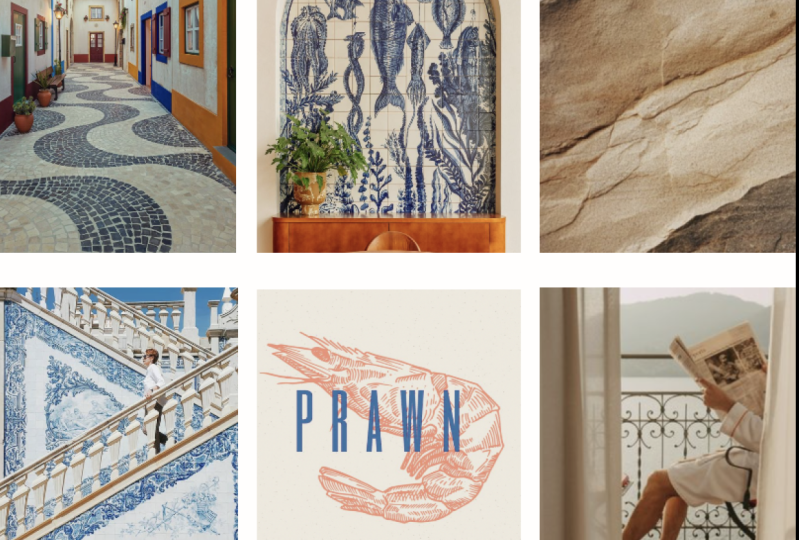
7. Moodboard 01 : Okay, so far, I have
deleted a few images. I still have a lot more to go. But this is the filtered
narrowed down version just by looking at the different
photography styles and seeing what will match
each of these categories. And now I'm going to
start trying to put them together in this
99 square format. I'm going to try to layer them
together by masking them. So maybe let's start
with this one. I'm going to send it to
the back shift whole shift and select the square, and then command seven. And that's just going
to mask it for you. And then I just
like to play around with how I want to crop these. So I think for this
particular reference, I want the yellow and
the green to be more dominant as opposed to all the other stuff
like the table. So I'm just going to crop it. O Okay, so I would say this is like my first draft, my
first go at it. And so far so good. I like the combination
of colors. I think there's a
general vibe that I like that suits the place and the way I imagine
it for the brand. But I think it's just
missing some richness. I still want to try to find
a way to get these plates in and some more patterns, maybe, some more architecture because I think that's
important for the police. So I'm going to try to make another copy of this because
I like the way it is now, and I'll see if I can switch around things
here and there. There. I like the way both drafts look at the moment. They're obviously
very, very similar, just minor differences and visual decisions I
just need to make. I think the next step
for me would be to start manipulating some of the colors of these
references because, for example, here, the most
obvious one is the word. It's in black and white. There's
nothing wrong with that. I just think that
when you manipulate the colors of certain references
that you really like, It really pulls together
the whole mood board together and it makes
everything look very cohesive. It doesn't stand
out in a weird way. I like to take references
that I particularly like, and I take it onto photoshop and I start
manipulating its colors. You can also do this with
transparency on Illustrator, but I think it's a
little bit limiting, so I like to use photoshop
for that purpose. I'm going to try to infuse those green and lemony colors into this word mark so it matches the rest
of the references. Another thing I'm at play
around with are these plates. I think this green is a little bit too pungent for
this moodboard. And as much as I love
the other colors, I think I'm going to
keep it cohesive with the rest of the moodboard
and see what it looks like. So I'm going to hop on
and do that on photoshop, and then I'll be able to decide which draft I want to take
with me into the presentation, and I'll have a much
better visual sense of it. All right. These are what
the two drafts look like. Mostly similar, just
minor tweaks here and there and differences
using photoshop. For the plates, I just
recolored some of the plates to make it match the
whole theme of green, yellow, orange,
and all these warm colors and just to match
the overall aesthetic. I do think that
it looks a little bit and has more
character in it, and that can really serve the brand later on in
the design process. I also enhanced the colors
of this couch over here with the arching back behind it just because it looked
a little bit pale. And I also tweak the background color
of this reference here to have like a sort
of muted lemon yellow just to kind of bounce
off the rest of the colors. And a massive
difference was made when I recolred the
word mark here. I just feel like
everything works really well together now instead of
having that black and white. Image stand out in your face. So I think I really
like both moodboards. I think this gives off a
more elevated vibe with the cocktail and it's just
it's more pleasing to the eye. I feel like this one just has a little bit more character with the addition of the plates here. I think it's just up to me
to decide whether I want to particularly have
this moodboard, have that extra
push of character, or do I want to stay
more on the sunny, warm, elevated side of
the brand and push the character and the richness in my second direction
of moodboards. I think I'm just going to
put this on pause here. I'll get a start on my second
mood board now just to show you what a completely different second
direction can look like. Then I'll compare
the two together. I'll put them together
because essentially you're going to be presenting these
two things to a client. So they both need to stay on brand and serve
the same purpose, but they're allowed to
be different and have different elements that are more prominent than the other
in each direction. So I'm just going to
put this aside for now and start on the
second mood board, and then I'll decide
which one to keep from these ones. Oh.
8. Moodboard 02: Oh. A. Okay. And we're back. So as you can see,
the mood board for the second direction is quite different in terms
of colors and it has that punch of boldness
from the Checkered black. But they still both
of them look like they're talking about
the same brand. And essentially, this
is the whole point of this exercise is to be able to extract inspiration
references, and imagery and to be able to filter them to find similar
patterns here and there, but still fall under the guides and the guidelines of a
brief and a strategy. So for this mood board, I was essentially inspired
by this reference over here. The arched architecture similar
to the first direction, but also those warm pink, and terra cotta hues. And something that really
struck out to me was those checkered old tiles and stairs that I saw
on so many references, and I wanted to
really hammer on that because it is very
attention grabbing, and it strikes me
as a statement. So I did want to include that in this moodboard as opposed
to the other one. And then I really hammered
on the pink color to give me that warmth of day in this moodboard instead of the
yellow in this moodboard. And it just strikes me as
young and modern and rich. And it gives me almost
this feeling of a magical place where I'm
going to go and spend my day, listen to music, eat
delicious food, meet people, and it's this whole sensory experience
that I'm bringing in. So I feel like that color really transports
me to that world. And then the usage
of brown here, I was inspired by the
natural materials found in Balinese architecture, Balinese textures,
the bamboo, the wood, and brown as a color in brand psychology is
very warm and inviting. And it feels very earthy
while still striking a balance to being modern
and rich and exciting. And then I also
wanted to include these patterns I found
on fabric and clothes. And these are
particularly prominent in prints and textures you'll find in both Spanish and
Balinese local art and beachwar. So I wanted to
also include that. And then later on
a design phase, we can include that in the brand identity as a part of an illustration,
for example. And I also particularly liked this illustration
here as well. A very modernized palm tree. And exactly like
the same exercise as I did in Mood board one. I did change around
a lot of the colors. So again, the word mark
here was black and white, and I changed that to fit
the mood of the brand, as well as this
illustration here. And then we also have the word
mark where I particularly liked it in the filtering
process shortly before. But I felt like the
other word mark suited this moodboard better, so I wanted to include
it in this one instead. So it still gives me
that elevated feel But also that inviting and relaxing attitude
about the brand. As for the photography style, I kind of kept it the
same in both moodboards. I didn't want to go to
astray from the brand. I didn't want it
to be alienating from its guests and customers. At the end of the day, I
wanted the richness and the culture and the design and the colors to come
from the interior, the architecture, the fabric. And all the artwork we're
going to do for the brand. And not so much from
the photography style. I didn't want it
to seem too aloof or too snobby as a place to go. Still wanted it to be inviting. So I kept the photography
style light and casual and appealing to all different kinds of
audiences that would go, whether that's a
group of friends or solo traveller, or a couple. I want people when they open the brands page or the
website and find this kind of photography to feel invited and delighted to go and not
to keep them astray. As for the first moodboard, I let go of the colorful plates. I just thought it was
visually a bit too cluttered for my
liking, and instead, I replaced it with this overview
shot of this beautiful, patterned, upholstered
fabric and table. So I didn't really compromise on the patterns and the richness
of the previous visual, but I did want to
maintain some sort of visual ease when you're
looking at the moodboard. So here I kind of like this dynamic feel of
the striped fabric, but also this design over here. And then, as well as this bar, we have those engravings
in the stone wall. So combining these
three together, we have really a cool
dynamic of patterns that we can use in this
type of direction. Was this direction,
it has more of an illustrative approach with the fabric and illustration, and the checker tiles. So they're both quite
different visually, but when you look
at them and then you compare them to the
guidelines of the brief, they still fall under
the same keywords. So at the end of the day, I want to be presenting two different mood boards
because I don't want to confuse the client and present something two similar
to one another, where in the end,
they're just going to merge both words together. So they do need to
look different. So in a nutshell, what I love about this exercise is that I get to create completely
two different look and feels for a brand, but they still fall
under the same category, the same brief,
the same keywords. They're just visualized
differently. It's as if you gave the brief
to two different designers, and they both understand
the brief very well. They have the strategy,
they have their keywords, and then they just
visualized it differently. So I think at this point, I'm happy with the outcome, and now we want to start
putting it together in a format presentation and start aligning our tentative
color palette on the side, and start writing
the descriptions for each moodboard
and put it together, finalize it as a
professional presentation.
9. Format & Presentation: Okay, for the first moodboard, I'm just going to start
grabbing my rectangles here, and I'm going to start color
picking off my moodboard. And obviously, you can always adjust this if the color
doesn't seem right. Again, this is not
set in stone and you can change this later
on in the process, but it's nice to give an overview of what colors
this moodboard conveys. So I'm going to start with
my first one here and try to go for one of
these green hues. I just color picked
this dark for sty green off some
of these references, and then I paired it
with this lemony yellow. Then I also another
shade of green, which is more sage like and more neutral because you
do need the contrast. I like the contrast
between these two colors, and then the pop of
yellow will really help to bring the brand forward
and give it some flavor. And then I always like
to include some kind of neutral color somewhere
in the bran moodboard, so it doesn't scream
colors everywhere. So a nice, muted
egg shell off white color pairs well with the undertones of the
green and the yellow here. I think that's a good start
for now for this moodboard. So let's jump to the other one. Okay. And then for
this moodboard, I actually added an extra color, which is not really a color. It's just a pop of
black because I do want to add accents
of black in this brand. I think it will really highlight the brown and the pink really, really well and give it that
extra accent of boldness. So I did add just, like, a little bit of color here. And I really like
the bold direction of this brand because
nobody thinks of a beach club on the beach and thinks brown,
black and pink. But this is where you kind of
break the usual boundaries, especially with a
category that's extremely saturated
like this one, and you really want
to stand out from all the blues and the urquises, and the whites and all
those coastal feelings. This is where you can find room to kind of break the rules, but under a proper
airtight brief. And here again, I also included a little
bit of leafy green, which is a common factor
between both directions, because both directions still
want to be luscious and rich in nature because it's an outdoor space
at the end of the day. So I did want to include
that in both directions. And as the same
with direction one, I still included another
neutral color here, which is a more deeper
beige than off white. I think it will really parallel
with the colors above it. So this is just again,
a guide for you. You don't have to
stick to these colors because we know at the end of the day when you
start designing, you will want to change some
stuff, and that's okay. But it's a good start for now. Okay, so I think both
moodboards are good to go. What I want to do next is copy
paste these onto keynote. I usually use keynote for
presentation purposes, but it's totally fine. If you stay here on Illustrator, you can just create a text box and start writing the
descriptions here, export it to PDF and
you're good to go. Keynote is basically
the same thing. I'm just going to
add some header slides between each moodboard, and it's usually just a program that I like to use
for presentations, personal preference up to you. All right. Welcome
back to keynotes. So I'm using the
same slide format as I did with the brief
and the strategy, which is usually
the case when I'm doing any branding project just to keep things consistent. So again, I have the
name of the brand, and as a subtitle, what kind of document this
is and the date down below. So usually in a
presentation form, I will have the brief
and the strategy recapped in a shorter version before I present the mood parts, just to recap some of
the things we talked about and to make it relevant as I move on to the mood parts. But for now, we're just going to jump into the format right away. So again, I just have
a header slide here, direction one, and
my mood board. So we just want to jump
into here the description. It's the final step, and again, it's not necessary, but I think it just helps
when you have some type of aid to read as you're
looking through these images, because you as the designer, you worked on them,
you spent hours, days Maybe even a week, looking
at these references, but a client is going to see
this for the first time. So they will need some
helping words, let's say. So keynote is
pretty easy to use, and just going to
go here to textbox, and it's going to
have a text box here, and then click on format. I want this to not be bold. All right. So mood
board description. So here, I just
want to basically describe the moodboard and
just a couple of sentences. If I were to summarize the look and feel
and the emotion and the character and
the personality that's coming out of this
moodboard, what would I say? So this is sort of
the prompt I tell myself before I go ahead
and write a description. And it also helps you prepare when you come to
present this to a client, so you know exactly what to say when you write all
of these things down. I was inspired by the colors
and all the dynamic lines of stripes and thin lines and patterns and dots
from the moodboard. I ended up writing.
This moodboard takes its warm and dynamic
energy from the sun and its refined and
relaxing attitude from nature's colors and channels them into a
rich visual language of character and flare. So something along the
lines of that just introduces your mood
board as an overall. Pick the right keywords, keywords directly derived
from your brief and strategy. Can stress how important that is enough to read it
over and over again. Familiarize yourself
with it so much, and that will help
you talk about the brand from the
very beginning in a very confident way. Okay. Next up, I need to describe the type of
imagery that's here. For the imagery, I
wrote down that it displays a variety
of refinement, attention to detail,
textures from nature, a dedicated and exotic
approach to food. Lastly, a portrayal of people
in their natural state, socializing in the moment, and relishing in enjoyment. You want to hit all the points and the different kinds
of photography you have, whether that's part of the
interior or the fabric or any details in
patterns and textures, and then the focus on food
and a culinary experience, as it's part of the brand. Lastly, the people who will be found in this place and how they're going to be
behaving in the space. It all adds to the imagination
and painting a picture, a vivid picture for
the c for their brand. All right. Next
up is typography. I'm describing the typography here as inspired by the brand. It's simple inviting to most of its audience,
but with a twist. Because the nature
of the place is going to carry so much richness, the logo needs to
take a simpler route, but without compromising
unsubtle but pungent flavor. I'm simply describing my thought process
and the reasoning behind why I included this
particular reference, and I need to back
it up to the client. Here I'm describing the fact that It is a simple logo because all the over references
around it are extremely rich in colors and patterns and
visual language. So you can't have richness in
every aspect of the brand. You need to strike a balance. Sometimes a word mark or typography can be
extremely rich because the brand identity or the
photography or the rest of the brand takes a simpler
and more subdued look. So the contrast here is key. And here I want to
maintain simplicity. In the wordmark and in the
logo or typography in general. But without compromising on
character or flare either. Instead of textures
in this moodboard, because moodboard number two, hammers more and textures, I want to change
this little headline here to graphic elements. So for graphic elements here, I'm describing them
as being inspired by the dynamic lines found in botanical nature and palm trees, since it is a big part of this brand to be around
the slushies greenery. So all this greenery has organic lines and different
shapes and textures in them, thin, thick, curve, straight, bulky dotted, et cetera. And all these
variations are endless. So it's a modern visual language that will never be boring, and it will stand
the test of time. And last but not least a
couple of words about colors. So for the colors, I
usually like to give them the poke names later on in
my design presentation. I name each and
every color I use something that's very tailored and customized to the brand. But here they're just
tentative names. So take it with a grain of salt. First one is forced green, and I like to include a
little description of what the color means and why it's
included in this moodboard. And I always explain
that it's not a personal preference
and the colors have a certain psychology
behind them and they are pertaining to a
specific element in the brand. I like to include a little
description of that. So forrest green is inspired by the luscious
greenery in the space, and it also evokes richness. The lemon yellow is light, refreshing, delighting
on a hot summers day. So I want to picture like a very cold beverage
presented in place, and that's the color
that pops in my head. And then sage green is very calm and relaxing and inviting, and it's also experienced, which again, alludes to the
hospitality of the place, and that at some
point in the day, you are going there to relax. And the last one
is eggshell white, which I then explained that it's an essential
neutral to have. Instead of a stark white color, this is the base neutral
color of the brand, or at least the tentative one. And that's pretty much
it. This is the layout. I usually do when I'm
presenting moodboards, and I like to keep the
text at a minimum. The focus is more
on the visuals. But again, the text is important to take home with
you, as I like to say. What I'm going to do is I'm
just going to copy paste this text here onto
moodboard number two. It's the same exact format, and I'm going to
replace the wording. Okay. And here is the wording
for mood board number two. So this is the final outcome
of the presentation. And in a real world situation, if I'm presenting two
or three moodboards, I typically like to
have a safe direction, which in this case is this one, because it's more
typical in the sense of its colors and its references
and its visual language. It's what you would expect, but not in a way that's not innovative and different
to its competitors, and that's well thought out
of and well intentioned. It's just a little bit
safer as a direction. And on the opposite
side of that, I also like to include on the
spectrum something that's completely wild and
different, like this one, something that really challenges
the brief and challenges the narrative of this type of brand and the industry
of this brand. So typically, when
I'm presenting, there will be a spectrum. If there are only
two directions, I'll have something like this
where I have a safe option and a wild card option where I can test the
client's limits. If I'm presenting three options, then I'll have
something in the middle that's in between both. Also do this to also understand my client
a little bit better. Understand if they're more of a safe stick by the
rules kind of person, and that will keep me in check throughout the
entire design process not to go to a stray or go too far from what they
hope and envision, and this will keep a very smooth process and communication
between both of us. On the other hand, if a
client is leaning more towards the wildcard option
and the daring option, then I also know that they're
really open to new things and suggestions and
different approaches, and that will give me room to explore and really grow crazy in the design process without being afraid that I
might disappoint them. So there are really
a lot of benefits to this process and a
branding presentation, and it's really
important not just for yourself as you're preparing
to go to the design process, but it's also
important in terms of building your relationship
with your client. That's pretty much it.
This is honestly one of the most enjoyable parts of any branding project
for me personally, just because there is
so much that goes into it and it really is the
backbone of any project, and I hope that
you see that now. Whenever you're
ready, we're going to jump into the next
lesson where I'll take you through
your class project to a completely different brand. So go crazy, have
fun and enjoy it.
10. Class Project: For your class project, I've prepared a whole new fictional brief
and brand for you that's been done and prepared as if you've just received
it from a client. And your task is to create a brand moodboard
for this brand. So the brand is
called the Oyster in, and it's a boutique hotel
in Lagos, Portugal. We're on a little bit
of a travel theme here. Your task is to research, put together and create one
brand board for this client, either using my format or any other format that you
feel reflects your process. Please upload this as a JP. And if you can include an
explanation of why you chose these images or
what insights you feel that serve the
brand's direction. I'll be uploading these files in the resources down below so that you can
have them at hand. Good luck, and I can't wait
to see what you create.
11. Final Thoughts: Thank you so much for
taking this class. If you found helpful, I'd love it if you left me
a review down below as it helps others understand what
to expect from this class. I'm also currently
offering one on one mentoring sessions
with Skillshare on Super peer and also dropping some digital products
soon on there as well. So if you ever
feel like you need some one on one feedback on your mood boards or
logos or projects or portfolios or career
growth in general, you can book a
session with me on there straight from my profile. Thank you again, and I'll
see you on the next one.
 Khadija El Sharawy, Independent Designer & Art Director