Transcripts
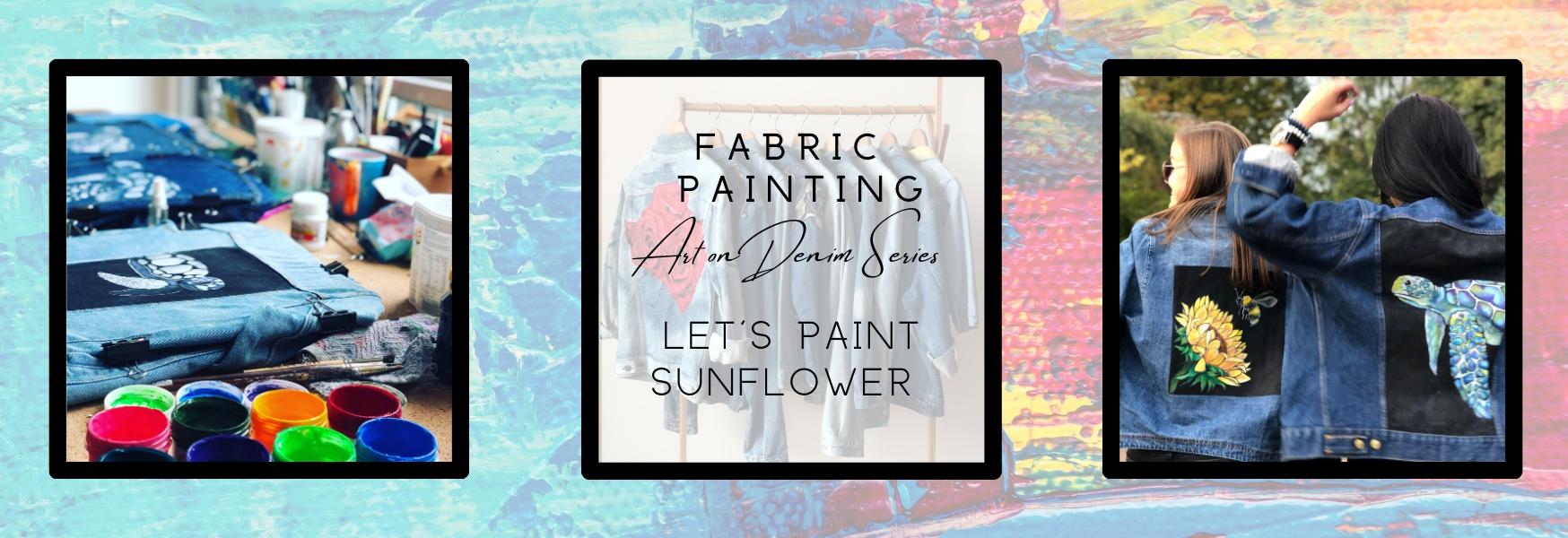
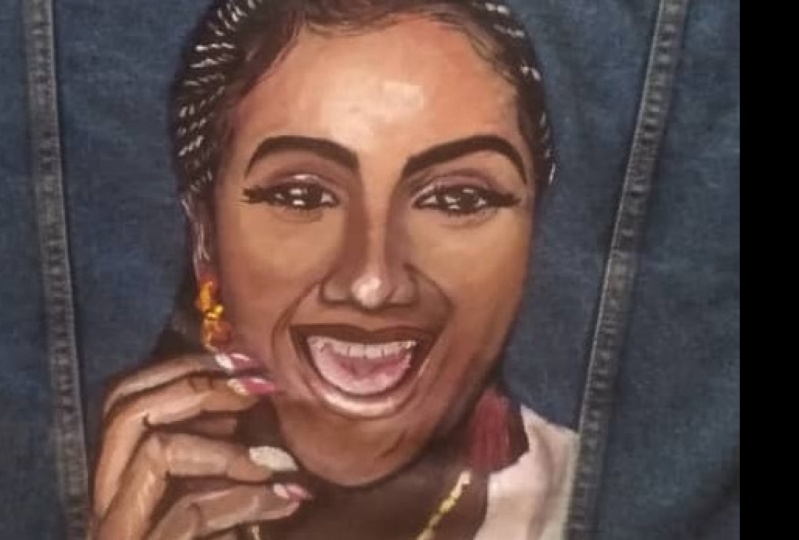
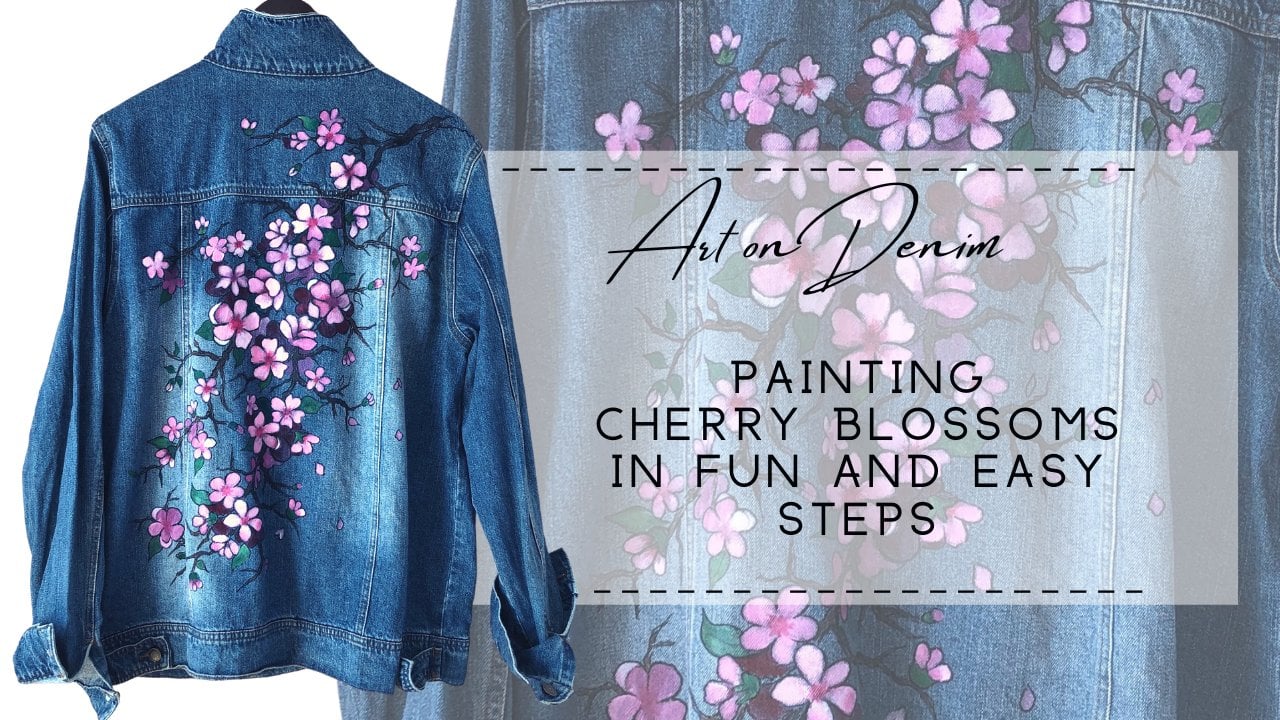
1. Introduction: Hello, everyone. My name is Eli Kale. I'm an artist based in Manila, Phil Baines. And today we will learn how to paint sunflower on denim. Apart from being a fabric artist, I also love working on murals and makes media art painting quirky figurative characters in saturated colors. My love for painting on denim started with an up cycling idea of saving a stain jean jacket from being thrown away. Before I knew it, my friends and family started placing orders, and the rest is history. Studying fashion design opened my eyes on how much the fashion industry contributes to global pollution. I started my company on wasted as an answer to the overwhelming fabric waste that we consumers produced every year. I source use denims from secondhand stores and dead and companies that donates rejected pieces from their production. For me toe up cycle, every piece is unique. We add art by hand painting, freehand machine embroidering and uplinking fabric to create designs. You can check out our Instagram page on wasted dot store in our at Sea shop on Wasted by Eli. I love working with Dan in because of the sturdiness and longevity of the material an old Dannon piece that needs an update is perfect canvas in creating a wearable art where you can wear your voice and nurture your creativity at the same time. If you haven't painted before, don't worry. Take your time and enjoy the process. You will surprise yourself without come. It is my hope that in doing this class, you'll be is part of cycle your old done in by creating personal ice wearable art pieces that you can partly show off, see you in class.
2. Materials and Set-up: Now let's cover the list of materials you will need for this class. We have five colors of acrylic paint plus fabric, medium small to medium synthetic acrylic brushes, two pots of water want to clean on the other to rinse water based fade proof, waterproof black markers, carbon paper for tracing and the sunflower pattern provided to you under Resource folder. We will also need water spray, bottle, rags, hair dryer and pain tree. Now here's how I set up my work table. In the center is a denim jacket with a cardboard support in place. Already to be painted on my right are two pots of water for cleaning and rinsing the brushes after it shoes. I also plays my brushes next to it for easy access. Next, my pain, Trey rag and paper towel. I think Tex Basic is my preferred choice When working on dining art, it has a thinner consistency, which makes it ideal for layering collars on denim. I also love the fact that it tries almost Matt Lance well with material creating a beautiful, unified effect. In this project, we will be using G A C 900 from Golden as fabric medium you can check out your local craft store for ever built e and options moving on to the rest of our tools. We have a hair dryer that comes in handy when drying between collars. To achieve a faster result. An important tool for denim. Painting your spray bottle for keeping the surface of your denim damp last but not least, the all around wet wipes for wiping out pains and cleaning up our mess.
3. Fabric Painting Basics: In this example, I prepared this most crap of denim to test both paints. I'll add a square patch of acrylic paint and both swatches, and we will let it dry and see what happens. So here we go. The binder mixed with acrylic is a key element in painting on fabric. We have to remember that a critic is made from 100% crescent. It's pretty much plastic all throughout. When you add fabric medium to acrylic, the material a tears better and makes a pliable so I can move with the fabric without any flaking or cracking. This is very important when you are working on fabric. Now let's take a closer look at the result of our test and this watch. We use acrylic paint. A few things to note here, the pain to the surface appears thick and stiff. Now, in this watch, we use fabric. Paint you will not, is the difference in appearance. It looks softer, more pliable, and the painted part moves with the fabric. It is worth investing on the right material to achieve the best result. When painting on a darker denim, it is important to use based collar to bring out the true collar desired for your project. Unlike working on canvas, where it is usually primed, working on fabric needs more patient approach to create layers enough for the color to pop . Note that acrylic colors darkens when dry. To give you a better idea, let's do a comparison using fabric colors with and without base collar. Here we go. So here I am, applying a yellow fabric color directly onto the denim. Well, let it dry. And on the next one we are going to use a base collar before we apply the yellow paint. Now let's apply the yellow paint over the base collar. You can already see how five burnt the collar is. It's just beautiful, and it pops. You don't have to keep on applying layers as I'm doing on the fabric collar. Without based the color base, it'll save you time on. It's a great way to make the color pop. The third example is mixing yellow with the base color White, As you can see, it, is much darker than the one on top, since acrylic paint dries fast, keeping the denim service damp. Help extend your writing time to blend colors and float into each other. The surface should stay, dump but not soaked. Inhabit painting. It is important to let your layers try to avoid lifting of colors. Okay, this was not my intention to do, but this happened. So we have to deal with this. Another bonus in keeping your surface damp is letting the acrylic paint extend its drying time. So when you spill something, you just have to grab wet wipes. Then it's easier to clean up and remove the stain. So you just need wet wipes, some kitchen paper towel and you are good to go. Keep repeating the process until the paint is completely removed from the surface. What?
4. Preparing your Denim: the best fabric for painting on is 100% cotton with a tight we've. If a fabric is loosely woven, pain tends to seep through the threats before it try and will cost in less intensity of the colors. Take timeto iron to fabric Well, Frankel's can create havoc on a design while you're painting. Now let's stretch the denim. Using a board, I use an illustration board cut out to fit the back of a denim jacket. You will need a handful of binder clips to secure the fabric. Lay the jacket flat on the back and plays the board in the center, talking the arms of the jacket in. Flip the board over to the back side. Stretch the denim, starting at the top, pulling just enough to keep the fabric nights and tight. Continue clipping the rest to the board. Once you're done, make sure there are no buckles and the back is nice and flat and smooth and ready for painting.
5. Transferring Design: prepare your carbon paper, the sunflower pattern and a pencil to trace. Another option is to cut the shape of the sunflower, trace the outside line and draw the rest of the flower, using the pattern as your reference. Now let's start tracing. Using a paper clip stuck together the carbon paper of the pattern at the center of the denim or wherever you choose to place the design, start tracing from the outer line working your way in when tracing it is important to use the right amount of pressure on the pen. Since fabric, especially Dan name is not us receptive as paper. No. Carefully lift a paper and top to reveal the transferred pattern. Yousefian water based marker toe work on the blurry lines if necessary. Now, if you're comfortable with your drawing ability, you can hand draw directly onto your denim using a chalk or a fine tip water based marker close to the color of your tenant. It's always lightly outline your drawing first, so it's easy to make corrections if needed.
6. Color Application: prepare your colors on the palette, starting with your base color. Titanium white. An equal amount of fabric medium. Mix well. Using your palette knife. Spray the surface of the denim with water to keep it damp but not soaked. Using a medium brush paint on the base collar. Starting on the pedals. Cover the shapes, but not the lines who created from tracing. We will use that to add shadow in depths to the peace later on, as always, dry between layers at a second layer of base collar if needed. Now mix yellow oxide and fabric medium. This is first layer of your pedals. Let it dry while the pedals are drawing. Let's work on the leaves. Makes permanent green with equal parts off fabric. Medium. Using an angle brush, work on the tips of the leaves following the shape. Leave that the lines created from tracing as mentioned before. We will be using that to add shadows and depth to the pace. Later on, mixing raw amber with the fabric medium paint on the disc floor. It adding more paint as you work on the line where it meets the pedals. That area will be darker so you can go ahead and be generous with the paint. Dilute your paint with a bit of water and do a wash when you start working at the center off the disc lloret toe light in the color that will add contrast and highlight. Now do the second layer of your pedals using yellow oxide.
7. Adding Depth & Contrast: Now let's continue building depth by painting the base of the pedal with yellow oxide, blending the colors in with cadmium yellow and a touch of white to paint the tip of the pedals. So there is a darker toe lied transition from the base of the pedal up to the tip. This time you will add shadows between the pedals and the base of the leaves. This area will naturally be darker, so go ahead and add another layer of color. Green also uses time to touch of the lines to add contrast. Andalucian of Movement on the Leaves when adding highlights on the leaves, makes permanent cream with the touch of white. I am using a medium sibling brush to apply the paint in Debian motion, like so, continue adding highlights and this time add a touch of cadmium yellow to your green and white palette for a better contrast. Once I'm happy with the color application, I grabbed my black marker and go over the line to clean it. I love the fact that it covers the line that got covered in paint and got looking all wonky . I also use the marker too dark in some areas where I feel it's necessary. For the last bid to add, I am using an air iridescent rich bronze to give the disc Lorette a finished look.
8. Heatsetting & After-wash Care: heat setting is a process of applying directed heat toe on area off painted fabric in order to make it permanent. This must be done to ensure that your painting does not wash, flake or peel off after washing, set your iron to Carden in dry heat mode. I prefer to use a press cloth to cover the painted area. When ironing tow. Avoid transfer color to the ironing board washer Dannon inside out in cold water under gentle setting with mild detergent. Avoid rubbing the painted area to preserve the color and paint.
9. Final Thoughts: Thank you so much for joining me in this class. I hope you learned and you school today. But more importantly, you had fun in creating a wearable art. This is just beginning of your creative journey. It is when we enjoy the experience that we find fulfillment in what we do. Please share in the gallery the progress of your project every time you work on them. I can't wait to see your final project. Let's continue to inspire each other in creating a wearable art. Please tag at a Nwe Sted that store and hashtag on waisted denim. When you post your project on social media, I will see you in our next
 Elie Quial, Mixed Media Artist & Fashion Upcycler