Transcripts
1. Introduction to the Course: Hi, I'm Dimple Sangui, and I have over 25 years of experience leading large scale
transformation programs. I have led these programs across fortune 500 organizations
like Cognizant, HSBC, CAP Gemini, and I have also trained thousands of
professional in analytics, AI, and lean six sigma. I have also done leadership
training globally. In this class, you will learn how to design
effective AI agents. Using practical patterns
like prompt chaining, routing, evaluators
and orchestrators. These are based on real world
agent design principles. This class is for professionals and product leaders,
consultants, and AI practitioners
who want to go beyond prompts and build structured
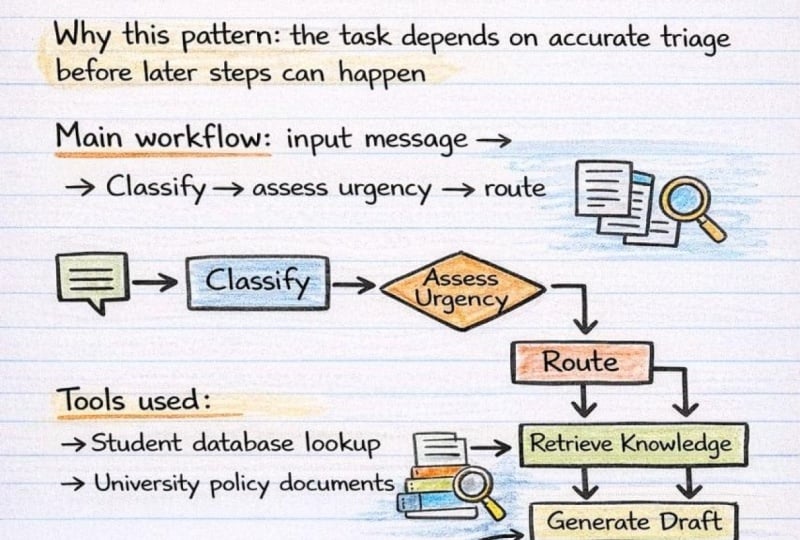
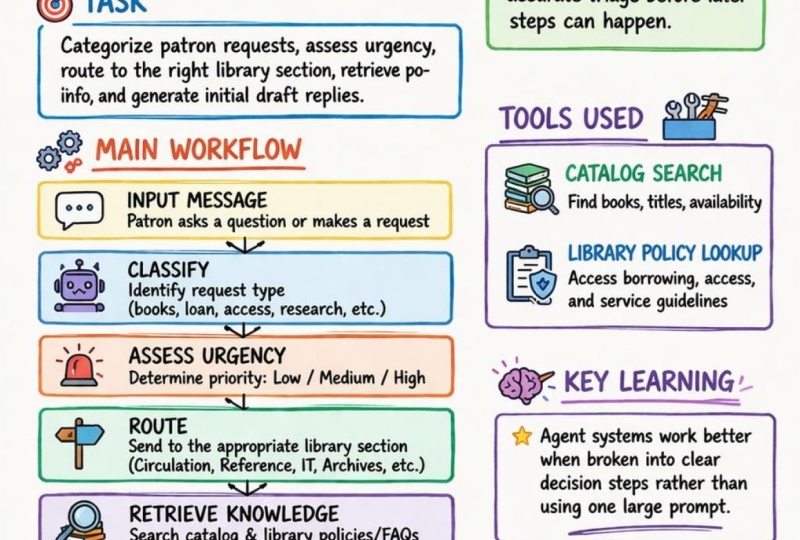
and reliable AI workflows. You don't need advanced coding, just a basic understanding of how large language models work. Your class project is to design a working AI agent system just as a diagram
for a real task. Mapping the workflow,
writing prompts, and reflecting on
your design choices. I have mentioned the details in the project description
section of Skillshare. If you want to understand how agentic AI actually
works in practice, this class will give you a
clear and usable framework. Let's get started. I will see you in
the first class. Oh
2. Building effective LLM: Building effective agents.
Over the last year, we have worked with
dozens of team building large language models,
agents across industries. Consistently, the most
successful implementations weren't using complex frameworks or specialized libraries. Instead, they were building with simple composable patterns. What are agents? Agents are defined
in several ways. Some customers define agents as fully autonomous
system that operates independently over
extended periods using various tools to
accomplish complex task. Others use the term describing more prescriptive implementation that follows
predefined workflows. At anthropic, we categorize all these variations
as agentic system, but drawn an important
architectural distinction between workflows and agents. Workflows are systems
where LLMs and tools are orchestrated through
predefined code path. Agents, on the other hand, are systems where LLM dynamically directs
their own process, tools, uses maintaining control. When and when not to use agents. When building
applications with LLM, we recommend finding the
simplest solution possible. Only increasing
complexity when needed. This might mean not building
agentic system at all. Agentic systems
often trade latency, cost of better task performance. And you must consider when
this trade off makes sense. When more complexity is warranted, workflows
offer predictability, consistency for
well defined task, whereas agents are better
options when flexibility and model driven decision
making are needed at scale. For many applications, however, optimizing a single LLM calls with retrieval in context
example is usually enough. There are many frameworks
when using Augentic system, easier to implement Lang
graph from Lang chain. Amazon's bedrock AI
agent framework, revert a drag and drop
GIM Workflow Builder, Valm another GUI builder for building testing
Complex workflow. These framework makes
it easy to get started and make it easy to simplify
standard low level tasks, like calling LM, defining, praising, chaining
to calls together. However, they often create extra layer of
abstraction that only observes the underlying
prompt and responses while making them
harder to debug. They can make it tempting to add complexity when simpler
setup would suffice.
3. Prompt Chaining Workflow: And let's take a closer look to a prompt chaining workflow. Many of you have led complex transformation
projects where the risk isn't in
the big vision, it's in the execution and ensuring that the
discipline is followed. The same happens true. So prompt chaining is not just about passing data from
one AI call to another. It's about embedding control
gates between each steps. And when you would embed compliance check risk controls and quality audits
in business process, the first LLM call
creates a draft output. This draft doesn't automatically flow forward. It is validated. If it passes, the
workflow continues. If it fails, the system
exits or escalates. That is how we prevent
the compounding errors. For executives, key
insight is chain allows us to treat AI
like a managed process, not a black box. Each stage can be tuned
whether it is extracting data, applying compliance rules or producing customer
facing communication. This design makes
AI predictable, auditable, and more acceptable
to regulators and boards. To connect it to your world, think of healthcare
provider operations. An AI extracts
patient information. The gate ensures that the
HIPA rules are followed. The second AI prepares
the treatment summary. The git validates
the medical coding. Only then a discharge node is
generated for the patient. Each checkpoint ensures
accuracy, compliance, and trust. That is why prompt chaining
is a critical foundation. It turns experimentation into enterprise
grade reliability. How do we look at prompt
chaining workflow? Think of it as an assembly line. Instead of asking AI
to do things at once, you break the job into stages. Each stage is handled
by a separate AI call, and the output of one stage becomes the input for the next. Notice the gate embitter. That's the quality checkpoint. If the AI output at a stage
doesn't pass validation, the process stops or loops back. If it passes, it flows forward. Complex tasks become manageable with prompt chaining workflow. Just like in Sigma, you don't just solve everything in one step, you break it down. Quality control is built in. Instead of trusting one AI call, you validate before
moving forward. Error containment. If something fails, you catch it early without polluting
the final output. Let's think for an example
from claim settlement, step one, AI reads and
digitizes the claim document. The gate verifies if all the
required fields are present. AI prepares risk
scoring for settlement. AI extracts applicant's
financial data. The gait checks the
compliance rule like missing AIC info. In step three, the AI drafts the loan
eligibility assessment. Step one, AI crafts a response. Step two, the gate
checks the tone, compliance language,
and SLA rules. Step three, AI finalizes the message for
customer delivery. Think of it like an
airport security. You don't go straight from
check in to boarding. You go through gates,
baggage checks, security scan,
boarding pass check. Each gate ensures that
next stage is clean. Prompt chaining is AI's version of staged quality
control process. Now that we have seen how the chaining creates
reliability, we will move to the next
and more advanced workflow, autonomous agent where AI starts to self improve
in real environment. Think of it as a relay race. One AI output is
checked at the gate and only if it passes
goes to the next AI step. If it fails, it exits early. This makes the process safer and more reliable. Motor claim. A customer uploads the accident details in
the photographs. The LLM one, does
the document check. AI extracts the policy details and the accident description. The gate does the
compliance check. Did the AI extract all the required fields if the accident date is within
the policy validate? If it passes, it goes
to the next step. If it fails, it exits or
flags to a manual review. The LLM two call checks
the damage estimation. AI drafts the cost estimates
using the repair guidelines. LLM three drafts
the final claim. It creates the settlement
summary for the adjuster. Only valid policy compliant
claims move forward, saving time and reducing fraud. Now let's take a customer
service example. A VIP customer complains, my loan application is
stuck for ten days. LLM one classifies AI identifies the query as a VIP
escalations about mortgage. The SLA check
happens at the gate. Does it meet escalation
of 15 minutes criteria? If it passes, it proceeds. If it fails, it gives an
alert to the manager. LLM two, we'll draft the escalation note
for level two support. LLM three will create
a customer reply, a personalized email
to the customer, and the output is the right
case are escalated fast, avoiding SLA breaches and
customer dissatisfaction.
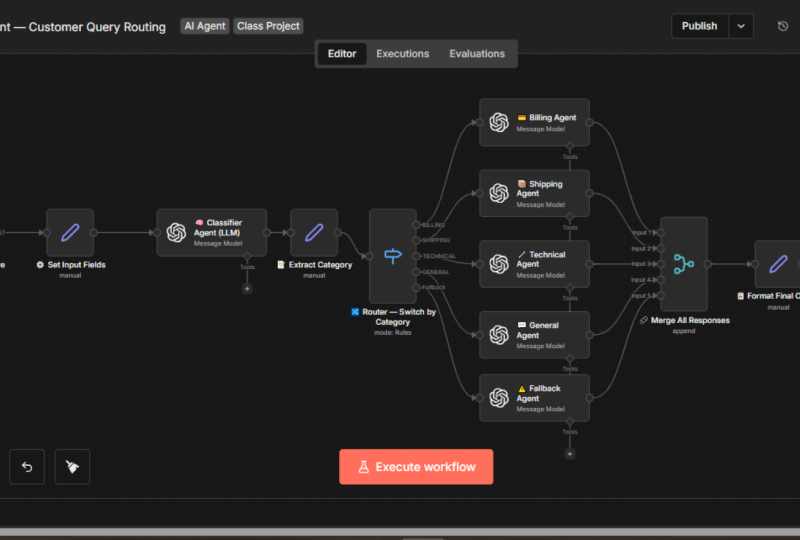
4. The Routing Workflow time: Now let's understand
a routing workflow. The engine behind many
augentic AI system. You have an input, you
have an LM router, and there are three
different LLM calls. So how it works,
the input comes in, say, a customer query, a claim form or a
loan application. The system just doesn't send
it blindly to a one model. Instead, it first goes
through an LLM call router. The router decides which AI model is best
suited for this task. From this, the request can be routed one of several
specialized models. LLM call one might handle structured
summarization classification. To might handle reasoning, heavy analysis like fraud
detection and risk scoring. The three might handle creative communication tasks like drafting customer response. Finally, the best result is
passed out as an output. For you, as
transformation leaders, the takeaway isn't the
arrow on the charts. It's the business advantage. In healthcare provider service, the router would send medical documentation
to a model trained on clinical language while routing billing data to a
compliance focused model. In a claims processing
motor accident, photos will be sent to a vision model for
damage estimation, while the policy text
would be going to a language model for
the eligibility check. In a customer service, quick FAQs would be routed to lightweight model for speed, while sensitive VIP
escalation will go to a model which is
tuned for empathy. This workflow matters because it prevents a one size
fits all approach. Instead, it ensures that the right model is used
for the right job, just like the way you wouldn't assign every task in your organization to
the same department. Routing is a governance
layer for AI workflow. It makes them efficient, accurate and business ready. Now that we understand routing, we want to see how multiple
AI agents can work together, coordinate across
different steps in a process instead of
acting in isolation. Think of it like a
traffic controller. The system decides
which lane is best for the incoming request instead treating every
request the same way. Claim traging a customer
Pfizer Motors insurance claim. The LLM router decides which specialized AI
model could handle it. If it's a fraud risk claim, the router, it will route it
to fraud detection model. If it's a standard
low value claim, route it to automation
instead of settlement. If it's a complex medical claim, routed to the compliance model, each claim takes
the correct path, reducing the manual
sorting and errors. I lost my credit card. The LLM router routes
it to the right AI, security AI to block
the card immediately. FAI explains how to
order a replacement. An escalation AI connects you to the fraud desk if unusual
activity is detected. Customer gets the
right resolution instead of bouncing
between the agents. Book me an appointment and
send me the lab results. The LLM router will
split the task. Scheduling AI, books the
doctor's appointment. WICOdEI retrieves
the lab results, and billing AI checks the insurance eligibility
and coverage. Patient gets all the
tasks completed through one interaction routed through
the right AI each time. Routing is about efficiency and precision instead of forcing
one system to do everything. It routes the right workflow to the right AI just like
the lean process does. Reduces rework, misclassification, and
speeds up the resolution.
5. The Parallelization: Now let's go to a
parallelization workflow. In the last model, we saw how routing sends
task to the best model. Here we will see a
different pattern, parallelization of workflow. Here, instead of
choosing one path, the input is sent to multiple
models at the same time. Each model contributes
a piece to the puzzle. Then the aggregator combines the result into a final output. Think of this like
running multiple teams in parallel to solve the same problem
quickly and thoroughly. Why does this matter? Because some business
problem benefits from speed and
diversity of answers. We understood that paralyzation is running multiple LLM calls, and then the aggregator
summarizes it. So let's say the patient
has fever, cough, and recent travel history
and allergic to antibiotics. The LLM one retrieves patient
EHR for past conditions. LLM two checks the guideline
for infectious diseases. LLM three flags
drugs allergy risk. The aggregator then merges into a safe treatment suggestion
for the physician. The physician gets a
single advisory reports not fragmented insight. Parallelization is about
speed and comprehension instead of waiting for one system to finish
before the next starts, a multiple AI runs in
parallel and then converges. It's like running multiple
specialist team in parallel during the lean
transformation cost cutting. We look at routing when the system decides
which model to use. Parallezation when multiple
model works at the same time.
6. The Orchestration and Routing2: We look at routing when the system decides
which model to use, parleization when multiple
model works at the same time. Here we are talking
about orchestration. How it the input first
goes into orchestra. Think of this like a
project manager who is then assigning work across
different AI agents. The orchestra decides
which task should be done first and which
model should do it. Each model like LLM one, two, three, tackles different
parts of the job. But instead of
working in isolation, they are coordinated like cross functional team
in your transformation. Finally, a synthesizer
pulls everything back together into a
single cohent output. The business value is powerful. Patient notes should
be split into clinical interpretation,
billing code, mapping, and compliance check then synthesized into one
complete discharge report. Let's think about motor claim. One model reviews the document, the other checks the fraud. The third draft the
customer communication. This synthesizer
then combines them into ready to use claim
decision package. Et's think about
mortgage business. You want income
verification, risk scoring, regulatory compliance
checks happen in sequence, and orchestrated and synthesized into one loan approval summary. A press release drop might be fact checked by
one model adapted at different markets
by another and style by social
channel of the third. Then synthesized into
multi channel package. Orchestration is
about coordinating. It's not about computation. It mirrors the way
transformation leaders already run across
functional programs.
7. Thank you for your time: Before we wrap up, I want
to share a little more about myself and how
you can stay connected. I'm looking forward to sharing my two decades of
experience with all of you. And the experience where
I have helped leaders and teams navigate large
scale business, digital and artificial transformation
project across India, USA, UK, Australia,
and Middle East. Along the way, I have
trained thousands of professionals in data
analytics, lean Sig Sigma, artificial intelligence, prompt engineering,
and change management, leadership training, both as corporate programs and
open learning communities. If you're watching this
as an individual learner, I would love for you
to stay connected. You will find links to join my Whatsapp group or
telegram community where I would be continuously posting about different
opportunities. I regularly share some
practical insights, learning resources, and updates on AI analytics and
transformation. I also share some case
studies on leadership. If you are here as a
manager, a consultant, or a learning and
development leader, and you are interested
in custom design, corporate training on agentic
AI, prompt engineering, data analytics, or
transformation program, please feel free to
reach out to me. I work closely
with organizations to design programs
that are custom made, that are practical, contextual
and business focused. I'm leaving the link to Linden
in the discussion section. Thank you for learning with me. I hope this class helps you design an AI system
more thoughtfully, and I look forward to
staying connected with you. Thank you for your
time. Happy learning.
 Dimple Sanghvi, AI Consultant, Lean Six Sigma Master Black Belt