Transcripts
1. Course Overview Lean Six Sigma Made Simple: This course is designed to teach you how to
improve the process, cut waste, improve quality,
and drive results. Course overview, whether you are a professional looking to streamline your work
or a team leader aiming to improve your
performance or simply someone who is curious about how processes can be
made more efficient, you are at the right place. Hi, I'm Dimple Sangui, and I'm excited to
guide you through this practical hands on course that has
been specifically designed using the principles
of lean sex Sigma. We have made the course accessible and
actionable for everyone. No jargons, no bluff, real tools, real insights
and real results. So what exactly is an sex sigma? It's a powerful methodology
that combines lean which focuses on eliminating
waste and maximizing value. With Six Sigma, we aim to reduce variation and
improve quality. Together, they form a
structured approach for problem solving that can be applied to virtually any process
in any industry. And here's the good news. You don't need to be a
statistician or have years of experience to
start using these tools. In this course, we have made
it easy by breaking down the core concepts into easy to understand bit size lessons. These are supported by
real life examples, actionable tools that
can be used immediately. Over the next series of lessons, we will focus on eight
classic types of waste. These are commonly hidden
from the plain sight. Drains, time, money, and
energy from your work. You will learn how to identify, analyze, and eliminate them. We will work through the
transportation waste, which is unnecessary movement
of material or people. Inventory waste is the excess took files or data that sits, but nobody uses it. Motion waste is the
inefficient actions that add no values. Weighting waste
is the ideal time caused by delays or
bottlenecks in the process. Overproduction is making more than needed or
making it too soon. Overprocessing waste is about doing more than what
the customer requires. Defect is an error that needs rework and causes
customer dissatisfaction. And the most important,
the talent waste. When people's skill and
creativity are underutilized, it causes a biggest loss
to the organization. Each lesson is short,
sharp, and focused. By the end of this course, you will not only
recognize waste, you will know exactly
what to do about it. We will also have the chance to apply what we have learned in the final project that
helps you improve the real process from your
work or your daily life. Please ensure that you submit your project and the
detailed instruction is given in the lesson there. Whether you want to reduce
the customer response time, or you are reducing the
errors in the report, or you are organizing your inbox, every
improvement counts. And throughout, we will share practical tips,
downloadable templates, and plenty of examples to make sure that you are not just
learning but taking actions. So are you ready to simplify, streamline and succeed? Let's get started. I will see you inside the class. The next class is to dive into the first module introduction
to the types of waste.
2. Online Delivery: Is it fast or is it efficient? Why, business is not the
same as customer value. Speed motion hassle. Looks impressive, right? 8:15 A.M. Route four, the driver is ready to go. Stop. Lo inside. Boxes are scattered
on the ground, warehouse is overflowing,
orders are sitting untouched. 10:00 A.M. Warehouse floor. 11:30 A.M. At customers home. Wrong item delivered. One order never arrived. Complaint begins to come in. The core question, is this process efficient
or is it just fast? Is it speed or is it impact? The common organizational trap, mistaking motion for progress, optimizing the delivery speed while ignoring the
internal chaos. The lean lens helps us to see enough of waste
and fix the flow. So the principle number one is internal success is not equal
to customer satisfaction. KPI dashboard at an
individual level says that the target is met. Delivery is delayed,
package is damaged because the customer
experiences late delivery, damaged packet or
incorrect package, and we are feeling we successfully deliver
1,000 packages today. The insight is success is defined by the
customer experience, not by the internal celebration. Waste is often
invisible to the team. What this team sees versus
what they don't see, half filled loads, waiting, rework and lost orders. Waiting, waiting, overwork,
rework, overproduction. These are the things
which are invisible, and an makes them visible. We want efficient
flow automation, and we want less of defects. Customer journey is the one
journey we should focus on the gap between the order place and
the order delivered. So to the customer, it doesn't matter which
department did that. They only feel flow or friction. The insight is we
don't optimize part, we optimize the end to end flow. Where are we celebrating the
output but missing the flow? Have you experienced a service that looks efficient internally, but feels frustrated
at the customer end? Weighting waste, motion waste,
defects, over processing, poor handoffs, are
the different types of waste or the
pain we experience. The shift is Len invites us to stop looking at
isolated steps, examine the entire value stream from the customer's
point of view. AI helps you analyze a pattern. Len teaches us what
really matters, customer value without waste. Um,
3. History of Lean: Let's quickly see a video. I'll ask you four
questions from this video, please observe it
carefully. Great. Welcome to the history
of lean thinking. Whilst elements of lean thinking can be traced over
hundreds of years, we'll start in an arsenal in
the Italian city of Venice. Established in 1104, the arsenal built warships
for the Venetian Navy. Over time, the Venetians adopted a standard design for the
hundreds of galleys built each year to campaign in
the Mediterranean and also pioneered the use of
interchangeable parts, which will come in too soon. This made it possible
to assemble galleys along a narrow channel
running through the arsenal. The le was completed first
and then flowed past the assembly point for each item needed to
complete the ship. By 15 74, the
arsenal's practices were so advanced that the construction of
a complete galley, going from start to finish
took less than an hour. Elo Whitney is
frequently credited as being the forefather
of lean manufacturing. Famous for inventing
the cotton gin, it was his promotion
of interchangeable parts during the production of 10,000 muskets for a lucrative
US Army contract in 17 98, which is amongst the first noted examples of lean thinking. The interchangeable parts on the muskets were cited as being an important factor in the North victory in
the American Civil War. The waste reduction thinking
of today was introduced by the early industrial engineers
around the late 1890s. Frederick W Taylor's book, Principles of Scientific
Management, published in 1911, began to look at
individual workers and work methods in more detail, how long work took to
complete and how he could produce more by
removing wasteful activities. While Taylor's application of scientific management was sound
and still is to this day, his decision to ignore
human behaviors, coupled with a dismissive
attitude towards workers made him a controversial
and difficult character. The concept of waste being built into jobs
and then taken for granted was noticed by motion efficiency
expert Frank Gilbrith. An advocate of
scientific management, Gilbreth went on to develop the motion study and
invent process mapping. His wife, Lillian,
also introduced workplace psychology and how the motivations of workers could fundamentally impact the
outcome of a process. The work of the
Gilbriths is often associated with that
of Frederick Taylor, yet there was a substantial
philosophical difference between the Gilbriths
and Taylor. The symbol of Taylorism
was a stopwatch. Taylor was concerned primarily with reducing process times. The Gilbriths in contrast, sought to make processes more efficient by reducing
the motions involved. They saw their approach as more concerned with workers'
welfare than Taylor, which workers themselves often perceived as concerned
mainly with profit. Around 1910, Henry Ford
and his right hand man, Charles E Sorenson, fashioned the first comprehensive
manufacturing strategy, bringing together the until now largely disparate and
individually applied elements of any effective organization, peoples, machines,
tools, and products, Ford arranged them in
a continuous system specifically for the
manufacturing of the model T. The results were so
successful that Ford quickly became one of
the world's richest men by putting the world on wheels and is considered by many to be the first
practitioner of in time, which seeks to align production
and customer demand. Ford's success inspired many
others to copy his methods, but most of those who did would fail to understand
the fundamentals. Unprepared for the pace
of industrial changes, the Ford system began to suffer, yet he refused to
change his system. The advent of labor
unions and rise of production proliferation,
annual model changes, multiple colors and
options further strained the Ford system and did not
fit well in his factories. At General Motors,
Alfred P Sloan took a more pragmatic approach, developing business
and manufacturing strategies for managing very large enterprises
and dealing with the variety demanded by an
increasing customer base. By the mid 1930s, General Motors had passed
Ford in domination of the automotive market
by reinterpreting the effective element of
Ford's production methods, which were sound
even in the new age. The allied victory in
the Second World War and the infrastructure
behind it caught the attention of postwar
Japanese industrialists who were quick to study
Western production methods. Tachiono's visit to
a US supermarket is often cited as one
of the key learnings. The focus of attention
were Ford's example, Deming's statistical
process control, Juran's management of quality, and the statistical quality control practices of Ishikawa, who is famous for the cause and effect or fishbone diagram, which remains an
excellent problem solving technique in virtually
any improvement context. At the Toyota Motor Company, Tech Oo and Shigeo Shingo reinterpreted the
successful elements of the Ford production method, integrating them
with the scientific management foundations laid by Taylor and Gilbreth and several other
techniques from the West, labeling it as the Toyota
Production System or TPS. Toyota acknowledged
that the Ford system had several fundamental
shortcomings, most notably with respect to employees and
their engagement. Toyota capitalized
on the fact that factory workers had far more to offer than
just muscle power. Their findings
probably originated in the quality circle movement, which thanks to its
major contribution by Shikawa Deming and Juran, led to team development and
cellular manufacturing. While production
cell concepts may not immediately translate
to other environments, team development and
multi skilling are critical in successful
application of lean service. From 1949 through the mid 1970s, the TPS approach was adopted interpreted by other
Japanese companies. When the productivity
and quality gains became evident
to the wider world, executives of the
American companies, from whom the East had learned, traveled to Japan
to understand how their counterparts had so rapidly developed
their thinking. By the 1980s, some
American manufacturers, such as Omark Industries, General Electric and Kawasaki, were achieving success through considered application
of the tools and techniques
perfected in the East. Consultants took
up the campaign, and acronyms
sprouted like weeds, yet they all referred
to systems that were simply derived from TPS. Gradually, a global knowledge and experience base developed, and success stories became more frequent and attracted
greater publicity. Len caught the imagination of manufacturing experts
across the globe. Branded implementations
quickly became commonplace and led to a rapid expansion
in experience and knowledge, creating debate on the
wider application of LN, particularly outside of
its industrial origins. One of the core elements of lean thinking are the
five key principles, which this day do
not substantially differ from the techniques
developed by Ono, Shingo, any
originators at Toyota. The application in any specific industry sector
significantly changes, and just as many firms
copied for techniques in lazy and unthinking
ways, many businesses, especially those outside
of manufacturing, have simply copied
Toyota's example, often with poor results. In 1990, James Womack co wrote The Machine that
Changed the world with Daniel T Jones
and Daniel Roos. The book recounted the history of global automobile
manufacturing, combined with the study
of Japanese American and European automotive
assembly plants. Perhaps the most
significant contribution to popular culture and
business improvement was the book introducing
the term Lean. In the mid 1990s, service and public sector
industries were becoming increasingly interested
in the benefits of applying lean to
their operations. As with manufacturing
firms looking to apply the Toyota
production system, service companies have to give serious consideration
to how lean thinking, particularly the
tools and techniques, fits their business
and how to apply it in order to achieve meaningful
and lasting benefits. In 2003, John Seddon put forward the concept of value
demand and failure demand. Value demand comes
from recognizing the initial request for a
service from the customer, and is ultimately
about what it is that a company or service
exists to provide. Failure demand is classified
as the failure to do something or do something right for the customer or
in simple terms, did we do it right first time? Sedn's approach made
significant improvements for the customers of
Portsmouth Housing Authority, whilst also reducing costs. Great. Now that you
have seen the video, my first question is, how
old is Len in practice? My second question is, is
Len only for manufacturing? The third question
is, what did you learn from the Toyotas
example from this video? The next question is which book was mentioned
in this video. Please give your answers in the comment section below. And
4. What is Lean?: But what is lien
in simple English? Lien is about delivering maximum value with
minimum waste. It's about removing
inefficiencies, simplifying process, and
making every step count. When you streamline, you don't
just improve the process. You are increasing
the efficiency and improving the impact. That's the power of lien. What is lien? Let's
go with the examples. At its core, N is fundamentally about maximizing value
while minimizing waste. Whether you are from
manufacturing industry, service or a digital
transformation, the goal remains the same. Deliver more with less by focusing on what truly
matters to the customer. Today, we are going to explore
three key concepts about lien and how we can use AI
to improve these efforts. First one is customer
centric approach. Always start by understanding what the customer truly values. Understanding customers need is the first step in
streamlining the operations. Example, a retail company uses AI driven customer feedback
analysis to tailor, personalize promotions and improve the
customer engagement. The second is continuous
improvement or Kison. LN encourages
iterative mindset when small changes accumulate
to drive efficiencies. If I think about an example from a financial service firm, it uses AI to monitor fraud
patterns in transactions, continuously improving
fraud detection algorithm. The third is waste elimination. LN identifies seven types
of waste, Tim woods. The eighth one is more
important. I will cover it. Transportation, inventory,
motion, weighting, over processing,
overproduction and defect. Skill Set waste
is the eighth st, which is very important
in today's world. A healthcare provider
reduces the patient waiting time by using AI
powered scheduling system, optimizing the
doctor's availability. LN is about thinking different and focusing
on delivering more. What do we focus on? What is great today isn't going to be
good enough tomorrow. Lean isn't about one time fix. It's a mindset of
constant learning, experimentation, and evolution. Small changes repeatedly done with consistency leads to
transformational results. Len isn't about working better. It is about thinking
differently, challenging the limits and
defining what's possible. The lean principle in short, is stay simple, do smart,
and become powerful.
5. Benefits of Lean Implemeantation: The benefits of an
implementation, let's understand with the help of some scenarios and quiz. Let's do it as a rapid
fire to or falls round. I repeat I'll say the question. I want you to write the answer
in the comment section. Lean LN is only applicable to
manufacturing industry and not the service industry. Falls. It is applicable
across industries. One of the Len's primary
goal is financial service to eliminate non value
added activities to reduce operational cost. True. Lien implementation in
healthcare can help reduce patients waiting time and improve the
service delivery. Obviously, this is true. Lien prioritizes cost cutting
over customer satisfaction. You guessed it
right? No, because N is a customer
focused approach. So we are not going to prioritize over
customer satisfaction. It will be along with
customer satisfaction. In a contact center, one form of waste could be excessive call transfer due
to inefficient routing. Yes, because it's
a type of waste. Let's understand with
some examples over here. One of the biggest
advantage of lien in a banking and
financial services and insurance industry
is to reduce A, reduce the customer
service time, identification and elimination
of wasteful process, increase paperwork
for compliance, more time spent on reporting. You guessed it right. It is identification and
elimination of wasteful process. Let's move to the next question. Which of the following is not a type of waste in
a service industry? Waiting time for approval. O processing,
unnecessary documents, increased employee engagement, excessive motion due to
poor workflow layout. Yes, it's not a type of waste, so we should look at something
that is value creating. It is increased
employee engagement. In healthcare, how does
team improve patient care? By increasing the
number of staff, this is going to add up the
cost by reducing the patient wait time and eliminating inefficiency in
service delivery. By cutting down medical
equipment usage, by focusing only
on cost reduction. Yes, you guessed it right. By reducing patient
wait time and eliminating inefficiency
in service delivery. Which lien principle
ensures that services are delivered based on
customer demand rather than pushing
unnecessary services. Value stream mapping, flow, pull system, or standardization. It is based on customer
demand rather than pushing. So opposite of pushing
will be a pull system. How does an impact workplace
culture in service industry? It creates a culture
of micromanagement. It emphasizes
continuous improvement, employee involvement,
and collaboration. It eliminates team
based decision making. It focuses on cutting cost
measures. You are right. It emphasizes on
continuous improvement, employee involvement,
and collaboration. Let's understand
the next scenario. A bank is struggling with
a long loan approval time, which frustrates the customers. The process involves multiple handoffs
between departments, excessive paper weeks, waiting
for managerial approval. Which lean technique
should be applied. Value stream mapping, increasing
the number of employees, extending the working hours, or removing the compliance chat. You know that B, C, and D are not correct. So I'm going to focus on VSM to identify inefficiencies and
remove unnecessary steps. Contact Center has noticed
that agents frequently transfer calls
between departments because the process is unclear. Customers are often
kept on hold for a long period, leading
to dissatisfaction. What lean approach
can solve this? Reduce the number of agents
to encourage efficiency, implement the cross
training for agents to handle multiple
queries without transfer, increase the whole time limit, assign each customer
fixed agent. Correct. The D is absolutely not
the correct approach, and I cannot be increasing
the whole time. I cannot reduce the
number of agents. So it is about implementing
cross training for agents to handle multiple
queries without transfers. Let's move on. A hospital
emergency department is experiencing long
patient wait time. This is leading to overcrowding. Which lean tool can help
address this issue? AFIS methodology to improve
workplace organization, a carbun system to ensure smooth patient flow based
on real time demand, increase the number of doctors, and reduce the diagnostic test. C and D happens to be
very dangerous. Correct. So we are going to go with Carbo to ensure
smooth patient flow. Moving to the next question,
an insurance company claims department
in experiencing delays because employees
spend too much time manually entering customer
data into multiple systems. How can N help
implement automation, digital workflows to
reduce manual data entry, hire additional employees
to handle the backlogs, extend the working hours, or reduce the number of
claims process per day. Again, B, C, and D
are very dangerous. So I'm going to go ahead and
implement automation and digital workflows to reduce
the manual data entry. Are you able to understand
how are we understanding the practical application
of lien let's move on. A service company handling customer service
notices a high level of employee burnout due to redundant task,
excessive documentation. Which lane principle would help improve their
employee well being, waste reduction by
automating repetitive task, implementing strict work quotas
to enforce productivity, encouraging employees
to complete task manually to stay engaged, assigning fewer
task for employees, but increasing the
working hours. And, waste reduction
by automating the repetitive task because these tasks are also redundant. To summarize the benefit
of lien implementation, the focus is on reducing waste, eliminating non value added
activities across process, improving efficiency,
streamlining workflows, and shorten the cycle time, enhance customer satisfaction, deliver better quality and faster service
with fewer errors. Boost employee engagement, empower teams to solve problems and improve
their own work. Support cost reduction, save money by optimizing
resource usage, enable data driven decision, encourage use of real time
metrics and visual management. Drive continuous improvement, foster a culture of
learning and innovation, build sustainable growth, align performance with the
long term business goal. I will see you in the
next lesson where we will cover about lean
tools and techniques.
6. Lean Tools list: We will learn about
value stream mapping to visualize the bottcks. Then we will also learn about five techniques to
dig into the real causes. Standard work to reduce
the variability. Visual management, to
make the gap visible, Tyson for team
driven improvement. We will also learn about FIS methodology to organize the workspace for
efficiency and safety. Then we will cover Tin woods, the acronym for eight types
of waste in the process. How do we identify
and eliminate them? We will learn about
spaghetti diagram to visualize and reduce
unnecessary movements. Then we will learn
about carban systems to manage the workflow and
limit work and progress. Problem solving tools are very important to find and fix
the root cause of the issue. And finally, we will also
try to understand time and motion study to analyze the task steps and
improve productivity.
7. Lean Guide Training: Have you ever been in a situation where you
noticed inefficiencies at work where processes could have been
faster or smoother? Let me share a story of Toyota. One of the pioneers of Lee. Back in 1950s, Toyota introduced the concept
of just in time. This was the way it revolutionized the
manufacturing industry, how they produced cards. Before Len, the process involved large inventories of parts
waiting to be assembled. However, Toyota realized this
created unnecessary waste in storage and handling. By applying lean principles, they shifted to a system
where parts only arrived as needed on the production line cutting down the
excess inventory. This not only saved money, but also improved the
speed of production. It reduced errors. In fact, they were able to reduce the production
time by over 30%. This is a great example of lean isn't just about
doing things faster. It is about creating
more value by eliminating waste
in all forms from inventory to the time
spent on tasks that don't contribute directly
to the customer's need. This story is just one
example and through. And this training,
we are going to explore more tools and
techniques like Justin time and Kison that can
help you spot and eliminate waste in your
own work environment.
8. Role of Lean Guide: The role of a lean guide as organizations mature
in their lean journey, the need evolves for just running projects to building a culture of
continuous improvement. And this role can easily be managed by a person
called Lean Guide. The lean guide is the one whose role goes beyond
applying just tools. The lean guide becomes a coach, a mentor, and a culture carrier. Someone who empowers
the team nurtures problem solving and aligns improvement with
strategic goals. We will break down exactly
what a lean guide does and how it differs from a lean practitioner
or a project lead. Think about someone in your workplace who
doesn't just solve problems but helps others
get better at solving them. Would you call them
as lean guide?
9. Lean Practioner vs Lean Guide: In this lesson, we will
understand the difference between a lean practitioner
and a lean guide. These are two important
roles in the world of lean. They have one purpose, but the different
levels of impact. We need to understand this
difference to understand what is our role and how
much impact are we making. Many lean efforts are stalled because the
roles are blurred. Implementing tools
without changing the culture creates
a fragile system. Tools alone can't
create transformation. Promoting practitioners
without developing a guiding capabilities lead to a tool driven moment that
reverse once the project ends. Both rules are essential for success, execution
and sustainability. A practitioner ensures that the work gets done right today. A guide ensures the work
continues to improve tomorrow. Lean fails without
either of them. Without practitioner, nothing
changes on the ground. Without guides,
improvements don't stick. So a practitioner is one does
hands on problem solving. His core responsibility is to
lead improvement projects, apply specific lean tools like five as KIS and value
stream mapping, and support the team on the ground during
the implementation. His focus area is
daily execution, process stability, and
waste elimination. Gemba workstation, where
the value is created, process tools like fives
KIS and VSM applications. We do the time and flow tracking for the daily execution
and monitoring. This real time
observation helps in proper data collection and helps in daily
execution monitoring. The scope of the practitioner
is at team level, single process or a department. His nature is tactical
and project based. The value he creates is that
he creates a faster process, reduce defect, and tangible
local improvements. Let's now move to
the lean guide. He's a strategic coach. He coaches leaders and teams and teaches them the
why, not just the how. Aligns the lean initiative with the organization strategy. He focuses on building
capability, not dependency. The focus area is long
term transformation, leadership behavior,
organizational culture. His job is a long
term vision and path connecting strategies across the organization levels. The scope of the guide is cross functional end to end value
stream enterprise level, and his nature is
cultural and systematic. The value he creates is
sustainable improvement loops, consistent decision
making across the teams and lean thinking
embedded in the culture. From doing lean to leading lean. Practitioners are executors and guides are for giving direction. Executes, improvements, solve specific problem
in front of them. That's the role of a
lean practitioner. Whereas a lean guide shapes
the direction and priorities, determines which
problems are worth solving to align
with the strategy. What's the difference
between tools and thinking? A practitioner applies
tools like Fs, CAB, SMEAD to fix
physical issues, whereas a guide develops the thinking capability
of the team, uses inquiry model and schastic coaching to
fix the mental blocks. The practitioner
builds the process and the guide builds the people
who runs the process. Are you looking at
short term wins or a long term
capability building? A practitioner is one who is working for delivering
projects results. Success is defined by thepletion
of a sprint or an event. A guide's job is to build
the system and habits, and success is defined by what happens when they
aren't in the room. Practitioner solves a problem. They are the experts
in the room. A guide is the one who teaches others to
solve the problem. They make others the expert. Technical expertise is where practitioner is the foundation. You know the work
to guide the work. Then you do project
leadership, and finally, you become a leadership
or a lean guide. What changes as you grow? Less firefighting, less
direct intervention and less of using of authority. You are doing more of coaching, more of questioning, more of influencing
without authority. Where do you stand? That's a question which
you have to ask yourself. Do you spend your day
fixing processes? Do you spend your day
developing people? Are you in a messy middle trying to guide but getting
pulled back into fixing? Let's identify someone in your organization who already plays the role of a lean guide, someone who asks question rather than giving the
answer straightforward. Someone who focuses on
cross development flow. Someone who remains
calm when things do not go or focus on the
learning opportunity. The core difference is that a practitioner improves
the processes. The guide transforms
the organization. Lean tool changes the process, lean guide changes the system. And
10. Differences between Lean and Traditional Management: So to summarize between lean and traditional management is on focus and philosophy. Maximize value by eliminating waste and improving the flow, approach in planning, being
adaptive and just in time, process orientation, being iterative and
continuous improvement, customer involvement, high customer involvement
throughout the project. Team empowerment, Measurement of success is checking
the value delivered, flow efficiency and
customer satisfaction, handling change by
embracing it as an opportunity to improve
waste elimination, removing non value added
activities, document. Minimal documentation focuses
on what is need to be delivered rather than just getting ground in the documents.
11. Purpose of Doing a Business: At its core, lien
is about one thing, delivering more value
with less waste. Every action, every process, every decision should serve the purpose to
enhance efficiency, streamline operations,
and maximize the impact. Everything starts
with the customer. What do they need? What problem
are we trying to solve? LN ensures that every action contributes directly to the
customer's satisfaction. Nothing more, nothing less. The second is map
the value stream. Waste is the enemy, whether it's time,
effort, or resources. LN is about eliminating
inefficiencies, cutting what doesn't add value, and ensuring that every step
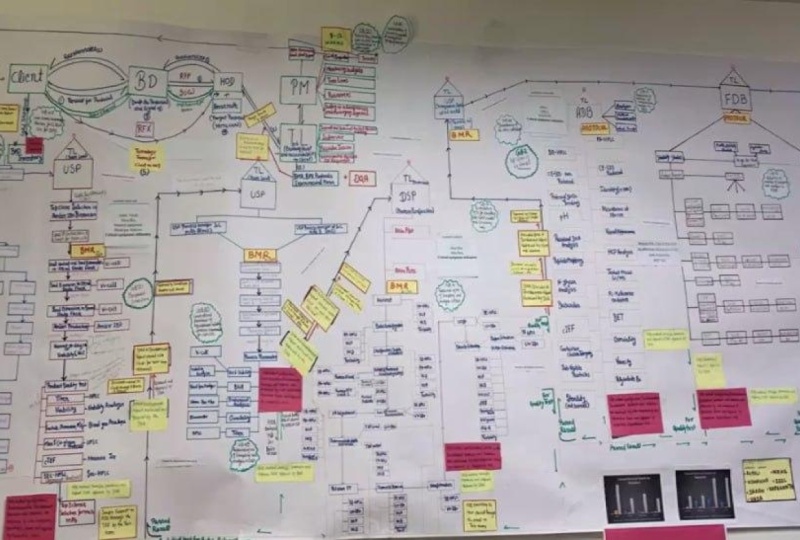
in the process is essential. Value stream mapping sees the big picture
change everything. This VSM exercise helps the organization
visualize the workflow, identify the bottlenecks and optimize the process
for peak efficiencies. Establishing pull is what keeps Lian from becoming just
another mechanical system. It ensures work happens only
when there's a real demand, no over production,
no wasted effort, just right value at the right
time to the right customer. Think about your own work. If you are pushing task forward, or are they pulling based
on the real demand? LN isn't about efficiency just, it's about a
purposeful efficiency. The pull is important and establishing the
pull is very important. The next step is
continuous improvement. Continuous improvement is
essentially in lean principles, encouraging team to consistently seek ways to enhance
processes and outcomes. Take Toyota's example,
the benchmark of N. Instead of mass
producing cars and stacking them
in the warehouse, they produced only when the
customer placed an order. Even Dell operates on the same principle.
That's the pull. It minimizes waste, reduces
the inventory cost, ensures every product has a
purpose before even exist. So now look at this slide
and tell me what is missing. The first one is
maximize customer value. Second one, minimize waste. Value stream mapping, continuous improvement.
Yes, you are right. You guessed it correct.
Establishing the pull is the element that is missing
from this list. Good work. What is the purpose of doing a business? What do you think? Before we jump into lean and performing process
performance improvement, let's pause and ask a
fundamental question. What's the real purpose
of doing the business? Take a moment, think beyond
profits and targets. What comes to your mind? Please answer it in
the comment section. It's about making money, solving problem, creating
jobs, or adding value. Please jot down few responses in the comment section below. There is no wrong answer. We will dive deeper. Yes. What's the purpose
of doing the business? Let's start with profits. Yes, profit is critical. It sustains the operation
and funds the growth, but is this the only reason
why we exist as a business? The second is
stakeholder satisfaction or customer satisfaction. Long term profits can only
be possible when you deliver real value consistently to our customers, employees,
and stakeholders. The next is to get into
a broader purpose, that is increase in turnover. Because when the turnover does go well, profits will increase. Customer satisfaction is also important because we
exist for customer. Improving productivity
helps us to have a proper work life balance and ensure that our
employees are enjoying work. We also focus on reducing cost because to
increase the profit, I have to keep my
cost in control. That does not mean that I'm
going to throw away people. I'm just going to get them
to do more efficient work. I'm going to create jobs
because if you are in business, you are creating
employment opportunities. Help suppliers grow
their business. Profit isn't just the goal, profit is the result. In this whole journey, the suppliers are also your
important stakeholders. We are also helping the
community because we get involved in CSR
activity and that we are able to do because we contribute to a few percentage of our profit towards
the society upliftment.
12. Three Pillars of Profitable Business: Think about this.
The three pillars of a profitable business are desirable growth
because business exists, they look for what can they
take to grow profitably. Just bigger, better. Every business today balances on three important growth
aspect, the desirable growth. The growth that the
customer wants, it's driven by understanding
what creates real value. It would be launching
the right product, improving services, and
enhancing customer experience. The next is sustainable growth. It's a growth that doesn't
burn out people or resources. It builds on
efficient operations, consistent process, and
meaningful resource usage. Lean helps here, remove
waste, improve flow. Can we help growing the way first year from now or from three years from now,
predictable growth. This is where data and systems come in.
Growth can plan out. With the right metric
discipline and standardized performance
becomes repeatable, not just based on lack. Can we forecast the next quarter's performance
with confidence? Growth that matters because
every business wants to grow, not only grow, but create equal opportunity
in the society. True success isn't just
about increasing numbers, it's about scaling
it in the right way. That means ensuring a desirable, sustainable and predictable
growth is very important. The growth has to
benefit the business, the employees, the
customer, the stakeholders. It's about expanding the
way we align with purpose, value, and long term vision. Are we growing in a way that enhances
customer experience? Is this growth making our
organization stronger, not just bigger,
sustainable growth? Growth that can last flash in the pan success that
isn't real success. Sustainable business focuses
on efficient systems, adaptable models, and
long term resilience. Are we scaling in a way that can be maintained over
a period of time? Do we have the right process in the place to
support this growth? Predictable growth.
Guesswork isn't just drive success,
strategy does. Predictable growth means
data driven insights, clear forecasting, and
repeatable success patterns. Can we actually project future revenue,
demand, and expansion? Are we growing based on proven systems rather
than wishful thinking? Growth without
direction is a kios. The real question isn't
just that are we growing? The question is, are we
growing in the right way? The best businesses don't
chase random expansion. They build growth that is meaningful, sustainable,
and scalable. That's the difference between short term winds and
long term domination.
13. Pizza Delivered Cold KPIs are Green: Internal efficiency
internal efficiency versus customer experience. Why good metrics can
still create bad service? The common blind spot
we observe over speed, status update and checklist. We assume that if the
dashboard is green, the customer is happy. The reality is on time internal step does not automatically equal
to a good service. To see service through the
customer's lens and identify where waste heights is the white space between
the departments. Welcome, everyone. We are here
to talk about the paradox. Most of us run our
days by dashboards. We track speed, we
track completion rate, we track completion rate, and we track status. When those lights turn
green, we feel good. But today, we are going to
challenge the idea that internal efficiency equals
customer satisfaction. We're going to look at why
your customer data might say we are winning while your customer
feels you are failing. We focus on speed and checklist, but overlook the journey. We look at the task. Each task like
document review data and reapproval routing, how much time it is taken, it is complete, it
is done, and so on. So when we track the
speed of individual task, status update of
individual task, and compliance checklist
of individual task, we assume I did my job fast and the
system is working well. The missing piece is the customer does not
see your checklist, does not see your
individual task. They experience the entire flow. So in our daily huddles, we do in our daily
huddles, what do we ask? Did you finish that ticket? Is the report filed? We focus on the, we focus
on the speed of the task. But this creates a tunnel
vision where we assume that if every individual person does their job specifically quickly, the respect but this creates
a tunnel vision where we assume that if every
individual person does their job specific and quickly, the result is perfect. As we are about to see, this is a dangerous assumption. Let's look at a scenario. We all know ordering a pizza. Look at this from a
restaurant's perspective. The order comes in, it's
confirmed in 2 minutes, the kitchen preps it in 8
minutes flat, record time. The dispatch is at 7:10 P.M. If you are the manager
looking at this screen, you're going to give
a hi fi to your team. The metric looks green
and the process worked. All the steps marked on time, order confirmed in 2 minutes, preparation station
completed in 8 minutes, dispatch log 710 on schedule. The system status
appears healthy. All the kitchen KPIs are met, the dispatch KPIs are met, system status is green. The organization
feels successful. At this moment, the
organization feels successful. The kitchen staff feels that
they did their job well. The dispatcher feels
they did their job well. According to the internal
definition of success, completing tasks on schedule, there is no problem at all. This is a happy path.
We did our job. The process follows
the standard. Delivery was successful,
100% process compliance. The customer view,
disappointed reality 8:00 P.M. Arrival time, 20 minutes late, conditioned cold, crushed
pizza, poor service. Now, let's flip the lens. This is exactly the same order, but this is what
the customer sees. The pizza arrived at 8:00 P.M. It's 20 minutes late. It's cold, the box
is lightly crushed. The customer does not care what the kitchen prepped
it in 8 minutes. They don't care that the
dispatch software worked. They cared that the
dinner is ruined. Customer don't experience
the prep time, they experience the outcome. Fresh hot pizza
versus the reality, the expectation
versus the reality. This brings us to the
critical question. Does the customer care
about internal metrics? No, they care about the
value they paid for. This case, hot, fresh pizza. The disconnect here is massive. We measured the process. They experience the result and the results are frustration. Does the customer care about dispatch time or do they
care about the hot meal? The customer experiences
disappointment, frustration and loss of trust. This is where we have to be
honest about our dashboards. Look at the difference. We track prep time. The
customer values freshness. These are correlated, but
they are not the same. You can prepare the
pizza in 5 minutes. But if it sits in the
cell for 40 minutes, the prep metric is green, but the freshness metric is red. So understand one thing, internal metric is not equal
to customer experience. You are thinking about
dispatch time, delivery logs. Customer is valuing
the arrival time, the convenience, and the ease. So when we track steps, customer feels the outcome. Optimizing a single
step does not guarantee the quality
of the whole journey. Why does this happen? Usually it's because of silos. Kitchen optimizes
for kitchen speed, driver optimizes for
driving routine, but who is optimizing
for the pizza? Often, the answer is no one. In Len, we learn that we have an efficient part and still
have broken the system. Why does this disconnect exist? Because we are not looking at it from an end to
end experience. There is no ownership. We are not looking at optimizing the flow and improving the customer
experience as a whole. We are looking at
individual tasks and cues. Waste heights in the
handoff, work green, waiting time in the rack, red, waiting time
for the driver, red. W of driving is again green. So if you look at the
timeline of the cold pizza, we can see something
interesting. The actual work of
making the pizza, driving the car was very fast. The problem was the
white space in between. The pizza sat on the rack, the driver waited for the keys, waist heights in the handoff. It's invisible for our
departmental report, but it's the primary
cause of the delay. Kitchen is efficient, Dispatch is efficient,
coordination is failed. Invisible to dashboard
but felt by the customer. Teams feel efficiency matrix, hand off friction and delays
are not seen by them. This type of waste is dangerous
because it's invisible. If the kitchen burns
a pizza, you know. But if the pizza sits for 10 minutes waiting
for the driver, no alarm goes off. Everyone is green. Yet
the customer experience is degrading by the minute. We need to shift our
focus from speed within silos to flow
across the value stream. It's not just about being slow. It's also about
being unpredictable. If you tell a customer
it will take 60 minutes, it arrives in 60
minutes, then it's fine. But if you say 30 minutes and it takes an hour, they are angry. The variation is the enemy. One day the Pizza is early, the next day it's late. That inconsistency
destroys trust faster than anything else. Variation hurts more than delay. One good experience
doesn't build trust. Inconsistent service
destroys it. Customer might forgive
a known delay, but they do not forgive
unpredictability. In an, we don't just
want to be fast. We want to be predictable. Variation creates waste. We have to add buffer time. We have a deal with complaints. We have to remake cold food. Standardize the
flow creates trust. We want a boring, predictable process
that delivers value every single time. So variation creates waste. The goal is to create
our process predictable. When we remove variation, we remove the anxiety. Where is the cold pizza
in your organization? Can you recall a service
that felt disjoint or frustrating even though
each step seemed efficient? Now, let's leave the restaurant. We want to think about your own work or
service you consume. Can you recall a time when
the service felt disjoint? Everyone you talk to seemed
to be doing their job well. So where is the cold pizza
in your organization? Is it between sales
and implementation, ticket transfer
between IT tiers, patient transfer between
the hospital units? This isn't just about food. If the online order is marked as shipped that sits in the
warehouse for four days. If the customer
service calls where the three different
agents sounds helpful, but your problem isn't
solved for weeks. If the doctor's appointment
that runs on time, but the billing is a mess, these are all examples of efficient silos failing to
deliver a coherent experience. They judge experience. Customer don't judge data or
they don't judge dashboards. They judge the experience. So as we close, remember this, your customer never sees
your internal reports. They don't know
you hit your KPIs. They only know the
experience felt. If you want to truly improve, we have to stop optimizing our own little corners of the world and look at
the whole picture. We must stop validating
ourselves with internal metrics and start validating our value through
the customer's eyes. Lean thinking encourages us
to view the whole journey. If the customer didn't feel it, it did not happen. The bottom line is the how. Technology and AI can give us
all the data in the world. They can analyze every time
line in the milliseconds, but data doesn't fix problem. People do. Lean helps
us see the flow, find the waste, and
fix the experience. AI analyzes timelines. Lean fixes the flow. Thank you, and I'll see
you in the next lesson.
14. Lean Management Fundamentals: We will take a
look at the video, and I will have five questions. So please watch it carefully. Have you ever had that feeling where your business
is growing so fast, it feels like it's about
to spin out of control. You're not alone. That's
a super common problem. Today we're going to dive
into lean management. It's this really powerful
way of thinking that's all about turning that chaos
into well clarity. We're going to explore how
you can use it to build real solid customer value by getting a handle on your
workflow and making quality a non negotiable
part of your process. So your business is growing,
and that's amazing. But here's the thing a lot
of people don't realize. This is probably the single most dangerous time
for your company. All of a sudden, you're hit
with these massive questions, right? Do we hire more people? Should we invest
in new equipment and getting those answers wrong? Yikes. It can be fatal. Seriously. So many otherwise
successful businesses stumble and fall right
at this exact point. You know how it goes.
As you get bigger, things just get
more complicated. Delays start to feel normal, and there's all
this hidden waste lurking just under the surface. This is exactly where Lean comes in and just changes
the entire game. It's not about just getting
bigger for the sake of it. It's about getting
smarter as you grow. Think of Lean as a blueprint
for scaling up successfully. It's all about taking that chaos and turning it into focus, swapping those constant
interruptions for a smooth, continuous flow and transforming all that hidden waste into something your customer
actually values. Alright, so here's
our game plan. First, we'll get into
the core mindset of N. Then we'll walk through
four key principles, the pulse system,
one piece flow, tack time, and zero defects. And to wrap it all up, we'll
see how these pieces fit together to put you on a path
of constant improvement. Okay, first things first, we have to talk about
the lean mindset. And this is so important
because lean is not just a bunch of tools or some
kind of quick fix program. It is a completely different way of looking at your business, your people, and
what it is you're actually creating
for your customers. So what is lean, really? Well, you can think of it as a philosophy that stands
on three main pillars. Pillar number one, everything, and I mean everything is
about delivering value from your customer's point
of view, not yours, theirs. Pillar two, you get there
by being absolutely relentless about finding and getting rid of waste
in your processes. And pillar three, you
never stop improving. It's a constant ongoing cycle of always getting a little
bit better day after day. Alright, let's jump into our first big principle,
the pull system. Now, this one is a
real game changer. It can totally transform how work moves through your
entire organization. So what on Earth
is a pull system? It's actually pretty simple. It just means you
don't do anything. Don't build a
product, don't start a service until a customer
has actually asked for it. It's that real concrete
customer demand that acts as the trigger, literally pulling the work
through your process. And this is a huge difference from how most
companies work, right? Most of us are used
to a push system. You make as much stuff as you
can based on some forecast, and then you just push it out there and hope
people buy it. Lean completely
flips that script. With a pull system, you only make what's needed
right when it's needed. Why? Because an actual customer is at the other end
pulling it from. The impact this has on the business is,
well, it's massive. When you sync up your work with what customers are
actually asking for, you instantly slash
the biggest form of waste there is
over production. And when you do that,
you're not tying up cash in a warehouse full of stuff
nobody's bought yet. That frees up your money,
your working capital, so you can invest it back
into growing the business. It is a total game changer. Okay, so the pol system tells us what to work on and when. But the next question is, how should that work actually
move through our system? That's where our second
principle comes in. It's called one piece flow. The whole idea here is to fight that natural urge we all
have to work in big batches. Instead, you focus
all your energy on moving just one
single thing at a time, all the way through the process. And that thing could
be a physical product, a report, a customer
ticket, whatever. I know it might feel
slower at first, but trust me, it's
unbelievably powerful. So why does this work so well? Because it drastically
cuts down on all that half finished
work that's just sitting around clogging
up the system. It creates a much
smoother process, gets rid of all those
annoying stops and starts and shortens the time it takes from
start to finish. And here's the best part.
Problems have nowhere to hide. They pop up right away, which means you can
fix them immediately. All of this makes you faster, more flexible, and it
drives your quality way up. Okay, so we know what to work on because of
our pulse system. We know how it should
move with one piece flow. Now we need to figure
out the speed. How fast should we be going? And that brings us to
our third principle, which is called talked time. I absolutely love this quote because it's just so perfect. Tacked time really is the
heartbeat of Alene system. It's the rhythm, that steady, consistent pulse that your whole operation
needs to sync up with. It sets the pace for
absolutely everything. Now, here's the
key thing to get. This pace isn't about
how fast you can work. It's about how fast you need to work to keep up with
your customer's demand. It's actually a pretty
simple formula. You just take your
available working time and divide it by the number of
things your customer wants. That's it. It's basically the rhythm of your
customer's buying habits. So why is this such a big deal? Because tag time helps
you balance the work perfectly across your
whole team or system. You don't get those frustrating bottlenecks where work piles up, and you don't have people just sitting around with
nothing to do. It's this balance
that makes that smooth continuous flow possible. And that, in turn, makes
your entire company super agile and able to pivot
when the market changes. Okay, onto our final principle. And you could argue
this is the most important one of
all zero defects. This isn't what it
sounds like, though. It's all about building quality right into your process
from the get go. This quote really
nails the mindset. See, it's not about being perfect and never
making mistakes. That's impossible,
right? We're all human. The big idea here is that
you build a system where you just don't pass a defect along to the next
person in line, and you definitely don't
pass it on to the customer. The way this works in
practice sounds simple, but boy, does it
take discipline? The second a mistake is
found, everything stops. I mean, immediately, not
after you finish the batch, not at the end of the day,
right then and there. Then you fix the problem
right at the source, and work doesn't start up again until you figured
out why it happened and put something in
place to make sure it doesn't happen again.
So there you have it. Pull, flow, talked, and zero defects.
But here's the thing. You can't just pick your
favorite and ignore the rest. These aren't
separate menu items. Their real magic happens
when they all work together as one big
interconnected system. When you take these
four principles and you power them with a real culture
of continuous improvement, you create an incredibly powerful engine
for your business. This goes way beyond just
being a little more efficient. We're talking about building a real lasting competitive advantage that helps you thrive, no matter what the
market throws at you. So you can see how
it creates this amazing, self reinforcing cycle. The pool system tells
you what to make. T time tells you how fast to go. One piece flow keeps
it all moving. Zero defects make
sure it's done right, and the whole thing
is wrapped in this commitment to
always getting better. Remember, this isn't a
one and done project. It's a discipline you
practice every single day. And at the end of the day,
that's what this is all about. Lean isn't just some
corporate exercise to cut costs or move faster. It's a way of thinking
that empowers your team, absolutely delights
your customers, and really truly brings out the very best that your
business has to offer. So I want to leave
you with a challenge, something to take back
with you to your team. Tomorrow, when you go into work, try to look at your
processes with a fresh pair of eyes
and ask yourself, what is the very
first piece of waste? You know, waiting around, making too much of
something, fixing mistakes? What's the first thing
you can find that you can start to
eliminate right now?
15. Lean Mindset: What is your understanding about the lean philosophy
and the lean mindset? U Len isn't new. It's a philosophy
that dates back to 1950s with Toyota
Production System TPS, a system that changed the
manufacturing forever. But here's the thing. Lean isn't about production,
it's about mindset. It's the core of
the lean thinking. Toyota didn't just build cars. They build a culture of
continuous improvement, respect for people and
relentless efficiency. That is the foundation that
sparked the revolution. One of the business across the industry continued
to build upon today, eliminate waste of all forms. Empower employees,
drive innovation. Lean isn't not a
system, it's a mindset. It's about thinking differently, seeing the waste
before it happens, empowering people to innovate. The question is, are
you just following the process or are you
continuously improving them?
16. Traditional Management Mindset: This is a very powerful it's not just the
method but the mindset. Before we dive into the
tools and the techniques, it's important to step
back and look for fundamental shift in mindset
that lean pre represents. This is just not about change in how we
manage the process. It's a shift in how we
think about leadership, people, value, and growth. Over the next few slides, we will explore how
traditional management differs from lean thinking and why this choice defines how future ready an
organization really is. So as we go through this, think about your
own organization. Do you see more of traditional traits or the
lean management principle? What impact does one have over the performance
and the culture? Let's understand this scenario. A bank team is under
pressure to complete a new loan approval process with a fixed budget
and timeline. Leadership is insisting on
hitting the launch date, even though the customer
feedback shows poor usability. The question is, should the
team focus on completing what they scoped or shift the focus to the
customer usability. Please give your answer in
the comment section below. Who does what value mean here? Management, timeline
or customer. The answer is the traditional concept or
management principle focuses on hitting the
scope, time, and cost. Lean focuses on
maximizing customer value even if it means changing the direction of
the wines stream. So focus and philosophy. Case study SLA versus
customer value. A leading telecom
provider engages an outsourcing partner to design its customer on
boarding process. The objective is to streamline the journey for the new customer and reduce the drop offs. The operation team completes the redesign strictly
according to the SLA, the service level agreement. All timelines and deliverables and documents scope are met. However, early customer
feedback highlights are critical gaps. The instructions are confusing
and difficult to follow. Despite repeated mention
from the end user, the feedback is not acted upon. When challenged, the
operation manager responded. We met the scope, it's up to the client to fix the
communication gap. Understand the
stakeholder's perspective. Client, who is a
telecom company wants a smoother onboarding
experience that reduces customer complaints
and call center load. Operation team believes
success is equal to SLAmetrics on time delivery
within scope, no rework. N customer struggles with
the confusing instruction, leading to frustration and
increased support call. Operation manager focuses on compliance and scope rather
than overall value delivery. The key dilemma over here is, should the project success be defined only by the
SLA compliance, ticking in the box or by the customer satisfaction
and the volume delivered? What's your opinion?
Please drop it in the text box on the
comment section below. Should should the
project success be defined only by
the SLA compliance? The discussion question
for the participant is in lean and Six Sigma terms, how should value be defined by process completion
or customer experience? If the SLA does not
capture customer feedback, what tools VOC, CTQT Co
analysis bridge the gap? How can the ops
manager shift from the compliance mindset to a continuous
improvement mindset? What process improvement
could ensure feedback loops are integrated
in the SLA driven projects? Okay. If you were the client, how would you realign the expectation with
the service provider? A banking client requests
a chatbot upgrade. The project is fixed
for three months, but the customer inquires change midway due to
the new KYC regulation, and the changes are delay
due to the rigid timelines. What is the risk of not adapting to the regulatory
or client changes? Would a flexible planning have helped operation respond faster? Len adapts continuously
based on real time data. The cost of sticking
to a plan made it past when the context
is already changed. Team often assumes sticking to the plan is equal to
being disciplined, but Len argues that
adaption is the discipline. Change is the only
thing that's constant. In service industry,
regulation and customer behaviors
evolve rapidly. Original plan may be
outdated in weeks. Would a flexible planning
have helped you faster? Lead with a lean approach, break the larger goal
into smaller milestones. Example, two weeks sprint, leave the room for client
collaboration and checkpoints, revisit the assumptions
in every feedback loop. Could we have delivered
the chatbot in two weeks increment with
involving logic built in. Tradition is lock and deliver, leans sense and respond. Process orientation. A customer support
process is inefficient, but the team is told. Let's finish fourth
quarter Aztus. We will optimize that
in the next cycle. The question is, what are we losing by
waiting to improve? Could we apply Kison to make
daily microimprovements now? This question brings
out opportunity cost. Delaying process improvement
is equal to the loss time, lost productivity, and
loss client trust. Daily pain continues for
the agents and customers, leading to frustration,
fatigue, and errors. Emphasize waiting for
quarterly review means we endure in inefficiency
leading to acting. Lean says, fix it now
even in small ways. The second question, how
can Kison be applied? We would cut our redundant steps from the call flow tomorrow. We can test one message tweak
before the full rework. Agents could flag daily
friction in the shared channel. Kisn means small frequent
low risk improvements. It does not need
a project kickoff or a leadership sign off. It needs ownership
and the intent. Traditional is fixed
during the plant cycle. Lien is about improving
continuously. A healthcare client is involved during the onboarding
and quarterly reviews. Meanwhile, agent face new
member questions daily, but can't escalate
process update on time. How would more frequent client improvement help
resolve this issue? Clients don't always know
what's happening on the ground. Infrequent engagement
creates surprise gaps. By the time it reaches them,
it's already escalated. Lean encourages frequent
feedback loops so that the client and the
delivery team stay aligned. Let's think with an example. A weekly sink or a monthly
dashboard could allow for an hourly warning before
it becomes a complaint. What cascades of the engagement would benefit both the sides. Let the participants suggest a high volume client may
need short regular feedback, a steady step, one
might need less. Len keeps the customer
involved continuously. Traditional management relies on milestone based checkpoint. Client joins only
at the milestone. Lean says client is a partner
throughout the journey. At ABC Company, the team meets the client's target
turnaround time for tickets but receive negative
feedback due to robotic reply and
unresolved issue. Is the operation success enough without the
user feedback? Because the feedback form shows that the
customers still don't feel understood due to generic
and scripted response. If the metric look green, but the experience feels red, are we truly succeeding? Traditional metrics like SLA, AHD, TAT, track
compliances, not value. Len adds qualitative feedback. So what metrics would
reflect the real impact? It could be first
call resolution, escalation reduction,
agent empowerment score. This could create a
balanced scorecard where both the hard numbers and the soft signals
can be highlighted. Success is value delivered
and flow efficiency. Traditional management
believes that success is meeting the SLmetric. A client request a mid process
shift in escalation logic. The operation team resist. We will raise a change request. It might take three weeks. The operation team replies, we have already
locked the script, so let's raise a change request. The client is unhappy. How do such delay affect
the service quality? Delays create risk,
legal exposure, client dissatisfaction,
and operational confusion. The real world issue often escalates during the
three weeks wait. This scenario shows how
traditional governance can slow down the responsiveness
while agility is critical. I compliance gap exists
for three weeks, who would be held accountable,
the client or us? And what if the team could act faster and redefine
the flexibility? Building flexibility, small
decisions can be made by empowering rules without
derailing the structure. Suggest fast track approval for low risk and
regulatory changes. Use examples like stand
up meeting, and so on. Traditional management
change is disruption. Lean change is built
in the workflow. View change a chance to improve.
17. Introduction to Types of Waste: Anything that does
not increase value in the eyes of the customer
must be considered as waste. In this video, we're
going to talk about MDA and eight types of waste that have been identified
in lean manufacturing. And every effort should be
made to eliminate these waste. We call these as eight
deadly waste of lean. The eighth one is the
most beautiful one, which we should definitely consider in today's world of AI. So without wasting any time, let's look at them
in more detail. Eliminating waste was
one of the core ideas of the founding fathers of the lean manufacturing,
especially TahichiOo. He identified three major areas that negatively impact the work. Those are called as
Muda, Muri, and Mura. Muda refers to waste. All the activities that do not add value is called as Muda. Before dividing the
waste into eight types, it's also important for us to understand what
waste actually means. Waste is any activity or
any action or any step in the process that does not add value for the end customer. In other words, it's any process the customer would not
be willing to pay for. Everything done in a
company can be divided into two groups, value
added activities, things that the
customer pays for, and non value added
activities are the things that the customer
does not care about. If you look at
typical organization, around 5% of the activities are value added activities while the remaining 95% are non
value added activities. So what are customers
paying us for? They pay us for value
added activities, and that is why the
goal is to reduce the non value added
activities and focused on what
really creates value. Len traditionally identifies eight different
categories of waste, and we are going to summarize it with the acronym downtime. D for defects, O
for overproduction, W for weighting, N for
non utilized talent. T for transportation,
I for inventory, M for motion, and E
for excess processing.
18. Techniques for identifying waste: Techniques to identify
waste in the process. FS methodology, TIM
worth spaghetti diagram, Kison philosophy, Carb systems, bottleneck analysis, value stream mapping,
at time calculation, visual management and
performance dashboard, problem solving tools, root cause analysis with
five and fishbone diagram, time and motion study. These are the different
techniques that are available to identify the waste in the
process and create value. We will uncover each one
of them as we progress.
19. Transportation Waste: Et's now look at each one of
the waste in more detail. The first waste stands
for transportation waste. The downtime can also
be called as Tim woods. These are just jumble alphabets arranged in an
alphabetical order, which makes it easy
for you to remember. So I would first take the
waste as transportation waste. Transportation waste is any unnecessary movements
of raw material, work in progress
or finished goods. The movement itself
adds no value. So it's important to minimize
this transportation cost and avoid unnecessary movement of material which
can deteriorate it. Movement of material and
resources is a deadly waste. In Lewin, movement is important from delivery trucks to the machinery or the
people involved. Transportation
waste often forces the company to spend extra time, extra space, and equipments. The common causes of
transportation waste are poor plant and
or office layout, unnecessary or excessive
processing steps. Misaligned process flow,
poorly designed systems. Hence, how do we countermeasure
transportation ways? We must do value stream mapping, design a linear
sequential flow from raw material to finished
goods. Continuous flow. Avoiding putting work in
progress into inventory, maintaining a continuous
flow of material. We should also explore the
theory of constraints. Avoid constant changes
in the job priorities. Now, in the next video, we will look at the second was.
20. Inventory Waste: Let's now look at each one
of the waste in more detail. The second waste is inventory. Inventory waste is any
excess raw material, work in progress
or finished goods beyond what is needed to
meet the immediate demand. Companies often hold just
in case inventory to meet unexpected demands or
protect against delays. But excessive
inventory doesn't meet customer need and add storage
and depreciation cost. Any material you have but aren't working on right
now, it's a waste. You have paid for it, but it is just sitting
in the inventory. It is adding to 50% to 60% of the total value through
the carrying cost. Inventory hides inefficiencies, reducing it at uncovered
improvement opportunities. The common cause for
inventory is overproduction, misunderstood customer demand, long setup times,
and poor monitoring. Sometimes we also have
unreliable supplier. Hence we overstock. The countermeasure
for this is to move from just in case to
just in time philosophy. One piece flow, tack time, C bar, and SMED, single minute exchange of die. If we focus on this, we will be able to counter
measure the inventory waste. In the next video, we will
learn about motion waste.
21. Motion Waste: Let's now look at each one
of the waste in more detail. The next type of waste which we are going to talk about
is the motion waste. Motion waste is the
unnecessary movement of people or machines
that do not add value. It could include employees
who are reaching, walking or moving
more than necessary, which can lead to injuries, long production time, and
inefficiencies and fatigue. The goal is to arrange the
process so that the worker can do with little or
unnecessary movement. They focus on the task to be done rather than
just moving around. The common causes is
a poor shop layout, congested workstation, lack of standards and
isolated operations. How do we countermeasure
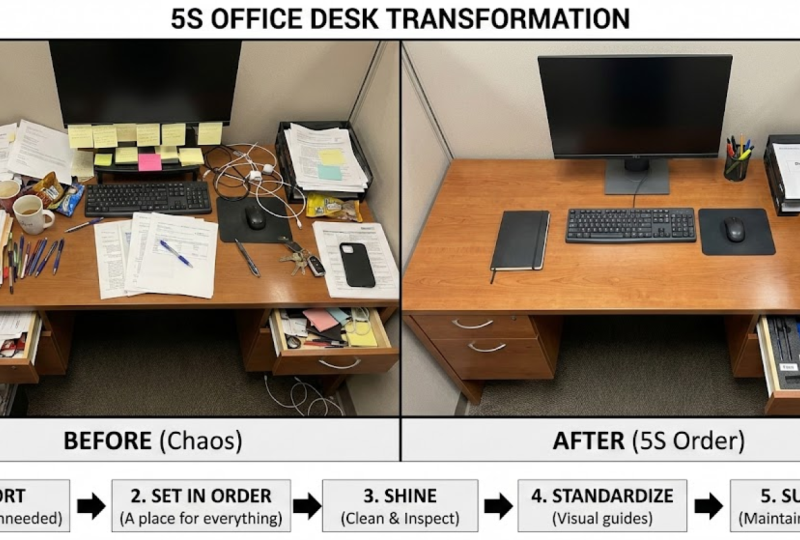
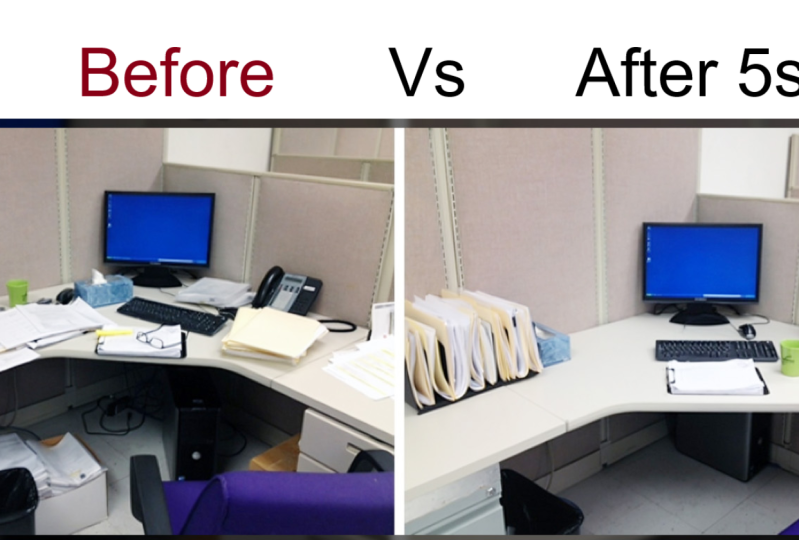
motion waste? Five West system is the
best way to handle it. Value stream mapping also
comes to our rescue. One piece flow, better work
and workforce planning. Remember,
transportation waste is the waste where the
material is moving. Motion waste is where
the people are moving, the employees are moving. In case of a service industry, transportation waste
would mean that you take a physical printout and send it by courier from
one location to another. Was a motion waste could be moving the files between
the folders unnecessarily. In the next video,
we're going to learn about the weighting waste.
22. Waiting Waste: Let's now look at each one
of the waste in more detail. In this video, we're going to talk about the waiting waste. Waiting occurs when someone in the process chain is delayed
from taking the next step. They are faulting or
slowing down the process. In lien, time is money and
it is a serious principle. Waiting leads to lost momentum and wasted
production time. Hence, this waste is
very easy to recognize. Goods waiting to be delivered, equipment waiting
to be repaired, staff waiting from
the previous task to finish to start their work, sometimes waiting for the
manager to approve your task. The common cause of
the weighting waste is unbalanced workload, unplanned downtime,
long setup times, inefficient or
insufficient workforce. Poor quality process steps
also add up to this. How do we countermeasure
weighting waste? Continuous flow, standard
operating procedures, SOPs, and value stream mapping. You see that we use VSM in
attacking all types of waste. In the next video,
we're going to talk about overproduction waste.
23. Over Production Waste: Let's now look at each one
of the waste in more detail. Base f, overproduction. Overproduction means
producing more than the customer's request or producing it even
before it is needed. This leads to excess cost and triggers other
ways like inventory, transportation,
motion, and weighting. Overproduction ties
up the capacity, material, time, and
resources unnecessarily. You paid today for what
you might need next week. And, the common cause for overproduction waste is just
in case production strategy. Unclear customer demands,
long setup times, production based on forecast and poorly applied automation. How do we countermeasure
overproduction? Just in time production, aligning production
with customers demand using the
concept of tack time, cycle time, and lead time. Reduce setup time with SMED to allow smaller
economical batches. In the next video,
we're going to talk about overprocessing waste.
24. OverProcessing Waste: Let's now look at each one
of the waste in more detail. Was six, overprocessing waste. Opcessing is
performing more work, adding more features than the customer values or requires. This can include
unnecessary features or tasks that increases the cost without increasing the value. Example, installing a TV
screen in the truck of a car. Customer neither expect it nor is willing to
pay extra for this. Sometimes we are busy changing the font colors of our PPT causing us
over processing waste. The common cause for overprocessing waste is
over designed equipments. Re entering or duplicating the data, misunderstood
customer requirements. How do we countermeasure
overprocessing waste? We compare the customer requires to the
manufacturing specs. We simplify the process, we re evaluate the
unnecessary steps, and last but not the least, value stream mapping
comes to our rescue. In the next video, we're
going to talk about defects. We have reached the
waste number seven.
25. Defects Waste: Let's now look at each one
of the waste in more detail. Was seven defects. Defect occurs when
the production isn't fit for use or requires rework or scrapping or increasing the cost and
consuming resources. We should be believing the
concept of first time right. Defective products result
in lost time, extra labor, tools, and sometimes dissatisfied
customers inspection. The common cause for defects
is poor quality control, excessive repairs,
inadequate documentation, lack of standards,
untrained workers. How do we
countermeasure defects, mistake proofing or PkaokiGdoka, automation with a human touch, root cause analysis, and
standardized work instruction. In the next video,
we are going to talk about unutilized skills. Y
26. Talent Waste: Let's now look at each one
of the waste in more detail. Waste eight unutilized. The most important type
of waste that needs to be attacked is unutilized
talent or skills. This waste relates to underusing the
employee's capabilities, abilities, ideas and creativity. We often overlook this waste
because it arises from poor management practices and the policies that limits the
employee's contribution. The common causes are administrative tasks
that waste time, poor communication,
and lack of teamwork. Low employee motivation,
insufficient training. The counter measure for
unutilized skill set is to better or improve
the communication channel, hire and develop the
skilled workflows, provide appropriate training, and ensure the skill
based job assignments. The goal of the
lean manufacturing is to eliminate
this eight waste, giving you a production system that has competitive advantage. While it's easy to
identify these waste, removing them is much
more challenging. Also remember not to
neglect the two abs, Mura, that is unevenness, Muri that is overburden. They also negatively impact
the performance of the team. Whether you are in
a service industry or a manufacturing company, all of this you have in your process and you
need to attack them. I will see you in the
next video. Thank you.
27. Summary till Now: Course overview. Foundation and principle of six Sigma and lien. In this course, we
will be introducing you to the foundation
and principle of Six Sigma and LIN
along with the values these quality and productivity
improvement methodologies bring to the organization. We also cover the key lien
tools commonly used in six Sigma projects and
explain what is len, what is Six Sigma, and what is the integrated or a unified approach
called lean Six Sigma. So what exactly is six Sigma? It all begin with an
important metric defects per million opportunity. DPMO. DPMO is a scientific
measure used to calculate the number of
potential mistakes or defects in the delivery
of products and services. This DPMO metric sits within the broader
organizational system where six Sigma operates. The core competence of this system is the
improvement methodology, which is known as
the DMAC cycle, which stands for define, measure, analyze,
improve, and control. So together, the metric and the DMAC process forms the foundation of
Six Sigma projects. This enables the organization to systematically improve the
business process of all time. Why do we need six Sigma? There are several compelling
reasons to adopt. The Fruit track
record of Six Sigma, which was popularized
by Motorola and General Electrics
in 1980s and 1990s. Moreover, the code
techniques have been used to nearly a century and have been adopted by leading organization
across the industry. The powerful tool kit, Six Sigma offers a
structured methodology and a robot set of tools. It identifies and
eliminates defects, reducing variation,
and improving quality. Though it was born
in manufacturing, this six sigma has
been successfully applied in a wide
range of industry, including financial
services, government, non profit organizations,
healthcare, logistics, and many more. Currently, even BPOs use Six Sigma from the
last three decades. The key benefits of Six Sigma
is that all organizations, whether they are for
profit or non profit, everybody faces the challenge of controlling operating cost. While ensuring sustainable
revenue growth, Six Sigma addresses these
challenges very well. So what are the ways
in which Six Sigma helps you manage
this cost reduction? Six Sigma has a proven method called cost of poor quality, famously known as
COPQ which is used. Six Sigma emphasizes on
the voice of customer BOC, to understand the customer
satisfaction level. We are aiming to
reduce variation, eliminate inefficiency, and improve the
process reliability. Six Sigma helps in profitability
and long term value. By improving quality
and efficiency, Six Sigma contributes to
increased net profits to the organization and improve the value system in
the organization. It builds a culture of
continuous improvement. So when we focus on
continuous improvement, Six Sigma ensures that
the organization remains customer focused while enhancing
internal capabilities. Process controls and
process performances. You need to understand
that DPMO and process performance are very important when it comes
to Six Sigma projects. The concepts like DPMO is the fundamental
basis for six Sigma. Once you can measure
and capture the data, you can then check the
chart performances, compare the actual results
to a defined goal or mean. Evaluate deviation from
statistical tools. By applying standard deviation, we access how process performs relative to its
specification limit. Anything outside the upper and the lower specification
limit is considered as out of spec and meets and it fails to meet
the customer expectation, principle of six Sigma and lie. In this course, we
will be introducing you to the foundation
and principle of six Sigma and lie
along with the values these quality and productivity
improvement methodologies bring to the organization.
28. Quiz Lean tools and Techniques: Welcome back. In this lesson, we are going to learn about
lean tools and techniques. Lean just isn't
about cutting waste. It's about designing a system where inefficiency
is impossible. You can name a few tools and concepts that
you are aware of. Please write it down in
the description section. What if you had
tools to fix this? A banking client reports
frequent data entry errors. Upon review, a few
four different teams are touching the same form
before it gets processed. Escalations are rising. What would you first check? Is it the agent training, process workflow,
or ticket routing? How would you find
the root cause? Please give the answer in
the description section. The second scenario
is a telecom client escalates because 15% of the customer queries are
resolved incorrectly. The average handle time has increased by 30 seconds
in the last month. What do you think
is going wrong? What information would
you need to fix it? And how often such multiple
handoffs happen in your team? Please give me the answer in the description
section below. The third scenario
is that your team processes health
insurance claims. Recently, SLA breaches
have increased by 25%, mainly because the claims are bouncing back between
teams multiple times. Where do you see the
possible inefficiencies? Who should own the claims
process, and why is it failing? To understand these
scenarios much better, let's understand the tools. We start by identifying
waste in the process, and there are eight
specific types of waste we will learn to
spot and eliminate. These are the first steps to lean a day in the
life of an agent. A customer sends an email, a ticket is created. It's assigned to a wrong team. It gets reassigned. Agent raises queries
due to unclear SOPs. Customer follows up twice and the final resolution
after two days. Let's wear the lean lens.
What's going wrong? Where's the waiting time?
Where is the rework? Where's unnecessary movements, and is the customer
experience smooth?
29. 5s With a game: The five s system. Let's understand the five S.
The first one is the SOT. It is the initial step. SOT is about eliminating
unnecessary items from the workspace to foster a
more efficient environment. Set in order set in
order is concerned with arranging the
remaining items for better accessibility
and enhanced workflow. She shine the stress the importance of
cleaning the workplace to uphold the safe and
efficient environment. We need to standardize, that is the fourth S because if we develop the
guidelines and procedures, it will ensure that the
learning that we did from the first three S are sustained. To the concluding
step is sustenance, guarantees that the
enhancement are preserved over time through consistent audits
and assessment. So how do we implement
fives at workplace? The first S is about removing unnecessary files and outdated
emails or redundant tools. Example, you can archive the old customer records
in the call center. The second one is set in order, SitonOganizing workspace or digital systems
for easy access, standardized Bhlder structure
for IT service request. Shine, CSO, maintain a
clean functional workspace, implementing a clean desk policy and regular system maintenance. Standardize, sit sit SG so, standardize, Set so, create AOPs checklist and
automation for consistency. A uniform email response
template for customer service. Sustained embed the five into company culture through
training and audits. Monthly FIS audit in
banking support team can ensure that whatever
we have implemented in the first four are sustained. Um, how do you implement FIS? It's important to train the employees for successful
implementation of FIS. This will ensure understanding and following the practice. Regular audits,
conducting regular audits helps maintain high standards of cleanliness and organization. This is ensuring adherence
to the FIS principle. Culture of continuous
improvement encourages employees to regularly seek ways to enhance efficiency
and productivity. Now that we learned about five, it's time for us to play
a game to understand this concept really
well. Are you ready? The game is about
finding the digits. You need to find the numbers
in the order of one to 49, and the time given to
you is 20 seconds. My clock is ready, right? You understood the task. The task is to find one
to 49 in the 20 seconds. Let's get started. I have
ticked off the timer. You need to start finding. Please ensure you
go in a sequence. First, find the letter one, then two, then three, and so on. Please don't jump
directly to 86 or 69. You target is only
to stop at 49. Great. Time is up. What
did you understand? How many of you were
able to find the number 49 or the first digit. Let's implement the first S. So we need to now
implement the fives. The first S is to sort. The purpose of SOT
is to eliminate any unnecessary numbers
that do not add value. Our target is only to find
the numbers one to 49. The numbers 50-90 are
only distractions. Hence, I have already
removed these numbers and you will have
to find the number of one to 49 in a sequence. I hope you are ready. I have set the timer three, two, one. Stop. Go. Please write in the
common section. How much did you identify? We were much better
than the first round. It's time for us to go to the implementation
of the second, that is set in order, organized for efficient flow. I'm going to put the
numbers in a checker box. One is on the left bottom box, two is on the left middle box, and three is on
the left top box. Our target would be to
find the number four, which would be in the middle
bottom box, and so on. Are you ready to start the game? You get the same 20
seconds to find it. Let's go. 10 seconds up. Tell me where did you reach? I think after the
implementation of seconds, you would have reached a better number than your
first and the second round. Now, let's implement
the third S. Let's sign and
standardize the process. We will order the number
in a standard way. This will ensure that
we are able to organize it in a more better way. I'll give you 20 seconds, and you please tell me within how much time you were able to identify all the 49 numbers
1-49 in a sequence. I think most of you would have done in the first
three, 4 seconds. Why? Because the numbers
are arranged in a sequence, you just had to scan your
eyes and you would not need the entire 20 seconds to do this process. Isn't
it wonderful? I would go ahead and standardize the numbers
to be of the same size, reducing the strain on
the eyes of the people, the employees who are working. This would also ensure
that I'm able to see a certain sequence of
numbers in any order. Hence, understand
the importance of the five S. This game would have definitely helped you understand the practical way of implementing fives
at your workplace. Finally, the most
important thing, sustain. This isn't about just
one time cleanup. The challenge is keeping it
in this way, daily habits, team habits, regular checks, everyone on board to implement
fibers into the culture. This was a great example.
30. Spaghetti diagram step by step: Spaghetti diagram we use for visualizing the flow and
waste like motion waste, weighting waste, redundancy
waste, rework waste. So we want to go from
kiosk to clarity. It's a lean practitioner
guides for moment mapping. Why visual tool matter in lean? We have data which
says task one, two, three, four are done
in 10 minutes each. When you go to the reality, you see how the people are moving across the floor
to complete their task. So standard metrics hide
the physical struggle. A visual map exposes it. So we will do this
by a simple method. First, we will define
an understanding of the Spaghetti diagram
and how did it origin. We will pick up
some use cases from the shop floor to the
digital workflow. Then we will build a step by step mapping guide, and finally, we will do the analysis of identifying waste and
redesigning the process. So what exactly is the
Spaghetti diagram? It's a visual flow tracing the continuous
physical movement of people material information
through the process. The name is literal. If the map is a mess, the process is a mess. Just like the spaghetti
noodles in a plate, the people are moving around in the office in the same way. Why is it called a
Spaghetti diagram? A chaotic activity is crystallized in a
clear concrete form. An SOPs a standard
operating procedure says it's a straight line, but the actual expectation is to go around the people
to find something. A diagram captures
their complexity of movement and it's often
invisible to the management. It reveals a hidden
factory of work overload. So Robert Mono of workaround
searching and waiting. The core purpose is to identify the full culprits in the
process, the motion ways, unnecessary movements of
people or searching for tools, transportation waste,
unnecessary moments of material, Waiting waste, idle time caused
by the flow interruption, backtracking, returning
to the previous location due to the poor layout. So the lean waste is
linked to movement, motion, transportation
and weighting, people moving without adding value like the
Spaghetti diagram, excessive foot traffic
and searching. Product moving
without adding value, unnecessary material
handling and long routing. Stagnation points where the line clutters because we can
easily see the bottleneck, idle time, and the
flow interruption. The goal of lean is to eliminate these waste
to improve the flow. The difference between
a process flowchart and a Spaghetti
diagram is this that the process flowchart is logical shows how the
process should work, whereas a Spaghetti
diagram is physical. It shows how the
process actually works. So a flowchart is very good when you're
thinking about sequence, a Spaghetti diagram
maps the geography. Where it fits in
the lean toolkit. The Spaghetti diagram is
a process analysis tool. It acts as step zero
for layout redesign. You may be using
value stream mapping, five as layout,
archives and events. This will be the first step. It provides the current state reality check before the VSM. It visualizes safety
hazard and congestion. If you think about a
manufacturing shop floor, an operator running between
the machine and the tools, high motion, fatigue,
safety risk. The target is to move the
tools closer to point of use. A paper flow versus a digital handoff,
redundant approvals, sneaker net waiting, teams and streamlining
the digital routing. If I pick up example
from healthcare, a clinician's movement
has to be tracked. You could identify ways like reduced patient care
time, staff burnout. Our target is to decentralize the supplies to
the patient room. Let's understand the
process of building a Spaghetti diagram
step by step. The first step is
to map the area. We draw the current
layout to scale, like the inner front. We include the walls, the furnitures,
equipment, and obstacles. Why? Because that will show
the actual work that happens. Do not guess walk the floor
to verify the layout. The step two is to
collect the moment data. You identify the people
by different colors. Quote and do the Gemba
at the actual floor. Use different colors for different people or
different items. Here I'm taking the operator A as blue and the material as red. We observe the real
time moment and we do not rely on our
memory to draw this. We actually see it when
we are doing the Gemba. Trace it continuously. Trace the exact path, including the loops,
the hesitations, and the backtracking. If they stop to talk or wait, circle the spot to
identify a delay. The golden rule is do
not lift your pen. Measure. Though it's
an optional step, my suggestion would be to measure the distance
and the time it takes because you turn the picture into data by measuring the total
distance traveled, measure the time per cycle, and calculate the percentage of non value added activities. We then analyze the
diagram and look for congestions or
bottlenecks or waiting time, excessive transportation
of material, and a spider web for
searching and confusion. These patterns help us
identify where is the problem. A hint is to look for the
ink, which is the darkest. How do we link the
patterns to waste? If it's a back tracking, we see that the
loop is going off. The type of waste is a motion
waste or the poor sequence. Congestion is about weighting
waste and imbalanced, a long transit of
transportation or poor layout. This visual cues are the trigger
for root cause analysis. Before we might have a lot of walking, creating
cellular layout, point to use storage, and combine to eliminate
the handoff. A
31. Do's and Don't of Spaghetti Map: The dos and the dons of
the spaghetti diagram. Small mistakes
hide big insights. Spaghetti diagrams are the simple but most powerful
tool for visualizing flow. However, poor execution leads
to misleading conclusions. This guide ensures
your observation captures the reality of work, not just the theory. Spaghetti diagram revolves
around the motion waste, hiding in the plain side, but only if done correctly, assumptions and shortcuts
weakens the outcome. We often think workflow
is a straight line, but reality is that it's a series of loops
and interruptions. The first do is follow
the actual movement. Never assume the
path. Observe it. If I take the case study
of the claims office, the assumption is the flights
are transferred digitally. When you go and observe, you might see that the
agent has walked to the other floor five times a day to deliver
the printouts. The fix is digital sharing implemented, removing
travel instantly. We walked this path
20 times a shift. Engage the people
doing the work. The operator knows the
truth of the process. The nurse maps
their own movement between the pharmacy,
the lab, and the ward. You are a visitor
in their workspace. People doing the work
are the experts. In a hospital study, it wasn't the consultant
who found the waste. It was the nurses.
By engaging them, they identified the waste
steps from lab to the ward, and this added up to 40
minutes every single shift. That 40 minutes given bang
for the patient care. Let's understand the concept of color coding and measuring. If we use different
colors to separate role, material and shift in
the service sector, it could be as
data, information, people, so it can help us identify the different
types of movements. 2 hours lost per week. Don't guess the duration. Use the stopwatch
and the pedometers. Small 5 minutes delay
often aggregates 2 hours of lost productivity.
Details matter. First, use the color to
separate the variables, tracking a new hire
versus a senior agent. This can reveal training
gaps immediately. Second, measure everything. 5 minutes walk seems harmless. But in a service industry, those trips add up
to two full hours of lost productivity
per agent per week. Look for patterns
and get the buy in. You can look at the map. Don't just look at
the longest line. Look at the knots, the small
movement repeated 100 times. These are the
frustrations of life and crucially ensures leadership is informed before you start. We need alignment to ensure that the exercise is
safe and supported. Don't draw through the
walls are the machines. Don't shorten the route
to save drawing efforts, capture the geometry
of the real route. Now the don'ts, it's tempting to draw the
straight line to keep your map looking
tidy. Don't do it. If the operator walks around
the partition or a machine, your line should also
walk around it, too. If you draw through the wall, you are deleting the data about the distance
they actually travel. Don't skip or add the noise. Even a minor moment matters. Repeated small steps like
reaching out to the printer, switching desks,
switching the tabs reveal the process patterns. Don't map personal time, exclude restrooms, cafeterias
or personal walks. Focus strictly on
work related to process flows to maintain
the data integrity. Before you heard out, let's
review our checklist. Are we observing the real path? Are the operators involved? Do you have the colors
and the timers ready? And most importantly, does the leadership know
we are doing this? If you can check these
boxes, you are ready to map. I want to leave you
with a question. Think about your day. If this is a small
annoying task, you do ten times a day, walking to a printer,
switching the screen. If we map your day, what
would it look like? We are doing this exercise to remove the frustrations
for others. Let's go and find the flow.
32. Spaghetti Diagram Showing Invisible cost: Spaghetti diagram, seeing the
moment you never noticed. As you know, it's a
very simple lean tool to uncover hidden waste in
service and operations. We know spaghettis are the noodles which are
very much entangled. We need a smooth flow. The invisible cost of work. Have you ever wondered how much unnecessary movements
happen in your workplace, just to get one task done? We rarely count the steps, clicks or the screen switch, but they add up to the hours
and lost productivity. We need to have an X ray
vision for operations. If we start mapping
the moment along, and it could reveal the waste instantly without
any fancy softwares. You don't need
expensive consultants. You just need to see the flow. The benefit of doing a
Spaghetti diagram is that it helps us in checking the reality
and getting things done. How many steps to print
or approve one document? How often do you walk back
and forth for a simple task? Do your process look efficient or does it look
like a spaghetti? So what exactly is a
Spaghetti diagram? As you can see, the noodles or the spaghetti on
the left hand side, these are the real spaghettis. And when you are walking down
on your floor to complete a task and you are moving
around like a spaghetti, this can help you understand it. So it's a visual
tool that can map the actual path of
a person product, or a piece of information. It captures the messy reality for physical or digital moments. It's a mindset shift
because it's not about drawing with
perfect straight lines. We're not seeing perfection. It is to see the flow honestly. The core question is, can we do this in a smarter way? Let's understand the
eight steps path to clarity from
identifying the problem to sustaining the solution. Define the objective, map the workspace,
track the movement, draw the diagram,
analyze the mess, propose the
improvements, test it, and update all the people. It's a very simple eight
step process which can help you implement easy flow of work, remove the spaghetti and
the mess in the work. So let's get into each
of the step in detail. The first step is to
define the objective. We identify the process
and clarify the goal. So the process can be
a patient intake form, invoice approval, and so on. We clarify the goal, we reduce the distance, improve the response time, and reduce the handoff. How do I map the workspace? Sketch the physical or
the digital layout, including the desk
office printers, coffee stations, and
software interfaces. The step three is to
track the moment. Observe the real moment. Don't guess watch
with your eyes. It's a tip to use color
coded for the flow. So you are going to sit
with color pencils. People movement with red color, material movement
with the blue color, and information moment
with the green color. Step four is to
draw the diagram. Trace the actual
path continuously. Expectation is messy lines
is equal to success. Reality is it should look
like a bowl of spaghetti. Because that's the real story. Step five is to
analyze the mess. Look for the loops. Are you redoing the work? Look for the long distances. Is the equipment too far away? Look for the back and forth. Are we missing
tools at the desk? Look for the bottlencks. Where do lines overlap or stop? Step six is to
propose improvement. Rearrange, move
the workstations, or the equipment
logically, redesign, change the workflow to
minimize the handoff, digitalize, use technology
to bridge the physical gap. The goal is to
straighten the lines. Step seven and eight, you have to test the
pilot and update it. So try the new layout
for a week, learn, measure the difference in terms
of improved productivity, reduced fatigue, and
improved employee morale, and remap if there is
any changes required, update it and let everybody
be educated on the new flow. Individual reflection. If someone tracked
your steps today, how many would be non
value adding steps? For a team discussion, where does your team
waste the most moment? Do you design for convenience or do you
design it for efficiency? Beyond manufacturing is
the service with AI. The Spaghetti diagram is
also relevant for hospitals, banks, IT supports,
and shared offices. The new frontier about combining lean observation with
generative AI insights. Let's take up the first case. I want to do an initial
process analysis for IT helpdesk ticket workflow. I see that there's a
Tier one, Tier two, Tier three, Tier four
network and database. The ticket is going through all these things
in an entangled way. We need a structured flow. Ticket enters, AI
does the routing, automates the
resolution, human agent, and he gets closed. The challenge is mapping how a support ticket moves
across the department. A lean view is identifying excessive handoffs and a
generative AI boost is that I use AI to convert
text based SOP or a chat log into a visual
process map automatically. Let's take another example
of diagnostic lab, how I can improve the efficiency by scaling the operations. Optimize the technician moment
as sample volume doubles. The lean view would
be restructuring the layout to prevent
collision and delay. A generative AI post
would be simulate the future layouts and traffic jam based on
projected growth data. Let's take the clinic
check in redesign process. The challenge was
validating that the new layout actually works. A N would do a pre versus
post change moment. A generative AI analyzes the IoT sensor data to instantly generate before versus
after moment comparison. Insurance claim processing. We have to identify delays in
the claim approval process. A lean view would
be highlighting documents sitting idle
with waiting waste. A generative AI boost
analyzes the timestamp in log to highlight the boerlin
suggest optimized path, partnership of AI and lien. It's an integrated human
insight and machine precision. AI analyzes the pattern and
processes data at scale. Lien defines a value and ensures the flow
serves the customer. The results are faster
inside, smarter decision. Um.
33. Kaizen Daily Continuous Improvement: What is Kaizen? It means
change for better. This comes from the Japanese
philosophy of two words, Thai, which means change
and Zen, which means good. It is not a one time project, but a culture of sustained
continuous improvement. The core belief is that the person doing the
work is the expert. Everyone has the ability to improve their own process
every single day. Focus on making the work easier, safer and more valuable
by finding and solving small everyday problems with your own wisdom and
not large investment. The power of small step is that how gradual change
creates a major impact. Kaizen focuses on small, gradual incremental
changes applied over a long period of time. Major breakthroughs
are the results of thousands of tiny improvements
accumulated over time. It's an ongoing effort on
improve upon the status quo. Consistency over intensity. A 1% improvement every day leads to exponential growth in
efficiency and quality. Emphasize on low cost, low risk ideas
implemented by the team. Then 1% ideas are better
than a 10% mandate. Seeing with new eyes, we need to identify
the waste and the strain or overburden
in our processes. Waste is any activity
that consumes resources but adds no
value to the customer. When we overburden our
people and system that leads to burnout and error is an
example of MI or strain. We can see that a
claims processing workflow involves correcting
billing code error, resulting in rework,
system response lag, making the people wait, searching for the policy file, and a mental fetti for
the screen toggling. But after Kaizen, an
ideal claim processing, after eliminating Muda and Muri, it becomes a straight
through process. The Kaizen mindset is a scientific approach
to problem solving. Kaizen is rooted in scientific
analysis, not guesswork. It's about understanding
how a process works to discover
how to improve it. It's about going to the
source and asking the why replacing this is how we have always done it with how
we can do it better. The action cycle is observe, identify, ideate, and implement. Study the current
process at micro level. Identify pinpoints at a specific
source of Muda or Modi. IDA generates a simple
idea to eliminate, combine or specify or simplify. Test the idea on a small scale and if it works, standardize it. The foundation of IN is where KISN operational
excellence begins. KISN is not a
standalone initiative. It's essential
building block for a lean organization because daily problem solving by
everyone is a KisN culture, which indirectly supports
the lean principle of value, pull and flow, and which ultimately results in operational excellence of
higher quality and accuracy, faster turnaround time, improved employee morale and
lowest possible cost. So Lean is a management
philosophy focused on maximizing customer value by relentlessly
eliminating waste. If Lean is a goal, Tyson is the engine of daily improvement that
powers that energy. A strong Kison culture is the path to achieve
key business results, higher quality accuracy,
faster turnaround time, improved employee morale,
and lowest possible cost. Leading the change, how to
foster the Kaizen mindset? Because the Kaizen culture depends upon leader
who encourages, not blocks the idea. Avoid these mental blocks. We are too busy to
look at it now. It's a good idea, but
it's not in the budget. I have tried that before,
and it will fail. That's not your area. Let someone else think about it. Embrace these actions.
Question everything. Ask why about current practices. Focus on how to
make an idea work, not why it can't work. So think on how to. Implement a good idea now. Correct mistake as you go. Don't seek perfection.
Empower your team. It's a great idea. How can I support
you? Instead of saying it's your
idea and your baby.
34. From Silos to Flow: The illusion of progress. When every team is winning, why isn't there a progress? Or our department is
hitting their targets. Example, Claims
intake processing speed has gone up by 15%. Billing and coding team
accuracy improved by 10%. Compliance review
throughput increase by 12%. We celebrated the
isolated team victories. The paradoxes, despite this, our end to end claim to case
cycle has not been improved. The customer is
still frustrated. So the total claim to
cash cycle is 45 days. There is no change.
Seeing the white space, where 90% of your
lead time is hiding, it could be the queue waiting
time in terms of Moda, or it could be a rework loop, which is a mode of rework
and transportation. So as you can see
in the diagram, the claim intake takes a
value added time of 3 hours, but the waiting queue
is for eight days. Again, the billing
and coding team works with a value
added time of 5 hours, but the rework loop is for three days clarifying questions. And finally, the compliance check where the value
added time is 2 hours. So technically, it's a 10
hours value added time, but the customer is experiencing a 12 to 13 days of delay. Our problem isn't the value
added time within your team. It's the non value added time like Moda
between our teams. The purpose of VSM is to
eliminate this entire end to end flow and make the
wasteful wide space impossible to ignore. Your process is your product. A VSM sees what the
customer feels. A customer don't
experience our department. They experience a
single unified process. A fragmented internal flow creates a broken
external experience, unpredictable turnaround time, multiple follow up calls
seeking status updates, inconsistent information
from different departments. VSM is the only tool that maps the journey from the
customer's point of view, from their initial request
to the final value delivery. As you can see, when you look at the internal
view diagram, there is a lot of rework
and information gap between the process flow. The customer view is that our customer journey view is that application is
submitted, there is blank. Then he makes a
status call for one. Again, he waits, he makes
the status call two, and the account gets activated. So understand that the rework
and information gap within our process is not giving a good experience
to the customer. The system trap. Why making one team faster can make
everything else slow? Because there's a concept
called as Mura or imbalance, which indirectly results in Muri or overburden and strain. Maybe you have a good
data entry process and you have automated it. The Senior
authorization review is the bottleneck and
the final processing, waiting for the work to arrive. The system performance
is limited by its single biggest
constraint, the bottleneck. Making a non
bottleneck department faster doesn't improve the
overall turnaround time. It creates a bigger backlog
for the bottleneck, causing more or
imbalance in the system. This increases the Mori
on the bottleneck team, leading to burnout, errors, and even longer lead times. The blueprint of the truth
system wide improvement, we need to focus on the place
where there's a bottleneck. Pinpoint the single constraint truly impacting the
turnaround time. Align all the teams by
creating a shared goal, improving the end to end flow that transcends
departmental silos. Focuses on investment,
guides where to spend the time and resources for the greatest
system wide impact, avoiding the wasted effort. Connect our work
to customer value. VSM helps us to stop from making improvements that
don't matter to the person waiting
for our service.
35. Kaizen Culture Playbook for Operations: Building your Kaizen culture, a practical playbook for BPO
and healthcare operations. The first step, make
it safe to suggest. Continuous improvement
begins when people feel safe enough to
question the status quo. The initial goal is
to not break through the ideas but building the
habit of participation. Observable behaviors. Leaders actively ask teams. What's the most frustrating
part of your work today? Team hurdles have a
dedicated five minute slot for process pain points. No idea is dismissed publicly. The response is always
thanks for sharing it. Let's explore that. If I think about some examples from the healthcare
or a BPO context, instead of saying, why is the HD so high on
this call type? Try to say, I noticed this
call type takes longer. What are the systems road
blocks you are hitting? Create a simple visible
system of ideas. The easier it is
to submit an idea, the more ideas you will get. Remove fiction from the process. Bad systems have high friction, good systems have low friction. Let's understand a
bad system first. It could be a multi page form requires manager pre approval, and ideas go back to the
black box with no feedback. A good system would be
something where we have a dedicated slack
or team channel like hash Kays and ideas. A simple digital form
with two questions. What is the problem and what
is your idea to fix it? All suggestions are visible on shared digital Carbon
board with the status, idea reviewing,
testing and done. In the beginning, reward the participation,
not the perfection. To build momentum, the first win must be celebrated visibly
and shared with the team. This creates a positive
feedback loop. The source material highlights a critical rule
for starting out. In the initial stage, whatever benefits is
coming through Kison, it should be distributed to promote the very purpose
of the activity. Practical examples,
a small idea. An agent creates a
simple email template for a common query, seeing 30 seconds
per interaction. Reward the team. The team leader recognizes the agent
in the daily huddle. The small time
savings are pooled for a team funded
coffee break or lunch. Organizational rewards,
implemented ideas are featured in a weekly internal newsletter with the photos of the person
and team who suggested. Now, we train the teams
to see what's hidden. Once people are
actively participating, it's time to provide
them with mental models to identify high impact
improvement opportunities. The Kison is the culture of sustained continuous
improvement, focusing on eliminating waste in all systems and processes. So coming back, a culture of sustained continuous
improvement, focusing on eliminating waste in all systems and processes. In our world, it means
finding and fixing small, frustrating things that
add time and clicks, but don't help the
patient or the customer. It's about making our own work
easier and more effective. Learning the language of waste, Muda, Mura, or Muri waste, inconsistency and
overburden, Muda or waste, activities that add cost
and time, but no value. Example, waiting waste for manager's approval for
processing high value claims. The other Muda could
be excessive motion, toggling between four
different screens to answer one patient queries. Rework or defect, correcting the data entry errors on
the patient intake form. Over processing waste, a
five step quality check for a task that is already at
a 99.8% first pass yield. MRA inconsistency, variation and imbalance
in the process. One agent is overwhelmed with the complex cases while
another only gets simple one. End of month reporting causes a massive spike in the
workload and stress. Muri are overburdened putting unreasonable stress on
people and systems, expecting one agent
to meet their call handling KPI while navigating
a slow crashing CRM. The simple toolkit for
generating the ECRS ideas. You don't need complex
methodologies to start. Ask four simple questions
about any frustrating task. E, eliminate. Can we get rid
of this step completely? Example, removing a
redundant approval field on a travel reimbursement form. C, combine. Can we merge this step
with another one? Example, combining patient demographics and
insurance verification into one screen or
reduce or rearrange. Can we do less on this
or change the sequence? Example, shortening a mandatory call
script by 10 seconds. Simplify, can we make
this easier step? Creating a browser
bookmark folder for the five most
knowledge based article? Making it stick,
refresher training and impartial coaching. Knowledge fades with time. Culture is to build through consistent reinforcement and
fair evaluation of ideas, continuous learning,
refresher training. Short 15 minute session in team meeting focuses
on one type of waste. This week, we hunt
for Moda of waiting, peer to peer sharing. Even team members who
implement a successful Kison present there before
and after to the team. The source emphasizes the necessity of
impartial evaluation. A team leader's role as a coach, evaluate the ideas based on its logic and potential
impact on the process. Please don't favor ideas from senior members or dismiss
ideas from the new hires. Parity will stop employees from giving suggestions
in the future. Rising the bar from small fixes from small fixes
to systematic improvements. As the culture matures, we shift focus from
quantity of ideas to the quality and impact
of implemented solution. The next level analysis
a claim denial rate, first call resolution,
and patient satisfaction. We need a small fix. So before implementing a KISN, we should review the
standardization step. Can this new method be performed consistently
by everyone? We have to check for the
widespread application. If this works for Team A, can it be applied to
Team B and Team C? Alignment. Does this involvement help us meet our key objectives? Example, reduce
claim denial rate, improve first call resolution. Maintaining focus.
What is not a Kison? Defining clear boundaries
prevent a program from being diluted with suggestions that aren't true process improvement. Let's understand some common
things which are not a KISN. Fixing a typo in the patient
record you just entered. KISN would be a system that changes or prevents
the typo error. Personal request asking
for a new chair or a change in company policy
on breaks is not a KISN. Obvious or regular maintenance, cleaning your desktop
files is not a KISN. An unimplemented idea. An idea is just a suggestion. A KISN is an implemented
improvement. Copying a previous Kison, resubmit an idea that is
already being implemented. How leaders nurture
Kison, the dos. Your response as a leader
determines whether an employee will bring you
another idea in the future. Embrace these
behaviors as a leader, challenge the current standards. Always ask the question,
why do we do it this way? Is there a better way?
Think how to do it, not why it can't be done. Focus energy on finding a
path to implementation. Don't seek perfection. A small implemented improvements now is better than a
perfect plan next year. As the source says, if you make a mistake,
correct it that time. Focus on wisdom, not money. Challenge the team to
find solution using existing resources and
their own ingenuity first. How leaders kill
Kison the don'ts. These common phrases, often
said without ill intent can instantly shut down employee engagement and
destroy psychology safety. It's a good idea, but
the timing isn't right. We are too busy to
look at it right now. It's not in this year's budget. I tried something similar
before and it failed. That's not your area
of responsibility. It's your idea, so
it's your baby. I won't take responsibility
if it fails. This kills the idea of Kison. How do we lock the gains
from idea to a new standard? An improvement is only
temporary until it becomes a new documented way
of working for everyone. Otherwise, people naturally
revert to the old process. First is to test and refine. The new method is tested by
a small group to document. A successful method is
documented simply and visually. Three, train. All
affected team members are trained on the new
standard. Four, update. All documents and old
documentation is archived. New process is now
the way we work. The power of visual
one page SOP. The best documentation is created by people
who do the work, for the people who do the work, it should be clear, concise,
and easy to follow. Created by the people
and for the people. So before Kison, a ten
page word document with long paragraphs and tasks. No screenshots or
diagrams out of date, told in a confusing share drive. After Kison, a single
laminated page or a clean PDF uses a simple
flow chart or numbered steps, includes annotate
screenshots for key actions, accessible from a central, easy to find knowledge base. Spreading success from one
team to the entire process. The true value of
ISN is unlocked when local improvement is scaled
to a global standard. A dedicated team or a
GiSN champion regularly review implemented improvements
for wider applicability. They share the success stories
actively through demos, newspaper and internal forums. We adopt and adapt. A team in a patient
scheduling sees a macro development
by claim processing. They adapt it to their new needs and
adopt the improvement. Isn flywheel, a self sustaining
culture of improvement. Kisn is not a
program you finish. It's a cycle. One spinning
builds its own momentum. Encourage participation,
more ideas are generated. To train and equip the
quality of idea improves. Three, implement
quality solutions. Tangible business
results are achieved. Four, standardize and share the baseline for
performance is raised. The new standard becomes the next starting point
for the improvement. The goal is to make small
improvement parts of everyone's job and
every single day.
36. Kaizen Leadership Two Paths: And leaders to path, choosing a culture of progress over a
habit of stagnation. Your mindset is the system. Kaizen is not a suggestion
box or a one time project. It's a culture of sustained
continuous improvement. For leaders in service
organizations, the success of this culture depends entirely on the
mindset they model. Your response is
a new idea either built a path to progress
or a wall to stagnation. Every interaction is a choice. The concept over here is that the source material
identifies the eighth form of waste beyond the traditional seven
unused human talent or human intellect. When leaders create
a meltal block, they are actively
choosing to waste their team's most valuable
resource, their brain. The wall of no resources, why busy and broke
are the traps. The two most common
improvement killers are phrases that sound like responsible management but are actually
admission or failure. We are too busy to
study this right now. There is no time to
fix the process, and hence the process is broken. The consequences of
statement like we are too busy precisely because
your process is broken. Refusing to pause and fix the leak ensures that you are
bailing the water forever. Your team is sentenced to
permanent firefighting. This is not in this
year's budget. This is a very bad statement
for a leader to make because you are prioritizing
money over ideas. The consequences, you misunderstand Kaizen
core principle. It prioritizes
wisdom over wallet. By waiting for a budget, you ignore the
countless low cost, high impact improvements
your team could make right now using
the existing resources. Let me give you a
practical illustration. A team is buried with redundant data entry
for client reports. The no resource leader says, We can't afford
automation software. The Kaizen leader asks, How can we simplify
this report using our existing tools to eliminate
80% of the manual work? The silos of indifferences.
It's not my job. In an interconnected
service delivery model, it's not my problem, it's a dangerous solution. When a leader
deflates ownership, they become the bottom neck. It's not our business, let someone else think about it. Do your job, let this be implemented by
another department. We are not affected
that much by this. This creates a culture of finger pointing and
learned helplessness. Teams optimize their
individual task, even if it harms the
overall client experience. Good ideas that require cross functional supports
are guaranteed to fail, and eventually people stop
suggesting improvements. As a leader, if an improvement touches
your sphere of influence, that is definitely your job. The throne of ego wasting
your team's brainpower. People doing daily work possesses a level of practical knowledge
no manager can match. Dismissing their insight
is a strategic blunder. Remember, employees don't
just bring two hands to work. They get their brain also. So are you teaching
me I'm your boss? Is a killer phrase.
Please avoid it. When you pull rank, you activate the eighth waste
unused human intellect. You are left with
only one mind, yours, trying to solve problems that require the entire
team's perspective. Your authority doesn't come
from having all the answers. It comes from creating an environment where
the big ideas and the best ideas can win regardless of who
those ideas came from. The path of progress is
adapting the Kaizen mindset. The alternative path is built not on the
budget or authority, but on the mindset of
curiosity and action. A Kaizen leader understands that a small gradual
incremental changes applied over a long period, adding up to a major impact
on business results. They transform their role from gatekeeper to
an accelerator. The core shift is
why it won't work. Two, how can we make it work? The focus on obstacles shifts
to the focus on solution. From being a gatekeeper
of resource, you become a
facilitator of wisdom. Hoding control is replaced by sharing knowledge
and enabling others from seeking perfection
to making progress. Waiting for the perfect plan is abandoning the continuous
improvement culture. Start with the Y, question
every idea that is fixed. A Kaizen leader refuses to accept because we have
always done it this way. It's a valid answer. They create psychological
safety for their teams to relentlessly question the
current practices and standard. The consequence of not asking why is institutionalized
inefficiencies. You carry the baggage of
yesterday into tomorrow. When we make curiosity
a core value, you give your team a license
to eliminate that waste. Why does this approval process take five steps? Can it be two? Why do we create
this weekly report? Who reads it, and what
decision do they make with it? Is there an alternative, simpler way to
onboard this client? Make execution happen? Progress over perfection. Do you seek perfection
in the first go? A 70% solution implemented
today is definitely more valuable than 100% solution
that never materialized. The goal is to make small
measurable improvements now and build from there. The leadership language is
that instead of saying we need more data before we can try this, please ask the question. What is the smallest and the fastest version of this idea that we
can test by Friday. Don't make excuses. Make execution happen. If you make a mistake,
correct it that time. Waiting for a perfect
plan guarantees inaction. Your competitors who
are willing to be 70% right and learn quickly
will race past you. Lead with wisdom,
not your wallet. The first answer to any problem should be What can we buy, but what can we simplify, combine or eliminate with
our current resources? This forces higher level of creativity and
critical thinking. In Kaizen, don't focus
on spending money. Focus on your wisdom
and use your mind. This is a very
beautiful diagram. The wallet approach, our
team is disorganized. We need to buy expensive
project management software. The wisdom approach
will be let's diagnose our workflow
issues first. Can we create a simple
visual carbon board on our shared digital whiteboard to clarify project status? It cost nothing, and it can
implement it this afternoon. And we can implement this. We can implement
it this afternoon. A wallet first approach
creates a bloated, expensive and complex operation. A wisdom first approach builds a lean, agile, intelligent
organization. Two destinies compounding stagnation versus
compounding improvement. If I go with the enthropic view, employ disengagement,
client frustration, rising cost, and
mis opportunities. If I go with compounding
improvement side, I can see team empowerment, process efficiency, higher quality service,
sustainable growth. TISN is the effect of small gradual changes
compounding over time. As a leader, your
daily mindset choices are not small things. They are everything.
They determine which path your
organization flows.
37. Kaizen Service Improvement Reframed: ISN lens a practical guide to finding daily improvements
in service operations. Tyson factory floor is now
your digital workspace. The core principle of Kison
is to eliminate waste, inconsistency and strain,
and it's universal. The challenge is
translating them from the factory floor to the
service environment. This guide provides a practical framework
to do just that. The machine, the material,
and the manpower. Your software, ID systems, and digital tools
are the machine. The material is your cases, your tickets, customer
files, and the data. The manpower is your team, which is your talent, focus, and the cognitive energy. The three enemies of efficiency, strain that is overburdened, inconsistency or Mura and
waste Muda, Muri or strain. Remember it, Muri
strengths with I and strain also has I Muri, unreasonable stress
on people and systems leads to burnout,
errors and downtime. Think of systems
that constantly slow or a process that requires
excessive mental effort. MRA is inconsistency
or imbalance. Variation in your process or system performance leads to unpredictable
results and waiting. Think of workloads that swing widely between teams or tickets, resolving items that
are all over the map. Muda or waste, any activity that consumes resources but adds
no value to the customer, the sources of delay
and unnecessary cost. A map for improvement. The six scope areas of KISN is service,
manpower efficiency, system and tools,
process and workflow, workplace safety, work
item utilization, and quality control. When we talk about
manpower efficiency, we are thinking about maximizing the value of the human talent. When we focus on
system and tools, we want to ensure that our
digital machines run smoothly. Process and workflow is about designing efficient
path from work to flow. Protecting against
physical or digital harm is the core of workplace safety. Optimizing the material you work with is about work
item utilization. Building excellence
into every work item is the goal of quality control. Let's dive into
each one of them. Manpower efficiency. Focus on human talent on high value work, not
digital friction. Manpower efficiency isn't
about working harder. It's about removing the obstacle that waste time
and mental energy. It targets the mod, waste of searching, waiting, and redoing the
work, and Mori or the strain of confusion and
physically taxing task. The key question is, where are we spending our team's valuable time on activities that don't
directly help our customers? Finding and fixing
manpower waste. A common ways to look
for is searching. Are your team members
looking for right tool, right knowledge based articles, or customer file across
multiple systems? Observe for excess motion, something like
unnecessary clicks, screen switching or navigating
on a poorly designed UI, waiting and idling
for slow systems to load for information from
other team or for approvals. Rework correcting
errors, reopening tickets due to
incomplete information or redoing the task. Conveyance, manually copying and pasting data between systems instead of using integration. Understand this that Muda
is more easy to find in a manufacturing plant floor
than in a service industry. Hence, you need to be smart. So the guys and ideas
so the question to ask in the ECRS
methodology would be, can we create a single
source of truth? Can we automate
this data transfer? Can two separate tools be
integrated into one dashboard? Can we reduce the number of clicks to complete
a common task? Can we create a simple checklist for complex tickets
to prevent rework? System and tool maintenance. You tools are your machines. They need continuous
improvement. In service operations, system
downtime, slow performance, and minor glitches are equivalent to a machine
breakdown on the factory floor. These issues create
MODA waiting, Mory strain,
indirectly impacting the team's ability to perform. The key question over here is what small recurring
system issues are we just living with which are silently
killing our productivity? From minor glitches
to major gains. The common ways to look for
is there a coolant leak, slow performance, memory hogs, applications that need
frequent restarting. Login failure, app crashes, features that don't
work as expected, system wide outage caused
by preventable issues, unnecessary notifications,
background processes, or tools left running that distract or slow
down those systems. A tool that only
works correctly if used in a specific way,
not intuitive way. So the question that we need
to ask is can we create a simple daily stand up or checklist for
our digital tools? Can we simplify a
complex tool into a template or
preconfigured settings? Can we establish minor
issues reporting channels to catch small problems before they become
a major breakdown? Let's move to process
and workflow layout. A poorly designed process
creates its own obstacle. The sequence of
your work matters. A logical streamline process allows for smooth
and fast completion. A convoluted one creates
MUDa either in the form of waiting or excessive
processing imbalance MUA and leading to an work in progress WIP pile up and
delay inventory waste. If we mapped our process
from start to finish, where would we find detours, bottlenecks, dead ends
or unnecessary steps? Streamlining the flow of value, common ways to look for. A single person or
step that slows down the entire workflow is an
example of a bottleneck. The time it takes to gather all the necessary
information before starting a task is a long setup time. Wasted time finding the
right document tools or person for the next step. It is the searching time,
unnecessary compliance steps, redundant approvals or
excessive documentation for simple task is extra wrapping and unwrapping or
overprocessing waste. The question to ask for
guys and ideas is can we remove this approval
step for low risk items? Can the information
gathering and the first step be done
in the same system? Let's move to the next
one, quality control. Quality isn't
inspected at the end. It is built from the start. The most expensive mistake is the one you may have to fix. Effective quality control
focuses on fool proofing or Poka Yoki the process to prevent defects from
ever occurring. This directly attacks the Moda
for rework and correction. Where do errors most
frequently occur? And how can we make
it impossible or at least very difficult that
the error will happen again? It's a very beautiful diagram. Designing processes
that prevents defects. The common ways to look for
is errors in data entry, incorrect information given to the customer or
bugs in the code. Reopening tickets,
recontacting customers for clarification and re running the reports is an
example of rework. Inspection time, excessive time spent on manual quality
assurance checks, peer reviews, and
supervisor approvals. Errors created by manually
copy pasting or moving data between the system is
handling induced defects. Ties and ideas and
questions to ask. Can we use drop down menus
instead of free text fields? Can we add automatic
data validation? Can we create standardized
templates for common responses to ensure
consistency and accuracy? The next item is work
item utilization. Every ticket is a raw material. It is designed for
efficient processing. The design is your material. The tickets, the forms, the request you work on dramatically impacts
the efficiency. Unnecessary fields and confusing layouts or
missing information are equivalent for poor
quality raw material that leads to scrap and rework. The key question over here is, how can we improve
our intake process so that every work item arrives perfectly formed and ready for immediate
value added work? How can we reduce waste
before the work even begins? Common waste to look
for is too many fields in a form leading to confusion
and incomplete data, Mints equivalent to
an excessive part in a manufacturing setup. Requiring a senior
employees time for a simple task that would be automated or handled
by a template, like an expensive material
because an associated versus a senior employees time is definitely a difference
in the dollar value. Tickets that are
immediately closed due to missing information
and are routed incorrectly or abandoned is an example of scrap in
a digital environment. A complex work
item that requires significant manual efforts
to move through the system, it's same like
heavyweight lifting. The key question to ask
for Keys and idea is that can we reduce the number of fields in our most common forms? Can we use conditional logics to only show relevant fields? We create different forms
for different request type. Moving to the next
important part of workplace safety because
a safe workplace is an efficient workplace. It reduces the mental stress and makes your employees happy. In a service environment, safety hazards are often
invisible but just as damaging. They range from physical
strain of poor ergonomics to the digital threats of phishing and mental stress
of an unreliable system. A safe environment prevents the ultimate waste which harms your team what are the
sources of physical, digital and psychological
risk on our daily work? How can we systematically
reduce them? Identifying and mitigating
the hidden risk. Common hazards to look for
is repetitive strain injury, that is RSI, from constant repetitive mouse
and keyboard actions. Danger of rotating parts. Phishing males are
insecure tools and social engineering risk. Data loss from system
crashes without autosave, accidental deletion
of critical files, danger of falling objects
in a manufacturing setup. If you think about collision
on a manufacturing floor, it is similar to overwriting each other's work in
a shared document without version control. Danger of high temperature
in a manufacturing floor is equivalent to a mental burnout
from excessive alerts, constant context switching
and high pressure workflows. The key question to ask
for guys and ideas is can we introduce keyboard shortcuts
to reduce mouse mileage? Can we create simple
visual guides for identifying
suspicious emails? Can we enable autosave
or version history on critical documents? Can we establish
focus time rules to reduce notification
driven burnouts? You don't need a committee. You don't need a budget. Eisen starts with
questioning the status quo. It is a simple brief that a better way is always possible. The greatest barrier
isn't resources. It's assuming things can't
be changed. Start tomorrow. Pick one small point of
friction in your daily work. Ask, is there a better, simpler and a past
way to do this? This is the beginning of Kison.
38. Muda Mura Muri: First, let's name the problem
you see every day as Muda, the Japanese term for
any activity that add cost or time but
does not add value. Think of all the
frustrating tasks that you do that don't help the
customer or the business. That is Muda or waste. It's the most obvious sign that a process isn't working
as well as it could. It's the operational
equivalent of a leaking pipe, a constant visible train of your resources,
time and energy. By definition, Muda means any operational
activity that adds cost or time but does not add value to the
product or service. Muda directly harms
your performance and your customer's experience. Waste isn't just
about inefficiency. It's about real
world consequences that ripple through the
entire organization. It's the root of
missed deadlines, budget overruns and
dissatisfied customers. Every moment spent on a
wasteful activity is the moment not spent on creating
value. Increased cost. Reworking claims and
managing long queues require extra staff
hours and resources. Delayed deliveries, waiting
and unnecessary process steps extends the time
it takes to serve a customer. Lowered quality. Rust work or process with
built in defects lead to errors that require
correction. Reduced morale. Constantly dealing with
broken processes is frustrating and demotivating
for everyone involved. You can see Muda in the
queue and in the rework. Waste isn't a
theoretical concept. It's happening right
now in your daily work. Here's what you look for
in a service environment. Waiting in the queue
is a type of waste. The customer call
waiting for an agent, an insurance claim sitting
in the inbox for days, the request waiting for approval
from another department. This is a time where no
value is being added. The process is tall
and the customer is waiting and the
clock is ticking. Rework on claims, the
waste of defects, a claim form submitted with missing information that
needs to be sent back, a data entry error that requires supervisor
to correct it. A report that has been rewritten because the initial
instructions were unclear. Every minute spent in fixing
a mistake is a direct cost. Rework requires extra manpower. Whatever you are
paying for a rework, that is waste of resources. Ask yourself, what can
we attack in this waste? Identify the waste
is the first step. The next is to challenge it. Use this simple but
powerful framework to generate ideas for improvement
in your own work area. Think about a frustration, non value added
task you performed regularly and ask
these questions. Eliminate. Can we get rid
of this step completely? Why do we do it at all? See, combine. Can we merge this step with another to make it
more efficient? Or reduce. If we can't eliminate it,
can we reduce the time, cost, or effort that
it requires Simplify. Can we make the
operation easier, faster or more straightforward? Start questioning the
current practices. Think how to do it, not why it cannot be done. So where does all
these waste come from? Let's meet Mr. Mura, the Japanese term for inconsistency and
imbalance and variation. If Muda is overflowing sink, Mura is the faulty facet, sometimes a trickle,
sometimes a flood. Mura is the unewnness
in your workflow. It's why one day your
team is overwhelmed with request and the next they are
waiting for work to arrive. This variation makes your process unpredictable
and unstable. Mura means inconsistency
or imbalance. It can be due to variation in the capacity or variation
in the quantity. Inconsistency is the engine
that generates the waste. Mura is rarely
visible on its own, but its effect is everywhere. When the work arrives in
unpredictable peaks and valleys, it creates a chaotic environment
where waste thrives. So rushed work results in
errors, bottlenecks and cues. When the work
floods in piles up, creating mood of waiting
and bottlenecks. When the work ties up, people and systems are left waiting nothing to
do the ideal time. To catch up after
the flood of work, people rush leading to mistake
and the Muda of rework. Pura generates Muda of waiting, Muda of stop, and
Muda of transport. Can you see Mura in the uneven
workload across your team? Think about the flow of
work in your organization. Is it smooth, steady river
or does it come in waves that crash against some teams
while others are left dry? That imbalance is
Mura in action. Team A is the flood
buried in request, working late to catch up, high chance of errors
due to the pressure. Team B is the trot, waiting for the
work from Team A, capacity is wasted,
skills are underutilized. This imbalance isn't a problem
of individual performance. It's a system problem. This variation is what
creates both the cues before the overload team and
the ideal team after it. Ask yourself, where is the
variation in our process? To smooth out the flow, you first have to see the
peaks and the valleys. Look for patterns of
inconsistency in your daily, weekly, and even monthly work. Answering these questions
reveal hidden Mura. I reduce the variation? Look at the number of
task arriving each hour. Is it stable or
widely unpredictable? Why does one team member have a backlog while the other
is asking for work? Is it due to the
skill set difference, task type, or how
work is assigned? Does the month end
and quarter end creates a predictable
surge of work? How does that surge impact our ability to deliver
quality service? Start tracking the flow. A simple chart showing task per day can make Mura
visible instantly. Finally, look at the
root cause of all of it, the Muri, Japanese term of overburden reasonableness
or the strain. Muri is putting
too much strain on our people, on our systems. It's asking someone to do a task without proper training using confusing softwares or working under constantable pressure. This overburden is what
makes the system create inconsistency that is Mura and results in
waste or the Muda. Muri means strain. It can be man, machine, or infrastructure
overburden. Muri leads to a
generation of fatigue. Over burden doesn't
just create waste. It burns out our best people. Muri is the most damaging
of three Ms because it directly impacts the health and the well being of our team. A system under constant
strain is unsustainable. People became, disengaged
and eventually leave. Fatigue and burnout. Constant pressure and overtime leads to mental and
physical exhaustion. A tired or stressed
employee is far more likely to make
mistakes creating rework. As strain is one of the
reasons for high absentism. Pushing people beyond their capacity results
in diminishing returns. Efficiency and
quality both suffer. You can feel Muri in the fatigue and see it
in the overtime report. Muri isn't just a
feeling of being busy. It's a state of being pushed
beyond reasonable limits. It manifests when the
demand for the job exceeds the capacity of the person or the process
designed to handle it. So we have Muri, which
is overburdened. We ask employees to handle twice the normal claim volume
without extra support, which in turn results into
Mura or inconsistency. Employees process some
claims quickly but poorly, while others are simply
pushed into the next day, creating a volatile and
inconsistent workflow, which in turn results
into Muda or waste. A poorly process claim
comes back as rework, and the delayed claims
creates a cube. The original Muri has now created two
distinct form of Muda. This cycle shows
how the stress we feel is a direct cause of the problem that
our customer face. Ask yourself, where is
the strain in our system? The final question connects
everything together. By looking at the source
of overburden or strain, you can address
the root cause of nearly all the waste
in our organization. Challenge the status quo and look for the
pressure points. Can I reduce the strain
in the operation? Is there a better, easier, and a more ergonomic
way to do this task? Are our tools and systems helping or are their source of frustration and extra work? Are expectations clear
and realistic are our people constantly
forced into heroic effect to meet
unreasonable demand? The concluding thought is that seeing your work through
the lens of Muda, Mura, and Muri transforms
your perspective. You no longer see problems. You see an
interconnected system, and once you see the system,
you begin to improve it.
39. Service Excellence Through Process Improvement: When price is your only
weapon, you bleed margins. To win low cost bids, management is forced to freeze hiring and demand
more output from the same team because
the client is giving the price pressure and there is a rising
operational cost, and you are stuck in between. The hidden cost
isn't efficiency. It's a direct path to breach
service level agreements, mounting backlogs and
client dissatisfaction. Declining quality leads
to cost contract, creating even more pressure
to cut cost in the next bid. It's the cycle that erodes
profitability and trust. Ifting the battleground
from prices to process. Tyson is building block for all lean methodologies
using existing technology, processes, and the systems
in the best possible way. Kison insight is your most powerful
competitive advantage. It isn't your price. It's your unique, highly efficient way of
getting the work done. The goal is to move from being a low cost vendor to
a strategic partner whose operational excellence is indispensible to the
client's success. Outcome, clients stay not
because you are the cheapest, but because your
ability to reduce their claim rejection or resolve escalations faster is the value. They can't get elsewhere. The success is to reduce the rework cost or give
them first time right. Your biggest expense isn't the profit and loss
account. It's your process. In Japan, this waste
is called Es Moda, operations and
activities that add cost and time but
do not add value. The visible cost
is like salaries, software licenses, and the facilities on
your budget report. Invisible hidden factories
is a significant portion of your team's day is spent in activities that add
zero value to the client. This is where the
profits disappear. Correcting rejected claims, searching for information
across three systems, re keying data from PDFs, dealing with escalations
caused by process failures. So rework, delay, escalation, and searching are
all hidden costs in our service process. The seven waste or Muda that are hiding from
the plain sight, rework, that is
inferior quality work, which gets rejected and
we need to do it again. Waiting waste, motion waste. Here, people are not moving, but you are clicking mouse, pressing all tab to change
between the screen. Transportation
waste doesn't mean physical movement of things in a transportation
waste doesn't mean physical movement of
things in a service setup. In a service setup. It
could be about moving files between folders,
over processing waste, typing the same thing again
and again by manual re entry, or you are going for
different approvals when you know that
that application is a low risk type
of application. Inventory backlog
is also a waste. Overproduction, making more than required is also a waste. The eighth waste is
the skill set waste, not utilizing your resources
to the best possible extent. The goal isn't to work harder. It's to remove the obstacle. For waste, apply
the ECR technique, eliminate, combine,
reduce and simplify. We need to hire more
people to clear this backlog is not
the correct way. We need to change the sentence
as we cleared the backlog by eliminating three unnecessary approval steps from our process. The result is cost per
transaction drops significantly. You increase operational
capacity and profitability using your
existing team and technology. 30% increase in throughput
with zero capital investment. Every error a client catches
is a defect we ship. We have to improve quality thus reducing the
cost of rework. We often accept a
certain error rate. Example, 5% claim rejection as the cost of
doing the business. The reality is each error triggers a cascade
of cost activity. Client escalation,
diagnostic time, rework by a senior team
member and a delayed revenue. The outcome could be a cost
of poor quality COP Ques, silently erodes your margins
and more importantly, your client's trust
in your capability. We have a damaged CSAT
score, client escalation, rework by senior agents, delayed payments and
compliance risk. These are all the side effects of an incorrect data entry. The flaw of inspecting quality in instead of building it in. A traditional response is that when the traditional response is when error rates are rising, our first instinct is
to add more layers of quality assurance checks
at the end of the process. The fundamental flaw
over here is that the strategy of detection,
not prevention, we are paying people to
find mistakes that we paid others to make in the first place, very
beautiful sentence. This is a vicious cycle. It's expensive, and it slows
down the entire process. It doesn't stop the error from
occurring again tomorrow. Make it easy to do it right
and hard to do it wrong. The key principle of Poka yoke are mistake proofing or fool proofing is to build
quality of doing it right, easier, and doing it
wrong, difficult. This is a mindset shift. Move from blaming
individuals for errors to explaining or
examining the process that allowed the
error to happen. This approach is very important because instead of asking
people to be more careful, we design systems where the
right way is the easiest way. The outcome is first time right. This becomes the standard,
not the exception. Rework, lumpet,
client satisfaction, source, and compliance
is strengthened. In a digital world, waiting is a four letter word. We need to improve delivery of products and thus
reduce the lead time. Reduction of the lead time allows us to have
fewer inventory. Clients and customers expect
near instantaneous service, but our internal processes are
often clogged with queues, handoffs and approval gates. The symptom, this leads directly to the breach
turnaround time, service level
agreement commitments. The consequences
mounting backlog, creating stress while
frustrated clients begin looking for faster,
more reliable alternatives. In the digital word, weight is a four letter word. The anatomy of a
ten day turnaround for 45 minutes of work. When we map a service process, we discovered that
the actual touch time when an employee is actively working on a task is a tiny fraction of
the total lead time. This we identify during
the analyze phase. The example is that a
new account opening may require only 45 minutes of
total active working time, but it takes ten business
days from start to finish. The waste over here is
that the other nine days, 23 hours are a pure
waste of waiting. It's the time the task
spent sitting in the inbox, waiting in the system queues or being handed off
between the teams. Creating a river of value, not a series of stagnant pawns eliminate bottlenecks and
handoffs to create a smooth, continuous flow of work. A customer ticket is passed from level one support to a level two support in
the billing team, waiting in a queue at each step. So before Kison, we have
waiting ways between Team A, Team B, and Team C. After Kison, we have a continuous
flow of work. The process is redesigned and the agents are cross
trained so that the level one agent can resolve 80% of the issues
in the first call. The result is that SLAs are not just met, they are exceeded. Blogs disappear, and
your operational gains and reputational gains are
speed and reliability. The human cost of
a broken process, this strain is called as Muri, strain on the man, machine
or infrastructure. Muri is one of the reasons for high absentism in
a service sector. In a service operation, safety isn't about
physical hazard. It's about psychological strain of fighting a broken
system every day. The Muri will overload our best people with
unreasonable workloads, clerky systems, and constant pressure to meet targets with
inadequate tools. This leads directly to strain, frustration, disengagement,
and ultimate burnout. Good people don't
leave bad jobs. They leave bad processes. Talented employees
get rid of reporting the same road blocks every
day seeing nothing changed. They leave taking invaluable
tribal knowledge with them. This creates a cycle of
constant hiring and retraining. High iteration is a
massive hidden expense in a recruitment fees, training hours and
lost productivity, and it devastates the
morale of those who remain. This is a virtuous cycle. Better work creates
better businesses. In your organization, employees are not coming with two
hands and two legs. They are coming with one brain. You should utilize
that brain to make your process excellent with higher quality output and speed, which in turn creates
royal clients and loyal clients with
higher retention and profit. We need to empower employees and reduce the attrition rate.
40. Service Kaizen Ideas: Generating Kaizen ideas
for service workflows, change for the better, one small idea at a time. Tyson is not a
complex methodology reserved for engineers.
It's a mindset. It's about learning to see the work that is actually being done and empowering the people who do it to make it better. The first step is
process analysis, seeing the real workflow. Your official process
map is a hypothesis. The reality is the truth. Let's assume that
you have an SOP. The reality is that it
might not go straight, but there might be
multiple communication, multiple jumping
between the processes. We begin by observing the
actual path that work takes, not the one that is
documented in the SOP. People doing the work are
the primary source of truth. Study the current process and operations at a micro level. The person doing
that process can be great help because he brings the practical
aspects into that study. Our focus is the client
on boarding journey. Let's apply our thinking on
a common service process. A new client is signed. The goal is to get them set up our systems and ready
for service delivery. On the surface, it seems a
straightforward process. Sales hand off a signed
contract to the operation team. The operation enters the
client data into the CRM. A case is created for the legal
team to review the terms. A manager provides
the final approval, the account is activated, and a welcome email is sent. What really happens
between these boxes? The goal of analysis is not
judgment, but understanding. Where does information or
responsibility transfer from one person or
team to another? Sales to ops or ops to legal. Identify the tools,
what software, documents, or systems
are used at each step. Is it Email, PDF, contract, CRM,
internal messaging. Track the communication. How do people communicate? Where do the questions
get asked and answered? Email threats, chat
messages, and meetings. To answer these questions, we can't stay at 30,000 feet. We need to go to
the ground level. The second step is
micro level study. Magnify the moments of work. Kaizen and ideas are
found in the details, the clicks, the weights, the copy paste, and the
clarifying questions. Shadowing, observe a team member performing the process
from start to finish. Interviewing, ask
open ended questions. Can you walk me through
how you do this? What's the most frustrating
part of this task? What takes longer than it
should? Self reporting. Ask the team members to lock their steps and spend
for a specific task. The onboarding journey. What we see when we look closer observation notes
from the operations team. The finding one is that there
is a duplicate data entry. The sales team notes are
there in their own system. The operation team manually re types the client's
name, address, contact information,
service level from the PDF contract
into the CRM. This takes on an
average 15 minutes and sometimes leads to typos. The finding two,
the queue analysis. Legal cases enter into
a single shared inbox. The average time a case sits in this queue before being
opened is 48 hours. There is no visibility into
which case is most urgent. The onboarding journey. Following the approval trial, observation notes from
the approval steps. The manager's approval
is the final gate, but the manager is
often in the meetings. The batch process
approval twice a day. If there was a
question, they send a chat message back to
the operations person, which takes the case back to the queue and creates a back
and forth conversation. The average delay here
is 1.5 business days. Where is the original
contract? I'm checking. Attach the PDF. Can you
confirm the service tire? Again, there is a
conversation that goes on. We now have a map to
the real process. The gap between the SOP and the reality is where we
find the opportunities. These gaps, the delays, the rework, and the frustrations are not failure of people. They are symptoms
of process waste. Waste means operations
and activities that add cost or time but do not add value to the
product or service. To generate effective ideas, we first need a language
to describe this waste, and let's learn
through the help of three M. If you look
at this picture, the sales notes, there's
a manual re entry. And goes into the
CRM entry form. There's a 48 hours
queue waiting time. The queue is then picked up by the legal team
for the review, and there's a lot of back
and forth that happens between the legal review team
and the operations person, waiting for the
manager's approval, which is an applied step, but there is an approval
bottck at this step again. We can clearly see what's happening in the
actual process flow. Identifying the waste, the
language of three M. Japanese manufacturing philosophy gave us three lenses to view
the process problem. Muda, waste, Mura,
unevenness, Muri, overburden. Any activity that consumes resources but creates no
value for the client, the most obvious
enemy is a Muda. Inconsistency in your process that creates peaks and valleys. Think of widely unpredictable
workload or quality level. Muri, overburden. Putting excessive strain on your PPR system leads to
burnout errors and downtime. Finding Muda or waste in
the onboarding process. Muda is the work we do that the client would
not want to pay for. It is the most common
target for Kison. The sales note goes
into manual entry, Muda for excessive processing, CRM entry, waiting time, legal team is waiting waste
is available over there, waiting for movement and waiting waste for manager approval between the Ops team
and the legal team. So let's understand
each of them in detail. The back and forth chat
messages for information, clarifying information
that should have been done in
the initial handoff, defect or rework, correcting typos made during the
duplicate data entry. Excess processing, the
act of manually re keying the information that already
exists in a digital format. Finding Mura or unevenness and Muri overburden your process
is equally important. Muda is often a symptom
of a deeper issue. Mura and Muri are frequently the root
cause of this problem. Mura or unevenness, the manager approving a
batch creates a Mura. The workflow isn't smooth. It's a stop and go. Some days 20 approvals
are processed, other days zero,
creating a backlog, waiting waste Muri, overburdened
expecting one person in the Ops team to be an
expert at manually interpreting every unique
sales contract creates Muri. This cognitive strain
leads to errors, Muda, or defects,
and frustration. Mura generates Muda of waiting. Muri leads to
generation of fatigue, so it reduces the
productivity of a man. Very beautifully said. We have named a problem. Now we have to solve them. The observation is
duplicate data entry. The waste type is Muda, excessive processing and
Muri cognitive load. Legal que, weighting waste, and batch processing of Mura, manager approval delay,
weighting waste, Muda, and uneven flow Mura. The Kaizens philosophy tells us that generating idea
reverses the waste. Let's use a simple most
powerful framework to do that. ECRS thinking, a framework
of ideas leading of asking, how can we do this
wasteful step faster? ECRS process forces us
to ask better questions. E eliminate, can we get
rid of this step entirely, the best possible
outcome? C, combine. If we don't eliminate it or
if we can't eliminate it, can we combine it with another step to
reduce the handoff? Or reduce or rearrange. If we can't combine it, can we reduce the time, effort, or resources it takes
or change its sequence? S, simplify if all else fails, how can we make this
step foolproof, easier and less prone to error? Applying ECRS starting with
eliminate and combined, we have duplicate data entry. The idea is to eliminate it. Can we integrate the sale
system with the CRM system so that when deals are
marked closed and won, a client record is
automatically created. This eliminates the manual
entry steps entirely. Before the sales team, there was a manual
entry into the CRM. The manual work generated
waste and errors. After this, we did an API integration between
the sales system and the CRM. Automatic integration
removes that step. So we eliminated it. Now let's go to the next one, legal and managerial handoffs. The idea here is to combine. Can we combine the legal review and managerial approval steps? Create a single review and approve stage where
both parties are notified simultaneously
for standard contract. Perhaps the manager approval isn't needed at all, eliminate. So before a legal review
would be completed, handed off and weighted
in the sequential steps to create delay and waiting
for the manager approval. After CISN, we are
saying there's a parallel review and approval process by the
legal team and the manager. This parallel processing
speeds up the workflow, and we get an approved contract. Let's continue with RNS that is reduce and simplify
the legal queue time. The idea here is to
reduce or rearrange. If we can't eliminate the queue, can we reduce the waiting time, create a priority system like
tagging the cases as high, medium and low priority so that the legal team works on the
most critical item first. This rearranges the work. Approval delays or
information hunt. The idea here is to simplify. To prevent back and
forth question, can we simplify the handoff? Create a standardized
digital handoff forms with required fields. The form cannot be
submitted unless all the necessary information
and documents are attached, like the client name, contract
PDF, and the service tire. Foolproof the form ensure that the complete information
was handed off. The new improved
onboarding journey. By applying ECRS, we haven't just tweaked
the whole process. We designed a new
more effective one. Before Kaizen, the
sales contract was one, manual data re entry
into the CRM system, hand off and waiting time
for the legal review. The que waiting time was
somewhere around 48 hours. After the legal team reviewed, it went to the manager
approval where it would be a 1.5
days approval delay. And there will be
a lot of back and forth between the
legal review team and the managerial approval and then the onboarding
gets completed. The average cycle time is
five to seven working days. After the KISN ECRS
application, the sales is one. There's an automated data
sink, standardized handoff, parallel review approval between legal and managerial approval, and the onboarding is completed. The projected cycle time is
one to two business days. Many of these powerful ideas don't require a massive budget. Kison thrives on clever,
low investment solutions. The fifth step, focus on low investment,
high impact ideas. Don't focus on spending money, focus on your wisdom, wisdom and small changes
versus heavy investment. The best Kaizen and
ideas are often simple, clever changes that uses existing tools and the
expertise of the system. The goal is to get a quick
win that builds moments. The implemented idea,
which is easy to implement and requires
least zero investment. Whatever investment
we are doing, it's break even should be
recovered within a year. Prioritizing our
onboarding ideas. Not all ideas can be
implemented tomorrow. Let's categorize them based
on the effort impact metrics. On the X axis, I have effort, low on the left side and
high on the right side. On the Y axis, I have impact, low below and high above. So I start with the cake wins which are low effort
and high impact. So that becomes my focus area. Like, create a standardized
digital handoff forms, implement priority tagging
systems for the legal inbox. We then go for major
projects where we plan for this where the impact is high and the
effort is also high, like integrating sales
and O CRM system. High effort and low impact, we will reconsider it later. Build a customer approval
dashboard from scratch. Low impact and low
effort will be our third priority
that is create a shared FAQ for common
client questions. Tyson is a culture,
not a project. Small improvements when implemented continuously
by everyone, creates a massive change. We identify the ways
we generate ideas, implement them, standardize
and observe again. What to do a leader's role. The question everything,
constantly ask, why do we do it this way? Seek many ideas. 10% suggestions
from ten people are always better than one
person's 100% idea. Think how to and not, why not? Focus on making the idea work, not on listing the obstacles. Implement then perfect. Don't wait for a
perfect solution. Implement a good idea now
and improve it later. Put on your Kaizen and glasses. The most powerful tool
for improvement is not a new piece of software
or a bigger budget. It's a new perspective. Your work is full of opportunities for small,
brilliant changes. You just have to learn
how to see them. What process will you
look at tomorrow?
41. Check our Understanding: So let's get with the
exercise on the next slide. Let's do a rapid file. Lien management use resources
as an investment to create customer value while
traditional management sees resources
privately as cost. Yes, it's true. Traditional
management encourages continuous improvement even if a process is already
working efficiently. The answer is false. Len follows a pull
production system while traditional management
follows a push system based on sales forecast. True. Traditional management
structure encourages a flat hierarchy while a
quick decision making falls. Lian standardization
means everyone follows the same process until
better is discovered. True. Which of the following is the key focus area
of lien management? Increasing output at all cost, reducing expense through
isolated optimization, maximizing customer value
and eliminating waste, relying on static processes
without adjustment. Yes, you're right.
Maximizing customer value and eliminating waste. An healthcare provider follows a traditional approach
for patient scheduling, booking appointments month in advance without considering
the real time demand. This leads to long wait
time and inefficiencies. How can in help
in this scenario? Implement a more flexible
scheduling system that adjust based on
real time demand, increase the number
of appointments slot without process improvement. Continue scheduling
patients far in advance without considering
the availability. Reduce the available slots
to limit patient load. You're right. Implement a more
flexible scheduling system that adjust based on
real time demand. Let's go to the next question. An insurance company
resists process improvement because leadership believes current methods
work well enough. Employees identify
inefficiencies but do not feel empowered
to speak up. How would a lean
culture address this? Encourage continuous
improvement by allowing employees
to suggest changes, maintain existing process
as long as they function. Only make changes when the
customer files a complaint, centralize all decisions at
the top level management. You're right. Increase
continuous improvement by allowing employees
to suggest changes.
42. Value Stream mapping Visualization: Getting started with
Value Stream Mapping, VSM, as we call it, it's a very powerful
tool for visualizing and improving the entire
business process from start to finish. As you can see in the picture, why should I use VSM? Focusing on one process is like fixing the car's engine
but leaving the tire flat. To see the big picture and make the real difference is
where VSM plays a role. It's a collaborative tool
with clear benefits. Visualization is both
material and information flow and focus on impactful changes. How do we create VSM? Step number one is to choose
a high impact process, start where a customer
is unhappy or product that generates
significant income. So either you have an SKU 1234, which is a low
priority of $10,000, or you have a half million SKU, which is a high priority.
So pick that up. Annual income of SKU 1234
is 10,000, which is low, whereas SKU 5678 is $500,000. Second step is to map the current state by
walking the floor, use pencil and paper and start from end of the process
and observe the reality. The goal is understanding
and not just drawing. Talk to people who
genuinely understand how the material and information
is actually flowing.
43. Mapping the Hidden Factory: Are our improvements
making real difference? We invest time and
resources optimizing individual processes,
expecting big results. Yet overall performance often stagnates and the customer
feels no difference. Why? Because focusing on
one part of the system is like improving
the car's engine but leaving the fields deflated. To truly improve, you must see optimize the entire
flow of value. Every organization
has hidden factory. The work you see versus the work that happens
on the floor. Alongside our productive work, there are hidden systems or
waste operating every day. There are unseen waiting time, unnecessary handoffs, rework loops,
information bottlenecks. We can't fix what we can't see. The first step is to make these hidden factories
visible to everyone. Value Stream Mapping is a blueprint for our
Hidden Factory. VSM is a tool we use to
see the entire system. This is not theoretical
exercise done on the computer. It's a hands on process. Walk the actual path of the work from customer
request to delivery. Use pencil and paper to
map what you really see. Talk to the people who do
the work to understand it. It creates one version
of truth for everyone. The benefit is it's
a common language. VSM breaks down the
complex process into simple visual formats that everyone from the C suit to the shop floor
can understand. Cross functional
alignment, it brings different teams
into the same room to map the same process. This replaces
departmental assumptions with shared fact based reality. It pinpoints where
implementation really matters. The focus is on value. Not all processes
create equal value. VSM helps you to start where
the impact is the greatest. Where is the customer
most unhappy? Which product or service generates the most
significant income? VSM prevents wasting efforts on low impact improvements and direct resources on what
will move the needle. It shows how work and
information actually flows. It gives you a complete picture. Most improvement methods only
look at the physical steps. VSM is unique because it maps two critical flow
simultaneously, the material flow and
the information flow. How the product or
the service moves towards the customer is
called as a material flow. How instructions, orders, and schedules tell the
material where to go. Often the biggest delays are hidden in the
information flow. The difference is clarity
before and after VSM. Our process knowledge
is fragmented based on assumptions and full
of blind spots, we argue about the problem. After the shared reality, you get to know the cycle
time, the wait time, the up time for
each of the step, and we get to know
the total lead time versus the total
processing time. We have a single data driven
view of the entire system. We see the real problem and
can agree on solutions. The map is not the goal. Understanding the
process is the goal. VSM is a living document, not a final report
to be filled away. Its true purpose is
to create a moment of genuine collective
understanding of the process. Its shared understanding is the foundation for effective
sustainable improvements. The next step is not
to admire the map, but to build a future state.
44. The Analog Advantage: The analog advantage. Mastering the Value Stream
Mapping before the software. What is the best software
for Value Stream Mapping? This is the most common
question we hear, but the most powerful VSM tool isn't a program you install. It's a structured conversion between the people
who do the work, and the goal isn't just
to map the process, but to create a
shared understanding. Software has its place, but only after the foundational VSM work
is done with the team. The principle one is to walk
the process, go and see it. What you do, physically follow the path of a single work
item from beginning to end. Observe every action,
every handoff, every delay without adjustment. There is a single
patient service request from the initial phone
call to the data entry, specialist review to final
resolution and communication. Why it comes first Because a process map drawn in a
conference room is a hypothesis. A process map you
walked in is a fact. You simply cannot walk the process from behind the
desk with the software. You uncover the hidden factory, the undocumented workarounds,
the system delays, and the communication gap that never appear in the
official procedure, document, but are the true
sources of the waste. The principle tool is to use
the paper and pencil toe. As a team map the process in real time on large
physical surface, use sticky notes
for process steps, markers for connection,
and capture data points and pain points
directly on the map. Using the whiteboard, map the
claim intake walk through with each sticky note representing the step
like scan the document, enter the data, initial
validation, and route the edge. Why it comes first Because it's a democratic
low barrier tool. Anyone can use a sticky node which encourages
universal participation. It keeps the focus on
the process conversion, not on who knows how
to use the software. What it enables a
shared visual artifact that the entire team
builds together. The map becomes a
physical focal point for discussion,
debate, and alignment. It fluids and easy to change, encouraging experimentation
and iteration. Principle three, empower
the cross functional team, assemble a dedicated team of five to seven people who actually perform and
support the work. This must include
representatives from every significant
handoffs in the process. Your role is to facilitate
not to be the expert. A team for a case
handoff process should include people
from sending department, receiving department,
and a supervisor or a lead who sees
the big picture. People who live in the process knows the process the best. A MP's value comes from
integrating the different, often conflicting perspective to those on the front line into
a single shared reality. This approach breaks
down functional silos. When the claim processor
understands the billing specialist
challenges firsthand, they build empathy and collective ownership
for improving the entire value stream, not just their individual steps. Why the manual approach
is non negotiable. Jumping to software is tempting, but it skips the
most critical work. The initial VSM session is not about creating
a perfect document. It's about building a deep
collective understanding. People must precede platforms, and the insight must come from human interactions
and discoveries. Alignments must
precede analysis. Team must first agree
on the current reality before they effectively
analyze or improve it. Understanding must
precede documentation. The goal is a shared
mental model, not just a polished diagram. When to use the software. Once you have created a clean, synthetic format for sharing
with the leadership, analyze the future state opportunities with
smaller teams, perform complex lead
time calculation across multiple scenarios.
45. Value Stream Mapping Beginner's Guide: A bigness guide for
Value Stream Mapping. Why use VSM? Don't just improve the engine. Improving a single process is like upgrading
the car's engine, but leaving the wheels deflated and the overall
performance doesn't improve. See the whole system,
not just one piece, focusing only on one process won't be felt by the customer. VSM helps you improve
the entire value stream. The core benefits of VSM,
a collaborative tool. VSM creates a visual
map that can be easily understood by everybody
involved in the process. Focus on what counts. It helps you see and analyze both the flow of material
and the flow of information. Where to begin your map. Start where you can get
the results immediately. Don't try to map the
entire company at once. Pick a specific area
for maximum impact. You have two SKUs, SKA or SKUB. Pick up the one where the
flow of money is there. If one SKU generates
$10,000 annual income, and the other generates 500,000, start to map the second one. Target the two key areas. Start where the customer
is unhappy or with the product or generate significant income
for the company. Five golden rules for mapping. Map by walking with
pencil and paper. This is not a computer exercise. Walk the shop floor and draw the map yourself as you observe. Start mapping from the end. Begin from the end of the
stream and work backwards. This helps you better understand the process from the
customer's perspective. Look for reality,
not system data. Do not rely on data
in the systems. Speak directly with
the people who do the work and understand
what really is happening. The goal is understanding
and not the map. The purpose of the
exercise is to genuinely understand the flow of material and information, not just to produce a diagram. The current state can be messy. Our target is to go to
a future state map. So to reach the
future state map, we must first draw
the current state. Map what is actually
happening now. Avoid the temptation to jump to conclusion and design the
future state immediately.
46. VSM Mapping the Entire Flow: The illusion of improvement. Improving one process is like tuning the car's engine
while the tires are flat. Your teams work hard, but does the customer
feel the difference? The result is lot of effort with no real change in the
overall performance. The result is lot of efforts with no real change in
the overall performance. From a single point
to the entire system, value isn't created in one step. It is delivered by
the entire system. This end to end journey from request to delivery is
value stream mapping. To improve the system, you must first be able
to see the system. VSM is your X ray for the flow. The production
control is sending a request which goes
and triggers parts, welding, assembly line, pain, and a happy customer. So VSM is not just a diagram. It's a diagnostic tool
for your business. It visualizes both the
work and the instruction, the material flow, and
the information flow. It reveals the real
bottleneck and delays hiding between the steps. Your flow defines the
entire experience. Customer feels the speed
of the entire system, not the efficiency of one silo. A smoother, faster internal flow directly translates to a
better customer experience. Your total lead time is the only metric the
customer truly feels. Locally optimized system will take 30 days for the
customer delivery. Flow optimized system can deliver the product to
the customer in 12 days. Start where it counts. It could either be
a customer pinpoint or a high value product. There is no point in trying to map the entire company at once. Start where you can get the
results quite immediately. Two ideal starting points
is where the customer is unhappy on product that
generates significant income. True improvement is system wide. So avoid local optimization
over the system flow. Optimizing one
part of the system will not optimize
the whole system. Focus on connections
and handoffs, not just the individual steps. Shift your thinking
from how I can improve my process to how we
can improve the flow.
47. VSM Preparation Building the Blueprint: Mastering VSM Phase one, building the blueprint for
a successful workshop. The Value Stream Mapping journey
unfolds in three phases. The successful Value
Stream Mapping initiative is a comprehensive process, not just a single workshop. It is divided into
three distinct phases. The phase one is
the preparation, which is our focus
for this class. This is the
foundational work done four to six weeks
before the event. This includes
defining the scope, building the teams, and
gathering the data. Phase two is the workshop, the intensive
collaborative event, which is a two to
five days workshop, where the team maps the
current state map and the future state map and builds
the implementation plan. Phase three is the follow
up, the execution phase. It takes six to 12 months where the team
implements the plan, monitors the KPI, and delivers
value to the customer. Step one is defining
the score with precision four to six
weeks before the workshop. We need to identify
the customer who is the ultimate recipient of
the value in this process, the patient, the
insurance member, or the healthcare provider
submitting the claim. Select a service family. Choose one specific
service to map. Avoid mapping
everything at once. Example, you can take
prior authorization for speciality drugs and not
all prior authorization. We need to set the start and the end point because defining the precision trigger that
starts the process and the final action that concludes
it is very important. Prior authorization request
received via Portal, final decision communicated
to the provider. Step two, assemble the
cross functional team. It could be your claims intake
team, your contact center, IT and systems, billing revenue
cycle, process experts. Involve all the process steps. The team must include
members from each step or every step of the value
stream you just defined. Include process experts, involve the people who
actually do the work daily, not just supervisors. Their hands on knowledge
is invaluable. Team members must be
100% dedicated for the entire duration
of the workshop which typically lasts
two to five days. This full dedication is to be ensured because
no dropping in and out. Clearly defining roles and responsibility of
each member during the preparation phase is very important to secure leadership
and expert facilitation. Engaging the company's
leaders or sponsors is very important because if the leaders are involved from the start, they act like sponsors. They provide resources, remote roadblocks and
champion the future state. Appoint an experienced
facilitator, this role is essential. The facilitator
guides the workshop, manages the timeline,
and ensure that the team stays on
track and objective. The facilitator must be neutral, not the process owner or someone with a vested
interest in specific outcome. Bring in a Sensi if needed. If your organization lacks
an expert facilitator, it is highly
advisable to contact an external coach or a
Sensi to lead this process. We need to gather
preliminary data to establish the baseline. That's the step number three. Collect the baseline data from your systems before
the workshop. This provides a factual
starting point to compare with observations
made during the event. KPIs like cycle time, lead time, quality indicator, and
maintenance indicator. Processing time for
individual task, like average time
to manually review a complex claim is a cycle time. Total time, a work item
waits between the steps. Time a claim sits in the
queue before being opened. First pass yield error rates, rework percentage, and denial rates are examples
of quality indicators. For back office, this
means system downtime, application latency, or batch processing
delays that impact work. Step four, prepare the
physical workshop. That environment
is very important. You need to book a
dedicated space, secure a room with large
uninterrupted walls or black boards that can be dedicated to the VSM for
the entire workshop. The map must be persistent. The map must not be
erased or taken down. It needs to be constantly dedicated to posting
and controlling the value stream for as long as needed to
implement the future state. Gather all the
necessary supplies. Large sheets of paper
for the map backbone, markers and posted notes in
multiple colors and size, calculators, tapes, and anything else needed
for drawing and analysis. Driving the
organizational alignment, hold a weekly or bi weekly
meeting with the team and leaders during the four
to six week preparation time. That is about scheduling
the pre workshop check ins. Purpose of the
alignment meeting is to verify how the preparation
phase is going on. Review the progress of the task, the scope, data
collection, and logistics, address any roadblocks
or challenges that arise, maintain the momentum. These regular check
in reinforces the importance of upcoming workshops and ensure accountability. Your preparation
readiness checklist. The scope is defined, customer is identified, specific service
family is selected. A clear start and
end point is set. Data is gathered, initial
cycle time, lead time, key quality indicators,
system performance, downtime data, et cetera. The team has to be ready, cross functional team selected, who are committed,
leadership sponsor who are engaged and informed. Experienced neutral
facilitator is appointed. We need to complete
the logistic by dedicating a war room with
a large wall secured. All supplies like paper, mark, posted, et
cetera, are stocked. Regular alignment
meetings are held.
48. Submit your project LSS: Now that we have completed
the entire learning, I request you to go down to the project and resource section to ensure that you
complete the project. Let's kin share, the
project instructions are very clearly given in the
project and resource section. Now that you have successfully
completed the training on Lean Six Sigma made simple
for giving you results, it's important for you
to complete the project. The project instructions
are given in the project and resource
section where we have given you an idea about what type of project
you can complete. I'm going to walk you
through a demo to give you a basic understanding of how you can submit a project. So applying the Lean Six
Sigma basic tools to uncover eliminate small
inefficiencies in your daily routine or workplace. Choose your processes. Pick up any daily task
or simple work process. Example, morning coffee routine, email or filing documents. I have cleaned up my desk, and I'm going to submit
that as my project. You're also free to use CIPOCOFlow charts to
submit as your project. The objective is to spot the waste or variation
in the process, apply some basic lean principle to identify the inefficiencies. You need to propose a quick
fix of how you are making the change or reducing or
eliminating the waste. We need to measure the impact
before and after metric, or you can show a
picture which can show the results.
How do you upload? You can upload a single
image containing the original process map or the process that
you have improved. Please write a description that what exactly have you done. I have also given you Skillshare project template
for you to have an idea. I'm going to upload my project by clicking
on Submit Project. So it is very clearly showing me the image of
before and after. You can submit the image
has been uploaded. I'm also free to
attach an image over here so that it can clearly show the picture
of before versus after. That's all by
clicking on publish, I'm ensuring that my project is published and it's visible. This helps me in
submitting the project, and my project will
be visible over here. Thank you once again
for the time that you have taken in
investing in yourself. You have completed an
important milestone, and I hope you will feel
proud of your progress. Remember, Six Sigma isn't just about tools and techniques. It is about thinking
differently, solving problems, and feeling better, and it's about leading change
wherever you are. So you keep applying
what you have learned, submit your class project, and don't hesitate
to reach out if you need guidance
or want feedback. I will see you in
the next class. Up till then, keep
learning, keep improving, and most importantly, keep believing in your
potential. Thank you.
49. Thank you for being my students: Thank you so much for completing the lean Sig Sigma
course with me. In this course, we learned about Tim Wood's different
types of waste. I sincerely appreciate
the time and effort and the focus that you have given
to your learning journey, because continuous
improvement starts with people like you
who choose to grow. Let me take a quick moment to introduce myself
beyond this class. Hi, I'm Dimple Sangui, a corporate trainer, consultant, and the founder of the Adiant Wisdom Solutions
or the Avisa Learning App. Over the years, I have the
privilege of working with professionals and organizations across various industries. This has given me
an opportunity for guiding teams in understanding and implementing Lean Six Sigma, operational excellence, quality management, business
process improvement. This learning journey
has helped me to equip a lot of organizations
to achieve excellence. My goal has always been simple
empower individuals with powerful tools and to solve real world problems and
building high performing teams, both at business and
in personal life. Whether it's through a training,
coaching, or consulting, I strive to make lean
six sigma approachable, applicable, impactful, and
easily understandable. I'm passionate about helping learners at every level
from freshers just starting out to senior leaders looking to drive transformation
in their organization. And this Skillshare
class is just one of the many ways I
share this passion. But your journey
doesn't end here. I would like to stay connected
with you as you grow. You can connect with me
on Lindn at Dimple Sang. The description, the link to my Linden has been given
in my teacher's profile, and the QR code is
displayed on the screen. I regularly post valuable
content on Lean Six Sigma, continuous improvement,
productivity, and leadership. You will also find
updates on my workshop, case studies, and
success stories and learning opportunities. I also run a dedicated
Whatsapp channel where I share quick learnings, tips, micro lessons, reminders and tools that you use
in your everyday work. Link for the WhatsApp channel has been shared in the
description below. This channel acts like a pocket size continuous
improvement code, and you can join it with a QR code displayed
on the screen. If you want to have access to even more learning resources, including the self paced
courses, certification program, and learning challenges, I
would request you to make sure that you check out the Aviza earning app on the
Google Play Store. You can download it
from the link given in the description or the QR
code displayed on the screen. I constantly keep adding
new content to my app, including downloadable
resources, templates, quizzes, project ideas,
and career tips. So it's a great way to keep your skills even
after this course. Thank you very much, once
again, stay connected, and it was a pleasure teaching all of you on the
Skillshare platform. Continue to invest time
yourself in your career growth. You have completed an
important milestone, and I'm so proud
of your progress. If you like the class, remember to leave a review
about your experience and ensure that you submit your project so that you can get the certificate
from Skillshare. Think differently, solve
problems better and lead for change because
you are the leaders. Thank you and see you
in the next class.
 Dimple Sanghvi, AI Consultant, Lean Six Sigma Master Black Belt