Transcripts
1. Welcome to class! : Did you know that if
you Google gratitude, you get half a billion
results? In those 520 million pieces
of information lies everything you would
need to know about this habit and how
beneficial it is. But if you don't find
a way to make it work for YOU, you're
not going to do it. And that's where I come in. If we haven't met before,
my name is Elise Aabakken. I'm a teacher and a performer, and also a dual certified coach. And I specialize in
joy and happiness, finding what makes you feel
joy and lights up your life. And it's not going to be
the same as it is for me, getting you to a life
that really fits you, that you've decided on, that
you feel like you've chosen. And a really important
thing to know, if you're going to
choose your life and notice it and enjoy it, it is getting to know
yourself better, getting to know what you like. The easiest ways to do that, one of the most obvious ways of figuring that out is through
a gratitude practice. For about 15 years or so, I've had this practice
in one way or another, and I know that life happens. Life is going to change and
you're going to change. So having something
that is flexible enough that changes with you is
going to be key to this. I've done in journals,
post-it notes, I've done it in, the
last three years or so. I've done it with an app, it's not
going to matter how it looks. if it's a beautifully,
aesthetically pleasing, like a perfect Pinterest
spread of a gratitude journal. It's just building a habit
of noticing your life. What are you paying attention to and what trips us
up when this happens? What functions in
our brain trips us up when we feel
like we can't, we only notice the things
that are horrible and ****. So if you're like I was when I was just starting
out and I was like, why do I only remember
things that are bad? And I'll tell you all
about the logic behind that and how this type of
practice can counter it. And that you're not
strange or wrong, or broken, or weird. If that is your tendency of noticing the things
that are going wrong, that means you're
a normal human. And I want to give
you some tools to help that so that you can feel better more of the time
and enjoy your life more. Okay? So I would love
for you to join me. Find a nice journal if you have one, you can bring your phone if you like, I'll see you in the next lesson.
2. Class project - What are we doing?: Welcome to your class project. Unlike some of my other
classes where you would paint something and it would be finished and you would
have it and you would say "Ta-da!" I made this, it didn't exist
before and now it does. It's not that class
project because ideally I would like
you to never stop. I would like you to establish this habit and keep
it with you forever. Because you are just by
watching this class, your brain is already
starting to change. You're already starting to notice more things that make you happy, more
things that you enjoy. It already has a benefit. It's not like you'll be done with this and then it'll
just be there forever. It's like brushing your teeth. It's like you don't brush your teeth for an
hour every Monday. And then like, well,
I don't need to do it for the rest
of the week now. It also needs some
upkeep, keeping it fresh. Also because you change
and your life changes, Chances are you won't write
down the exact same things. I'll go back and look at
my old gratitude journals. I'm like, I don't even remember this moment or this
sweater that I was grateful for or this person, what did we do together? But I was grateful for
them at the time being. This is the way that gratitude intersects with mindfulness. That staying present
in the moment. You can't really live your
life and be present in your life if you're not
going to notice, right? If you never noticed. You could have the
most wonderful friends and the most delicious food, and the most fantastic
experiences. But if your brain is
elsewhere and you're not really noticing and you're
not really paying attention, you're not going to remember it. This is something at your
attention is always spent. If your attention is elsewhere
and you're distracted, or are you thinking
about something else or thinking about something
that could go wrong? Or thinking about worrying about what your body looks like, worry about somebody
else's thinking. Instead of being in the moment
with your delicious food, being the moment at the cinema, enjoying a beautiful concert, enjoying the sunshine,
looking for flowers, you will not notice them, and you won't remember what. This also is a habit of
practicing remembering, noticing, being aware, being present with your own life and what's really going on and what's
really happening. Because as Gretchen Rubin says, the days are long, but
the years are short. Suddenly another
year has passed, another two years have passed. What do you remember
from last year? What do you remember
from two years ago? The things that you
pay attention to. The things that you notice, you're paying from
your attention account from your energy budget. You're paying attention to the things that are
important, right? And we want you to
spend that attention. I would like you to
spend that attention. You probably want that too. To spend the attention
on things that matter, things that are good, things that bring you joy, things that light you up. Instead of spending
your attention, letting your energy
and your money, money, energetic, money,
attention, money leak out, or things that are not really
important to you, right? The class project could be. If you wanted to just add
a photo of your journal, of your book, I would
love to know what you've discovered by
the end of this class. If something surprised you in what I'm going
to share with you today or of course leave a
review, and that way, I also know what
is sticking out, what is standing out for you, what is helpful so that I can help more people in the way
that I talk about this.
3. Low threshold supplies: Supplies you'll
need for this class are really nothing special. You just need something to write on and something
to write with. I would encourage you
to bring a journal, but since the whole point of this is to make it
as easy as possible, if it's easier for you to write on your phone, please do that. I usually use an app called. Presently, I'm going to link
it so that you can find it. You can download it. That is for Android because
I don't have iPhone, but I'm sure there's something equivalent or you could
just use your notes app. I really like
presently because it has questions every single day. The main question is just
"what are you grateful for?" And you can fill in
whatever you like. And it also has quotes
about gratitude, quotes about happiness, quotes about noticing, appreciating. It's a really sweet
app and right now I have like 975 days. I've been doing this for a long time because
that's what was easiest for me if I was
just starting out though. A way to slow your mind
down, which is really, really helpful when
it comes to noticing, when it comes to
really amplifying the memories that are
stuck in your brain. You write something
down on a post it note, you're like just the
action of writing it makes it more likely
for you to remember. Because it also connects
it to your body, right? You have a somatic experience. Somatic means "in the body" What I would recommend that you
do, is get a journal if you feel like the threshold would
be lower if you just have a ratty "nothing" journal
or the back of a stack of printer paper that has
something else printed on the other side if you want to
make it even less precious. Because sometimes, I don't
know if you're like this, I know that's something
that I meet a lot with students when it
comes to art supplies and colleagues as well. Like oh, I can't
use this because I will use it up and maybe
it won't be very nice, Maybe I'm doing it wrong. First of all, you're
not doing it wrong. Let's get that out of
the way right away. But if that makes the threshold too high
and feel like, well, if I'm using this
beautiful journal, then I'll have to
write really nicely. And I have to always
use the same pen. And then suddenly,
do you hear how the threshold just got higher? I did. I want you to, if you
do use a physical book, make sure that you use one that will make it
easier for you. If something is like, oh, this beautiful journal
makes me so happy. I really want to write in
it, that sounds like joy. That sounds like it
makes it easier. I'm so excited to write my book. It'll help me remember. It will help me find more joy in it. It will make me do it then. Yes, use a beautiful journal. Use that journal that you've
been saying, you're like, I can't use this for
anything until I find something super
precious and special. Might I argue that this is
very precious and special? But if that's going
to trip you up and be like I can't
write in it unless I have this one specific pen or I don't know if that feels like that's going
to be an obstacle. Go with something,
go write on trash. Go write on, you know, I don't know, napkins. What I recommend
that you do though, if you have a physical
writing thing, is what I do. This makes the
threshold lower for me. I have it open. What I do with my morning journal,
I have it open. On the right page, I have my writing thing,
freshly sharpened. I love sharpening pencil. I have a beautiful pencil sharpener. I put this on top
and I leave it open. If it's closed, the threshold is just slightly higher,
which is strange. I know, it's silly. I don't, I don't
care anything that makes the threshold
too high: out. Get it out. Make it
as easy as possible. For me that is having my book
open and having something on top of it also thought
I had these here. You can also write unposted
notes, for example. If you're like I'm embarrassed about the things that
I'm grateful for. You're allowed to throw
it away afterwards. There are no rules.
I'm just going to give you every single
version of this. So let you make it so easy for yourself that you do it, okay? Can you have an
agreement on that? Whatever you hear in this
class, take what you need. Try out all the different
versions and see what you like. But don't just try
one version of it and then like
it didn't work for me actually, I knew it wouldn't. All right. Do we have an
agreement? All right. Try a couple of
different versions. Maybe you hate writing
on your phone. Maybe you don't really
like this app at all. Maybe it makes you forget. My app has like a pop up
notification reminder as well, so that I'll remember. Because even after 15
years, sometimes I'm like, did I write? I don't remember.. So! Get
something to write on, something to write with for me. I also love mechanical pencils. Easy. I don't have
to sharpen anything. If I don't have my sharpener, it's fine. Use a beautiful pen. If you don't want to
use a beautiful pen, waste the beautiful
pen, use a ****** pen. Okay? Use something that
will make it easier for you. Whatever direction that is, it maybe it's a direction
I haven't even mentioned. You're like, I don't know if
this is allowed or possible, or helpful, or anything. It is. Whatever it is, Do it in a note in your
computer if you like. I always write in the evening. You don't have to, but
my experience is that noticing throughout the day and writing in the evening
is the easiest. Although I will
encourage you to write as we're going through this
class, in the next lesson, so that you already have
an experience of it in the easiest easiest easiest way. I'll see you in that.
4. THE BIG SECRET: At the bottom of some articles or even some chapters in books. And it says too long, didn't read... this
is that chapter. It's just the one
where you're like, actually I feel self motivated enough to start this. I
just want to get started. I just want to get going and this is that chapter for you. The only thing you need to know is that
throughout your day, notice three things you like and you're grateful for,
that makes you smile and then write them
down at the end of the day, that's goodbye. Thank you for coming to class!
5. The actual "How To" - Repetition and noticing: We're going to talk about the
reticular activating system later and how that
filtering process happens. But if you just want to get
started to do it together, you can write down
something that has made you happy today. Either someone did something
that made you smile, something that you notice, something that
you're grateful for, something that you appreciate. Maybe it's something
that you own, or maybe it's a person you're
grateful for your bike, who's already on your
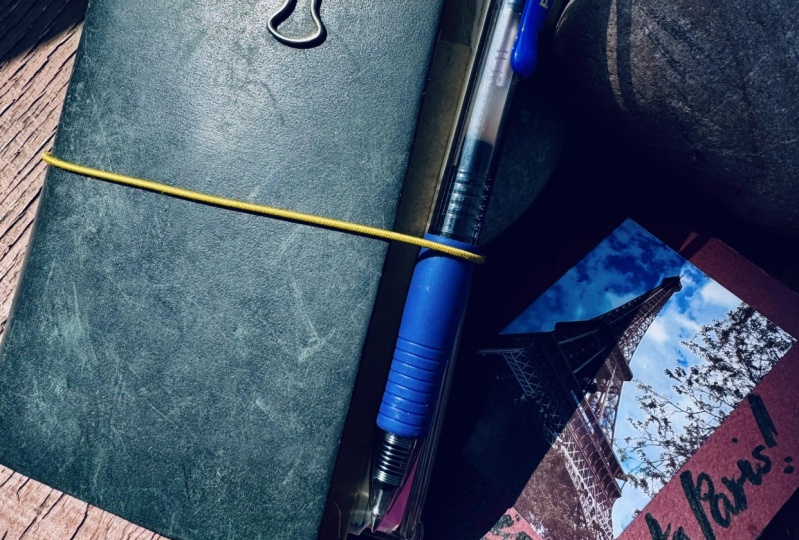
team and you're just right today before fancies. This is writing on a post, on a post elastic, write it in a journal, right? With your favorite pencil, or your most favorite pencil, it doesn't matter, right? Write down something that
you're grateful for today. I'm grateful, I'm
grateful for the sun. It's really nice and sunny.
It was raining all last week. Grateful for the sun and the wind because it
was very entertaining. I was like my hair was blowing
everywhere. It was great. I'm grateful for my friend who decided to want to go
to the cinema with me. And we went to the cinema
early in the morning. It's really nice. We took the train
to Paris and we saw a beautiful movie that
we really enjoyed, I can't spell with beloved
friend. Grateful for that. I had a smoothie that I made yesterday that was
in the fridge that I could just drink and then
it was super fast and I could recharge myself
before this filming. Grateful for passed
me that I made that. Grateful for Ma Smoothie. Happy things are going my way. Anything that you want
to tell yourself, I'm like, these are good things. These made me happy.
This was helpful. And sometimes you
won't feel this like explosion of gratitude, like a rattling through my body like a wave of appreciation. Maybe it won't
feel that intense. Maybe it'll just
feel like a soft, glowing feeling of, oh,
that was really nice. Maybe it's just for that guy who held the door open for you. Maybe it's just for
that vista who made a lovely design in
your cappuccino cup. Maybe it was the
woman at the bakery who smiled at you when
you were like a seeing, can I have the pastry like that one and one in the middle, even though it feels like a
bit of a silly thing to ask. Yes, of course, I got exactly
the one that I wanted. I advocated for my needs. Perfect, you know, little
moments of gratitude, things that you're
noticing, things that are going your way, things
that are lovely, things that are sweet, things
that are enjoyable to you, to you is a really
big thing here. Because I can go out and I can tell you all
the things that I notice. I can tell you about my favorite things, my favorite clothes, my favorite activities things I want to spend my money
and my attention on. You might not like those things because they don't fit you. They're not for you, they're not your
favorite things. That doesn't mean there's
anything wrong with you, and it doesn't mean there's
anything wrong with me. It doesn't mean that
my things are stupid. And it doesn't mean that
your things are stupid. It just means that
we're different. Humans, which is the
whole point of humanity, that we're so different. I don't want you to
go out and start looking for my favorite things. I don't want you
to force yourself through a watercolor class. If you hate watercolor, sure, try new things. But notice how it feels
when something just works. When something is good for you, something makes you smile,
something lights you up. Notice that. Right? We're only ever in
the moment to moment, and you are the one who chooses where you want
to spend your time, your money, your
energy, your budget, the things, the
resources you have. Where are you spending them? Where are you paying
with your attention? Because that's what you amplify, that's what you
build underneath. That's what you're telling
your brain is important, which we'll talk more
about in another lesson. But just started quickly, just wanted to tell you about the four things
that will happen. You will walk around your day if you want to
write those down right now. You can also look around you in your space and see what
you're grateful for. Things we do then on
is that we notice, we notice the thing, maybe the
thing that makes us smile. You catch yourself smiling. You've already had
one experience of it, of it like bringing
a little bit of joy. Then you pause. You're like, oh this pi smile, this is O. I need to write down, I need to remember
this for later. And here you have a
couple of choices. If you want to, you can
make a note on your phone. You can record a voice
message to yourself. You can take a
photo of the thing. You can write it down
somewhere already. Then as it happens to
help you remember, right? Because what we're
really doing here is helping you remember your life. We're helping you remember
noticing and remembering. Paying attention to your life. This is it, it's
happening right now. That sounds so obvious, but that's it, right? Noticing and
remembering, and having a recollection of like, oh, look at all these
beautiful, wonderful, fantastic, magical things
that are happening. Have these been
happening all the time? And I just haven't noticed. Have all these people been
smiling on the street? Have all of these beautiful
flowers been here? And I just didn't pay
attention and I didn't notice because I was
preoccupied with something. This is not to say that, that that's so normal. I did that too. I do that too. There are days that
are super crap, Of course there are,
because life is life. And noticing and paying
attention to the things that we enjoy is a way of
combating that, right? Is a way of balancing
that out so that there's a different
chapter on this. Even if you're in a
horrible situation, even if you're in grief, you know that
somewhere in the world your favorite color exists. So you've had memories that
are not this painful, right? And we'll talk about this later. And also the trap
of that because I don't want you to
gas light yourself. But back to the side, going back to this moment where you tell yourself to remember, maybe you make a
dot on your head. I do that sometimes. I just did that this
week. Let's remember to bring socks back to work. Strange thing, my mom
always used to do this. Find a way to help you remember if you
think you'll forget. I love taking photos of things. Find a way that works
for you that makes the threshold a super low. Then you come back at
night to your home, to your bed, and you
write them down. As you're writing them down, as you get it into your body, you're having a somatic
experience of it, which means fancy
word for a body. You're getting it into your body, there's another channel. You're seeing it one more time. You're reading it as
you're writing and you're thinking and you're
repeating it again. Then the next day, probably, or another day, you might pick up your
journal and you read through it and you repeat
it one more time. And you remember, and
you recall this thing. See how many times
you repeated that? Now, see how many times
you've amplified that. First do feeling of joy, of seeing that flower, of
eating that delicious food. Of being with this wonderful
person that you care about. And they're like, I
have to extra notice. Be really, really present,
Be really mindful, be aware, pay attention. And then you write it
down, you recall it. And then you remind
yourself again, while this is all happening, something else,
something annoying, something that might
also have happened. But you know what
happened to that? You didn't repeat it
four times, right? We repeat it, we pay
attention to it, we notice it, and watch
everything change. You'll have an immediate
reaction of like, there are good things
I am noticing. After a while, it'll start
getting more automatic. Maybe you'll forget about it. Maybe we'll come back to it. All of that will be addressed
in the perfectionism on. But coming back to
it as a practice, just like meditating,
meditating. It's not really about
clearing your mind. Clearing your brain being Z. That's not what
meditation is about. Meditation is about noticing. Oh, I noticed that
My mind wondered, and I'm going to bring it back to what I want to focus on, what I'm telling my
brain to focus on. If that's your breath,
this is like doing that in your life and your mind wanders and
everything and saying like, oh, what do I want to focus on? The start good. They
start puppy about, they start going my
way. People on my team. Oh yeah, What matters to you? Do you want your focus? Because this is how
we train our brains because you don't have to believe everything
that you think. If you think your life is
crappy and everything is bad and everyone's that's typical. Brain over generalizes
remember bad things also because it's keeping
you safe which is also in another chapter. You don't have to know all of those things to get
started with this. You don't have to know
all of the science. You don't have to
know the reasons why things are the way they are. You can just start it
like this if you want to. And be be done on your merry way to continue
your gratitude practice. If you want to stay on and
listen to more of matters, negativity bias, the traps of perfectionism,
please stay on. I would love to
tell you about it, but you already have
the information you need to go and start this. This is the information I had
when I was just starting. Gratitude is important.
Three days per day, cool. Finished knowing that there are no rules and you
get to make your own, get to keep it flexible with you because your life is going to change forever, right? Keeping it flexible
enough to stay with you. So that some version
of this practice, notice and appreciating
comes with you. Go right down three things
that you're grateful for and I will see
you in next lesson.
6. RAS - Your brain's filter: What we're doing is
we're reinstalling your recticular
activating system, the RAS, because your brain is already filtering
out all the time. It's constantly filtering
what's important to you, what are we focusing
on? What's the deal? It's constantly filtering the world and all
of our impressions. We get so many impressions
with so much information. We have to have a system
to filter things out. And we get to tell our
brain what to focus on, right, what is important to
us, and we focus on that. When I was just starting
my watercolor journey, I was in watercolor everywhere. I was like, oh, look
at this painting. Is that Viridian Green? I saw it on packaging. I saw it in art supply stores. I was looking for it
because it was on my mind. I told my brain it
was important, right? It was something I
was focusing on. If you're looking to buy a car, you'll see that car everywhere. Your favorite team, you're like, oh, that someone has a T shirt. It's my favorite thing on it. You notice because
your brain knows it's important. If you want
to be in a relationship, you'll see people in
relationships everywhere. If you want to get a tattoo
you're suddenly really interested in everyone else's
tattoos, right? So this is just us telling
our brains what to focus on. It's kind of like
rallying up your team, in your brain, to be like,
okay everyone, are you ready? We're going to go out
there. We're going to look for the
things that we enjoy. We're going to look for
things that are good, things are great, things
that make you smile. Are you ready?
You're telling them you're giving them a task,
something to search for. Because your brain
also loves answering questions and it hates
unanswered questions. It's like, okay, we're
looking for things that are good. We love a little bit
of a task/mystery/challenge and it's like
see what I can find. And you start scanning, which is why I ask you
just scanning your room to see what you like.
Like like you lady. My favorite friends have some crystals, have some flowers. I love this pigeon with this head stuck in
a piece of bread. I like this lamp. I like
that this clips on. I have my favorite bandana.
I use it as a belt. I'm grateful that
this fits as a belt. I'm grateful for this person, this person, this little
bag you can notice. Because that's what
you're looking for. If I told you to look
around for something green, that would be your scan,
that would be your filter. Right? If you're looking for bad things,
you'll find them. If you're looking for good
things, you'll find them. They're all there already. You get to decide
what you focus on. It's like telling you to go to work and be like, okay,
on your way to work. Can you count the amount
of yellow houses? When I call you, it's
like How many houses? Three. And how many red ? I don't know. I wasn't paying
attention to the red... Of course you wouldn't because your focus was on the yellow. Maybe you'll remember red
accidentally, that will happen. The red houses still exist but your focus was on
the yellow, right? That's the difference. That's what we're
installing and you're like, okay, this is the filter. This is something that you can do when you're
looking for something. Training yourself
to see solutions. Seeing good things,
seeing things you like. Seeing ways things
are going your way. Seeing how you're
already enough. Whatever belief you want to amplify and find evidence for, this is the system that
helps you do that. It's really important for this
type of practice as well. This is what we're using
to filter our days. How can I notice? What am I looking
for? What's my focus?
7. Classic perfectionism traps: Now that you know how to do it, why or why haven't
you already started? Why haven't you just done it? If it's so easy and
there are things that can happen that trip
you up with this, I've probably
encountered most of them either from myself or from someone that
I've talked to like, oh gosh, you have to
start a positivity. But it's the best thing in
the world, people have not. I wanted to tell you about the objections that I've
heard and something that I've bumped into that we're close to like sabotaging this
for me and make me stop. When this happens, you will know that you are
completely normal. Does that sound good? Excellent. The first thing
which trips me up in a lot of places and trips a lot of people up and I see it, and I've been in groups of
this and I see it all over social media is
perfectionism, right? The idea that I have to do this, if I do this, it
has to be perfect. I have to keep a perfect streak. I have to do it
every single day. Whenever we start a new habit, we can get into a bit
of perfectionism mode. Thinking that I flawless will be the only worthy
way of doing this. I know, because I've done it, Let me be the first to say
that you don't have to. That's not how you get
the benefit from this. Even if you drop a day, drop a week, you drop a
month, you come back to it. You know that the coming
back is so much more important than whatever
time you missed. If someone was like, oh my gosh, I forgot to brush
my teeth today, would you be like, we too bad
for you. It wasn't perfect. So, you know, there's no point in you continuing now and coming back to it because
all of your progress is lost because
you skipped today. No, you wouldn't because that's
not what matters. Right. Coming back to something like I mentioned
with the meditation, the practice is in
the coming back, The practice is in
the returning to it. Right? And the gratitude is
going to be there anyways whether or
not you tend to it, whether or not you repeat it, it's not like, oh,
it's old, now broken. You have like warm up and stretch back to your
normal flexibility. Well, it takes some
time to get into a practice and the habit again, if you haven't done it
in a long time Sure. With anything and it's
also really forgiving, can come back to it quickly. Also, I love Pinterest. Pinterest is on my
main source of joy. I love it so much. And most of the time, what we see on Pinterest,
what we see on social media, what we see in
commercials advertisement is perfectionism, Is perfect. Streaks. People show off. They're like, I've done this
every single day forever. I've done this practice
for a very long time. And I've skipped days, I've skipped, I've
skipped months, right? I had mild periods of time
where I didn't do this at all. That's not important.
That's not what I focus on. I focus on the fact that I back. Right. If your cat was
lost out in the woods, would you not have been focusing on the
fact that they came back and how important that was? Right? So be your own cat,
got me back from the forest. You know, perfectionism,
control up in very sneaky ways. Thinking that you're breaking some kind of rule,
some kind of should, and there will be
some shame around it, of like, this is so easy.
Why can't I just do it? It's just your inner my
inner critics name is Chad. Your brain chattering,
trying to keep you safe, trying to not change anything. Your brain only wants
to keep you safe, or doesn't want to
change anything, ever. When you're doing something
to change a habit of yours, to change your
perspective on the world, this could change your
perspective on everything. Sounds super dangerous
for your brain. It's like, well, if
we're going to do that, let's at least do
it perfectly and in a really safe way so that we
can be criticized for it, or nobody can tell us
we're doing it wrong. Letting go of it's supposed to look like this or it's
supposed to feel like this. It's supposed to work like this. It's supposed to be so easy. It's an easy practice, yes. But establishing any
habit can be challenging. It is challenging because
it's something new. Adding it into your day, starting to move around your
perspective in your life. Yeah, it's going
to be a challenge. It's okay if this doesn't
take 2 minutes to establish and then
you're done for the rest of your life, right. As what I want to tell you
about Pinterest is also the beautiful bullet journal
spreads through like, wow, this is so
artistically beautiful. I could never do that in this. It won't be possible for me. I've also had a bullet
journal for about, this is my ninth, eighth, or ninth bullet journal. I did some beautiful,
beautiful decorative wins. They took a long time,
they tripped me up, and they made me
feel like if I don't keep up this level of beauty, beautiful decorations,
I can't do it. Don't let that be a
hindrance in just jotting down on a posted note three things you're
grateful for. The practice is in the noticing, It's not how it expresses
itself very often. Refer to this theory
of it doesn't matter what it looks like
matters what it feels like. I don't care if you
have a life that looks really good
and feels like ****. I don't care if
you have beautiful clothes that look good. If they make you feel horrible. I don't care if your pants
look really good on you. If you like, I can't sit down. They feel horrible. I
can't feel my legs. Or you look very stylish, but you're so cold and it doesn't really matter
what it looks like. Matters what it feels like. Don't let the visual
perfectionism of it be like, oh, I wish I had this romanized like dipping into my ink
well in a beautiful robe. Don't let that be the threshold of romanticizing this idea. Gratitude can be gritty
and it can be like tears. And I'm so grateful is done. Not very romantic. Still helps your
brain differentiate. Focus on the fact that there are nuances in life and there's lots of different
things going on. Don't let perfectionist
and trip you up either in like I have to
follow a perfect streak. If I ever miss a day,
I'm broken and ruined and everything's
bad. Not like that. Also not in how it looks,
what it looks like. It visually looks like, oh, I can't do a bullet journal because my
head writing isn't neat. Then I suggest you do what I
do and you do it on the app, even though my handwriting
is quite nice. Whatever lowers the threshold
and perfectionism has a sneaky tendency to heighten
the threshold to make it impossible to do it
exactly right and perfect. Then you don't do it
because it's not perfect. Rather than imperfectly doing
version, you're like z. Don't know if I have
three things every day. Write down to write down one. Take a photo, make
it work for you. What I want you
to do is to start noticing the things you
like, the things you enjoy. That's it. That's genuinely,
that's the whole thing. In my version of doing this, my approach to this, what I encourage you to
do is write it down. Yes, I encourage you to write by hand because
it feels good in your body and slows your
brain down a little bit and you notice it extra
and you see it visually. That's not how I'm doing it now, but I think that
would be better. I think the best thing
is thing that you do just like any
three minute walk outside is better than
no walk is better than the perfect workout
that you don't do. Right? Just to let
go of perfectionism. If you're ever
questioning yourself like I don't know if this is
allowed. It's allowed. Like I wonder if this is okay. If this is
the right way of doing it. I think I'm doing it
wrong. You're not doing it wrong. Okay. Let me be the first to tell you you're not doing it wrong. Figuring this out, figuring
out a way that it can work for you, go wild. I know people who
have gratitude jars, whether write and they
fold it up and they put it in the jar and read it at
the end of the year or not, or burn them anything, whatever. If you're like, I'm going
to cringe so much if I read this and I read it and
it's silly and it's stupid, and I'll be
embarrassed. Burn them. Throw them out. Don't
show it to anyone. It's only for you. It's your
personal internal practice. Do I think it will
impact your life and your relationships with
people around you, the world changing the world
by you being more content, happier person who notices good things is someone who's paying attention to good
things also in other people. Yeah, I do. I believe
that changes the world. Not to put that pressure on you, just go right down
to things that you enjoy. Let's start there. Perfect or not. I mean not perfect, imperfect
imperfectionism be like you can even borrow
one of my mindsets, which is if it is imperfect, good imperfectionism
is one of my values. It doesn't have to be perfect to be valuable and wonderful, and fantastic. Was it imperfect? Great, Ten points to you. All right, excellent
you in the next lesson.
8. Negativity bias: All right, Now that we've got perfectionism
out of the way, I wanted to talk to you
about two other traps, two other things
that can come up. That is the reason that you're probably noticing all
the things that are bad. And if one bad thing happens that you think
the whole thing is bad, there are two functions
of our brain because our brain is lazy and wants
to do the easiest thing. I'm like, yes, perfect.
Let's capitalize on that by making
this really easy. But we have to do it
so easily because the easiest thing for our
brain is something called the negativity bias and generalization or all
or nothing Thinking, please trip me up all the time. Which is why I wanted
to tell you about them. Because they're really
sneaky and really tricky, and they make perfect sense. And you're a normal
human if you have them, but you would if you're a normal human,
probably watching this, hello, unless you are
a cat, in case hello. Anyways, the negativity bias is a function in the brain
that stems from a long, long time ago when it was important that we remember
things that are bad. If you were out and
you were looking for berries for your clan, it was really important
that you remember that this one is poisonous. This one will kill you. This is the most important
berry to remember. All of these are
fine. I don't really need to remember the
difference between them. I just all of those are fine. I don't know what they
taste like. They're okay. They're not out to get me. They're not dangerous.
They're fine. It's really important to
remember this one, right? What's the most
important thing to come back and tell
everyone about that? One bad thing that like I need to remember to tell everyone that this is
where the lions are. I can't let anyone go there. This will be disaster. I have to remember this
because it's so important because it's going to
keep us safe, right? That is the negativity bias that when you have
ten people saying, oh my gosh, I loved
this thing that you did and this is amazing
and fantastic thing. And then one person was
like, yeah, it's fine. It makes sense that your
brain remembers that one person because that's what it's trained to do because
that is the uncomfortable one. All of these other
people being fine, being happy at this
birthday party, enjoying whatever your outfit, and almost like, I don't
like that very much. That's the uncomfortable
one, right? That's the one you
want to avoid, which is why it makes perfect sense that your brain is like, that was not very nice, let's remember that
so we can avoid it in the future, right? It wants to remember bad things so that it can keep you safe. But it doesn't care if
you're happy, right? It doesn't really care if remembering bad things
makes you unhappy. Remembering nasty
comments, that one comment on social media that
was sarcastic and mean. And it's like every single
other person who was like, oh my gosh, amazing, great. I love you. You're
amazing. Fantastic. They don't really matter. You're just going to
remember that one, nasty one, because
your brain is like, this is the most important one. It makes perfect sense,
it comes with you. And knowing that
knowing that that is normal is also helpful
for you to be like, okay. It makes sense that throughout
this day last week, the number one thing
I remember the most was getting
stuck in the rain or bad interaction with someone or someone cut in
front of me in traffic. It's uncomfortable
situations that I want to avoid in the future. Again, brain running
on prediction is going to assume this
might happen again. And it wants to avoid it,
so it needs to remember. So it's giving it a lot
of attention, right? It's a functional,
normal, natural thing. We're not going to
try to get rid of it, we're just going to
give the other side some fricking
attention and be like, oh my gosh, thank you to the ten people over here
who I've just ignored. Because I was looking over
at this one poisonous berry. Look at all the attention
and all the focus and all the presence I
can have with all of these wonderful
people instead. Right, That's what we're doing, not ignoring the fact
that this person exists. And if this becomes a
dangerous situation, of course it's important for
us to remember and avoid. But why are we paying so
many attention points, budget, energy budget
spent on this. One bad thing versus turning
our heads a little bit, shifting our perspective
a little bit. Me like ah, look at all
of these people noticing, remembering, I got so
many lovely comments on the skirt and
I really love it and it feels really nice on me. And then you don't write
down, you don't amplify it in your brain that that
is important, right? You have to tell your
brain what to filter out.
9. Generalization (and a note on grief): The second thing
is generalizing. We love putting things in boxes. We love seeing patterns where like "when
this thing happens, this thing happens" again
with the predictions. Like I'm assuming that this is the way
that this thing is. If you have a bad experience with like a dog bit you
when you were little, you're going to generalize and be like all dogs are scary. Maybe you'll develop a phobia. Maybe something will
be like this will be an assumption that you have
in your brain of bad things, especially things that
will keep you safe. And that makes perfect
sense for your brain too. Again, it wants to save energy. That's your brain's
main objective. It's like, how can
I make this easier? How can I be lazier? How can I figure out a way
to do this that doesn't cost me a lot of energy because
it wants to keep itself, it wants to save its
energy and its fuel. In case something scary happens, it's like wherever I can save my energy and my
attention budget, I will, I'll just assume this thing about
this whole thing. In that way, I have a
rule that I can follow, a generalized rule, and I could just categorize like this whole
vacation was bad, this whole thing is bad. This whole thing is good. This whole thing, It can
generalize in both ways. But what we often do, because this pairs with the
negativity bias, is we generalize and
assume something bad. And then we avoid it
because we're like, it's not for me,
I don't like it. I had one bad experience once and then I'm going
to avoid it forever. Stepping away from the
generalizing and noticing, did I really have a horrible day or did I have one horrible
interaction with someone? And then actually
the rest was fine. It's like having a pimple stay with me. Like
having a pimple. We're like, oh my gosh, my
whole face is full of pimples. It's actually just this one and then everything else is fine. Like the way we notice gray
hairs and we generalize, we're like, I'm going gray. You have three gray hairs. Is it a prediction
Yes! Normal brain. Is it a generalization? Yes. Normal brain, is it a noticing the things
that are bad categorized as not good enough, poisonous berry? yeah, normal brain. Just knowing that information makes it feel safer to be like, oh, okay, I'm normal. This is a normal human
brain thing to do that you can remind yourself of
when these things happen, which they will and they still do to me and
they will forever. And what we can do is decide
what we want to believe. Our brain is going
to offer up all of these thoughts like a
buffet and be like, okay, let me see what I
logically actually agree with. The way gratitude
works is we practice looking for the way
we're not generalizing. I'm not asking you to be naive and never look for
things that are bad and never acknowledge
things that are not working. But I also want you to
notice that the habit is generalizing, the negativity
bias all or nothing thinking? that whole thing
was bad this whole month. I was tired. Were you? or were you're tired for a lot
of it... but not all of it. Noticing. Like it rained the
whole way home. It didn't. It rained for 5 minutes and then it stopped
for 10 minutes. It rained for another 5 minutes. And I generalized it
because it was easier. And it's so interesting when we start knowing these things, that also feeds
into a gratitude of like I thought it was just a horrible day now
that I think of it. Now that I'm going into notice, really glad I had waterproof boots
even though it was raining. I'm glad I have a bike
so I can get home fast. I'm glad I have a really
good team in my back when someone's horrible to me and I'm crying in
the break room, that someone else is
there to support me. I'm grateful for their
support. do you see how these are not ignoring the
fact that bad things happen. We don't
want to do that. We're not trying to gas
light ourselves and be like, everything's just happy,
nice all the time. Toxic positivity vibes, good
vibes only! No! bad, shiddy, horrible things are
going to happen. I want you to notice that
there's still things that you can find to be
grateful for. Grateful for support. Grateful for the way that
you're supporting yourself, even in those moments. Because I'm not asking you
to be grateful for grief. I'm not asking you
to be grateful when things are absolutely
horrendously ****. Maybe you'll come home
some days and be like, first of all, feel
free to not write a gratitude journal the
days that are ****. But also if you
want to write down, I'm so glad this day is done. I'm so glad I never have
to live this day again. I'm happy I'm going
to sleep now. I'm grateful for my bed. I'm grateful for my pajamas. I'm grateful this day is
over. You could write that. It still brings you
a trickle of hope, a trickle of something, knowing that you don't have to change the thing
that's happening. Grief, loss, depression, those things
are going to be there. We're not trying to ignore them, and we're not trying to
say they don't exist. We're just reminding
ourselves that that's not the whole picture. We're zooming out a little bit, knowing that on some level
your brain's gonna remember somewhere in the world
your favorite snack exists. You have memories of something else, because you've
practiced, right? When something is thrown
at you that's heavy, your gym muscles,
even in your grief, you've practiced, the
repetition is still there. The habit is still there not to ignore it, not to deny it. You're human, you're
going to need it. And at the same time, knowing on some level there's a pile. There's 15 years
worth of gratitude. Practice of noticing what's
here, what's present. What I like, knowing
that it exists, even if you can't think of anything you
like right now, it makes perfect sense. And that's why we practice
and the emotional resilience of that keeps us in hope.
10. Values in action: Before we wrap it all up, I wanted to tell
you something about values and the values
and our core values. And maybe you've done
some value exercises and maybe you've been
looking at like, oh, what are my values? I've done this a few
times throughout my coaching training and figuring out what
matters to you, why you do the
things that you do. I want to bring you
back to the example of the too long:didnt
lesson. I wrote down. I'm grateful for the
sun and the wind, grateful for cinema
with my beloved friend, and grateful for my smoothie. These all connect
just the pattern you might start seeing
when you start doing this. They connect to my values, they connect to my values of
entertainment and culture, and artists and creatives. And going to the cinema, if I was creating
something myself, if I did some time to paint, if I bought beautiful artwork, if I went to an
exhibition or a concert, that might be in
that ballpark of, I love my favorite song
that came on the radio. It's connecting me
to my values and what matters to me,
the sun and the wind. I'm so glad I spent
some time outside. I feel so refreshed when I've been out in the
sunshine and there's some wind connecting me to
my value of being outside. What kind of human
do I want to be? What's important to me? What do I want to spend my time on? Adding more of that,
knowing that, okay, I've written down
like seven times in the past two days something that has to do with
being outside. Maybe I can orchestrate
for more of that. What are my values here? What am I looking for? Maybe you'll start
noticing the same. And how are your actions
matching your values? One of my other
values and what I encourage everyone
is self compassion, self love, self appreciation. If I never do that, if I never do anything to confirm that that's
important to me, it's going to be really hard to believe that that's
important to me. If I say it's important for
me to support the arts, I never go to the cinema
or never go to a concert, or I never listen to music. It's going to be hard to believe that that's really
important to me. If I never do anything
that matches that. If I never do anything
nice for myself, it's going to be hard for me
to believe that I love me. Right. But if I know that tomorrow me is
going to be busy, I'm going to make
her smoothie that yes, today really appreciated. Like I guess I love
me. Look at that. Look at this loving behavior. Look at this loving action. Look at what I'm noticing
instead of like so boring, making the same
smoothie as last time. I could also say that's
an option on the buffet. Remember that's a thought
that could come up of like, can't believe I'm still
making the same smoothie after like nine years
of the same one, have a bit of creativity. Where can I find proof that
this is a loving, caring act? Where can I find proof that I'm spending my money, my time, my energy, my presence on
things that matter to me? Where can you find the proof? What am I grateful for? These friends, these people, these experiences, this food? What do I want more
of in my life? And that's also what the
gratitude is telling you. It's like I've written down
so many times this thing. Where's my control
in this control as: Where do I have influence? Where do you have power
to change something? Where do you have an
opportunity to be like? Yeah, well if my
values are supporting the arts and spending time
with people that I love, that will make me grateful. I'll be grateful to myself for the way that
I spent my time. Where are you in control? This has been mentioned
by someone else. I haven't done this
a lot, but I wanted to mention it because I
was thinking about it. They mentioned have a
gratitude practice that also focuses on when other
people are grateful to you. Because you can't
really control, ever, we can't control
what other people do. I can be grateful for someone
making me a cup of tea, but I don't have control of
them making a cup of tea. I can ask them, but I
can't make them, right? I can't force them to. If they do, that's lovely
and I can appreciate it. And I can be grateful
and grateful to have such a wonderful friend
who helps me like this. It's somewhat out of my control.
Do you see what I mean? But if I decide to make
something for someone else, I decide to send someone a
letter or make someone a cup of tea or say something
complimentary to them. I'm in control of that. I'm in charge of that. You're in charge of what
you put out into the world. If you smile at a stranger, the stranger hasn't
have to smile back. You can't make them do that. You can't control that. The only thing you
can control is being a person who
smiles at strangers. That's one of your values, maybe connection is one of
your values and you're like, this is something
that I want to do. I want to spend my
energy on this. I want to spend my time on this. Also, I want to argue that it
doesn't take a lot of time. Where is it important for
you to put your time and energy and focus
what matters to you? This is also how this starts impacting the rest
of your life, right? Informing you of who
you are and what you value and who you care about, where you want to
spend your time. Do you see why I love
this practice so much? I hope so. I'll see you in the final
lesson for some final thoughts, some round ups, and
some gratitude for me. I'm so glad you're here.
I'll see you in the next one.
11. Where to go from here <3: That's it. You're all done. That was the end of the class. You've looked through
all of the videos and maybe you've skipped around, maybe you've taken some time, maybe you've started
with the first lesson. You're like, I can do
this is only read this. Maybe you come back people like actually I am
being tripped up by perfectionism or the fact I'm generalizing and I can't
find anything good and I put the threshold too high and all of the other things that you might run into when
you're making you habit, when you're trying to
change your brain, which is really freaking
brave of you by the way. To change something
that's been installed in, something that goes against
the natural easiest thoughts, which is just to continue
the way you've always been. It's brave of you
to try to change. It's brave of you to attempt
to think something new. To focus on a different
place to support yourself, to find more joy, to
have more impact, to have more well being. To reboost your optimism and your hope and your positivity and your outlook on your life. Because if you are not fueled, how are you going
to do anything? How does it feel like anything
is worth it if you're not ever appreciating and enjoying the things
that are good, that fuel you, that fill your cups. That you have something to
give and things are ****. So you have some anger to take from some power when
things need that. This isn't to boost
your toxic positivity. I recommend highly The book Lightmakers Manifesto by Karen Walrond, talked about
this in my podcast as well. But having something
that fuels you, so that you know what
this work is for. If someone comes
at you and like, I don't know, I just, everything feels
so hard and so difficult. You now know why things
feel hard and difficult. You can help them
as well, like hey, I've started this practice, I've started this practice of noticing, I'm noticing a difference. It feels different from
going into the world in like exploration, science mode. Like can I find
something that I like? Can I look for the things that inform me of who I am
and what I care about? I know I've mentioned Marie Kondo a couple of times in this already. But what happens when you start noticing? You start
seeing what you're like. What do you want to spend
your time on? What do you want to spend your money
and your energy on? What do you want to
spend your life doing? That sounds so grand, but that's it. It's the same. Like if you've taken any
of my watercolor classes, you're taking my workshops. This is the whole thing, like how can I make
this work for me? How can I make it easy to add more of the things
I want in my life? Why am I making it so difficult to do things that bring me joy? Why am I allowing
the hustle culture, all of this like
stress and pressure, thinking that hard work is
going to be more valuable. So I never let myself do
anything that's easy. No, Getting to know
yourself better is one of the best things you can do to figure out what you actually
want to do with your life. What you want to
spend your time on. Having a practice like this in my professional
recommendation is one of the ways you
can do that, right? This is one of the ways
you can start noticing. And will this
potentially turn you into like one of
those optimistic, horrendously annoying
types that are like, let's find a solution to this. Let's figure out a way
that this can work. Someone who has your back, having your own back, being your own cheerleader, being on your own
team, proving to yourself that there
are things that are happening that are
good that you enjoy. Then watch everything change. It sounds like a big promise. I know. I hope you can find a way to
tweak this to fit you. If there's anything
that still feels sticky or difficult or unclear, please reach out to
me and let me know. I'll put my e mail and links. If you can contact me,
find me an Instagram like, hey, I have this thing though. Will this work, can this help. What do I do in
situations like this? Please reach out and ask me. I would love to help you
establish this type of habit, whatever that looks
like for you. I'm a huge advocate
for "whatever works" I think I need
that on a T shirt. Figuring out how
it works for you, how can we make it work for you? Maybe you need to call
it something different. I did. I didn't call it
a gratitude practice. I call it a positivity book. Feel free to borrow that. Feel free to make your own name. Put that in the review or the class project if you
put it in the gallery, if you tagged me on Instagram. If you start this habit
and it is a skill, it is something that
you can practice, something you'll get better at, something you can do quicker. It's not going to take a lot of time because you're doing it while life is happening and what's probably
going to happen, potentially, you'll
start noticing where you're not really happy. Where you want to put more of
your energy and your focus, and you want to orchestrate
more of this joy. But to begin with, I encourage you to not
change anything. You don't have to change
anything to start this, right? You don't have to
change anything. You don't have to force in more joy to prove that there's something
to be grateful for. I'm grateful for my coffee, like almost every single day, it's just the same
cup of coffee. I'm just repeating it, and every day. I'm like, oh, this feels so doesn't mean I'm
doing this perfectly. Absolutely not. Did I'm not address that in the
lesson of perfectionism. Of course, we're not
doing it perfectly because you're not a machine. Because you're not AI, right. You're going to do
it imperfectly. Let's get that out of the way immediately and
start experimenting. Put on your fancy
science jacket. Do you like how this
cut looks like, a doctor shirt? Go explore. There's no
way of doing it wrong. I'm really proud of you
for going through this and figuring out some way
to bring more joy, more pleasure, more
enjoyment, more gratitude, more appreciation, more
noticing into your life. It makes your life richer, it makes your life more
interesting to you. Because we're also looking
for things that you enjoy. It's an exploration of the
world and also of yourself. And it's so beautiful
and I'm going to not cry anymore and just say that I'm so grateful that you're here (see? immediately,
have this all the time) I'm so grateful that I'm such
an emotional person that this really matters to me and I get to share
this with you. And true, I'm grateful that
I've done this for so long that I can
tell you about it. Maybe it'll help someone else. Maybe it'll help
you appreciate your life more, enjoy it more, have more energy, have more space. Have
more deep breaths. Have more moments of joy,
enjoyment of appreciation. I'm so grateful
that you're here. I hope to see you another
time in another class, or I'll catch you
over on Instagram where there is always
wonderful non-sense. And you'll see a
lot of photos of moss and little flowers. I'll talk to you very soon.
 Elise Aabakken, Voice Coach - Teacher - Performer