Transcription
1. 1) Introduction à la feuille d'or: Ce n'est pas des hommes. Bonjour, je m'appelle Joanne benzene ou et je suis photographe
d'art de Travelers Rest, Caroline du Sud. En tant que photographe de beaux-arts, j'ai imprimé beaucoup de photographies et le substrat a toujours été le principal domaine de choix. Mes choix initiaux comprenaient des encres d'archives, des papiers d'
art en Canvas. Et laissez-moi vous dire les 500 premiers. Impressionnant. Je ne peux pas vous dire le sentiment de satisfaction que j'ai la première fois que j'ai vu mes photos, imprimées, importées, encadrées et accrochées au mur, et encore mieux la première fois que j'ai reçu de l'argent pour le faire. Malheureusement, comme avec toutes les choses qui sont faites de façon répétitive, il a commencé à se sentir rassis après un certain temps et
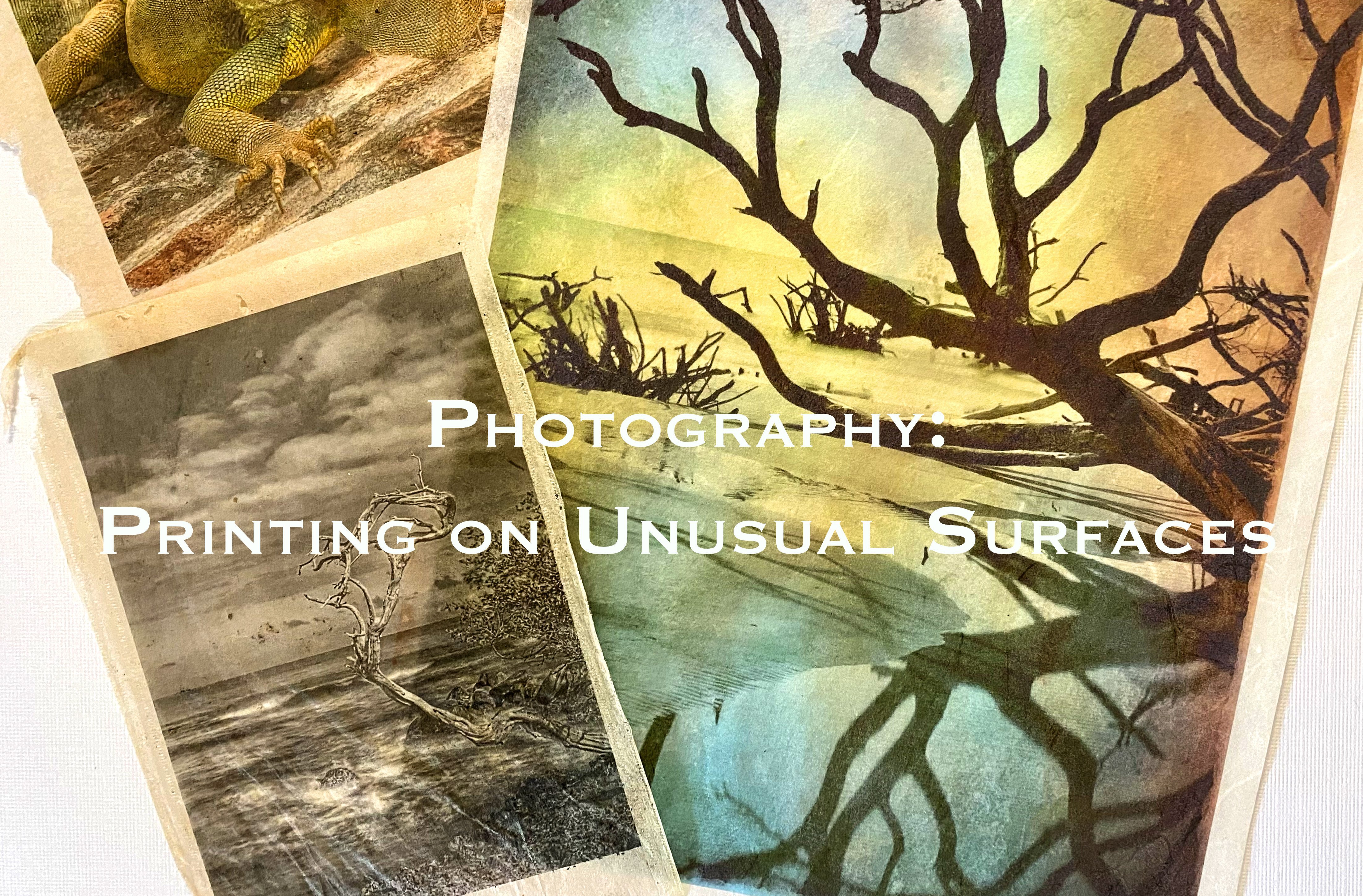
a donc commencé ma quête pour trouver des substrats plus intéressants. Dans ce cours, nous allons imprimer sur vélin, puis ajouter hardiment. Je vous invite donc à vous joindre à moi pour ce voyage de la norme à l'étalon-or.
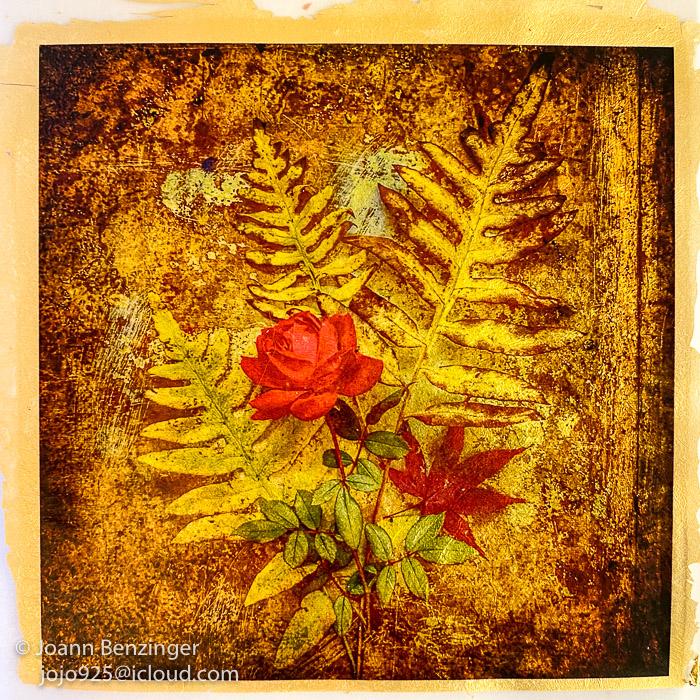
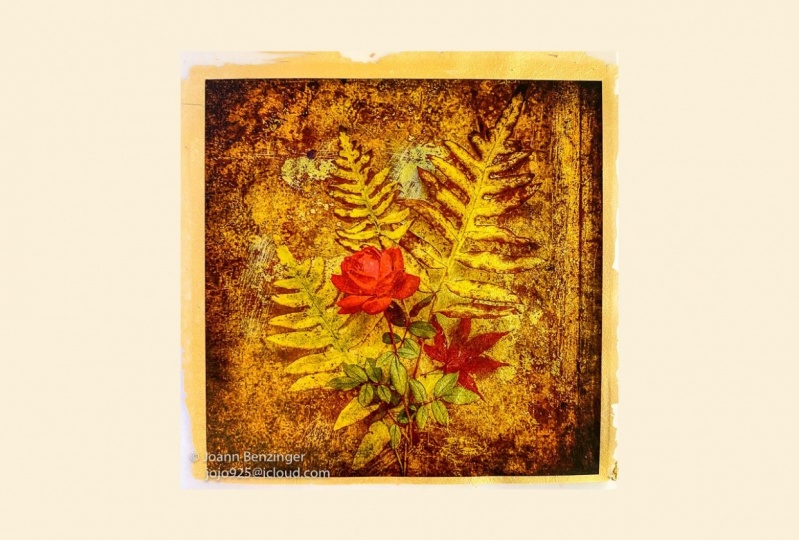
2. 2) Fournitures: Il s'agit d'une photographie standard imprimée sur un papier assez basique. Ça s'appelle, on veut prendre nos photos de quelque chose comme ça à quelque chose comme ça. C' est une photo qui a été imprimée sur vélin et qui a ensuite appliqué une feuille d'or à quoi ? Donc le vélin, comme vous pouvez le voir, c'est un papier très pur. C' est ce que nous allons apprendre dans cette classe. Et je veux juste vous guider à travers quelques objets incontournables. Prenons quelques minutes et parlons de fournitures. Donc, l'une des premières choses dont vous aurez besoin est un morceau de papier artisanal. Vous voulez poser quelque chose pour protéger votre surface de travail afin que vous ne
finissiez pas par pulvériser de vernis ou de colle sur votre bureau ou votre table. Donc virale du papier artisanal, ça vous évitera beaucoup de chagrin plus tard. La prochaine chose dont tu auras besoin, c'est du vélin. Maintenant, vous pourriez penser que n'importe quelle marque de vélin fera l'affaire, mais ce n'est pas le cas. La marque et que j'utilise est le majordome Bearden et l'encre jet d'encre va absorber dans ce vélin vraiment bien. J' ai essayé d'autres marques de vélin que j'ai ramassé au magasin. Et l'encre est juste là et finalement elle commence à se tacher partout. Alors faites-vous une faveur, obtenez un bon vélin. Si vous décidez de ne pas utiliser cette marque de vélin, je vais parler d'un processus un peu plus tard qui pourrait vous aider. Tu vas avoir besoin d'une feuille d'or. Vous n'avez pas besoin d'obtenir une feuille d'or 24 carats ou 18 carats. C' est un composite et ça fonctionne très bien. Vous pouvez aussi obtenir la feuille de cuivre ou la feuille d'argent. Quel genre de métal vous utilisez n'a pas d'importance du tout. C' est juste une question de préférence. En plus de cela, vous allez vouloir obtenir leur adhésif de pulvérisation. On aura besoin d'un Breyer et on va avoir besoin d'un pinceau doux. C' est juste un vrai pinceau bon marché. Ce sera pour lisser les feuilles de feuille d'or plus tard. Juste quelque chose de très doux. Ce n'est pas quelque chose que je suis marié. Vous allez avoir besoin d'un conseil Bristol. La raison pour laquelle vous avez probablement besoin que c'est de mettre en fixation à l'arrière une fois que vous avez votre feuille d'or dessus, vous ne fascinez pas la planche Bristol. Il se boucles. Vous aurez besoin d'obtenir un peu d'adhésif. Ce sont deux marques différentes que j'ai utilisées. On va avoir besoin d'un spray de vernis. J' ai utilisé la marque cri pelouse de vernis en spray. Vous pouvez obtenir un demi-brillant, satin, un brillant, un maths. C' est votre préférence. Vous voudrez aussi avoir du papier cire à portée de main. Si tu veux. Tu peux ramasser des papiers de riz. Je ne peux pas garantir que ça va marcher, mais on va essayer parce que rien ne s'est aventuré, rien n'a gagné, pas vrai ? Alors, tu les ramasses dans un magasin d'artisanat ? Je cherchais juste quelque chose avec des textes ou je pense que celui-ci serait vraiment sympa. Et je dois essayer celle-là. J' ai aussi un vélin moins cher que j'avais ramassé dans un magasin quelque part. Et bien que je sais que cela ne fonctionne pas, exécutant à travers mon imprimante, je pensais que si j'utilise un codage spécial que j'ai dessus, alors peut-être que l'encre resterait mise. Ce sont acheter de l'aide à l'encre. Vous n'avez pas besoin de la s. Si vous obtenez votre vélin de Butler cher à lui, ce vélin fonctionne très bien. Mais si vous utilisez un autre vélin ou pour ces papiers de riz, nous allons d'abord le coder avec cette aide à l'encre précoce a un certain nombre de produits merveilleux. Vous pouvez étaler sur presque n'importe quel type de substrat et ils passeront à travers votre imprimante et les bénéfices non répartis. Et quand j'imprimerai les canettes en aluminium sont musulmanes, et nous allons l'essayer avec le papier de riz.
3. 3) Revêtement et impression 1: Typiquement, lorsque je fais ce processus, imprimez sur vélin, qui est un papier très léger. Vous pouvez voir à travers elle. Et c'est ce qui fait cette iridescence quand j'ai mis la feuille d'or sur la face arrière de celle-ci. Aujourd'hui, j'ai pensé expérimenter un peu et essayer d'utiliser des papiers différents. J' ai pensé essayer du papier de riz. J' ai donc ramassé quelques feuilles au magasin d'art local. Et je les ai réduits à une taille que je trouve gérable. Ils viennent en très grandes feuilles. J' ai réduit la ligne à huit sur dix parce que quand je les passe à travers mon imprimante plus tard, je vais devoir les ramener à une feuille de support qui sera de 8,5 sur 11. Donc, je suis allé avec huit sur dix et je devrais être en mesure
d'imprimer une belle pièce ici qui fonctionnera vraiment bien pour le processus de feuille d'or. Je vais faire cinq par sept ou quatre par quatre, cinq par cinq dans ce sens. Donc, pour que l'encre de mon imprimante adhère à ce papier, je vais devoir l'enduire de quelque chose et j'ai un produit de l'aide Inc. Celui-ci est appelé irisé, brillant perle précoce. Ils ont un certain nombre de types différents de pré Colts. Fondamentalement, ce qu'ils font est lorsque vous les étalez sur n'importe quelle surface, il vous permet d'utiliser cette surface à travers votre imprimante à jet d'encre et l'encrier adhère à cette surface. Je l'ai utilisé sur des boîtes en aluminium. Je l'ai utilisé sur le vélin, un autre type de vélin que ce que j'utilise habituellement. Vous l'avez utilisé sur Mousseline et ne reste qu'une grande variété de produits différents. Donc je pense que ça va très bien marcher avec ce papier, même si je ne l'ai jamais essayé auparavant. J' ai mes pièces prêtes à enduire. Je les ai tous réunis. Et je vais les garder empilés de cette façon parce qu'ils sont tous très minces. Et quand j'ai écrit ça avec le produit d'aide à l'encre, une partie de ça va saigner. Donc, je pourrais aussi bien le laisser saigner jusqu'à une autre pièce que je vais citer de toute façon, cette façon, je peux mieux utiliser mon produit. Avant de commencer tout ça, je vais utiliser le décapant de peluches, tout d'abord, sur cette petite éponge pour ne pas suivre les poils de chat, les poils de chien, la poussière. Les petites particules vont faire de même. Chacun de mes morceaux de papier parce que si c'est farci, adhère au papier après que j'ai mis le revêtement dessus. Ça va faire partie de mon art. Et je vais faire les deux côtés. Tu vois, j'ai pris des morceaux de terre et une chanson floue heureuse a fini. D' accord, et je vais les empiler à nouveau ensemble. Et puis je vais juste faire face à ces trois choses. Et je m'assure juste que vous obtenez un beau manteau complet sur chacun d'eux. Et je le mets de côté pour le sécher. Et comme je l'ai dit, celui-ci a déjà un peu dessus parce que certains d'entre eux ont été lessivés à l'arrière de ma dernière pièce que j'ai faite. Vous voulez vous assurer que vous le codez vraiment bien. S' il y a des endroits qui ne reçoivent pas réellement de cette pré-couche, l'encre ne va pas adhérer correctement car tout ce que vous pourriez être déçu. Et d'un autre côté, il se peut que vous
aimiezvraiment aimiez que parfois les choses arrivent et qu'elles peuvent être très agréables même si elles n'étaient pas ce que nous avions prévu au départ. Et je vais m' assurer que je ne laisse pas ce assis sur cette pile de produits engagés parce qu'il conduira ici lui-même. C' est comme de la colle. Donc je ne veux pas que ça s'en tienne à ça. Vous posez une feuille de plastique pour les mettre ? Ils vont monter très bien. Je vais donner à celui-ci un peu plus parce qu'il n'avait pas impression que je lui ai donné autant à la première. Comme il me reste un peu dans ma petite palette ici, je pourrais aussi bien l'utiliser. On y va. Il y a tout codé. Je vais les laisser sécher. Et la prochaine partie du processus consistera mieux les vendre à une feuille de transporteur et à les envoyer par l'intermédiaire de l'imprimante. Ayez encore quelques morceaux de papier que j'aimerais
expérimenter et j'ai trouvé cette belle texture. C' est un autre papier de riz. Je vais en faire un ou deux. Et j'ai aussi ce vélin. J' aimerais juste voir si je l'habille de quelque chose, si je peux le faire fonctionner bien. Je vais utiliser ce produit d'aide à l'encre appelé or irisé et essayer ça. Je ne l'ai jamais utilisé avant, mais je pense que ça vaut le coup. Je vais mettre ça sur le morceau de papier de riz et un morceau de velum. Et puis je pense que j'utiliserai la couche transparente, la couche transparente standard pour quelques autres morceaux de papier de riz. J' ai pris ça et je l'ai légèrement tourné d'avant en arrière plusieurs fois. A ne pas secouer x, je ne veux pas introduire bulles et je ne
peux pas l'ouvrir. D'accord. Oui, il y a un sceau dessus. Donc codé tout ce papier. On peut se demander si j'en avais vraiment besoin ou non. D' accord. Oui, il n'est pas parti. Je suis donc heureux de mettre la feuille de support ou l'autre feuille en dessous et de regarder comment mon velum s'est enroulé. Tout mon Dieu, ça va créer un défi. C' est pour ça que c'est une expérience, non ? Ok, je peux déjà vous dire que ce film ne va pas marcher. Alors que serait presque fait. Donc mon papier de riz ne marcherait pas. Mais je pense que le papier de riz va aller bien. Mais ça va être un peu un défi. Je viens de terminer le codage à. Je ne sais pas, je ne pense pas que ça va aller, mais je veux beaucoup en utiliser. Pas d'espoir sur celui-là. D'accord. On va laisser ça sécher.
4. 4) Revêtement et impression 2: Ok, ça fait quelques heures et mon journal semble être sec. Ce cygne est un peu collant, donc je vais juste le mettre de côté. Mais pour ces deux-là, je vais aller de l'avant et les amener à la feuille de transport. Si vous regardez un peu plus près, je ne sais pas si vous pouvez le voir ici, mais il a une sorte de Xin nacré. J' ai vraiment hâte de voir à quoi ça ressemble quand j'imprime dessus. Ça peut marcher. C' est peut-être juste qui ? Chaotique avec tous ces endroits vides. Tu sais, c'est qui sait ce qui va se passer avec ça, mais ce sera amusant d'essayer. Essayons. Donc, comme je l'ai dit plus tôt, j'ai coupé ce papier à huit par dix taille 8,5 par 11. C' est juste un vieux papier de copie et je vais les prendre chacun à une feuille. La raison pour laquelle je fais ça, c'est parce que quand je l'envoie par l'imprimante, si je l'envoie juste comme ça, ça va être pris sur les engrenages là-dedans et j'aurai probablement fibres de papier et toutes sortes de choses coincées dans mon imprimante. J' ai une imprimante chère, donc je ne veux pas faire ça. Quand j'imprimerai ceci, je vais probablement aller cinq sur sept, ou peut-être un carré de cinq sur cinq pouces. C' est donc le seul critère que j'ai pour ce qui me reste ici. Je veux m'assurer que j'ai assez d'espace pour imprimer, donc je ne veux pas mettre plus de bande sur eux. Ce dont j'avais besoin, ce que j'ai ici ressemble à environ un pouce de bande d'artiste, trois quarts de gamme serait très bien. Vous pouvez utiliser tout ce que vous avez sous la main. Si vous êtes inquiet pour le, la cassette déchirant votre papier. Un bon truc, c'est d'enlever un morceau de cassette et je ne peux pas te montrer, mais je vais te dire ce que je fais. Je vais prendre le côté collant et je vais juste le mettre sur ma chemise et ça va ramasser un peu de flou. Et ça l'empêchera de déchirer mon papier. Prenez une partie de l'attaque elle-même. C' est un peu loin pour moi de faire ça bien. Donc je vais devoir mettre ma tête sous la caméra. Bon, alors ce que je vais faire, c'est que je vais enregistrer ça ici. D' accord ? D' accord, donc j'ai fait celle-là celle-là. Je vais devoir le couper plus tard. Mais ce que j'ai fait, c'est
que je me suis assuré que le bord de la bande ne dépasse pas le haut du journal. Parce que si je suis collante de ce côté du papier, ça va encore causer des problèmes dans mon imprimante. J' essaie de m'assurer que ce document que nous avons est aussi plat que possible. Tout ce qui reste là-dedans est un problème potentiel. Je vais utiliser un couteau pour couper les extrémités de cette bande. Je ferai ça après que j'aie enregistré l'autre. Quand tu les encris, tu veux t'assurer que le panneau sur lequel tu mets la pré-couche est orienté vers le haut parce que c'est le côté sur lequel tu veux être imprimé. Alors soyez conscient de quel côté est en place. en passant, je suppose que ce
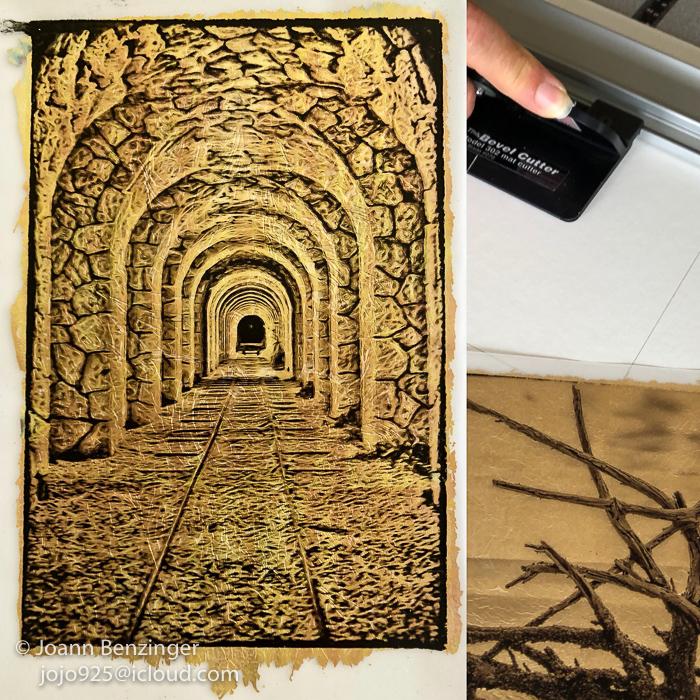
n'est pas la meilleure chose au monde de continuer à toucher la surface. Comme n'importe quel autre papier d'art. D' habitude. Le moins de fois vous pouvez le toucher le mieux parce que nos mains lourdes huiles sur eux. Et tu ne veux pas de ces huiles et de tout autre résidu. Vous pourriez certainement utiliser des gants en coton qui pourraient vous aider un peu. Vous pourriez potentiellement laisser cette fin ouverte. Ce serait le côté qui est introduit dans votre imprimante. Pas vraiment nécessaire que tu enfonces ce dernier bord, mais je vais m'assurer que je ne laisse rien au hasard. Je vais courir pour obtenir mon exact sur la vie, je reviendrai. J' ai mon bord droit, mon tapis de coupe, mon couteau et mes lunettes. Je vois ce que je fais. Celle-là a l'air assez carré. Cygnes un peu plus mesquiné. Je n'essaie pas de changer les dimensions du papier. J' ai juste besoin de couper ces petites histoires de cassette. Si je change la dimension du papier, cela pourrait être problématique lorsque je l'utilise via mon imprimante. Donc, si je dis à l'imprimeur que mon papier est de 8,5 sur 11, mais c'est en fait de 8 sur 103 quarts. Il ne va pas savoir exactement où mettre l'impression. Ainsi, les mesures pourraient être légèrement désactivées. Incidemment, lorsque vous configurez cela dans votre imprimante. Et j'utilise Photoshop, et je dirai à mon document quand je l'enverrai à l'imprimante de laisser probablement un en-tête de 2 pouces. Et la raison pour laquelle je vais faire ça c'est parce que ce premier pouce ici c'est prendre. D'accord. Donc si je commence ici, voyons. Ok, eh bien, ça me donnerait cinq par sept. Et cela ferait en sorte que lorsque je frapperai, l'image va vraiment commencer
ici et je ne veux pas qu'elle démarre ici sur la cassette. Si l'imprimante commence à imprimer ici, je ne vais pas obtenir l'image complète. D' accord, ça a l'air plutôt bien. Ces deux-là sont prêts à partir. Je vais les prendre et les imprimer. J' espère que les doigts ont croisé tout le monde. Espérons que ce sera quelque chose de agréable.
5. 5) Vernissage: J' ai imprimé sur notre papier couché, je les ai laissés sécher pendant au moins 24 heures et maintenant je suis prêt à les enlever de la feuille de support et à les préparer pour le vernissage. Il y a plusieurs façons de retirer le papier de la feuille de support. Tu pourrais juste prendre cette cassette et la décoller. Et si nous avons tout fait correctement, ça n'endommagera pas le papier sous-jacent sur lequel nous avons imprimé. Alternativement, celui-là arrive plutôt sympa. Alternativement, nous pouvons le couper à l'aide d'une règle et d'une sorte de tremblement, que
ce soit un exact ou naïf ou l'un de ces ronds. Je ne sais pas comment on les appelle. Mais cela fonctionne vraiment bien. Quelle que soit la façon qui fonctionne le mieux pour vous. La principale chose dont vous voulez vous souvenir est qu' en fin de compte, vous allez avoir une feuille d'or en dessous. Et vous allez créer un tapis qui va faire le tour du périmètre. Donc tu veux t'assurer de ne pas couper ton papier deux citations. Cela va devoir être monté à l'intérieur du tapis ou alors vous voulez vous assurer que vous avez assez d'une limite ici pour que vous puissiez le fixer à la planche arrière quand vous vous apprêtez à le fâcher. Donc, au plus, je le taillerais au bord de la bande. Mais pour celui-ci, je vais juste continuer avec le pelage et voir si ça marche. Je déchire la bande du journal dans cette direction. Ok. La raison pour laquelle je fais ça, c'est que je ne crée pas accidentellement de larmes. Si je le déchire de cette façon, je suis plus susceptible de déchirer mon papier. D' accord ? Maintenant, quand je retirerai ça de la feuille de support, il va sembler que l'image est beaucoup plus légère. Vous voyez une partie de l'ANC a effectivement passé à cette feuille de transporteur. Mais nous avons une très bonne image. Et rappelez-vous quand nous soutenons cela avec de l'or, puis encore sur une autre feuille de papier blanc, il va y avoir un beau contraste. Alors ne paniquez pas si votre image semble vraiment appréciée. Celui-ci a bien fonctionné, il est prêt à être verni. La raison pour laquelle nous voulons nous vernir pour ne pas rayer ou endommager l'image. Je vais juste le mettre de côté et enlever la cassette de l'une des autres. Pour celui-là, je vais le couper. J' aime toujours tirer ça avant de déplacer la règle parce que je ne ramènerai jamais cette règle au même endroit. Et je suis juste un peu aligné avec le bord de la bande. Cela va nous donner un morceau de papier beaucoup plus petit pour travailler. Donc, vous voulez, encore une fois, assurez-vous que vous avez assez d'un périmètre pour que vous puissiez le fixer sous votre fenêtre rencontré. Vous aimeriez peut-être plus d'une bordure d'or que moi. En général, mon or ne sort pas beaucoup plus loin que le bord, mais j'aime bien en avoir un peu. Il a l'air vraiment beau et organique et il
dit clairement que c'est quelque chose qui est fait à la main. Ce n'est pas une chose traitée par machine. C' est quelque chose que quelqu'un a réfléchi et toutes les petites incohérences sont ce qui le rend beau et spécial et Matt dupliqué. Oui, je pourrais imprimer cette image à nouveau, mais la feuille d'or ne va jamais tomber dessus de la même façon deux fois. Donc, chacun va être un peu unique. Donc j'ai réussi à l'enlever à nouveau. Vous voyez qu'il y a un peu d'encre qui a
traversé et c'est à travers ces belles zones ici. Et c'est très bien. Ça va avoir fière allure. Une fois qu'il y a la feuille d'or derrière elle. Je vais essayer de le déchirer à nouveau parce que je me sens un peu plus heureux d'avoir plus de papier à travailler à long terme. Ils peuvent toujours le couper si je veux. C' est un peu plus difficile d'ajouter du papier plus tard. Facile. Est-ce qu'il voit là qu'il a commencé à se déchirer un peu. Donc je vais juste descendre ici. Tirez de ce côté, voyez si je peux le faire commencer de cette direction. Tu commences à déchirer quelque chose. Une bonne solution à essayer est juste aller de l'autre direction. Parfois, il libérera mieux d'une autre direction. Et on y va. Je dirais que la raison pour laquelle cela a commencé à pleurer parce qu'il a été enregistré dans l'un de ceux-ci. Quand j'ai codé ça. Je crois que je l'ai signalé sur la vidéo. Quand j'ai codé ça, le papier s'est un peu affaibli, et quand je l'ai ramassé, je l'ai endommagé. C' est pour ça qu'il a commencé à se déchirer. Une autre bonne raison pour vous de toujours
vous assurer de vous donner suffisamment de place pour travailler avec. D' accord, on y va. Je pense que ça a l'air bien. Nous sommes prêts à les vernir. D'accord. Donc je sais que tout ça a l'air un peu sombre pour toi, mais rappelle-toi qu'ils sont allongés sur un morceau sombre de quatre, Micah, et ils sont très transparents. Donc, quand ils reviennent sur une surface plus légère, ils vont aller très bien. Donc, c'est juste un morceau de vieux pour le mica que j' utilise quand j'ai besoin d'avoir une surface que je ne suis pas préoccupé par les dommages. Donc, la raison pour laquelle nous voulons vernis est de les protéger contre les rayures. Donc je vais leur donner juste une couche légère d' un vernis en spray et j'aime utiliser cette marque, c'est pleurer Elon vous le vernis archivistique. Celui-ci est un satin. Il est livré dans un brillant et un tapis aussi bien. Votre choix ? J' aime le semi-brillant, mais cette fois je vais utiliser le satin et on verra comment on aime ça. Je vais juste lui donner un joli revêtement uniforme sur les trois et ça va lui donner une certaine protection. Plus tard, nous allons devoir utiliser à nouveau le vernis. Une fois que nous aurons mis la feuille d'or dessus, nous aurons aussi besoin de protéger ce côté. Donc, nous reviendrons sur cette surface de travail et reviendrons sur le vernis à un moment ultérieur dans le temps. Mais pour l'instant, assurez-vous que vous êtes dans un endroit bien aéré et donnez un bon coup à leur vernis. C' est une très bonne idée de lui donner un spray d'essai quelque part parce que s'il sort dans un splat, vous allez avoir un gâchis sur vos mains. Vous voulez avoir une belle brume même fine et la mienne a l'air bien. Donc je vais juste commencer par le sommet. Et vous constaterez que donner vos photos de manteau de vernis fait vraiment éclater les couleurs. Je pense que ça va vous plaire. Donc, nous allons juste le laisser sécher et nous reviendrons dans un petit moment quand il sera temps de commencer la feuille d'or.
6. 6) Appliquer la feuille 1ère partie: Bienvenue de retour. Je suis contente que tu aies fait aussi loin. Donc nous avons déjà tout verni. Tous ces morceaux de vélin et le papier de riz, tout a obtenu une couche de vernis dessus pour le protéger un peu. Si vous craignez qu'ils aient l'air un peu pâle, je vais juste les mettre sur un morceau de fond
blanc pour que vous puissiez avoir une meilleure idée de la façon dont ils auront l'air de la vie ultime. Donc, quand on le regarde comme ça, c'est un peu difficile à faire. L' image ne s'inquiète jamais. Une fois qu'on aura des antécédents, ça aura l'air complètement différent. Celui-ci est en vélin, où l'autre était sur un papier de riz. Même image. D' accord, donc tout est verni. Donc, à partir d'ici, nous allons
les retourner et nous allons en fait appliquer la feuille d'or à l'arrière. Je vais juste en faire un ou deux pour vous à la caméra pour que vous puissiez voir comment je le fais. Et puis on se retrouve ici après qu'ils aient agi. Maintenant, comme vous pouvez le voir, celui-ci est un peu curling. Donc, quand je l'étendrai ici, je me souviendrai de savoir si oui ou non ça va être beau et plat. Ça semble être très bien. Si j'avais des inquiétudes, ça utiliserait une bande et la sécuriserait de cette façon. Pour les fournitures pour, pour cette partie de la classe, nous allons utiliser cet adhésif de pulvérisation de marque de boule de vitesse. Et encore une fois, j'ai une boule de vitesse en métal Leith. J' ai choisi le but. J' ai quelques petits morceaux supplémentaires de projets dans le passé qui peuvent être de bonnes charges. J' ai une brosse douce que je peux utiliser pour
aider à lisser la feuille d'or après l'application. Un autre morceau de papier ciré pour m'aider à soulever la feuille d'or de la tablette. Et je l'ai fait, c'est une planche de tapis que j'ai découpée. Ça va m'aider quand j'ai pulvérisé l'adhésif, va m'aider à éviter sur le sprite. Je vais vouloir laisser un peu de frontière parce que j'ai aimé les morceaux déchirés à la fin. Encore une fois, c'est la face avant. Nous allons appliquer la feuille d'or à l'envers, luttant pour la poser, face vers le bas. D' accord, la feuille d'or est dans ce petit paquet. Il y a une pièce en plastique transparent sur le dessus qui protège la première pièce et ensuite il y a du tissu entre les deux. D' accord. Quand j'ai choisi la taille que j'ai imprimée, je me suis assuré de l'imprimer un peu plus petit que la feuille d'or. Donc pour moi, la feuille d'or fait 5,5 pouces et je crois que j'ai fait ces cinq pouces carrés. Cela va permettre juste un peu de frontière. Quand je pose ce morceau de tableau de maths. Je veux juste m'assurer qu'il y a un peu de bord affiche pour qu'il y ait un peu de déchirure. Quand je relâche la feuille d'or. On va juste vaporiser ça. On veut avoir un joli manteau uniforme. Ça devrait être une grande quantité. Je vais supprimer cela et le mettre de côté. Il y a plus de pulvérisation ici, si bon. Il y a plus de pulvérisation ici. Donc ça va être collant. Fais attention à ce que tu le mets. On va attendre un peu. Habituellement, ils disent environ deux minutes avant que vous appliquez réellement la feuille d'or. Alors pendant qu'on attend ça, je vais juste te montrer un petit conseil. Donc voici ce morceau de feuille d'or ici. C' est vraiment dur de le ramasser avec les doigts. Les doigts ont des huiles. On transpire, on devient collant. Vous pouvez utiliser des gants de coton. Mais le truc le plus simple est en fait de prendre son morceau de papier
ciré et de le mettre sur un et voilà, il va soulever tout de suite. Je vais juste le laisser reposer ici jusqu'à ce qu'il soit temps de poser ça. D' accord. Donc l'ensemble, je vais juste placer ça sur l'image. Et une fois que ça frappe, ce n'était pas de bons gars, ce n'était pas bon. Je suis désolée. Ok, eh bien, parfois on apprend à ne pas faire les choses avant d'apprendre à les faire. n'y a pas grand-chose que je puisse faire une fois ça. Qu' il a dit que c'est une affaire qui a fait un accord ? C' est bon. C'est bon. Ils feront mieux sur le prochain. Un peu amusant. Je vais prendre certaines de ces pièces supplémentaires que j'ai et juste
les appliquer aux endroits où j'ai foiré. C' était vraiment triste, les gars. Je suis désolée. Eh bien, ça va juste être un exercice, ne vous inquiétez pas, soyez heureux. Ne vous inquiétez pas. Tout ira bien. Tout va s'arranger. Oui. Aucun type sueur ne connaît SWACH. Ce n'est pas ce que j'aurais voulu faire. Mais ce qui va être mon pire ennemi, c'est ces petits endroits où la couture, ici, il y a une couture. C' est un peu triste, mais peut-être que ça n'aura pas l'air mal. On verra. Allons l'allumer et jetons un coup d'oeil. Hé, tu vois maintenant, ce n'est pas si mal. Tout est bon. Je croyais avoir eu une petite catastrophe, mais ça va. Je vais prendre ce pinceau et frotter un peu le bord si je peux le soulever. Parce que j'aime que ça soit un peu plus prêt que ça. Mais je vais dire celui-là. Celui-ci est un gardien. D'accord. Je vais le laisser sécher face vers le bas, donc je vais juste le mettre de côté. Nous allons devoir y revenir plus tard et lui donner une couche de vernis puis coller une planche Bristol à l'arrière. Parce que si tu ne le colle pas à une planche de Bristol, juste des boucles. En fin de compte, nous voulons avoir comme ça, voir comment celui-ci, parce que le velum, la feuille d'or, puis sur le dos. Et après avoir verni la feuille d'or, j'ai collé un morceau de planche Bristol et cela lui donne juste une certaine stabilité. D' accord, je vais en faire un autre et j'espère ne pas bombarder. Voyons comment ça se fait de la bonne façon cette fois. Débarrassez-vous de tous ces petits morceaux ici. Et comme vous pouvez le voir, si j'ai des morceaux de bonne taille, je les ai sauvés parce qu'on ne sait jamais quand tu auras besoin d'eux. Essayons celui-ci parce que je suis curieux de savoir comment cela sur ce papier va fonctionner. D' accord ? On va s'ennuyer. Un peu de frontière. Non, cherche mes ongles. Je suis comme ça ? Génial ? On va laisser cette merveille jusqu'à.
7. 7) Appliquer la feuille 2 Partie: Je suis très bien foiré. Cette surface de travail. Elle est collante avec de l'adhésif. Il y a un peu de vernis dessus. Donc je vais juste poser ce joli morceau propre
de c'est juste un morceau de carton qui était probablement coincé dans des papiers que j'ai achetés pour garder tout beau et plat. Et je veux continuer avec, je veux continuer avec fascinant ma feuille d'or à l'arrière de ceux-ci. Je vais en faire une plus grande pour C. Vous pouvez voir comment je fais ça quand j'ai besoin de plus d'un morceau de feuille d'or. Alors rappelez-vous, c'est la face avant pour fixer la feuille d'or à l'arrière. Pendant que j'attends l'adhésif, je voulais juste vous montrer une paire de ces gants en coton que vous pouvez ramasser. Ils sont vraiment gentils d'avoir à portée de main pour chaque fois que vous touchez des papiers d'art. Ou si vous travaillez avec des documents anciens et que vous ne voulez pas que vos huiles pour les mains s'y trouvent. Il y a agréable d'avoir quelques paires autour juste pour des situations comme ça, vous pouvez également les utiliser pour ramasser la feuille d'or. Parce que comme je l'ai déjà dit, il y a des huiles sur nos mains et elles
transpirent et parfois la feuille d'or colle à quoi ? Je vais continuer à utiliser le papier cire qui semble fonctionner pour moi. Et nous sommes prêts. Donc ce que je vais faire, c'est que je vais prendre le premier morceau de feuille d'or et que je vais essayer de l'obtenir en haut. Et puis je vais prendre un autre morceau de feuille d'or et remplir le fond. Je vais monter à ce sommet qui a des dégâts. Et on dirait que je vais l'endommager encore plus. Pas de pitié. Ok, il ne veut pas se libérer de cette cellophane. C' est bon. On va passer à une autre pièce. On y va. Beaucoup plus facile. Et je vais m'assurer que je monte ça au-dessus de la ligne de couture. Et puis je vais essayer d'en retirer une partie. Et je vais laisser un morceau plat là. Ne vole pas très dur avec ça de peur que tu déchireras ta feuille d'or. Cette pièce va aller dans ce petit pot ici. Pour l'instant, juste pour me donner quelques beaux bords rugueux. On va réfuter ça un peu. Juste sur les côtés. Ça fera l'affaire. D' accord, je vais mettre celui-là de côté, laisser sécher, et plus tard je verrai ça.
8. 8) Vernis et Bristol: Il est temps de mettre une couche de vernis sur le dos de ceux-ci. Je vais utiliser ce crime sur le vernis satiné UV. La raison pour laquelle je le vernis est d'empêcher la feuille d'or de ternir et d'être protégée pour qu'elle ne raye pas. Je vais juste lui donner un manteau rapide. Elle a déjà été secouée. Comme avec chaque fois que vous utilisez du vernis, vous devez l'utiliser dans une zone bien ventilée. Après avoir vaporisé le vernis, je vais le mettre de côté et le laisser sécher. Et une fois qu'il sera séché, nous reviendrons et nous attacherons la planche Bristol à l'arrière. Je veux juste vous donner un peu de la terre ici avant de commencer la prochaine partie du processus, nous avons une belle surface de travail plane qui va ici. J' ai un peu de panneau de mousse et j'ai mis mes photos face cachée avec la feuille d'or vers le haut. La raison pour laquelle j'ai choisi le panneau de mousse est parce que c'est une sorte de surface douce. Je ne veux pas abîmer ou gratter mon prince. J' ai de très beaux livres lourds parce que je vais
vouloir les poser dessus après avoir mis l'adhésif sur le tableau Bristol, que j'ai juste là. Et je vais utiliser cet adhésif super 77. C' est un joli adhésif fort. On va vaporiser ça sur le tableau Bristol, poser sur les photos, et ensuite je mettrai des livres dessus pour s'assurer qu'il a une bonne adhérence et qu'il reste beau et plat. On se retrouve ici en quelques uns. Ce que j'utilise pour ce processus, c'est juste une vieille planche Bristol. Ce n'est rien de spécial qu'une marque fasse. C' est juste quelque chose qui a un peu plus d'une structure et
ça va aider à empêcher nos photos de curling plus tard. Donc, je les ai prédécoupées et je vais juste vous montrer que c'est la taille. C' est la photo. C' est le côté de la feuille d'or. Et j'ai coupé ça à peu près la taille de la photo. Je ne veux pas l'étendre au-delà de la feuille d'or parce que quand je colle ça, je ne veux pas voir ce bord. Je veux ça derrière la feuille d'or. Je voulais juste ajouter un peu de structure pour garder cette belle et plate. D' accord. Donc, tout ce que j'ai fait pour les
couper, c'est que j'ai mesuré mes photos et
que j'ai fait, j'utilise juste une règle et un couteau exact sur une surface de coupe. Ils sont tous prêts à partir. Certains d'entre eux aiment celui-là. C' est une taille différente. Si vous êtes un peu
plus cohérent que vous pouvez les couper tous de la même taille et c'est assez facile. Tous mes carrés sont quatre et un quart pour la photo de taille que j'ai. Donc, je vais juste les exposer ici. Je vais donner à
mon adhésif un peu de spray à cause d'un globs. Je ne veux vraiment pas ça sur ma planche Bristol. Oui, c'est bon. D'accord, donc je vais juste donner un bon coach solide ici. Si je ne lui donne pas assez d'adhésif Lake, il semble être épuisé. Je devrais peut-être aller chercher une autre marque. S' il n'y a pas assez d'adhésif ici, ils ne vont pas malades et finiront par arriver. Et si vous vendez ces produits, vous ne voulez pas que cela arrive à vos clients. Alors assurez-vous que vous donnez assez si les morceaux. Très bien, ça va être à propos de la fin de cette caméra. Incidemment, si vous faites cela avec du vernis et qu'il commence à le faire, arrêtez immédiatement. Et ils ne se souciaient pas que ça se globalise autant avec de l'adhésif parce que c'est oui, c'est de la colle, c'est de la colle. D' accord. Je vais bouger la caméra. Je reviendrai avec toi dans une minute. Nous y voilà. Tous ensemble. D' accord. Donc nous voulons nous assurer que vous prenez la carte et la mettez sur la bonne photo parce que si vous la mettez sur la mauvaise, comme je vous l'ai déjà montré, vous allez finir par avoir des morceaux de cartes montrer à travers le dos du vélin. C' est transparent. Donc c'est un peu important. J' ai le côté collant ici. Je vais la mettre face cachée sur le dos de ma feuille d'or. J' ai un rouleau Breyer ici. Et je vais juste l'aplatir. Je vais appuyer assez fort. Je veux m'assurer que ce truc est scellé sur tous ses bords. Côté collant, face vers le bas. Et maintenant, je vais à de jolis tampons lourds. Il suffit de poser des arcs sur les photos. Et puis nous allons laisser ça monter, revenir un peu et les transformer tous nos voir comme nous
aimons, ils seront prêts pour les équiper.
9. 9) Matin, Matting: Pendant que vous les gars, êtes-vous prêts pour le dévoilement final ? Je pense que tout est bien séché, alors jetons un coup d'oeil et voyons ce que nous avons. Ce stock là. Pas de mal fait. D' accord. Alors on y va. En les regardant. Je dois dire, je pense que j'aime probablement le velum, le bast. Ce genre de papier de riz n'est pas mal. Celle-là, ça ne me dérange pas. Celle-ci dont je ne suis pas vraiment folle. Donc vous pouvez voir la différence entre la photo originale et ce que j'ai ici. Ça a juste l'air un peu dingy. Scie. Je ne sais pas si j'aime vraiment ce genre de papier de riz. C' est bon. C' est bon, ça valait la peine de le faire. Celui-ci est plutôt joli, c'est encore une fois, ce papier bizarre qui a les trous et puis c'était un autre genre de papier. Oui, celui-là est sympa. Vous ne pouvez pas voir l'or à travers lui aussi. Le but vraiment ajouter quelque chose. Donc je pense que j'aime voir l'or un peu plus. Bon, maintenant on les a tous. Mettons-les de côté parce qu'on va faire d'eux ? Et je vais en mettre un dans un Matt. Et je vous le dis, je ne vais pas vous apprendre à couper les maths et j'espère que vous savez faire ou vous savez où les faire. Si vous utilisez une taille standard, vous pouvez simplement ramasser des maths prédécoupées. Ou si vous allez dans les cartes de cartes plus que les cartes mappées plus, vous pouvez leur donner des tailles spécifiques de l'ouverture de la fenêtre. Tu veux avoir coupé et ils le feront pour toi. Si vous achetez en vrac. C' est vraiment une bonne affaire. J' ai de telles tailles non standard dans toutes mes photos, je coupe habituellement les miennes. Jetons un coup d'oeil et voyons où cela va fonctionner. Je vais juste ouvrir ça pour que tu puisses voir comment je l'ai. J' ai donc un vétérinaire plat 4d. C' est ce qu'on appelle une charnière de fenêtre. Et c'est un tapis de fenêtre. On dirait juste que c'était noir et j'ai coupé le trou dedans. D' accord. Et c'est à ça que ça ressemblera quand c'est fou si je l'aime plutôt. Je vais juste te montrer sur un autre où je le signe. J' aime utiliser un crayon sur ce velum et je signe partout où il y a un endroit où il va apparaître, généralement en bas. Pour sécuriser cela en place, j'utilise la cassette d'Artist. D' accord. C' est sans acide. Ça ne va pas causer de jaunissement sur mon travail d'art. Et voici comment je le fais. Donc je vais juste aligner ça pour que je sois content de l'endroit où il se trouve à l'intérieur de la fenêtre. Chose. Super à propos de là. C' est un dessous de verre en ardoise que j'ai recouvert d'une chaussette. Parce que je vais mettre ça sur ma photo recouverte d'une chaussette parce que je ne veux pas qu'elle gratte l'image. Ça va le maintenir en place. Alors je vais ouvrir ça. Je pense que deux pièces des artistes prennent, je vais les enregistrer du haut et laisser la gravité faire son travail. Tu ne veux pas l'enregistrer ici parce que ça pourrait causer du flambage. Vous voulez juste la laisser tomber au fond, laisser la gravité faire son truc. Donc je vais fermer ça. Et on y va. Tout est prêt.
10. 10) Réflexions finales: Eh bien, cela conclut ce cours sur l'étalon d'or, utilisant le vélin et la feuille d'or pour embellir vos photos. J' espère que vous avez passé un bon moment. J' espère que vous apprendrez quelque chose que vous pouvez prendre dans votre propre flux de travail. Et j'espère que vous ferez une très belle création. Je suis ravi de voir ce que vous venez avec et comment vous utilisez ce processus. Assurez-vous donc de poster quelque chose dans la section du projet de classe. Je veux juste vous faire savoir que cette classe était en fait le résultat direct d'
un autre élève qui m'a posé des questions sur un processus qu'ils ont vu dans l'une de mes autres classes, qu'ils voulaient plus d'informations. Donc si vous voyez des choses que j'ai faites, peut-être que vous aimeriez plus d'informations ou peut-être que vous savez quelque chose que vous avez toujours voulu essayer. Peut-être que je sais comment le faire. Allez-y et postez un commentaire. Je regarde tous les commentaires dans la réponse dans. Alors qui sait ? Peut-être que vous m'aiderez à comprendre ce que ma prochaine classe. Merci encore d'avoir suivi mon cours. Apprécié, heureux création. À la prochaine fois.
 Joann Benzinger, Fine Art Photographer, Teacher