Transcripts
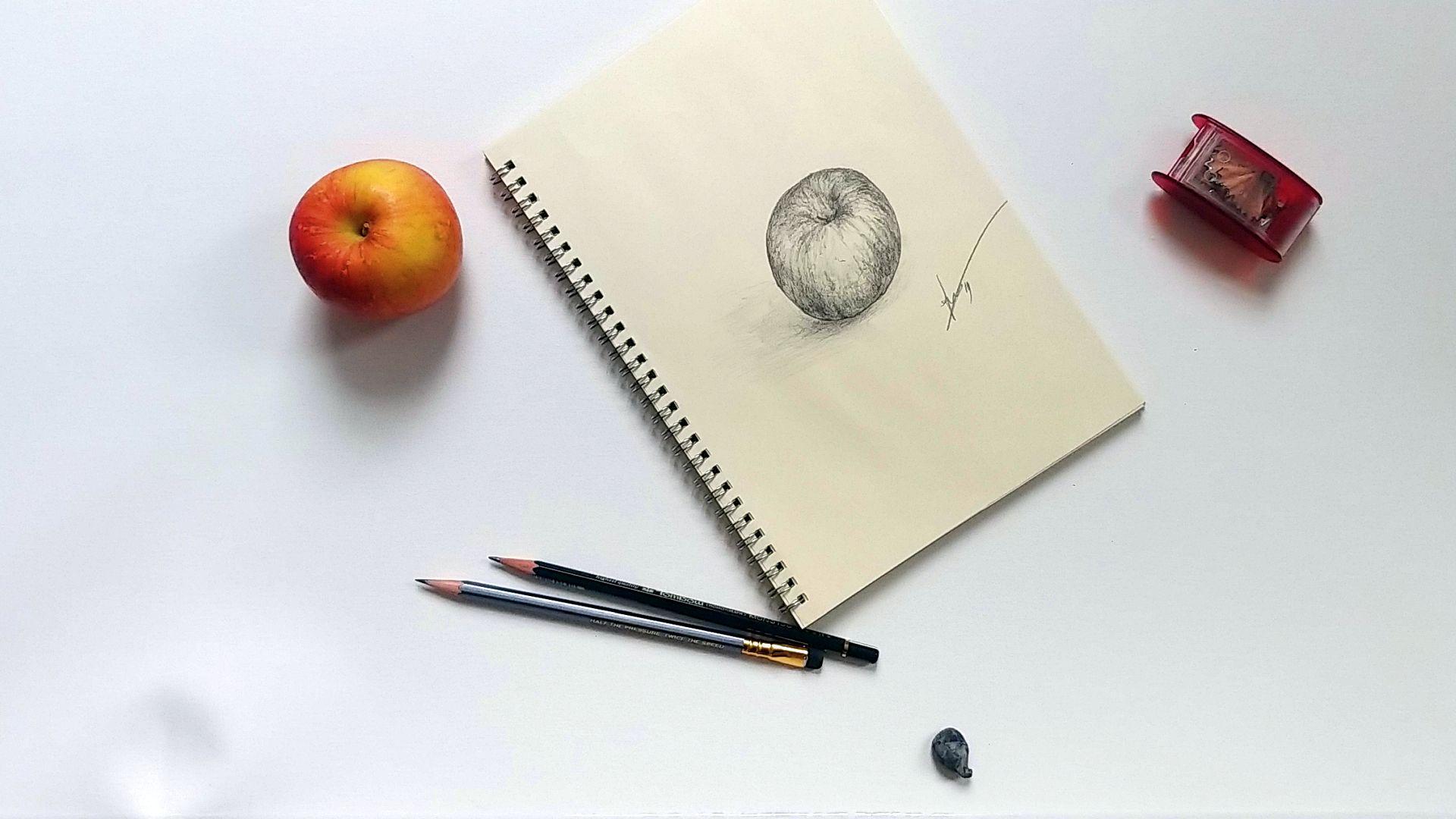
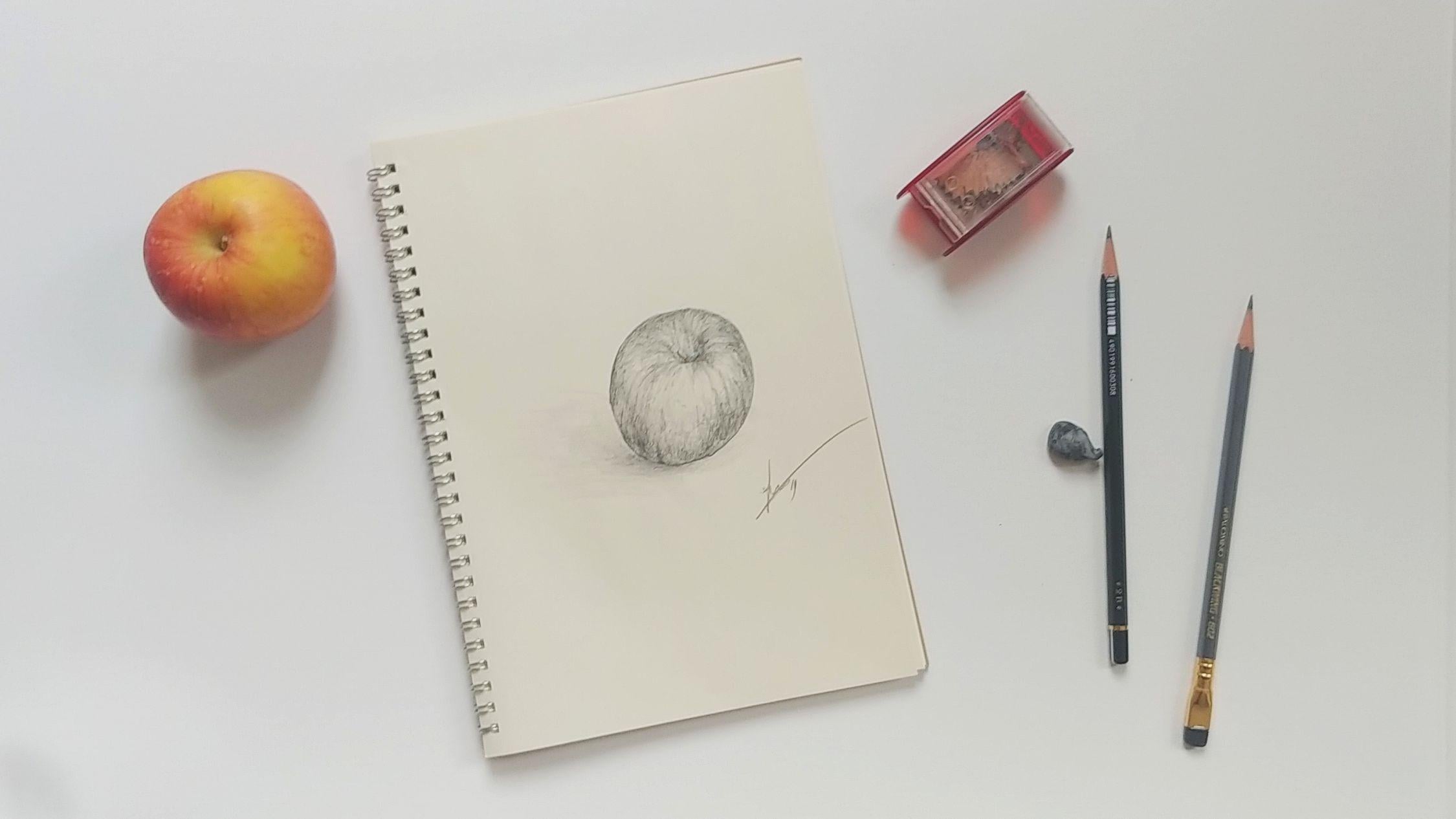
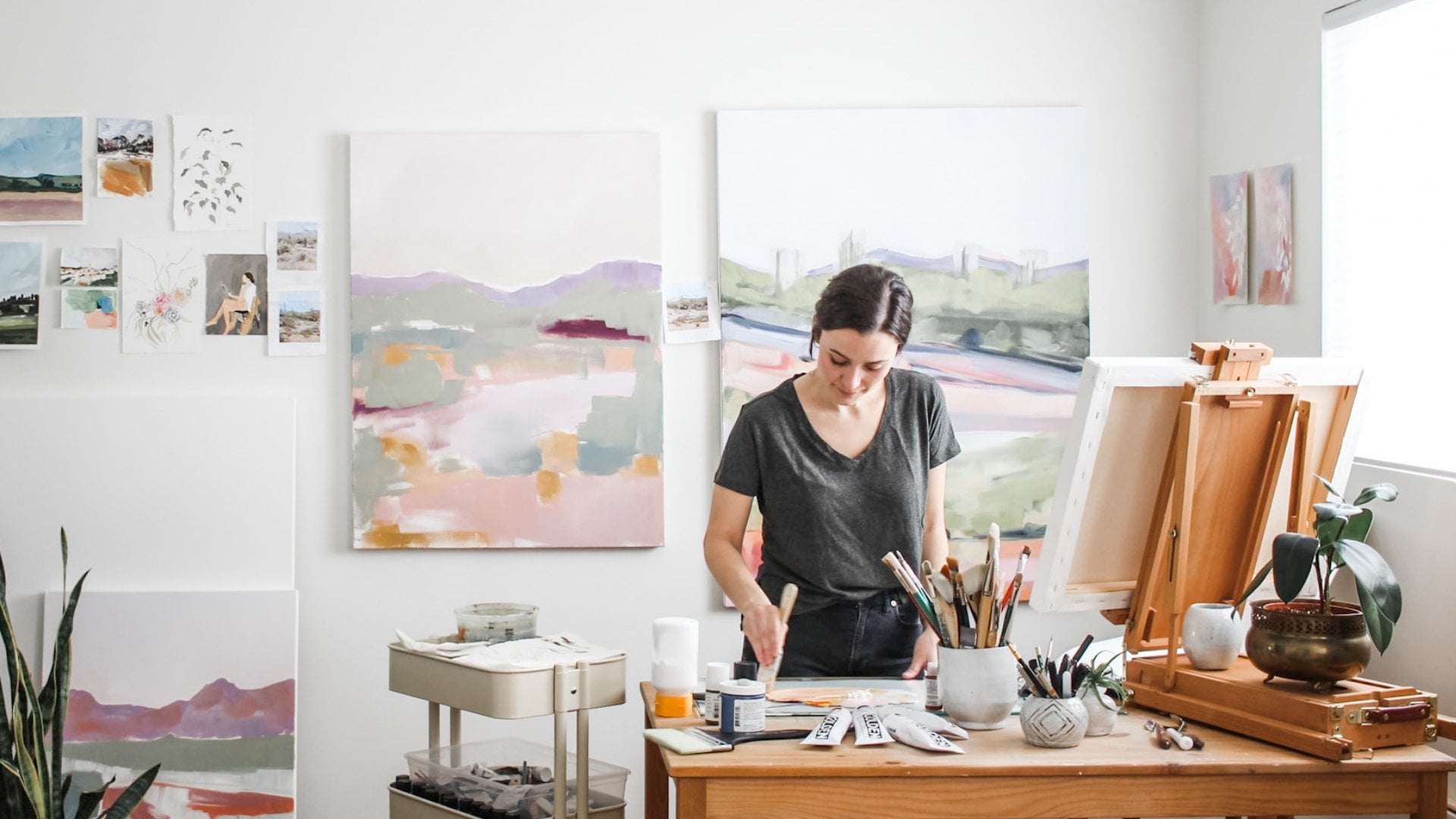
1. Introduction: hi from after art. This is a little corner of my studio. I am Dutch. I am a classically trained professional artists. I earned my bachelor's degree from the Academy of Art mean over in the Netherlands, and then I went on to get a master of arts degree from the Royal College of Art in London. I think everybody can learn how to draw, because somewhere you teach yourself. So in this class for this project, we're going to make a classical drawing because I think the classical drawing is the basis off all art. So why an apple? Because this is what we're going to draw an apple. You think of it off as a ball, but it isn't. He's got a shape that's different. It's not cried round. It's not quite perfect. This will actually seems to lean a little bit. This is how we started at the Academy of Art. Me nervous, and it's a good idea because a little bit boring, though we had to draw apples every day, and I got tired of it. I went home. I did 100 50 frigging 150 apples brought them to the academy, said Please do something else? Yes, Well, if I do 100 apples more, you don't have to do 100 apples you don't want really good one. Your dumb do two or three. Fine. I would love to see what you're doing. I would like to see how you hold your hand for the lesson. When we talk about the hands on. I would like to see if you're willing to share it. Drawings that I'm not finished so we can talk about it. And of course, I love to see a finished project. So we're going to do this together. We're going to use this project of drawing an apple to talk about the materials, hand, poster line and shading and putting it all together by making a study over apple. All you need is a piece of paper, a pencil pencil sharpener, the razor very important tool trust Make if your peace of mind and an apple, I will show you my favorite materials. But anything will do, but something that's group will do better
2. The Tools of the Trade: way are at my desk and he was my sketchbook. My pencils he raises and my pencil sharpener. Let's talk about my pencils first. I like Japanese pencils. I like very, very good pencils. It makes life easier. It makes drawing better. This is the to be. This is a soft pencil. Be soft. H is hard. HB is the middle. The higher the number, the softer or the harder the pencil lead, which is graphite, not lead. Beautiful. Would Andi, They are no round. We got six sides. This is important. This way it won't roll off your desk. A pencil, especially a soft warm. And it rolls off your desk. Force on the ground, Probably letters broken. All these different places. You conserve it away and these are about $3 each, which is worth it, in my opinion. And it last you a long time if you don't drop it. This is nowadays also made in Japan. It comes with this super handy feral, which contains razor. You can actually pull it out like this, and you might even save this Ferriol when the pencils finished and put it on another pencil if you like. This is quite a good AirAsia to then. I have these really cheap mechanical pencils. I have a bunch of them. I throw them in all my bags. You're an artist. You don't want to be caught without a pencil. And because they're mechanical, you don't really need a pencil sharpener. Very simple, very easy to use. And they even have this cool little immigration on the top bridges. Quite a decent AirAsia. But the best razor, in my opinion, the most evolved and razor is the need herbal rubber eraser. So I keep this covered in its plastic covering. I just cut off pieces as I need them. They do dry out eventually, and I've got small pieces in my different pencil cases, and you can need them in point. If you want to do something very, very precise, you could make him flat. They turn a bit black. It takes a long time because before this has worked out, and the most important thing is these don't harm your paper. If you need to do a lot of raising Andi, they don't leave these these little rubber rowley things, which you didn't have to wipe off now in your studio If you want to do this, you should use a feather. Let me get this. This is actually a pen I made, but you want to use a feather to swipe them away. That way, you're not smudging your graphite drawing all over the page. You don't have that problem with these ones when you have it with the normal ones. Even though Steve desire good, they still have that problem. And then we come to the pencil sharpener. This is my favorite pencil sharpeners. It has a double sharpening process, and it's got this little reservoir. It's not big, but it's the reservoir. And it's got, like, two extra um blades so you can exchange these later all you want. A pencil sharp, nervous, a little bit of a reservoir to keep your shavings in. Because all right, to leave shavings everywhere and people object to that, especially museums. Well, it is what it is. This is face one face to face. One gives you a very, very nice point. Well, very nice, pointy shape. I don't know if you could see it, but this is not yet a very good point for that reuse Face to make a bit more here we have a super sharp point. Very, very nice. I like a very sharp point. The sketchbook. I like this sketchbook like that it has on elastic bands. This is easy. It's actually quite light weight, although it's got a nice quality paper in it. And it even has a little singing elastic where you where you can put your pencil in. And it also has a book marker. I love book markers to have it in a sketchbook. His brilliance Very nice. I like my paper to be not quite white, not bright white. In fact, whenever I see bright white, I already don't trust the paper. And then when I come to feel it, feel free to feel paper. You do want to know how it feels. It's always way too smooth. It's got too much glue in it. You want a paper that has a little bit of a tooth, but not too much or I don't like too much. I want to be able to make a fine drawing like this. This isn't one academic drawing. It needs to be thick enough. You don't want to see through it, or you see a bit through this, but not too much. It's good enough to do some more heavy drawing on it. Push a bit harder with the pen soul. That's nice. Nice paper. Nice book, and you fill this up, put a number on it and then go on to the next sketchbook.
3. The Hand, Line and Shading: I use my pencil. This is how Hold my pencil in three fingers. You don't need to put pressure on your pencil, especially if you good wrong, especially if you have a soft one. And these two fingers you bend in your old on a needs your hand you really glide. Glide on these two fingers and that keep shore paper clean because your hand is producing oils. This helps you to grip things toe. Hold on to them, but it will also eventually put an oily sport on your paper. Now, of course, if you know used to this, this gives you an enormous variation of pressure and power and and subtlety. But it is also difficult. And we don't want to stop drawing just because we haven't practiced this. We're not used to this group yet, So you want to put your hand down? Feel free to do so. Pro tip little tissue underneath. That way you don't get oils in the paper. You will find out that if you really, really busy in one sport and you've got your hand here and maybe it's Holt oil will get onto this part of the paper and a pencil actually will slip and watercolors won't work. So that's why we do this. I can make sick and sin lines if I do, to let some horses and then another thing you want to work on the shading. Very little pressure will make a dark shade, especially with a softer pencil. That is your personal preference that which, which kind of pencil prefer I do suggest you try them out a little bit. And don't forget, never be worried that you might change. Don't feel you're stuck with one thing because you've chosen this business. Depends love chosen. This is what I'm going to work with and nothing else. No, no, no. We changed, Aled the telling, and that's good. It's not a bad idea to do a couple off exercise. Especially know if you have a new pencil. Always do that to try and new pencil out. You could make beautiful tonalities with this. You don't need to. You can go over to gain and gain dog, and now I've got one flat side to my pencil. You can actually use that to your advantage. You can use the other side if you want a really sharp, thin line or you can keep to the flat line and make a very, very, very soft shadow. This is what your hands does. Your hand controls the pencil, the lie to your touch, the easier your lines are and the more subtle your shades get, Which doesnt mean each country knock really good at it. But we do this academic drawing to get this control control. Come from your hands And don't do everything from your wrists. No, to use your whole arm. That's why this all needs to be loose. You don't want to be stuck. This found I come through like this. I'm already shaking. Be loose. Be relaxed that your hand. Now we talk about our mind with our mind, we decide what we're going to do. So I was talking about tonalities. My mind decides how much tonality we need. Do we need some more? Don't need some less. You're always thinking Don't underestimate this. You're always making decisions every single time. There's two parts of what your mind does. Your mind remembers things. Memory is an extremely important part in throwing because you look at, you know, good apple. You look back at your page. You need to remember how it looked, because otherwise your bracket your page and you still don't know what to do. You need to remember something, and you also need to decide where we're going. So we have this. Apple has got, like, a little lip here, and it's got these striations. So I remember those reproduce them and you have to translate this three dimensional object into a two dimensional object. This depths off, shed on light and color has to be translated into tonalities in gray, black and white. That's what you brained us. And of course, later on, we'll look at door daughter. Things will look at other things, and very soon you will have internalized this. So always be aware of what you hand us, always trying to be relaxed and always be reminded of what your brain does.
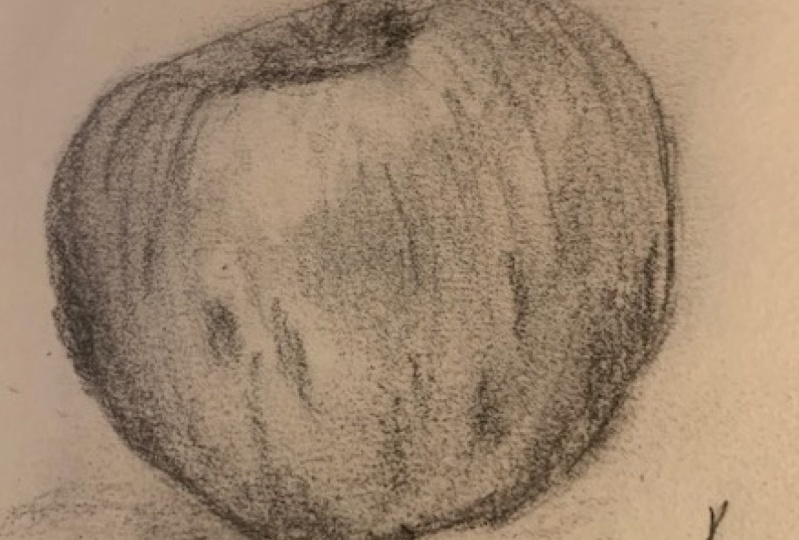
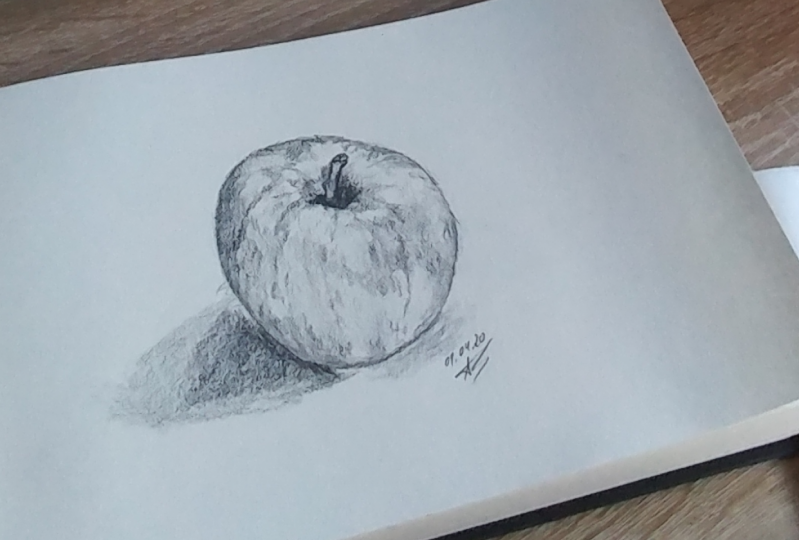
4. Drawing the Apple (finally!): So we're ready now. Pencil paper, apple. The first thing we do is we look at the apple. What shape doesn't have? We decide where we put the apple, and what I do is I. I project that image, but in lying because I want to do an outline first, I'm making a sin outline. No, I like to draw on a nice long life and never worry if it's not perfect, Nicholas, that's what the arrays was for. The artists best friend. Let's get a little bit of shape in this apple. We won't worry too much about the details yet. We're just looking at shape right now. It's a bit darker here, shocking to a heavy online. I do like to put my lines a little bit into the shape, and because this apple is sort off stringing, the colors are sort of stringing. That will help us a lot in making it really look three dimensional. So as I remember, what I want to do is perfectly all right to tune your paper around a little bit. You can draw upside down if it makes it easier for you, because I want to keep my lines in the shape of the apple. I was lying here. I don't think I'm going to use that right now. Missed Our came got off this indentation, but a conflict with the color, the colors light. That's why we go very slow from light to dark. This is definitely darker. My pencils flattened out of beds. Location Your very, very nice. A soft light Grey. I'm barely touching the paper here, actually. And see how I was already getting some three dimensionality in there. So the light is here more apple. But there's a big yellow sporting. This is still a bit lighter. E think I think I'm getting close, getting the tonality right because it's going to change the moment we put in that the fact off the color of a little blood still little stripes during my pencil around because now I've got a nice shop, sharp change on the other side. I'm turning it because it's easier for me to make a really nice kerf this way than this way . So this was issued in this, right? So I just turned my paper to whatever suits me. Makes me happy a bit dark. Now I'm just slightly pushing it, and it will just lift up some off the graphite. You can put a little bit of shade because let's make it flat working a little bit on the shadow. And that's mainly so that my point is nice and flat so that I can make very subtle shadow here. Just just a little bit will do it more later, but it makes me happy. It takes a little bit of shape that gives me so feeling because this is shading. It's a bit floating now, right? And once we got the shade right that the apple throat will be firmly anchored to the table . So let me see. I'm using this little stem here as a starting point and let me see one off. These things is going on here. The move. Little site here. By the way, if you want to share your project, I would definitely like to see different stages. That's always interesting. He's got, like, these little sports, too. Got some light spots. Maybe will cheat. Remember when we used a razor to lift them up a little bit? Maybe it is cheating. I'm I'm just letting it flow and see what happens. Might not be the exact sports that the apple ass, but it gives the irregularity of nature. And that was a bit darker here, isn't it? Definitely. It's this bit. This bit is quite dark, too. If I were to do this straight the way the way I did my gradations, then you tend to get very stripey effect we world mortals effect. That's why I'm cross hatching here. It's actually quite fun. Don't listen a long time. You see this as like a flame. Here goes up, down and up. Swag Here all that Randa's mottled a mixture of letting my pencil just wonder a little bit . Let it wander over the paper, see what happens. I think it's darker. Let it wander a bit more. That's saying flame 62 short of Mounir over here, but is easier for my hands. And I put it straight to see what I'm actually doing. No, I think that this needs a little bit more shameful together because I'm changing it a long time. Putting in these details actually flattens to shape a little bit, so we have to get back to our so you dimensional shape. If that makes the apple these shades too light. We will darken these a little bit. And so you go two and froze. You keep looking and analyzing, and you also look and analyzing what you're doing here. This is definitely to light. It's like definitely dark shape. I'm not talking this bit in a mortal way because I think it looks mottled. Sometimes you have to What's your decision? If you want in harm something or just ignore it, this is this is not a photo. This is also why art is so interesting because you see what the artist sees and you see the results off the artists decisions. Your apple. If you do exactly the same, Apple rude and should look a little bit different than mine because she's a different person. Pity our constant, this apple around to everybody, the old or the same. Very same apple, which makes me think if you do this project, you want to share your drawings. Also, make a picture of the apple. She had a picture of the apple. I think that's a light sport here, and it's dark down. I do a bit like this. I see a nice and even it becomes except we don't want it. Even we want modeling. I don't want to do too much. Do this apple, I would say knowing when to stop is a very, very Portman's part off painting that little bit shade here. I think I want a little bit darker here. Maybe I should add that and no pattern apple. Look, say Granny Smith or Golden uses would specially it's just thoughts will be the way to start this. If you are new to this, you have been doing all the drawings. Go ahead, get me a really complicated apple. There's something about patterning that's that flattens it. I think I'm going to stop here when I was a little bit of shade because we have so flight the shade of very, very soft. Actually, we were painting this. If you if you look here, you can definitely see that the red off this apple is reflecting in the table. You would put this in shade needs a lot of red, but we're in black and white. If you look here shaded, its darkest. This is the part that that grounds apple for making wound. Very targ lying here. Now I'm pushing a bit harder because I want that really dark line there. It's quite dark here, a little bit dark here in this very, very light shade here. So renders the shading wasn up. It's at this point for where I'm sitting. Yep, I think I'm dumb, not will. Muster never hurts to look away from your drawing a little bit. Just look at something else se telling this. And then you look back with fresh eyes, some lost minute changes. So now we don't. I hope that everybody had a good time doing this. And I can't wait to see everybody's hands, apples and drawings. Share your apple. Share your sketch. We'll talk about it.
5. Final thoughts: practicing academic drawing trains your hand, your eye in your mind. It will improve Any other art project you're working on. It was a little fun having you guys visiting me in my studio showing you my art materials drawing with you. Don't forget to share your drawing and never hesitate to ask me any question you might have . I would love to hear from you and I'll see you at the next project.
 Aafke Art, Art with Aafke All about Art!