5 PRINCIPLES OF STOICISM
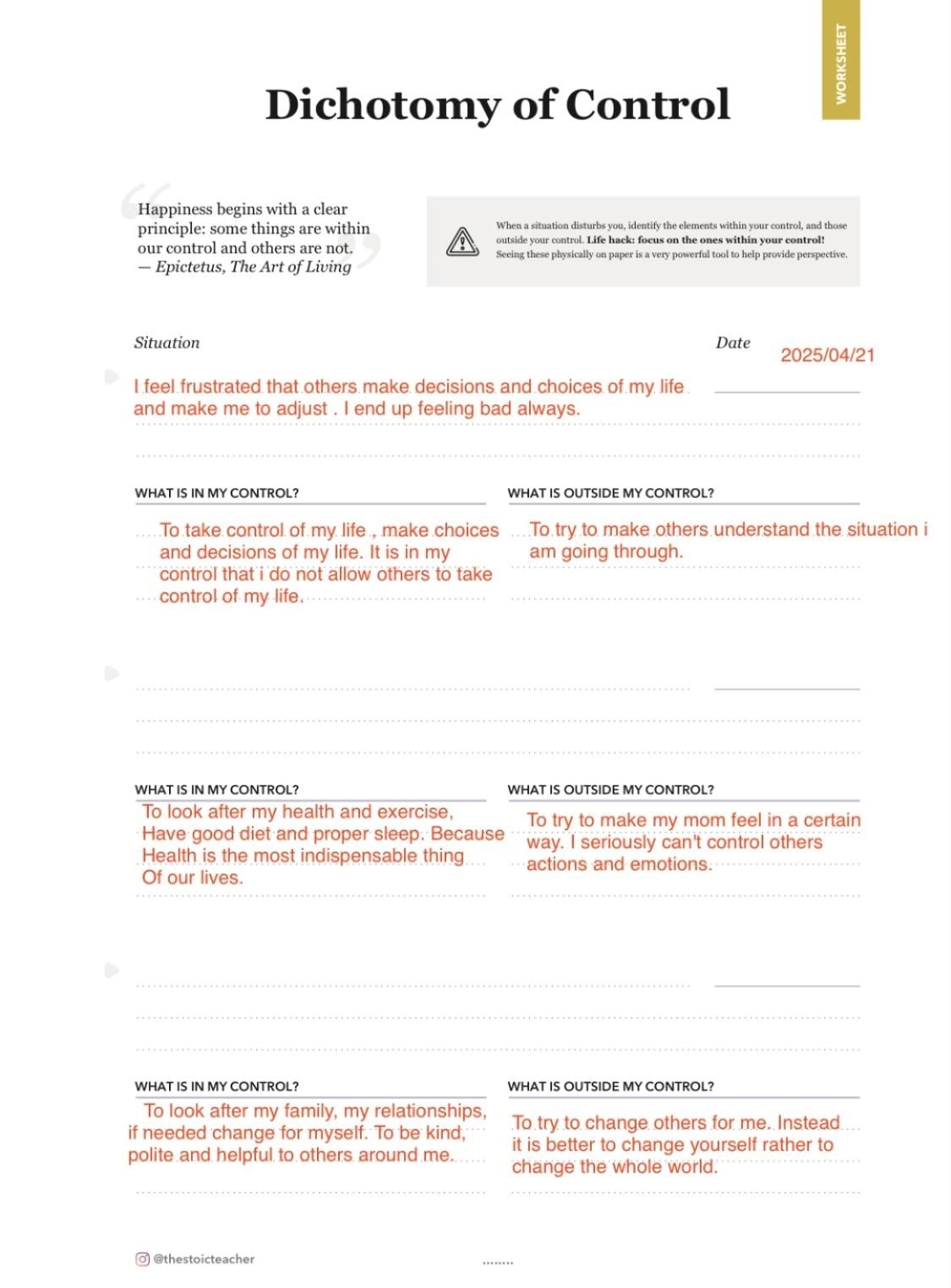
here’s a concise description of the five principles of Stoicism you mentioned:
- Dichotomy of Control
Understand and accept that some things are within your control (your thoughts, actions, and responses) while others are not (external events, opinions, outcomes). Focus your energy on what you can control. - Premeditating Adversity (Premeditatio Malorum)
Mentally prepare for potential difficulties by imagining possible obstacles and hardships. This builds resilience, reduces fear, and keeps you calm when challenges arise. - Voluntary Discomfort
Occasionally practice discomfort — like fasting, cold showers, or facing fears — to strengthen mental toughness, appreciate comforts, and detach from unnecessary desires. - A View from Above
Reflect on life from a higher, broader perspective. See yourself as a small part of the vast, interconnected whole to gain clarity on what truly matters and ease personal worries. - Journaling
Engage in daily self-reflection through writing. Track your thoughts, emotions, virtues, and lessons to better understand yourself, correct mistakes, and align with your values.