Transcripts
1. Introduction: Is now the third class within my YouTube broma to success, where I'm going to show
you how you can find your right audience on YouTube. If you haven't watched any
of the previous classes, including either of these two, go ahead and watch those first, then come back to
this one so you have the foundation of knowledge
to build upon correctly. In this particular section, we are going to focus on how you find an audience
for your videos, why they're going to watch your videos in the first place. Then also, how you can do clever tactics within
your content to make watch longer, have things in the background that
they resonate with. So then that way they
actually want to subscribe because they feel like
you are one of them, or you are a part
of their community, not just some random person
making videos on YouTube. It's a lot of clever things that you do almost psychologically, subliminally, in the
background of your videos, the stuff you wear
in your videos, how you talk in the videos, the type of language you use, that just makes you resonate more with that viewer
that you're targeting. It's very clever
marketing strategies. So in that way, they feel
more inclined to subscribe with that you're having to
beg for a subscription. Then also, they feel like
you are relating to them, so you can create
all of the content. For them, and they
actually feel a part of some form of a community like they finally found their home. So we're going to
break all of that down in this class
with a bunch of different tasks so
you can build out for whatever topic and
videos you want to make. And then that way, you'll
have a huge understanding of the mindset of your viewer and how you can not exploit it, but obviously use it to your advantage within
your content strategy.
2. Task 1 - Top Views Last 48 Hours: I'm going to get into the
good stuff of finding your ideal viewer
and your audience that's actually going
to watch your content, so hopefully actually
starts to get some views. Now, throughout
this first episode, I'm going to set you for tasks. I want you to
follow these tasks, both having a
retrospective look at your current analytics so you understand who's been
watching your videos, and then from that
you can decipher why they've been watching them and also where they've
been watching them from what traffic
sources, and so on. And then from there, we'll
build up this knowledge with multiple other tasks
where we'll start to understand the
differences between the psychological standpoint of the age group and demographics that's watching your consent. That's what we'll do
within this video. First, let me just
briefly break down the main core age groups that
watch all of my content. So firstly, we have a huge Genz audience that watches the main
technology channel. This is anything
12-24-years-old. This is a huge market
that we're targeting. It's the next
generation of buyers. There's lots of
different things that Gen Z do different to
any other age groups, so you'll market to
them accordingly. We've then got a large
millennial audience that's sort of the secondary
audience on the tech stuff, but also on some of the
music channel stuff. So Millennials, again, they're a completely
different generation. You're sort of looking
at anyone that's like, I'd say really 26 to
sort of 40-years-old, 44-years-old, that sort
of bracket of people. People in their 30s, basically. So a Millennial has a
lot of disagreements actually with Gen Z with
how Gen Z view the world, and also Millennials
viewing of money, Millennials have much
more debt than Gen Z do. They're more willing to go
in debt to Flex and show off on Instagram to have false status and
all this type of suf, so people think, got a
really big fancy house, they've got a ran drove, they've got all
these every things. But actually,
they're massively in debt just to get that
Instagram story. So there's a lot of
different things with how those two
generations behave, and also the conflict
between that that you have to be aware of when it comes to how you
market to them. We'll break all of
this down in a moment when we get onto the computer. And then we have an
audience that's very, very old that watches
my music channel. And these are people
sort of 40 to 60 years, 45 to 60-years-old. That watch my music content. The ideal viewer here is
someone who's married. They use music as a
hobby, so it's escapism. So they basically go
to the spare room, go to the little music studio, and it's an opportunity for
them to escape their family, or their wife or whatever,
have a bit of peace and quiet. And they can go there and
do a bit bit of music. So understanding that frames how you're going to
sell an online course. This will be great.
I'll save you more time so you can get to
the good stuff, the fun stuff of making music. Because obviously, that's
all they really care about. They don't want to sit reading manuals and
learning the products, so they want to fast track
that so they can actually use the limited time that they have or time that they've got left, actually enjoying their
hobby, which is music. So all these different
factors all come into play when it comes to how you present yourself
in the content, IE, what you wear, you talk, the slang that you use, the
terminologies that you use, and then also how you then treat and behave around the audience
with the things you say. So the first task that
I want us to do is to actually understand
what's currently successful on our channel. So I'm assuming that you already have some videos
on your channel. You're now watching
this course to try and elevate or go
to the next level, or the analogy that my dad likes to use is going to
that next pitch. You're in non league
football you want to try and get into
professional football. You're trying to progress
onto that next pitch. I think it's a
beautiful analogy. So the first task we want to
do is you want to actually understand what we've done with the work that we've created. The videos that we've
made, what's actually currently being watched
in the last 48 hours. So when you go
onto your YouTube, you can see in the
last 48 hours, basically the top
performing videos, whether that be YouTube
shorts or YouTube long plays. If you are a hybrid
content creator, you obviously want
to make a list of what shorts are
currently being viewed. But also what long format
content is being viewed. So we're going to
go to that area in our YouTube analytics, which basically just
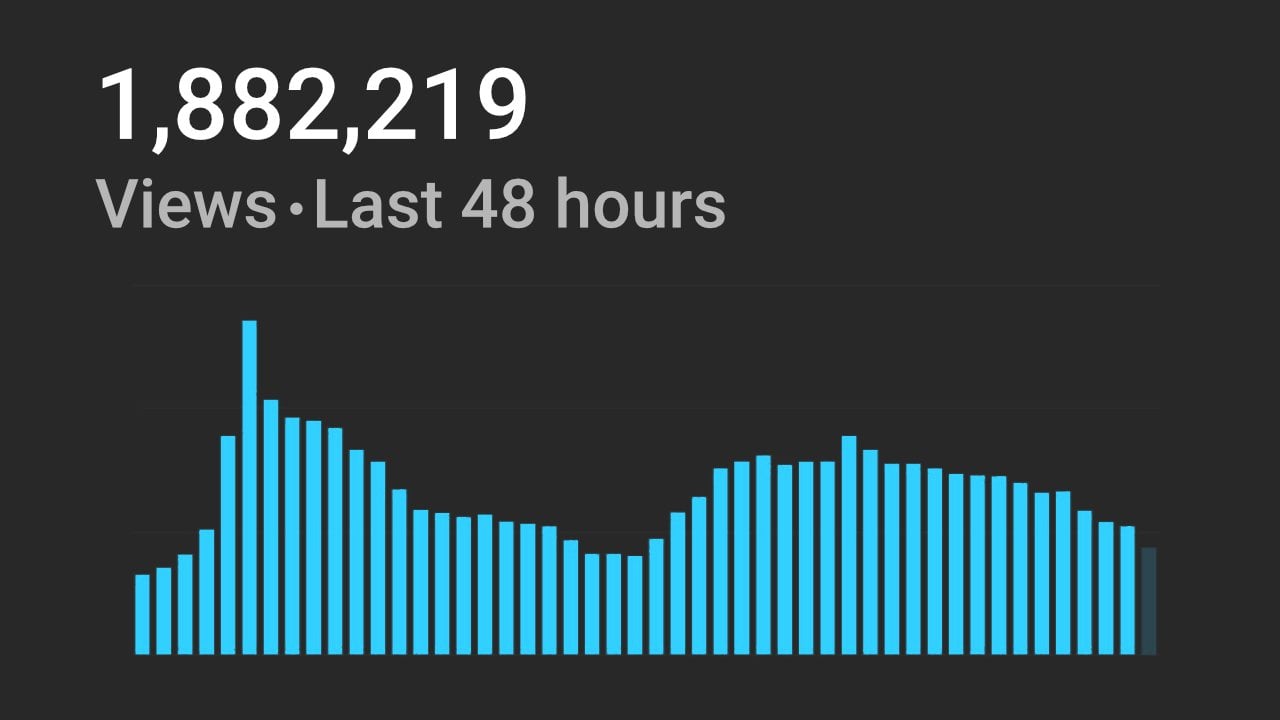
the main dashboard, and I'll say last 48 hours. I usually hover around 800,000 2 million views
and last 48 hours. Click on there and
you'll see basically the top four videos
when you click S More. So you want to see the 48 hours, the last most viewed videos. So we're just going to do
let's say top five videos out of that for both
shorts and also longs. So that way you can
see what's working, and also it will give
you some ideas for what long format
content you could potentially make and vice versa. So if you've got a lot of
shorts that are popping off on a topic, you
could go, Okay, I'll make a more in version of that video or inspired
by that shot, and we can expand
upon that topic and see if we can
recreate those results, but in obviously much
more profitable way, which is obviously long format. So you're going to simply
basically put these in a listical format of 12345. And we're going to track
basically the video titles. You want to write the
video title here. And then you want to put how many views it's got, t's say, 4,800 views in the
last four 8 hours on the individual video. And then also, once you've done this for
all five of the videos, you then want to
make a related list of content that
is similar to it.
3. Task 2 - Finding NEW Video Ideas that will work!: Once you've completed this
for these top five videos. You then want to go ahead
and make another list. But on this one, you now
want to come up with new video ideas that could
be related to these topics, and this will be the first batch of content that you'll then start testing with the
new defined audience. If it is, of course, the audience that you
actually want to tie it, which we'll find
out in Task three. So just to keep
the brain active, you'll then look
at these videos, and you'll go ahead
and make similar ones. For example, when I did this back when I was
growing my channel, these were the four videos I did that actually were
performing very well in the last four 8 hours. So there were warning dealt by the paper like screen
protector that was getting 1,300 views every four 8 hours. M one iPad Pro is
amazing for gaming. What's the best iPad
screen protector and also the best budget
monitor guide for the Mac Bucks and Mac Minis, during that period,
that was hovering around 800 views every four
8 hours, or 400 views a day. I'd listed those out
and I identified those from that list with
in your main analytics. Obviously, you find
all this information inside of your main
YouTube dashboard. You can go over here,
see your views in the last 40 hours
and click C More. Alternatively, you can go
into the content tab now, which is a new dashboard
that's been built out, and you can actually
have a look at basically where the video views are coming from for
each content type, so you can go down
to your top videos in the last 28 days, and you can go ahead
and click CMre, and then that will expand the fold out and get all
the info from there. If I were to recreate
this list, again, the current videos that are being viewed on my channel are 14 playstation features
that you need to know. The first thing we
might do is again, seven of the best playstation secrets
or something like that. So you would go ahead and create a variation of that topic. So it's a tips and tricks video
that's playstation based, but maybe has a different
number in there. Numbers that usually do
well are 714, and ten. They're usually nice little
numbers, and 27, as well. I say anything that's
a little bit odd. I personally haven't
had great experience doing like a top five list. They usually underperform
a little bit, but that's just Again, the next two videos
that are doing well are ten things to do
when you get a new, whether that be Xbox
or playstation. Something we might
do here might be ten things to do
when you get a new. And then if we wanted to
pivot into a new category, could maybe be iPhone or maybe the new Samsung
phone just got announced. It could be a Samsung or Android
or however you spell it. So you could basically
throw something like that, or you could do like I I did ten things to do when
you get a new X box. I did that last year,
and then a year later, I did ten things
to do when you get a new playstation
to time the market, with it being Christmas and
all that type of stuff. We'll talk about
market timing when that is relevant in
the actual course. But you seen how I'm still using this technique even with
an established channel. Next video was, I bought
the Colts Xbox accessories. Again, if you already
look at my channel, I've recreated this video for station accessories and
Nintendo accessories, because I knew it was
a proofn formula. So again, we might go ahead
and do this video again. It might be I bought the
craziest Xbox accessories. So we would change like, one of the words just to make
it a little bit different. So you're not using the
same title all of the time. And then finally, this video
is quite an interesting one. I'm shocked this
one's doing so well, because it's such
a generic idea, but how to basically
build a gaming PC. So how to build your
first gaming PC, it's like a tutorial,
taking people through step by step. Very
competitive topic. A lot of people that have done this huge channels
line is tech tips, J two sens, some of
the Mega tech guys and girls have covered
this topic already. I might go and look
at that and think, Okay, how did to build your
first gaming PCs doom well? What about something
like ten things to do when you get
a new gaming PC? Then that way, we're using that idea that's already working. So ten things to do your new PC. So that would be my sort of
list set up right there, and then I now got from my best four or five
performing videos, I've now got a list of four or five more videos that
are very similar in topic. It's a high chance that they're going to
perform very well too because it's based off of
data rather than guessing.
4. Task 3 and Task 4 - Videos Last 90 Days Analysis: Now going to move
on to Task three, which I personally think is one of the most
beneficial tasks you can do when surveying all of
your YouTube content. Here, we're going to
look at our videos over the last 90 days. So what videos have
been performing the best over the last
90 day period. So then that way, we can assess it across a
larger time frame, and we can then see what
videos have picked up, which videos have
then slowed down, which have completely flatlined. But more importantly, we're going to look at where
the views came from. Who were the viewers,
the age group of those, and then also, how long
did they watch for? And the final W is
going to be the Ws. This is a simple four Ws,
almost like geography. I remember we used to
do this at school, like the four Ws. We? What? When and why? Or whatever. We've got the four Ws,
and we're going to assess who where what and when. So right here, we've got
the exact table that I used and created just before
my YouTube channel blew up. These are all of the
videos that I plotted out and monitored within a beautiful little
table chart like this. You've got the
video and then who, where, what and when. Now, you're going
to break down each video with its exact title, and that way, if you
change it in the future, you've still got it there
for a reference point, the exact video title, and then a little dash to show how many views it had
in that 90 day period. So you can see this one
did exceptionally well, 130,000 views, and so on. So these were all of the videos that we could take a look at. Then you've got the who. Here is where you're
going to break down the percentages of the age groups that are
watching the content. Obviously, you get that
within the video analytics. You can get that super simple. You literally go ahead into the analytics of video and
go over to the audience tab. And then down here, you can see the exact age group
of who's watching it. Now, obviously, depending on
how big YouTube channel is, sometimes this data
isn't available because there's just not enough watch
numbers on the content, which is to be expected. But if you've got a few
thousand views on the video, you should be able to access at least the age groups
of the viewership. You can see here, got a
very nice spread actually across Gen Z all the way through to Millennial
on this content. Anyways, once you get that data, you then want to split it into the main key age
groups that you want. You don't want to put the
whole thing in, like, 13 all the way through
to 65-years-old, because some of these age
groups we aren't targeting. But the two key age groups
that I wanted to target was 18 and 2018 to 24 year olds
and 25 to 34 year olds. They were sort of my
main two categories. Predominantly Gen Z, there a little bit of
millennial that's just sort of growing into
that 30-year-old bandwidth. We were tracking
that right here, you can see the H split
on each of the topics. Then also we're
breaking down which of the traffic sources
that came from. This was very important
to understand the viewing habits of a
Gen Z versus a millennial. So were Gen Zs searching more than the
millennials or were the millennials getting
the content surf to them via the YouTube
browse feature? Once we've established what the traffic source
was most dominant. I then highlighted them
in different colors. So I highlighted the age group
that was more dominant and then also the traffic source
that was more dominant. Then that way, I could just have a quick glance at it and go, Okay, browse, Genz
brows, millennial. Okay, browse, Search Gen Z. Then that way, I could just get a bit of an average and go, Okay, okay, is there
any patterns here? Finally, we've got
the what, which is, click through eight
on that piece of content, and also the AVD. What was the average
of duration, 50%, 50%, 42%, 60%, 60%. All right. Those videos
are absolutely banging. So then that way you can assess how high of a quality
was the video, O, you go, Oh, actually,
that video only had 19% watch retention on it. Okay, was it longer
than the other ones? Was that okay? Yeah, The AVD was larger because it was a 30
minute long video, even though it has a
20% watch retention, it has a larger AVD
than this guy with 51%, but actually the video
is only 3 minutes long. All of that then plays a
factor into understanding, A, k. These top videos here were longer than the videos at the
bottom of the list. So maybe YouTube likes longer videos because it keeps people on the
platform longer. Oh, and that one had a good
click through rate as well, so that AVD times click through equals
video being pushed out. You start to the patterns
within your own content, which is the most effective way of self analyzing yourself. I can make as many
examples as possible, but end of the day, my
channel isn't your channel. My audience isn't your audience. So you need to follow the steps, but with your own data
to obviously have it be worth anything. Finally, just out of obsession, I tracked when did I upload it? Was it a Wednesday?
Was it a Friday? Was it a Monday?
Was it a Thursday? What day was the upload? And obviously, there was a consistent thread
of Wednesday, Wednesday, Wednesday,
Wednesday, Wednesday. There was a lot of
Weddes days where I thought, Okay,
that's interesting. You know, to be
totally transparent, I don't believe the
upload date really dictates the longevity
of the piece of content. The date doesn't really matter. It'll get the amount
of views that it might get across a two year
period, regardless. But I do think it
has a large impact to sort of the first 28
days of the performance, like seven, 14, 28 days to that piece of content,
which is very important, especially if you're doing
a lot of sponsorships, because you want those
average 30 day views to be as high as possible, so you've got a large ad rate
within the negotiations. Because when we get
onto sponsorship, you'll understand how
they structure them based off a first 30 day performance, rather than looking
at how the video performs over a
six month period. That way they get
a cheaper rate. It's a load and nonsense.
Which is why we don't do many integrations because
it just piss ways. What I'd noticed was
there was a pattern on Wednesdays and a little bit on Fridays that
were doing pretty well. Now, obviously, the YouTube
dashboard now tells you what times your viewers are actually on, which
is very insightful. It shows you what
days the demand basically increases
with the color charts. It shows when they're online, what they're doing,
what they're watching, that type of thing, and then the hours, when they're not active, which is helpful to decide
what's actually happening. But what I ended up
realizing was the reason why Wednesday did great was
for the following reasons. It didn't have
anything to do with the fact that the
viewers were online, but it meant that the
content had time to mature. So you uploaded it
here on a Wednesday, and then over here,
you have a Saturday. So by the times the content had done okay in
the first few days, maybe slowed off a little bit, you would then get
the natural momentum of the weekend kicking
in, which is Friday. So obviously, the
kids would finish school, half 3:00 P.M. I don't know what time
they're finish in America, but 3:30 P.M. Some even finish at 2:00 P.M. Here in the UK now, which
is just ridiculous. They'd finish and then go home, go, Oh, Oh, what
we're gonna watch? We're gonna watch
the whole weekend. Got the whole
weekend. Go, Ben olan uploaded a couple of days ago, video would then take off and
have a second put outpush. And then you'd have the
momentum of the weekend, like all of the older
audience finishing work. And then that would just all
result in sort of the video. Coming pretty well, then it
would maybe slow off and then just do its thing for the
rest of its shelf life. But I noticed Wednesday
was a key day capitalizing on just
giving the time for the video to mature on the
algorithm and then get pushed out once the viewers came on line towards
the weekend. Whereas when we were uploading videos on Saturdays or Sundays, this was peak demand, like Marcus, Brownlee,
Mr. Ho's the Boss, all the mega channels were
uploading on these days, and I was just getting
lost in all of the noise. So the video was just
doing average or whatever. So we were getting completely lost in all of this noise of the big channels going for obvious day,
which was Saturday. So that way, it gave us time
to mature and it was less competitive and then stand a
chance over the busy period.
5. Task 5 - Viewer Persona’s Psychographics: You've gathered all of this
data in the first four tasks, we're now going to
move on to Task five, which is where we're
going to begin profiling out the viewers or the avatars, as people like to refer to them as basically the people that are watching your content
and what group and pool do they fall into? This is where it
actually gets quite fun, and a bit of psychology
comes into play and you start to really understand
yourself and your peers, that your friends and things,
but also all the people in your family and why you
sometimes disagree on things. For example, I realized
after doing this I'm Gen Z, but all of my
siblings are millennial. So there's literally
ten to 15 years age gap between me and my
brothers, which is huge. So when I do certain things, they disagree with how I act, and they disagree with the types of jobs that I
have, that YouTube. They don't think it's
a proper career. And it's got nothing
to do with me, but it's just their outlook
of life as a millennial. And then vice versa,
me as a gen Z, I see what they do
as a millennial. I think that's stupid.
But it's because of our views, even
though we're the same technically generation
of children from the same parents were actually different
generations completely. I'm more like the
age of grandkids because I'm Gen Z and
their millennial. So there's actually a
complete miscommunication in our outlook because
of our age demographics. This is super fun. I think
you'll enjoy this part. So we're now going
to take a look at our viewer personas and
also the psychographics. Steep dive into this task of creating your
viewer personas. Specifically, I'm going to
focus on Gens and millennials, but we'll brush
stroke over some of the other age groups if
they're slightly irrelevant. But these are the main core sort of hardcore users of YouTube. So right here we've
got our avatar, and throughout this task, we're basically going to add different degrees
of their interest, and this is going to assess from everything from their income, their lifestyle, their position in their life that
they're currently in. Do they have kids?
Are they single? Are they married? Are
they getting married? How much debt do they have? Are they trying to
start a new life? This is all super
important and that way you like, for example, like
you're reviewing products, you know what products to talk about and what
not to talk about. Is obviously, they can or
can't buy those items, or you would frame how you would make the
video different. A, you would be more of
a showcase piece going. This is one of the most
expensive TVs in the world, and you wouldn't
go, Oh, you can buy it with the linked description. You would more just showcase,
this is what's possible. The world, and then
actually, the some budget alternatives that are very similar and got these features. Those are linked instead.
So just your positioning in the market and
what you do there. So we're going to basically, throughout this task, go ahead, take our little viewer
avatar here and add different interests to this
little sort of think map, and obviously, you could just create it in a little document. Speed this process up for you. I'm going to go
ahead and take you through my own personal
document that I created when I was figuring out the differences between
these two generations. Now, the way I got all of this information
was just by reading books and also googling things when I had
a question about, how does a Genz Just reading loads and
loads of web articles, and obviously books,
different resources. And then from there,
you can galvanize a whole bunch of
different knowledge, see what's a common thread, because some articles contradict themselves depending on
which outlets written them, and we'll talk about that just
at the end of this video. But this is first. Let's actually go through
the fundamentals of what. Created this nice little bullet point list that
was structured as a comparison between the goals of a Gen Z and a millennial. This is super important
to understand what is their purpose
on the planet Earth? What does A Gen Z
want to achieve, and what does a millennial
want to achieve? Is there any cross
over there or is the complete contrast in those
aspirations and desires? So, of course, because a Gen ZED is younger than a Millennial, they're at the start of
their professional career. They're either at school,
college, graduating, and they're trying to get
into the property ladder, they're trying to get
an independent life. Whereas a millennial is
someone who's 30 mid 30s, who should already have all
of that stuff together. They should already
have a job. They should already maybe potentially
have a house of their own, whether that be renting,
whether that be buying? So there's all these other
things that they'll have achieved because they're
ten to 15 years older than basically the young
20-year-old and 18 year olds coming straight out of school. So this is something to be
very important to be aware of, because again, when you
do content, for example, there's a tech reviewer, there's a lot of products that
you were positioned as ten of the best apps for
students. Perfect video for Genz whereas instead,
you might be like, ten of the best apps for pros
for a millennial audience, the best productivity
apps or something cause millennials
don't have much time because they've got
kids, whatever. Anyways, so man goal that I sort of established
here was, you know, making money and having
a successful career was super important to Gen Z more than presuming friendships,
relationships, and hobbies. That was for 70% of Gen Z. Now, this sounds like a
staggering thing, but actually, it makes complete sense
because throughout the first three or four
years of my early 20s, I didn't see any of
my mates at all. I literally just it was locked
down. That didn't help. But I literally just text
them every couple of months, but all I did was just work
work work work work work. I cared about was building
my YouTube channel, creating a solid foundation
and having something of substance that I could then build on throughout the
remainders of my 20s. Because have a short
amount of time in your 20s to achieve with
unlimited energy, whatever you want to do. So that stat actually backed
up how I was behaving compared to the majority of my friends, and
then obviously, once I had achieved a
sort of solid base, we started hanging
out playing football, whatever on five or side, doing a little more socializing going to parties
with the whatever. Just a little bit
more once I'd sort of got that head start
that I sort of wanted. Then also backs up
the second point about Gen Z that
adults are more likely to define themselves
by what they do rather than who they
are and what they are. So, for example, I define
myself as a YouTuber. However I meet people, I don't talk about like, Oh,
yeah, I really like, you know, music and guitar, I don't talk about
things that are like, Oh, I really like star wars. I go, Yeah, I'm a YouTuber. And all I talk about is a
work. That's my entire life. That is my pure
obsession is the career, and obviously, what I do. I'm defined by my category. Job, of course, you've got the obvious thing
what a young person wants to do get a job by a car, you know, begin an
independent life, move out of home, whatever
pretty standards. Then the final thing was that I found very fascinating
was the fact that around 23% of Gen Zs want
to be famous in some way. Now this is obviously
because of all of the influences that
they follow online. So something like a stats
like one in three or one in four Gen Zs want to be a YouTube or or something in that vein. And this was again,
huge information because means as I
grew my channels, I thought, Okay, potentially, there's an opportunity for
a YouTube course here, whether that be the one
you're watching right now or a slightly more dumb
down version for how to be a gaming YouTube borer or something for a
much younger audience. Because clearly,
there's a huge 25% of the market that wants to learn how to
basically get followers on social media and achieve
some form of status. On the flip side, let's
take a look at how millennials behave in
contrast to A gens. So firstly, millennials, most important thing to them is they want to travel
and see the world, all of that sort of
fluff that you see on the inter screen,
they're like, you know, financial freedom and passive
income and work on a beach. That's that type of
generation right there. So all of my brothers,
they're all millennials. And obviously,
when I look at how they led their 20s, this
is exactly what they did. They focused on their careers. Then obviously, they
went about and traveled loads and then had kids
much later in their 30s, whereas my parents had kids
when they were like 21. Other than me, I was like, they were like 35. So when they So, so you can see
how the way they live their lives is completely
different than basically their
parents' generation, and then also a little bit
how Gen Zi is doing it. Millennials love to travel, and more specifically, they like to show off where
they are traveling. So this is a really
interesting thing that like a millennial was more willing to go into
debt than a gen Z, just so they could show
off on social media, so all of their friends think they're having
a great time. And I actually see now I
understand this. I see how millennials are
using social media. It's constantly like,
Oh, look, I'm here, look at me, at quite frankly,
nobody really cares. Whereas, I use social media in a similaray, but that's
just because it's my job. I'm like, I'm here
filming this video. I'm actually doing
something real. Whereas this is all contived the way a lot of the
millennials are using it. Oh, I'm on this cruise ship. Oh, I'm on this beaching thing. And really, they can't afford the holiday and they've
spent all of the savings on that holiday. Oh, we've got this
new kitchen in our house and they've spent
like 20 grand on a kitchen. When the old kitchen
was perfectly fine, all just for that
Instagram post to get like 36 s. So that is how the millennials like
funneling their entire life. They're so consumed on
almost external validation. This then backs up
with the purchasing, they love accumulating
material things, having a rain drover, having a fancy car, having
the big house, even if they can't
really afford it, fashionable brands,
having the designer bags, all the different
stuff like that, to show a degree of false status, even if they can't
really afford that. That's why most of them
have everything on finance, like the washing
machine, the fridges, it's off scale, the amount of the millennial generation has. It's all because they're
just what that state of state or state of state
is all of the time. Now I'm not bashing on
millennials in any way. This is just what the
science says from the things that I've read and then also how I've observed how people behave, depending on the age group
that they fall within. I'm an incredibly
observant character. Always studying things,
no matter where I'm at. I'm studying how people are behaving in social situations, how they're using social media, just as a regular
everyday person. I think I'm quite
unique that way. Most people don't
observe anything. They're just walking around
the street. There's a pig Yeah, whereas, I minds 1 million miles an
hour all of the time. Probably quite an
overwhelming person really to deal with. Now, I'm obviously
saying that all of these things create a degree of false status, or all these. This is important
because you can market, and it sounds bad, but you can take advantage of these insecurities
in your marketing, the way you frame things. And if you're not aware of how these people behave and
what's important to them, you're not going to
sell the outcome correctly of a
product, and also, it's going to resonate more with them because if you're like, Oh, I'm going to show you how
to get financial freedom in blah, blah, blah, blah. Oh, that's perfect. I'm in debt, I need, and I want to sit on a beach, and I
want to travel. You see it in all of
these online guru, how they're just hitting
these key points, and the millennial signs
up and buys the course, buys the piece of
learning, information, watches the webinar, whatever, because they're resonating
with how that person feels. It's huge, both from whether you're selling
them something, or you're selling them
yourself with videos, and you know, just
YouTube content. Either way, there
has to be some form where they feel like a
relatability to you. And the reason why the relatability is
there is because you've intentionally placed it within
your marketing strategy. Go through these last remaining
points with Millennials, and I'll talk about some
key things that I now know about Gen Z that
is very important. So, financial stability is a huge element of a
Millennial's life, because on average, they have $42000-100 thousand in debt. Now, that isn't anything
to do with their mortgage. I don't believe, either. If I remember correctly, that is literally just debt,
or that be cars, or have that be furniture,
or that be kitchens, or that be just stupid stuff they've bought for the house. So they're in this
complete negative equity, which is why
everything they do is false status because they
can't really afford it. So their biggest driver in life is to try and find a
way to make more money. That's why you see so many videos on the
Internet that's like, How to start a side hustle, you make money from your
hobbies because they're so desperate for cash
to pay things off, whether that be a
monthly payment or just completely pay
things off outright. Same as well, you see that a millennial main age group to sort of start a
family is 27 to 30. I'd say that's probably
more like 27 to 33 34 now after I've met and spoke war two millennials and observed. S, obviously, they spend
their entire life traveling, doing all these holidays, doing off in Australia,
you're on a gap. They do all these
things in the early 20s and then suddenly go, Oh crap. I need to have a
kid. I need to have a kid right now and then
there's that panics on, so that's what their
main purpose is. And then the classic buzzword that you've
heard 1 million times, they want to retire early
and have financial freedom. Obviously, they're
never going to achieve that because they
have $100,000 in is how they're going
to retire early may. But that's what their
ultimate goal is. So it's really important to
understand what sort of what the wide scope of each generation's
purpose and goals are, and that way you just know
what they want in life, and you can start serving
them with the right products. This stuff right here for probably some people
watching this course, I think, well,
this is pointless. I just want to make
YouTube video. Show me how to get
views on YouTube. This is how you get views
on YouTube by actually understanding the viewer that's watching the content. Literally 90% of Tubes. 99% of YouTubers do
not do this step. But all of the big channels, all of the mega channels
will have done this sep, and that's why they're
Aga channel with millions and millions
of followers, hundreds of millions of views, billions of views on the videos, because they have a
clear marketing plan and they've created
a media company, and they're serving an audience with exactly what they want. They're giving them
the piece of food that they want off
that menu, like, boom. Absolutely perfect.
And they think, does this guy know, I really, really like spaghetti Bolinas? It's because we've researched beforehand and went through
your Facebook profile, and we know everything
about you, mate. This is a super important step, and you don't want to skip over it because you'll regret it. You'll waste so many more months and years trying
to grow your channel, because you don't understand who you're a marketing two and why.
6. Task 6 - Understanding Consumer Habits: On to some of the
consuming habits of our viewer personas. So, first off, let's
take a look at how much time somebody spends on a device with their
attention span. So, right here, I've got some
nice little images that I pulled from some articles that I'd read when I
was researching this. So again, understand four
different generations, both the baby boomers,
my dad's generation, then my siblings generation,
then obviously mine. And that way you could
see it all the way from your granddad through
to you in current time. And then again, you can see any similarities in crossovers. Specifically focusing
on the attention span. Gen Z have an eight second attention span
versus millennial, who will watch something
for 12 seconds on average. So again, this will
completely change how you would do the
pacing of your content, once again, depending on what
age group is watching it. So Gen Z needs faster
paced content, a little bit more
sausage factory. Mr. Best sort of, you
know, well overwhelming. Whereas millennial may just want something a little bit
easier to consume. And I see this reflection on my music channel. When I sometimes have
videos edited in the similar style
to my text stuff like maybe doing 14 tips, and it's a little bit
more faster paced, and we're promoting
an online course, where it's slower paced, learning a lot of the comments
on the music channel, because obviously
it's 35 and up. I'd be like, Oh, this is way too fast paced, D
d d. Oh, my word, D d d d. Just because they have a slower
attention span, basically, than the exact same pacing on an Xbox tips video for
a younger demographic. And this comes down to a
few different factors. Now, what I like to say is a Gen Z is an intelligent buyer when
it comes to technology, and a millennial is an unintelligent buyer
when it comes to tech. No based on IQ or
anything like that, but because of
when they grew up. So, a Gen Z grew up from
2000 basically onward, and they had Internet. They had tablets,
they had computers. We had things from the instant off from when we were born. I grew up without
never not being around computers or the
Internet or anything like that. My brothers and sister
who is millennial. They grew up
obviously, they were born sort of in the 80s. So they had, like,
dial up Internet, the first few computers, the first video game console, like a Tari or whatever, started appearing on the market. So their exposure to technology probably didn't
start until they were like 12, 13, 14, when they
were teenagers, whereas mine was basically
from 3-years-old. They had a little, like,
early learned table. Obviously, if you're doing
videos on gaming technology, much younger age groups
going to be watching that, so you can be really fast paced because they
know what RAM is, they know what a gigabyte is. They know NVM SSD drive. They know what this
shortcut does. They know all of
this terminology because it's just
second nature to them. As a millennial, you
might have to be like, A, this is an NV SSD drive. What's an VSSD drive. You go, this is a new version of basically a hard
drive that runs much much faster than
even an SSD does, because this is now an NVM SSD, and it does to do you might have to elaborate and
explain things up further because they're
an unintelligent buyer when it comes to technology, because it's just
not as natural to terminology. Also,
when it comes to creating informative
videos on YouTube, something that
Jens appreciate is watching a bunch of different
content from lots of different creators that
share different perspective and point of views on
the piece of product, the piece of equipment,
the tutorial, whatever. They really like accepting bold opinions from a
large range of sources. In contrast, a millennial less willing to accept a
diverse point of view. So basically, they'll just accept what they think is right, and only that's right,
and nothing that you say to them is going to
possibly change that. And my dad sees this all of the time when dealing
with my brothers. He'll give them a
bit of life advice, and he'll be like, Hey, right, maybe Maybe you
shouldn't do that, and he'll be like, Oh, you
always tell me what to do. Oh, and then they'll do what they thought was right, and
it was completely wrong. They'll just have more debt,
and then Dad was right, but they'll never
admit and just go, Dad's controlling
Dad's this and that. He's like, Well, he did
tell you it was wrong, and you now look like
an absolute ****. But whatever, Was me as
the younger age group they give me some
advice to go, I never thought of it that way. You
know, that's really good. Then I'll maybe go
ask another sort of mentor type guy or a different YouTube channel friend
and go, Oh, yeah. Yeah, yeah, that's
actually quite good. I think I'm maybe
a little bit right with this, but my
dad did say this. So, I'm going to go with a hybrid approach
on both of that. I just I like taking
knowledge from everything and then deciphering what's right. Same with
what we've done here. I took information from loads and loads of
different articles, and then I've picked what I thought was right and
wrong at certain points. I thought. That's
a bit of nonsense. Yeah, That's a bit of
propaganda or something, you know what I mean,
that's not true. And then I put it into a document that
formulated correctly. To skip ahead for a moment here, this mindset was
reflected within that Paper Light screen
protector review and the Logy tech iPad cover that I briefly talked
about earlier. You can see the Paper
Light screen protector had 20,000 likes for a
negative honest review. And the main
predominant age group that watched this was Gen Z. Whereas, when it came
to the Logy tech thing, similar amount of views on
the content, this right here, Has only a millennial
audience that's watched it. There's not a single Gen Z, like 3% Gen Zs
that watched that. You can see only 20%
of people liked it. The huge negative bahlash, the negative comments all came from Millennials because
they weren't willing to accept the point of
view of somebody who'd bought the product, I
bought the product. They hadn't bought the product, but still they weren't
willing to accept what I thought about it
when I had it in my hands, which basically sums up
that generation as a whole, impossible to deal with. Other example of
when content has had a large amount of
millennial views. It gets a lot of
hate comments on it, and I'll explain
why the psychology behind why this happens, and potentially how you
could also deal with it. But when I reviewed
the iPhone 13 Pro Max, I specifically said in that video this phone
was quite heavy. I just came from the iPhone ten and I got this phone. Why? Why is this phone so heavy? Like just it felt quite heavy. Not that that was
like a deal breaker, but it was just an
observation that I'd made. I'd also said the phone was much larger than other
iPhones I'd used, which made it quite
difficult to use if you were somebody
with smaller hands. Vi, I have quite large hands. I've got big fingers, so I can play that guitar and shred
around on the guitar. But some little loser
watching the content doesn't realize
you're like one of the world's best guitar players. So don't take that into consideration while they're
writing the comment. Anyways, you say
things like that, and you get comments like, man up and hit the gym. If the iPhone's too heavy. Obviously, lifting weights
can make any difference as to whether you figure
phone is heavy or not. Again, it's that hate comment
towards you rather than actually the problem
with the product because they can't argue
against what you've said. It's that thing with that
millennial not being open minded towards an opinion, so they'll just target the
person that's said it, you, you just got
little arms, mate. Oh, you've got acne.
You see what I mean? They'll just target you
rather than the actual point. So basically, their
comments no longer have anything to do with the
content of the video anymore. Their opinion towards
you or towards Gen Z, because, again,
sometimes millennials don't really like Gen Z. They maybe think they're
too opinionated to whatever because they have more bold
opinions than obviously, and millennial does
from everything that have been understanding. Now, after I discussed
this with some friends, some older friends, it helps
having older siblings. Spoke to some millennials. I went and talked to them, and I said to the
what do you think this could potentially
be? This is huge. H having conversations
with your friends, whether that be
the same age group or older people to try and understand how they view your content and what they
think of you as a presenter, what they think of the
videos that you're making, what image are you
portraying online? Is incredibly insightful,
but you have to make sure that those
people giving you advice. Are I wouldn't say genuine, but they're not sugarcoating it. So, my dad, for example, he's brutal because he all he
cares about is the success. So he'll be like,
That was rubbish. What were you doing that
for? You don't do that. Like an absolute knob doing stuff like that.
Don't post this. He'll give me proper feedback. And say, Oh, did you
think of that video? Yeah, I thought it was good,
but constructive feedback. Just negative
pointless feedback. O was brilliant, son, yeah, yeah, because he's my dad. L one of those proud dads that, like, is at football
practice with this kid. Oh yeah, he's good to play for Man City one day. He,
Oh, yeah, he's so good. My son's the better.
He's always, even when I used
to be a musician, he used to take me to my gigs. I played a festival
to like 4,000 people. He'd sit in the van on the way home and he'd go, Yeah,
it was good that, but you did miss
a couple of notes on that solo, and, you know, you know, your vocals were a bit maybe like a seven
out of ten today. But it was cold. Give me a full breakdown. I go,
yeah, you're right. That wasn't. Yeah, okay. And
then I go home and practice, and then we'd be better next
time we go out and play. Now, this isn't because he's an evil person or a bad person, but it's because he
just wants the best for his son and also the
best for his legacy. Because if I become successful, his legacy lives on
forever, as well. And then, likewise,
my kids become successful. Legacy,
here's legacy. My grandad, everything becomes
relevant because the go, who was Ben Rollins' dad? Oh, that was John Rollins. Oh, what did J Oh, John oles? Oh, granddad was a, you know, Antiques
cabinet restorer. Oh, really cool. Oh, suddenly, everything
becomes relevant. So everyone has
invested interest. This is where again
millennials get confused. Same with my
brothers. Lo say, Oh, Dad's always got an opinion
on this and that da da da. It's just 'cause he wants
the best for the legacy of the family and himself and
the legacy of his kids. So when you get
advice from people that are willing to
give it, it's huge. I took advice from a dad. I talked to loads
of different people that were useful in those
age groups that were intelligent that
I knew would have a proper conversation
with me and not hold back on any feedback. So interesting
things that I took, especially the conversation
with some millennials was this exact point right here. So because a lot of millennials are approaching the mid life, they're approaching the
middle phase of their life, that they probably feel a sense of Fomo and also
missed opportunities. So when you as a little fresh
eyed kid come on YouTube, and you're making
videos, and you look like you're getting
a degree of success, there could be an element of
jealousy from this age group because they feel
bitter toward you because they never
achieve that so young. So, what they're going to do is ate always comes
from beneath, as my dad always tells me. They want to try
and drag you down to their level or make
you stop uploading or lose your confidence
or not be as equipped as you could be as a YouTube because
of their thoughts. Have a great example of
a guy that was doing exactly this on all of my apple content I was
making at the time. He'd been doing YouTube
videos since he was like, since YouTube existed,
like, ten, 12 years ago. And he literally had
like 3,000 subscribers. And he was comment
on all my stuff, saying everything
that was wrong, saying everything that did And it was all because he was
jealous that this kid had got 15,000 subscribers in a couple of months versus him, and he should
have had that. He should have had
that. Which is complete jealousy
because he fell into this bracket of negative
millennial basically. Obviously, they're
approaching the mid life of the middle part of their life, that
phase of their life. This creates the
jealousy towards the youthful Gen Z because you've got your whole
20s before you, your hopeful future, and
the world's pass them by. There could be a
degree of that the jealousy and the comments
that you're getting. So that's their problem. Don't really care. I'll keep making videos because their
opinion doesn't matter. But also, something that
can play into a factor is. They're not bitter
towards you as a person, but they have this degree of
Fomo that they can't afford the latest tech because of the phase in life
that they're in. As we just established in the
bullet point list earlier, they start having families
around 27 to 30 odd. So at this stage,
they no longer have disposable income to
spend on themselves. They now have to spend it on
their child, you know, food, clothes, nursery, you know, all that type of
stuff and expense that comes, which is expensive. It could be like
two grand a month to send a kid to nursery. They no longer have the cash to spend on the latest and
greatest technology. So they'll watch me
doing a video about a new piece of iPhone or
something and be negative, say, Oh, this is rubbish,
this isn't this. Maybe give it a miss and
get there and think, Oh, he's entitled, I would give
anything to have that. So that is always going to be another factor
that comes into play. They feel bitter
that they basically can't buy the latest games. They don't have time to
play the latest games. They can't buy the
latest playstation because they don't have
that money that they have, or they no longer
have the free time to enjoy what they
have purchased. So there's an element
of resentment there just because you're
a younger person, almost taking it for
granted in their eyes. So with all of this new
found knowledge about Gen Z And millennials. The solution is to
frame your content different depending on
who's going to watch it. So if an item you know is specifically going to
attract a Genz audience, you might make a video
that is faster paced. It's more brutal or honest about your opinion
on certain things, and it's maybe a little bit edgier because
they'll enjoy that. If you're going to be
reviewing a product that's specifically targeted
at millennials, I Apple Max, iPhone stuff that's a little
bit more premium expensive. For example, great example
is usually gaming laptops or portable gaming devices like the steam deck and the MSI
claw, stuff like that. That's obviously for people
who are traveling for work, but want to play
games on the go, and they're on the aeroplane, business professionals
in the 30s. Again, on that video,
you might go ahead and make more of a
feel good review. So they'll watch that content escape in their miserable life, you know, they escaping
whatever they want to escape. And then your video
makes them feel good whilst you're reviewing
that piece of content. And then they have
positive association with you as a younger presenter,
and they don't hate on you. Actually. This is a good video, actually. I feel good. I might go out and buy that. You're still honest
about the product. But you may be frame some of the negative stuff in a
slightly different way, so they don't get
too triggered by it, but the overall premise of
the contents feel good. And then they go, yeah,
yeah, that was good that. Because they're
looking for escapism as a millennial within that product review
or whatever it is that you're creating
YouTube video.
7. Avoiding Misinformation (BONUS): I promised at the
start of this video, and I want to show
you an example of an article that I just
didn't believe was true. And then I used my YouTube
audience to back up that fact. So I was obviously, I was reading lots of
stuff about Gen Z. And some of the articles would align and have
the same information. But then some of them would contradict other articles that you'd read and you'd think, Well, the other article said
that Gen Z believed this, then I read a book
and that said this. Why is this article saying this? Here is a beautiful example
of that right in action. So here we have this
article from the BBC. It says, half of young
people want electric cars. Then you go ahead and you read
the article, and it says, like Gen Z, absolutely
love brands like Tessler. Absolutely, they love
this. They love that. And I thought, I hate Tessls. I think they're hideous cars. And I don't know a single friend that would ever buy a Tessler.
So I text on my mates. I'm like, Do you like Tesslers? No, no, no, no, no. No, not a single, yes. Nobody said yes. I thought right. We're going to YouTube to get the
actual answer here. So I did a poll. I said, which is your
favorite dream car brand? We threw in cars that they like, P S Lamborghini, Aster Martin. And then we threw
Tesla on there. And only 15% of the
votes went to Tessler, and I was like,
that makes sense. That makes complete sense. It surprisingly did
beat Aston Martin. But again, you think
about Aster Martin, James Bond isn't as
cool as he used to be. They literally killed him
off in the last movie. You know. So most of the
generation don't have an affinity with
James Bond, like, maybe my older brothers do
or even my dad's generation, where, you know,
he was a cool guy that rolled around
and Aster Martin. Lamborghini made sense, and Porsche made sense
because both of those cars have been cover
cars on games like Forza, and also, you know, Lamborghini is that ultimate status symbol that every sort of young person wants to aspire to having. But this pool right here got 80,000 vote and backed
up the fact that Tesla was not as popular as this article made out,
because if it was true, it would have beat Porsche, it would have beat these
brands up being way higher on the spectrum of votes because of your half of young people
apparently wanted Tesla. Another time that I fact checked one of our articles we were reading was in regard to whether they did actually
want to be YouTubers. So I did a little
poll here saying, would you ever start your
own YouTube channel, again, to fact check and back up
whether that one in four, one in three start, whatever
it was, was correct? This got 51,000 votes of which 62% voted yes, which
made me think great. Those articles are
pretty bob on that these young Genzs do want
to be a famous YouTube. And finally, another time that I did this was with Instagram. Saying, Do you use
Instagram in 2023 to see if this age group was
actually using the app. Huge percentage said, yes, I also did one with Twitter To. Again, there was loads
of articles that were hating on obviously Elan
Musk purchasing Twitter. And I went ahead and was like, Well, do you use Twitter? Do you like Twitter just to see if those
articles were true, loads of young people
installing Twitter. Obviously, again, the
YouTube poll dismissed that myth and made us realize Twitter
is still being used.
 Ben Rowlands, Content Creator with 800,000 Followers