Transcripts
1. Hello Winter!!!: Winter is such a magical
time of the year, and what better way to embrace the season by capturing
its beauty on paper? Hello, everyone,
and welcome back. I'm Suiia an engineer, a watercolor artist,
and an art educator. I'm so excited to
invite you to join me in this winter adventure
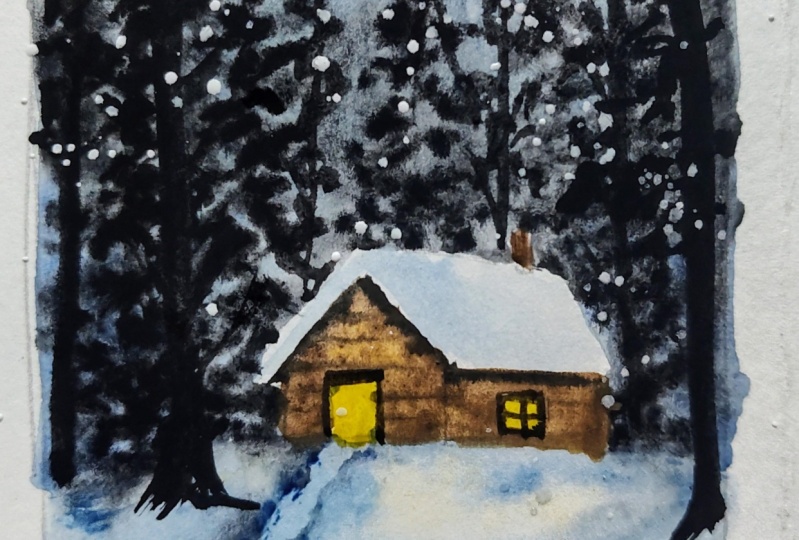
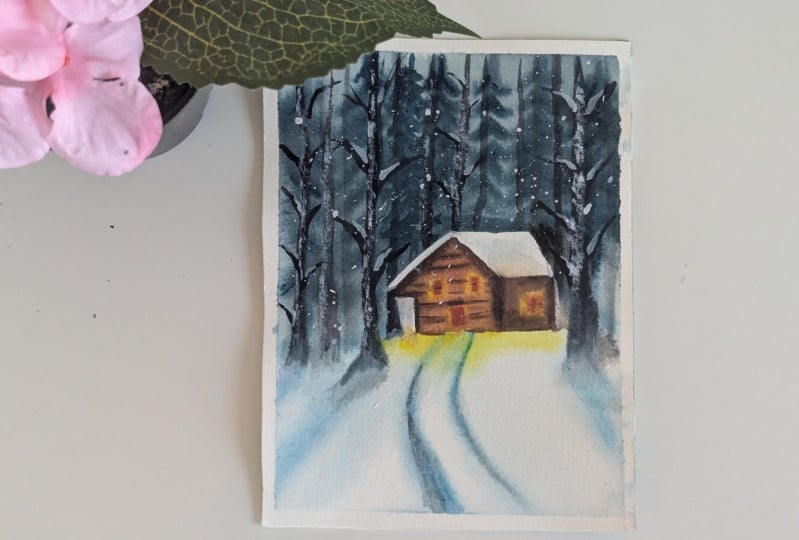
as we paint a cozy, snowy cabin in the woods
using watercolors. Whether you're a beginner or you have been
painting for a while, this class is for you. I'll guide you step by
step through the process, right from sketching the scene,
painting the background, adding the foreground
trees to adding the final details that will make your winter
cabin come to life. Together, we'll explore
the unique qualities of watercolor like the
wet on wet technique, creating some
textures and achieve that soft tranquil
feeling that snow brings. I believe everyone has the potential to create
something beautiful, and by the end of this class, you'll not only have a stunning winter scene to be proud of, but also some new watercolor techniques that you can use
in your future projects. So go grab your paints,
get comfortable, and let's create something
magical together this winter. I can't wait to see
what you come up with.
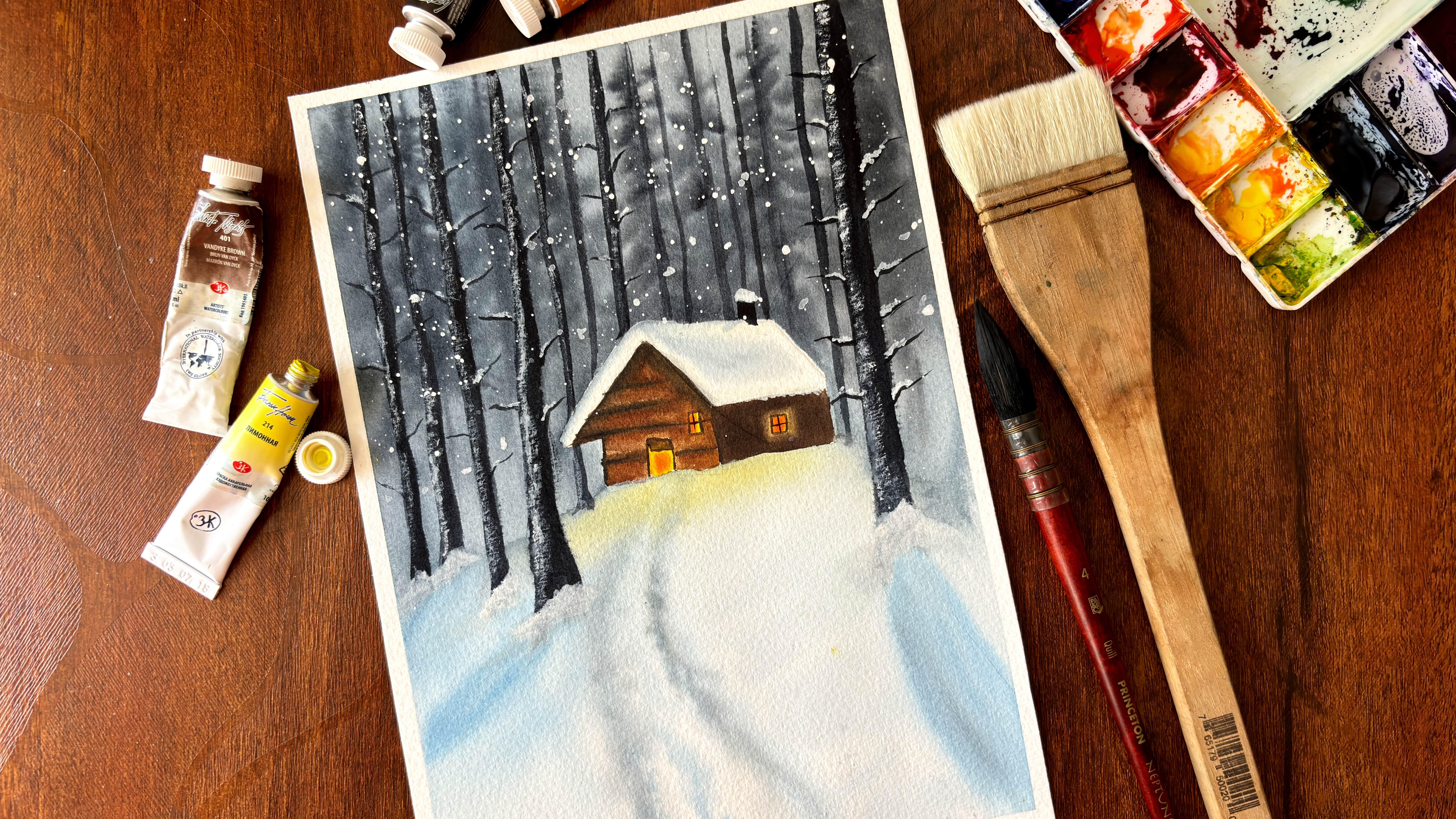
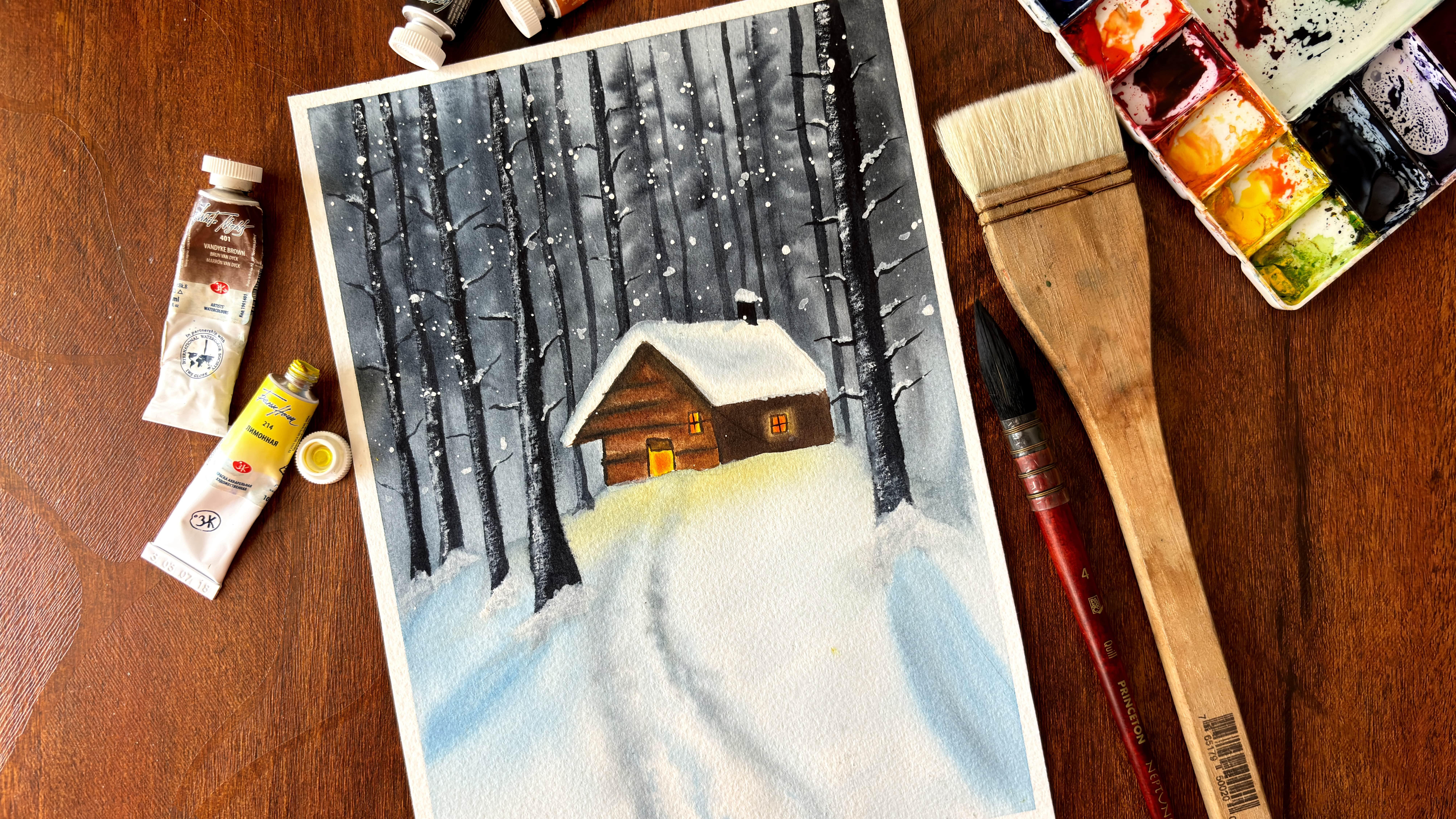
2. Art supplies: Alright, so let us take a
look at the art supplies. First is the paper. I'm using the paper from the brand
Saunders Water food. This is 100% cotton, 300 GSM watercolor paper. So it has got a
very nice texture, and it is not heavily texted. This is a cold crest
watercolor paper. So you can go with any
watercolor paper of your choice. Just make sure it
is 100% cotton and a minimum thickness of 140 LB. So this is the size of the
paper that I'm going with, but you can choose to go with
any size as you want to. Just make sure you're
not going with a two smaller sized
paper, right. So next is the colors. So for the detailed
list of colors, I have done a
separate video onto the next section where I'll be explaining all the colors
that we have used, and I'm going to be
using this palette, and it has all the colors
from white knights. But as I said, you can choose any color that you have got. I mean, any brand of colors
can be good to go with. Okay, so next up, we'll take a look
at the brushes. So very basic minimum brushes. One is the flat wash brush. This is a silver hake brush
from the silver black velvet. Then you'll need a larger
sized round brush, and this is from Princeton. This is from their
Neptune series. I absolutely love this to use to cover a large area
surface of the paper. Next up, size number
12 round brush. This is again from the
brand silver black velvet, and then you'll also need size
number eight round brush. And then you'll also need
size number six round brush. So these are the basic
brushes that you will need. Also, you'll need a
synthetic brush to add the snowy details or
textures onto the trees. All right, so this is pretty
much about the brushes. Next, obviously, you'll
need a pencil and an eraser to add
the pencil sketch. Next, you'll need a masking tape to tape down your
paper, of course, go with a good
quality masking tape and you'll need
two jars of water. Make sure one jar has to always remain clean to pick
up the fresh paint, and the other is to clean off all the dirty paint
from your brush. All right, so then you'll need a cloth or a tissue like this to wipe off the excess amount
of water or the paint. And finally, you'll need a board like this to
tape down your paper. So this is pretty much
for the art supplies. Go get them ready, and I'll see you soon in
the next section.
3. Let's take a look at the colours: Okay, so let us take a look at the colors that you will need
for this particular class. The first one that I'm going to swatch here is Prussian blue. So we're not going to
directly use this color. We're going to blend this
color with the paints gray, and we're going to create
that background forest. All right, so this is the
first color that you need. If you don't have Prussian blue, you can go with any
other blue like ultramarine or some other
dark blue. All right. Next up, I'm swatching
here is the paints gray. You can see this is a
beautiful shade and it's sort of darker
in its tonal value. And that's the
reason I'm going to mix Prussian blue and paints gray to create that blurry
misty pine in the background. All right, so the
next color that you would need for
this particular class is when Dike brown, and this is basically
for painting that cabin. All right. So you can go with ndike brown in case you
do not have ndike brown, go with any other brown. I'm sure there are
several different kinds of browns available in
different palettes. So need not worry about it. Alright. And if you
have a light brown, then you can add a
little bit of paints gray to it and create a
darker version of it. Next, you'll also
need a little bit of burnt umber, right? So if you don't have burnt
umber, that's absolutely fine. You can just go
with normal brown, whatever you have
got the light brown. Okay? So this is another
beautiful shape. Alright, so the next color that I would be swatching
up is you will need a set of yellows and
oranges to create that light reflecting
from the cabin. So first, I'm going to
swatch cadmium yellow. So I'm sure this is
another basic color. So yellow is always present
in different palettes. Then you'll also need a
little bit of cadmium orange. So we're going to mix
yellow and orange together to create that light
coming out from the cabin. All right. Okay, so lastly, you'll also need
some white gouache. Of course, this is a
winter snowy scene, so we need lots of white
gouache to add the snow. Alright, so these are the
colors that you will need. Get them ready quickly, and I can't wait to see
you in the next section.
4. Pencil Sketch: All right, so let's start
with the pencil sketch. The pencil sketch
is really simple. We are going to sketch a teeny tiny cabin and a couple of
trees in the background. So let us start with the cabin sketching.
It is really simple. So first, I'm going to
draw a triangular shape, and then we're going to
create a parallelogram. And yeah, that's about it. That's the roof of the cabin. And now we are going to sketch
the walls of the cabin. So this is the front wall, and this is another wall
just behind the front wall. All right. So you can
adjust the size of the cabin as per the
size of your paper. So if you're going with
a larger sized paper, then you can have a
slightly bigger cabin. And if it is a
smaller sized paper, then you can have a medium
to smaller sized cabin. Make sure the cabin is not very big because
we just want to show that there is
a teeny tiny cabin far away in the woods. So that is the idea. Alright, so now we're
going to add some trees, and the placement of the trees can be anywhere that
you would like to. So there's no hard and fast
rule that you have to follow the same placement as I am
doing, so it's up to you. And don't go ahead and draw too many trees because that way you will be covering
the entire background, which we do not want to. All right. Just go
with minimal trees, and that's about it. So you can just wait for me to complete the pencil sketch. Then you can pause the
video and then you can create the pencil
sketch for yourself. All right, so now we'll create the shadows for the trees
that we have added. This is the reason
why I'm creating it now so that it'll be easy
once you start painting. So you need not search where is my tree and where I
have to add the shadow. So that is the
reason we are also sketching the
shadows of the tree. So this is the tree
and the cabin, and we have added the shadows. Now we're going to
create a pathway onto the cabin and that's
also really simple. So towards the cabin, the pathway is really
short and narrow. And as it goes away
from the cabin, it's going to get wider, right? So it's just a simple pathway. So you can just wait for me to sketch it and then you can
repeat it for yourself. All right. So I think we're almost done with the sketching. So now, the last thing
left is to create or add some windows and
doors onto the cabin. And yeah, so just add a teeny tiny window onto
one side of the wall, and next on the front side, we're going to have a
small door and a window. All right. So this is a
simple pencil sketch. So you can just
take your own time, create a pencil
sketch for yourself, and I'll see you soon
in the next section. I
5. Wetting The Paper: Oh, All right, so now let us
start by wetting the papers. So as you can see, I always like to use my larger
sized Haque brush, which is from silver
black velvet. But you can choose to go with any flat brush or any larger sized round
brush as well, okay? The idea or the goal here
is to make sure that your paper is nicely wet before you dig into
the final painting. Okay? So this way, it allows your paper to stay wet for a longer
duration of time, and it gives you the room for painting for a
more number of time. Like, it keeps your
paper wet and nice. And since we're
going to work mostly on the wet on wet technique, having a good wetted
paper is very important. So wetting the paper
necessarily does not mean just pouring the water and having large
puddles of water. The water that you apply
on the paper should be evenly distributed between
all the regions of the paper. All right. So most probably during the process
of wetting the paper, you can see most of the
water gets collected in the center and some gets
collected at the edges. So we're going to make
sure we're going to push away all the excess water, wipe it off before we start
painting the actual painting. Okay. So make sure
take your own time, go ahead and wet your paper. Alright, so yes. All right. Seems like
the paper is nicely wet, and now we can finally
begin with our painting, and I'll see you soon
in the next section.
6. Painting Background Pines: All right, guys. So now that
our paper is thoroughly wet, we can start the painting. I'm so excited, and I hope
so are you. All right. So now we're going to paint a misty pine forest
in the background. So the colors that I'm going
to use are paints gray, and I'm mixing this with a little bit of Prussian
blue because I don't want entirely a darker kind
of forest in the background. I want a mix of bluish and
grayish kind of background. So it all depends
upon you how you want to have your forest
to upear, okay? So just don't go for a single
shade, I would suggest, try to mix and match the colors and then
go ahead with that. Make sure you're not
touching the cabin. Just carefully go around the cabin and drop
in your paints. At this point of time, I'm not worrying about how the color is spreading
on the paper. I'm just allowing the
colors to flow on the paper and create the magic because
it's just in the background. It's not the foreground details. Whatever happens in the
background is completely fine. We're not going to focus
much onto the details. Randomly go ahead, free
your hand muscles and just let the paint and the water create the
magic, I would say. All right, so I'm
just pulling and pushing the paint
onto the paper. And for this purpose, I'm using my larger sized
brush from Princeton. This is from their
Neptune series. You can go ahead and choose any other larger round
brush that you have got. So the perkse of
using larger brushes, you can cover a
larger surface area at a given point of
time. All right. So this is how the
background looks like. Now I'm going to pick up a
slightly darker tonal value of the same mixture that is the paints gray
and the blue mixture. I'm going to start creating some pine tree kind of
shapes in the background. So it all depends upon you, whether you want to go with larger size brush or
smaller sized brush. So right now with a
larger size brush, I saw that the paint
is spreading too fast. So I've switched to my
smaller sized brush. I think this is the
size number eight. This is from silver
black velvet. So I'm not having
too much water on my brush because I already
have enough water on my paper. So this is how you
can control the way your paint flows onto
your paper, right? So please make sure you
do not a loose mixture, you should have a milk kind
of mixture of your paint. So you can see when I'm mixing
the paint on the palette, there's barely any water. It's very, very less. All right. That is the reason I'm able to create these beautiful pines, and the paint is not spreading
very fast on the paper. I'm having complete
control of how I can manage these brush strokes. All right, so now it's barely going to be a
repetitive process. Just enjoy this. Turn on your favorite music and just paint those
background pines. So you can watch me
how I'm doing this. And once I have
finished painting, you can go ahead and paint
your background pine forest. Alright, so just
watch me and yeah. Uh All right, so I'm happy with
the first layer of the background pine trees. So I'm going to go ahead and paint another layer
of pine trees, not completely, but
somewhere where we have a little bit of spaces
left in the between. So I'm going to go ahead with a slightly darker
tonal value this time, and I'm going to
create some pine trees just like we did previously. But if you're already happy
with the first layer, then you can stop right there. I'm really happy with how the
background has turned out, and I'll see you soon
in the next section.
7. Painting the Snowy ground: All right, so now it's time
to create that snowy ground. So if your paper
has slightly dried, then make sure you
take a little bit of water and re wet
the bottom region. So I'm going to quickly pick
up my brush with some water, and I'm going to apply
the water and re wet the paper to ensure that
the paper is still wet. Alright, so just
make sure you're not disturbing the
background pines, slowly go ahead and wet the
snowy ground area. All right. So now, what we're going
to do is there are two things that we're going to create on the snowy ground. One is, you're going to create slightly softer shadows for the tree trunks
that are going to be appearing on the foreground, which we will be painting
in the upcoming sections, and the other one is
you're going to create a snowy path which is
going towards the cabin. Now you can see I have picked
up some Prussian blue, and I'm just trying to
add those colors onto either sides of the pathway
just to depict the snow. So we're not going to leave
the snow entirely white. If you might have seen some
images on Pintrest or Google, you might have seen that dark blue reflecting on the snow. That's because of
the snowy night because of the reflection of the sky and the
shadows of the tree, which contribute
to this blue shade onto the snowy ground. Now you can see with
the same color, I'm trying to add
those softer shadows onto the snowy ground. The reason why I'm doing
this now is I don't want to have these shadows to be
appearing very prominent. So those shadows
should be faded, soft and appearing very mild. This is the reason we
are painting it wet on wet. Right, so yeah. Now with the same color, I'm picking up a lighter version of this Prussian blue and I'm trying to create
that snowy pathway. So you can see I'm just moving my brush in a very random way, and I'm just dropping the paint with the help of my
tip of the brush. Now I'm picking up
some paints gray, and I'm mixing that with the Prussian blue that is
already added on the paper. So this way, I'm
trying to create an organic snowy pathway
towards the cabin. So it might seem a
little bit confusing or it might be a little
bit difficult in the beginning, but trust me, just wait and watch the process
like how I'm painting it, and then you may
pause the video and then continue doing
it for yourself. Alright? So it's just
easy just follow the pencil sketch and you're
going to create a beautiful, snowy pathway. Alright, so yeah. All right. So now we're going to add some light onto the ground. This is the light which is
coming out from the cabin. So for that, I'm going to
pick up some Indian yellow. You can go with any yellow
that you have got like cadmium yellow or even
lemon yellow is fine. So we are going to add this
light onto the ground. This is just to show
the reflection of the light which is coming
out from the cozy cabin. Okay. So yeah, depict
all these things. So adding all these
lights and this blue on the snow just makes the painting look more
natural and more realistic. So if you would
have left it flat, the painting would look
really flat and you would not be able to bring out the real essence
of the painting. It is these teeny, tiny details that make your painting
look even more stunning. Even though your
painting is very simple, there are no much elements, but it is these details that bring out the
essence in your painting. So just keep these
points in mind, and it'll surely help you in your future paintings
when you're going to plan a different
kind of painting. Alright, so you can see how
I have added that yellow. And now I'm fixing
the pathway a little bit because when the
paper is slightly wet, the colors may seem to
be a little bit darker, but when it dries, it's going
to look one shade lighter. So go ahead and drop the same
colors onto the pathway. But if your pathway is
already looking nice, then there's no need
to do this step. Okay? So I'm just
blending in the colors and just making it a little lighter and
not too prominent. All right, so I'm happy with the way the snowy
ground has turned out, and everything is
looking beautiful, the light reflecting
on the ground, the snowy pathway, the
shadow of the tree trunks. And yeah, so I'll see you
soon in the next section. H.
8. Painting the Foreground Trees: All right. So now
that the background has completely dried, it's finally time to add
some foreground trees. So for the foreground trees, it's very simple and I
love painting trees. It's one of the therapeutic
processes, I can see. So start picking up
your paints gray, and we're going to
add some tree trunks. So starting on towards
the leftmost end. So you can see how I'm
adding the tree trunks. So from the top, it is going to be thin, and as I come down or closer, it's going to turn a
little bit wider and and all the trees
are not going to be of the same size
or same shape. They are going to be
of different heights. The placement of the trees
is going to be different. This will give a good
perspective to our painting. So always keep the rule of
perspective while painting. All right, so this is going
to be a repetitive process. Again, put on your
favorite music, grab a cup of coffee, add a few trees,
take some break, come back, and add again. All right, so yeah, I just love doing this. So now you can see the
placement of the trees. I started on to the left. I went on towards the right. And now, again, I'm somewhere
not exactly in the center, but somewhere towards the cabin. And now you can see the
tree that I'm adding now, I'm making it a little
thicker towards the bottom and also taller compared
to the background trees. This way, this placement of the tree ensures that there are some trees which are far away and some trees which are
closer to the viewer. Alright. Th was the rule of perspective that
I was talking about. These are very minute things, but these things make
a lot of difference, a very huge difference in
your painting. All right. So yeah, you can just wait for me to complete
adding the trees, and then you can go ahead
and paint it for yourself. And also, one more thing,
you need not place the trees in the exact same
way that I'm showing here. Your painting might have
turned a little different. You might have sketched your
trees in a different manner. The placement of your
trees also may change, and that's absolutely
fine, right. So yeah. All right, so I'm happy with the way
the trees have turned out. Basically everything,
the placement, the thickness, the
size, the shape, everything, and
I'm thoroughly not going to go overboard
with painting trees. Otherwise, I'm going
to completely ruin it. And yes, so I'm
completely happy. And I think now we
are good to go and proceed with the next and
the rest of the painting. I'll see you soon in
the next section.
9. Adding the branches: All right. Now that we have our foreground
trees being painted, we're going to add
teeny tiny branches onto these foreground trees. It's a very simple process. Again, I'm going to pick up
my paints gray and this time, I'm going to use my smaller
sized brush size number six, or you can go with
size number eight also because usually
it has a pointed tip. I don't know where
the other brushes, but the silver black velvet
has got a nice pointed tip. So yes, it's up to you. You can go with any
brush that you have got. So you can see I'm creating these delicate teeny
tiny branches, and they do not have
a specific position. I'm just randomly going ahead
and placing these branches. So all you can do is if you're not confident in
the first place, you can just try
these brush strokes onto a scrap piece of paper, and then once you
get the hang of it, you can just go ahead and add
it to your main painting. All right. So you can
just watch me as I paint, and then once I'm
ready with mine, you can just pause the video and then paint it for yourself. All right, guys. So I hope you have added these teeny tiny branches
onto all of the trees, and now it's really
looking realistic. So I'll see you soon
in the next section.
10. Painting the Snowy Cabin: Oh, All right, so now the background
elements are completely ready and the
foreground trees are also added. Now it's time to finally
paint the snowy cabin. So starting with wetting the
front portion of the cabin. So go with any
smaller sized brush because the cabin is tiny, and we don't want to disturb the paint that is already
there in the background. Alright? So I'm using my size number six round brush
from silver black velvet, and I'm just gently
going ahead and wetting the regions
of the cabin. So for bin, obviously, we're going to go
with Wendy c brown, or if you have any other
kind of dark brown, you can just go ahead
with that as well. And if you have a light brown, you can mix a little
bit of paints gray and create your own
dark brown shape. So you can see it's a
nice, beautiful shade. It's from the brand
white knights, but you can go with any
brown that you have got. All right. Like I
said, you can create a darker mix just by
adding paints gray. So I have painted the
roof, not the roof, the edge of the roof, using the Wundik brown. And now, with the same color, I'm just going to intensify
it because we want to make it look like as though the shadow is falling there. So you might have seen
those huts or small cabins. The roof the edges
of the roof are a little bit darker compared to the middle portion of the cab and now for the center
portion of the cabin, I'm going to go
with Indian gold. And a mix of another brown that I have in my palette or you can go
with burnt umber, as well. So that is another
beautiful color that you can choose to go ahead and
paint your cabin with. So just mix and match
the color play around, like I always say, and you can just, you know, come up with
something really new. So we want to have that woody
effect to our snowy cabin. So that is what we are
just creating here. And obviously, we're
going to leave the doors and the
windows as it is because we are going
to go ahead and paint with yellow and orange
light later on. So just go ahead and fill the entire portion of the front portion of
the cabin quickly. And yeah, make sure you're leaving those gaps for the windows and the doors.
Just don't fill it out. Otherwise, it's very difficult to lift off the paint later. All right, so yes. So I think I'm just going to go ahead and intensify the colors. So you can just watch me, and then you can paint it for yourself. All right. So now that we have painted
the first layer of the cabin, it's time to add some horizontal
lines onto the cabin. So you might have
seen some images on Pinterest or Google
where you can see the teeny tiny huts or the cabins have these
vertical or horizontal lines. So that is what we are exactly
trying to create here, and it might look a little bit lighter because the
background is still wet. So I want you to go with a darker tonal value so
that once it gets dry, these lines look a
little bit prominent and make your cabin look
even more realistic. All right. So yeah, this is how it's
looking at the moment, and now it's time to paint the other side of
the wall of the bin. So again, just go ahead and wet gently if the
paper has dried. Otherwise, you can just directly go ahead and start painting. Again, I'm going to
choose the windy cebown. First, I'm going to go
with lighter tonal value, and then we're going to
gradually build up and fill the entire wall
except the window. You can just watch me
how I'm doing this and later you can pause the video
and paint it for yourself. All right. So now that we have painted the walls of the cabin, it's finally time to add
the paint onto the windows, so you can go ahead with cadmium yellow or any other
yellow that you have got. So fill it carefully because the background seems
to be still wet, and if at all, some paint flows, just go around and lift off
the paint carefully, right. So if you're not comfortable with using size
number six brush, you can go with even a
smaller size brush like size number two or any
other brush. All right. Just get comfortable with
whatever works for you. And now to intensify the light, to make it a little
bit more glowing, we're going to go
with cadmium orange, or you can go with any
other bright orange that you have got
and just add it to the central portion of
the window and just blend it with the already
added yellow previously. All right. So it's very easy. You can just watch
me how I do this. And similarly, we're
going to paint the doors and the windows on the other side of
the cabin, as well. All right. So just have a look, and then you can paint
it for yourself. All right, so now it's time to finally paint the snowy roof. So there's nothing
much to paint. We're just going to
add the shadow of the night sky reflecting
onto the roof. So we're just going
to go ahead and gently wet the snowy roof. And what we're going to do is, since this is a night scene, we're going to try to add the bluish tonal
values onto the roof. Just to depict that, there is
sky on top, the night sky, and the light of the sky
is falling onto the roof, just as we did for
our snowy ground. In a similar manner, we're
going to do it for the roof. So generally go
ahead and pick up a very light mixture of
your Prussian blue and your paints gray and add
it onto the edges of the roof and as you come to the center
portion of the roof, we're just going to create a parallelogram kind of
structure and just add this to depict that light of the sky is falling
onto the roof. So you can just watch
me how I do this, and then you can paint
it for yourself. Uh So now you can see this is how the
snowy cabin has turned out. If you feel like there
is a dark paint, you can make use of white
guash and just correct those spaces so that you preserve the whiteness
of the snowy roof. All right, so I'll see you
soon in the next section. Yes.
11. Adding Some Snow: Alright, it's finally
time to add the snow, and this is one of my
favorite things to do. So for adding the snow, I'm using my synthetic brush
and white guash, of course. And yeah, so you can
just go ahead and start adding this dry brush
pattern onto the trees. Make sure you're not
picking up too much paint. So I hope you're familiar
with the dry brush technique. So all you have to do is take a little bit of
amount of paint with very bare minimum water
and then just dab off the excess paint onto
a wet cloth or tissue. And you're just
going to go ahead and add it onto the tree trunks. So we're going to
add a little bit of snow onto the base of the trunk just to
show that it is rooted properly into the ground. Otherwise, it's really
going to look a little odd. So make sure you
do this as well. So this is again going to
be a repetitive process. We're just going to follow the same process and
cover all the trees, the foreground trees
with the snow. And one more important
thing to note here is, I'm not adding the snow
onto the entire tree trunk. It's only onto the left
edge of the tree trunk. This is another
rule of perspective just to show that
the front portion of the tree is covered
with the snow and the side and the back
of the tree are az is. So you can already see how the painting is
taking its shape. From where we started, now you can see how
the painting is taking its shape like the trees, the cabin, the snowy ground. Everything is just adding
the depth to our painting, and it's making our painting
look even more realistic. So you can just wait, watch me how I do this, or you can just go ahead and paint along with me if that is what you're
comfortable with. All right, so yes. All right. So now that you have covered the trees with the snow. Now what we're going to do is, since it's a heavy snowfall and it's a snowy winter scene, what we're going to
do is we're going to add some snow onto
these branches. Basically, we're going to try to depict that the snow that is falling has been getting
collected onto these branches. So you can just add teeny tiny blobs of snow
onto these branches. Again, this is going to
be a repetitive process. So just go ahead and just add these snow blobs onto all
the branches of the trees. Or if you choose to, you can just go ahead and do
it for some of the trees. But since this is a snowy scene, I would like to do it on
all the trees. All right. So yes, so you can just
paint along with me. All right. So now
that we have added the snow blobs onto
these branches, now it's time to
add a little bit of white guash onto the bottom of the tree trunks
just to make them look like they're
immersed into the snow. So I'm doing this. You can see the way
I'm doing this. So you can create a
triangular shape, pick up a lot of white guash, and just add it onto
all the tree trunks, basically the base
of the tree trunks. So now you can see the
way it is looking. Earlier, it was just looking as though a tree is stuck there, but now you can
really make out that the tree immersed
into the ground. So these are the small details
that I was talking about. All right, so everything
is looking good, and I'm so happy at this stage. And finally, we
have one thing to do onto the cabin windows, we're going to add those
horizontal and vertical line. This is again,
optional, but since I'm focusing on the detailed
look of the cabin, I'm adding it. But
it's up to you. If you want to add
it, you can add it, else you can just leave
it the way it is. Alright, so this
was another detail. And now, finally, we're
going to splatter some snow, and this is my favorite part. Again, I'm going to take
white guash, but this time, we're going to make
a runny mixture and create the snow falling, and we are going to do
this by tapping method. Alright, so enjoy Alright, guys, this is how
it has turned out, and I'm very happy
at this stage. So the next step is to
peel off the masking tape, and after peeling, I'll see
you soon in the next section.
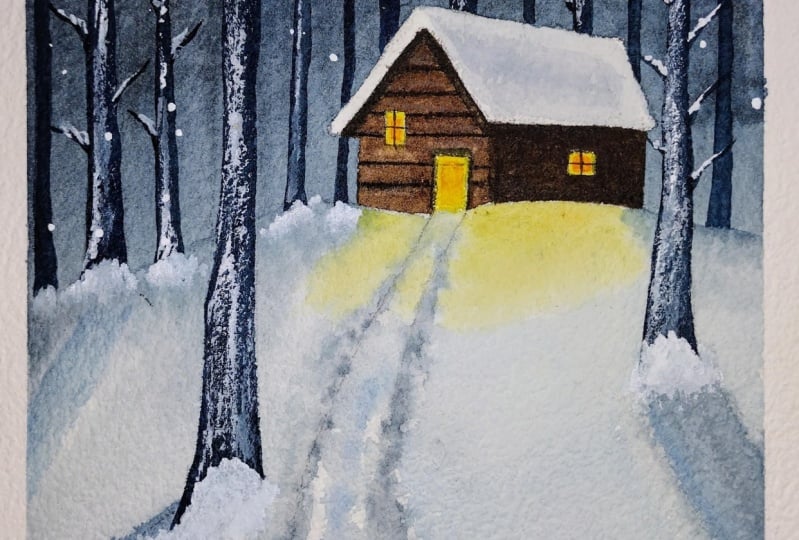
12. Thank You "SNOW" Much: Okay, so this is
the final painting, and I'm truly happy with
the way it has turned out. I mean, Look at it, guys. Isn't it gorgeous? I want to take a
moment to express my heartfelt thanks to everyone who supported me
throughout this journey. Whether you help me
brainstorm ideas, give me feedback or simply
encouraged me along the way. Your contributions
mean the world to me. I couldn't have done this
without your support, and I'm truly grateful for
each and every one of you. I hope this class brings you as much joy as I
had creating it. Thank you for being a part
of my creative journey, and I can't wait to see
your beautiful creations. Please post your projects in
the class project section, and I would love to review
them and give you a feedback. And if you're someone
who would like to post the project on Instagram, then do tag me using
my Instagram handle, my pain story. So
that's about it. Enjoy your holidays, guys. Merry Christmas, have a happy
and cozy winter season, have lots of cookies, hot chocolate, and whatnot. Just enjoy yourselves. And get creative and also
take care of yourself. That's more important as we are wrapping the
end of the year, have lots of smiles
on your face, and I'm going to come next
year with lots of ideas, lots of classes, and lots
of love from you guys. Thank you so much. Stay
happy. Stay creative.
 Aishwarya Shetty, my__paint___story | Watercolour Artist