Transcripts
1. Intro and Welcome: Hello and welcome to this class. My name is Hayley, and in today's class, I'm guiding you
through the process of creating the whimsical and
beautiful effect of bouquet. I will explain to you what
is the most important part. I will be guiding two on how to create your own
beautiful, bulky effects. I do paintings and debates
in a whimsical way and do have something
beautiful to look at or to give
some to someone. During the class, we are
going to be learning different techniques that we can use to create the beautiful
blocking effects. And you will be amazed on how
easy, just time-consuming. But super pretty effect the
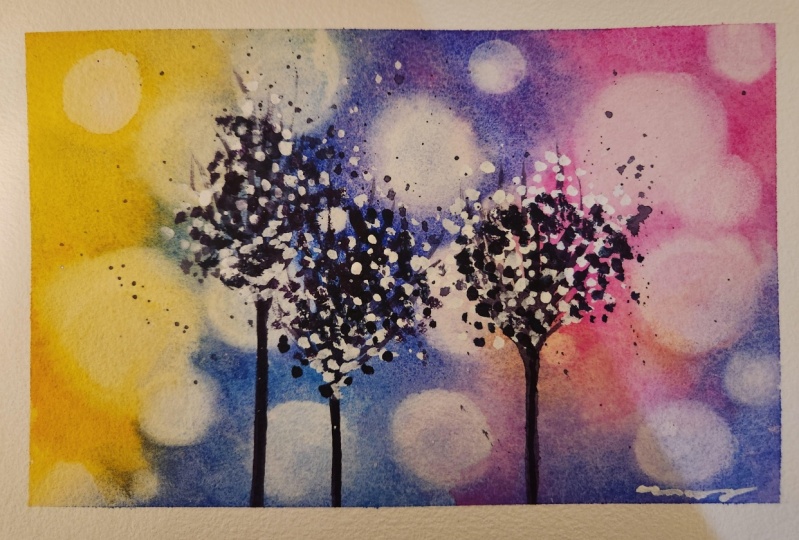
bulky makes to Japan things. By the end of the class, you will be able to paint a beautiful background with a whimsical effects of bouquet. So I hope to add
super excited to join this class and
to start creating something beautiful
and everything but it do as well to follow me
yet on a skin check. So you don't miss any class. And taking consideration of leaving the attribute
on that this class. So I can know how do you like it or do suggesting for
next upcoming classes. I will see you in
the next video.
2. Material Overview: Let's take a look.
All the supplies that we are going to be
using during the class. We have here, all the
materials we need. This is an overview. The specifics I will be given
to you during the class. We have a gain, water or pilots. We are going to be creating
this in the next video. I have white paint. You can have a one
market brushes, a mixed pen and paper,
watercolor paper. I am using Canson. This is a very good
quality watercolor paper. And I just took one page
and I cut it in half. So I have two. Smallest size watercolor. You can use a small
watercolor paper or whatever you have at hand. I always have a pencil. Other supplies that we may
use for joining the class, like washy tapes, fine liner to trace or pieces on
the watercolor paper. And always have in a day extra paper and
anything Do we may need, and your coffee or
tea on the side, I would say during
the next video.
3. Preparing the Paper: The class, I will be using
my watercolor paper, but I want to make it smaller. So I have here my whole
size A5 watercolor paper. And they have a
much cutting mat, so I don't damage the
surface of my desk. And I have a ruler. I just cut in half. So my size will be
about a tree size. Smaller one. You can use any, any size you want
for your paint. I NGOs working in this
because it's more easy to work and to explain
the technique that we are going to be
working during the class, I will round the edges
of these two pieces. So I get a more cute
looking for my paper. This is a paper cut
to confine them in the supply stores or on the Internet and
shop, online shop. They are very affordable. Or you can just use scissors
if you don't have this. This is just aesthetics. Now that my pages are done, Let's proceed to prepare
or paper to work on them. Just fixing them. This is a cardboard from the
back of my watercolor paper. I just use them. I would show you this. This one is from my block
of my watercolor paper. And I always keep them
aside because I am using them to protect my
paper and my surface. I have my clean towel. Now. I will use my technique to
soften up the glue on my tape. My paper doesn't get
damage like this. I will just tape the tape on the tower and then I
will be dust it off. And now the glue on the
tape is not that strong. So when I take my paper with it, when they fix it
to my cardboard. And then when I take it off
of my paper, we stay safe. No damage. And it will be really nice. You will see, I hope you're going to use
this technique to soften off the glue on
your paper tape as well. So do paper doesn't
suffer any damage. I will do this with
all the sides, Always keeping a
rhythm or a direction. Say, I start with it on there
and then the upper side, and then the sides. When I pull it off, it is easier for me. Now my paper is fixed and
ready to be used and I will get no stains
on my surface. Hybrid seed in the next video.
4. What is Bokeh and How To Create it: Before we start with our class, Let's talk about what is the bouquet if it is a common technique
used in photography, where one of the elements of the image is
intentionally bluer. It normally do see these pictures where the
background of your picture is like Farsi and the lights
are light blue color. This is the bucket effects. I will show you some images. You have a better idea. I then just typing this
in search machine. So I will show you this example so you
have a better idea, but you can just bright in the internet search
machine the word bucket, and it will bring to you
some different images. So you can have this idea.
Look at this picture. The subject up the front
and the back down. The lights are blurry and Fauci. And this is what we are
going to be creating. This beautiful glass
that I hope you do enjoy and had so much fun. In the class. We are going
to be using mostly circles. But you can use any
shape you like, like these hairs shapes. You can really use any
shape you like. To do this. You just need to have
the right tools or the patients to
create those shapes. We are going to be starting
EC and relax us in circles, the most common ones. How to create bouquets
effects with watercolors, is what we are going to be
learning during the class. I have here my paper, my paper, fix on my cardboard, and it's all done. So I have tapes and
I am ready to start. I have the colors,
the watercolors, and I have different
tools that we can use to create
the bulky effect. Seeing here coins,
these are coins. We are now going
to be by anything. We are using this to
create beautiful effects. I have also a tape circle, stamp, a eraser from
a pen or pencil. We are going to be
using all these. And also I have this eraser
to have a shape here. And we are going
to be using this to create beautiful effects. You can see I have
different sizes. And the most important thing
is you can use anything. It just needs to be
flat at the bottom. So when you stamp it on
the paper, it stay flat. I will go over it with
my tissue paper and I am creating a flat
surface like a stamp. And thus the whole science
behind this technique. Okay? We can also make
the bulky effect using brushes and we're going to be learning
data as well. I will explain you do truly during the class,
don't worry about it. So I just pick up some kinds
in different sizes and have your paper and ready. And here I have the brushes. Brushes in different sizes. I have my clean towel and
paper to create these, and I will be showing, showing you how to do it in
an easy and relaxed way. Don't worry about it. Okay, For this fierce
example, just the practices. So you get a hang of
what I am doing here. I have different
colors and I will be painting this paper as a background using
different colors. This is a multi-colored example
that I want to show you. So you have a better idea. I have a flat brush. This brush contained or
retains very much water. But if you don't
have a flat brush, you can use a round
brush is not a problem. So I released this because it is easier to explain to
you in a easy way. I will just make my brush really wet and this brush
retains the water, so I don t need to apply
water on my paper. If your brushes doesn't
contain too much water, just start by wetting the paper with clean water
and then adding the colors. Again, starting with a
light shade of blue. This is just for practice. This is a Prussian blue. You know, and I then making
like that lighter, too dark. So we have the perfect amount of color that we need to
create the effect. This very important that you
mix the colored ones that do live some darker
spaces on paper. I didn't just apply
all my blues. And I will be adding
other colors to make it more colorful
and beautiful. I think a little
bit more of water because we need the
paper to be wet before we start creating
beautiful effects. Now I am adding these
bread and when it mixes with the blue violet, and this is what I want. I want a colorful
background so you have a very beautiful experience
creating this effect. I will start by
showing you how to create the buckling
effect using your brush. You see a number six. I didn't wet brush in the water and then
painting circles, lifting the color with my brush, cleaning my brush onto my
paper or onto my clean towel. And just start to see that the color FDR to
lift from the paper. Now, let's try it
with a bigger brush. This is a number ten. And I am doing the same,
just painting circles, lifting the color up
to start creating those light effects versus the whole point of
the bokeh effect. This has light in
urban gray background. Now, I will show you
another technique using the coins would have
started with this model one. I am prepping it with my
paper and look at this. Look how easy the
color lift up when I stamp the colored
with this coin. What happened in the paper? I'm gonna just wetting
my paper because it's getting dry super-fast. And you can do the sign
if your purpose or to get thrive and just add water. Brush. Look at this, how the color lift up is fascinating and I'm loving
this technique so very much. And it is the easiest one. I experimented with. This is why I am showing
you during our class we are painting using only brushes
to create the bucket effects. And then we are going to be
creating another piece using Bitcoins to get a beautiful
bulky effect donated to bake. All have in mind to create
different sizes of circles. In this case, we are
using the shape circles, so be mindful of that to have
different sizes of circles. So do bulky effects turn
out very natural and beautiful using different size of coins and circles
that I have, and also different
sizes of brushes to create those different
sizes of bulky effect. Continuing, adding more and more and wetting my paper
when I feel it is to try to continue applying or the safe lifting
up the colors. The more darker spots
do have into painting. The ECS will be for you to create this lifting up technique to create the lights effect
wonderfully and beautifully. And I will see you
in the next video.
5. The Magic of Bokeh Effect with Watercolors: Okay, now let's
take a closer look. And I will be using
my brush number six to smooth out those some of
the bulky effect circles. So you can see how working
with your brushes and stamps, if you have thin or
with your coins, will help you to have
a more soft and, and delegate Bucky effect. It is just a magical technique. And through,
throughout the class, you will see that this technique is really,
really fascinating. Also, addictive to
create beautiful pieces. Allows your colors to mix up. Then the block effects, because as you saw in
the reference picture in the video before, the book, effects are like
this blurry lights on the background
of our picture. Normally there is a subtour at the front and the block
effect is on the back. As you saw in those
reference picture. Very gentle when
lifting of the colors. And you will see that your
painting will be beautiful. I want to show you on the SAT how to do this technique using all the materials that I
showed you at the beginning. And now, using this all day, Sirica and using my brush, normally people
have those stencils that they have this circles or triangles and they use those
to do the block effect. I don't have them. This is why I'm showing
you how to do it with a circular object. Now, let's use the back
of our pen or pencil. Mechanical pencil, to create
smallest Bucky effects. Try to mix the pattern. Don't put older book effecting
one side of the painting. Try to distribute them
around your paper. This is a wax stamp. And then using these, just covering it with my paper. This is the eraser survey
dataset and he has, this has like a square shape is very fascinating to mix or some shapes and look
how this looks. Now I will let this
completely dry around five or six hour and look
how it is looking now. They live. Now that my
painting is completely dry. I will use some touches of
God to create some bulking. In gold effect. I will be just activating
my gold color with water. Then I will paint some circles. To create contrast
on my painting. You can use different sizes
or you can choose to paint the circles in guards
in the same size, but distribute in
your whole painting for this path part of the glass that is just
experimentation in to show you a preview and on how we are going to be
working during the class. I will just paint
the background. We are not going to
be adding anything. We're going to do
that in the class. And you will see how easy and
fabulous this technique is. To remember to paint
around the lines, have circle is, okay. And this makes the painting look more natural and beautiful. Paint as many as you want, and try to keep the
shade really liked. Now I will add some splashes
to make or painting pop. And this is very important. You can use a splashes
into painting. I will let this dry and
then I will peel off the paper tape and look at
this beautiful bulky effect, because the white and the color red circle
around or painting, it is a beautiful background. To write something. You can add a little
painting over here. But for now we're just
keeping it at this stage. And we are going to be
starting our class. We are going to be creating
two beautiful pieces, adding other elements
to our beautiful bulky. But I will see you
in the next video.
6. Creating the Bokeh Effect with Brushes: To create our beautiful bucket
effect using two colors. In this exercise, we are going
to be using a flat brush. This is a big flat brush. You can also use a round brush if you
don't have a flat one. And again, using Prussian
blue and compose blue, do two types of the same color. You can use any shape,
pink, violet, yellow, orange, red, but you need to use two values of these colors. And we are going to be
starting by wetting, very wet our brush and then picking up some
of the pigment. And we are going to be a star by grazing or feeling
or paper with color, but make sure that your
brush is very wet. If not, then you can first make your paper wet with clean water and then
start adding the pigment. This is the wet on
wet on wet technique. But this brush contains or
retains very much water. Does is why I am not wetting my paper before
starting to add colors. We're looking here to
add that get shades of the same color and lighter ones in as you
can see on the paper, how I'm doing it. I just started with a very
light and then I start, I started adding more
and more pigment. And then here and then adding more pigment that color using
mostly the Prussian blue, because this is
my darkest value, depending on the shapes that you choose to make your background. In this case, then do we'll add our accordingly darker
values and lighter values. And this is, this is the first step we need to
take in consideration that our background and needs
to be wet before we start, before we start creating
or bokeh effect. And for this first technique, we are only using our brushes. We have different size
of round brushes. And that thing, or the
whole technique here is to lift up the colors
in those places. Or our painting, we are
going to be keeping in mind to create different size of pocket or these
little circles. As you can see here. This process, It's
very time-consuming. So make sure you work
as quickly as you can. Because when you paper, I start to get dry, then it would be
very difficult for you to make those
lifting up the color. But we have always a solution. If your paper start
to get a dry, then you just need to
paint with clean water. The aria, where do you
want to live? The color? So my paper is wet and I'm just tracing and lifting
up those circles. This is the first time
that I'm telling you to work as fast as they can. Because when our paper is dry, it will be very difficult
and uncomfortable to pick up the color because
our paper can get damaged. So work as quickly as you can, but not too quickly that
you've damaged your paper. And remember, if the paper
start to get too dry, then you can just wet
your paper and paint. And as you can see,
I'm also using my tissue paper to lift out, to lift up the colors. Yet I'm using a little
bit of water because the lighter side of my
painting is almost dry. You know. You don't have too
much pigment in here. So the paper AC source that
liquid very, very fast. But the word we have
odd with water. And remember we are
using in this part of the class only our brushes. So you can see. And then you can choose
which technique that all the that I'm showing you during the class
you want to use. But I do want to repeat them more as I was
telling you before. And when I was explaining what the bokeh effect is,
this photography effect. Do need to be conscious
that you need to make as much Bokeh effects
in different size. So you get this blurry
DC effect, but nice. And remember to lift the
color and then you make a round circle motion. So when the color
is start to dry, thus, you don't get
those hard lines. You will notice that
with the brush is very, very time-consuming
to paint or bookcase. But I want to show you how to use this technique
because then you can mix different techniques
to paint beautiful effects. Just take your time,
but not too much. Remember, this is the
first time you are working as fast as you can. So get comfortable with this. And this is the fierce practice. You will get the hang
of it by doing so, I encourage you to
start painting with me. So you get the feeling
in your hands or endure eyes on how you want
your book to look like. Remember you can use any, any shape I then using the
circles because this is the most common one
and the easiest one for a beginner
class like this one. So we want to keep
that end lighted. Some spaces on or painting. You can always go
back with your brush on the OS that you
are ready painting. I will say during
the next pivot.
7. Two Color Bokeh Effect With Brushes Only: Let's continue with our
lifting up the color and creating the effects
as much as we can. It is a battery consuming
process as I am telling you. So we are going to be
very mindful about that. And taking the time to soft
enough stuff, circles, using water and going and
painting, empty painting. Some of the circles over K effect that we
already have on our paper. We are using only brushes
to create these effects. So you have an idea
on how to work out your beautiful bokeh effect
and, or tissue paper. You can chain to tissue
paper if it gets to dampen with color.
So don't hesitate. You don't need to use the
same paper all the time. You can change it if
it gets full of color. And this is the idea. And as you can see, the
paper looks like this. Almost dry. And it is. So this is why I am wetting
my brush and going back again to my painting and
trying to create that effect. And you can see also that
in the darkest pigment, the lifting up the color
shows up more vividly. So don't hesitate to create
more of them or to choose just one place of background to create
your bouquet effect. I enter into keep the sizes
very different. In looking. Now, I will start adding other sizes behind and
around my address, the book effects that I
already painted on my paper. The brush that I'm using
for the most part of this creation is a number six. But remember as I was
in my first class, that depending on the
brand of your supplies, the sizes are different and the shades are
different, e.g. on the watercolors. So don't get with me, I don't think it is a good
idea to share the I share it, but I think it may confuse
you when using e.g. number six in one brand. And the size is not the same
as the one I am using here. So I didn't turn into just
this side, you have refinance, but try to use a smaller medium-size brush
to create your bucket. If you are working in
this size of fake it. If you paper the speaker, then use a bigger brush. Or if you prepare is smaller
than use a smaller brush. Just necessities
to the materials and the supplies that you have. An way with the ones
do are working with. This part of the process
is just lifting up, collecting the
circles as moving up the goal or even adding
more water or more pigment. If I see it, needs it to be more cohesive
and more even on my paper. So you need a good eye for this. And do need to like
what you are seeing. Endure paper. The only thing I want
to make you aware of is don't give up yet. I think you can see that this doesn't look like anything
labelled K effects. But trust me, when we've finished this
beautiful painting, you will see how
beautiful this technique and this effect is. We just need to keep going
and keep doing our job here, lifting this color from
our paper and creating these beautiful shades and beautiful circles
in different sizes. It's all we need to do. Just don't look at it. It is already done. Just look these as it is. But when it is finished, I put them so it
would look really, really completely different
and you will love it. And I think it may be a very, very addictive technique to use more and more painting because
it's time-consuming now. But when you learn the
technique and how easy it is, for sure you will use. The more paintings and
you would combine it with another techniques that
you already have in India, back of techniques and you will create a beautiful,
beautiful pieces. I went to propose
this idea that maybe you want to take part on is you can take pictures
of your progress and then share it on the class project
section for this class. Because at the end,
when you're beautiful, painting is done, you
will see the difference. And then you can have those a step-by-step
process of creation. And you can share that with us. As I always do, I share with you a
sample project on how you can share your class
project in any of my classes. So it would be a good
idea now to take a picture of process
of how it looks. And then you can share it on
your class project when you finalize your
beautiful painting. And I went to see, hopefully do reactions on how beautiful these look like
after you finish it. Because, believe me, when I start to paint
this bokeh effect, I was unsure to check this class because I
wasn't getting there. But I was just at the beginning. When I keep I keep doing it. I keep progressing
on my painting, lifting up that color, and just trusting the process. And I committed to not
resist the process. And when I finished my
painting, oh my goodness, it was so beautiful and
I was so excited that I wanted to share it with
everyone and show look what, look what I did, how
beautiful this is. And then I get, I got addicted to this
technique and using it over and over and over
and over for making cars, for friends, for my other
paintings that I do. So beautiful. For sure. I'm thinking on doing some name tags for
posting a bad thing. This will make a
beautiful background for the names of the people that are
coming to the parting. And I can wait to create them. Take a picture of
the budget process because you will be very, very surprised on how just
lifting these colors, you will have this beautiful
effect in your creation. Use your brush to soften, ask those hard lines
of dirt right corner and give this a more
circular shape. When I was researching
for this class, I learned that some Japanese
artists starting to use it, this technique from photography. And this is how now we see it also in watercolor painting. But you can use any
medium you can use wash, you can use acrylics, you can use pastel colors. You can use this technique
in any shape or form. Even I saw one artist's painting these in
a colored paper. And it looks so beautiful. I saw one using just
black and white. Oh my goodness,
this is looks like a picture or in black
and white picture. So beautiful, really duped, can experiment and try different combination
of colors or no colors. And it will make your
creativity really up and allow yourself to experiment and try
different techniques. And in the next
part of the class, the class I will show
you how easy it is to create beautiful buckets
using some other elements, as we saw in the first video. But this time using it
to create a real piece. For now we're keeping this. We are not giving
up on our painting, just trying to lift up those colors there where we think we can adding more water using or tissue paper
to create this effect of lights and shadows and
have a beautiful painting. I then painting
this horizontally, but then I will use
this background, embed the form I will
show you, of course. In the future devious one, we are advancing
to the details and the final repeal of this
beautiful painting. We are, in the next video we are going to be adding some details, but we need these to be
completely perfectly dry. Even you can leave
this overnight or a couple of hours, five, 6 h. And piping need to be, need to be really, really, really, really,
really, really dry. So we can continue and transform this beautiful painting
in the beauty that it is. And we, when, when we build off those types,
oh my goodness, you will see the crispiness and the beautiful organized
painting that we're doing. So try to make those final book Gay effects and then lead painting
completely dry. And I will see you in
the next video when my painting is perfect, the dry.
8. Two Colors Bokeh Effect - The Reveal: My painting was completely dry, but I'm not completely happy. Hang how it looks. I'm just touching some of the bulky and adding
a little bit of water to see if I can move that color and lifting them up. And finalizing some smooth. Being asked us some
of the other circles, I get completely happy with it. I want to reshape some of them. You can do the same if you're
painting is not us to like, don't hesitate to do it. It is up to you. It is completely in order
to make adjustments. So do paintings really
looks like you want. I will continue doing this
until I feel it is perfect. Three, beautiful. And I also saw that
on my lighter color, I didn't paint too
much of the book. So I then just trying to paying them with a little
bit of pigment on my wet brush and then
lifting up those color. But I went over do this because on this part
of my painting, I will add a
beautiful lettering. And at the end, and you will see how it looks
now that my colors that I added before dry a little bit. So get on the paper. I'm just lifting them. Getting a little bit of more light on this
part of my painting. Continue smoothing
out those line of my gray color and lifting
to get more light. I want to reshape here, taking a little bit of pigment, allowing it to sit on the paper, and then lifting them a
couple of seconds later. So I think we're almost ready. I didn't just eyeballing. Those were good and reshaping the ones that are a
little bit of reshape. I hope you had a judge
in this process. You are painting with
me in real time. This is no speed-up of the BPO. We are working here together. And this is a
beautiful opportunity to create and to have fun together and learn
from our mistakes. And see how we can
improve or techniques, or how we can do it better. And this I get together to
create something beautiful. So I am thinking
that it is enough. For now. I will finish up these lines here that are a little bit hard. And then I will allow this
to try again for a couple of hours before adding
the final details and making their DTLs. Okay. Or painting
is completely dry. It has been 5 h after
I painted on this one. And look how it looks. Now. Very dry my paper and now we
can add some gold effects. I really activate
my goal colors. With my brush. I will add some just painting some
circles here and there. To elevate or painting, the color doesn't
need to be too dark. Try to keep the
equal light effect. You don't need to lift
these colors as well. Just paint with a very washing
or watery gold pigment. To make. These little details are
not beautiful painting. Try to make things
different sizes. We'll see how it will
look when it dries. I think, using different
shades of color. So we can get the effect. You can paint as
many as you want, but try to keep
distance between them. So you don't overshadow
the other bucket that we already work hard
on getting on your paper. You can also use
a splashes here. They make the picture pop up. And I may do that at the end when we add the
lettering and so on. So just combining
some techniques to make your painting
more and more beautiful, I will allow this to track. And then I will come back to
show you how I will proceed. To see I have for now my
painting on a vertical position. I already trace
and my lettering. So just to have a
guideline and using a permanent marker
to trace the what? The lettering. Thank you. I then tracing the word. Thank you. So you can use any type
of Latin into one. And it will make a beautiful
card for someone that you went to thank offered
Thanksgiving as well. You can use these as you want. Or you can use
another message here. Beautiful card. Now, I will fill up these letters so they look like hand-lettering
or brush lengthening. So we get this beautiful
effect of brush lettering. This learning style is called Fox calligraphy
because you are just making up these
hand-lettering effect. Or you can use a brush
lettering if you can do hand lettering. I just wanted to just
this permanent marker. So my letters are more fixed on the paper. Beautiful. You can use any message
for this lengthening or you can paint something
here if you prefer. But I think that for painting, you need to do that before. So do you use the
masking tape or masking liquid to avoid the color
going integer drawing. And then to be laid off. And then you can add
color to your subject. But for this class,
as a beginner, I wanted to show
you just how to do the bokeh effect and add in some little details
like this lettering. And not too complicated for you as a fierce time
using this technique. I want to make your life easy. When do you let the
jeweler, the bus, the basic of postcards
and you can make it. Now, let's add
some splashes with my white bleed proof paint
using my old technique, using the bamboo stick
and my flat brush, I will add some splashes. So my painting, I start
to look beautiful. I am already loving it. I hope it do, are loving it as well. And lead us some blue splashes too and make it pop as well. That this is not to liquid because then it will mix with the background.
Just a little bit. Don't overdo this
because we want the effects to be the
star of your paint. So now they're satisfying
part of the class, peeling off the tape. And you can see how
easy and how smooth or goals of paper
without damaging it. And we have this
crease lines here. Hopefully no color
group went through any. Didn't have pretty,
pretty, pretty. Let's take a look at old
beautiful effects lettering. And I hope you love this
as much as I love beneath. Look at those details, highlights and the
lettering and the book TFX, using only our brushes. I will see you in
the next video for a more beautiful bokeh effect.
9. Multicolor Bokeh Effect: Okay, time to make our
multicolored bucket. I have my paper
fixed, my colors, my brushes, my water,
my tissue paper. We are going to
start by applying foods or background. For this. I want to use the
multicolored watercolors. So I want to create a beautiful background
using this opera pink, red, yellow, and blue. And I want these colors
to be buried pipeline. I then using this time. So you can see a round brush, not the flat brush that
I use on the past. I'm using my round brush. So you can see that this works
as well as the other one. I didn't wet my paper before. I am using a bigger brush. So it retains water. Then IN wetting my
brush on water, clean water, and then
painting with my colors. I want the colors to mix. So I don't know, making so much of a thing
of cleaning my brush. I then just wetting in water, they picking up the next color. Only the yellow must be always clean because then it
becomes maybe I am placing the colors
here and there and trying to make
them as vibrant as I can and still
keeping my paper wet. All these colors
mix well together. You can choose another violet, totally different palette and
see how it works for you. The thing is to create a
very colorful background. When we have or background. Then of course we
are going to start, we're going to start to
create or pokey effects using different tastes of blue and trying to create
those dark spots. Adding more pigment
here and there. To create a distributed fun and vibrant,
colorful background. Do the same. And remember, you can take a picture and start collecting your pictures
for your class project. That will be very fun. Then you can see
the progress and the final piece coming to life. It is always a joy
to see the progress when we are working
on beautiful pieces. I think my background is ready. It is still wet. And I will start by picking
up color with my coin. But up in this paper, as we did on the
previous practices. And then weight by brush, I will smooth out some of these circles as they are
not so perfectly round. And that is totally okay. And these are all
on the same size. And of course we will try to keep different sizes for
these bulky effects. Using my brush to
pick up the color and then picking up
color with my brush. Here, you can have a very
close up of the process. Going gentle on my paper and
making the circle bigger. This process is very
important so you don't have those hard
lines around your circle. Okay? Makes sure do circles are perfectly smooth out. But you can also
left some of them, not the aspects that
because when you see those background
lies in the blurry, bulky effects, do start
to see like double. And this is not perfection. We're not looking
for perfection. We're just trying to smooth up those hard lines
when they watercolors dry than makes or
painting not too smooth. Starting to create
bigger circles. So we started to create the bulky effects with
the different sizes. When you pick up your color
with the tissue paper than a smooth the lines with
your brush and so on. This is a beautiful process,
beautiful progress. And we're just keeping, doing this until we
fill it is enough to start adding bulky effects in other places of our painting. Remember to try to broke
the pattern that the brain's tried to make and place the bulky model
distributed into paper. I will see you in
the next video.
10. Multicolor Bokeh Adding the Details: In the first part, we work with just the
brush and the paper. Now we are using
the coin to make our beautiful circles
around or background. Remember, if you paper or your colors are
starting to dry up. Just go through with your brush and clean water to
activate the colors. And if you think, dude, some places of your painting
or your background color, then just add more
colors before you start lifting of those color
to create your book effect. Like here, I think this jello needs a
little bit of color. I will be adding
more color to it. In a second. My brushes super clean, and I will start smoothing
these other circles. And my paper is dry here. It is easier to do it like that. You can pick up the color and
creating different sizes. This is a very important part. So your painting
and start to look more cohesive and bogey effects, start to pop up onto paper. Just see now that it looks
like lights in the background. When we add some details
to this painting, when it is completed, you will see the beautiful
effect that just with some patients and some technique you can create in
your paintings. We continue as smoothing
circles with our brush. And going there, what we need, when we think we need
to lift the colors up. Wonderful. Feel free to use a bigger brush
or use other coins. I'm mixing the two
techniques here. So you see how this part
of the process take time. But when you finish your
painting, look really nice. Smoothing out those hard lines. When my watercolor has dried. Then we have this little
circles off or blocking effect. Go through all your circles and go with your brush and
pick up those scholars. And continue doing
this until you feel it is enough to then start applying or creating more wacky effects
around our background. Colors. Try and do a
little bit of water, the color start to move. And that's good to know. Then pick up the color with the tissue paper until
you are satisfied. It may be a long process, but the results is worth it. Of course, you are
always painting to clear out mine and
to become relaxed. And to have at the end a
beautiful, a beautiful creation. Then you can share with others. You can keep to
yourself, as you prefer. It takes time, but you will
love it when it is done. Correcting, correcting,
correcting. This is a long process. I was telling you, don't give up, just
keep doing it. And you will see how
fascinating this technique. Some of those watercolors, we will not go fronted paper. You will not be able to pick the color up because
the paper at 38. Major set of big
problem out of that, just continue and
try to just smooth those lines and
maybe make contrast, creating other bulky effects
around them like this. So the focus of the eyes of the people that
are looking at the picture. Go stat, Where do you want? My painting here on
the yellow is dry. I will add a lipid
with more of pigment. So I can then create some
effects over here as well. I want a cohesive painting. So it is important that you have darker spots on dude background. I will let this excerpt by further segments and
then I will pick up some color using the coin for
our model circular shape. I will see you in
the next, be there.
11. Multicolor Bokeh - Final Touches: We are going to be
continue smoothing those circles and adding other sizes of our
bulky effects. So don't give up yet. And if your diet, just take a break,
pause the video, look through the window, drinks water, and then come back and
continue with your painting. Creating another big
bulky effect here. Now that I have more pigment. And look how beautiful this
mix, blend things are. That is why it is so
important to have darker shades on your painting. You can create the light effect, digging up the color is
a beautiful process. This pink is so vibrant. Soviet different. Okay, We are continuing doing this until we see our painting. Or background is done with all the places having their bulky effects
that we want. And then bot, eyeballing and calculating
new book effects. And so on. Look how beautiful these
bubbles of bulky ad showing up. This looks also like the herbs they had to
see in these pictures that is like an outer around
persons or objects of light. And they are very
magical and beautiful. Mystical. Creating some
half effects here. For more drama on our painting. Eyeballing in to see where
we can paint another bulky. They need to adjust direction. Eyes, digital painting, depending on how dark
or how light you have, your painting palette
and your painting. Then you need to
decide where to put more bulky effects and so on. This is just a
reference, just a guy. But you need to work
on your own paper. So you have another
results for sure, depending on the colors
that you are using, the brands that you are using, even the paper,
make a difference. And you will notice it. Once did you start working
on your art piece? We are almost there. And depending on how
big or how small your paper or the surface
where you are working in is, then do we need to work
longer or shorter? Is a matter of what
you have on your desk. So you can not compare yourself with my work or with the
work of other people because they are
using other materials perhaps or other sizes. And thus is very individual. Work with what you have. And that is perfect. Now I will let this dry, and I will see you
in the next video.
12. Multicolor Bokeh - The Reveal: Okay, my painting is
completely dry and I have here a very
small Burdash. I think this is a number to go with your smallest
brush, your fine brush. And I will paint some flowers. And I will start by painting
the stem using a dark brown. Creating this, using
these two colors, blue, orange, and violet. In adding a little bit of black. So it gives me this dark color. So does trace out a line
using your hand going from down to up and create, create song, sung of this line. Then we are going to be adding some lines above
with the same shape. You see this becomes very
dark orange, red, and blue. And then you have a
brown, dark brown. This is our guidelines. So we can paint or
little flowers here. The three of them
are the same flower. A beautiful subject
for our example here. We are going to
do these lines on the three steps
that we have here. And you can start to see
that the block effects, even though the flowers
are not ready now, you can leave it as it is, is you want like the winter a century that will make a
beautiful winter card as well. Or when winter painting. But we're going to be
painting a flower. Then just making this
a little bit thick. Because then we are
going to be painting some dots using or white paint in a little bit of watercolor to get
a little bit more of the color to or flower. Now, my, my stems
are dry and I have here my blue bleed,
proof, white. This is a white paint. You can use gouache or acrylic for this part
of the painting. And just start to add with your fine brush
this little dots, creating the petals
of these flowers. Flowers. And creating this
beautiful effect that ready. Go through all the stems
and create a dude. Dots are sub-patterns. So as you start to see
mod structure under painting to keep a
space on the dots. So we created these effects that we'd see through
those spaces. Here. Tracing a line parallel to my stem to give
this a little bit more of elevation on the paper. And doing this with
the other one as well. The petals starting at the bottom and then going
a little bit more loose. When it goes to the
tips of the stems. You can paint any
flowers you like. I just found this
very easy to do and gives a beautiful effect
on the background. With the blocking effects, you can see now how they
are really showing up. You can also use a Posca paint, acrylic paint, and it will be easier for you to
create these little dots. Use whatever you have at hand. It's very important that do
work with what you have. Elaborating the stem. And now let's add
some color to this. I'm just mixing these
colors, red and blue. So I have a dark violet
and I will just add some in this colors
here and there. To make this pop
up a little bit. Go through all the whites
and see how it looks. You can use whatever
other colors you want. I'm just using this to
maintain a cohesiveness on the colors in the palette
that I have here on my desk. Do the same with
the other flower. They look like. Now that I see it the more I'm almost done. But let's call them flowers. Like dandelions. I was trying to painting,
to painting it. Don't overdo this step just
as add some dots into colors. And now we can splash or
painting a little bit with the same watercolor that
we have on our painting. And I entered into, I mix the pink overlapping
with the blue. This is why the buyer
lettuce is lighter, vibrant, just a little
bit, not too much. Around the flowers. A little bit on the background. It is looking pretty,
pretty, pretty nice. I really love how this looks. And I can't wait to show
you this without the tapes. Now is the fun part. Removing the tapes. And how satisfied in this is
to see those crease lines in order Bucky effect showing
up through the flowers. Is it really a magical thing,
this blocking effects. I hope you have
enjoyed this as well. And I can't wait to
see what you create, what color to choose, how you proceed to create
your blocking effects. And please don't
hesitate to let me know if you need some
clarifications on ideas. Just left me a comment. Below this class I will
see you in the next video.
13. Your Class Project: Congratulations, if
you're seeing this video, if it is still completed
the whole class. And for your class project, you guessed it does need to stay in the class project
section for this class. Work in progress step-by-step
and your materials, how do they actually looks like? And upload a picture
of it and tell it with us and with me and
I will love to give, to give you a beautiful
comment that review in your painting if you have any
question, don't hesitate. And that in the common
section for this class, I will see you in
the next video and I can't wait to see
what you create.
14. Thank You for Completing the Class: Thank you so much for completing the class and congratulations
for doing it. And I can wait to
see what you create. And remember, you can
always review this class. So I know how to felt about
this class and what to learn. And if you have any suggestions, you can always write to
me here at the comments. And if you upload
your class project and we can interact to each other and give us a beautiful
moments of connection. You can follow me
here on Skillshare so you don't miss any update, any new class with conversations about
creative moments together. If you have an
Instagram account, you can also follow
me on Instagram. And if you upload
your work over there, then that me and I will love to see your
creation and comments. Something beautiful. I am always looking
forward to seeing you in my next class or in
my past classes. Remember, you can
review this class. You can create a
conversation with me if you have any
suggestion for a new class or any question that you need me to talk about, then just spread
the mean here in the discussion below this class. I will love to connect with you. I wish you a very
beautiful, creative moment. And I can't wait
to see dude with the full bulky background
effects endure paintings. Bye-bye.
 Artjourneywithme Heidi, ARTIST AND FACILITATOR