Transcripts
1. Hello and Welcome : Hello, and welcome
to this class. My name is high. And in this class, you are
going to be learning how to paint watercolor,
illustration, botanicals. And we are going to
be painting cactuses. How amazing and bring
me or this cactuses. And I will guide you through the whole process of
chosen the paper, chosen your color palette, making the brush
control exercises, and how you can
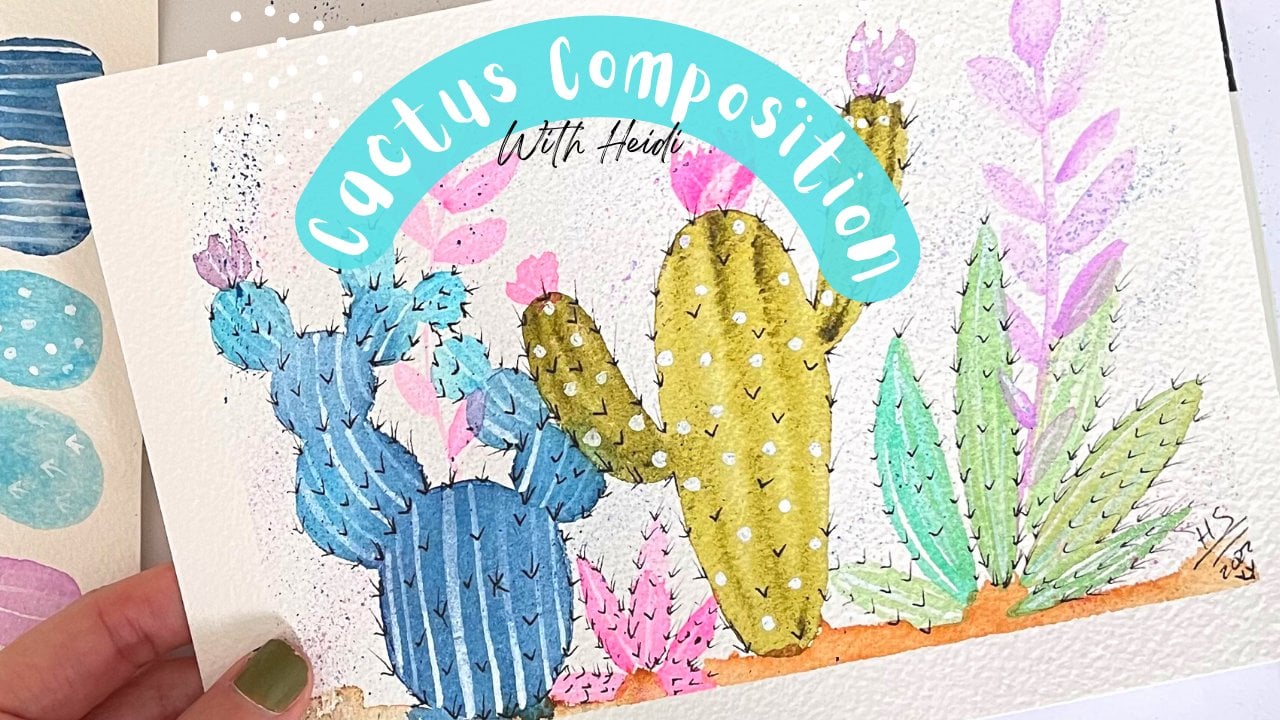
manage them well. And by the end of the class, you will be able to paint beautiful cactuses in
a pot like this one. So I hope to get the inspiration to
paint beautiful pieces. And remember, you can always
let me know if you have any question in the discussion
section for this class, Let's just start a
discussion and we can interact to each other. You can also follow me
here on Skillshare to get the updates when
I upload new classes, your class project,
you guessed it. You just need it to
take a picture of the business and
share it with us. Uploading a picture of the resources in class predict in the class
project section. For this class, I can't
wait to have two in-class, and I will see you
in the next video.
2. The Supplies You Need: This is a watercolor class. And now we are going
to be taking a look at the supplies that we are going to be using during the class. So get ready to know, what do you need to
complete this class? Do need a clean towel and as
always, took major branches. Watercolor paper, using a watercolor paper
that had more texture, is called press as well. And it's from ashes. You can use another type
of watercolor paper. Don't hesitate to use
whatever you have at hand. We are going to be using
different colors of watercolors. I will explain that
when we are going to be doing the color chart, white paint or a white marker. Fine liners in black brushes. This time we are going to
be used in different types of round brushes
that I had to use. A big the biggest one
that you have from your round brushes and
all the different sizes. Am mixing palette to mix. Our colors. Always had at hand as well
washi tapes and whatever do need to have your
beautiful creations. I will see you in
the next video.
3. The Color Studies: Okay, I have a piece of
paper and I will start by playing with all the color
to make the color studies. So we know exactly how our
colors will look like. And I will start with
my Prussian blue and my cobalt turquoise light. With this to color, I have to
pair 1234 pairs of colors, and we are going to be working. Then on our page, I have a big brush, number ten, round
brush and have n. I have already put all the
colors on my color palette. So we are going to be starting
with the Prussian blue, just within the brush in water. And then painting on the paper to see the
intensity of this color. My paper is dry. As you can see,
the color is very bicarbonate because
only my brush is wet. You can always manage the
intensity of the color. Adding water or
taking out the water. Using your brush. Wet will make a big difference in high and how would
you call it looks like. And using your brush will make a big difference in how the deepness of the
colors you are using. Looks like on your paper. We are working on or a color palette or OEM
or color chart this way. So do you have a better idea on how to recolor looks like? Now, we are using
the cobalt two keys, light to make a contrast between these two colors
is really fascinating. To mix the color. Remember to have always
circling towered on this side. Water, clean water. And it will help you have a more relaxing and enjoying
playing with their colors. To play with the intensity on
the pigment you are using. And remember, you can use
all the colors you prefer. I just choose this once. Because the painting that
we are doing on this class, I think the system must be a different
combination of colors. But you can work with
the colors to light. Now in some, adding some
touches with the pigment that Prussian blue to see
how my painting reacts. And denote this is
looking very bright now. But when it dries, the color would become
a little bit lighter. I am doing the same with
the second color study. So I have a better
idea when I applied in the layers during
the painting process. While, or set of blues,
Chase is drying. Let's play with our
lilac and violet. These two colors are so
beautiful and I am changing my brush because the space
on my paper is smaller. And it will be easy for me
to do the color status. This way using a smaller brush. You can use any type of rash for your color chart and
play with shades, starting with a liner. And as you can see,
this color is very beautiful and pass
them in a pastel tone. And we will see when
we add more water, how this color can really light with make easier
to create contrast. During the painting that
we're going to be doing. During the class. You can see one has more pigment and the other has less pigment. Now I will started
with the violet, and this is a more
pigmented color. And using the same technique, I want this to be to see how when it is dark and with this
more diluted with water, when they dry, I went to see how the colors look really
trivially look like. And that is why it is so
important that you Good to know closely your colors and
how you can improve them, or how do you can use them
to your advantage. Now. Or foods to bar, of course, are done and
they are driving by. Now. Let's do the green set. And we're starting
with the olive green. And the second green
that we have is BDD. And the olive green is such a beautiful
and classic color. I really like this color. We are doing the same. One, lighter shade
of this olive green and a darker pigment
that olive green. So we have an idea how they look when they dry or
onward painting. In reality, if you look at
cactuses or Scotland's, this might be the natural
color of these plants. Now we are using and DVD VN, Amar S middle emerald green. And we're doing this
sign, a darker shade. And then I know that
that is lighted. And this is when we are going
to be painting or pieces. We are adding shade
and we are trying to make the painting
dry dimensional. And for that, we
need to play with the concentration
of the pigments. And does this look? And now we are going Use
the last set of colors. And they are the burnt
umber and the burnt sienna. I am starting with
the burnt sienna, which is a little bit of a brown color that we might
be using for the bot. Offer the ground where our cactuses planted
or weight not to come. Maybe use this for
your cactuses as well. Now, the last color
is the burnt umber. And this is a more color, as you can see, very
dark or very dark brown. And I didn't using the
two shades as well. One dark and one very light, barely diluted with water. Alison, adding sun touches of color to see how my quadrat
react when they are dry. And they are so beautiful. This is all the colors
when they are dry. As we work with the
Prussian blue and the cobalt turquoise light. And you can see how the yet. And then we use the lilac
and mineral violet. Then we use the olive green. And then BDD. And next we have the burnt
sienna and burnt umber. They are looking very
pretty and we're ready to start painting. I will see you in
the next video.
4. Practicing Brush Control: Here we have our color studies
and now we are going to be doing some exercises
because we need to do it. And we're starting with the
spines of the cactuses, which are very easy, and we're using fine
learners to do them. Two types, one more
big, one more fine. And it is very easy. You just need to
do like a check, sign on the cactus when
you are painting them. And I wish you all do
more detail when we are. But this is pretty easy. You just use your fine liner
to paint those spines. And now we are going
to be doing there. But ash control using a fine
brush the findings to have. And then with white paint, we are just tracing lines to practice these patterns because
we are going to be meet, we're going to be using
these patterns when we are painting the cactuses. Okay? These are just very finite. And you need to
make sure do have a very nice control of your
brush to do them properly. I will charge you more closely. Look, just set up
from the bottom and then going up very
slowly to the Russian. Yet when you are more capable
than you can trash on this. Another idea would be you use a fine liner or a paintbrush. We have the tip more sturdy, so it is easier for you
to paint those lines. Now, we are going
to make just dots. It helps you to control the size and the movement while
using your brush. It is relaxing. Exercise is better
condom recommendable for you to do this
type of exercise. So you contract your brush, ECT. Now we're doing the spine
with a white paint. And look how VDC we first do a a V shape and then
a line in the middle. So easy it is. Now we will continue with
the lines this time, giving a little bit more
space between them. Now, we are just making
these horizontal lines. To practice brush control. You can go over
the lines to make the pavement that
occur if you need. Now, let's paint
some diagonal lines. To practice brush control. You can do as many
patent asked you like, your hand, get the
muscle memory. You can play with the thickness, thickness of the lines. So you feel your
brush on the paper. And the speed that you
use will also give a different experience
and a different look. Under paintings, we are using the finite needs to
make the buttons. So you see that this is easier
with a fine liner as it is with the brush because your muscle memory
is already done. You know how to hold
pencils or pens and do. Your brain knows how it
is called going with the fine liner I am
doing and the spines. And you see that it is a different look when I use
the thicker fine liner, ask when I use the fine liner, which make it look more pointy. Now, I will continue
using the fine liner. So I just had an idea
how they took undue, got to practice with me
doing this exercise. This is somewhat thick
line and you see the difference between
the first one with it and the second
one we are doing. Now this find the V and
the line in the middle. It is very easy and the
effect is beautiful. You can do as many as you like. And it will give you
a nice cactus effect. This binds up the cactuses for the offending the plans for an animals that
want to eat them. This is why they
have this pints. Now I am doing the dots and it is easier
with the fine liner. You can use the brush or the
fine liner us to prefer. But also challenge
yourself to use the brush. So as you get into your hands. We're going to repeat
it this exercises in the colors that we
already established. And as you can see the
corner, sad, beautiful. Now I am doing a different pattern and this
is hair shape for the spine. And look how cute
this look like. It means you can
use your creativity to create your own patterns. And they will be unique design. And of course, they
will be beautiful. Don't hesitate to use your
creativity that this is your principal and
most important, work. Well, while creating pieces. Look at this collection
of patterns. And I can't wait to see what you come out on the class project
section for this class, I also did the study from the pink opera color that
I forgot to do before. I will see you in
the next video.
5. Painting The Nopal Cactus: Okay, let's us that
painting or fears cactus, which is not bad cactus. I fixed my paper on my surface and I have my
bigger brush, round brush. Number ten. I have all the materials
that need water, my watercolors in the palette, and my clean tower. So my paper is dry. I am just tracing with
my hand the idea. I have part of my characters, my butter, no bulk cactus. I will start painting
first the cactus and then I will go ahead
and paint the pot. And when the, when
the whole cactus is paint IN starting
with my olive green. And I will make the
first part of my cactus, which is a oval shape. Using my round brush and making the silhouette doesn't
need to be a perfect. All will do. Can have your
reference picture to paint the similar shape
of a bulk cactus. And then I just, I'm just dragging and pulling
my color to make it bigger. So it looks even on my page, a cactus is composed by
different sizes of all ones. In this case, I am using
in this shape because the Nepal cactus had
this silhouette. Can make it as big as you want. The first one, the
fifth, the fifth shape. Then we are going
to be adding or the medium-size ovals on
every side of my fears. Oval like this, using
my BD then who? These more emerald
green in a light j. This is the first lady. And we are using
the technique wet on dry because my paper is dry. I am just adding a little
bit of shape on the bottom of the oval because
this will be in a pot. They are on the ground. Now I'm adding a little bit
more of pigment here in there to make the contrast
pop up on my second. For my notepad shape, I will trace the
second oval like this. And I want this to be a little bit bigger than the second one. It is touching the fierce, fierce cactus shape that
I paint them before. And as you can notice again, using a more pigmented green. Because I want this to
be more rich in pigment. And I will correct the
shape as I see it needs. There are many reference
picture on the Internet. You can look out. Or if
you are lucky enough to live in a place where you have
this type of cat cactuses. Then you can go outside or
maybe you can visit a garden where they display
this beautiful plant and get a better idea. This is a very nice activity for yourself to get
inspired by nature. I did this once when I was
in Singapore and they have a big Botanical Garden and it is filled with beautiful different
cactus and succulent. Okay, now let's start
painting the smallest shapes, using the olive green to make, like small ears on
top of the pier. And then even a smaller one on top of the second
one of the smallest. Do you need to see how
your composition is going on and blaze more or less. Not bad cactuses as you wish. And osteo want to
see your painting. Here. I'm just mixing these two
colors to make them the lot, or even just with my wet brush. So the hard lines that
will be there when it dries doesn't get too hard. Just dissolving them. Now for a little bit
of contrast IN using my Prussian blue in
a very light shade. The paint, the ovals are the noble or one of the cactus on top of the biggest Nepal
cactus that I fear is painted and then adding as well
ovals with my turkeys. Cobalt two keys. It is to make the
composition more cohesive in more variety of colors. Now, I will do a bigger
one using the same Shea. Two keys are covered duties. It is called looking
at my painting. To see if I need to
add more smaller ones. Are bigger ones somewhat
on the painting. Now, again, just adding
a bigger one with my brush and blue pigment color. Taking consideration
that you need to have your watercolors
is still wet done. Dawson. Don't let the color of the dye because
then you won't have this beautiful mixing and color mixing that
you are seeing here. It needs needs to be a little bit wet in case your
color gets dry. Then just with your brush
and go through the color. So when you add the day, the torches with
your next color, the watercolor will
react with the water. Now, I then just going through all my notepad cactuses and adding some touches of a deep pigment that water column in the chain
and the same shape. And looking if they need
more glazing or model color. Now I am having a view
of my whole composition. And I just noticed
that I want to add another small cactus over here on top of this one
because he was feeling alone. So I am adding a little one here and checking
if other part of my painting needs more
pigment or just go with my brush and adding
some depth and shadows. So it looks a little
bit more cohesive here. I'm also making the
pointy and pointy oval. So when I paint the
air and they bought, it, looks like in the ground. And it is now looking very
beautiful, arbitrary. And I wish you are getting
this beautiful results in whichever color sets do
choose for your cactuses. And I can't wait to see
what do are creating. I will add some touches
here and there. And then I will let this dry a little bit and proceed
to paint a pot. I will see you in
the next video.
6. Nopal Cactus Pot and Flowers: Okay, now my cactus
is almost dry, is not completely dry, but I will start
painting the pot. And for that, I am using
my number six round brush. I have my clean water, my towel, everything
I have on my table. And the colors that we
are going to be using are the burnt umber and
the burnt sienna. I am starting with
the darker one, which is the umber. Burnt umber. I then just painting a
part, a rectangular part. Two can use any shape for
your pet and do his duty, do it as a juror. Likings. I started by tracing the outer lines and then I will add the
color on the inside. Covering the surface with
my umber, burnt umber. And then making
the shape to then add the soil IN, reshape my part here and they're moving,
they're watercolors. So when it dries, look nice, I will start adding in the soil around the cactuses. On my part. Going slowly around the
shape of novel practices. And now my watercolor
is completely dry, so they want mid mics. When I go through
with the brown color. Painting this toy, you need to paint
the soil by Leggett, because sometimes
the watercolors dry and it becomes a little
bit lighter in color. You don't need,
you don't need to dilute the color or the pigment
of the other color here. Try to maintain the intensity so your soil looks fascinating. And just as the real
one, as you may notice, I left a white space between
the upper side of the pot and the color that
I add in the center of the butt to make a contrast. And on this side
and not the button, I then letting the color darker. So it gives you the
dimensional look. As you can see, it is dry
now and it is looking very beautiful and looking, and another looking
at my cactus, I want to add some flowers. For that. I am using the smallest brush. I have a decent number two. And the color that I choose
for that is the opera pink. I will make a color study because I forgot to do
it at the beginning. But now looking at me doing it, and it is a good thing
to have extra paper. So as you can try
your colors anytime to see how much
color you have in your brush or how much water. I will start painting
some flowers on the top of the small cactuses. Just going with my brush and
making a beautiful flower. They are sold allocate. In real life as well. I will add another more pigment, it pink flower here
on top of this. And I will add some
touches of my pink so the flour get a more pigment. As little bloom on this
small cactus N9 detail one. On this one, they are
just starting to bloom. This is why they look like that. Okay? Now I think I will
let this completely dry to start painting
that the things. And I will see you
in the next video.
7. Nopal Cactus Final Details: It is time for the tails. And we're going to
have so much fun. Just prepare your white
paint, your fine liners, do smaller brush your
water and cooling tower. And this is how it
is looking like, so beautiful and pretty. And now we are
going to be adding some beautiful details
on the notepad. Using these small, small, small, super small brush is
a number, doubles. And it is perfect. You can also use your fine line. See 2.5 or paint markers in black and white as we did the successes for controlled
brush that you remember. And I have my white paint in a little lead to mix the white with water
to make it more fluid and easy to paint. Like this. I'm just mixing
the white paint with a bigger brush so it gets easier for me to pick the color. When I use the small rash, I will add with white, some details to the pot. Head shapes. Make it look cute and lovely. You can add any details. You went to your bot
and you can even paint, just put in the
color you prefer. I just wanted to make
it more contrasting with the colors of
my Nepal cactus. Don't hesitate and use
your own creativity. This is the most important part on every creative process. Just have fun and
make it beautiful. Now, it is time to
add the details inside the Nepal cactus. Using my smaller brush and
picking up some white paint, I will start adding those little dots inside the
oval shape of my cactuses, starting from the
right to the left. Or you can do it another way. And if you are left-handed, maybe this is the
better way for it. You don't smear the color
when you move your hand. I didn't just keeping
distance with those noble noble business side and the white paint. Luckily, this paint
dries really fast, so I don't have that problem. I will add those dots in
all the Nobel cactuses. And taking it slowly. And as a meditation process. It doesn't matter if you add many dots or just
a little at once. Do you prefer? I just want to make
this effect as a galaxy or a sky full of stars. That SYN, adding
so many of them. This is just the
beginning because the cactuses half
doses pints and we will be adding dorsal
spine as we learn in the control B, control,
brush control. Be there how to make
those little spines. And of course I will
explain you how to do it. Another time. You get the idea much better. Adding some bigger dots. Because nature is not perfect. She does like to make. And perfection means
not her thing. She prefers diversity
and beautifulness. So now we're done with all
the dots inside the cactuses, letting this completely dry. So we proceed now to
use our fine liners. In this time, we are
using black to make the spines like this a v star. This is a way and the
other way is a V with a little line insight
as we learned in the previous class. I will start with the
biggest fine line. Adding the B across the cactus. Joe's, a couple of them to make contrast
with the white ones. And these are on the
center of the cactus. So as you can see it clearly
how beautiful they are. N on the outline. We are doing the spines. Just doing the b with
Oh, fine, fine liner. Let's take a closer look. So just see how they
affect is building up on our cactus. Just a B. So simple as that. And you can do it. I know. Just go around and add those little piece
as much as you want. Now we will proceed with the
next one doing the same. And we are going around
or let the cactuses. So they had this similar. These are very nice produces and do need to take it
slowly and consciously. Then speed up the process, just go with the flow. And you will enjoy it much. Now that I am going with the
pen a little bit more deep, you see that beautiful contrast Going on the older characters. Because we need to add
this defense mechanism to all the ovals. They do know that
the Nepal cactus is also known as the
prickly pear cactus. And this cactus is
found natively in the southwestern regions of the United States and in Mexico. The flat cactus pads can
be eaten when the plant is John has many healthy benefits. Benefits when do it properly because they contained
soluble fiber, vitamin C, and some
essential minerals. It's also leaching anti-oxidants and it will help you
maintain your longevity. Informed yourself, and get to
know these beautiful land, which is not that a
gift from nature to do. Now, I will add all
the spines around the flat parts of my cactus. So our work will be then
I'll finish with this. I hope you're having fun
and that you are really excited to create this
beautiful cactus. And I can't wait to see
what color combinations do decided to use, because there are infinite when it comes to color palettes. And when, the more you
play with your colors, the more ideas you get on
how to mix them properly, and that they give you the beautiful dresses and the most beautiful final pieces. Of course, you can always
keep on this side of realism. But sometimes it's also
nice to plate with the deaminase and
creativity on or papers. To make it more fun and more and more
appealing to look at. The last spines and complete
in this beautiful cactus. Then Nepal cactus is a
beautiful and playful one. Okay? Or painting is complete. And now i then just adding my signature and do
need to do the same. So do make your
mark in art work. So I think it is
looking 3D printing. I loved the combinations
and I love how the watercolors at
the end looks like. And I also love on how the palate shine
through the paper. So I hope you like this one. I can wait to see yours and I will see you in
the next video.
8. Boho Saguaro Cactus: Okay, now we're ready to start
painting or second cactus. And this one you are
very familiar with. When I start painting it, it is called the Saguaro Cactus. And this the most illustrated
cactus that you can see. We are going to be using
the violet color for the big bad cough or cactus. And we're going to be
tracing a elongated oval. And then we're starting with a very light
shade of violet, very dilute with water. And I'm using my bigger brush. Then I will start adding some the second layer with
a mod pigment, violet, starting from the top
and then going through the whole elongated oval, which is our cactus path. The Saguaro Cactus is the mass. Use it in illustrations and in those cars when they
use the lettering, hug me and it is this beautiful
Saguaro Cactus with open arms but pointing spines. Now we are tracing the arms of our Saguaro Cactus with the lilac color as well
in a very light chain. And afterwards, we are going
to be adding other layers to make the colors more vibrant. It is a very fun to paint. And I hadn't used in
these colors to make a little bit more of fun. White painting. We are painting
then the second arm of our Saguaro Cactus. So this is our fifth layer. And look how the
colors are mixing. Now. Or painting is still wet. And I then added
some pigment and water color in the center
of the Saguaro Cactus. In the body part of the cactus. We make contrast and it
looks more dimensional. I then also adding
some touches of this same violet color on
the arms of the cactus. It is looking pretty nice. I am really liking it. Not the way our
cactus is drying. Let's paint the pot. And for that, we
are using or olive green and tracing a little
pot underneath or cactus. But that too maybe had
at home or when they do have seen in the garden
shop and do like it, then just paint it
identity Cindy slides and letting these white
spaces between those lines. And then I joined them to
make the shape of my pot. This is, I put, I saw in the chop last week and I just
fell in love with it, but it was too big for my home, so we didn't buy it. So now I enjoined
the whole chain. And this is how it looks like. I will this lead completely dry to proceed with the details. But before I will be
doing the shadow or, or Saguaro Cactus using a very
light shade of our sienna. Barton CAN just mimicking the shape of our Saguaro
Cactus on my paper. It doesn't need to be perfect. Just a little line
here and they're just mimicking the shape as if the sun is making the
shadow behind or painting. The shadow is always a
little bit more elongated. So you don't need to be
precise on the shape. So now I will paint
some flowers on the top of our Saguaro Cactus in the color that the
case cobol turkeys. Don't make some contrast. Betty light in color. Because the draws cactuses
are fairly light in color. And adding some thought
just on the TI. I will now start
painting the details. Did you remember we were
practicing our brush control. Now, it's time to put
them onto practice. And I will try it
first and see if my mix of my white paint is
enough to start painting. So I just did the line,
aren't those colors. And I will start adding the
lines from the bottom up. My watercolor on the
paper is completely dry. Make sure your
watercolor is dry. Because if it is wet, it is here beside of my paper. I didn't notice that the
color will just fade in. The white will start to mix with the watercolor on the
path of my cactus. So I will okay. The body of the
cactus is wet. Steam. I will let it dry completely and I will
resume with the details. And I will see you
in the next video.
9. Boho Saguaro Cactus Details and Reveal: Now, or watercolor on the body of our cactus
is completely dry and it is perfect to start painting the lines
inside the party. I then starting
from the bottom and going slowly up with my brush. My white paint is in a
perfect consistency. And I want this line
to be very fine across the whole
body of my cactus. We are filling with
these fine lines. The whole body of
our sidewalk cactus. This make a wonderful contrast. And now we're
completing the details. Adding some lines on the flower to define it much. But now I'm painting the
details inside the pot. And I will be making
some triangles. To make, look. I try well, look, because I find this is
a beautiful pattern. I will start painting
just the outline of my triangles with
the Prussian blue. Then I will feel that
triangles with color. Now my three triangles are, the outline of my
three triangles are complete and I will start
filling it with the color, which is the Prussian blue. As to GUN, notice I make, I made two triangles with the deep showing up and one in the middle with
a dip showing down. And then I will add
another detail. In the middle, the triangles. And on the bottom of the pot, you will see you can
use another shape here. This dark hairs as we did
in the other tattoos, pot. Or you can use circles
or rectangles or dots, make the design as to what free. You can also draw lines, wavy lines, or horizontal
lines or vertical lines. The possibilities are endless. And do. Please feel free to add
the butter that you like. Now I can add in some
little dots between the triangles and on
the sides of the pot. And then I will paint some
wave line underneath them. One is already something in
a sub two horizontal lines, and one in the middle, which is a wavy line. And other little details between the two white
spaces, these little dots. And it isn't looking
so really cute. Okay, now I want to
add some splashes. And for that I need
my flat brush. Jim, I know this technique
from my previous classes. I just this flat brush
and a bamboo stick to make very, very tiny splashes. On the background
of my painting. It is very easy to use. Just be careful
with the amount of water to add to the watercolors. You don't make a mess while
trying to make the splashes. Now, we are adding the spines
and do know how it goes. Just painting this little piece around the shape of our cactus. And here we are using the
beach shape and the line inside the domain to
make it more dramatic. And we're going add on or, or silhouette of our cactus. It is looking really pretty. And it's such a easy illustration
that everyone can do. And I can't wait to
see what you create and how to paint dear cactus. And what color do I use? The traditional greens
change or another mode. Beautiful colors
that you can use to place their
creativity and, or ice. Or painting is complete. Don't forget to add
your signature. I will do it. Of course. I just wanted to show you the final piece and I will
see you in the next video.
10. The Class Project: Congratulations, you
finished the class, and I hope you have
learned so much and have so much fun with me
during these lessons. Now for your class
project, it is very easy. You can share with me in the class project
section of this class. Any of these pieces
of your artwork, a final piece, your sketches, your materials,
work in progress. And I will be super happy to comment on your work and get to interact
with you directly. I can't wait to see
what degree eight and get to interact with you in the comments section
on your class project. I will see you in
the next video.
11. Thank You : Thank you so much
for taking my class. I hope you enjoy it as much
as I did chatting with you. And I hope you learned
something new and then you can create a beautiful cactus in effort to tell
with their friends or with your loved ones
to liquidate your home. Now, I want to hear
from you if you have any suggestion for a new class that you want me
to share with you? I exploit and new possibilities
with watercolors. Just let me know, let me know in the comments
section for this class. And I really love to live
and interact with you. You can follow me
here unethical chat so you don't miss any update on new glasses and
beautiful conversations that I chatted with my students. You can also follow me on Instagram so we
can get in touch. If you just share
your projects on an, on an Instagram, you
just need to contact me and I will love
to see your work. I am looking forward to see
you in my next classes or in my previous classes so we
can take moments together. Thank you so much again
for taking my class, and I will see you
in the next class. Bye bye.
 Artjourneywithme Heidi, ARTIST AND FACILITATOR