Transcripts
1. Introduction: Hi, I'm Elaine Vitikainen. I'm an illustrator and an
entrepreneur from Helsinki. I've been journaling
for many years now. But last year, I started digital journaling on my iPad
using the Procreate app. I created my own templates and I've really
enjoyed the process where I can move things around and easily correct
my writing mistakes. And also, I can use the digital stickers and washi
tapes that I've created. In this class, we
will be designing a weekly spread. A weekly spread gives us a
more detailed plan and it's really helpful to see the
entire week in one spread. We will be needing an iPad and Apple pencil
or any stylus that you have and the Procreate app. I will share with you the
fonts that I've created for you to use and some
digital stickers. And also, if you have
joined my previous classes, you have already downloaded
some of the stamp brushes that I've created for
you to use in your projects. By the end of this class, you will have a weekly
spread template that you're proud of and
really fits your needs. I really hope to
see you in class.
2. Class Project: For the class project, first, we will take
the time to think about the elements we want
to see in our weekly spread. We will create these
elements and then combine these elements together into a weekly spreads template. To help you get started, I'm sharing with you some
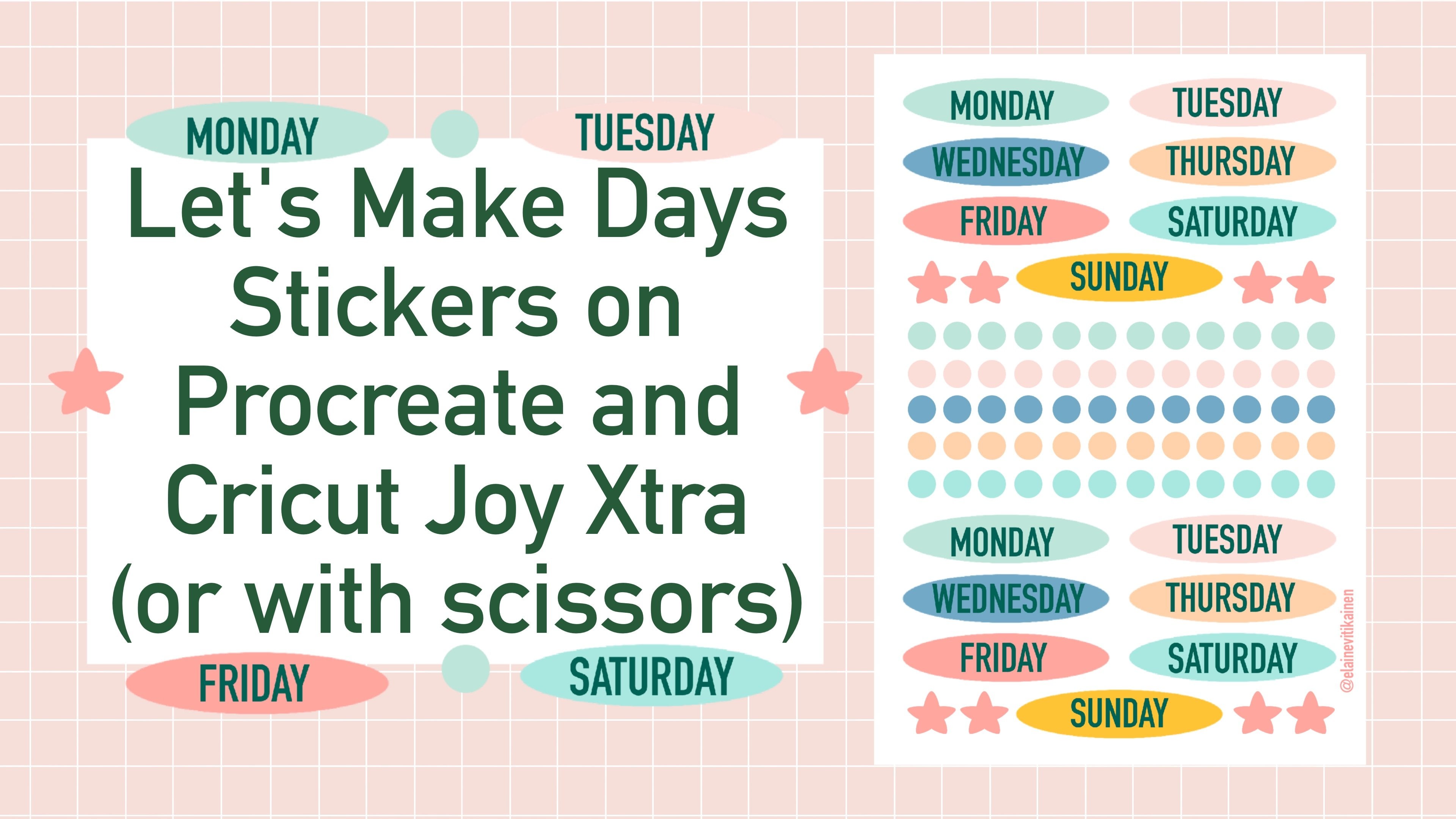
of my digital stickers, which includes the days of the week and the
months of the year. And the link to the
fonts that I've created. You can find these in the
class resources section. If you've taken my
previous class, you have already
downloaded my stamp brushes that you can also
use for your project. I've also made a bonus video on how to add a border on stickers if ever you decide to make
stickers for your project. By the end of this class, you have designed a unique Weekly spread that fits your
needs and you're proud of. Please don't forget to
upload your progress and weekly spread template in
the project gallery section. For the next lesson, we will think about
the elements we want to see in a weekly spread.
3. Weekly Spread Elements: When designing your
weekly spread, the first thing we
ask ourselves is, what do you want to see
in your weekly spread? What are the things
that you track on a weekly basis? Then
lists those things. Some of the most
common things that people track our moods, habits, self-care,
meal plan, water intake, highlights, affirmations,
brain dump, weekly goals, weekly spending, sleep, reading,
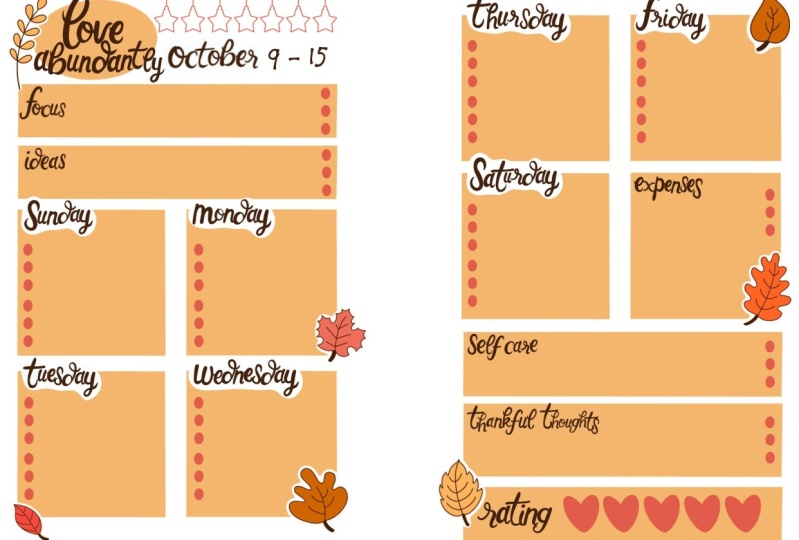
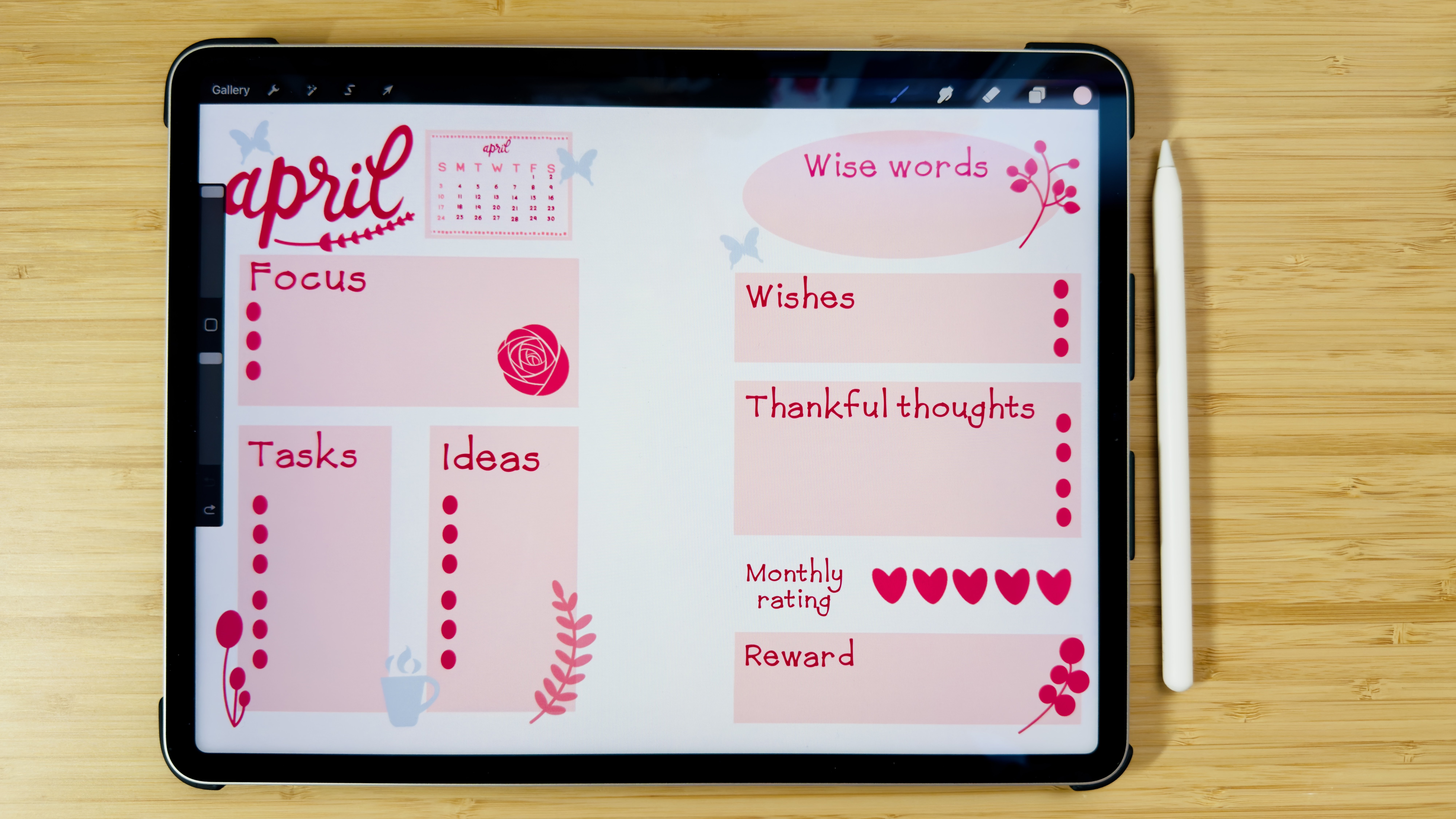
exercise and playlists. For my spread. I will have
the date for that week, the days of the week where I
put the tasks for each day. My main focus for the week, the highlights or I
call thankful thoughts. Idea space for when
ideas come up. A saying or a quote for the week and a rating for the week. Also, I consider the theme or the style that
I'm aiming for, the colour palette and the
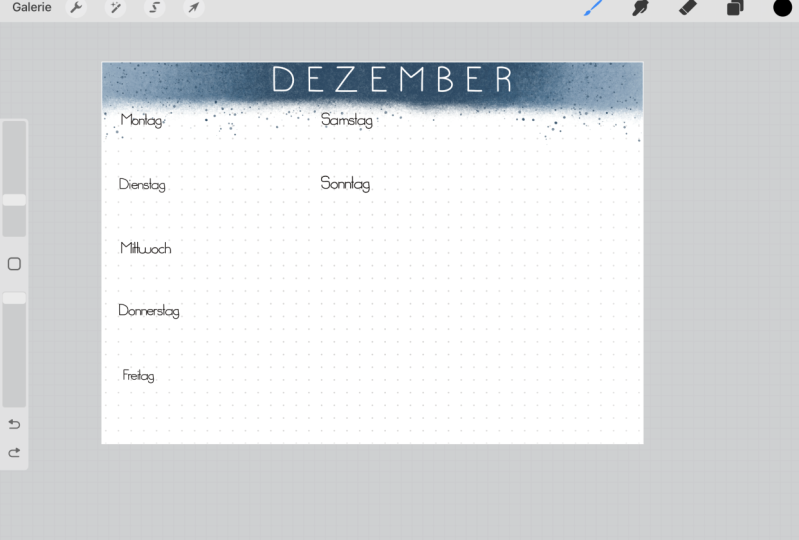
size of my weekly spread. Here are some of the designs
that I've used in the past. Now let's take the
time to think about what do you want to see
in your weekly spread? What are the things that you
track on a weekly basis? List those things. Also think about the style
that you're aiming for, the colour palette and the
size of your journal. For the next lesson, we will create these
elements together.
4. Creating Weekly Elements: Now it's time to gather the
elements for our templates. But first, let's
create our canvas. For my canvas, I'll be
using an A5 size journal, which is the most
common journal sites. So let's open Procreate. Hit the plus sign and let's
create our canvas. I will set it at 2480 pixels
by 1748 pixels at 300 DPI for good quality printing if you later decide
to print it out. Hit Create. First, let me show you how
to use the digital stickers. Let's start with the
names of the month. Click action, then add. This will depend on where
you saved the file. For me, I've saved it in
my photo gallery, so I will insert a photo. Once I have the file, I will choose the
selection tool, freehand, and I'll
start cutting the month that I will use. In my case I will be working on
the month of October. Swipe three fingers and a copy and paste
panel will appear. Then choose cut and paste. So now you have the
month of October in another layer ready to use. Then separate the days of the week by using the same process, placing each day in
a different layer. And now for the
digital stickers, I'll be using a
different sticker set from the ones I've provided, but the process is
still the same. I've also prepared the autumn colour palette
for this spread. I will now start writing
the text for my sections. So let's go to action
and add texts. You can choose the
font you like. Remember to always go to
the action panel and add text so that each of your text will be in
a different layer. I have the date for the
week, the main focus, thankful thoughts, ideas, quote and rating. For the background shapes, I will be using a lighter color. I'll be creating a square, a rectangle, a
circle, and an oval. Let's also put the
grid by clicking action Canvas and activate
the drawing guide. This will help us in
creating the shapes. I will start with a square. Remember that when you
hold the pen in place, it will create a straight line. Check for gaps before dropping the colour from
the color palette. Add another layer to
create another shape. Now we have all the elements
in the different layers.
5. Weekly Trackers: Now let's talk about trackers. To create a weekly tracker
is not really complicated. Since this is a weekly spread, tracking would mean seven times. So you can easily
add a tracker with an object with seven
elements for each day. For example, you
can add a group of seven flowers that represent
each day of the week. You can add colors to
each flower per day. Or it could be a set of seven ornaments in
your weekly spread. The most important
thing in tracking is to understand the use
of these elements. So for example, if
you're using colors, you have to specify what
each color represents. If you're using this
as a mood tracker, it could represent the
colour yellow for happy, blue for sad,
green for hopeful, and red for anger. You can also create
these simple emojis to track your moods by simply
placing them in each day. The simplest tracker is
just to write it down. For example, the hours of sleep, the amount of water you took. You can also add a section in your weekly spread about
your weekly spending, what you did to take
care of yourself, what did you listen to. So now we have all our elements. For the next lesson, we will be combining
these elements together to design our
weekly spreads template.
6. Placing Weekly Elements Together: Now it's time to put together
the elements we've created. Let's open our Canvas. Remember to mark the gutter so that if you will
print this template, you will have the
space for binding. Let me download my guide. So now we're ready to put
these elements together. As we put them together, remember that it's all
about experimenting different placements and see how everything will go together. It's important to create the template that best
serves your needs. Don't forget to have fun
and enjoy the process.
7. Adding a Border Around a Sticker: To add a border
around a sticker, first, duplicate
the thicker layer. Go to the adjustments
panel and choose Gaussian blur slide to adjust. I've put mine to 20 percent. Then go to the selection tool. Be sure to choose automatic. Then tap one finger. Slide to adjust the
selection threshold to the desired size of
the sticker border. Invert. Add another layer, then
fill the layer with white or any color
of your choosing. Move this layer
under the sticker. Delete the blurred layer. And there we have the
sticker with a border. I hope you enjoyed
this quick guide.
8. Thank you: Thank you for joining
me in this class. I hope you enjoy designing
your weekly spread by thinking about the
elements that you would like to see on your
weekly spread, creating them and putting them together into a unique template. Now you can create
more templates. Bye for now, and I hope
to see you again soon.