Transcripts
1. Welcome: Hi. I'm Mirka Hokkanen and I'm a picture book author
and an illustrator, an educator, and an artist. I'm also the stay at home
parent for three kids. And as with many of you
who might have kids and multiple competing
demands for your time, you can probably relate to the frustration of feeling like there's never enough
time to just sit down and enjoy creative work. But many of us do have time
to doom scroll on the phone or veg out on the couch with the notion that you're too
tired to do anything else. And so this year, I wanted to change that and
replace that time that I'm scrolling on my phone with some
time for creativity. And honestly, do you ever feel refreshed after
scrolling on your phone? If I think about it, I never do. But I do know from experience
that when I do take the time to be creative and work on a drawing
or something like that, even if it's at the
end of the night, I always feel better and more positive after a little
bit time of creativity. So this year, let's
build a creative habit together and make the commitment to make at least one
illustration per week. So not daily, just one per week. So you'll still have time to veg out and scroll on
the phone sometimes, but I want to start making
healthier choices for myself and bring joy and creativity
back into my life. And I hope that you'll join me. So this class is
for everybody who's interested in getting better at illustrating books for kids. And honestly, why
not writers, too? It's for anyone who wants to build consistent creativity
into their lives, who wants to grow their skills, who wants to create new
pieces for their portfolio, somebody who needs to get out of a creative slump
and be a part of a community and have
something that you can post on social media,
if that's your choice. Starting and building
a new habit can be a bit daunting at times, but I've created a set of picture book related prompts and will also help
you set up guideposts for yourself so that the
threshold to start and then to continue will be low and you'll find successful and keeping
up with this journey. The class projects
section will be a place for us to
post our work weekly. You can also post
on social media with the Hashtag KidLit I Week, and I'll be updating the class monthly with new prompts
and inspiration. You can jump into this
class anytime you want. Don't worry, if
it's not January, the beginning of
the year for you. You just start at the
month that you come in, and then at the end of the year, once you cycle around, you can rotate back to the months that you might have missed earlier in the year. So if you're ready to start on this journey with me,
I'll see you in class.
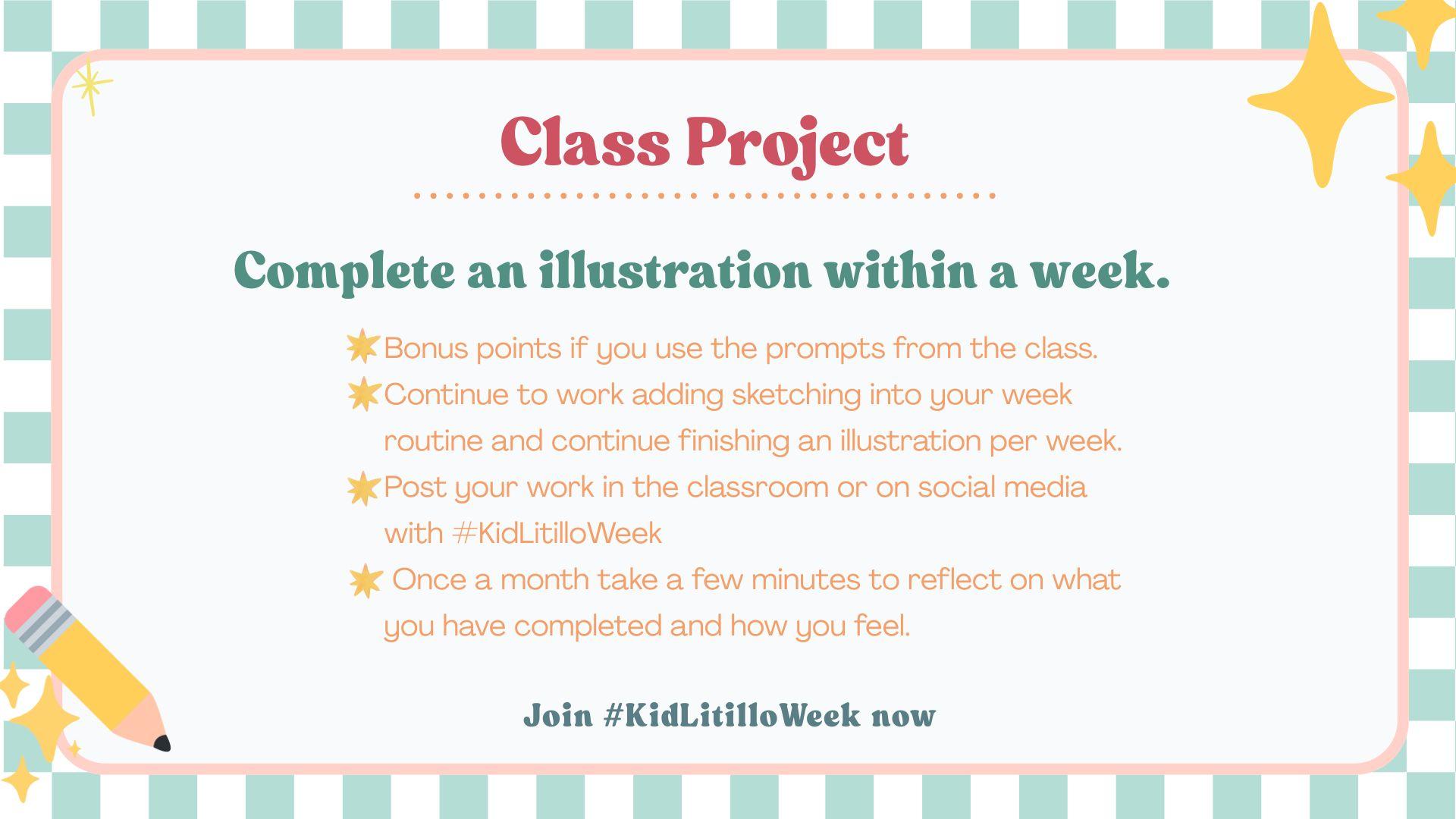
2. Class Project: Job is to create one
illustration this week. After that, I want
you to show up each week and create
another illustration. And if you think about how much time you spend scrolling on your phone or online shopping or on the couch or watching TV, you can swap out at
least one or two of those times a week to
do some illustration. Have to use any specific
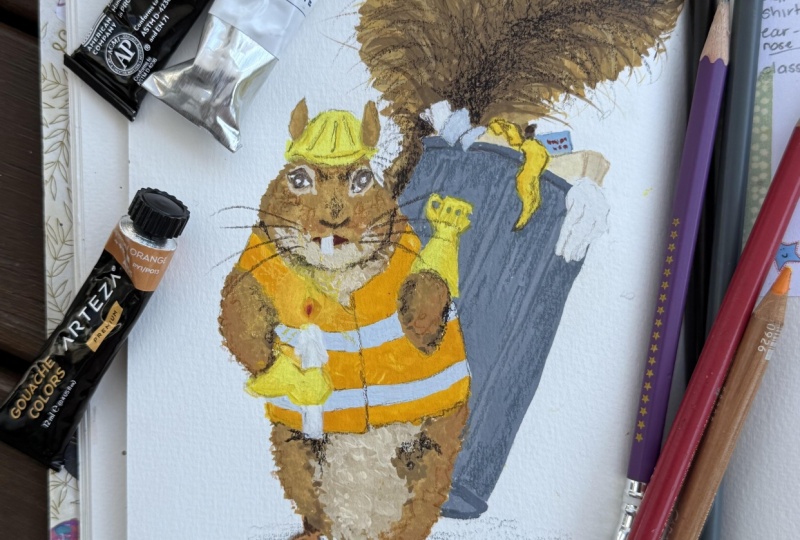
medium for this project. I'll be using a variety of
different things every week. I illustrate on my iPad. I also like to do traditional. I do watercolors and
pencils and gouaches. And so pick whichever
thing or pick whichever medium is kind of
calling for you that week, and you can even do
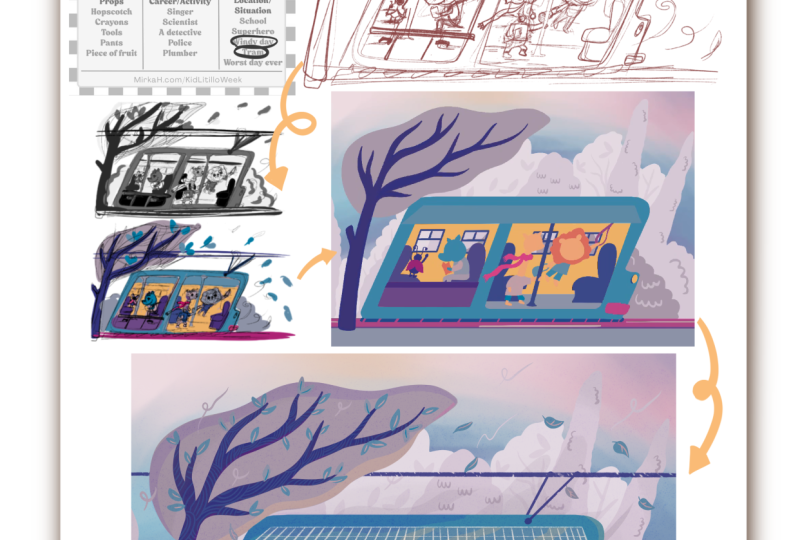
sketches and then paint, and you don't feel
like you have to just stick with one medium
through the whole year. I've created a monthly
class resource for you. You can download it from below here under the Projects
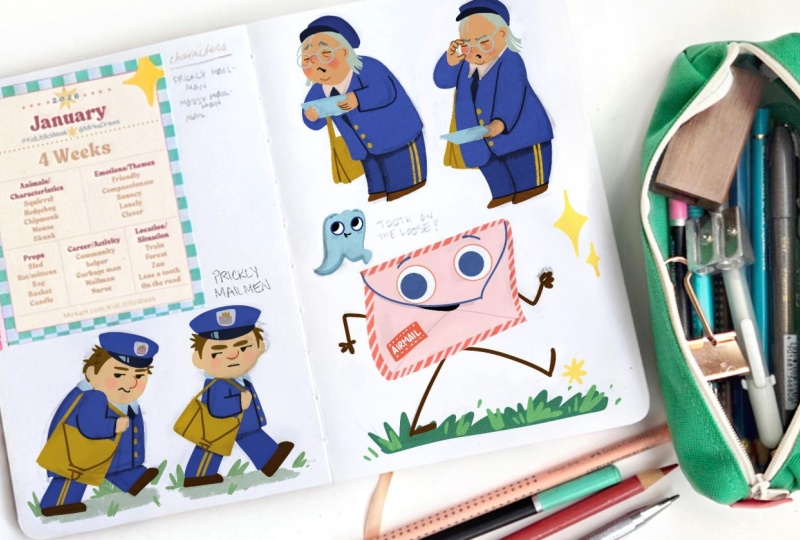
and Resources tab. Class resource has written instructions and a prompt list organized by months of the year. So each month has a
different amounts of prompts based on how many
full weeks are in it, and then you can mix and match the prompts based on what
inspires you each week. If you are an author, you can use the prompts
to generate new ideas for stories and then writing at
least a paragraph each week. The prompts are all
thought out by me. They're not AI generated lists, and I've picked themes and characters,
emotions, locations, things that are all
relevant to picture books so that when you're using the prompts to create
illustrations, your finished work will be relevant to the current market. Usable in your portfolio and appealing to editors
and art directors. And I wanted to mention
about the list of animals for each month that
you see in the first column. You're not obliged to
draw animals each week. You don't even have
to use a prompt from each column or each
section each week. The animals that I chose are the most common animals
in picture books. And if you don't
want to draw them, you can also use them
as inspiration and characteristics for characters
that you might be drawing. So, for example,
how would you draw a mousy little girl or
a squirrely mailman? Or maybe you make a character
out of one of the props. So maybe it's a mousy mitten. And so you can think
about the characteristics of an animal. And so, for example, if
I tell you to imagine in your mind a mouse mailman,
what would that look like? Or if I asked you to think of a squirrelly mailman
or if I asked you to think of a prickly mailman and if you think of what all those
mailmen would look like, they would all look
very, very different in the way that they stand, maybe in the way
that they're built, maybe in the expressions,
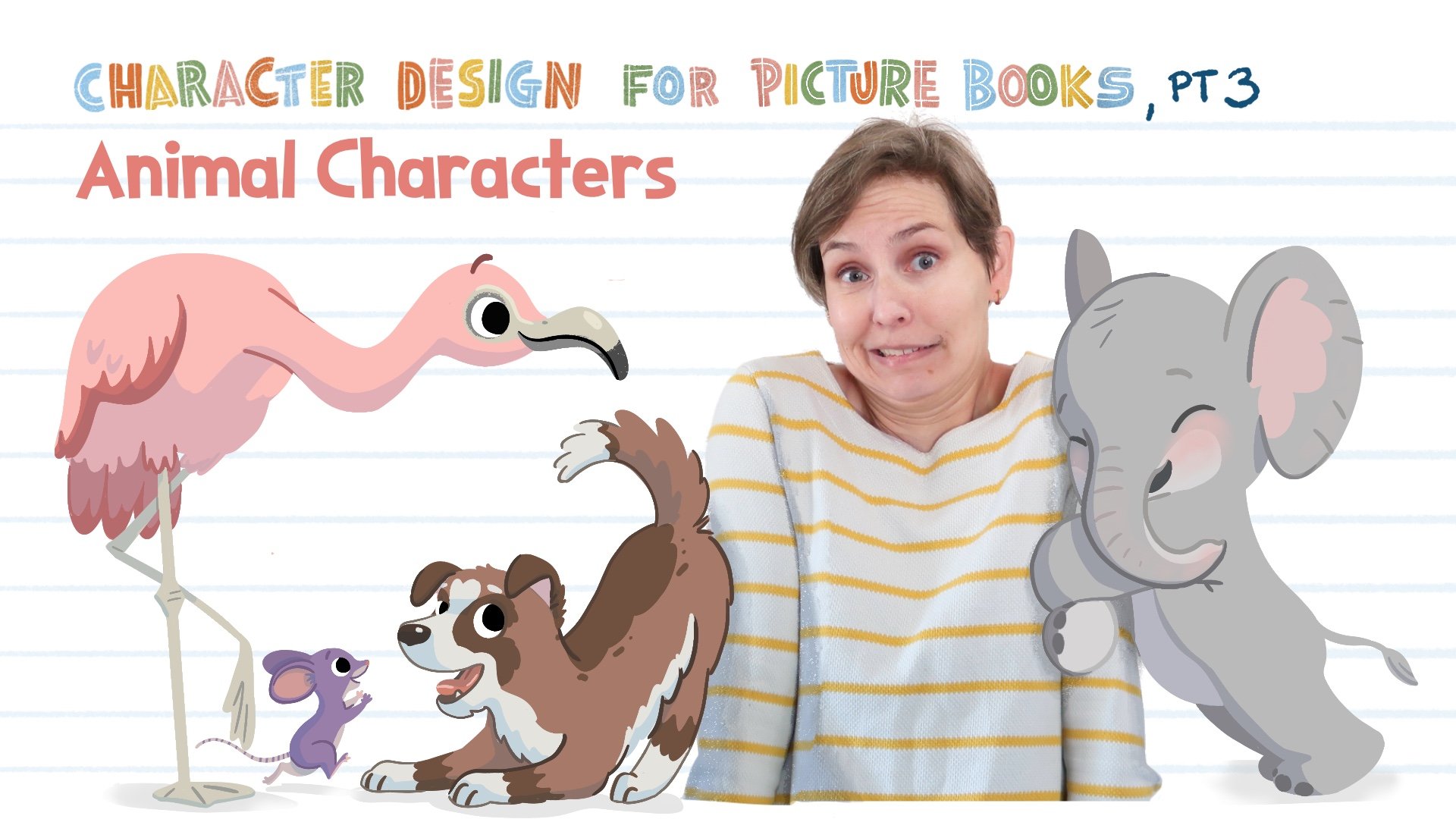
the way that they move. And so you can use the animals
as a starting off point for character
designs rather than just literally drawing
the animals themselves. And now that we talked
about the project, let's look at some steps
on how to get started.
3. Skillshare Kidlitilloweek 3 guideposts: How do you get started
with this project? So it can be a little
bit hard and it can feel a little bit daunting if you think, Oh, a whole year. But really think of it as just going week one day
and one week at a time. And if you're looking
at the week as a whole and you know it's
going to be super busy, just try to do
little illustrations on the days when you have time. It can also feel
hard if you haven't been fostering a creative habit. Um, for myself, I know
that there can be weeks, sometimes even a
month can go by, and I haven't had
a chance to draw anything because I'm
so bogged down with emails and taking
the kids here and there and organizing an
event and being present. And there's, you know,
holidays coming up. And so it feels like
there's always something. And so I'm creating this class as much for you as I am creating
it for myself, and I'm going to
be participating in this class
weekly myself, too. And so I feel like creativity
is this kind of a muscle, and if you don't use
it for a long time, it kind of withers
and it's no good. It doesn't work
very well. But the more that you use your muscles, the more that you go to the gym, the more that you work out, the stronger those muscles get. And it is not like a piece of fabric or
clothing like a sock, the more that you wear it,
that it becomes threadbare and it becomes holy and
it doesn't work anymore. And so think of creativity
more as a muscle. The more that you do it, the easier that it's going to get. So the more that work on your illustrations
and the more time that you are able to
put into creativity, the more it will give to you and become
easier at the same time. And so I wanted to give
you some you could think of them as exercises if you think that you're
working on your muscles, or you can think about
these as stepping stones or guidestone so that when you get stuck or when you don't
know which way to go, that these kind of
guidelines will keep you on the path and the journey that you
are wanting to take. So the first guideline that I've provided for you
are the prompts. And you can go to the resources section in the class and
download a handout, and I am giving you all the prompts for the
full year all in advance. And so if you wanted to, you just need to download that one document and then everything is going to be there. Or if you wanted to print out monthly prompt cards
that look pretty, then I will also
be posting those at the end of every month
for the upcoming month. I'll be posting those
into the classroom. So the goal of the prompts is that it will give
you something to draw, so you're never going
to be out of ideas. And I want you to print these out or say them on your device, and then you can put them. If you're going to be
drawing in a notebook, you can put them in your
sketchbook or your notebook, and then that way,
they're always going to be with you when
you need them. And as a second kind of a guidepost for the
year or a guideline, I also want you to think about yourself personally
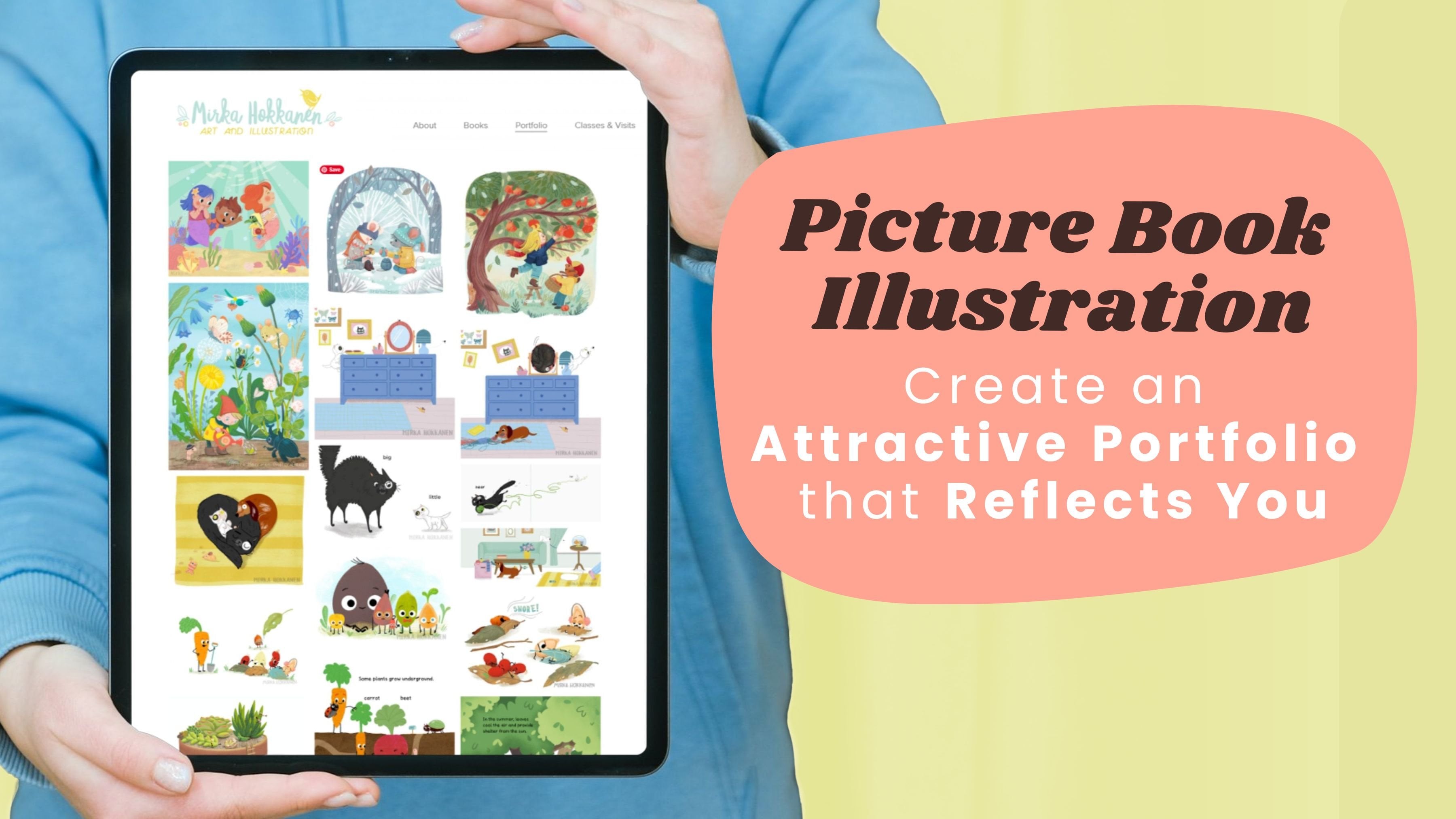
what you like to draw. In my previous class that I posted right
before this that talks about picture book
portfolios and the ten kind of main things that you
need to put in there, in that class, I
talk about having a picture book portfolio that is representative that includes
work that you like to do. So if you don't
like to draw cars, don't include a bunch of
cars in your portfolio. If you like to draw animals, then draw lots of animals and include those
in your portfolio. And so before you get started, having a little
bit of planning go into it beforehand
will make it easier. So think about what do
you like to illustrate? And if you are trying
to work on a portfolio, think about what does
your portfolio need? Do you need full spreads?
Do you need spots? Do you need character
illustrations? And then kind of make a list for yourself of either the
things that you like to illustrate or the
types of things that you need in your
portfolio and kind of have a list going the
yearly prompt list has a spot where you can write a theme for each
month for yourself. So thinking, for
example, this month, I'm going to be
working on characters, and then next
month, I'm going to be working on spot
illustrations. And then the third month, you could be working on a
full spread illustration or a page illustration
and what you could do during that month instead of trying to do a full
page illustration each what you could do is do parts of the
illustration each week. And so if you want to get to a full illustration at the end, you could work on a character. The first week, the second week, work on some props, the third week, work
on a background, and then by the fourth week
by the end of the month, then you put all that together, and then you have a full
illustration for your portfolio. And then that way
with the prompt list, and with all those ideas, every time you sit down, you're pretty much halfway
there already. All you have to do is just draw. So the next way to kind of lower the threshold
of getting started and keeping up with this is
having your equipment ready, whatever you're
going to be using, and then also habit-stacking, stacking your drawing activity with something that
you're already doing. So personally for myself, I started this challenge because I want to get off
scrolling on my phone. And the times when I
do that is usually on my lunch break and
then at nighttime, when I'm kind of too tired
to do anything else, or at least I say that I'm too
tired to do anything else. And so my goals are to have my notebook on
our dining room table, and then it's going to be open. I'm going to have my drawing materials
over there already. And then that way, when I
sit down to have lunch, everything is going to be ready. And instead of being on my phone and scrolling, I have
my notebook there, and I can just work
on doodling and sketching while I'm
finishing up my lunch. And so I can do that on the weekdays when my
kids are at school, and then on the weekends when we usually
eat lunch out or, you know, we're coming and
going and having events. Then on the weekends,
I can try to work my creative activities to
be at nighttime when I'd be on the couch or in bed and have either my notebook with me or then have my iPad with me. For the next guide post, I would recommend
that you try to work a little bit of creative time.
Most Dave's of the week. And I'm not saying
you have to finish full illustration every day of the week
because at least for me, that would be kind of
an unattainable goal. But I can work on maybe, like, a character sketch on one day and then refine it
on the next day, and then I could finish it on
the iPad on the third day. And that way, I'm
not trying to do a full illustration from
beginning to end in one sitting, and then that makes it a
little bit more manageable. But I know that our
schedules, they ebb and flow, and there's going to be times where things just
get really busy, like it might be Thanksgiving
or week of Christmas or the kids are out or somebody's
sick and kids are home. And so there will be
times where it's going to be harder to get an
illustration done. And on those weeks, then you have to give yourself
a little bit of grace, but still try to get at
least something done. Even if you draw a
rock and you give it a pair of eyes and make
it a cute little rock, at least you made
an illustration, and you stuck with your plan. At least you did something. And then kind of
relating to that, there will be times when you are going to look
at your illustration and think that it's it's not
going anywhere or it's ugly. Every illustration kind
of has that ugly phase where you're not quite sure
if it's worth finishing. It just looks horrible and you've maybe put all this
time and effort into it, and it's just not working. But I encourage you to
kind of work through that kind of hump
or that rough time. It's, you know, you start and it gets really hard and you're
going uphill and uphill. But I encourage you to
kind of keep going. And then finally, you kind
of get over that hill and things get a little bit easier and you see
where you're going. And once you kind of put those polishing touches to that
illustration, most of the time, the illustration ends up looking okay or being
something that I'm, you know, pretty
proud of at the end. So I encourage you that even on some weeks
when it feels hard, just finish that illustration. And most of the
time, it probably turns out into a pretty good
illustration in the end. But, you know, sometimes it
doesn't can't say that 100%, all my illustrations are great because that's just
absolutely not true. It's not true for any
illustrator out there. And social media can be a
little bit deceiving because obviously we put our best foot forwards and we put our nice
illustrations out there. But you can rest assured
that every illustrator out there has horrible sketches.
They're just not out there. And so, on the weeks when you just have a
horrible illustration, it's okay not to post
it in the class and you don't have to post
everything on social media, but at least you have put
some time into illustrating, because if you think
about illustrating as a journey and you're on
the road to something, if you are not moving forward, if you're putting any milage in, you're never going to
get to your destination. And so at least you've
put some milage. At least you've put time
getting to know your supplies, and we'll take those skills with you into the next illustration. So let's review our
guideposts really quick. And so the first one is
print out your prompts and write down your
own references and stick them to your sketchbook or download them onto your device or just have them
handy somewhere. The second one is have your tools ready to go
wherever you plan on working. The next one is stacking
or replacing your habits. So use a habit to attach
your drawing tube. So, for example, for myself, I usually scroll on my
phone when I'm eating, and so instead of scrolling
on my phone when I'm eating, I'm going to be sketching in
my sketchbook and eating. Fourth, try to work more
than one day a week, but some weeks are
busy and you might only be able to squeeze
one session out of yourself and just keep it simple those weeks
and give yourself grace. And then we are not looking
to have masterpieces. It is okay to make ugly pieces and you learn and
experience from all of it. If you feel really
stuck one day and need some more direction
on what to draw, here are two exercises
to get you stuck.
4. Skillshare kidlitillo 4 shapegame: Character shapegame. I featured this game in my
character design class, and you can also use it. You can also use it
this year and in this class to come up
with fun ideas to draw. The basic gist of the game is that you have
a piece of paper, and then you have
a little spinner and a paper clip and a pencil, and you put the pencil down and you spin the
paper clip around it, and it will give you one of the shapes that's
around in the circle. And that shape is
something that you can incorporate into
your character. And you can either
work on this for your character facial features, or you can use it for a full
body design of a character. And you can spin more than once as many times
as you want to use the shapes or to come up with shapes to incorporate
into this character. And to learn more about
character design, you can jump over to my character design class and get some
inspiration from there. And in the next video,
we'll talk about getting unstuck with some
blobs and splets.
5. Skillshare kidlitillo 5 splatexercise: Probably familiar with
the Rashark inkblot test where you look at an ink blot, and then you try to think
of what it reminds you of. So this is kind of
a similar exercise to unblock your creativity. And in this exercise, you can either take some paint and splat it down onto
a piece of paper. You can use a tea bag. You could take a piece
of scrap paper and cut it up into shapes and then
glue that on your paper. You can ask a kid or a family member to draw some
shapes for you on a pen. You can get as creative
with it as you want. And then once you have
some sort of shapes or blobs or splatters or
something on your paper, then you look at those slats, think about what
it reminds you of, and then start drawing that out. And you can either draw
directly on your splats, you can draw around them. You can draw on a separate piece of paper, however you feel, but you can just use
those splats and blobs as inspiration for
whatever comes into your mind. All right. In the next video, let's do a quick review for the project and how
to post in the class.
6. Skillshare kidlitillo6 finalproject: The class project is to
share any illustration that you've done as part of
this illustration challenge. Upload it to the
project section. And because this is kind of a long term illustration project, feel free to share your pieces as often as
you feel comfortable. Sometimes it's just that
little dopamine that you need to get started and to finish knowing that
you can post it somewhere and then people
will like and comment on it. Posting your work weekly will
also be a great way for you to track your progress and see how far you've
come in a year. Also with your class project, feel welcome to share about
your wins and your struggles. It might even be beneficial
to do monthly reflections. Think about how did
you feel this month? Was it easy to get work done? Where did you struggle the
most Illustrations that you liked or didn't like and what you liked or didn't
like about it. And in the next video, we'll have some final thoughts
before we get going.
7. Skillshare kidlitillo 7finalthoughts: This class is a little bit different than the other
ones that I've posted because it's something
that's going to be ongoing and updated
through the year. Feel free to jump in at
any time of the year. It doesn't have to be
January. Any time will do. It's always a great time
to start a creative habit. I'll be in the classroom
and we'll always be liking and commenting
everybody's posts. You can download all the year's
prompts together already, and then I'll also be
posting monthly with a prompt card that you can print out and post in your
sketchbook, as well. I'll also be participating in the class and posting my work
in the projects gallery. You can also post your work on social media and use the
hashtag kidlit Ilo week, and then that way, we can
all find each other's work. On if you post on Instagram, you can also tag
me at Mirka draws. I'll also be posting on BluSky with user name Mirka Hokkanen. So if you haven't already, I want you to go download
the first prompt sheet, and I want you to
think about what kind of illustrations you
want to work on. Decide what habit or time of the day that you can attach
this new drawing practice to. For me, it'll be
lunchtime during the weekdays and nighttime
on the weekends, and then get your tools
ready so that when you have a moment time to work,
they'll be ready for you. And then you'll be all
ready to get started. I can't wait to see your
weekly illustrations.
 Mirka Hokkanen, Illustrator/Author/Printmaker/Educator