Transcripts
1. INTRODUCTION: Hello, and welcome. Join me to paint
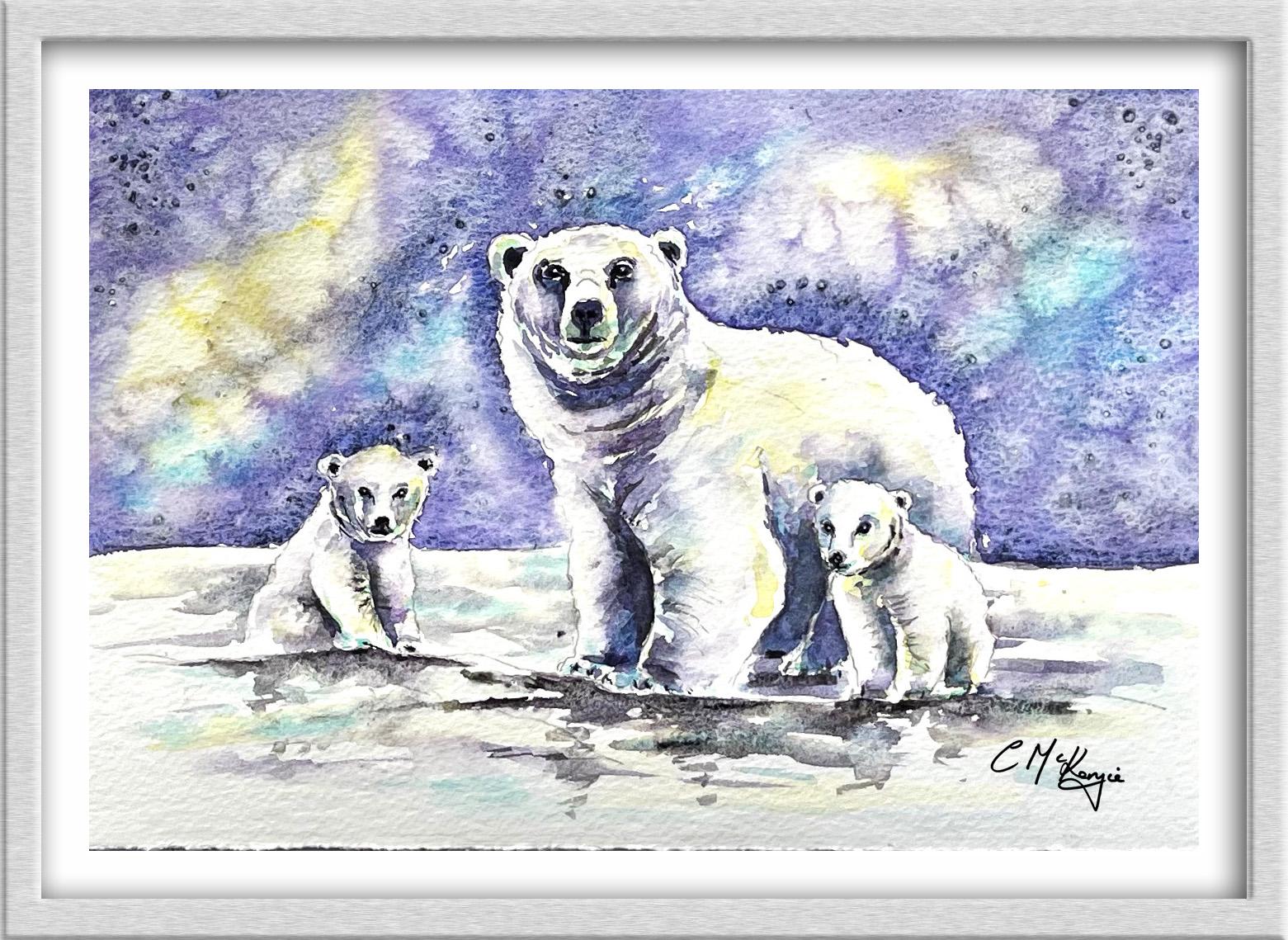
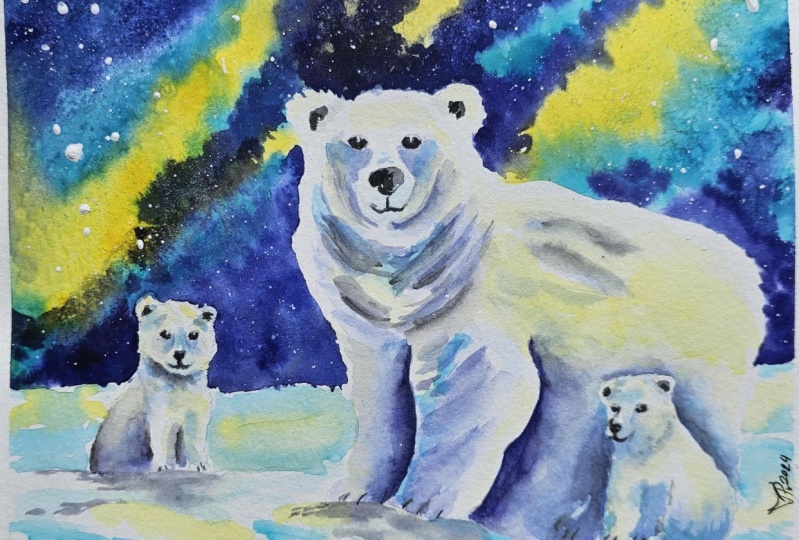
this lovely family of polar bears beneath a glowing Arctic sky using expressive and atmospheric
watercolor techniques. We'll begin with a loose wet on wet sky to create a
soft aurora effect, adding texture and salt to
suggest movement and sparkle. Then we'll build the
bears in layers, carefully developing tonal
values to create form, light and shadow, while keeping the painting fresh and luminous. By the end, you'll have a beautiful Arctic
wildlife scene full of softness,
contrast, and mood. It's suitable for all levels, including beginners because I'm going to be guiding you
every step of the way. And I'll be sharing all
the techniques, tips, and tricks that I use in
my own professional work. I've included a copy
of the drawing in the project resources section so that you can download
it and trace it, and then not worry
about the drawing because this is a
painting class. I am a professional artist, author, and tutor,
and over the years, I've sold a lot of work
across the world and helped hundreds of people to
learn more about watercolor. You can see examples of
my work on my website. My style leans towards
impressionistic and contemporary rather
than photorealistic. I like to explore loose approaches that bring
out the colour, light, and essence
of my subjects. I've tried to
replicate this across all the many other videos
that I have on Skillshare. I'd love to see your
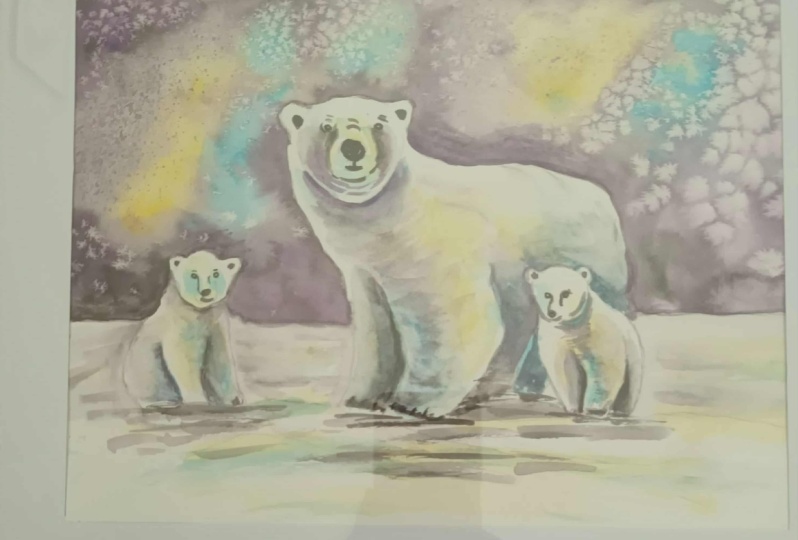
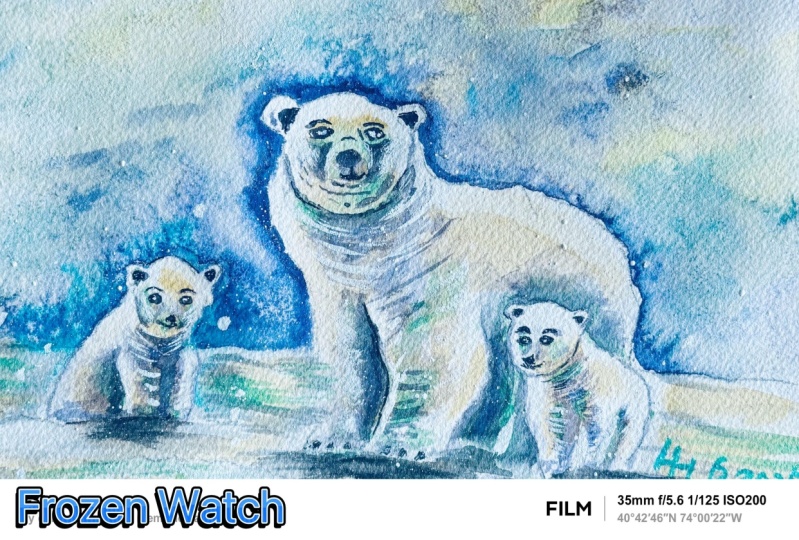
own finished painting, which you can upload through the project and resources tab. I'll give you some
personal feedback on it, and you'll be able to
see the artwork of other students and
get their support. At the end of the class, you'll have your own beautiful artwork to be very proud of. So let's swizzle our brushes and get on with the painting.
2. Paint sky wet-on-wet. Let colours mingle for aurora effect.
Salt technique for texture & sparkle: I know you're going to love creating this little painting, and hopefully at the end of it, they'll give you a really
big bear hug, too. For this class, these are the colours and materials
that I'm using, but do feel free to use
any that you already have. For information on brushes
and paper, et cetera, do check out the basic
materials document that I've added to the
project resources section. Now you can see that I've
kept the drawing very simple, minimal detail so
that we get a nice, loose free flow painting. And I've included a
copy of the drawing in the project resources section so that you can download
it and trace it, and then not worry
about the drawing because this is a
painting class. The first thing that we're
going to do is paint the sky and we're going to
use the wet on wet technique. The wet on wet
technique is simply putting wet paint onto wet paper or paint that is still wet and let it spread
into the wet wash. This results in a lovely
diffused effect with soft edges. Because the paint mixes into
the wetness of the paper, the color is diluted
and the tone is paler. So it's a perfect technique for painting a lovely
soft blended sky. Now, as you can see, I'm
painting over the whole of the sky with clear water
and a clean, large brush. You just need to
take a little bit of care when you're going around the edges of the
bears because we don't want the sky
colors to run into them. So when we apply the paint, it will only go where
we've placed the water, and it won't go
into the dry areas. So now that the sky
area is nice and wet, I can just drop in some
of my winds yellow color. And I'm using the tip of my brush just to
touch the color into the wet wash underneath and let that water soak up
the color from my brush. So I'm avoiding lots
of hard brush strokes. And now I'm adding
in a little bit of the cobalt teal light. If you don't have this color, you could use cerulean
blue or cobalt blue. In fact, you could make the
whole sky blue if you wanted. I'm just adding a little bit of color to vary the scene and
give it a bit of interest. I've mixed some purple with a little touch of black
just to dull it down a bit. And now I'm making this
the main color of my sky. So again, I'm just
touching it in. The paper is still very wet, so you can see that the
paint is running and blending with the previous colors that I've already put on. I'm taking particular
care around the yellow because purple and yellow is going to make mud, so you want to place your
colors in separate parts of the paper wherever possible and just let them
merge naturally. I'm also taking a little
bit more care when I'm painting around the little
bears and the mother bear. As I said earlier, the
paint will only run into those areas of the
paper that are wet. But if you do accidentally use your brush and dab that
over the bear images, of course, you will inevitably
lantern paint there, which is not what we
want at this stage. Time wise, there's a bit of
a balance to be had here, because although I'm saying, take your time and be careful, particularly when painting
around the bears, there is actually
a fine limit on the amount of time that you
can spend painting a sky, because once the paper starts to dry and the paint
doesn't flow naturally, you will begin to
get hard edges, and laboring over working a sky is the most frequent
thing that tends to ruin it. I usually give myself a time
limit of 10 minutes or less, depending on the size of the paper to get the
paint on the sky area, if I'm looking to paint a soft, blended sky, of course. I'm putting a lot of this
dark purply color around the back of the
mother bear because the top of a back is
going to be white, and so I want this
contrast between dark and light to be particularly
standing out here. I did thoroughly wet my paper. So although I've now moved over to the right hand side of it, it is still nice and wet, and I am still getting that nice diffused,
blended appearance. If you're not a quick
worker, of course, you could always complete the
sky in two separate halves. The danger of that
is sometimes getting a hard line where the two
halves meet in the middle. Now, as you can see,
the reason that I don't tape my paper down
is so that I can pick it up and jiggle it around
because that helps to get the paint running and blending and moving in a
very natural way. It avoids getting lots of nasty brush strokes
in the middle of it. And as you can see, I'm getting a really nice effect just
from moving the paper, tilting it about up and
down and side to side. I'm using some paper
towel to just collect up the excess water at the edges of the paper
because otherwise, that water has got
to go somewhere, and that would create
cauliflowers later. Because it's still wet,
I can flick a little bit more of that cobalt
teal color into it, and again, give it another
shake to let that color blend. And I can also add
some dark purple again because as I've been shaking
and moving the paint about, it has lost some of
its darker tonality. So I can add a little bit
more of the dark purple where I want to strengthen
the tone of the color. And do remember that watercolor does dry lighter
than when it's wet. So you've got to allow for about 20% lighter
tone when it's dry. That can be quite hard
to judge visually, especially if you're a beginner. It does come with experience, but you could always try some practice watches on a
bit of spare paper and just have a look at how different that color is when it's dried to when you
first put it on. I've added a little bit more
black to my purple color, and I'm just using that in a few places to add a
little bit more contrast, particularly along
the horizon line. I do need to stop
now before the paint dries because I want to add
some salt for snowflakes. Applying salt is very useful for creating the
appearance of snowflakes, foliage, or rock texture. Just sprinkle some grains
of household salt into the drying paint just as the sheen is going
off the wet paper. Leave it to dry,
then gently brush away any excess salt
with your finger. And you'll find that
the salt has absorbed the paint and left behind some lovely little
sparkles of light. And you can use different
salts for different effects. Try some rock salt or sea salt or even some
dishwasher salt. And then I'm very quickly
just adding a little bit more of the darker paint to the left and right corners of the paper to create a sort of vignette effect which will draw the focus even
more to the bears. And now it's time to let it dry.
3. Bears: First Layer. Paint light and mid-tones. Tonal values to shape form & volume.: Watercolor paintings
are often created using a number of different
layers or stages, because if you mix too
many wet colors together, then you will get
the dreaded mud. We're going to paint
the first layer of our little bears for only
the light and medium tones. I'm starting with the mother bear because she's
the largest image. I'm going to continue using
this wet on wet technique. I'm using slightly tinted
water so that you can see more easily that I am not wetting right up to the
edges or the outer edges, I should say, of the bear. I want the outer edges to be completely white so that
they look silhouetted, backlit against the dark sky. I'm taking care again to go around this little baby
bear that's in front of the mother so that the
colors that I'm putting on don't actually spread
into him just yet. Although we do think of polar
bears as being pure white. In fact, as you can see from this image that I've
pulled off Wikipedia, they do have different colors in the shadows and darker areas. I'm just using two colors
for this first layer. That's the yellow
and the teal colors. I'm using the yellow
where the lightest tones are and the teal where
the medium tones are. Because the teal is
a slightly darker, stronger color, of course, than the yellow, I'm getting
most of the light tones on. As I said, this is going
to go on the light tones, but not where the bear
is absolutely white, which will be
particularly around the outer edges or wherever
the light is catching her. Then I'm adding my teal color
where the mid tones are, particularly underneath
the chin there, or the large furry
area I should say. Around the chin, just underneath the eye sockets
and around the snout, then coming down
into the leg area, there's going to be
some shadow between the two legs at the front
where one is behind the other, some shadow on this
second front leg. There'll also be so darker tone behind the little baby bear. We want to add that so that the little
baby bear stands out. But coming behind
his little face, the mother's Tommy
and her back legs, they're going to be in shadow. So I'm adding the teal color, the mid tone at the moment
to those back legs. As I said earlier, if you
don't have this teal color, you can substitute it with
cerulean blue or cobalt blue. That's perfectly fine. Obviously, you'll get
a different look, but it'll be just as lovely. I'm just going back to
the facial area now, thinking about any little
touches an such as underneath his nose will be darker and
just underneath his chin, I'll just strengthen those areas a little bit with
the teal color. I'm also just using
the tip of my brush to wiggle in those colors between them and get a better blend. I'll leave mum to dry
now and move over to our little baby
bear on the left. I'm using exactly
the same technique, adding the clear water where the tones are
light or medium, leaving the paper white
where I want it to be white. Then I'm starting
with the yellow, which is the lightest color
for the lightest tones, and then moving on to the teal color for
the medium tones. Similar to um, the lightest
tones are going to be towards the top of his
head and along his snout. The medium, the darker
color is going to go in between the legs to separate them and the back of his body, but not right to the
back, the very back. The outer edge will of course still be catching that
light from the sky. I think you can already see that by using these different tones. The lightest tone
being the white and then the pale yellow
and then the teal. We're getting a more
rounded effect. More three D effect
with our little bears. Later on, when we add a
second layer of color, a darker layer, then we will get an even more rounded
and three D effect. But it's coming along
nicely for now. And I think you can start
to see the beginning of that rounded shape
building up with these colors that we're
applying at the moment. I think I'll move on now to
the little bear on the right. And exactly the same process. The lightest areas
will stay white, then the light areas will be in yellow and the
medium in the teal. Again, thinking about where
the darker color needs to be between the leg and under the eye sockets and around the snout were sculpt
in here with paint. Just as a reminder,
don't forget, if you get too much paint
of unwanted color anywhere, you can use your
paper towel to dab it off whilst the
paint is still wet. It can be removed
either as I say, with your paper towel or even
with a clean, damp brush. Don't be afraid to go
back in there and take off any excess color
that's a bit overdone. I'm just going to add a
few more little touches of the light and medium colors
to this little bear's head. And then I think I'm going
to call it a day and say this first layer is done and
I can leave it all to dry.
4. Bears: 2nd Layer. Build darker tones & create rounded form. Use a magic sponge to lift highlights.: For this second layer, I'm going to be using the
wet on dry technique. The wet on dry
technique is simply painting wet paint on dry paper. It allows for more control, stronger color and crisp, hard edges where the paint ends. The paint will only go
where the brush takes it using two colors
for this second layer. One will be the same purply black that we used
in the sky color, mostly purple with a
little bit of black added. Then I am also going to use some pure black in
one or two places. I'm using that pure black now on the mother bear,
I've added it to. In ears, her eyes,
nose and mouth. I've tried to leave a
little tiny highlight in each eye for the
highlight in the pupil. Now if you don't manage that, you can always add
it later on with a white pen to shape the
area around the snout. I've switched to the
dark purple, black. I'm also going to be using here the blending and
softening technique. When you paint wet on dry, wet paint on dry paper, you invariably get hard edges. Whilst we want to keep
some of those hard edges, there are others
that we will want to soften in to the
underlying wash, where you simply
use the damp brush to pull the paint away
from the hard edge. Blending it softly
until the color disappears into the
underlying wash or white of the paper. It might sound like a
relatively simple technique, but it is actually quite
a difficult one to master thoroughly if you
haven't already done so. I do suggest that you
practice this technique because it will make a massive difference
to all your paintings. As you can see here, I'm using that blending and softening technique to soften in some of those lines
that I have just painted in using a clean, damp brush to just pull
that paint away so that it softens and disappears gently into the
underlying color. It does take a little
bit of practice, but it really is well
worth the effort becoming familiar with
this particular technique. I'm bringing the dark color down now in between the front legs, painting the very
dark shadow that's going to be in between them and also the back legs that are behind the baby bear
here on the right. I'm always keeping an
eye on what I've just painted and I'm wary now that I need to just take that shadow
a little bit further round his neck to create a more
rounded effect there. And then going back to the legs, I'm softening in those dark
areas of paint that I've just applied there so
that they blend more gently towards the
left side of them. Shadows are always darker,
nearer the source. And they're lighter and softer as they get
towards the light. I'm going to be using this
purply black color to add shadow and shade in now
to each of the three bears. Working my way around
them all individually. I'll also be using the pure black color to
paint the baby bears eyes, nose, mouth, and ears. I sometimes think painting is as much about taking paint off, removing it, as it is
about putting it on. This is where you need to assess your own painting and decide
whether it's perfectly fine, just as it is, or whether
there are a few areas that could do with some paint
lifting off or lightning. Although you can use a brush and some water to lift off paint, I want to introduce you
to magic sponge eraser. Because this little tool works miraculously to remove
unwanted paint, you can use it to lighten
an area that is too dark or even strip the color
right back to white paper, depending on which
color you've used. Because some colors do stain in the paper
more than others, just tear a small
piece of the sponge, dip it in some clean water, then squeeze it to
just damp and rub over the unwanted paint until
the color is removed. Use a paper towel in between to blot and get the last
bit of paint off. And keep rinsing your sponge
out during use to keep it clean or even throw it away
and use a fresh piece. If you accidentally get a
blob of unwanted paint in the middle of your
painting or you just want to lighten
the tone of an area, give it some highlights. This little piece of
sponge will become your best friend because it's normally sold as an
abrasive household cleaner. It does tend to rough up
the paper a little bit. Take extra care if
you're painting over the area that you've
sponged with another color. You can see here what I'm
doing with my painting, where I've decided
I have gone a bit overboard with some
of the shading and it needs either getting
completely back to white or lightning in tone. Although it's
stating the obvious, they are polar bears, not brown grizzly bears. We do want that
white appearance. Having said that,
just as a reminder, here's the photograph from Wikipedia of a family of bears. It's not exactly the
composition that were painting, but it does show that
they are not pure white. That they do have shading
and colors in the shadows. Now that I've sorted out
all my whites and lights, I'm using a very fine
pointy brush with the black paint to just reinforce some of the
black areas like the eyes, the nose, the mouth, and some other dark shadows
around the bears. Again, this is where you
need to have a look at your own painting and make some judgments about
what details need. Fine tuning on yours. Don't follow what
I'm doing slavishly. If it doesn't need
doing leave well alone or there might
be other bits that I'm not doing that you
do need to pay a bit of attention to
on your own picture. Sometimes it can be a good idea to just walk away,
have a cup of tea, leave it alone for
half an hour or so, and then come back to
it with a fresh eye. I'm going to continue with
the rest of this section, fine tuning the details, the very dark areas, and strengthening the
contrast here and there, in and around the bears.
5. Paint Snow & Ground. Tonal variation to snowy terrain. Add shadows.: Simple and crisp. White is
actually a colorless color. Mixing red and green
and blue light together is what gives
you white light. Now because it is white, snow can appear a difficult
subject to paint. With water color, it
isn't really a color, but some consider it to be so, because white light comprises all hues on the visible
light spectrum. Therefore, as it comprises all other colors in the rainbow, you can effectively paint snow with a palette of
all these other colors. Because snow reflects the sky, it can often incorporate
a lot of blue, particularly where
the shadows fall. However, especially
when the sun sets, the sky can radiate a variety of other colors that you can add the depth and visual
interest to the composition. For instance, it can be useful
to add a touch of yellow to areas where the shadows transition into the
brighter areas. It may seem counter intuitive, Snow isn't meant to be
blue or yellow or pink, but it will all work beautifully
together in the end. Another point to note is
that when painting white, it's all about tonality. Don't be afraid to use some
medium and very dark tones because this will
bring impact and emphasize your whiter areas. To keep our painting harmonious, I'm using the same colors that I used in the sky to
paint the snow. If you've used blue
instead of teal, then that's the color
that you would want to be using in the snow as well. I'm using the wet
on dry technique, painting with wet
paint on dry paper. But I'm also going to be using the blending and
softening technique to soften some of
those hard lines. Because after all, snow is soft, but it can also be
crisp and icy as well. A mixture of hard and soft
edges will suit us very well. As always, I've started off
with my lightest color, the windy yellow,
and then adding some streaks of
cobalt teal light. I've left lots of white paper in between because we
are painting snow. Then to convey the dips
and hollows in the snow, I'm using my purply black color to add some darker shading, particularly around the bears. I painting some of the
dark color over the top of the yellow and teal and some
straight on to white paper. We're getting a nice variety of color tones and shades here. It's a principle
rule that things appear darker and stronger as they move towards us in the foreground and lighter
far away in the distance. It's important to keep the tones stronger in the
foreground towards us, and keep them lighter as
they're further away from us. Adding some very dark tones just immediately
below the bears, we'll bed them in to the snow and ice that
they're sitting on. A final point to mention is that if you've not
already done so, do rub off any residual salt that's still in the sky area. I already did this a
while ago when I'd left my painting to dry
in a previous section. And you can see
I've got some real, rather nice snow flaky
effects going on in the sky. I am aware that
this salt technique can be a little
bit unpredictable. Sometimes it works,
sometimes it doesn't. If it's the case
that you haven't got some lovely
snow flaky effects, all is not lost because all you need to do is
mix up a bit of white gouache or
white acrylic and spatter that on with an old brush or the
handle of a brush. Load your brush with some paint and then you can either shake the brush with a wristlkinaction to force the paint
onto the paper, or tap the brush with
your forefinger or with a second brush that you're
holding in the opposite hand. If you didn't manage to get those tiny little highlights
in the pupils of the eyes, you can use your white
gouache or acrylic to add a little pin prick of white paint or even
use a white gel pen. It's very easy when
you're putting on all these lovely colors to get carried away and overdo it. So many paintings
are ruined through overworking and laboring
over them too much. I know only too well the temptation of just
adding a little detail here, a little detail there, and before you know it, you've lost all that
lovely freshness. But as always, there
comes a point in time where you need
to stop fiddling. Sit on your hands and
call it finished. All you need to do
now is sign it, pop it in a frame, and hang it in pride of place. I do hope you've enjoyed this painting and that
you've learned some tips and techniques along the
way that you can incorporate into
your own paintings. Why not pop it into
a mount and a frame? And you'll be amazed how good
it looks when you do that. I really love to see your
own finished painting, which you can upload to
the your project section. If you could just take a moment to leave me a short review, That also would be really great. I do hope you've enjoyed this video and it's
encouraged you to have a look at some of my other
classes in the meantime. Thank you for joining
me and I look forward to seeing your next
time. Happy Painting.
6. FINAL THOUGHTS: Well done on
completing the class, and also the painting, if you've been painting
alongside of me. We've covered quite a few
different techniques. We've simplified the drawing. We use the wet on wet technique, putting wet paint on wet paper. We use the wet on dry technique, putting wet paint on dry paper. And we use light medium
and dark tones of color to convey a
rounded three D effect. And we also looked
at how to lift off paint and
recover light areas. Now, don't forget to upload your own painting through
the projected resources tab. After all your hard work,
I'd really love to see it, and I'll be sure to give
you some personal feedback. And if you've
enjoyed this video, do have a look at my other
classes on Skillshare, which are packed
with more tips and techniques to help you
on your own art journey. If you click the follow button, you'll be able to follow me, and then you'll be the first
to know when you upload a new video or any
exciting updates. And if you could
just take a moment to leave me a short review, that also would be really great. In the meantime, thank
you for joining me, and I look forward to seeing you next time. Happy painting.
 Carrie McKenzie, creating painted visions