Transcripts
1. Welcome Video: If you're watching this course, you probably pursuing a
career in TEFL or trying to teach your kids whose native
language is not English. Either way, I am ready to ensure you are in
the right place. My name is John, and five years of international teaching
experience haven't given me the opportunity to share this knowledge about
TEFL with you. If you are in a way, the
tuition Some country. This course is about
kickstart, your curry. I am a certified teacher
or the solid experience in guiding learners in
a classroom setting of up to 20 students. I also possess an
applied knowledge of various educational
approaches. So what is generally the meaning of the
temple is some form of teaching English to people whose first
language is not English. It takes place in
a country where the first language
is not English. Examples would be
teaching English in Mexico or teaching
English in Cambodia. So what is Tesla? Tesla is teaching English
to non native speakers in a country where English
is their first language. E.g. teaching English
to Italians in England. And now, when we know all
the terms and conditions, we're ready to begin. Let's start.
2. After You Finish This Course: The main question you
have to ask yourself is, what happens after I
finished this course? Firstly, you gain some knowledge
on teaching techniques, child psychology, and
class management. Now remember, this
course is mostly about teaching English
to a young learners. It's always nice to start the TEFL journey from this step. Secondly, you will be ready
to pass that cephalic Sam. I'm sure some of you
may want to bring your career up to
the next level. And what's better than becoming a qualified expert
in this field. And lastly, you will enjoy it. The prospects of the
tear film career. Maybe you will find
yourself wanting to teach in Vietnam or Costa Rica. That would be great. I will also let you know
some little techniques when becoming a
teacher, real world. And now to the course, we will start from the theory. What are the best ways to
develop English for students? What should you always
bear in mind when teaching a child how
to juggle the reading, writing, listening, and speaking will be covered
in following lessons. Finally, I will share
some lesson outlines. This is about practice. How do you start the class? How to divide the topic
into pieces are what tissue material to use
in a classroom setting. I'll be honest. I wish I have this
information when I started. And you are the brave
wise if you decided to sit down and learn
more about TEFL. So are we ready to start?
3. Theory: Language and Literacy: Welcome back to the
TEFL fundamentals. This lesson is about language
and literacy development. But before we start, I have to share some
important information about early childhood education. It is essential to
know that children start to learn language
from the day they are born. They grow and develop. Their speech and language skills become increasingly
more complex. So they learn to understand and use language to
express their ideas, thoughts, and feelings, and
to communicate with others. During early speech and
language development, children learn skills that are important to development
of literacy. Reading and writing. This stage, known as
emergent literacy. It begins at birth and continues through
that preschool years. Childrens see and
interact with print, e.g. books, magazines, grocery lists. In everyday situations. E.g. home in preschool
and take care. Well, before they started
elementary school. Parents can see their
child's growing appreciation and enjoyment of printers. He or she begins to
recognize words. That's why I'm
scribble with crayons. Point out logos and street signs and name some letters
of the alphabet. And gradually, children
combine what they know about speaking and listening with
what they know about print. And they become ready to
learn to read and write. And now we are ready to talk
about language and literacy. There are three main
points in this lesson. Fissures and challenges of TEFL. What do reading, writing, and speaking, and got to do
with language and literacy. And I will share with you some curriculum tips that quote that you see right now on
your slide is in Mandarin. That was one of the most
common sentences I've heard while teaching English
as a foreign language to children in China
that basically can be translated as,
what did you say? The TEFL challenges will
sometimes result in unique experience in
possible difficulties of literacy and
language development. Teachers are always
advised to anticipate the potential for
these difficulties and develop the awareness
and skill to support EFL students and
make adaptations to support students are
successful progress. Oral language and
literacy development is always supported by
student's native language. All young children come
to school equipped with a foundation in knowledge
and learning from home. Development and learning
begin in the first language. And it is in this language
that children begin to construct their
own knowledge and form meaningful
communicative relationships. So successful early
childhood programs acknowledge and build upon
this prior knowledge. Wherever possible, you
are EFL students should receive their
initial instruction in their native language. But again, it always
depends on the curriculum. Now let's have a look. What's a reading, writing, and speaking gotta do with language and literacy
development. Reading is a
language-based skill and requires that children have many opportunities to see words, say words, and practice works. These actions helped children to understand the
meaning of words. Words are most often learned as preschoolers talk
with their teachers and listen to
stories being read. Research shows that
children who are aware of the sounds that make up words
are much better readers. When children to
sound out words, they're gaining
phonological awareness. When teachers read the children, they have the opportunity to share the meaning of
words in the book, as well as have children repeat the words
and sound them out. Books are undeniably
at the cornerstone of language and literacy
development for young children. Books, together with
the relationships that children have
with their families, is how children gather the information needed to make sense of the world around them. It is important that children
have access to books and opportunities to
look at them and read them over and over again. It is important that children have people to read
books to them. This activity fosters meaningful relationships
with others. Children who are able to develop these relationships also develop the social skills
that allows them to concentrate more fully on
all domains of learning. Before learning to write. It is important that children practice tracing and
drawing with a pencil. So again, basic pencil
controls kills. These activities, lead to the ability to form
letters and numbers. Provide your child with
opportunities to trace and draw in a fun and
motivating format. Progress from straight
vertical lines to more challenging lines, such as curved zigzag
end diagonals helped children appreciate
the connection between language
literacy and rising. Teach them something practical like holding a pencil properly. This can be an amazingly
challenging task for a child who is
still developing the fine motor
skills required for problem manipulation of
utensils like pencils, scissors, helped children to use a relaxed rather
than cramped movements. Demonstrate how to properly grip the pencil between the
thumb and pointer finger. Lifting the pencil, arrest
on the middle finger. Teach them the skill
gradually so that your child retains interests and does not become
overly tired. Keep the writing lesson short. Five to 15 min is plenty
of time for practice. And now to the speaking part, try to develop a
show-and-tell format. It group time, teach
children how to share the basic information
about themselves. E.g. you can implement
into your class a toy or a character that answers
your questions later. The same character asks
children the same questions. Moreover, developed
circle time activities that allow children to take
turns in conversations. Listen to what children
have to say to you, as well as to their peers. Talk was children have meaningful conversations
that get them thinking. Use big words
around children and be prepared to share the
meanings of these words, not to challenge, but to inform and increase
children's vocabulary. Also, share your thinking
process with your students. Think out loud. The development of a teacher's
instructional approach is an important part
of the curriculum. Each approach
provides a seizure, the guidance
necessary to support children's early
learning and development without digging deep
into those approaches, I will try to share some
curriculum skills that I've gained throughout my
whole career experience. First, language and literacy are connected from
infants hip on the one. Speaking, listening,
reading, and writing development together rather
than one after another. Secondly, the acquisition of language and literacy
skills is social. It happens because
young children, once we interact and
communicate with others. Third, literacy learning occurs during meaningful
interactions. Experiences and activities for children differ in how
and how fast they learn. Some language and
literacy learning happens naturally during play
and everyday experience. Some depends on
explicit instruction from observant and
sensitive adults. And six, differences in children's home language and culture can affect
literacy development. Classroom literacy
experience should always value fitness
differences. And now to some practical tips. First one is very obvious, but position yourself on child's eye view when you're
talking to him by her. Second, always show
empathy and laugh. Third one, don't forget to make personal observations that will help you to understand
every child better. Also makes sure that you're always providing children with various teaching material so that they can fully
enjoy the class. And the last one, customize
your learning environment. Think of ways that you can
incorporate materials that's accessible and native to your particular
geographic location. Think about inventions that
you and your colleagues can create that meet the needs of your particular
school and classroom. Also let the inside and
outside of your school and classroom or reflect what is important to you
and the children. Finally, I think it will
be reasonable to summarize all the theory that you've heard today by this beautiful quote, children see magic
because they look for it. I'll see you on the next lesson where we will talk about theory, implementation and
practice. Thank you.
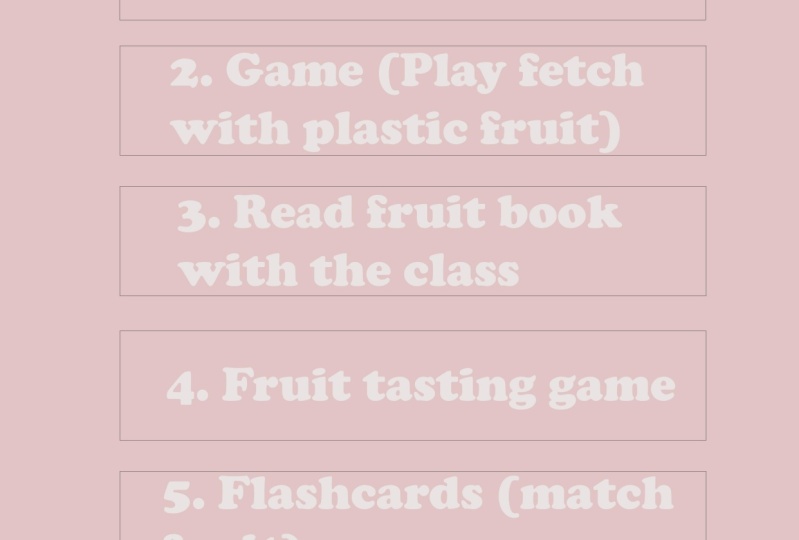
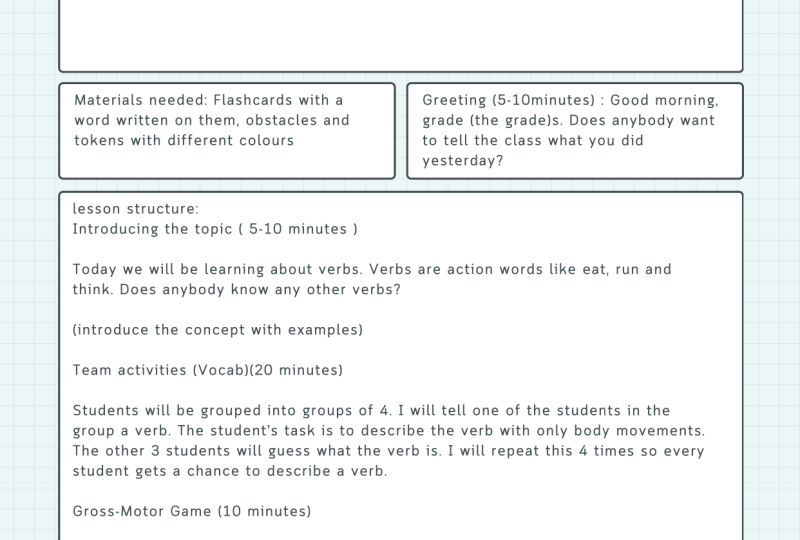
4. Practice 1: Teaching Plan: I'll show you that sampling
that will help you to teach fell the way that
children will enjoy it. Because remember, if
you chose teaching, your ego dissolves and
it's all about kids. This outline is more
planned and is used in many teaching centers
all around the world. It starts like this. Imagine you have a numerous
type of topics you had to teach your students throughout the
whole school year. Colors, professions,
animals, winter. What you do is
take one topic and give it a teaching
or week, five days. Of course, if you're
not restrained by your teaching
department on this one. And each class is a 30-minute, one-hour class with a small
break in-between the process. Now again, this is
a very useful way to teach kids specific topics. But of course, you are free
to tweak the procedure depending on their involvement and interaction
of your students. Villa since you are given
are Introduction, expansion, consolidation of
one, consolidation to review and assessment. Let's say we start from Monday. Introduction time.
You are introducing a child to this
topic. Nothing crazy. Next is Tuesday expansion. Here is where a child tries
to dive deep into this topic. Your role as a
teacher is to involve a kid into this
beautiful journey. Implement a reading games
on developing gross motor. If you're able to go to
use an outside space, there will be even better. Consolidation. One, It's time to
work on memory, rising crafts and
hand coordination. Also, don't forget
about the alphabet. Consolidation to bringing some
joy inside the classroom. Piano, maracas, guitar thing, the topic sung using
these instruments. If you can also have
fun with flashcards. And finally, Friday
review and assessment. Generally, you can
use a little bit of everything from
previous lessons, tried to observe if
kids actually enjoy the week and remember
the information today, you got the chance to know
that overall teaching plan. Let's make it easier for you and make a separate lesson on each class from introduction
to review and assessment. Because remember the last time, not only the curriculum outline is a broad spectrum of skills. From using your voice and gestures to knowing when to
laugh with your students. And knowing theory and
implementing it into the practice is what makes a teacher a gentleman,
professional. I'll see you next time.
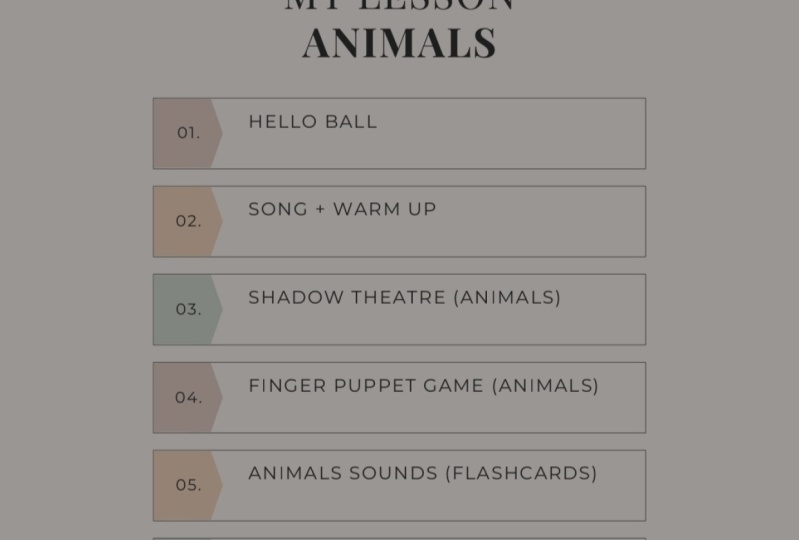
5. Practice 2: Lesson Plan: Our first lesson,
author teaching week is the introduction. Their routine is following
hello bowl and Song time, showing cell
introducing flashcards, alphabet activities, one,
rising, exercise and bye-bye. Let's linger on this. First is hello bowl. Imagine it's your
first class ever. Now, mainly up to
50% of children may refuse to respond to a
stranger in a classroom. What you do is
find an assistant, a classroom teacher, or an
adult to throw a ball to. If there is no one around, you use a toy or a doll and repeat the same
action with that. After this, you can
start your class by saying hello to each
kid individually. If someone does not
want to respond to you, don't force it, just smile. Give me a high-five and proceed. After saying hello to everyone, you can turn the musical
and chant together. Always remember
that a child's home comes with T p. What is it? Basically, it's the way
children can memorize and understand a song by using
gestures and movements. The example is showing
on your screen right? Now. Second step
is Show and Tell. Again. You may need the adult to assist you and a microphone. Make sure you introduce more sentences as your
students progress. The mutation of the
process is on your screen. Right now. You love your family. You like flashcards. Make sure you have
a good amount. Laminated cards. There are various types of
games you can implement. Playing with flies, waters, tab and say jump and say throwaway sticky ball
and say, where is. As you kids memorize
the material, you implement other
flashcard games, make your students
pronounce words and reward them afterwards
for Alphabet. Alphabet activities. Always fun. For the first time. You can introduce a song that represents this letter, e.g. if it's a letter a, you can say alligator
has an apple, but then introduce kids to the special worst of this letter. Teaching phonics requires
special training and mentoring. In my opinion, if
you're a beginner in the education world,
don't rush. First. Again, they experience
and then learn how to teach phonics
step by step. If you'll need writing exercises or even
flashcards for your class, go visit super simple. And always remember
what I told in the theoretical part
of this course. Keep the rising lesson short, five to 15 min. Now let's head to the second lesson and see
what you need to know. Expansion. Hello bowling sometime show-and-tell
or reading gross motor and
vocabulary words have that reading activities
and how to contact them. First is understanding the
level of your students. If it's the class of
two three-year-olds, just read them a story. Feel free to repeat certain
phrases and sentences like beautiful princess
or It's a red dog. However, if you are dealing
with 45 six-year-olds, then it's the right time
to teach them sight words. What are those? Site courts will help
students to learn reading by memorizing separate
wards and collocations. E.g. the sentence is
on your white board. His name is Teddy. Children using
their point fingers and your dictation, repeat. His name. Is Teddy. Always feel free to
ask them a question. What's his name? His name is Teddy. Now, to games on gross motor, Use flashcards from that topic
us eating while developing this skill is always advised to teach vocabulary
by using tunnels, hula hoops, balls, and toys. Third day of your teaching
week is consolidation. One. This is where we
include writing, craft, and memory activities. Writing can consist of tracing, coloring, matching, and
identifying exercises. Their goal is to develop
fine motor skills. Don't forget to
provide your kids with rising exercises according to
the topic you are teaching. Crafts can always be found
on super-simple dad. Now, therefore, memory exercises are designed to include
the vocabulary, the game sound, clap, clap, boom, What's missing? Where we say Guess who, heads up and etc. Zai number for consolidation to. Here, I advise you to teach
NFL using rhythm and sound. Again, if you feel
that you want to pay attention on something else, feel free to do so. Remember, we use a cool
mnemonics is one of the best ways to
memorize anything from words to poems in consolidation to every child has a
chance to be a star, to hold the mike and singular
topic song out loud. But what about a
flashcard games? You'll ask me, don't worry. After you introduce
kids to a cavalry, they are now ready to
play musical chairs, dark, dark, cuz musical
freeze and etc. Day number five,
review and assessment. It's time for your
students to shine. Bain mind. The goal of this
lesson is not to assess, but to observe the progress. Later on, you must keep
your teaching plan in balance depending on
your student's skills. Make sure you observe
objectively and communicate with parents to enhance their
children's development? That was everything getting. It's now about my
TEFL class procedure. I'll see you the next
lesson where I'll explain how to be a teacher
in a real world, from financing TEFL jobs to a
classroom, management. Bye.
6. Practice 3: Tips: Helpful advice for TEFL, teach first, number one, as you become an educator, you will realize that the two approaches to
early childhood education. First one is teacher directed. It is seen as a drill
and recitation approach. Second one is
child's initiative. It is when a teacher
assumes the role of a coach assisting
children on how to play, I prefer to mix both approaches. Number two, rewards
are always good. High fives stars. Thinkers, however, don't do it frequently. Research shows that if your students always
anticipate the reward, they might quickly lose the will to learn
and memorize stuff. Number three, class behavior. Previously, I described how a simple toy can help
you to break the ice. Well, the same dole can help you to establish so-called
classroom rules. We don't fight, we don't
jump from tables, and so on. Number four, if you feel that your school blacks
teacher materials, go talk to your supervisor. Generally, schools are
often willing to cover such expenses so you don't
need to spend a dime. Number five, blending
a telephone jump. Over the past year,
I have managed to receive job offers from
various countries. Everyone knows, work-related
websites are always useful. However, my tip to
you is to contact and employer directly over
the e-mail or message. If you don't know
where to start, just go make yourself a list
from your top ten countries. Then go to Google and
start researching. What are the top schools
in those cities? Find their numbers,
email address, Facebook pages,
and contact them. This brings me to tip
number six, heavier CV, cover letter and
a reference list prepared and tailor it to
every job you applied for. I hope you found this
helpful and I'll see you in the next last
lesson of this course.
7. Thank you and goodbye: Thank you so much for
taking this course. If you found it helpful, please share it
with your friends. I'm looking forward to receiving
your reviews and I hope the next step for
you will be getting certified and having a TEFL job. I wish you the
best of luck. Bye.
 Jean Sansyzbayev, Educator