Transcripts
1. Introduction: Hi, this is Michelle West
[inaudible] for your class, take the mystery
out of marketing. What is it? What am
I already doing? I want to start with
a question for you. Imagine you're in a meeting with coworkers and/or clients and one person singles you out and
asks, "What is marketing?" How would you feel? What would you say? If you'd feel a
little apprehensive and uncertain about
how to answer, you won't be after this class. I've been the head
of marketing for over two decades
for everything from a non-profit organization to a for-profit company
to a university. I'll tell you that even
marketing staff aren't always certain on how to
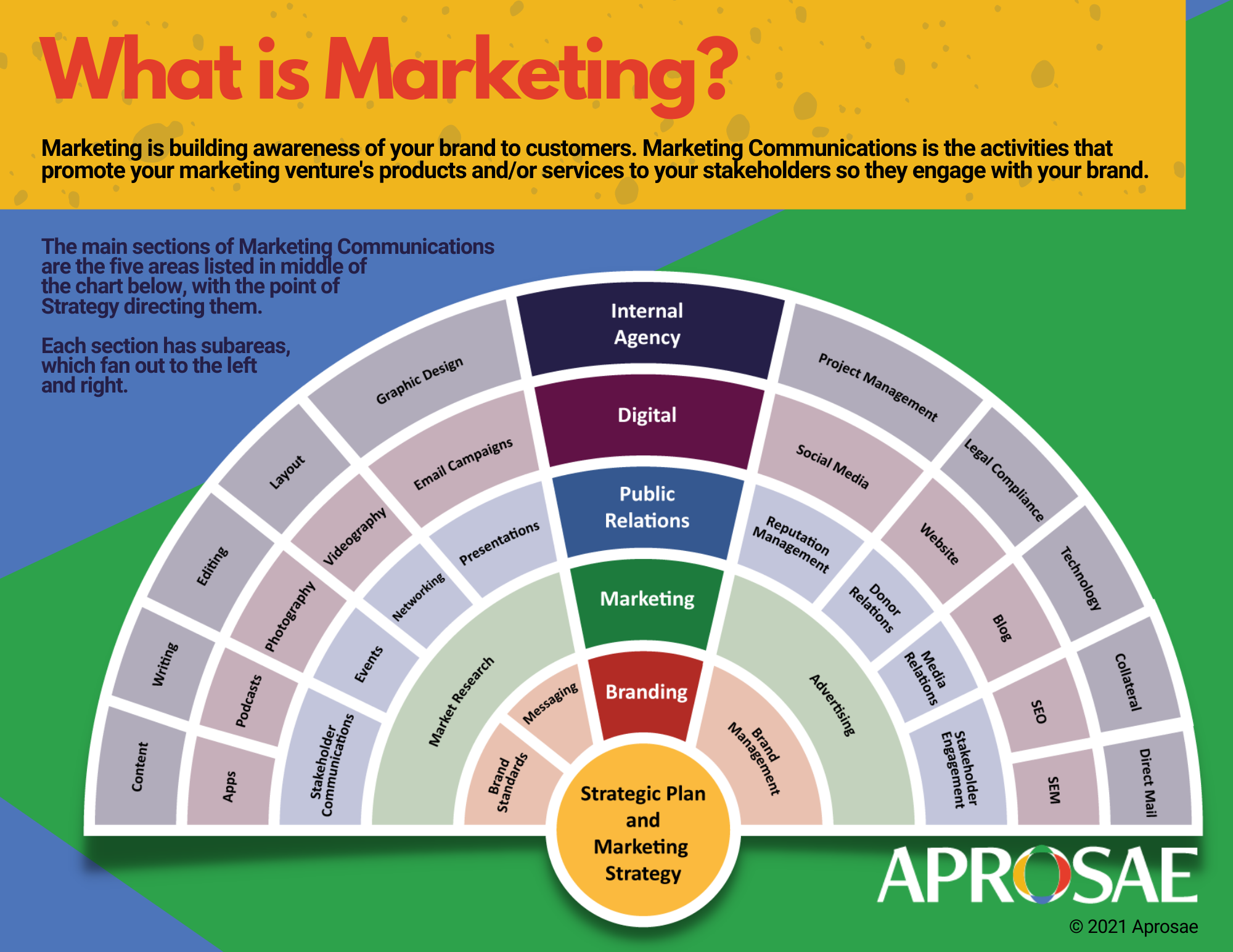
answer that question. But by the end of this class, you'll have a chart
so you don't have to memorize what marketing
communication is. Instead, you can reference this chart as a cheat sheet to remember or even teach others about what marketing
communication is. What I'm really excited about, is that you'll learn
how this applies to your company, your
marketing effort. Whatever the reason is that
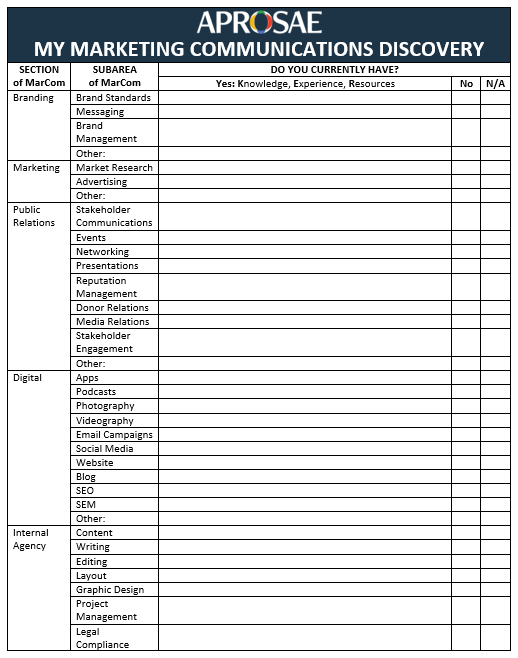
you're taking this class. Through the class project, you'll have a second chart that you'll fill out with
what you're currently doing and what you might like to start doing with marketing. Let's get started.
2. What is Marketing?: [MUSIC] Marketing in
very general terms is regarded as building awareness of your brand to customers. Usually in the business world, there are two overarching
marketing disciplines that companies will hire for, though it's not always
labeled as such. Those two disciplines
are marketing and sales, and marketing
communications. These two disciplines
market or promote two things, products
and services. Products are an
item your customer purchases but can be
physical or digital. Examples of physical
products are things like a bicycle or an
artist's painting. Digital products could be a downloadable template off
Etsy to plan your wedding, or your logo in the form of a digital file that's emailed to you from a graphic designer. Services are things
people pay you for, that you do for them, that could be a wedding
planner planning your wedding, or a graphic designer training
your team on color theory. Marketing and sales promotes your brand's products
and services with the goal of creating revenue for whatever business venture
you're a part of. Marketing and sales
relies a lot on the sales funnels such
as lead generation, market research, pitching,
closing, and things like that. Here's our marketing
communications chart that we saw previewed in the introduction
lesson of this class. Marketing communications,
or marcom, uses a variety of marketing
tactics to deliver a consistent experience of
your brand to the customer. Some might say that's the goal of marketing communications, but I think the
goal is essentially the same at its core, to lead to the sales of
products and services so your business venture
can exist in the black. If you think about your
favorite restaurant, you don't typically have a
salesperson use a sales funnel on you directly to get
you to buy their food. They instead use a
multi-channel approach to lead you to buy their food. For example, you see
a TV advertisement, that's the first channel of
the multi-channel approach. Then you cut a coupon
out of a magazine for a free appetizer,
our second channel. Lastly, you signed up for
their loyalty program and get an email from them announcing a new dish, that's channel 3. This is marketing
communications that usually has marketing and sales
principles backing it. If you're looking
to sell products or services for a revenue, meaning to make money, you might need to use marketing sales and
marketing communications. Some examples of
this could be people selling cars or gym memberships. But if you're a non-profit, instead of marketing and sales, you might rely more on
development and fundraising. It's important to recognize
that marketing and sales, development
and fundraising, even business
development, all require their own attention
when you have products, services, or programs you're
promoting or selling. In this class, we're
going to focus on the common denominator
that all sole proprietors, small businesses,
non-profits, and other organizations need,
marketing communications. Let's head on over to
that in our next lesson.
3. What is MarCom?: Next, we're going to cover what marketing communications
or marcom is. I see marketing communications
like an orchestra. You have the conductor and the four main sections
of instruments. Each section has various
instruments within it. Every section, every
instrument works together to complete their goal
that's led by the conductor. Here's our marketing
communications chart again. We have sections of marketing, just like an orchestra has
sections of instruments. But instead of instruments, we have sub areas of
marketing sections. The exclamation mark
that's in the center of this chart contains the
five sections of marketing. Fanning out to the
left and right, are the sub areas
for each section. But notice the yellow point
on the exclamation mark. That's the conductor,
the strategic plan and marketing strategy
of the organization. Next, we'll dive into that
and the five sections. Whether you're a hobbyist,
sole proprietor, small business or non-profit, you'll learn what you're
currently doing and what you might want
to start doing. This is a very important note
for the rest of the class. From here on out, instead
of listing all the types of people and entities that
this class applies to, like hobbyists,
sole proprietors, small businesses,
and non-profits. I'll just say you're
marketing venture. Please just know what
we're going to cover applies to everything from a side hustle to a corporation. Let's move on to why strategy is the conductor for our
marketing venture.
4. What Part Does Strategy Play?: [MUSIC] The reason why the
strategic plan and marketing strategy for your
marketing venture is on this marketing
communications chart, is because any marketing efforts should support the goals
of the organization. Just like a violinist doesn't make up their own part
of the performance, but follows the conductors lead. The pieces of a
marketing strategy, like a brochure,
email or website, should be created to
support the goals of the strategic plan that's directing your marketing
ventures goals. If you don't have a strategic
plan in lieu of that, you can ask the person
leading your venture or organization what
their top goals are for the coming
year or years. If you are the person in charge and you don't
have a strategic plan, it's well worth your
time to go through at least the thought process
of a strategic plan, so that you're putting
your time and money into the goals that
will benefit you the most at this point in time and that will set you
up for future growth. If your marketing
strategy doesn't support the strategic
plans goals, it's usually wise
to make sure that your marketing strategy has
your leadership support. This is because
unless you've done marketing for years upon years, you might not know
the obstacles and or scope creep that
will come your way. When they do, you'll usually
need other people's help in the organization or
need to hire a contractor, both of which require
a leader's buy-in. If you start with their
buy-in from the get-go, you're setting yourself up for a greater chance of success. [MUSIC] Now that we have the direction of
a strategy guiding us, we're ready to go to
our class project.
5. Class Project: What Marketing Do You Do?: [MUSIC] You might be
surprised by what you're about to discover
through our class project. Because you might be marketing more than you knew you were. We're going to dive into what each marketing
section entails and apply that knowledge to our
class project along the way. Please start by opening
the file titled My Marketing
Communications Discovery. The first column lists the sections of Marketing
Communications, which is otherwise
known as MarCom. The second column lists the sub-areas of
that MarCom section. The third and last column
we'll fill out is titled, Do You Currently Have? This third column is where you'll note what
marketing skills and or efforts you currently
have or are doing. This third column could have three different answers; yes, no, or NA, meaning not applicable
to your marketing needs. As we go over these sub-areas, we'll walk through a
couple of examples on how to fill out
this third column. [MUSIC] By the end
of this class, you'll have the
foundational knowledge of what marketing communications is and discover what you're doing in each section
and sub-area. Let's start with our
first section on our marketing communications
chart, branding. [MUSIC]
6. What is Branding?: [MUSIC] What is branding? It's the use of a
distinctive design and culture of a name, symbol, or any
other feature that identifies a seller's
products and or services. In simple terms, your
brand is the look you portray and the feel people have as they
experience your brand. If we're not intentional and coordinated about our branding, people can get mixed messages
about what we represent. In marketing
communications branding is the section that's
right above strategy. Because it too is foundational to doing the
other sections of marketing, public relations, digital,
and internal agency. Branding is comprised of
three main sub-areas. Brand standards, messaging,
and brand management. Brand standards can
be basic or full. Let's start with basic
brand standards. If you have a logo, have detailed how it's
to be properly used. Have a color palette that defines what colors
can be used in your brand's marketing
efforts and have chosen which fonts
represent your brand, also known as typography. Then you have basic
brand standards. If you have all of the
basic brand standards and an editorial style guide and
visual design guidelines, then you'd have full
brand standards. Let's walk through an
example of filling this out. Let's say, Sam and Mary, they have a small
business together and they have basic
brand standards. They'd put the word
basic in the yes column regarding whether they have knowledge about brand standards. Mary's taken a class
about brand standards but doesn't have any practical
experience with creating them. Sam has had no
training so they put a K for knowledge and note
that Mary has been trained. For experience in
a previous job, Sam worked on a team to create brand standards so for experience they put
an E and note that. Knowledge and experience
are usually in-house, but resources usually
pertain to help outside the people who are selling the
products and services. Sam and Mary have put
aside $300 to have a branding expert review the brand standards
and offer suggestions. They add R for resources and
note the budget they have. If you don't have basic brand
standards at a minimum, then you can mark an
X in the no column. No one should mark N/A, not applicable, for
brand standards. They are a foundational
and critical need for any marketing of a
product or service. This will be true
for the next two branding sub-areas as well. Next is messaging. Messaging represents things
like your mission statement, vision statement,
tagline, elevator speech, core values, brand pillars, and value proposition
that you use in your marketing
efforts so there's a consistent and approved
message being conveyed. If you have some
of these things, you can mark yes
and list what you have or you can
mark the no column. Last is brand management. While brand management
can be more complex than what
we're about to say. You can mark, yes, if you have at least
one person who ensures that your brand
standards and messaging are represented on all
marketing efforts that are distributed to anyone
outside your small business, organization, or
marketing venture. If anyone can create marketing materials or content and choose their own colors, for instance, and write
whatever and however they want. Please mark, no, for
brand management. If there's another sub-area of branding you'd like to note, please put that
in the other row. That's after brand
management and mark what you do or don't have in
the yes or no columns. Next up is the
marketing section.
7. What is Marketing in MarCom?: [MUSIC] In marketing
communications there is, of course, marketing
that can take place. For this section of marketing, we'll go over two of the main sub-areas that most
any organization needs. [MUSIC] Market research
and advertising. Market research
is learning about your target market
and researching what their needs and wants are related to your product
and or service. You'll gather information
about your audience, such as demographics
and behavioral trends, you'll also look at things
about your industry, such as trends, competitors,
and market share. Let's look at Sam and Mary's
business again as an example on how to fill out your marketing communications
discovery chart. Neither Sam nor Mary had any
knowledge or experience of how to gather market research on their audience or industry. But when they took a course from their local small business
development center to start their business. Mary remembers one
of the presenters talking about how to learn
what your customers want. They've set up
other meetings with SBDC experts and hope to do that with this
presenter to learn more. Also, Sam has a friend who's
a reference librarian, who's offered to show him some sources for researching their industry and competitors. Between these two things, they're hopeful they can complete the market
research they need. Now, they fill out their chart indicating that they have
access to resources, that they have every
intention of following up on before they perform any
further marketing efforts. They chose to mark an X in
the no column so they can quickly glance that column to see what they need
to follow up on. Yet If you wouldn't have marked it like that had you
been Sam and Mary, please mark this chart in the way that makes sense to you. [MUSIC] Like all the sub-areas of branding we covered
NA or not applicable, shouldn't be an option
for market research, since we must know who
we're marketing to and the industry
we're marketing in, in order to make informed
marketing decisions. [MUSIC] Next is advertising. Advertising is generally
regarded as creating an advertisement and
placing it in a paid venue. Such as an add-in print like
newspapers and magazines, television, radio, outdoor, which is things like
billboards and bus benches, promotional swag items, and digital, which can
be social media ads, website banners, and more. You don't necessarily have to
pay for these items but you usually provide something in exchange for advertising space. If you advertise
write yes and note what kind or kinds of
advertising you have done. If you've never embarked
on placing an ad anywhere, mark x in the no column. There are some
unusual situations where people may not choose to advertise and could mark
an x in the NA column. One situation might be a medical professional who only accepts clients
by referral. Instead of advertising, that person might just conduct public relations efforts to maintain and grow their
referral sources. If there's another sub-area of marketing you'd like to add, put that in the other row
that's after advertising and mark what you do or don't have
in the yes or no columns. [MUSIC] Now, we're ready to move on to the public
relations section. [MUSIC]
8. What is Public Relations?: [MUSIC] What is
Public relations? Public relations, or PR, is activities that
build relationships between your marketing
venture and its stakeholders, who are people interested in some aspect of your
marketing venture. The purpose here is to build
relationships that lead to mutually beneficial
interactions between you and your stakeholders. One stakeholder type might
be those who buy from you. Another type of stakeholder
might be those who consistently refer others to
your business or non-profit. Yet another stakeholder
might be other organizations that partner with you to
promote your related services. Most organizations have
several different stakeholders and the communications you provide to each
stakeholder group might be different if their interests
and needs want that. Public relations
is often seriously underrated and is usually very low or no cost versus marketing efforts
like paid advertising. Also, public relations has
high returns when done right. That's because
relationships and word of mouth still drive
trust and decisions. This is evidenced
by the facts that reviews impact buying trends, and word of mouth
is often the rated the highest referral source
in marketing surveys. Now, that we know what
public relations or PR is, let's go over eight
main sub-areas that most marketing
ventures can benefit from. The first is stakeholder
communications. As mentioned before, each
stakeholder group might have different interests and many communication's tailored
to those interests. These communications
are meant to foster a deeper connection to
your marketing venture. They are not marketing
e-mails that promote a new product to buy. The action you want the
stakeholder to take after getting this communication should be clearly defined in your mind. For example, a freelance
graphic designer donates her time to teach art classes at a local homeless shelter. She then sends out
a monthly email to her community contacts who share her passion to help
those experiencing homelessness and in that e-mail, she showcases the artwork
her students created and provides opportunities
to get involved. She is building a relationship
with like-minded people, but also is building her
brand in multiple ways. For this example, the graphic
designer would fill out her marketing communications
discovery chart by noting that she
has the knowledge, experience, and resources to inform and provide
opportunities for engagement. If not, mark an x
in the no column. If what your marketing is a product that is purely
an exchange of money for an item and
you don't plan on building relationships with
those who buy from you, you could mark an x in the not
applicable or in a column. Next is events, this is what it sounds like. Do you host any events or
participate as a vendor at events to build relationships with people interested
in what your marketing? If so, please note
what events you host or participate in and put
that in the yes column, if no or not applicable,
you know what to do. Now, we'll move to networking. Networking is an
intentional activity of building relationships
by going to places where you can
meet others who might want to learn about your
marketing ventures, products, or services. An example of this could be a realtor who goes
to every chamber of commerce meeting to
build relationships in his community so that when
someone needs a realtor, they might think of him. You know the drill, please pause this lesson and mark
the appropriate column. Let's look at presentations. This is a form of
public relations I love because when you
present at let's say a Rotary Club
or Satoma meeting, where else do you get 15, 30, maybe even 60 minutes of undivided attention about
what you're marketing. Even if you're
selling a product, you can generalize your
presentation to be informative in nature on a topic that's related
to your product. In your introduction,
which includes what your marketing venture
does in the role you play, people will learn what
products or services you offer and think of you if or
when the need arises. They'll also see
you as credible, maybe even an authority on this aspect of your industry
that you're talking about. You're putting a face on the product or service
you're offering, which is usually way more
memorable than an ad. Think about what you
might do in this area, and pause this lesson to
mark the appropriate column. The fifth sub area, public relations is
reputation management. This can take many forms, but one that most
all organizations participate and should participate in is monitoring
their social media channels. This includes all channels
like Facebook, Instagram, Twitter, as well as Google
my Business and Yelp. It's managing the reputation
you have online and off. Offline it could be contacting
the media when you want to build a positive image
or repair a negative one. If you intentionally manage your reputation
online and or off, please note what you do
in the yes column or make an x in the no column, please don't mark NA unless you don't have an
online presence. Next is donor relations, well, this can apply to for-profits, it mostly applies
to non-profits. This is all about communicating to your donors so
they know where their donations
have gone and the impact it's made
on your mission. Please pause this lesson and
mark the appropriate column. Now, we'll move on to one of my favorites, Media Relations. Media Relations is building relationships with
media personnel, which could be
reporters, editors, and others who create
and break news on TV, radio, print, and
digital sources. Earned media is when
you get media coverage. Think of a newspaper article
or a TV news report, and its featuring
what your marketing and you pay nothing. They come out to
interview you and then post the story,
like presentations, there is an incredible level
of credibility given to you when the media positively highlights
what you're doing. Many don't know how to garner
this type of coverage, so when you do, you're going to look like an
authority and trustworthy. Now, think about if you
do anything in this area, then pause this lesson to
mark the appropriate column. The last sub area of public relations is
stakeholder engagement, this is providing
opportunities for your stakeholders to be engaged with your
marketing venture. Maybe it's a volunteer
opportunity, we are marketing venture
hosts a yard clean-up day for senior citizens and you ask all your stakeholders
to come out and help. It could be a fitness
studio that offers a free class where they can bring their friends and family. If you want to add another
sub area of public relations, please do so in the other blank after
stakeholder engagement. Otherwise, you know what to do, fill out one of
those columns and we are done with
Public relations and ready to move onto
the digital section.
9. What is Digital?: This digital section is more
than digital marketing. It's also the digital
things you host. Like a website and digital
communications you share. Like an email drip campaign. Since most people are very knowledgeable about
these subareas, we`ll just briefly look
at the 10 subareas. Applications or apps are
software programs or applications on mobile devices like smartphones and tablets. Unless you're selling apps, a lot of businesses
don't have apps that they maintain and/or sell. But if you're the exception, please fill out what
you do with apps in the yes column of your mind marketing communications
discovery chart. Otherwise, mark an X in the no or not applicable, NA column. Podcasts or digital audio files your marketing venture might produce that your stakeholders can download or listened to. Please note your involvement or lack thereof on your chart. We all know what photography is, but the way it pertains to your marketing
venture that sells products or services or
even to a nonprofit, is that you have to buy
photos that you'll use for your marketing venture
in a way that gives you the legal rights to use them. You can also find a few
sites that will let you use photos for commercial
purposes for free. But if you can't find
the photos you want, one way to buy photos is to employ or contract a person
to take the photos for you, so you own the rights
as long as you have secured the appropriate
waivers and such. Another way is to buy
rights to photos from an online photo purchasing
website and then use those photos according
to the rights given. It's important to know
what's legal and what's not in using photography and downloading photos
off the Internet could get your
marketing venture in trouble and violates the rights of the person who
owns that photo. This is a broad comment
on the topic of intellectual property
rights and does not, and is not intended to
constitute legal advice, but is for general
informational purposes only. If you use photos that you
know you had the rights to, you can detail that
in the yes column. If you don't, you can mark
an X in the no column. Most of us in business
of nonprofits need photos so an A isn't
likely to apply. Videography is similar to photography in regards to
intellectual property rights. You have to have permission
to use videos that someone else has created or had
their likeness featured in. Please fill out your
charts similarly for the videography subarea. Email campaigns are a great
tool to communicate to your stakeholders and market your products,
services, or programs. An email campaign can be a single email that's
sent out for either communicating or
marketing or it can be a series of emails
sent over time, also known as an
email drip campaign. If you send emails to any
of your stakeholders, please note what you do or mark an X in the appropriate column. Social media is
something we're all probably very well aware of. Facebook, Twitter, Instagram, TikTok, YouTube, LinkedIn, Google My Business, and Yelp are the ones
that are the most popular among organizations at the time of this
video`s posting. If you're marketing
venture participates in posting to any social
media channel, you can note that
in the yes column or mark an X in another column. Websites are something that most all organizations start
with and rightly should. Without a website,
your marketing venture can look like you're
not established yet. Though I have seen some successful
small businesses use a Facebook page in
lieu of a website. Please mark your chart with what you're currently
doing with websites. Blogs and vlogs, which are video blogs can be an
important tool for some. While these can be hosted off your marketing
ventures website, blogs are usually hosted
on one's websites, so the blog has a better
chance getting traffic to it. If you have a blog related
to your product or service and updated regularly, like every month
at a bare minimum, note that in the yes
column, otherwise, mark an X in the
no or NA column. Search engine
optimization or SEO, is improving your
site's ability to come up in search engine results when people search
for things that are related to your
website's content. If you work in your website's
backend to optimize it for SEO or you hire a company
to do this for you, then you can note that
in the yes column. Otherwise, you know what to do. Search engine marketing
or SEM is similar to SEO in purpose in that you're improving
your site's traffic. But you do this by purchasing advertisements that come
up in search engines. These are also referred to
as pay-per-click or PPC ads. Please pause this lesson and
mark the appropriate column. If there's another subarea of digital that you
do or want to do, please put that in the
other row that's after SEM and fill in your
chart accordingly. Next up is the last
section, internal agency.
10. What is Internal Agency?: Internal agency has
three groupings that it's sub-areas fall into. The first grouping is
creative skills that are used across the
organizations marketing needs. These skills are content
creation, writing, editing, layout,
and graphic design. The second grouping is
technical skills that undergird all marketing projects
to make sure they're completed well and on time. Those skills are
project management, legal compliance,
and technology. The last grouping are
production pieces, namely collateral
materials and direct mail. These are the things
that are produced and used across
the organization. Regardless of whether
they're skills or materials, the subareas of internal
agency often touch and impact the other
sections in some way. Content creation is of utmost
importance in marketing. You have to have content, whether it be the written
word, photographs, videos, or anything else to share
what your products and services are and why
people should want them. The creative skills of
writing, editing, layout, and design are used
to build content, but there needs to be
a content strategy for your marketing venture. This content strategy guides not only what will be produced, but how you're
going to distribute it to various channels, like from your website, to social media,
to a newsletter. So you hit as many people as
you can with your content. If you regularly create new content and distribute
it for your audiences, please note to
what extent you do that on the class
projects chart title, My Marketing
Communications Discovery. If you don't do this, mark an X in the no column. The not applicable or N/A column likely shouldn't be marked with an X given that you need content in order to communicate
to your stakeholders. Writing for marketing
purposes is a hound to craft that's going to vary
from technical writing. Writing for social media varies from writing for a newsletter, from writing for a brochure, from writing for a website. If you have someone who can
write for marketing purposes, please note that
in the yes column. If not, mark no. Similar to content creation
writing is essential to your marketing
ventures communication and marketing needs, so marking an X in the
N/A column isn't likely. Editing isn't just checking
for radical errors, it's also to review all the important aspects that marketing materials should have, such as ensuring that it's
on-brand and that the writing is accurate while making sense
to an external audience. Some organizations
have another person who's not a professional editor, services second set of eyes, and then other organizations have a professional
who can edit. If you have anyone who
serves in either way, please note that
in the yes column. Many hobby businesses,
small businesses, and non-profits may not
have anyone in this role, so marking no or
N/A can be common. Layout refers to how print
and digital publications, such as brochures, fliers, newsletters, and
presentations are laid out. The person skilled in layout will know how
to place the blocks of content in a way that fits the publication
they're working on. For example, there's research
behind where to place what content goes on each
panel of a brochure. Also, there's a way to paginate a newsletter or annual report. Like editing, this isn't something that most
marketing projects have when the organization doesn't have a large
marketing budget. So if you don't have anything in the yes column,
that's not uncommon. Though most graphic
designers are skilled in layout and design. That brings us to
graphic design. Most marketing projects have
a graphic designer to help. If not, it's unfortunately
very obvious, unless someone is
unusually gifted with a creative
eye and aptitude. Graphic design employs many
skills and knowledge sets, such as color theory
and white space, to make marketing material
aesthetically pleasing and effective in drawing
people into the content. Please pause this lesson and
mark the appropriate column. Now we're moving on to
the second grouping of sub-areas that are
technical skills. Project management is the first
one and often overlooked. Sometimes a marketing
project gets underway and the left hand doesn't
know what the right is doing. As a result,
deadlines get missed, people forget to pass the baton to the next person, and so on. Having someone who knows who's responsible for each
piece of the project, when that piece is to be done and follows up to make sure it's done and passed onto
the next person is what brings a marketing
project to completion. If you have this process or person available for
your marketing projects, please note it in
the yes column. Otherwise, mark an X in
one of the other columns. Legal compliance is
also something that's overlooked because people don't know what they don't know. We've already mentioned
intellectual property or IP rights regarding photography
and videography in the digital sections lesson. So let's talk about legal
compliance with email. The CAN-SPAM Act of 2003, which stands for
Controlling the Assault of Non-Solicited ***********
and Marketing, is a United States law that sets national standards for the
sending of commercial email. If violated, there can
be legal consequences. Complying with
intellectual property law and the CAN-SPAM Act
are just two things in the marketing world
that those creating and approving marketing projects
need to be aware of. By setting up a process
to comply with someone, to ensure it's enforced
and maintained will help ensure that your marketing venture not
only does the right thing, but also stays out
of legal trouble. Here's the legal
disclaimer I have to note, this is a broad comment on
the topic that some legal issues related to
marketing and does not, and is not intended to
constitute legal advice, but it is for general
informational purposes only. Now, please fill out
your chart accordingly. The last of the technical
skills is technology. Those creating
marketing projects need to have the right tools, especially software and a computer that can
run those programs. Adobe Creative Cloud is the one suite of
software at the time of this video is posting that most people creating
marketing materials need. Others who aren't trained and, or experienced creating
marketing materials may use other programs, but it will likely
limit their ability to create sleek and
professional materials. Some budgets just won't allow
for Adobe Creative Cloud, and those organizations
can still thrive without the professional level help in tools until they reach
that next level. The other technology that warrants attention is analytics. It's important to
have data to make marketing decisions
and using analytics to measure things like your
website traffic and social media
channels is crucial. This information can uncover how your audiences want to be communicated with and contribute
to your market research. If you have the
appropriate software to create marketing material, as well as the setup
and knowledge to use analytics in your
decision-making, please note that in the yes column along
with anything else related to technology and marketing that you'd
like to mention. Otherwise, mark the other
appropriate column. Collateral materials can be many things in print
and, or digital forum. Some examples are: newsletters, brochures, annual
reports, and fliers. Collateral materials can
also be business cards, letterhead promotional
swag items, and branded templates, like
PowerPoint templates that are available for anyone in your marketing venture to
use so they stay on brand. Now's the time to pause
and note what you do or don't have with
collateral materials. Direct mail is a
physical piece of marketing collateral that's
in the form of mail. For profit organizations, usually use direct mail to market a product or
service they're selling. If direct mail is sent
from a non-profit, the goal is usually
to fund raise. Both types of organizations
can use direct mail to build awareness or
publicize events. Direct mail requires not only the creation of the material according to certain standards, but also adherence to
certain postal regulations, as well as the knowledge
of how to stand out in the sea of other mail your
recipients are receiving. Please pause this lesson
and note if you do anything with direct
mail on your chart. If you can think of another
sub-area of internal agency, please add it in the
other blank below direct mail and fill out
one of those columns. After that, you are done with your marketing communications
discovery chart for all five sections
and 33 sub-areas. Congratulations. So what do you do now?
11. What's Next?: [MUSIC] Now that you know what marketing communications
is and what you're currently doing for whatever your marketing, what's next? Well, you have a
couple of options. First, I hope everyone
posts their chart titled my marketing
communications discovery. I'd love to give feedback, so please let me know what
product or service you're marketing as well as any questions you have and
I'll get back to you. Second, we have to say, or have more videos
on marketing, so please follow us. That way you'll know
when they're out, if they're not
already on our page. We also have videos that will dig deeper on all
five sections of marketing communications
so you can learn tips and tricks on how to
actually do marketing. Like how to come up with brand standards,
social media strategy, advertising plans,
create publications, get earned media, and much more. We're also working on strategic planning and
marketing strategy classes. So hold on to the chart you used in this class
because we'll use that discovery to build
a marketing strategy. Whatever you do with marketing, please remember you can't do it all in a day,
nor should you. Congratulations on
taking your first step to understanding
what marketing is. You can build your way up to a marketing strategy that will prioritize what you can do now and plan for the other
things at a later date. Remember, u we're here
to help you get there. Please post your
discovery chart, we can give you feedback, and you'll be one step closer
to where you want to be.
 Aprosae - Michelle West, Training / Consulting / Speaking