Transcripts
1. Introduction: welcome to story writing, setting, reading goals and making sure you achieve them. You feel like you're not getting anywhere with your writing, that despite your best intentions, you're not getting done. What you want to in this class will discuss how to set reasonable and achievable goals, how to plan reading into our schedule, how to track our progress, how to motivate ourselves and how to re evaluate when we achieve a goal or when one isn't working. My name is Kit Campbell. I am a hybrid author, which means I'm both traditionally and Andy published, and I'm also an editor book for matter and self publishing coach. This class is part of the writers motivation Siri's, which is designed to help authors find the best processes that work for them so that they can get done what they want to get done. This class is for any level of writer who feels like they're not getting done, what they have the potential to get done, or for anyone who wants to make their process more efficient. The skills that we learn in this class can be used whether you're actively writing or whether you're doing rating related activities, such as planning, revising, editing, marketing or publishing. So what's the point? Is class well without knowing where you want to go? It's harder to get there, and the goals that you make during this class can be updated at any time, and the skills you learned here can be useful for any part of the writing process. At the end of the class, you will have goals plan for a time period. You will have thought about when in your day or week you can work and you will have made a plan moving forward, which includes things such as how you're gonna get yourself in the right mindset, too right, and how you're going to track your progress and any rewards that you may need to reach your goals also, Hopefully, by the end, this class, you will understand what works for you so that in the future you can be successful. All right, let's talk about why we want to set goals
2. Why Set Goals?: get started. Why should you set goals? Well, you can't reach a goal if you don't have one. Goals could be great, especially if you find yourself often distracted or unfocused. Having a goal gives you a direction for your work. If you know where you want to end up, it's easier to point yourself in the right direction You need to go. Having a goal also gives you an area of focus. If, for example, your goals toe have a short story done by an anthology deadline in two weeks, then you know that you need to focus on that. And having a goal makes your writing sessions in general more focused because if you have a goal and you know what you need to do to reach it, you're going to be able to sit down and get to work faster instead of wondering what to work on or gain distracted by things that turn out not to matter. In the next video, we'll discuss how to set usable goals
3. Setting Goals: Let's talk about how to set goals. The most important thing to remember about setting goals is that your goals need to be reasonable and achievable. This means that they need to be something You, at your current skill level, can do something like I want to be best selling author is not a good goal because it doesn't have any specifics. What constitutes a best selling author? What steps can you take to get there? The whole thing is a little nebulous. A better goal might be. Take a book marketing course, because that's something that you can do. It has steps, and it gets you a step closer to your best seller idea, because it will teach you how to market your book so you'll sell more copies. Another perk of reasonable, achievable goals is that they hold up better for your mental health. They help you do it accomplish as opposed to waiting for things to happen to you. You've probably heard this acronym before, but it helps to make sure your goals are smart. The S stands for specific. I will submit to this anthology versus I will get published this year. M is for measurable which means you have some metric you're tracking to see how you're progressing towards your goal. Word count is common when working on a draft. A is for attainable, which, as we already mentioned, means it's something you're able to accomplish at your current level. Get my book option for movie is not attainable. If your book is only half written, for example, they are sends for relevant, which means that the goals make sense in the broader scheme of things. And T is for time bound, meaning that there is a deadline of some sort. This both helps you stay focused. I only have two weeks to get this done before miss this opportunity, and it helps you figure out how much needs to be done in each working session so that the goal can be broken down into reasonable steps. You can Onley control yourself. This is an important thing to get through your head. Ah, go like get an agent Sounds good. At first glance, it has steps you can dio, such as finishing your manuscript, editing and polishing it, doing agent research and making a list of potential agents to query preparing your submission materials, etcetera But even if you do everything you can, there's no guarantee you'll get an agent. This is a goal that relies on another person to complete, and you can't control other people. A better goal would be query agents that you can control, and it also leaves alternatives open. If the agents don't respond the way you want them to. Let's look at some goal examples. This is my yearly gold sheet on it. I list all my current projects, their current goals, when I'm going to work on them, if I'm going to work on them and where I am on set goal, I find a sheet like this helpful because I can see everything in one place, and it helps me prioritize the projects that are more important. Also, this is a dynamic document, which means I can update it as necessary, and I can change my goals as I reach my current ones. If you look on the third line, I've reached the current goal in my SciFi horror novella so I could update my goal for the next step. Now a document like this is meant to be high level. I'm not working on all these at once. That would be crazy, But a document like this does allow me to then break things down into monthly Gal's. I use my yearly goals to four monthly goals. I have a pretty good idea how much time I have to work on average as well as how productive I typically em and how many things I can handle at a time. If this is new to you, you may want to focus on fewer or even one thing at a time. I do monthly goals because that's what works best for me. But you can do weekly or daily instead. If that works better for you. I don't recommend doing more than three months of detailed goals at a time. However, I find that the longer the time period, the more likely you are to drift off your prediction, either one way not gain as much done as you thought or the other getting too much done and running out of things to do. You don't necessarily need to make your goals based on time periods, however. Instead, you can figure out all the sub steps necessary to complete your goal and then estimate how long each step will take you or simply work through each step until they're done. You can do sub steps of these subsets as well. For example, the right first draft step can be broken down into right at least 1000 words per writing session. Alternately, if you like to know when you're working on what Gold Step, you can use a calendar to plan out your goals. So in this example, I've picked three goals to work on each week. One is to write 5000 words on my story. Two is to submit three short stories, and three is to follow up with my Veda readers. And then, as you can see, I've put the days of the week there, and I have put times of day and I have put in when I'm gonna work on each goal. This could be a good method if you're more visual. All right, homework time Before you move onto the next video, I want you to set up your goals for the time period of your choice. So step one, pick a long term goal. So finishing the story, getting something published, editing something, basically something that's going to take you a while and need multiple steps. Step to pick a time period. Work in month, week, day, etcetera. Step three. Break your long term goal into smaller steps and step for figure out which smaller steps you can complete in your time period. For example, if you're working on writing a novel and you know it will be about 90,000 words and you know you can write about 20,000 words in a month than your goal for the month would be 20,000 words or 5000 for the week, or about 670 words per day. When you have your goals in their steps in mind, move onto the next video.
4. Planning Out Your Writing Time: Let's talk about how to plan out your writing time. You have to prioritize your reading time. If you want to reach goals, there's always something else you could do instead and saying We'll get to it at some point . Today can be a good way to let time get away from you. It's better to pick a time and stick with it. This helps you form a habit, and habits are more likely to get done around everything else. Also, be sure to pick a time that works for you. If you drag yourself out of bed every morning, setting your alarm earlier is probably not going to do you any good. Likewise, if you're too tired after dinner designating that as you're reading time, we'll go poorly. It can also help to put strategies into place to be able to deal with unexpected breaks that might be useful time. This is why a lot of writers carry around. Notebooks are used recording app on their phones. Even an extra 15 minutes. Waiting at the doctors can be useful time. If you're prepared for it, plan out your writing time. By this, I mean you should plan out what you're working on when? If you know what you're working on in what time period, it allows you to sit down and get straight to work. Otherwise, you may find yourself getting distracted by different options. Should I write my prompt response? Email reviewers edit my short story or even worse, getting overwhelmed by it all and wasting time on other things. Depending on how much rating time you have, you can plan out your time on a daily or weekly basis. Some people may have two or even more time periods in a day they can use for reading, while others may only have a few times a week. I personally do it on a daily basis. Using my monthly goals is a guide, but you should do what works best for you and your circumstances and make sure you stick with your plan. Otherwise, what's the point of planning your time out in the first place? There are exceptions, like there are for everything. A deadline got moved up. You found out you have an opportunity, but you must act on it immediately, etcetera. But in general, sticking to your plan is the best way to get done. what you want to get done when you need it to get done. And speaking of that, let's talk about deadlines. I'm sure you know the term, but just in case you don't, a deadline is a date when a step or project must be completed. They can be very useful for reaching your goals because they help you structure your work for, said Goal. I recommend self imposing one. Even if you are the only person who cares when something gets done, they could be the difference between something taken a few months or a few years. Let's run through an example of why deadlines could be helpful. Let's say I signed up for a writer's conference in eight months. This is a major opportunity. And when I can't do too often because writers conferences are expensive, aside from networking and learning from published authors, I'll have the chance to showcase my work to some agents and editors. Next they go through the steps I will need to complete before the conference. But first step is to plan out my revision. Different people revised in different manners, but I find it helpful to go through and do my plot or character arc pacing, etcetera work before I start the actual revision. This helps me see all the big picture things that need to be fixed, which means I can just do the revision instead of having to stop and make sure I'm doing the right thing in the right place. So I give this step two months, which gives me six months for the other steps. Next is the actual revision cutting, adding rear aging, making the story I have into the story I want. I'll give this five months. I can break this down further to if I have 40 scenes my novel, then I can divide that by my five months. So I know I'll need to do eight scenes per month, at least, and then we have Step three. Maybe I have an invaluable beta Rieder, someone I know who can read my stuff quickly, and when I need them to, maybe we'll get my revision done early so I can get the manuscript to the beta early and hopefully expand my time frame for the Polish if necessary. But again, you can't control other people, so it's good not to get hung up on steps and involve them. If you're beta isn't available, just move on and then the polish is what it sounds like. A re through to catch anything you might have missed. Having a deadline allows you to break down the steps needed to be done and see how much you need to be doing on a regular basis to reach your goals. It can also be useful to have triggers in place that can tell your brain it's time to write or otherwise work. A trigger could be anything, as long as you link it specifically to reading and do it each time you sit down to work. Some examples of triggers could be setting up a writing corner somewhere in your house where the only thing you do there is right are always writing first thing in the morning before you do anything else, or you can put on a specific music playlist or otherwise set up some sort of writing ritual . For example, when I write fiction, I have special reading gloves. They're really anti carpal tunnel clothes that I always put on. Some people don't need triggers and are able to easily and quickly get into their working flow. But if you find yourself floundering a bit every time you sit down, it doesn't hurt to try some out and see if one works for you. Homework Time again. Now that we've talked about making time for reading, planning out your time setting deadlines in trying out triggers, I'd like you to put together a plan for the next week or so. Look at your schedule and see where you have consistent time periods, either from day to day or week to week, especially a times where you know you could be productive and then plan out what you'd like to work on in those time periods. Most people work on a single project at a time. If that's you, this is easy. You can cycles for each time period, such as a word count Kal, if you're writing or number of pages if you're editing if you like. If you're working on multiple projects, you can designate some time periods for one project in some for others. If you have a deadline, you set to figure out how much progress you need to be making and make note of any triggers you currently use or that you'd like to try
5. Tracking Your Progress: putting a plan into place is all well and good. But if you don't track your progress somehow, it can be hard to see how you're faring when it comes to reaching your goal. Tracking your progress allows you to see exactly where you are in the process. Both how far you still to go and how far you've already come. Depending on your tracking methods, you can make tracking more fun, either by using graphs, which are great if you're a visual learner, or by making your tracking method more visibly colorful through color coding or stickers. Tracking your progress can also help with your motivation, since it can be empowering to see things getting done, or even to know that you're making progress. Even if it's not as much as you hoped, then it holds you accountable. It can be tempting to work a little bit here and there and feel like you're getting somewhere which you are. But without tracking, it's hard to know if you're getting where you're supposed to be as quickly as you meant to . So what are some methods of tracking that you can use? Personally? I adore spreadsheets. I have a ton of different ones, ones that go for the whole year and ones that go for a month, ones for multiple projects and ones for a single project. I like them because they're extremely customizable like graphs, Adam color coding. Good to go. And there's a tenant, different ones on the Internet that smarter people than me have made that could be modified to do what I want. But that's only one way. Another way is online trekkers. These come in a variety of different types, from little signature bars that go on a forum toe hold websites dedicated to keeping track of things for you. This could be a good option if you're mostly tracking the same thing, such as word count. If you prefer an offline method, calendars and planners work well. You can put a stick around a calendar each time you reach your daily cool. And if you planned your week in a planner, well, you're killing two birds with one stone. You can cross off the task once you've done it, or highlight it or at a sticker. Forums, especially writing forms, can be a good way to keep track of your progress, depending on the community. Several writing communities exist that offer ways to track your goals as well as challenges to help you reach them. Communities are also good because they give you access to other writers who can cheer you on, help you reach new heights and make sure you're doing what you said you would. Here's a basic word. Count tracker. This is a yearly tracker where it tells me where I should be for the year, whether I've reached my daily goal and it allows me to keep track of what I was working on that day. Here's a difference, Richie, which I used to track a specific project. A draft of a high fantasy novel. The numbers air so decimal E because I was writing 94,000 words in 71 days. I like this one because it's very easy to see if I'm on track to finish on time. What will work best for you? Look at the goal in time period you picked as well as the writing times and any deadlines you selected in previous videos. Can you break it down into something that's easy to track? You can track word count or pages if you're actively writing chapters, air scenes if you're revising or time spent in any point in the process, so make sure you're only counting time. You're actively working. What's the best way to track? Whatever you're counting? Do you want to do it on paper, on the computer or someplace you can get to on the Internet, select a method and then move on to the next video.
6. Sticking With Your Goals: you've picked your goals, you've set up your process and you're tracking your work. How do you stick with your goals? Well, one way to keep yourself motivated is by using rewards earning something when you reach a goal and accountability, which is a visible acceptance of responsibility. A reward could be something little, such as earning reading or some candy after reaching your daily goal or something big, which is getting yourself author business cards After your first story is published, a word of warning about rewards you should be able to write with or without rewards, though they can be helpful for getting started or for getting through something you don't really want to dio. If you find yourself relying heavily on them, you may want to take a look at your goals and how you're approaching them. Accountability can also be helpful. If you're in iron willed person, you could be accountable to yourself, such as making sure you don't watch TV until you've done your work for the day. Most of us will benefit from some outside accountability. However, this is where writing community can be helpful, as we've already discussed. You can also announce your intentions to your roommate, your mother, your Children, your best friend, your spouse, whoever you can trust to periodically check up on you and make sure you're doing what you're supposed to be doing. It can also help to find a writing buddy. So when you check up on and who checks up on you, you should also plan out your rewards and accountability in advance. I plan to tell at least one person what you're doing and plan or what rewards you're getting wind. Otherwise, you might find you giving yourself 15 minutes of YouTube time after every 100 words. Another thing that can help is to re evaluate your goals on a regular basis. Maybe you overestimated how much time you have to work right now, and you've fallen behind, which can be demoralizing by adjusting your goals. To match your current situation, you can make sure you're making progress and that your expectations are in line with reality. Alternately, Maybe you've underestimated your productivity and you finish something ahead of schedule. Or maybe something's come along that you really want to do a submission opportunity or reading challenge, or another activity that takes precedence over what you're currently working on your goals are supposed to be helping you get done what you need or want to get done, so make sure they're doing that. As an example, I'm making this class in the depths of Corona Virus Quarantine. I had planned to work on one novel project this month, but it's actually easier to work on a different one with the time I have available to me. So I've updated my goal as a caveat, though. Don't just change your goals willy nilly. Give them a try for a decent amount of time, probably at least two weeks before you modify them. That way, you can make sure you're changing them because they need to be changed. Sometimes you run into issues with your goals. Where the cause isn't immediately clear. You can find yourself procrastinating or just simply not making any progress. You can help to take some time to look at the goals closely, to see if we can identify the problem. Consider is this really something you want to or have to do? Creativity isn't like math. It doesn't always work. If you can't find something you like about a project, it can be hard to keep going. Try to find something to motivate you to continue one. Do I want slash? Need to do this? Or do I only think I should? Sometimes we do things because we think we should. Everyone else is writing in this genre or this genre selling super well where your ill did this at this point in their career and not because we actually want or need. Teoh. Do you feel like you don't have the skills to pull it off? You won't know if you don't try. The worst that'll happen is you'll have to try again when you have more skills. Am I trying to do too much at once? Some people can work on four things at once. Some can work on one. If you're getting overwhelmed or feel like you're not making any real progress, try just in the number of projects you're working on. At one time, Am I in a creative rut? Break out your old work and see how much better you are. Now, write something silly just for fun. Try your hand at something else. Creative rut suck, but you can jostle your way out of them. Are my expectations unreasonable. Are you expecting too much out of yourself too fast or you're not pushing yourself enough. Readjust your goals in the right direction. Sometimes, no matter how much you started a goal, it's not clear why it's not working. If you have to do something else for a while, then come back. Often times your brain will figure out the problem while you're doing something else. We touched on this when we talked about accountability. But having support for your writing could be vital. Well, no one can work on your stories except you unless you're co writing. Having other writers to commiserates with cheer on Challenge and just check in with occasionally is hugely beneficial. There are 10 of writing communities out there somewhere specific to genres. Some push reading well. Others focus on publishing somewhere local and in person, and others are online, and you can belong to more than one at a time. I belong to four right now. That being said, you confined support other places as well friends, family, other people who are interested in what you're writing about, but having someone who's willing to lift you up to make a world of difference
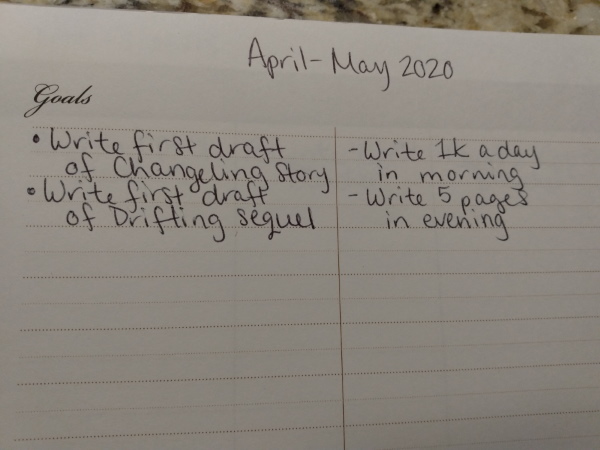
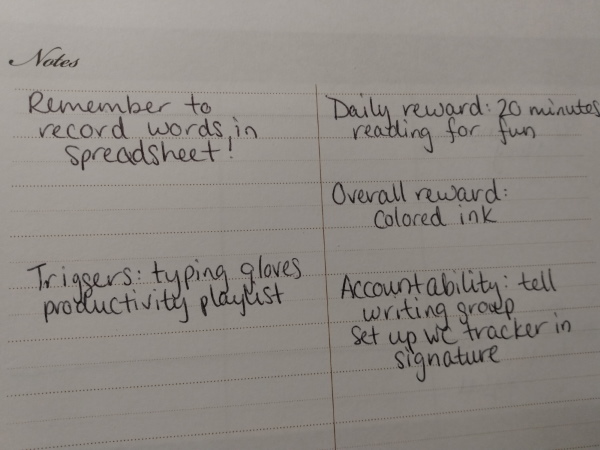
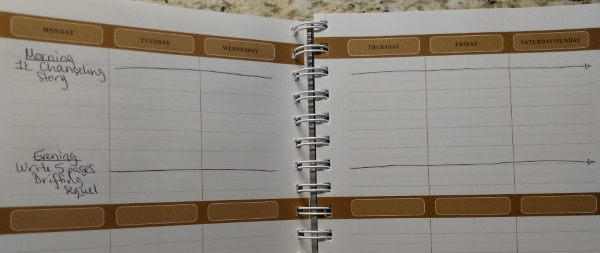
7. Recap and Project Introduction: congrats. You made it through the class. I hope you've learned how to set goals that makes sense. How would make time to work on your goals, how to track your progress and how to stick to your goals. And if you have any questions about any of the steps, please leave me a comment down below. We worked on our individual goals throughout the class. Now would be a good time to put everything we planned out together. Look it over and make sure you can use what you have to move forward. Do you have reasonable goals that you can start working on right now? Do you have a plan of when you're going to work on them and techniques in place to help you focus? Have you put together a way to track your progress and thought about reward? You give yourself either on a daily or an overall basis. If you're missing a step, now would be a good time to fill in that information. I put together an example for you. This will also be available in the project section in the class. If you'd like to refer to it later. Okay, so here is my example of my goals. Typically, I work on the computer, but I did do a paper example for those who would like one. So I'm looking at the time period of April and May 2020 and I have two goals. The first is to write the first draft of what I'm Calling My Changeling Story and the second straight, the first draft of a sequel to a short story wrote called Drifting. I've also done the illegals for each. I'd like to write 1000 words a day on the Changeling story in five pages a day on the Drifting Sequel, which I am Handwriting in a notebook have also divided up what time of day I am working on the stories so that I can get that planned into my schedule. Over here, I've done the rest of my work, so I will be tracking my words on a spreadsheet on the computer and for my triggers, I will be wearing my typing gloves and turning on my productivity playlist. So here are my rewards. My daily reward is 20 minutes of reading for fun, and my overall reward is colored ink for my illustrations for my accountability. I'm going to tell my writing group my goals, and I'm going to set up a word count tracker in my signature. Now, over here, I have also put my goals onto a calendar so I can see when exactly I'm working. So as you can see every morning I'm working on my tanks in story and every evening I'm working on my drifting sequel, and that is my plan for every day of the week. So you can put more detail into yours, or you can put less whatever works best for you. And as I said, I will put this down in the project section so you can refer to it again if you would like . But remember, it's important to make sure that this process works for you not to directly follow what I'm doing again. Please let me know if you have any questions or need any help, and I wish you luck on achieving your goals.
 Kit Campbell, Writer/Editor/Lover of Cephalopods