Transcripts
1. Start One Task Without Pressure : If you often sit down to
begin something and feel a quiet resistance before you even start,
you are not alone. That heavy feeling where a task feels bigger
than it should, even when it's something simple, I can feel frustrating
or tiring, or, like you are already
behind before you begin. If this sounds familiar, there is nothing wrong with you. Many beginners struggle, not because they are
lazy or unmotivated, but because starting
feels tied to finishing. The moment you think about beginning your mind jumps ahead to how long it might take, how much effort might require, or whether you will
even finish at all. While you are here, we are
going to soften that moment, not by forcing motivation, not by pushing harder, just by changing how you begin. You will not need
any special tools. You will not need extra energy. You will only need a
small amount of time and a willingness to
try something gentle. I and Paul, I help beginners learn simple
productivity skills in a calm and supportive
way so they can feel safe taking
small steps forward. I used to believe that starting meant
committing to finishing. If I could not finish something, I often avoided starting at all. Over time, that made even
small task feel heavy. What changed things
for me was learning to separate starting
from finishing. Once I did that,
beginning felt lighter, and task stopped feeling
so intimidating. That is why I like
this topic so much. It meets people where they are. It works on busy days, tire days, and low energy days. It is not about
discipline or willpower. It is about kindness
and clarity. Here, we will focus on
one simple decision. You will decide to
begin a task for 5 minutes without any
expectation to finish. That is all. This lesson
works on its own, and it also fits naturally alongside other simple
habits you may build later. It is especially helpful for beginners, busy
parents, creatives, workers, or anyone
who feels mentally full and wants a
calmer way to start. This is not for
people looking for complex systems or advanced
productivity methods. It is gentle, basic, and
intentionally simple. All you need is a
task you have been avoiding and a timer or clock. That is it. We will move slowly. We will build one small
project together. And by the end of
this, you will feel clearer about how to
begin without pressure. Take a breath, you are
in the right place.
2. Begin With a Five Minute Start : Many people delay
starting because they believe a task deserve
a large black off time. When that time does not appear, the tasks stay untouched. That quietly creates stress in the background of your day. If that happens to
you, it makes sense. You are trying to
be responsible. You do not want to start
something you cannot finish. That intention is kind, but it can backfire. So instead of planning,
organizing, or preparing, we are going to do
something much simpler. You will create one small
project called 5 Minutes Start. The project is exactly
what it sounds like. You will begin one real
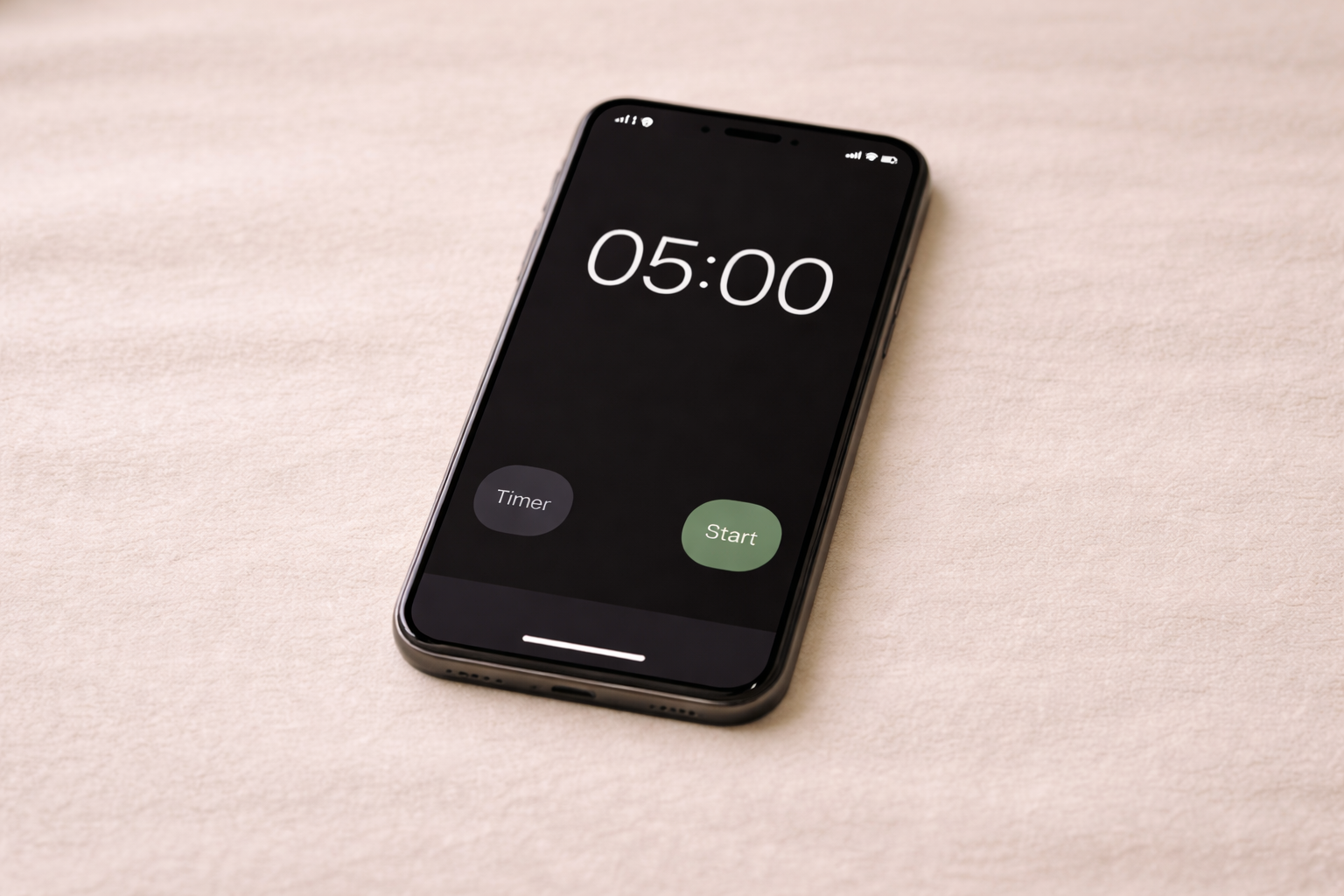
task for only 5 minutes. Then stop. The only material you need is a timer or a clock. You can use your phone, a watch, a kitchen timer, or
anything that shows time. We will build this
project slowly as we go. First, you will choose one task. Then you will set a
five minute timer. Finally, you will stop
when the timer ends. That is the entire project. You can work along as
we go if you want. You can also pause or
rewind at any time. There is no rush
here. By the end, the finished project will
be simple and clear. You have started one task
gently without pressure, and you'll have a
proof that you did. It does not need to be perfect. It does not need
to be impressive. Practice matters
more than polish. If your energy is low
today, that is okay. Even 5 minutes counts. You are already doing the
right thing by being here. Let us talk about why this works before we do it together.
3. Separate Starting From Finishing: Many beginners
believe that starting a task means committing
to finishing it. That belief quietly
creates pressure. Pressure makes
starting feel heavy. If starting feels heavy, the mind looks for relief. Relief often comes
in the form of delay, distractions,
or avoidance. The simple idea here is to separate starting
from finishing. Starting is just
opening the door. Finishing is walking
all the way through. You do not need to do
both at the same time. When you give
yourself permission to start without finishing, the task loses some
of its weight. It becomes smaller and
more approachable. There are a few simple pieces
to this idea. One is time. When time feels unlimited,
task feel endless. When time is clearly limited,
task feel contained. Another is expectation. When the goal is finishing, the mind worries about
effort and outcome. When the goal is starting,
the mind relaxes. The last piece is trust. When you practice gentle starts, you learn that beginning
does not trap you. You can stop when you choose. For example, if you
want to clean a room, thinking about cleaning the entire space can
feel overwhelming. But thinking about touching one small area for 5
minutes feels possible. Or if you want to write, finishing a full
piece can feel heavy. Writing for 5
minutes feels safe. This matters because starting
is often the hardest part. Once you begin, momentum
can happen naturally. But momentum is a bonus,
not a requirement. Here is how this flows
in a simple way. First, you choose one task. Next, you set five minute timer. Finally, you stop
when the timer ends. This works because
it lowers pressure, creates clarity, and builds
trust with yourself. We are not trying to do more. We are trying to begin more gently. Let us try it together.
4. Choose One Task To Begin : Sometimes the hardest part
is deciding what to start. When everything feels important, nothing feels easy to begin. If you feel unsure
here, that is normal. You are not choosing the most important task of your life. You are choosing one small thing to touch for a few minutes. Take a moment to
notice what has been sitting in the
background of your day, something small, something real. You only need one task. It's still the same
project, 5 minutes start. You can do this with anything. Folding laundry,
opening document, washing few dishes,
reading a page, clearing one small space. When I first write this, I
chose something very simple. I opened a notebook
that had been sitting close for weeks. That was it. No big go. Now gently choose your task. First, say the task out loud
or quietly to yourself. For example, tidy one
corner of the desk. Next, make sure it is a real task you can
physically begin. Then remind yourself that you are not finishing this task. You are only starting it. After that, place
yourself near the task. Sit at the desk,
stand near the sink, open the notebook. Finally pause for a moment
and notice that you have already begun by choosing. That small decision matters. This step is about
clarity, not commitment. You are simply choosing
where to begin. Notice how it feels to
choose without pressure. There's no promise
attached to this choice. You can carry this
feeling forward. In the next lesson, we will
add a clear time boundary, so starting feels even safer.
5. Set A Five Minute Timer : Even when you choose a task, the mind can still wonder
to how long it might take. That can pull pressure back in. A timer helps contain
that pressure. If you feel resistance
here, that is okay. Tirs are not about rushing. They are about safety. Use any timer or clock
you have nearby. When I began doing this, I used the simplest
option available. Sometimes it was my phone. Sometimes it was
a kitchen timer. The tool does not matter. First, look at your timer. Next, set it for 5 minutes. No ten, not 15. Keep it small. Then place the timer where
you can hear or see it. After that, remind
yourself of one thing. When the timer ends,
you will stop. No matter what.
This is important. The timer is a
promise to yourself. Now, begin the task gently. Move slowly. There
is no need to rush. For example, if
you are cleaning, touch one item at a time. If you're writing, write one sentence at the
comfortable pace. If your mind says
you should do more, gently return to the timer. You are not trying
to prove anything. You are practicing beginning. As the minutes pass, notice how the task feels when it
is contained by time. You might notice that it
feels lighter or more manageable or simply
less loud in your mind. That is the point. When
the timer is running, you are doing enough. In the next lesson,
we will complete the project by
stomping on purpose.
6. Stop When The Timer Ends: For many people, stopping
is harder than starting. There is a quiet fear that
stopping means failing. If that thought comes
up, take a breath. Stopping here is part
of the practice. This is still the same
project, 5 minutes start. When the time ends, pause. Notice the sound or signal. Then stop what you are. Put the item down,
close the notebook, step away from the task. Do not rush into the next thing. Give yourself a brief moment. When I first practiced this,
stopping felt strange. I wanted to continue
to prove something, but stopping taught me trust. Stopping teaches your mind that starting does not trap
you. You are in control. After you stop, gently
notice what change. The task is no longer untouched. You showed up. That is enough. You do not need to
evaluate the results. You do not need to decide
what happens next. You completed the
five minute start before the task was
only in your head. Now it exists in the real world, even if just a little. This mole action builds
confidence over time. You are learning
that beginning can be safe, kind, and finite. Take a moment to let that land. You did exactly
what you set out to
7. Complete The Five Minute Start : The project you created is
called 5 Minutes Start. You used one primary material, a timer or clock. The project
description is simple. Begin one task for
only 5 minutes. Across the lessons, you build
this project step by step. You chose one task. You set a five minute timer, you stop when the timer ended. Here is one example of
a completed project. Shown in its final form. Project title 5 Minutes Start. Project Description. I chose to tidy one corner of my desk. I set a five minute timer and worked gently
until it ended. When the timer finished, I stopped and stepped away. That is the complete project. This works because it focuses
on completion of the start, not the task itself. It creates clarity
without pressure. To upload your project,
take a photo or screenshot that shows proof you did
the 5 minutes start. This could be a picture
of the task area, a screenshot of the timer. Or a simple note
confirming you began. Upload one image or screenshot. Add the project title, add one short sentence
describing what you did. The best time to create
and upload this project is right after you
finish the 5 minutes. Keep it fresh and simple. Do not overthink it. Most people upload quick
imperfect projects. That is expected and welcome. This space is for
practice not performance. Once you upload, you are done.
8. Common Questions About Starting Gently: You made it through
all the steps. It is normal to still
have a few questions. Here are a few questions often
come up. First question. What if I want to keep
going after 5 minutes? That feeling is common. If you want to
continue, you can. But the practice is to
stop at least once. Stopping builds trust
because you learn that starting does not force you
to continue. Second question. What if 5 minutes
feels too short? If 5 minutes feel
short, that is okay. The goal is not progress. The goal is beginning. Short time lowers pressure, which makes starting easier. Third question, what if I
forget to do this later? If that happens, simply return to the same project
when you remember. Choose one task, set the timer, and then stop when it ends. Repetition builds familiarity. One small tip that helps is to tie this to a something
you already do. For example, starting a
task right after making coffee can help because
it feels natural. The most important thing
is to keep it gentle.
9. Begin Without Pressure : You did something
important here. You practice starting
without pressure. You learn that you can begin a task without committing
to finishing it. You learn that 5 minutes is
enough to create movement. If there's one thing I hope you take with you, it is this. Starting can be kind. Before, starting may
have felt heavy. Now, it can feel
lighter and safer. I believe small gentle starts change how we relate to
our work and ourselves. You are becoming someone who begins even on the
low energy days. A simple way to remember
this is the word start. Set time, touch the task, allow stopping, return
later if needed. Trust the process. Thank you for being here today. Please remember to
upload your project. A simple photo or
screenshot is enough. The best time to apload is right after you completed
your 5 minutes. If you found this helpful, please leave a review. Leaving a review
helps me grow as a teacher and helps other
beginners find this lesson. If you have questions that is completely normal,
feel free to ask. Take a moment to feel
proud of yourself. You showed up and
practice something new. Starting gently can open
more doors over time. Thank you for
taking this lesson. I will see you in the next one.
 Paul Nene, Helping beginners take action