Transcripts
1. Stop Feeling Scattered and Choose One Calm Task Order : When everything feels urgent, it can feel impossible to start. You sit down, look
at your to do list, and your mind jumps
everywhere. It feels noisy. You might even close
the notebook and walk away because it
feels like too much. If that sounds familiar, you are not behind.
You are not lazy. You are just looking at
too many things at once. Here we are going
to slow that down. I and Paul, I help beginners
learn simple skills in a calm and clear way so they can feel steady instead
of overwhelmed. I used to think productivity meant doing more
and moving faster. But the more I rushed, the more scattered I felt. What helped me most was
not adding more tools. It was learning how
to calmly place my task in one simple order. I like this topic because
it gives relief quickly, not next week, not after
a full system today. By the end of this, you
will have one clear, simple line of task arranged
from first to last. Nothing fancy, just
column order on paper. This works on its own, and it also fits naturally with other simple
productivity ideas. If you already love
complex planning apps and detailed color systems, this may feel very basic. But if you are a beginner
who feels mentally crowded before you even
begin, this is for you. All you need is paper and a pen. That's it. We will move slowly. First, we will understand what
column order really means. Then we will build your simple
order task line together. Finally, you will lock it
in and stop adjusting. You do not need to feel ready. You just need to be willing to write three tasks on paper. Let's begin gently.
2. Write and Arrange Three Tasks From First to Last : If you have ever
written a long to do list and then ignored
it, you are not alone. Long lists can look productive, but they often
create more stress. So we are doing
something smaller. Your project here is
called ordered task line. You will write three
tasks on paper and arrange them
from first to last. That is all. We will use one simple material,
paper and a pen. If you do not have
fancy stationary, that is perfectly fine. A scrap of paper, the back of the receipt or a
notebook page all work. What matters is that you
physically write it. As we move through
this, you will build your order
task line slowly. First, you will write the
three tasks again clearly. Then you will place
them in order. Finally, you will stop adjusting
and let the order stand. By the end, your paper
will show three tasks arranged in com line
from first to last. It will look simple, and that
simplicity is the point. You can work along with me. You can pause if
you need a moment. You can rewind if you want
to hear something again. There is no rush here. The final result is one
short line of task in order. Not a full system,
not a life plan. Just one small
decision made clearly. Perfection is not required. Clarity is enough. You are already doing
something important just by being here and
deciding to try. Now, let's understand
why this works.
3. Understand Why Simple Task Order Reduces Overwhelm : When you feel
overwhelmed by task, it is usually not because
there are too many tasks. It is because there
is no clear order. Your brain keeps asking which
one first again and again. That repeated questions
create mental noise. So instead of trying
to do everything, we answer one question
clearly. What comes first? What comes next, and
what comes last. Calm order simply
means placing task in a visible line
from first to last. That's it. There are three
gentle ideas behind this. First, fewer choices
create relief. If you look at ten task, your mind has to
compare all of them. If you look at three,
it feels lighter. Second, visible order
reduces repeated thinking. When you see a
task placed first, you do not need to
keep redeciding. The decision is
already made on paper. Third, stopping
adjustments builds trust. When you stop rearranging, you show yourself that your
first com decision is enough. For example, if you have to
answer emails, wash dishes, and prepare a short report, you might keep
switching between them. But if you calmly
place them in order, your mind can rest. The simple idea here is this, choose one count order
and let it stand. Here is the flow we will use. First, you will rewrite three
tasks clearly on paper. Next, you will place them in
order from first to last. Finally, you will stop adjusting and allow
that order to guide. This works because it
closes the mental loop. Instead of endlessly
comparing task, you make one decision about
order and move forward. In simple words, we
are not adding more. We are arranging
what already exists. Now, let's build your
order task line together.
4. Write Three Tasks Clearly on Paper : Sometimes the hardest
part is just starting. You might feel unsure
which task to choose. That is normal. We are not
choosing the perfect task. We are choosing three real ones. Take a slow breath. Your
next small move is simple. Write three tasks again,
clearly on paper. Grab your paper and pen. At the top of your page, write the title
exactly like this. Ordered task line. Now, first, think of three real tasks
you need to do today. Keep them small and realistic. We will use these three tasks. Answer two important emails, wash breakfast dishes,
prepare short meeting notes. Next, write them one under the
other without numbers yet. Just simple lines. You page now looks like this. Order Task line, answer
two important emails, wash breakfast dishes,
prepare short meeting notes. If you only have 5 minutes
today, that is fine. Writing these three lines
already reduces mental clutter. After that, pause and
look at your paper. Notice how different
it feels to see only three tasks
instead of a long list. You are not solving everything. You are narrowing your focus. When I first write this, I felt almost silly
writing only three task, but I also felt lighter. My page stop shouting at me. Take a moment and let
your page breathe. In simple words, what you just did was limit your attention. You created a small container. That is enough for now. Next, we will gently
place them in order.
5. Arrange the Three Tasks From First to Last : You might now feel
a small tension. Which one should be first? What if I choose wrong? That feeling is common. Remember, we are not
finding the perfect order. We are choosing a calm order. Look at your three tasks, answer two important emails, wash breakfast dishes,
prepare short meeting notes. Now, ask yourself
a gentle question. I could only do one
of these first, which would bring
the most relief. Let's say the
emails feel urgent. So first, lightly
place the number one in front of that task. It now becomes number one, answer two important emails. Next, choose which task
should come after that. Maybe washing dishes feels
quick and satisfying. So place the number
two in front of that. Number two, wash
breakfast dishes. Finally, the remaining task
naturally becomes last. Number three, prepare
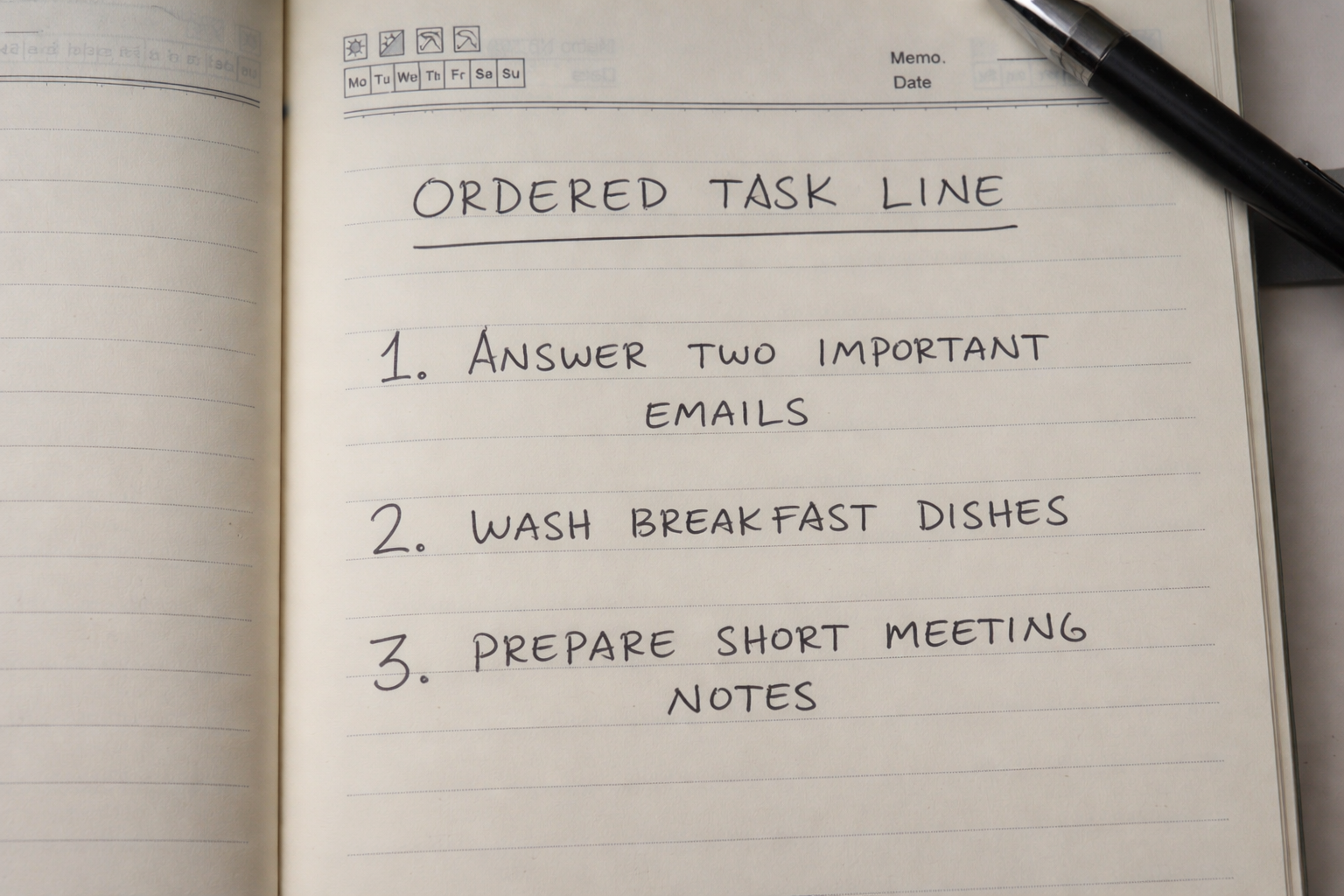
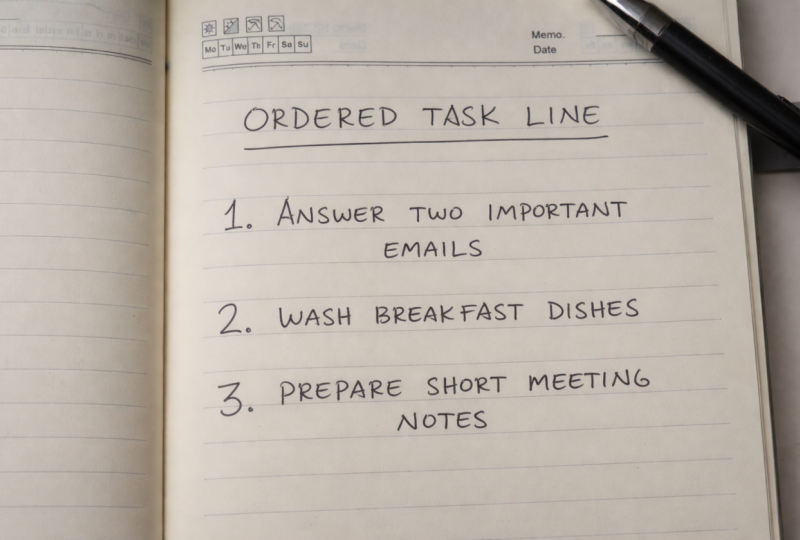
short meeting notes. Your page now looks like
this. Order task line. Number one, answer
two important emails. Number two, wash
breakfast dishes. Number three, prepare
short meeting notes. Now pause and look at this. You have just made a
simple order decision. When I do this, I
often feel a shift. My mind stops jumping
between tasks. It sees a path. You feel unsure, that is okay. You are practicing
making one calm choice. Let's say you were
tempted to switch the order again.
Notice that impulse. But for now, simply
let the numbers stay. In simple words, you have turned three floating tasks
into a small path. That path is enough to begin. In the next part, we will make one final move that gives
this calm order strength.
6. Stop Adjusting and Let the Order Stand : Sometimes after you number task, you might feel the urge
to change them again. Maybe you think, actually, maybe the dishes
should be first. This back and forth
can continue all day. If that happens, you
are not failing. You are just used
to re deciding. Now, we will gently
practice stopping. Look at your order task line. Order Task line. Number one, answer to two important emails. Number two, wash
breakfast dishes. Number three, prepare
short meeting notes. First, place your pen
down on the table. Next, slowly read the list
from top to bottom once. Then say quietly to yourself. This order is enough for today. After that, fold the corner of the paper slightly or
close your notebook. That small physical
gesture. Maybe you think. Actually, maybe the
dishes should be first. This back and forth
can continue all day. If that happens, you
are not failing. You are just used
to re deciding. Now, we will gently
practice stopping. Look at your order task
line. Order task line. Number one, answer to
two important emails. Number two, wash
breakfast dishes. Number three, prepare
short meeting notes. First, place your pen
down on the table. Next, slowly read the list
from top to bottom once. Then say quietly to yourself. This order is enough for today. After that, fold the corner of the paper slightly or
close your notebook. That small physical
gesture signals that the order is set. Finally, choose to begin with the first task without
changing the list. This is the calmst part. You
are not forcing yourself. You are allowing your earlier
decision to guide you. When I first learned
to stop adjusting, I noticed how much energy I
use to waste second guessing. Letting the order stand
felt surprisingly peaceful. In simple words,
you made the order, now you trust it before
your tasks were competing. Now they're standing in line. Take a small breath and
notice the difference. You have completed
the final move of your ordered task line.
7. See Your Completed Ordered Task Line : Your project is the
ordered task line. You use paper and
pen to create it. You wrote three tasks clearly. Then you place them in
order from first to last. Finally, you stop adjusting
and let the order stand. Here is the full final example exactly as built.
Order task line. Number one, answer
two important emails. Number two, wash
breakfast dishes. Number three, prepare
short meeting notes. That is the complete project. At the beginning, you
simply wrote three tasks. Then you added numbers
in front of each task. Finally, you chose to
stop changing the order. This simple line works because it closes the loop in your mind. Instead of constantly
comparing task, you see one clear path. To upload your project, take
a photo of your paper or type your final order task exactly like the
example structure. Include the title Order
task line at the top, add a short sentence describing how it felt to choose the order. It is best to create and upload this on the same day you use. That keeps the experience fresh. Keep it simple. Even
if your list took only 2 minutes to
write, that is enough. Most people share short
imperfect versions. That is completely normal. This space is for
practice, not performance. You have completed
all the steps. When you upload, you are
showing yourself that you can make a calm order
decision and follow through.
8. What If I Still Feel Unsure About the Order : You have finished building
your order task line. It is natural to have
a few questions. First question. What if I realize I chose the
wrong first task? That happens sometimes.
If you notice halfway through that something
truly urgent appears, you can create a new
order task line. But if it is just a small out, let the current order stand. For example, if you're
halfway through answering emails and
you think about dishes, stay with emails because your earlier decision
already reduced confusion. Second question. What if I
have more than three tasks? If you have many tasks, choose only three for this line. For example, if you
have seven tasks, pick the three most pressing and create the order
task line with those. This works because
fewer visible tasks make it easier to decide
the order calmly. Third question. What if I keep wanting to
adjust the numbers? That urge is normal. If you feel it, pause and reread your full order task
line from top to bottom. Remind yourself that the goal is calm order, not perfect order. For example, if you want to switch dishes and kitting notes, ask yourself whether the change truly matters today.
Often, it does not. Helpful tip is to place your pen away from the paper
after numbering. That small physical act reduces the temptation
to rewrite. Another powerful shift is to
view your list as a line, not a ranking of importance. It is simply the sequence
you choose for today. In simple words,
once you choose, let the line guide you.
9. Feel Calm and Use the PUT Method : Mm hmm. Did something small
but powerful. You took scattered tasks and
placed them in a calm order. You learn how to write
three tasks clearly, arrange them from first to
last, and stop adjusting. If there's one thing I hope
you take with you, it's this. Clarity comes from choosing an order and letting it stand. I believe simple decisions
create strong days, not dramatic changes,
small, steady moves. To remember this easily, think of the word put. First, you put three
tasks on paper. Next, you put them in order. Finally, you put the pen
down and trust the order. When you hear put, you
can smile and remember, Oh, that's what I was doing. It is simple, but simple works. Thank you for being here and taking this time for yourself. Before you leave, please
upload your order task line and leave a review in a
full sentence sharing how this help you because
your review helps me grow as a teacher and helps other beginners
find these lessons. If you have any
questions, that is completely normal,
feel free to ask. You started feeling scattered. Now you have a clear
line in front of you. That shift matters. Clarity often deepens when we practice small choices
like this again and again. Thank you for taking the class. I will see you in
the next lesson.
 Paul Nene, Helping beginners take action