Transcripts
1. Decide What Tasks Can Wait Today: Sometimes you look at your task list and feel
acquired pressure. Everything feels urgent,
everything feels important. And because of that, your mind feels crowded before
you even begin. If that sounds familiar, you are not doing
anything wrong. Many beginners feel this way. You want to be responsible. You want to stay
on top of things. But when every task feels equal, it becomes hard to move. Here's the gentle shift
we will practice today. Instead of trying to do more, you will decide what can wait. And that decision alone can
change how your day feels. I and Paul, I help beginners
build simple habits in a calm and steady
way so they can feel clear instead
of overwhelmed. I used to keep long task list. I thought that writing everything down
made me productive. But I noticed something honest. I was spending more energy worrying about tasks than
actually finishing them. That is why I love this topic. It's not about doing more. It's about choosing
less on purpose. While you are here,
we will focus on one clear decision only. You will decide which tasks
are not needed today. That's it. No tomorrow, not next week, just today. This stands on its own. You can use it anytime
your list feels heavy. It also connects naturally with other simple
productivity habits. But today, we keep it focus. This is not for
advanced planners who already have
complex systems. If you love color coding
and layered calendars, this will feel very
basic, and that is okay. You can use it as a
reset or refresher. This is for beginners, for someone who looks at the list and feels
tired before starting, for someone who wants relief
without complicated rules, you only need the
simple task list. Can be on paper or on your
phone, nothing special. Here is what we
will do together. First, we will understand
why every task feels urgent. Then we will look at
your current list. Next, you will gently mark tasks that are not needed today. Finally, you will set
them aside without guilt. By the end, you will feel
clear about one thing, which task you are
choosing to ignore today. If your mind feels
busy right now, take one slow breath. You are already
taking a calm step. Let's begin.
2. Create an Ignore List From Your Current Tasks : When your list feels long, it's easy to think you
need a brand new system. Maybe a new planner, maybe a new app,
maybe a full reset. Well, you do not need that here. Instead, you will create something very simple,
an Ignore List. Your project is to look at
your current task list, and clearly mark which
task can wait today. Those mark tasks become
your Ignore List for today. That is the one thing
you will create. You will use one
primary material, your existing task list. It can be handwritten page, and Notes app or
a basic document. Use what you already have. As we move forward, you
will build this gradually. First, you will look at
what is left on your list. Then you will mark tasks
that are not needed today. Finally, you will
set them aside in a simple way so they stop
pulling at your attention. The end, your finished result will be your original task list with certain tasks clearly
marked as ignored for today. It will not look dramatic. It will not look fancy. It will simply show
which tasks are waiting. You are allowed to pause
and work along as we go. You are allowed to rewind. You are allowed to move slowly. This is practice,
not performance. You are already doing
the right thing by choosing to filter
instead of panic. Let's look at what is really
happening behind the scenes.
3. Understand Why Everything Feels Urgent : When every task feels urgent, it usually means
one simple thing. Your brain sees all unfinished
items as open loops. And open loops is something
not yet finished. It quietly asks for attention. If you see clean the kitchen, your mind think not done. If you see email client, your mind thinks not done. If you see organized photos, your mind thinks not done. Your brain does
not automatically sort them by importance. It simply notices
they are unfinished. That is why your
list can feel heavy, even if some tasks are small. Here is the simple
idea we will use. Not every open loop
needs to close today. That one sentence
changes everything. There are three calm
throuts behind this. First, time is limited. You physically cannot finish
everything in one day. So some tasks must
wait. That is normal. Second, many tasks
are optional today. They might matter this week, but not in the next few hours. Third, choosing to
ignore something for one day does not
mean you are lazy. It means you are filtering. For example, if your list says, reply to friend
about weekend plans, and today is Tuesday. That task can likely wait. If your list says, prepare slides for
tomorrow morning meeting, that probably cannot wait. The difference is not effort. The difference is timing. Here is how we will apply this. First, you will look at your remaining task
without changing anything. Next, you will mark tasks
that are not needed today. Finally, you will set them aside so your eyes stop
landing on them. This three part flow
works because it turns a crowded list into
a filtered list. Instead of trying to do
more, you remove pressure. In simple words, you
are not deleting task. You are giving them
permission to rest, and that permission gives
you breathing room. Now, let's gently begin
with your actual list.
4. Look at Your Remaining Tasks Without Changing Them : When you see a long list, your first instinct
might be to start crossing things out quickly or adding more.
Pause for a moment. Right now, you do not
need to fix anything. You only need to look. Take your task list. That is your one material. If it's on paper, place
it in front of you. If it's on your
phone, open it and make the screen bright enough
so you can see clearly. Now, the projectile for this work is Ignore
List. Keep that in mind. Building that slowly. First, read your list from top to bottom
without touching it. For example, imagine your
list says finish report, clean kitchen, call dentists, organized photos,
reply to friend. Just read it quietly. Next, notice how your body
feels as you read each line. You do not need to fix
the feeling, notice. Maybe finished
report feels heavy. Maybe organized photos feels
distance. That is enough. Then say to yourself, This is just a list,
not a command. If your example line
is clean kitchen, simply looked at it and think, this is just a line on a page. After that, resist the
urge to add new task. If your mind says, Oh, I also need to buy groceries, let that thought pass. Today is about filtering
what is already here. Finally, take a slow breath while looking at the full list. See it as a whole, not as separate alarms, just as written words. At this point,
your project still looks exactly like
your original list. Finish report, clean kitchen, call dentists, organize
photos, reply to friend. You have not changed anything
yet. That is the point. You have practice looking
without reacting. Sometimes that alone
reduces pressure. You are learning that a
list does not control you. You can choose how to respond. In the next part, we will gently begin marking what can wait.
5. Mark Tasks That Are Not Needed Today : When everything stays unmarked,
everything feels equal. Now we will shift that. You will mark tasks that are not needed today. Take
the same list. First, ask yourself one simple
question for each line. Does this need to be done today? Start with finished report. If the report is due
tomorrow morning, the answer is yes,
leave it unmarked. Next, look at the clean kitchen. If it is already
reasonably clean and no one is coming over,
maybe it can wait. If so, lightly mark it. You can draw a
small line through it or add the word
wait next to it. Then look at the call dentist. If it is a routine
check and not urgent, you might mark it as wait. After that, organize photos. That clearly can
wait today. Mark it. If the friend asks something
time sensitive, live it. If not, mark it too. Now, pause and look
what happened. You did not delete anything. You simply mark what
is not needed today. Notice that only one
line remains unmarked. Finish report. You have just filtered your day. If your real list ends up with two or three unmarked
task, that is okay. The goal is not to
reduce it to one. The goal is to remove what
does not belong to today. You are practicing
choosing what to ignore, and that is a powerful shift. In the final part, we will
set these marked tasks aside so they stop pulling
at your attention.
6. Set Ignored Tasks Aside Without Guilt : Sometimes, even after
marking task as weight, they still sit on the page. They still catch your eye, and part feels slightly
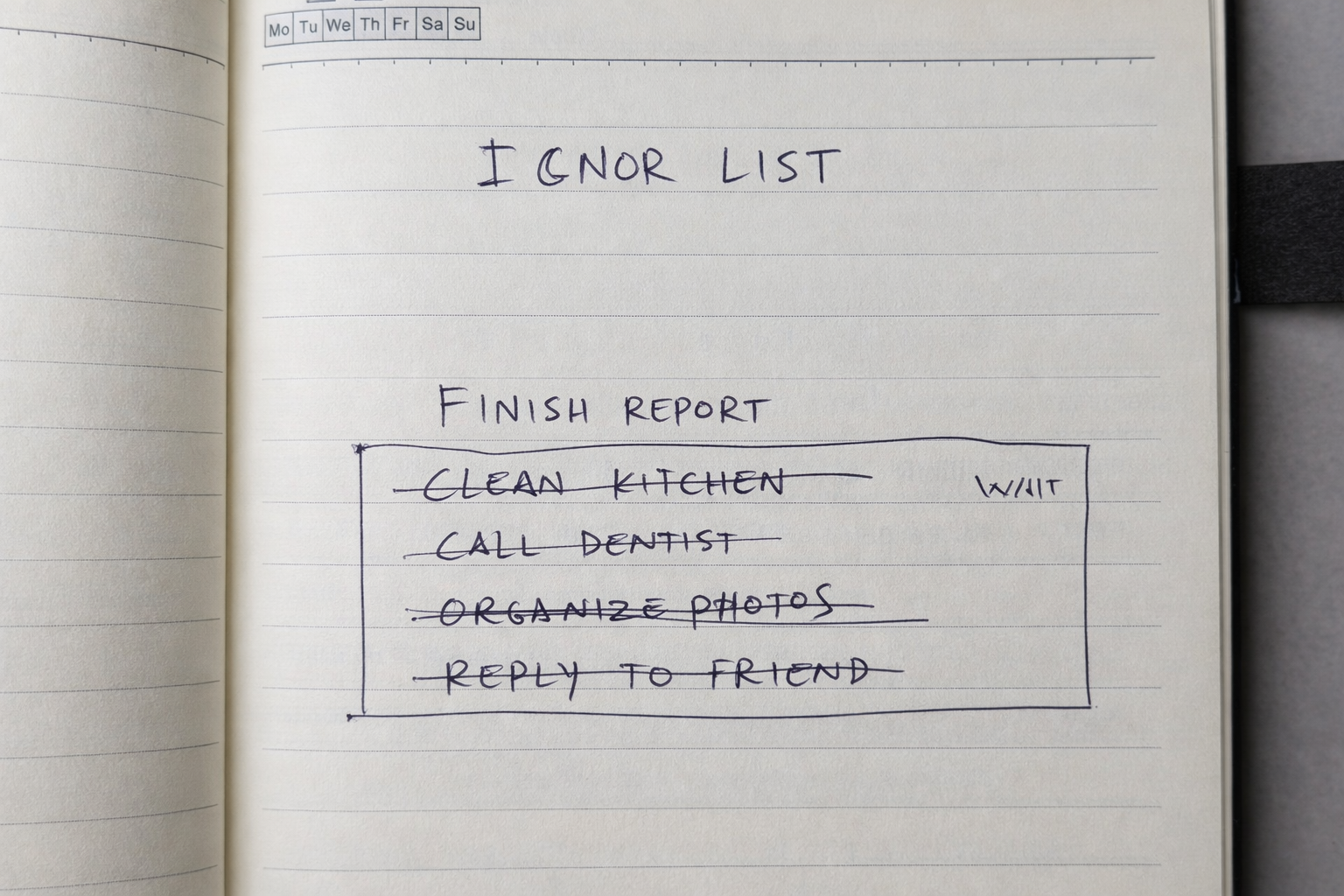
guilty ignoring them. That feeling is normal. Now, we will complete your Ignore List. So take your mark list. First, gently draw a light box around the task marked weight. Or if you're on your phone, move them on the bottom under the simple line that
says Ignore today. Next, physically
move your attention to the top section only. If on paper, fold the
bottom part slightly, so only finish report
is fully visible. Then say quietly. These
can wait until tomorrow. Look at Ignored section
while saying that. This is important. You
are giving permission. After that, notice that your visible list
is now very short. In this example, only
one task remains active. Finally, sit with that
short list for a moment. Feel the difference between five competing tasks
and one clear focus. You did not abandon
responsibility. You made a decision
about timing. This is the calmst
part of the process. No rushing, no pressure. Before, your mind
saw five open loops. Now it says one. That is the transformation. You have finished
Ignore List for today. You have chosen what to ignore. That choice gives you space.
7. Upload Your Ignore List With Marked Tasks : Mm your project is your Ignore List created
from your current task. You use one material,
your existing task list. The project title
is Ignore List. Here is the final example
we built together. Finish report, Ignore Today, clean kitchen, call dentists, organize photos,
reply to friend. At the beginning, you simply looked at your full list
without changing it. Then you mark tasks that
were not needed today. Finally, you group those tasks under Ignore Today
and set them aside. This final version is
your reference example. It is simple, it is clear. It shows exactly which task you are choosing
to ignore today. To upload your project, take
one photo or screenshot of your Ignore List showing the
task you marked and grouped. Add the project title
and Ignore List. Then write one short sentence describing how many tasks
you chose to ignore today. You can create and upload this right after finishing here. Or you can wait until
tomorrow morning when your list feels heavy
again. Keep it simple. Most students upload
very basic list. Even a quick version made
in 2 minutes is enough. No one expects perfection. This space is for practice. Once you upload it, you have completed every part
of this process. Now, let's answer a
few common questions.
8. What If I Am Not Sure What To Ignore : You made it through everything
from start to finish. It is normal to still
have small doubts. Here are a few common
questions. First question. What if I ignore something
important by mistake? That fear makes sense.
If you're unsure, look at your ignore
today's section and ask. If I leave this until
tomorrow, what will happen? If the answer is
nothing serious, then it's safe to ignore today. For example, if you
mark organized photos, then you can leave it
under Ignore today because delaying it one
day does not cause harm. Second question, What if
everything feels urgent? If everything feels urgent, try imagining you only
have 2 hours available. In that scenario,
which task truly must be done in those 2 hours? For example, if your list
includes finish report and call dentists and the
report is due tomorrow, then you can leave call
dentists in Ignore today because the deadline
makes the difference. Third question, what if I
feel guilty ignoring tasks? Guilt is common. If
you feel guilty, look at your Ignore List
and remind yourself. This is temporary. For example, if Clean Kitchen is
under Ignore today, you can tell yourself
you are choosing timing, not avoiding
responsibility. Here is one helpful tip. If you feel unsure, start
by ignoring only one task. If your list feels heavy, then you can ignore
one small task first because practicing with one makes the process feel safer and one powerful
mindset shift. Ignoring is not quitting. It is choosing. When you
choose, you regain control.
9. Feel Clear About What Can Wait Today : You did something
simple but powerful. You look at your
list, you mark tasks that are not needed today.
You set them aside. If there's one thing I hope you take with you, it is this. Not every task deserves today. You are allowed
to choose timing. You now see the difference
between a full list and a filtered list before everything
competed for attention. Now you can decide what waits. I personally believe that
small filters create big C. Not overnight success, not dramatic change,
steady clarity. Here is the simple shortcut
you practice today. I call it rest. Read your list, exclude
what is not needed today, set it aside, then
focus on what remains. Rest. That is what you were doing all along. It's
not complicated. It is gentle. And interestingly, when you let some task rest, your mind rest too. Thank you for being here and moving through this
with patients. Before you leave, please applaud your Ignore List if
you have not yet. Take a photo or
screenshot to share it. And I would truly
appreciate if you leave a review in a
full sentence sharing your experience because
it helps me grow as a teacher and helps other
beginners find this lesson. If you have questions, that is completely normal,
feel free to ask. You should feel proud right now. You made one clear
decisions about your day. At the beginning, your list
may have felt overwhelming. Now you know how to
calmly choose what can. Clarity often grows
quietly over time. The more you practice filtering, the lighter your taste can feel. Thank you for taking the class. I will see you in
the next lesson.
 Paul Nene, Helping beginners take action