Transcripts
1. Welcome To The Class!: Hello, art lovers.
I'm with Ullerstone and I'm very happy to
invite you on long, exciting journey into painting snow leopards with watercolor. If you've ever
been captivated by the elusive beauty
of a snow leopard, then you're in for a retreat. Join us in this class
where we'll delve into the enchanting world of
these majestic creatures, capturing their grace
and mystery on paper. Together we'll explore
techniques that bring out the unique characteristics
of the snow leopard, from its graceful presence to the intricate
patterns of its. Further, these
elements will help you express the essence of
this magnificent creature. I've been a professional
artist for many years, exploring lots of
different subjects, from wildlife and portraits to cityscapes and
countryside scenes. I've always been entranced by the possibilities
of water color, but when I started,
I had no idea where to begin or
how to improve. I didn't know what
supplies I needed, how to create the
effects I wanted, or which colors to mix. Now I've taken part in many
worldwide exhibitions, been featured in magazines, and been lucky enough
to win awards from well respected
organizations such as the International
Watercolor Society, the Masters of
Watercolor Alliance, Windsor and Newton, and the SAA. Watercolor can be overwhelming
for those starting out. Which is why my goal is
to help you feel relaxed and enjoy this medium in
a step by step manner. Today, I'll be
guiding you through a complete painting
demonstrating a variety of techniques and explaining how I use all
my supplies and materials. Whether you're just starting out or already have
some experience, you'll be able to follow along at your own
pace and improve your watercolor skills if this class is too challenging
or too easy for you. I have a variety of classes available at different
skill levels. I'd like to start off with a
free, expressive approach, with no fear of
making mistakes as we create exciting textures
for the underlayer. As the painting progresses, we'll add more details to bring it to life and
make it stand out. I strive to simplify
complex subjects into easier shapes that
encourage playfulness. Throughout this class, I'll be sharing plenty of
tips and tricks. I'll show you how to turn
mistakes into opportunities, taking the stress out of
painting in order to have fun. I'll also provide you with
my watercolor mixing chart, which are an invaluable tool when it comes to choosing
and mixing colors. If you have any questions, you can post them in
the discussion thread. Down below, I'll be sure to read and respond to
ever think he post. Don't forget to follow
me on Skillshare by clicking the follow
button at the top. This means you'll be the
first to know when I launch a new class
or post giveaways. You can also follow me on Instagram at Will Elliston
to see my latest works. What are you waiting
for? Let a leach. The artists win and
create a masterpiece that reflects the grace and
wonder of the snow, leopid.
2. Your Project: Before we begin, I wanted
to take a moment to express my gratitude to each of you for joining this class. It's deeply appreciated as we dive into the world
of snow leopards. We'll learn the delicate art of watercolor painting and discover
some unique techniques. Snow leopards are not only
a fascinating subject, but they also challenge us
to master the subtleties of watercolor to truly capture
their ethereal beauty. It's not just about
the final artwork. This class is a
chance to unwind, express yourself,
and connect with fellow art enthusiasts
who share your passion. You'll be amazed at what you can achieve with a bit of guidance, encouragement, and a
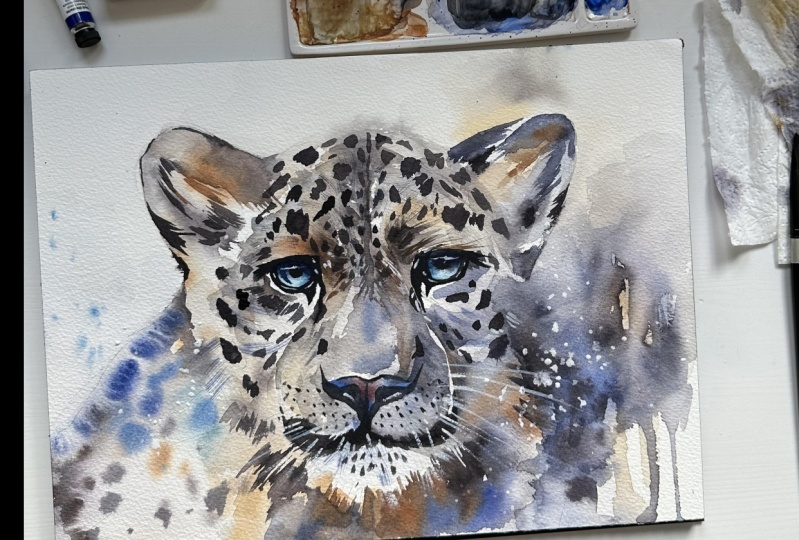
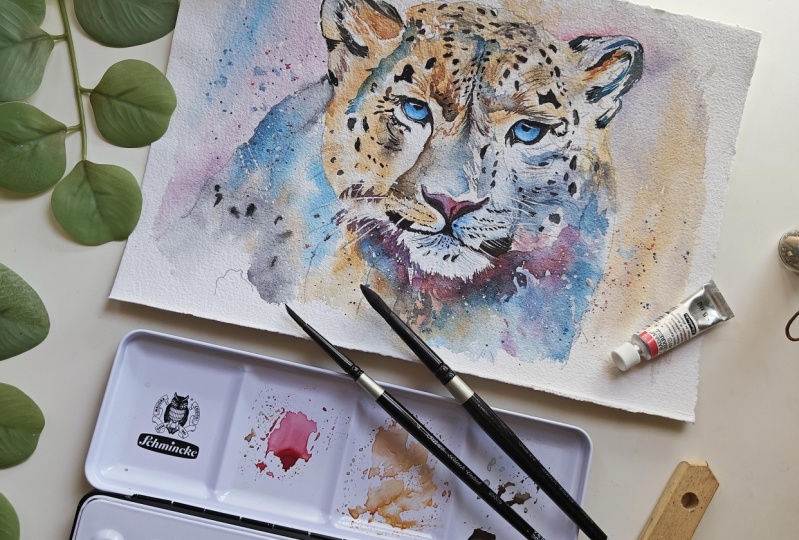
splash of watercolor. In the resource section, I've added a high
resolution image of my finished painting
to help guide you. You're welcome to
follow my painting exactly or experiment with your own composition
as we're going to be focusing on the painting
aspect of watercolor, I've provided templates
you can use to help transfer or trace the
sketch before you paint. It's fine to trace when using it as a guide for
learning how to paint, it's important to have the under drawing correct so that you can relax and have fun learning the
watercolor medium itself. Whichever direction
you take this class, it would be great
to see your results and the paintings you
create through it. I love giving my
students feedback, so please take a photo
afterwards and share it in the Student Project Gallery under the Project
and Resource tab. I'm always intrigued to
see how many students have different approaches and how
they progress with each. I'd love to hear
about your process and what you learned
along the way, or if you had any difficulties. I strongly recommend
that you take a look at each other's work in the
Student project gallery. It's so inspiring to see
each other's work and extremely comforting to get the support of your
fellow students, so don't forget to like and
comment on each other's work.
3. Materials & Supplies: Before we dive
into the painting, let's take a moment to review the materials and
supplies I typically use. Having the right materials can greatly impact the
outcome of your artwork. I'll go over all the supplies I use for
this class and beyond. They're very useful to have at your disposal and we'll make it easier for you
to follow along. Let's start with the
paints themselves. Like most of the materials
we'll be using today, it's a lot to do
with preference. I have 12 stable colors in my palette that I
fill up from tubes. They are cadmium
yellow, yellow ochre, burnt sienna, cadmium
red, Alizarin, crimson, ultramarine blue, cobalt blue, sill blue, lavender,
purple, di, black. At the end of the painting, I often use white guash
for tiny highlights. I don't use any
particular brand. These colors you can
get from any brand, although I personally
use Daniel Smith, Windsor, Newton Holbein paints. Let's move on to brushes. The brush I use the most is
a synthetic round brush, like this Skoda Pearl brush
or this Van Gogh brush. They're very versatile because
not only can you use them for detailed work
with their fine tip, but as they can hold
a lot of water, they are good for
washes as well. They're also quite affordable, so I have quite a few
in different sizes. Next are the mop brushes. Mop brushes are good for
broad brush strokes, filling in large areas and creating smooth
transitions or washes. They also have a nice tip that can be used for smaller details, but for really small details, highlights, or anything
that needs more precision. I use a synthetic
size zero brush. All brands have them and
they're super cheap. Another useful brush to have is a Chinese calligraphy brush. They tend to have long bristles
and a very pointy tip. They're perfect for
adding texture or creating dynamic lines
in your paintings. You can even fan them
out like this to achieve fur or feather
textures as well. And that's it for
brushes onto paper. The better quality
of your paper, the easier it will be to paint cheap paper crinkles easily
and is very unforgiving. Not allowing you to
rework mistakes, it's harder to create
appealing effects and apply useful techniques
like rubbing away pigment. Good quality paper, however, such as cotton based paper, not only allows you to rework
mistakes multiple times. But because the pigment
reacts much better on it, the chances of
mistakes are a lot lower and you'll be more likely to create
better paintings. I use arches paper because that's what's available
in my local art shop. A water spray is
absolutely essential. By using this, it
gives you more time to paint the areas you
want before it dries. It also allows you to
reactivate the paint. You want to add a smooth
line or remove some paint. I also have an old
rag or T shirt which I used to clean my brush. Cleaning off the paint
before diving it in the water will make the
water last a lot longer. It's always useful to
have a tissue at hand whilst painting to
lift off excess paint. Also, you never know when an unwanted splash or drip might occur that needs
wiping away quickly. I also have a water dropper
to keep the paints wet. When you paint, it's
important to have them a similar consistency to what
they're like in the tubes. This way it's easier to
pick up sufficient pigment. A hair dryer is useful
to have for speeding up the drying time and controlling the
dampness of the paper. And lastly, masking tape. And this of course, is just to hold the paper down still onto the surface to stop it sliding
around whilst painting. Also, if you plan on
painting to the edge, it'll allow you to create a
very crisp, clean border. Now that you're familiar with
everything you might need, feel free to explore with whatever materials or supplies
suit your style best. Now let's get ready to
start the painting.
4. Tips For The Sketch: Now this drawing is
quite an intricate one. I do suggest that you use the template for this one if you want to get a
good painting out of it. Unless you're very confident
with your drawing skills, I'll show you how to roughly draw it out
if you want to give it a go yourself in your sketchbook or even
if you want to paint it. But basically, if you want to tackle this many
intricate details like ever, you have to start off with the most simple, broadest shapes. That will be basically starting off with
a big, big circle. In this case, I'm pressing a little
bit harder than usual because I want
to make sure I can, I want to make sure
you can see it. But usually I'd be light so that I could
rub out the lines. And hopefully I can split that circle in half because
you've got the head. Then go to where the eyes are. The one good thing about this subject is
basically symmetrical. All the little dots are
the same on each side. Then I'm looking
for patterns like the ears come out at that angle. I can follow that angle
of the same side. Then it's not actually a circle, we're just using
that to simplify it. Now that we've drawn the ears, we can correct that by, it's a bit of a cut off there. We can use pencil to
rub that line out. Bringing that in around here. The skull comes in. The eyebrows section. Here, I'm looking at
a different angles, the eyes at that far, I'm keeping it
soft because I may make mistakes and I
might want to rub out. I probably will. It takes a bit of time to get these drawings right so that I
can scan them in. And then for you to use
them as a template. The templates look a
bit different from how I usually draw them myself, because I need to make sure all the lines are there
for you to follow. Whereas if I was drawing myself, maybe I wouldn't go into so
many details and I can rely on the paint to fill in the rest of the details
rather than the pencils. So I'll just be showing how
to block out the main details because it's always
useful to see how it's done rather than doing a
separate class on drawing. Just briefly showing
you how I go about it. I'm keeping things very simple. I'm looking at angles, looking at spatial differences. It takes a bit of
practice, it does, to work out the shortcuts of how to break all this
complexity down. It's not something that's
consciously learned, actually, just have to put in the practice and you
pick it up subconsciously. Your mind just works out where, where it's just
more like a sense. Up until now, everything
has been fairly symmetrical to keep it
slightly interesting. And I'm going to have the body of the snow leopard coming
to the side here of it. Now with the drawing, and I think with the template, I'm not going to put
it in all the circles, I'm just going to apply a few of them and keep
them symmetrical. For example, here, if
you look at a circle, draw a circle there. If you look at it straight
on, it's a circle. But when it bends with the
curvature of the skull, it will look more like that. As in perspective. Circles are straight on, they're going to
be more circular. But when they come up
here, when they're flat, they're actually going
to look more like that. And some right here that on
the very bump of the skull, they're just going to look like lines rather than
circles like that. But that will be
more clear when it comes to the painting stage. It's these things,
drawing these circles in perspective which gives
it an illusion of form. I think this is fairly okay. I'll have a, another check and I'm going to
start rubbing out these lines bit by bit and going back in with
a darker line, mapping out all the areas, the little highlights so that you can trace
it nice and easy, then rub out the soft lines. And then I'm going
to scan it in, stick this paper to
my painting board.
5. Painting The Eyes: There's many different ways to start this painting
or any painting, it's usually with
the lightest colors. First, for a change, I'm going to start
painting the eyes, the underlayer of the eyes. I'm going to take my number
eight synthetic round brush and just with pure water, just the eye area, just because it's easier to
wet it first with water, then add piquin second. So I'm going to use
Serilian blue for the eyes. Starting up at the top
and spreading it down. If it's too strong, you can suck some out on the
other side and put it in the other side like I just did. These eyes are darker at the top and then they
gradually get lighter. Another way of saying
that is they're lighter at the bottom and
gradually get darker. We want it to be a nice
smooth transition. If it's too wet, just
wait for it to dry a bit. We'll paint in the iris, the black iris later. This is just the underlayer at the stage, in the
corners as well. It's darker. You can see the pigment on my paper is starting
to dry off now, so I can go with darker
pigment without being red. It's going to run right
down to the bottom. I think Serilian blue
is a beautiful color. It's basically sky blue. Maybe at the top we can use
a bit of a different color. That's where it gets
extra dark because Serilian blue by itself
isn't such a dark color. And at the top, we really
want it to be very dark. I'm adding a bit of
ultramarine blue here at the very top. It's still wet the paper, it will still bleed into that other blue,
the serian blue, and create a lovely
soft gradient being the first part
of the painting. The blue eyes can
look quite intense, but don't forget we'll
be coming around later. The darkest tones
and these midtones will really pop and look a lot
lighter than they are now, that's the under
on the eye done.
6. The Left Ear: Now when it comes to painting the rest of the snow leopard, we're going for a bit
ignore the black spots. First of all, we want to
paint the form of the fur. And then at the end,
we'll paint the spots. It'll be a bit
difficult to paint the fur as well as the
dots at the same time. The spots at the same time. To make it easier, we're just going to paint the
form and then come back to the spots at the end starting from left to right
as I'm right handed. I'm going to work this
way so that I don't mess up painting as I go along. Likewise, if you're left handed, you can
work the other way. I'm going to mix
some yellow ochre. I'm going to have that ready. There's a dab of burnt
sienna in there, so that it's not
pure yellow ochre. Then easily enough, the
rest is just gray scale. So we could start
painting the ear. Do that again. I'm going to wet the area out to begin with. Starting with the
lightest sections first I'm just going to drop
in some gray pigment. I'd like to add some more. Warmth is dropping in some
of that yellow Oka mix. Black can be a very
intense pigment. Sir, you got to be careful you don't go
overboard with it. Just gradually build
it up as you go along. And as it starts to dry, you can go back over these areas and just dab pigment into to
out with that form, this illusion of form.
7. Extending The Wash: Moving out to the next
section, but still, but not connecting it to
the other section yet. A few strokes to imply fur, We can connect it a bit, but bring some of that
pigment out into there. Remember, we can
paint in layers. So we can start with one color and
then come back later on with a different color. We can take our time. We can also wait for it to, and come back later. I'm going to purposely go over the line in this bit to
create a bit of interest, a bit of a fading edge. And that will also allow me
to create a little bit of a highlight on the
edge of the ear. Bring it in on this side, I'm going to mix more
of that yellow Oka mix. And what I'm going to do now, I'm just going to go
over various parts of the painting where
the yellow ochre appears and have it
as a underlayer. You can create nice soft edges by first painting with the yellow ochre and then
going back with a white brush. A pure water brush. I mean where you can pre wet the water first, then occasionally
involving some grays. Remember we're ignoring
the spots at the moment. I'm right in the center here. I'm using slightly
thicker pigment. Where it's dark, it all
falls into the middle. We're doing a bit of
wet and wet technique here because as you can see, it spreads out wet. And wet is quite
intimidating way to paint. But the good thing about it is that you can take
your time with it. You can go slowly
paste yourself. Only add light
pigment bit by bit. You can always stop, wait for it to dry and then do
a second layer.
8. Gold and Silver: I like mixing this yellow
ochre with the gray. Because the gray gives
it a silver kind of feeling and the yellow ochre
gives it a golden feeling. And while it's wet, it might look like it's too
yellow Oca or too golden, but when it dries the
vibrancy will go with it. Let's do a similar thing
up here with the ear, the outside edge, leaving a little gap before
the pencil markings. Put it in some yellow, a little bit of gray
on top of that, and bring that across. It could be darker down here
and you can connect it, then it can fade out. And I think I want most of my edges to
be soft at the moment. Any hard edges that you
find as they're drying, just go along with a wet brush that's
completely full of water. Just a damp brush rather. Just soften out the edges just in the middle section
here where the mouth is. I'm not going to wet it
and use a little bit of blue in the center to
vibrants are grain out a bit and then just softening
the edge as it comes out.
9. Mixing Blue Greys: This side of the
painting is going to be more yellow akery down here. We're going to keep it
cooler and used blues, so there's a nice little
contrast going on. Keep that edge soft, using a tissue to
soften that edge. Same up here, going
in with pure water. Getting rid of that hard
edge of the tissue, bringing up that water,
we'll keep an eye on that. As it dries, it's all dry. Whenever you want
to get back to it and create a soft edge, you have to re wet
with pure water. Some of the edges,
wherever you are starting, even though we're
going to be abstract and have been quite abstract with what we've painted so far. As long as you get
the main details, the eyes, the nose, the mouth, and the ears, as long as
you get them well defined, then it will be quite
convincing as a snow leopard. Because after all, snow
leopards are well disguised. The rest of the fur
doesn't have to be that clean and tidy. As we move down, I'm
going to start to mix a blue dark by change to a bigger
brush if you need it. In some areas like down here, I think I will actually
use a larger brush. I don't even know. It's quite
a long process doing this. It's just because I'm taking
my time having a bit of fun. You can go faster if you want, but make it all tense when you can just
have fun, relaxed painting.
10. Painting The Body: Just when it starts to
dry, I'm just going to pick it up a bit of a tissue that it has a hard edge but lighter
with the tissue, some of the pigment stays,
some of it doesn't. Now, moving back onto this side, I want to clean my brush. Use pure water and
just wet this area. Pre wet it because I want
some soft edges here. Don't just wet the area that
you're planning to paint. But we beyond it so that it
can grade out to nothing, I'm trying to have
a neutral gray. Then I add a few
other colors just to make sure it's not
all the same gray, it's slightly influenced
by different colors. Just about here. I starting to paint
that section, then I use pure water on
my brush to fill it out, to bring it down and
then go the other way. Go back up like that, crazy little edge there. It's gonna go all the way
down, actually, Pretty much. And here I've got a water spray, which I'll just use to
make sure some areas don't dry because I'm not
ready for it all to dry yet. Again, that can fade
out to nothing. So I'm just using pure water to create a nice
soft edge there. You can dab a few other colors in there to make it exciting. But hopefully these
will fade out and look a bit like
spots later on. Now I'm going to be
a bit daring here and apply a little
bit of blue here.
11. A Burst of Blue: And now I'm going to be
very bold with this blue, put some really
thick pigment there. And I'm even going to
bring it out a bit here, f, f of that blue here. Just a bit of a burst of color. And I'll put a burst
of blue here as well, later on in the composition. And what that does is basically had a bit of excitement, oh no, I'm just gonna let that dry. I'm gonna re wet this area
here, soften that edge, drop in some lawn pigment there. Now I'm going to go back up to here and add a few
darker details, starting with this ear, using a very dark black. Starting to get the
full total range. Now sometimes you can, instead of mixing
a lighter black or pigment, you can paint it. And before it
dries, lift it off, just slightly lighter
than the rest of it, without having to mix a
lighter color or dilute it.
12. Building On Tones: More. Turn some dark pigment and then soften it. King it out with
want more water. Use a mixture of
these browns and dark blues just to add some
tone in the various places. Although it seems like water color doesn't have
a lot of versatility. You can go back and
forth quite a lot. If there's something
you don't like, you can rewet it, soften it out, take it back, add more pigment. Take more pigment away. Remember, once we
add the dots in, it'll make much more sense and all the features
like the eyes, and the mouth, and the nose.
13. Getting Expressive: Being a bit more slap dash
with my textures now. Because I want to
keep the energy, I want to feel the water color, I want to make it look
a bit more exciting. Moving quickly, we
can make it more exciting by adding that
energy into our painting. Negatively painting some of the fur bursts of color every now and then. The mixing, getting them to
mix together organically. It doesn't need to
be super detailed. The eye, the viewer
will put the details, fill in the details for us.
14. Fur Texture: Now we've done some
soft textures. Now I'm going back with the
tip of my brush to do some, what I call stagato
textures, Some hard lines, a paint the right hair. Now I'm going to move to my calligraphy brush
and just create, fan it out by stabbing
it on its side. Then in some areas
I'm just going to force the kind of shape
or direction of the fur. So it will just give us subconscious influence
that it's meant to be fur. Maybe do some brown ones clean my brush and
decent blue ones, dark blue baby down here. If you want to be extra clever, you can use water spray, holding it quite high
up and wet the paper. Get it nice and moist. Give it time to absorb in and
make the whole paper damp. You don't want it
to be glistening, you just want it to have a slight absorbitum of water without any pools of
water being created. Then once you got to that
stage, you can go back in. The water will make these
lines a bit softer.
15. Purposely Painting Outside The Lines: Now I just replaced the water in my water container so that I can have a nice soft edge here. I want to go over
the line here a bit, create a bit of interest. I'm going to also
tilt my paper and allow the water to
just drop down. Help it by starting it off. Now it's time to get very bold. Again, I'm going to think about
which area I want to wet. I think it's going to be here. Going all the way out. I'm going to put a very
strong pigment here. Maybe even this blue,
ultra marine blue. So here.
16. Making Drips: Tells on the side again. O, o, as it dries, dabbing
in some darker tones, in some of the areas holding up and
letting it drop down. We try, actually, I'm just
going to use this sharper, harder bristle brush
just to make some areas lighter to bring up the pigment. That's another way you can
blend some water color. You don't have to be nice and
soft, and delicate with it.
17. Painting The Spots: Now I'd say we've pretty much finished the abstract phase. We're going to start
going into the painting, the spot stage and the details. But let's start with some of the spots just so that we
know where we are tonally. The basic idea of
the spots is match it on both sides to
have it symmetrical. This is where it
really comes to life. They're not exactly round
spots because the curvature of the leopard affects
how flat they are. You can vary the consistencies
of your pigment. And you can see once you
start adding this pure black, it really starts to make sense. The chaos gets toned down a bit, and because they
aren't perfect dots, you're free to have
imperfections. I'm going to paint
the left side first because I don't want to smudge black dots following the
curvature of the mouth here. Just look at the
reference picture. Look at my painting and paint. When it comes to
painting yourself, paint everything that you
see that is pure black. As soon as it starts to fade
to gray, stop painting. We'll deal with that later. You see in some sections, right now I'm brushing
it and then very quickly ing it out so
that it's not pure black. Now try to match it
on the other side. Doesn't have to be absolutely symmetrical up here. They're quite flat
rather than spots. They're more like lines.
18. Finishing The Eyes: Now I'm going to go to the eyes and paint the
details of the eyes. If you use my tracing template, it'll be a much easier
job to fill out the areas that you're
meant to paint pure black. And of course the
iris in the middle, someone on the other side, making sure I'm
painting the outline first and then coming
back to fill it up later. I'm going to make
the blue pigment even darker at the top, trying to make sure those
pupils are well balanced. We can get our white guash. Let's do a little line like that over the top section, then underneath the eye, do a little line right in the
middle of this black patch.
19. The Last Few Details: I could turn this bit
again just like that. It doesn't matter if it
interferes with the black bits. I quite like having
that soft edge. So interfering with it
equates that soft edge a bit. Okay, now to paint the nose, and I'm going to start off with this serlian blue that we've been using for most
all the blues. And then painting
the top bit like that fact, paint all of it like that. You can add other
interesting colors that you might want to add. Maybe a different kind
of blue in these corners as it's no, maybe we can just put a little
bit of red in there. That's enough.
Just let that dry. We're going to use a hair
dryer to speed that up. And before it's completely dry, a little swiggle down
the middle that Id on the top edge to a
plaque line like that. Not much more to do now. Just add a few highlights. Let me dry it first,
Taking my small brush, making sure I'll have
a nice fine tip. I'm just going to
paint some whiskers to dry surf to it water. You can basically go on with
these details until you're happy when you feel like you don't need to add, add any more information. One final thing I'll
do is add some splets, but I don't want to interfere
with the details that we've already painted in the middle. I'm just going to
use a tissue to protect the important
details of the face. I'm going to get quite
a lot of thick pigment and dilute it a bit that it sts easily really be
quite generous with the amount of pigment that
you have of this white wash. Also, I, I should use
a thicker brush too. Maybe I'll use this
calligraphy brush. If you hold your
brush vertically, the splats will be a bit bigger. If you hold it horizontally, they will be smaller and that's done.
20. Final Thoughts: Welcome back and congratulations of reaching the
end of the class. I hope you found it enjoyable. If you haven't already,
take this opportunity to dive into the painting and apply the techniques
that you've learned. As we wrap up, let's take a moment to reflect on what
we've accomplished today. We've not only explored the techniques in
watercolor painting, but also discovered
the unique charm of capturing the elegance and grace of these elusive leopards. From building realistic
fur textures, to lestering the interplay
of light and shadow. And let's not forget those
mesmerizing blue eyes. Each brush stroke brought
our snow leopards to life. Every journey as an
artist is ongoing, and every stroke you make
contributes to your growth. Remember, watercolor painting is not just about technical skills, but also about expressing your creativity and
personal style. I encourage you to continue
exploring, experimenting, and pushing your
boundaries to create your own unique
watercolor masterpieces. As we come to the
end of this class, I hope you feel
more confident and comfortable with your
watercolor painting abilities. Practice is key when it comes
to improving your skills. So keep on painting
and experimenting. I want to express my gratitude for each and every one of you. Your passion for
watercolor painting is so inspiring and I'm honored
to be your teacher. If you would like feedback on your painting, I'd
love to give it. So please share your painting in the Student Projects
Gallery down below. And I'll be sure to
respond if you prefer, you can share it on Instagram. Tagging me at Will Elliston
as I would love to see it. Skillshare also loves
seeing my student's work, so tag them as well at Skillshare after putting
so much effort into it, why not share your creation? If you have any questions
or comments about today's class or want any specific advice
related to watercolor, please reach out to me in
the discussion section. You can also let me
know about any subject, wildlife or scene you'd
like me to do a class on. If you found this class useful, I'd really appreciate
getting your feedback on it. Reading your reviews
fills my heart with joy and helps me create the best
experience for my students. Lastly, please click
the follow button up top so you can follow
me on Skillshare. This means that you'll be
the first to know when I launch a new class
or post giveaways. I hope the lessons today have
sparked your creativity, leaving you eager
to explore more in this captivating world of water color until we meet
again. Happy painting.
 Will Elliston, Award-Winning Watercolour Artist