Transcripts
1. Intro: If I told you that the only
thing standing between your videos and professional
results isn't geared at all. It's just knowledge. In this class, I'm going
to show you how to turn your smartphone into a super
powerful filmmaking tool. The same phone you
carry every day. We'll go straight
to the techniques that makes the
biggest difference. We're going to talk
about how to pick the right lens, control
exposure, color, film with stable movement, control your lighting, and
how to record perfect audio. And this is valid if you're
filming for YouTube, reels, clients, or even
just for yourself. By the way, I'm
Andrea, filmmaker and content creator
that is leaving the backpack with the
heavy camera gear behind more often than
I want to admit to, and just using this little guy. And by the end of this
class, you're going to shoot a 1 minute creator reel
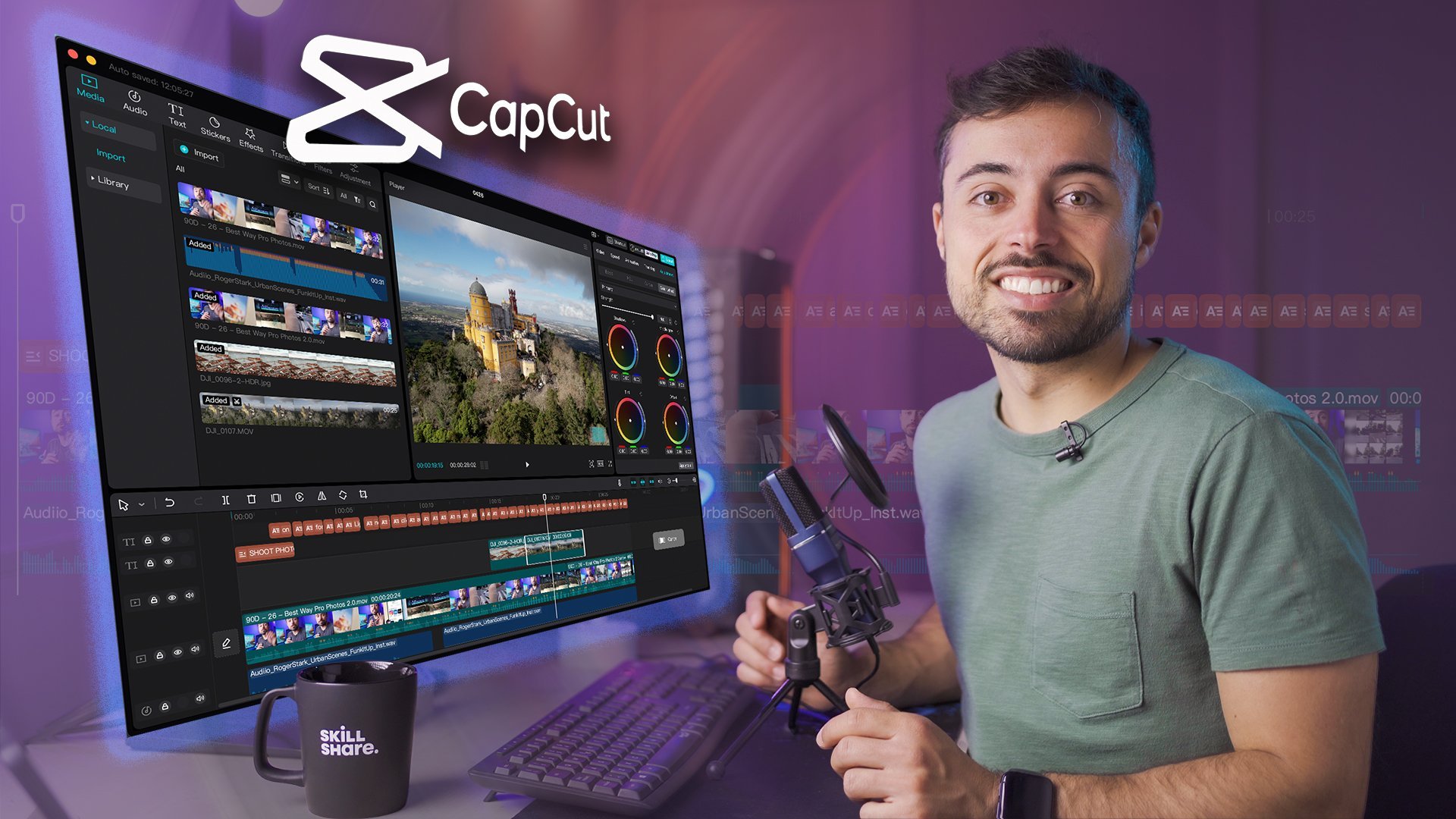
ready to be edited. And for the editing, don't
worry. I got you covered. I'm going to link you to
one of my other classes, either Capcut for desktop
or Capcut for mobile. And there you're
going to learn how to shape your videos into something amazing using your
computer or your smartphone. Alright, hope you're excited
about what's to come. And in the next
lesson, we're going to talk about the class project.
2. Class Project: Go here is not only to
learn but to practice. So you're going to
create a 1 minute, create a real, just a short
sequence mixing Aro and Vero. Tell a simple visual story. To make it fun, I'm
going to give you three creative directions
for you to choose from. Just pick the one
that you feel more natural and easier to do. The important is to just do it. Option number one
is show your craft. This kind of it requires filming a little bit of zero to
show what you are doing. It can be illustration,
cook you want. And adding a voice over to tell the story
would be fantastic. This way you're going
to be practicing composition and storytelling. Second option is a
day in the life. The catch here is that this kind of video doesn't require you to go out of your way
to film anything else. Just follow your journey
throughout the day. Like this, you can
practice, framing yourself, finding beautiful
compositions and light, and just practicing
with the phone. Option number three
is tell a story. Now in this video,
you're going to practice your talking to
the camera skills. It can still be related
to showing your craft. But you can also share
a story if you like. And you can cover pauses and
cuts with zero on top of it. Just think about this structure. Hook. What and why? Show, and then the payoff. Now, here the simplest ideas
are the ones that work best. Coffee rituals, behind
the scenes setups, little travel
stories, you name it. Now, once you're done shooting, you can post in
the Project panel, one of the clips that you liked
the most and just give me your impressions about what felt easy and difficult to do
so that I can help you. Now, if you already know
how to edit and you want to showcase your final work,
that's even better. Just upload your video to YouTube and put it
as unlisted and paste the link in
the Project panel so that I can see it and
give you some feedback. Alright, now let's make
sure that you have the right setup to bring
your ideas to life.
3. Initial Setup: Definitely don't need
any expensive gear. Any modern phone can
shoot great video. Important is knowing how
to use it correctly. You're going to
choose which phone, lens, app, and settings to use. First of all, the
brand of the phone you already have or the one you're thinking about buying doesn't matter for this class. They are all going to
have different qualities, and we're going to
use one app that is common for IOS and Android. Now, if you're thinking
about buying a new phone, I would suggest you if you're
on the Apple ecosystem, if possible, get
something from the 15 P on because it has some
different video advantages. Introduced a new
filming profile called Epolog that really
looks very good. If you're an Android
and on a budget, I highly recommend you
the OpoRno series. But if you want something
more top notch, you have the Find
Ek series that just competes with the top
Samsungs or iPhones. But as I said, what you
already have is enough. On the screen now, you're going to be able
to see the same scene filmed with $150 smartphone. 401,200. Quality is better, but it's way less
than you can imagine. Now, one thing in common
with most phones is that you're going to have a
choice of different lenses. And one thing that is important
here to know is that one of them usually outperforms
all the others, and it's usually the
primary one X lens. It often has the
largest and best sensor at the back the glass. And this is what receives light from outside and
creates the image. It means more sharpness and best performance in low light. Now, especially when doing some o and going out and about, you're going to
be wanting to use the ultra white or
the telephoto lens. And they can work,
but you have to pay a little bit more attention
to the environment. Now, if you want to go
really deep into this, you can actually
buy a set of lenses to be used on top of
your primary lens. This is definitely
going to make things look a little bit
more professional, but this is already on
that 1% improvement that you can do by the end. Okay, now, which app to use? The native camera app is okay, but it won't give you manual
control over everything. I work, but it can be also a little bit
unpredictable at times. One thing that screens
amateur video is when settings change in
the middle of a video, like the luminosity or
the color, for example. So for food control, I recommend
you two different apps. The first and best one is the one that I'm
going to be using throughout this class is
called Blackmagic Camera. And the second one
is called ProShot. Very soon, there's going
to be also a new version of the moment Pro app. So if that's already out,
you can try that also. The important is that any
of these are going to allow you to dial the
settings manually. Things like shutter speed, ISO, white balance, and much more that we're going to
talk about in a second. Let's start with the
Blackmagic Camera, and later on, you can try others to see which
one you prefer. So once you have it
installed, open the settings, and let's go through
them together. First of all, if
your phone allows, let's do four K. If not, just choose ten ADP,
and that's okay, too. This is how much information is going to be in a
single frame of video. Basically, four K is four
times bigger than ten ADP. So more detail sharpness, but also occupies
a lot more space. Codecs are going to be
different on Apple and Android. Here, if your phone
allows for it, just choose the Apolog option. Although it is going to need an extra step, it's that good. But if you want to go simple, when there's
something that works, both on IOS and Android, you can choose 8265. And the bit rate, anything
around 50 megabits per second is going
to be just fine. Basically, the higher
you go on this list, the higher the resolution and information you
have in the file. But the difference
between each one of these starts getting smaller
and smaller as you go up, but the file sizes
get much bigger. So this area here is
actually the sweet spot. Now, if you're filming
something else, you have the whole
screen to look at and frame whatever you want. But in the case in which you're
trying to film yourself, then you have to think about
how to see that you're in. Naturally, the selfie camera is going
to be the easiest one. You can see the whole screen and you can see where you are. But as we talked about before, the best camera in your phone is the primary lens
that is on the back. And this is the difference. See? But this way, how are
you going to see yourself. And there are many
different solutions. The hardware solution
is just using a mirror. You can use whatever you have at home or you could get one of these mirrors that has just this arm to connect to the phone, and then you can
see the if you want something more software based,
let's check some options. Now here, you're going
to need one other device to see the screen. The easiest most practical
is if you have a smartwatch. Both Apple Watches and
Android Smartwatches can see the screen
of your phone, and you can start and stop
recording from there. A lot of brands
are going to have specific software to help
you do this kind of stuff. Apple has the screen
mirroring app in which you're going to be able to see
your phone in your Macbook, and Oppo has its own software that is going to allow you
to do exactly the same. Now, if you have a
complete different mix of smartphone and computer, you can just use the Android cast it's going to
work for Apple, Android, Windows, whatever you need. And
use is very simple. You just open it on both devices and you provide the code
from one to the other. So one fits the image and
the other one receives it. It can be a little bit laggy,
but in this situation, all you need is one frame to
check if you're in position. All right, so now that
your setup is dialed, let's master the
manual controls. In the next lesson, we're going
to talk about frame rate, shutter speed, ISO,
and white balance.
4. Frame Rate: The automatic mode in your main camera app is already so good, why bother with manual control? And that is because
when you're in control, you are choosing how to
tell a story and avoiding all those amateur mistakes like luminosity, changing or color. And the best part is that once
you dial what you need in, you don't need to
touch it anymore. So let's start talking
about frame rate. Every video is made up of
steel images or frames. And when they're
played in sequence, they create this
illusion of motion, and your frame rate
is what's going to decide how that motion feels. And you're going to choose it based on two different things. First, the purpose of your shot. Is it a top hell
video? Is this zero? Are you going to do slow motion? And second, the
region you're in. But why the goal
here is to match the frame rate to the local
electric current frequency, which is 50 hertz in Europe
and 60 in these other places. This just means that
your camera is going to be completely in
sync with the light. So no black bars, no flickering. In most of Europe, we use PA, which means that we
are going to be using frame rates that are
multiples of 25, so 25, 50, 100 FBA. In the US and many other
countries like in Asia, for example, it's
going to be NTSC, meaning that you're going
to be using frame rates like 24, 30, 60, 120. So if you ever noticed
it where you live, your phone has a wrong setting. Or if you noticed it, when you travel, you should change that. And it's such an easy fix to make everything look
more professional. On Apple, all you have to do
is go to the settings and enable PA frame rates
in case you need them. On Android, you
usually don't need to do anything. They're all
going to be available. You just have to choose in
the Black Magic camera, they're all available
from the start. Okay, you've picked your region. Now you have to choose how
you want the film to look. Let's take Paul as an example and start with the
most basic frame rate, which is going to be
25 frames per second. It's great for natural motion,
interview, daily content. Now, if you double the
frame rate to 50 FBS, you're capturing
twice the amount of frames that you needed
to show in 1 second. The same action now is going
to take twice as long. This means slow motion. And if you go even further,
like 100 frames per second, the same action now
lasts 4 seconds. We're talking about 25% speed. And this is how you get those beautiful slow motion shots. So a summary, simple
to remember, 24, 25, 30 FPS, great for interview, talking head videos, social
media, YouTube, love it. 50, 60, 101 20, great for Bureau
and slow motion. So let's go deeper into shutter
speed than motion blur.
5. Shutter Speed: Shutter speed is the
setting that is going to control for how long each of those 25 frames in
a second is exposed. It's basically saying for
how long your camera is going to open her eyes and
watch what's happening. One 50th of a second, for example, sounds very fast, but if something is moving, there is enough time for
it to change its position. That object is not in
the same place anymore. So the slower the shutter speed, meaning more time the camera keeps watching,
more this object is meaning more motion blur. The faster it looks,
meaning that if the camera just peaks
quickly what's happening, they're almost going to get just a photo of the situation. And if it's really
fast, it's even hard to understand if the object
is in motion or still. Now, as I told you before, there is a simple rule of thumb. Shutter speed equals two times the frame
rates per second. Not mathematically,
just the number itself. So 25 FPS means one
50th of a second. 50 FPS, 1100 of a second. Now, for the video
itself, if you just put these frames one
after the other, you're going to see that
high shutter speed. Causes a lot of jitter,
chaos and intensity. And if you go low, everything is kind of blurry in motion, looks like you had
way too many drinks. Pro tip, if you're shooting
outdoors, automatically, your phone is going
to want to bump the shutter speed high to compensate for the
amount of light. If you want to avoid it,
you can use an NDFter. Some brands have special
phone cases that just allow you to adapt Difuter
on top of the lens. If you don't have
that, you can just get an Difuter and just
put it on top. Or if you don't have
a solution for it, just know that the jitter and everything that is happening is exactly because
the shutter speed is too high to compensate.
6. ISO: Let's talk a little
bit about ISO, your digital brightness control. It makes the image
brighter without adding any lights to the scene. Sounds great, right,
but there's a catch. When you bump up the ISO, you're amplifying
the camera signal, and that introduces
digital noise, these little ends that you
see in the back of the video. The smaller the sensor, the faster this noise appears. So most smartphones are
going to look clean in good lighting until
about 400 ISO. Professional cameras can handle much more than that, but
the idea is the same. You want to keep it
as low as possible. The next setting is something a lot of people underestimate, but it's super important.
It's the white balance. It just controls how your
camera or smartphone sees the colors and basically
what they think is white. If your white balance is off, your whole scene is
going to shift color. The colors are all going to be tinted, something different. It's like adding a
wrong color filter without realizing it.
But there's an easy fix. You can go to the white
balance and just set auto to let it try to
find the correct place. But then don't leave it in auto. Just lock it and you're
going to be good to go. If you think the
automatic is not doing a very good job, you
can do it manually. Basically going to have
two different wheels, one for blue and yellow, and one for magenta and green. So just go in the
opposite direction of what you're seeing on screen, meaning if it's too yellow, just push it towards blue. If it's too green, just
push it towards magenta. And use as a reference point something that is
white or black in the scene because
they are a little bit easier to see if there's
a color cast or not. Once you're satisfied,
lock it in place. A lot of things can make
the camera try to change it in the middle of a shot
like different lights, and here some phones
react differently. So it's just better to have it fixed throughout your shot. You'll be able to see that in
the Blackmagic Camera app, there are already some presets
here that you can try, and they basically refer
to the temperature of these different lights so that you don't have
to do it manually. If one of them
work, just use it. So now that you've
mastered control, let's take it to the real world.
7. Movement: In this lesson, we're going
to move with purpose. I'm going to show you how to
keep your footage stable, smooth and cinematic without
any kind of extra gear. For rows or interviews, stillness
equals professionalism. Now, if there's
one piece of gear that is worth buying
in the beginning, probably just a
very simple tripod, even a compact Jobi tripod
with a phone mount. You instantly remove that
doubt about where to balance the phone here and
having it fall in between shots,
changing position. So lock your frame, hit record, and let the subject
do the movement. Now, when you do move handheld, you have to make the
camera part of your body. Hold it with two hands
close to your chest. Bend your knees and move with your hips. Not just your wrist. And the further away the
phone is from your body, the shakier it's going to get. So breathe and moving during your exhale, it's much smoother. Walk heel to toe like
this very slowly, and you can anchor your elbows against your body
if it's possible. And if you need to pen, rotate your whole body,
not just your arms. Now, people often ask me
if a gambo is worth it. And honestly, you're going to be very surprised on how much smooth your handheld footage can be if you just
follow this practice. These techniques are super useful when you're
shooting zero, and each shot should
have one purpose. Easy to show movement to review information or to add context. So the basic tip here is to just avoid penning infinitely. Short controlled clips
that feel natural. Short slide pens help review
what's in front of you. Slow push ins or pull out. Tilts help review the
scale of something. Arc and orbits help you
review the dimension. Proper follow movements when you want to keep
up with something. But remember to walk
the way I showed you. So if you want to
practice, you can try to do a three shot bureau here, a static white shot for context, a slow handheld slide or
push in for movement. And finally, a detail shot. And when edited together,
you're going to feel how these all just
flow together. Camera movement isn't
about showing off, it's about helping your audience feel what you're filming.
8. Framing: You learn how to
move the camera, let's think about
where to point it. Composition is how
you make people feel something without
saying a word. It is what turns a random
shot into a visual story. Every frame should
have a purpose. You have to ask yourself,
why am I showing this? What should the
viewer feel about it? And this mindset
changes everything. But let's be practical.
The first thing I want to do is to activate
the grid lines in going to be able to see
now that the screen is divided into thirds. This is going to make
it easier for you to frame symmetrical shots or compose them in a way
that your subject is above one of the lines, meaning at one of the thirds. If your character is looking right, you can place them here. If it is looking left,
you can place them here. It just makes the viewers eyes flow naturally
through the frame. Second tip is
simplifying your frame. Smartphones have
very small sensors, meaning that most things
are going to be in focus. That's why clot backgrounds
are very distracting. Scho simple clean spaces, playing backgrounds and separate your subject from
the background. You can also use
what's around you to guide the viewers
eyes to your subject. Streets, fences,
railings, whatever these lines are going
to add flow and geometry to your scene. By
now, you've got the idea. The concept is to help guide the viewer to the right place. Now, flat shots
feel very lifeless. So you can try
composing your shot, adding several different
layers like a foreground, your subject, and a background. And this could mean filming through anything you can find, maybe through a door
or beside a plant, anything that can act
naturally as a foreground. And most of all,
framing can be a way to entice some sort of emote
So a wide shot feels open, cinematic, and
gives more context. Medium shots feels more personal and connected
to the viewer. And close ups feels more
emotional and intense. And the idea here is that
you're going to mix them up. A practical exercise
you could do filming the same shot in these
three different distance. Take a white shot, a medium, and a closer, put them together, and you're already going
to feel how a story is much better told like this. Now, this is not about
following strict rules. It's just about guiding
emotion and attention. Next up, we're going
to talk a little bit more about
lighting and how to shape contrast and color to
add mood to your composition.
9. Lighting: You can completely
transform your video. And you can have the
best smartphone, best camera app,
best composition. But if lighting is bad, it's
going to ruin everything. And once you start
paying attention to it, where it's coming from, how harsh it it, the color, then there's no turning back. And you instantly start
shooting better videos. Now, the first thing to
look at is intensity, how strong your light sources. If your video is
looking too dark, your first instinct might
be to just raise the ISO. But remember that that brings noise to your so you can try getting closer to the source of light or adding more
light to your scene. And it can be
something very simple, just like another lamp, being closer to a reflector
wall or even opening a white notes app on your laptop screen and leaving
it open in front of you. And the same thing is valid
if your shot is too bright. You can start cutting down the light a little
bit by stepping back or diffusing it a little bit more
like with curtains. Now, the direction of the light completely changes how
the subject looks. Straight on, removes
texture and dimension. Great for makeup tutorials, for example, but not much else. If you want more
depth, you have to move the light a
little bit sideways. This way, you're going to
create some shadow and light, and this contrast gives more three dimensionality
to the scene. If you can make it
at 45 degrees to the side and up, it's
going to look like this. Being back lit usually
doesn't look too good. And more often than
not, the phone is going to try to
compensate for that, making everything overexposed in the background and you a
little grayish and lifeless. A silhouette shot
can look very cool. Now the next element
is light quality. How harsh is your light? And the easiest way to tell,
just look at the shadow. Of course, it depends on
what you want to achieve. But usually softer light is more flattering and it's
easier to deal with. So using some sort of diffusion
in front of the light, and the bigger the light source, the better it's going to be. That's why a very small
lamp looks very harsh, but an enormous
window look amazing. Let's talk a little
bit about color, and not all the lights have
the same color temperature. And mixing them up can
totally ruin your image. Usually, indoor lights are
warmer around 3,200 kelvin. Daylight outside is
cooler around 5,600. And if you start
mixing those two, you're going to see
blue light coming from the window and warm tones
coming from the lamps. And it's almost
impossible to fix this. So the best option is to choose
and stick to one of them. On the Blackmagic Camera app, you have some
presets around here, or you can set it manually to match the light
source you have. Now, what are the
best light sources you already have for
free, and it's the sun. But just be aware that early
morning and late afternoon, the sun is much softer than
it is during the midday. So during those times, probably it's better to just film in the shade than out in the what tools could you have
to improve it even more? Things you might have at
home like for example, a foam board could be enough to reflect some light onto you. A bed sheet or shower curtain
to avoid harsh light, a small lead panel or a desk lamp for a
key light at night. It's not exactly
about what you have? It's where you put it. You see how lighting
is storytelling. Bright and even lighting
feels happy and open. Dim directional light feels
more dramatic, mysterious. Okay, next up, we're
going to move into sound, this invisible layer that
makes your images feel alive.
10. Sound: Have the most cinematic
footage ever, but if the sound is bad, people are going to click
away in seconds. And good audio isn't
just a technical thing. It's emotional. It makes your video feel
polished, immersive. So in this lesson, we're
going to make sure that your sound matches the
quality of your visuals. Let's start with the basics. Where does your sound come from? The phone's built
in mic is fine, but it picks up everything. Traffic, echo, wind,
your footstep. So for anything more serious, I would recommend using
an external microphone. A small level microphone is perfect for interviews
or talking head video. You can clip it to your
shirt, and you can instantly see how the dialogue
becomes much clearer. Just pay attention if your
phone has USBC lightning or a microphone jack lavalier microphones with
all these types. But if you prefer more freedom, and this is my recommendation,
I would go wireless. The receiver is going to be
connected to the smartphone, or it's going to be connected
directly via Bluetooth, and the transmitter is going
to be on the person talking. Okay, so now the receiver is connected to the smartphone and I have the transmitter here, which means that I can even
go farther away or back, and the sound should
be just the same. The dogs are ba. Some great
options for brands are Road, Boya, Holland, and DJI. Oh, super reliable and small. And the audio from the
microphone ends up inside the video file that you're going to
have on your smartphone. So there's no extra step
needed. A pro tip here. If you need to record something, but you don't have the
external microphone. At least check if your
smartphone offers the option of choosing from where the sound
is coming from. Usually, they have
different microphones, and you can tell
the app if you want voice recorded just from
the front or the back, depending if you're interviewing someone or if you're just
flogging, for example. With the Blackmagic Camera app, you can even choose which
microphone you want to. Before anything
serious, I highly recommend you to do
a test recording. Speak naturally 5 seconds, and then put on the headphones
and check, how is it. And I'm sure you're going to
pick up some problems like wind noise or the microphone rubbing on your shirt or echo. When you're happy with the
setup, check the levels. If the voice is reaching between minus six and minus ten DB, it's going to sound
loud enough to feel full but not too much, that it's going to be distorted. In a pro tip here, just put
your phone in airplane mode, or at least do not
disturb mode because calls and alerts arrive exactly at the moment
you're recording. If you're filming indoors, just make sure to close windows, turn off the AC or a
fridge that can be noisy. And if you have
curtains, carpets, sofas, they are great
at absorbing echo. And if you're outside,
I highly recommend you to put one of
these wind protector. Probably chose the windiest
day to record these videos, so we're going to know
if the windfall works. You're gonna find them
by the name of dead cat. Because even a small breeze can totally destroy your audio. Okay, so remember,
great sound is about intention, just
like your visuals. So get your microphone
close to you, listen to it, control your space, and use
sound as a storytelling tool. Alright, now that
you know how to film like a pro, in
the next lesson, we're going to bring everything together and film
your first project.
11. Conclusion: The moment where all your
learning becomes real. During this lesson,
you learn how to shoot with intention, control light,
compose your shots, and record great sound. Now it's time to use it
all in a creative project. And remember, the goal here
isn't perfection at all. It's just practice. You're going to create
a 1 minute video that mixes Aro and Bro
to tell a story. Just to refresh our memories, we have three options
for the project. First one is showing your craft. The second was a
day in the life, and the third one
was tell a story. Whichever project you choose, just remember what
we learned here. Keep your shots intentional, record a test and check your
visuals and your audio. Watch your surroundings
and the background, the simpler, the
better, mix wide, medium close shots and light the scene with
whatever you have, but conveying the emotion once your footage is ready,
you can start editing. And editing is where
everything takes shape. Pacing, emotion, music,
they all come together. So if you want to keep learning,
my next class is going to guide you step by
step on how to edit on your smartphone
or your computer with Capcut Mobile or
Capcut for Desktop. Remember, every filmmaker
starts with small stories. The key is to finish one and knowing that the next
one will be even better. All you have to do is upload a frame or a piece of your video to YouTube as unlisted and post it in the
project's gallery. And I would love if you
could tell me how was the experience and what did you find easy or difficult
about the process? I love seeing your work
and giving feedback. So if you enjoy this class, make sure to follow me here on Skillshare and join me on the next one so that we
can edit it together. So now you know your phone
is not just the phone. It's your camera,
it's your notebook, it's your creative voice. So now go tell your story. Cho.
 Enrico Luzi, Creative travel content