Transcripts
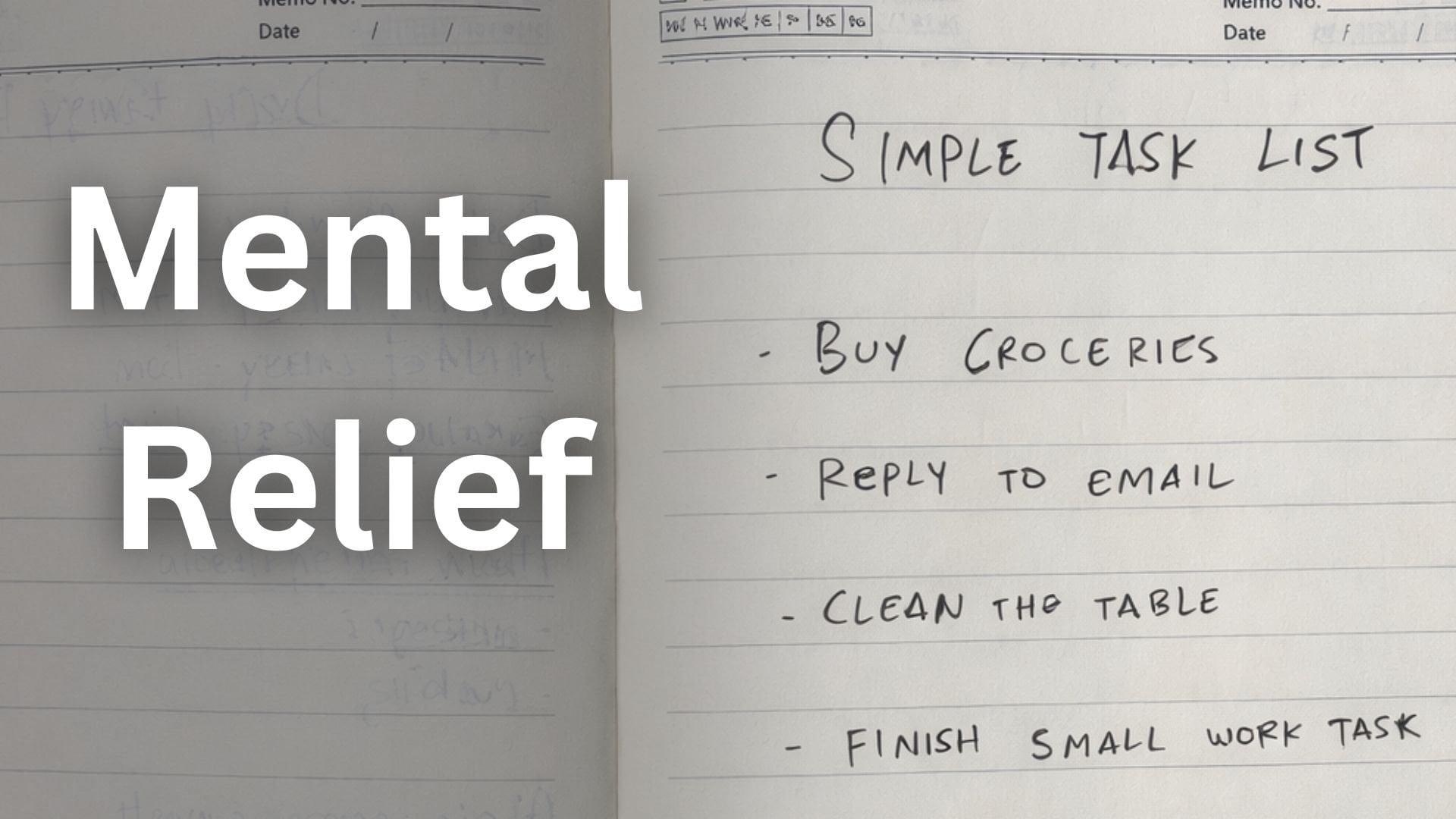
1. Stop Making Long Creative To Do Lists and Choose One Task : You feel creatively blocked, you might think the problem
is talent or motivation. But often the real
problem is this. Your list is too long. You open your notebook, you write ten ideas. You feel excited for a moment. Then you feel tired. Then you close the notebook. If that sounds familiar,
you're not alone. Many people feel stuck not
because they have no ideas, but because they have too many. Today, we're going to
make one gentle change. Instead of planning everything, you'll choose one task. Just one. I'm Paul. I help beginners
learn new skills in a clear and simple way so they can feel calm and
confident trying something new. I used to think creative
people needed big plans, full pages, weekly systems, color coded list.
I tried all of it. And the more I planned, the less I started. Over time, I realized
something simple. When I reduced my options, I reduced my stress. And when I reduced my stress, I could finally begin. While you're here,
you'll learn how to turn an overwhelming list into one clear action you
can actually do today. This stands on its own, and it also connects naturally with other lessons
about starting, focusing, and finishing
creative work. This is not for
advanced planners who love complex systems. If you already enjoy
detailed weekly boards and layered workflows, this may feel too basic. But if you are a beginner
who feels blocked, distracted, or scattered,
this is for you. All you need is a piece of
paper and a pen. That's it. We'll look at why too
many choices freeze you. How to narrow your list down and how to calmly begin
just one thing. By the end, you'll
have one clear task in front of you instead
of a wall up options. Take a breath. You don't need
to fix everything today. You only need one small
start. Let's begin.
2. Write Three Ideas and Cross Out Two : Here's what you'll create today, a single sheet of paper with
three ideas written on it. Then two of them crossed out, leaving one clear task. That's the whole project. You'll use paper as
your main material. Any paper works,
a notebook page, printer paper, even the
back of something old. We'll build this slowly. First, you'll write
three creative ideas. Then you'll cross out two. Finally, you'll begin
the one that remains. By the end, your page will show one active task and
two crossed out ADs. That cross out list
is your proof. You can work along
with me as we go. Pause if you need to,
rewind if you want to hear something
again, there's no rush. The final result
will look simple. The short lines, two with
a line through them. One left clear. It doesn't need to be perfect. Messy handwriting is welcome. Crooked lines are fine. The goal is clarity, not beauty. You're already doing the
right thing by showing up and being willing to try
this in a simpler way. Next, let's talk about why reducing options works so well.
3. Reduce Options to Reduce Pressure : When you sit down to create, your brain often asks,
What should I work on? If the answer is ten
different things. Your brain doesn't feel excited. It feels crowded. It's normal to feel overwhelmed
by too many choices. That doesn't mean you're lazy. It means your mind is
juggling too much. The simple idea here is this fewer options
create more focus. When you reduce your list, you reduce the mental noise. First, too many ideas
compete with each other. If you have drawing, painting, editing, learning a new tool, and organize your
files all on one page, your attention keeps jumping. Second, choice feels
like pressure. You start worrying about picking the best task instead
of just starting. Third, when everything feels important, nothing feels clear. So instead of asking, what
should I do this week? We ask a smaller question. What will I work on right now? If you feel blocked while
planning a big art project, then you can choose one
small task instead. Because your mind handles one thing more calmly than five. For example, if your list
says, finished sketch, start new painting, watch tutorial organized
brushes, you might freeze. But if only finished
sketch is visible, your body relaxes. There's less debate. Here's how we'll do this
in three simple moves. First, you'll let yourself
write three ideas, not ten, just three. Next, you'll physically
cross out two, not erase, cross out. Finally, you'll begin
the one that remains. Even in a tiny way. This works because
you are training your brain to act after
narrowing down, not before. In simple words, fewer
choices make starting easier. Now, let's move
from talking about it to actually doing it.
4. Write Three Creative Ideas on One Page : When you feel stuck, you might either write
nothing or write too much. Maybe you stay at the page or maybe you fill it
with a long list. Today, we'll choose the middle. The ideas only. Go ahead and take
your paper and pen. At the top of your page, write the projectile
exactly like this. One task only. Now, we begin first, write one creative idea
you could work on today. For this example, I'll we draw a simple coffee mug sketch. Next, leave a little space under it and write
a second idea. All right, start painting
a small sunset background. Then leave a space again
and write a third idea. I'll write learn one new
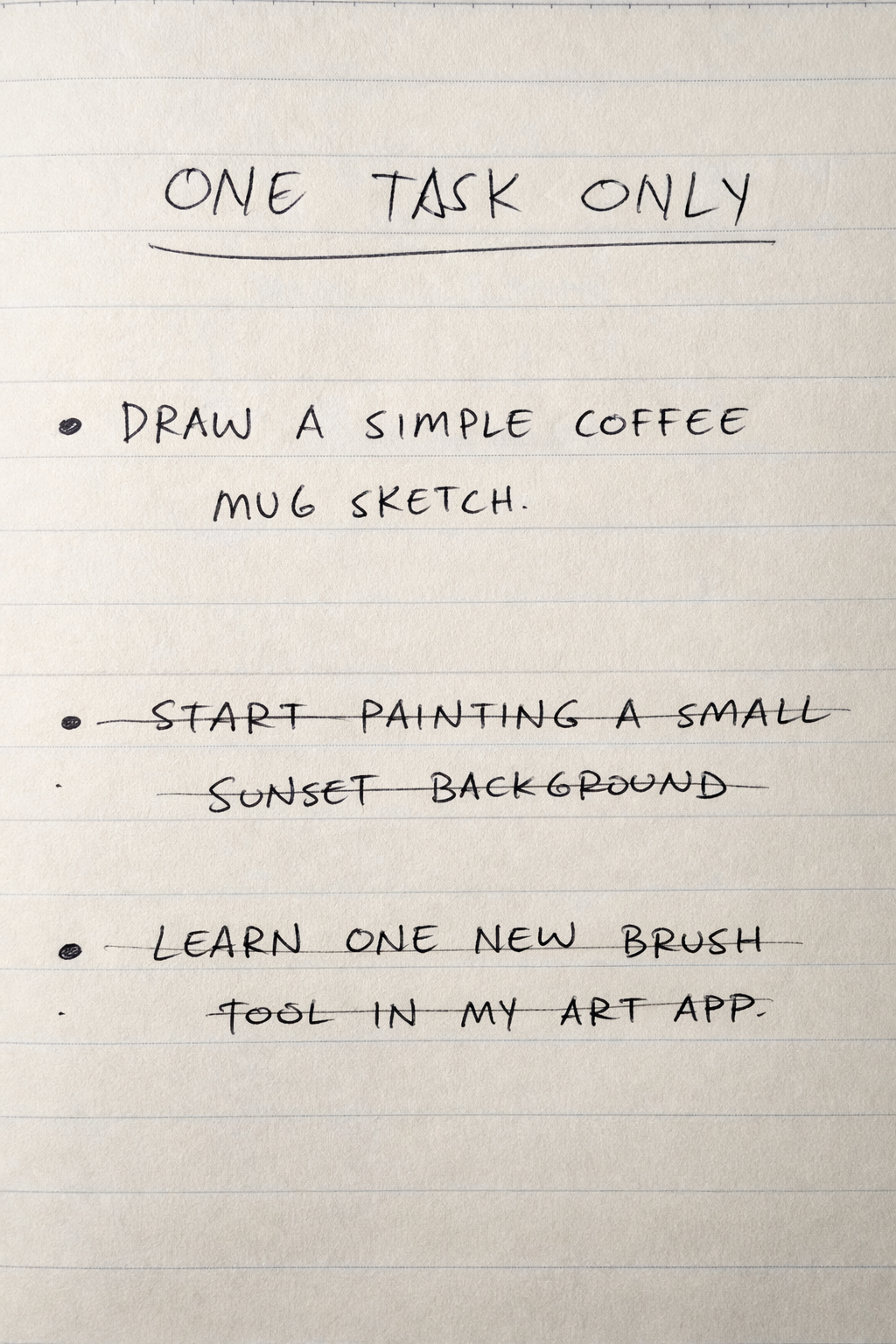
brush tool in my art app. Now pause and look at your page. It should look like this. One task only, draw a
simple coffee mug sketch, start painting a small
sunset background, learn one new brush
tool in my art app. Now, notice how we
stopped at three. No four, not seven. If you only have one idea
in your head, that's okay. You can invent two small
ones just for practice. This is about training
your focus muscle. When I first write this,
I wanted to add more. My brain said, but what
about this other idea? I wrote it on the separate page. Not here. This page
stays at three. Take a moment to
feel the difference between three and a full page. It's lighter, isn't it? You've already done
something important. You limited the list. In simple words, you
contained the chaos. Next, we'll make the bold
move that changes everything.
5. Cross Out Two Ideas and Leave One : Now comes to the part that feels uncomfortable
for many beginners. You might think, What if I choose the wrong
one? That's normal. Choosing means letting go of other options, even temporarily. But remember, you're not
deleting these ideas forever. You're only clearing
space for now. Look at your three ideas. Read the first one slowly. Then the second, then the third. Ask yourself, which one feels
simplest to begin today? Not the biggest, not the most
impressive, the simpliest. In my example, I look at draw
a simple coffee mug sketch, start painting a small
sunset background, learn one new brush
tool in my art app. The sunset painting
feels bigger. The new brush tool
feels uncertain. The coffee mug sketch
feel small and doable. So I choose the
coffee mug sketch. Now, take your pen and draw a single line through one
idea you are not choosing. For me, I cross out, start painting a small
sunset background. Then I draw a single line through the other idea
you are not choosing. I cross out, learn one new
brush tool in my art app. Do not erase them. Do
not scribble angrily. One calm line through each. Now, your page looks like
this. One task only. Draw a simple coffee mug sketch, start painting a small
sunset background, learn one new brush
tool in my art app, with the last two crossed out. Pause and notice the
visual difference. Two lines closed, one line open. This is powerful
because your brain now sees one path
instead of three. When I first did this, I
felt a small wave of relief. It was quiet but real. The decision was made. No more internal debate. In simple words, you
cleared the runway. Next, we'll gently begin
the one that remains.
6. Start the One Task in a Tiny Way : Sometimes you think starting
means finishing. It doesn't. Starting means
touching the task. Look at your one remaining idea. In my case, it's draw a
simple coffee mug sketch. Now, we make it even smaller. First, take a new area of
your paper or flip it over. Next, draw a very
simple curve line for the top of the mug. Just the rim, nothing else. Then draw a two light
vertical lines going down. After that, connect the
bottom with a gentle curve. Finally, add a small
handle on the side. Stop there. You are not shading, not perfecting, not
improving, beginning. Notice how small that is. A few lines, less than a minute. Your original page still
shows one task only. Draw a simple coffee mug sketch, start painting a small
sunset background, learn one new brush
tool in my art app. With two crossed
out and one clear. And now you have physically
touched the chosen task. This is the calmst part. There is no rush to continue. You move from
planning into action. When I practice this, I often smile at how simple it feels. All that tension earlier was
about choosing, not doing. Before you had three
directions pulling you. Now you have one small
drawing started. You've reduced pressure,
and you've begun. This is a real shift. Take a breath and let that land.
7. Upload Your Crossed Out List : Let's look at what you created. Your project is a
single sheet of paper titled One task only with
three ideas written, two crossed out,
and one left clear. In our example, it
looks like this. One task only, throw a
simple coffee Mac sketch, start painting a small
sunset background, learn one new brush
tool in my art app. With the second and third ideas, cross out by one simple line. You use paper as your main
material. That's all you need. Make sure the title and
the cross out lines are visible at the
project title, one task only in a
short description, I wrote three ideas, cross 02 and started the one
that felt simplest today. That's enough. This
simple page works because it shows
a decision made, not a perfect plan, not a finished masterpiece,
a decision. Upload it when you
finish your tiny start. Even if it took only a few
minutes, keep it imperfect. Most people upload
simple honest pages. This page is for practice,
not performance. Once you've taken the photo, you've completed every step. And that small
completion matters. Next, let's answer a
few common questions that might still
be in your mind.
8. What If I Pick the Wrong Task : You made it all the way through. That's already something
to feel good about. It's normal if a few
doubts show up now. First question, what if
I choose the wrong idea? That fear is common. If you choose one idea and later realize it feels too hard, you can repeat the same
process tomorrow with three fresh ideas because the goal is
practicing reduction, not locking yourself into
a lifetime decision. Second question. What if my project feels too big
even after I choose one? If your single idea
still feels heavy, you can shrink it again because starting smaller
reduces resistance. For example, if your idea says, paint a full landscape, you can adjust it to sketch one tree outline because smaller pieces are
easier to begin. Third question. What if I
like planning and Long list? If long list make you
excited instead of stress, you can still use this
method when you feel stuck because it's a reset tool. You don't have to
abandon your style. You only use this when
overwhelm appears. Here's a helpful tip. Keep a separate page
called later Ideas. If new ideas pop
up while working, write them there
because that keeps your one task only page clean. And one more mindset shift. When you feel blocked, ask, Do I need more ideas or fewer. Often, the honest
answer is fewer. Now, let's gently close.
9. Remember the ONE Rule and Keep It Simple : You did something small
but powerful today. You faced a long list. You reduced it, you cross out
two ideas. You began one. If there's one thing I hope
you take with you, it's this. Clarity comes from choosing, not from planning more. You prove that you can
narrow your focus and act. I believe small,
steady decisions build creative confidence more
than big dramatic burst. If we turn everything you
did into a simple word, it's one. Only three ideas. Now, two crossed out,
exactly one started. One is easy to remember. When you feel
blocked, think one. You might notice something
interesting later. The hardest part wasn't
drawing the mug. It was deciding. Thank you for being here
and trying this with me. Please upload your
cross out list photo. The best time to upload is right after you finish
your tiny start, while the momentum
is still warm. If this helped you,
please leave a review in a full sentence and share
how this simple method affected your focus
because your feedback helps me grow as a teacher and help other beginners
find this lesson. If you have questions, that's completely normal,
feel free to ask. Feel proud of yourself for
reducing instead of adding. At the beginning,
the list felt heavy. Now, you know how to lighten it. Clarity can deepen overtime as you keep choosing
one small thing. Thank you for taking this class. I'll see you in the next lesson.
 Paul Nene, Helping beginners take action