Simple Watercolor Landscape For Beginners | Learn To Paint | Alifya Plumber | Skillshare

Playback Speed


1.0x


  • 0.5x
  • 0.75x
  • 1x (Normal)
  • 1.25x
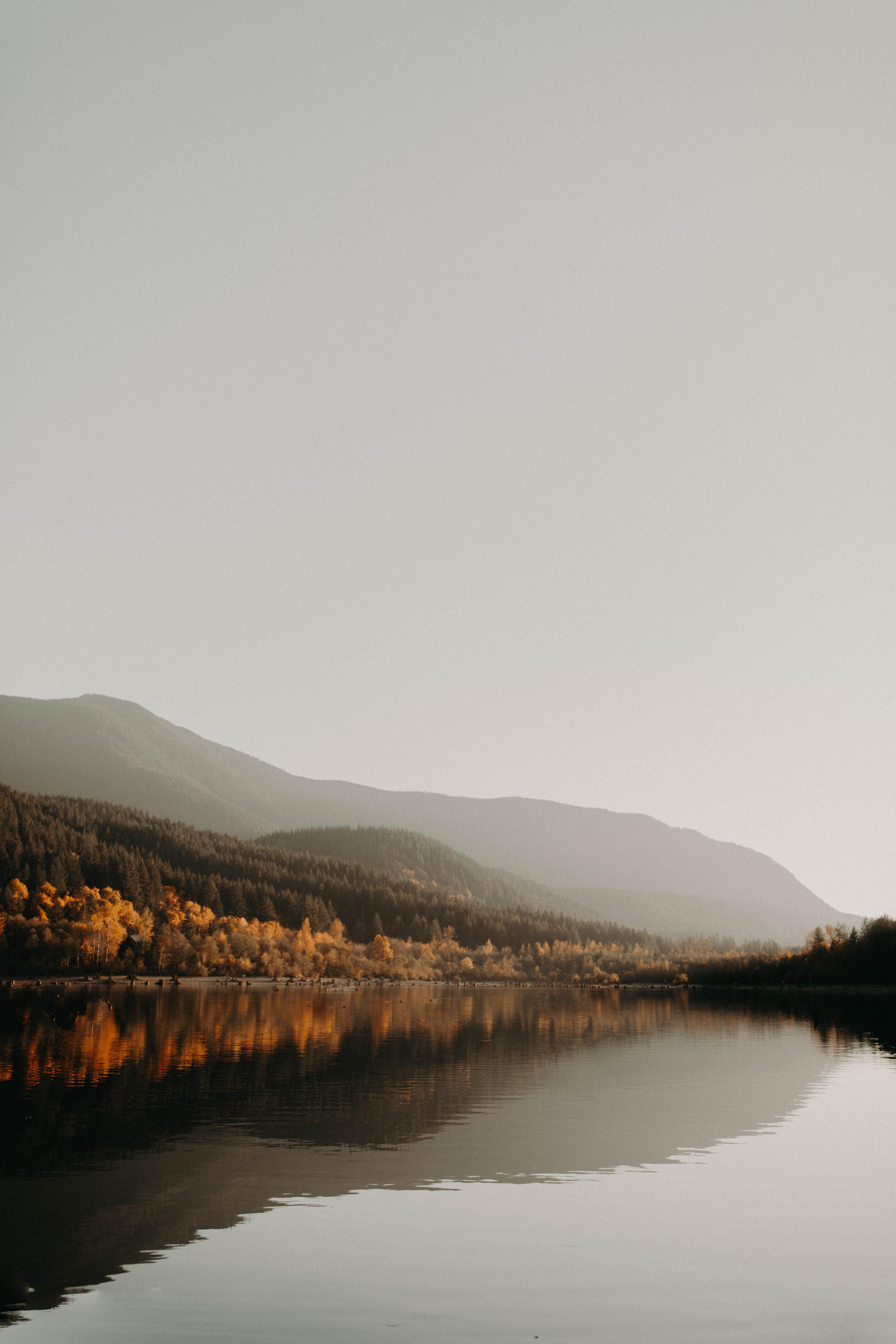
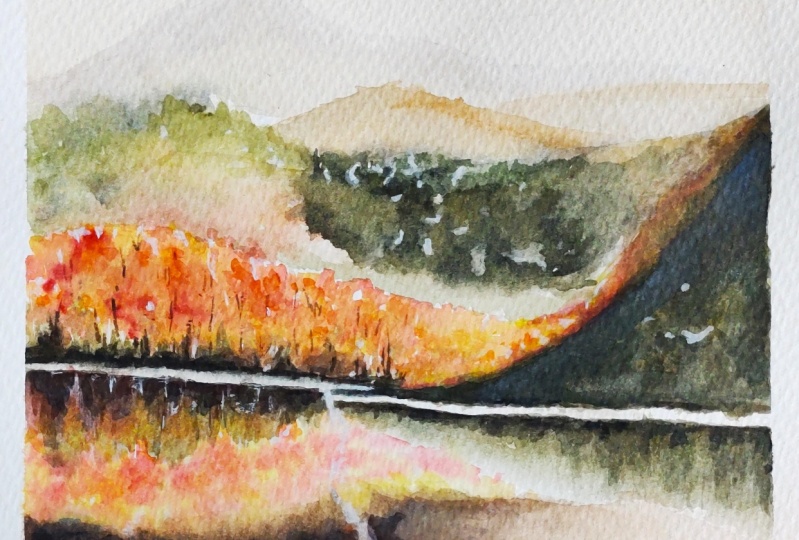
  • 1.5x
  • 1.75x
  • 2x

Simple Watercolor Landscape For Beginners | Learn To Paint

teacher avatar Alifya Plumber, Artist | Acrylics, Watercolors | Painter

Watch this class and thousands more

Get unlimited access to every class
Taught by industry leaders & working professionals
Topics include illustration, design, photography, and more

Watch this class and thousands more

Get unlimited access to every class
Taught by industry leaders & working professionals
Topics include illustration, design, photography, and more

Lessons in This Class

    • 1.

      Introduction

      0:40

    • 2.

      Exercise 1 - Techniques

      1:48

    • 3.

      Exercise 2 - Layering

      1:38

    • 4.

      Exercise 3 - Wash

      0:50

    • 5.

      Exercise 4 - Brushwork

      2:28

    • 6.

      Materials & Sketch

      2:35

    • 7.

      Painting - First Layer

      10:27

    • 8.

      Painting - Lake Reflection

      6:16

    • 9.

      Painting - Last Layer & Details

      5:42

  • --
  • Beginner level
  • Intermediate level
  • Advanced level
  • All levels

Community Generated

The level is determined by a majority opinion of students who have reviewed this class. The teacher's recommendation is shown until at least 5 student responses are collected.

354

Students

14

Projects

About This Class

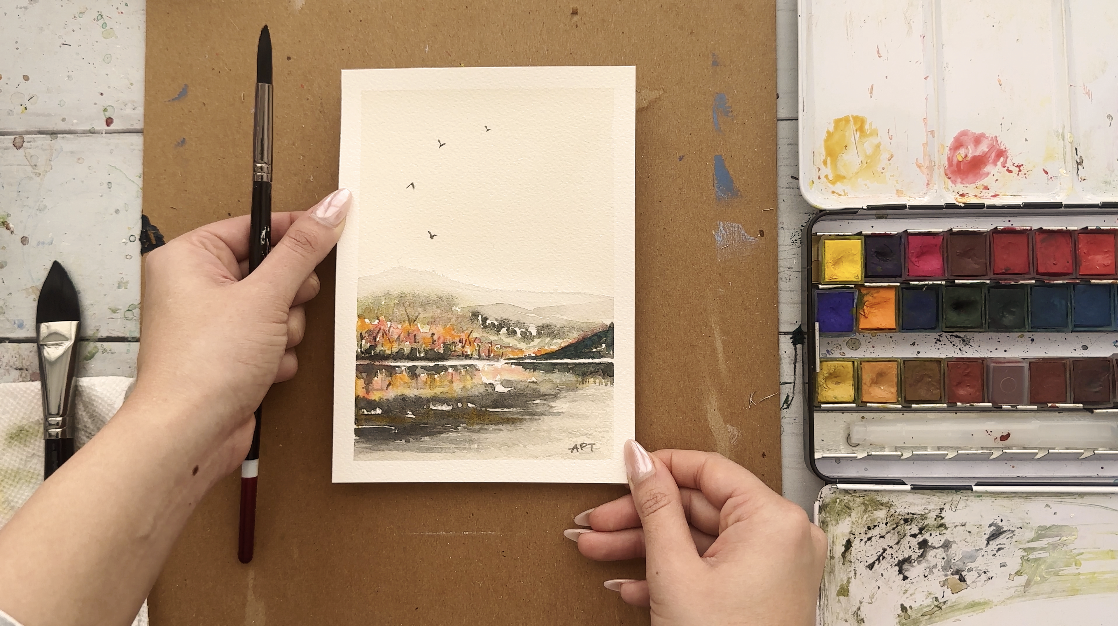
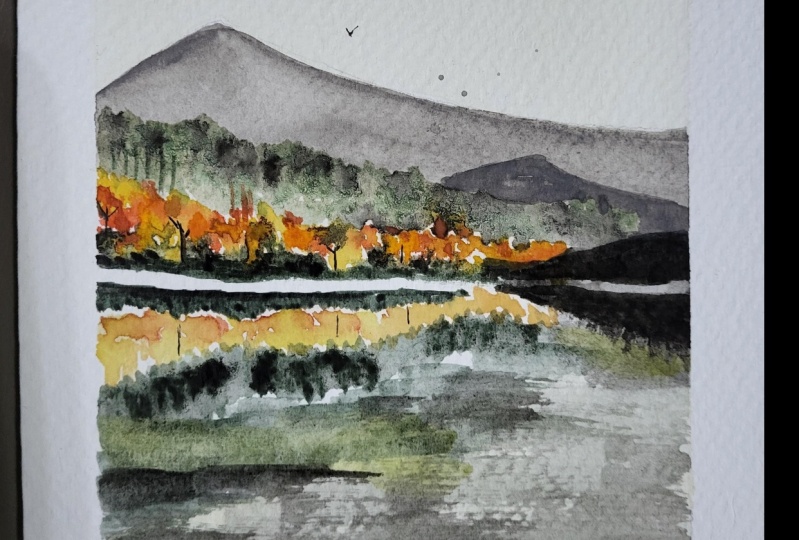
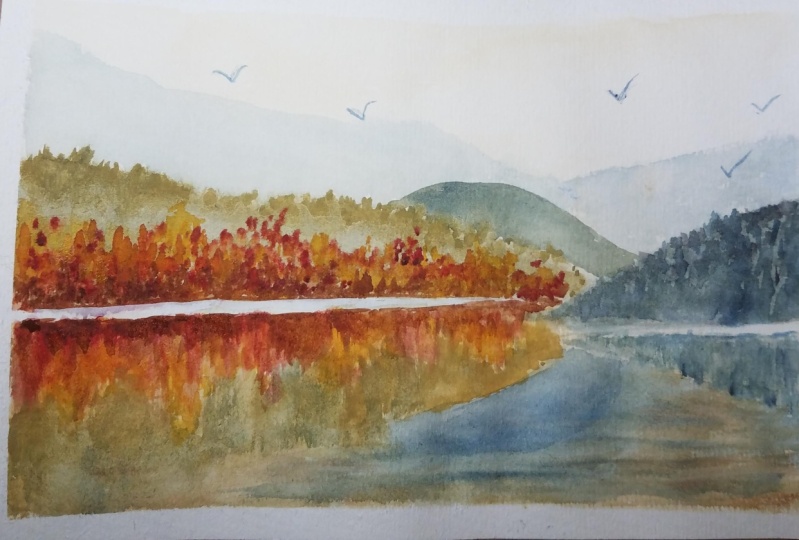
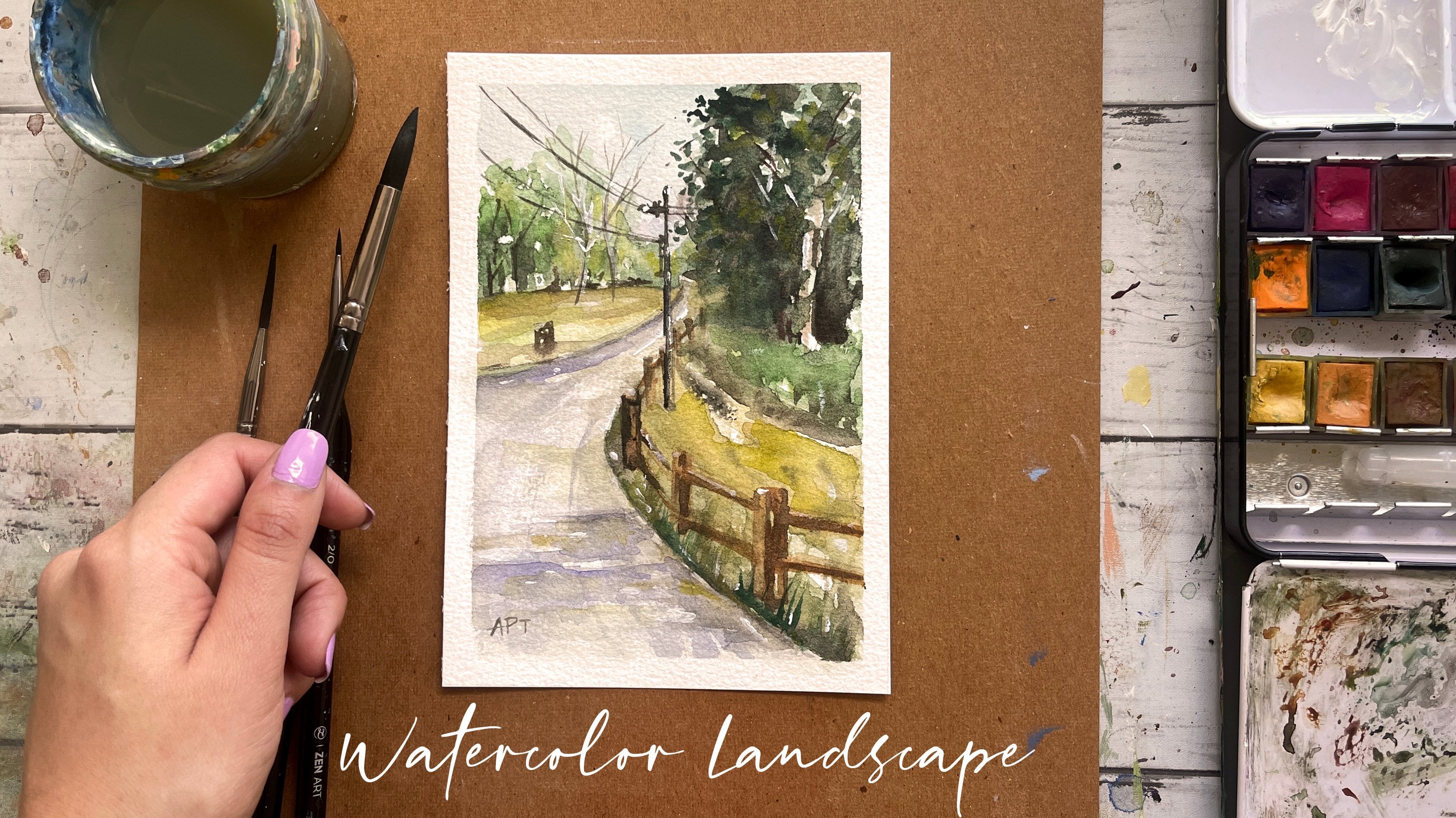
In this class, I will be teaching you how to paint a 'SIMPLE WATERCOLOR LANDSCAPE.'  I will show you basic watercolor techniques and will paint along this project step by step. Great for sketchbook practice. This class is great for beginners and beyond. 

A former art teacher and now an independent full-time artist, I am so excited to be teaching on Skillshare and I truly hope you find this corner of your space comforting, inspiring, and encouraging! Can't wait to connect with you all!

FOLLOW UP CLASS!

  1. Watercolor Landscape (MOST POPULAR) - https://skl.sh/3VxN3OP
  2. Watercolor Sunflowers - https://skl.sh/3bIrpBQ
  3. Watercolor Roses - https://skl.sh/2Re4M14

TOPICS I COVER:

  • Prepping your paper and materials – I will show you how to prep your paper before painting and all the brushes and paints you will need for this project.
  • Warm up exercises – I will go through exercises and cover basic techniques, layering, washes, and brushstroke practice.
  • Painting process and details – We will go through a couple of layers, keeping our exercises in mind.
  • Final Touches – This step will teach you how you can be more expressive by mark making with highlights and shadows.


MATERIALS I USED (but use whatever you have available.)

1) Paints:

  • Arteza Watercolor half pans- https://bit.ly/3fFJ5xS 
  • saffron orange, golden yellow, Naples yellow, black (noir), olive green, indigo Blue

2) Brushes: https://amzn.to/3sYzxad

  • 3/4" cats tongue
  • 8" round 
  • 2" round

3) Arches Watercolor Paper 140 lbs 

4) Bowl for water / pencil, eraser

5) Paper towel / rag

6) washi tape - https://amzn.to/3Dc25Bq

*Disclosure: Some of the links above are affiliate links, meaning, at no extra cost to you, I will make a commission, if you click through and make a purchase. I only recommend products that I genuinely use on a regular basis!


SOCIALS

Instagram - get latest updates!

W e b s i t e (Shop Art & Merch) - https://alifyalifestyle.co/

Art Facebook group (Paint With Me) - share your work, connect with art lovers, & monthly giveaways!

Youtube - more art inspo

ETSY SHOP - ☆ Join my newsletter for 10% off - http://eepurl.com/dAOxEf

Meet Your Teacher

Teacher Profile Image

Alifya Plumber

Artist | Acrylics, Watercolors | Painter

Teacher

Hello, I'm Alifya Plumber Tarwala, a Fine Artist from sunny California. A former art teacher and now an independent full-time artist. My classes here will be focused over Loose Landscapes and Florals in Acrylics and Watercolors. I am so excited to be teaching on Skillshare and I truly hope you find this corner of your space comforting, inspiring, and encouraging! Can't wait to connect with you all!

To keep up with snippets of my artist life, follow along on Instagram. I also have a Youtube channel for more art inspo! :)

Instagram - get latest updates!

Youtube - more art inspo

See full profile

Level: Beginner

Class Ratings

Expectations Met?
    Exceeded!
  • 0%
  • Yes
  • 0%
  • Somewhat
  • 0%
  • Not really
  • 0%

Why Join Skillshare?

Take award-winning Skillshare Original Classes

Each class has short lessons, hands-on projects

Your membership supports Skillshare teachers

Learn From Anywhere

Take classes on the go with the Skillshare app. Stream or download to watch on the plane, the subway, or wherever you learn best.

Transcripts

1. Introduction: Hey everyone, my name is Alicia and I'm an artist here in San Jose, California. In today's class, I will show you how to paint the simple and loose watercolor landscape, following easy steps and techniques. Great for beginners. We will go over the materials, basic watercolor techniques, layering and washes, as well as some standard brushwork. We will then paint this watercolor painting step-by-step. So let's begin. 2. Exercise 1 - Techniques: So before we start, I just wanted to go over some basics with you. I'm not going to overwhelm you with a lot of techniques and brushwork, but I'm just going to cover the techniques that we will use in today's class so that you can get a more practical approach for this. So the two most common watercolor techniques, or wet on wet and wet on dry. For the wet on wet paint is applied to wet paper. You can layer different colors on top of existing wet paint, which will create this blurred out expansion effect, where you will notice the colors bleeding into one another. The second technique is wet on dry paint is applied onto dry paper. It is as simple as that. So let's look at the effects that these gave us, right? So now the wet on wet gives us soft edges. It's more blurred out. This is great if you want more delicate, softer paintings, great use for backgrounds or far-away objects. You can also blend easily while getting an effective gradient and also creates a misty effect. It is also unpredictable and hence, not so much in your control. The very opposite of the wet on wet is the wet on dry, which gives us sharper edges. So you can definitely have more control where you can get well-defined shapes. The wet on dry also allows you to lay your paint as much as you want. We will go through layering in the next step. 3. Exercise 2 - Layering: So here I'm going to show you how you can layer your paint in watercolors. I'm going to show you three different kind of washes here, each one with a little more pigment to show you the effects of layering. If you want well-defined shapes and it comes to layering, you will have to work on this wet on dry. So I'm drying out my paper with a blow dryer to speed up the process before I begin to layer my shapes. Okay, once you're painting has dried, layer your shapes little by little getting darker each time. But also wait for your painting to dry in-between each layer that you add. So as you can see, the lighter your initial wash is, the easier it is to build up on layering. So keep that in mind when you are painting with watercolors, you always have to work light to dark. Unlike acrylics, where you can get away with working from dark to light, I think watercolors as a medium does require you to be more patient. 4. Exercise 3 - Wash: Let's go over some basic washes here. So for the first one we have a flat wash where your pigment is even all around. And then to get a gradient, I'm starting from a light wash with less pigment and will slowly increase my pigment intake as I move downwards. You can also, you can also start dark and then gradually lighten up. Your wash as well. Too toned is where you combine two colors and merge them together by blending. And to blend them, you will lightly brush your colors in between. 5. Exercise 4 - Brushwork: In this lesson, I wanted to go over some basic brushwork that can be applied to any watercolor painting. So I'm going to start with a nice big round brush. Again. All of these brushes are linked below. If you are interested in them. I literally love this brush. You will see me using this brush for Mozi, the entire painting almost 95% of the time I'm gonna be using this one brush. It is super versatile because you can get extremely tiny lines with this as well as big ones. Holding your brush is straight up. Using its tip can give you thin strokes. You can also use the side of the brush. And then obviously using its belly can give you larger strokes. This next brush is a long, thin brush, which can give you extremely fine details. I usually pull this brush out at the very end when I'm wrapping up just to add last-minute final details to make an impression and to add a few, just a few marks here and there. Okay, So this last brush that I'm gonna be using is the old brush. I like to use this to get some really cool dry brush effect. You can also make this brush yourself by taking any old round, small round brush that you have that you do not really care much of the state on any surface to make the bristles span out. But like I said, I use this brush to get some dry brush effect mainly on my trees. What this means is that you want less water and more pigment for this brush technique. Using this can give you very natural brushstrokes and somewhat, it's somewhat unpredictable and adds to that loose painting style effect. You can also get a dry brush effect with your regular round brush. So usually in a good watercolor painting, you should have all these techniques we went over to add interest and make it impactful. So as you move on to today's lesson, you will see me using all these techniques we went over and I will show you how you can turn a simple landscape and make it interesting by adding a variation of brush marks and details. 6. Materials & Sketch: Okay, so these are all the materials that I've used for this painting. You will need a bowl for water, a paper towel of some sort, a pencil and eraser, and a washi tape to tape down your edges. And then for the brushes, I only use these three brushes again, they're from a brand called Zen art. I don't think that they sell this anymore, but I will try and link them if I can find it. And then for the paper, I use arches this time, along with my palette. I have linked some of these below if you're interested. Alright, so first step as always, is taping down the edges. I love using a washi tape. When it comes to using this medium, it is seamless when peeled off and it does not believe whatsoever I have linked to below if you are interested. And once you finish off this step, we will move on to the sketch phase. Does not met sketching involved in the scene, as you can see, it is a very simple landscape, but you can still take a few pencil marks before we begin painting. So starting with the mountains in the far back. And then I'm just going to get the horizon line to the lake. For the trees. I'm only getting the placement of the trees for visualization purposes. So no need to draw out extreme details unless that really helps you. But I would not recommend it since it will leave you with unnecessary pencil marks which can be erased at the end, but still. Okay, Last but not nice. I'm just going to draw out the reflection of the water and that'll be it for the sketching. 7. Painting - First Layer: Okay, so let's begin with the sky forest. Super simple and easy. It will be a simple flat wash. So I'm just taking in a bit of a black mixed with a bit of Naples yellow, which is this mustard color. And then use any watercolor, flat or round brush you would like and likely wet the paper. With that. I mean, only the sky part. So essentially you just want a very light tint of this guy just enough to leave you with a color once you peel off the tape. Why we have this color handy, I'm going to paint the bottom half of the lake where the sky reflects in the water. I'm switching my brush to in number four, round brush. And I'm using that grayish black color and painting that faraway mountain you see in the reference, which by the way, you can find in the projects and resources tab. So simply right-click and save the image to your desktop or you can print it out if that helps more. You, I'm just using a bit of olive green and Naples yellow. I'm getting that dark layered mountain right underneath. Notice how I'm holding my brush vertically and using the side of my brush to paint these faraway trees. You simply want to dab ever so gently and move your way across. Since the layer above is wet, you will get a slight wet on wet expanding of the paint effect, which is nice. So be mindful of also leaving some small white gaps throughout your painting spontaneously as you paint to add natural highlights and give impressions of tiny objects. So these little white little specs here and they're also breaks up shapes to add more interests. I'm getting some black in a few places amongst the green layer we just painted. Light stabbing motions is all you need. As you can see, I'm only using the tip of my brush to get the wet on wet effect. Using that same blacks who also paint the rights to a shadow shape. And why we added also getting the reflection of the same shape by blow it. So think of the shape as an inverted, mirrored image. Alright, so now moving on to the fall colored trees, I'm taking in this bright orange, which is also called golden yellow in the artist's palette. And I'm also going to be adding the saffron orange, which is this reddish tone for the trees as well. It's the same exact technique to the trees above. We are lightly dabbing the tip of our brush while leaving small white specks and moving our way across. Remember these trees are quite far away, so we're looking for impressions of these shapes, which is basically translate it into splashes of color. Okay, so doing the same thing with this reddish color and dabbing that in-between. Taking the olive green again, I'm adding in a layer of trees right below this red and orange one just to fill the empty gaps right below this. So take your time. Don't rush this and move slowly and patiently. Again, I'm just using the tip of the brush like we did before. I'm just using number one round brush just to kind of extend these colors and elongated slightly. I'm kind of pushing the color upwards a little bit just to give it a slightly more of an impression of trees. Using black again for the last bottom layer. Adding all these layers will give you a landscape more depth and perspective. I'm cleaning that line off with a small round brush. Adding in more depth and color here with some black. Similarly also getting in a tiny splash of color to bring out the orange and red smart. To keep in mind, watercolors do dry lighter, so you may need to add in more layers once dry. Getting in a couple of extra pieces of layers to the mountains here with a simple flat wash. Using some light gray. 8. Painting - Lake Reflection : Alright, so now it's time to get the reflection to the water. So basically we're just translating everything we did above, down below but with less detail. So again, just think of this as a mirrored image. So I'm getting the dogs out of the way first. So I'm starting with the bottom tween reflection. I mostly pulling all of my strokes downwards as I paint to get the reflection effect. I'm still holding my brush vertically and using the tip and the side to pain to this downwards. Now own painting horizontally and I'm getting the reflection of the faraway mountain. Don't forget to leave some white gaps open as you paint along. Darkening all of this section a bit more to just bring up the darks. Excuse me. For the bottom, I'm getting a light version of this black to fill that up. For this section towards the right here, I'm just using a dry brush effects of it, which means less water, hence the term dry. This will bring this textured look that can add some more variety of brush marks and works well with water anyway. Alright, so the last part of the reflection or these colorful trees is, so I'm just reading that section first so that we can get that blurred out wet on wet effect. So I'm using the same yellow and red to kind of just dots that in-between. I'm getting a bit of yellow below as well for that added glow. 9. Painting - Last Layer & Details: I wanted to bring out some of the darks a bit more, especially towards the right mountain. So I thought of adding some indigo blue with some black to just kind of add that extra deep color. Last step is fine details. Not too many of his time, but just a little for the trees. I'm taking my number two round brush and adding thin branches just to give some more impressions of faraway trees. Getting in some tiny birds in the sky, and we will be done. Alright, let's take this tape off so we can see what we've got. Last but not least, if you have any pencil marks that need to be erased, do So right now, but be sure to your paint is fully, fully dry. Before doing this step. If you followed me so far, Well done, I can't wait to see what you came up with. Share your projects. I would love to see them and do not forget to leave this class. It will ask me any questions in the discussions tab below. I invite you to explore the different classes I had created for you. Classes and watercolors, as well as acrylics are available if you want to learn more. So do consider following me so that you do not miss out on future painting classes from me. Thank you so much for your support over at my website and also my Etsy shop, you can find original art prints and much more. The links are below. As always, follow me on Instagram to keep up with latest updates, giveaways and all that fun stuff. Thank you once again. And happy painting.