Transcripts
1. Intro: What's happening? Kind folks, welcome back to another
I paint creatures Skillshare class right
here on skillshare.com. First of all, just
like to thank everyone for view my classes and
getting value out of them. Basically kind of go out of
the norm and provides you some fun creative activities and expand your painting and drawing skills from
your imagination. Today is no different. We were paying in Plessy foam, little cute Plessy that
is squeezed double and comes with a
character on it. But I use my creativity
and I use acrylics. And I painted on top
of it and made it a multi-dimensional
character creature. Plessy, little foam Plessy. I think that's what
they're called policies. But in this class, basically going to
take you through the painting of it
and all my creative ideas all the way to
the application of acrylics onto a
real interesting, challenging surface like this. It seemed to work really
well and I'm basically going to run through All my processes, what I'm thinking
about and how I apply my creativity and
my ideas to this and make a totally
original plus x0 toy here with multiple creatures. And I'll talk about how I
started looking at it so I can have multiple faces with
multiple creature parts on it. And what type of brushes I used and layering techniques and the classic acrylic techniques
that were applied here to basically draw for and draw scales and
draw all kinds of three-dimensional facial
features and creature features. It was extremely fun time and I'm looking forward to bringing
you along in this course. There's just one more video and it's basically
sped up a little bit, but definitely we'll go
through all the techniques, my process of creativity,
my storytelling, and the ins and outs of the different art materials
I used from brushes too, ink pens to water brushes to basically the wet palette
that is sitting there. And my choice of colors and the layering techniques and everything all
good with that. So get ready. Get your Plessy toy
or get some type of stuff doll that has a
good enough surface that will hold paint and
we will get into painting. This is kind of a general class. It is painting this
squishy Plessy toy. It's also about using acrylics
to paint on, you know, just normal day household
things and surfaces that have a plastic surface that will hold the
paint and stick to it. So I'll see you over in video. The coloring video.
2. Painting Full Coverage: What's happening, folks,
and welcome to painting. A toy Plessy or squishy or
whatever this is called. But it's a cute little character that was kind of like a panda. And I thought I'd take it on and create all kinds of fantastical creatures and
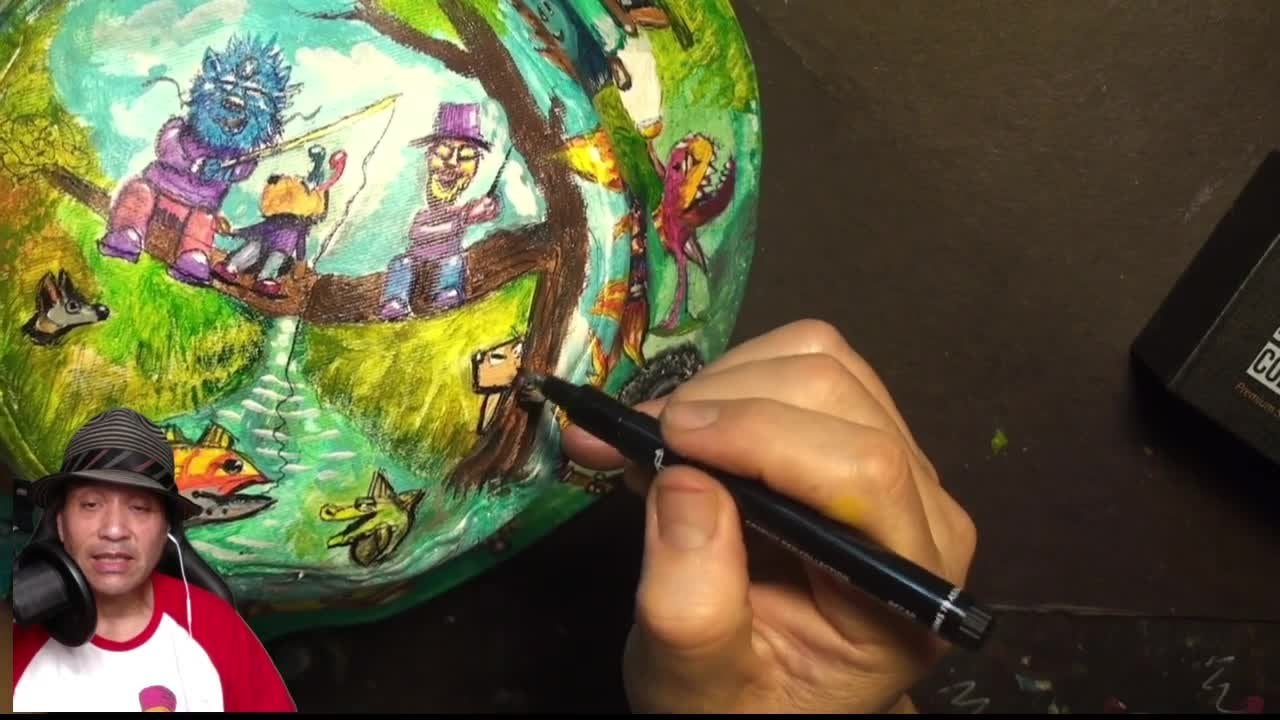
characters from my imagination. And I did this for a commission. I'm using acrylics and the first thing I'd
like to talk about is choosing a surface so you definitely can get
a surface like this. Didn't really
include a reference in the exercise for this course. Because I want you to just pick up something around
the house if it's a plastic toy or some type of service that will
handle the paint. And the best way to do
that is experiment. I just ordered this online. I've kind of had a lot
of experience and what I do is if the surface
can't hold the paint, then I use what's called JSR. And that's ground for
acrylic paints that is basically made out
of acrylic paint and use these white
gesso or gray gesso. And you cover the whole
thing and it will make a tactile so the
paint will stick. But when I got this squishy, this toy Plessy,
basically it got it. It's very squishy. But I just started to kinda
tack it with my finger. When I attack it, I can
feel that it kind of sticks my finger to it so I know
that it can handle the paint. Then of course, the best way to really experiment with
and get it going is just start to paint on it and
start to dab and paint and do what it is needed to
get on the surface of that. The first medium
that is definitely a really viable for
this is acrylics. And I definitely experimented a little bit with my
favorite sketching tool, which is a big stick,
a ballpoint pen. And that applies really
easy on the surface. And so I did a
little outlines and mapped out the different
creatures I'm gonna put on it. That is a capo
Yochai right there, which is japanese water Goblin. And I thought that fit
perfect on the back there and kind of
made a little scene, laid down a lot
of the background first and then started painting. And kappa is apart, duck and apart fish
and apart turtle. Thought it was appropriate
to put it right above it. And it has this kind of center
line thing that allowed me to also think
about the design. And also what I do on these type of equation says I just
don't paint right away. I kind of think about it. A
little bit of a story can tell and basically
put that together. So I'm basically just
painting all over it. I get ideas down and sketched
in there a little bit and then course use the
acrylic to really start to punch it in and take
it all different places. And just let my imagination open up wide and go
where it needs to go. And there were certain
features like those ears, which I turned into
eyes on one creatures. And there's multiple
creatures that can be shown in characters on this. And I just started a mapping them all in and intuitively design
and being creative. A lot of times I use
a lot of observation. I'll step back every
once in awhile and just look a little
face you go there and this is working out and then
kind of multi-dimensional hard keep flipping it
sideways and upside down. Started out first with the Panda because it
was the white place and then started flipping it left and right and started to
see in another face there. And it just kinda slowly
playfully came together. And I'm using a wet
palette right there, which is for acrylic paints. Because acrylic paints
drive really quick. You end up wasting a lot of
paint and then also the paint gets not as sticky and not as a GUI to get
on the surface, melting and it starts to dry up. And acrylic paints,
it's pretty much, it's, it's it's binder is polymer, which is pretty much
a type of plastic. So that's why it goes
really well with this type of squishy Plessy because it kinda has a plastic kind of phony feel on the surface
almost like it has. Plastic skin on it on his phone. I was concerned a little bit when I first started
painting on it that it would be too squishy and
I'd have the problem of putting down my paintbrush and it was squished too much, but that wasn't a
problem at all. It's pretty much is a
pretty nice service. It was almost like almost as
flimsy as a canvas would be. Has has a little bit
of pushing play on it. Yeah, so I use the wet
palette and the wet palette, basically what it does is it has a sponge and I use kind of a shammy piece
under on top of that. And then I use what's
called pallet paper. And you dunk that in a
really warm or hot water. In that hot water basically gets in the granules of the shammy, the sponge and then
the pallet paper is very fiber it out so it absorbs a lot of the water and
it keeps it moist so that when you put all the
acrylic paints on top, they stay wet and then
you can reuse them. So like at the end
of this session, I can take my spray
bottle out and spray all over the paints
and get them all wet. And then it has the top
for the sealant top. Pretty last for a long time, as long as you keep
wedding them and stay conscious of keeping them all all intact like that. And so then it makes
it a very good process because I can squeeze out
a whole bunch of paints. You can see I pretty much built a pallet of
really dark blues, medium blues and light blues. I have some greens and
some reds and magentas and some for screens and darker
greens and then yellows. And then my favorite
grounding color, which is almost like a burnt sienna or some
type of dark and yellow. So basically a lot of this was
very pleasurable because I did some blends and did a lot of details and did a
lot of backgrounds. So use the traditional
techniques of acrylics and how you keep layering and you keep putting different layers and
they give becomes more tactile and you
can build upon it. And you can see I can punch in my really,
really dark some, when we went around to the
other side of the character, really got a mouth looking like it's really indented in there. Here I'm doing a real
fantastical creature that I kind of discovered
through some of the elements that
are on there and made it multi-dimensional
and putting a lot of texture and how
I get a lot of that texture is I first laid down base color and get it working and get some
coverage on it, and then start doing
a lot of detail and swirls and contrasts. You put in shadows under
bunch of light colors. And then the power
of acrylics to, is the ability to
use the opaqueness. And opaqueness means basically
it's not transparent. And so I can go over things
and kinda paint more like a sculptor than
drawing and painting. Kinda sculpt the
nose and the shapes. Not exactly the right word, right where I want it,
then I can shape it. I've found that this surface
also was extremely powerful for blending and just use
water as a medium, too. Thin my pain out
and given a medium and you can see like right
there really just intense, beautiful blend between
the yellow ocher, burnt sienna and kind of like
a hands-on or lemon yellow. And then always love using
magenta from my reds. So it gets really
beautiful oranges and it seemed to
work really well. Another thing that really
got really well as soon as I started laying down enough of the textures on here, I started being able to dab and make all kinds of
really cool brushstrokes. And that's how I
created all the hair and the kind of hairy textures. And it worked really well in the textures are beautiful
and they're really vibrant and they
really punch and they explain a little bit of the type of character creature
that is on that point. I also started playing
with, right now. I'm playing with a
little bit of white, but also a dirty and
a little bit of a little gray and maybe a
little bit of burnt sienna. And it started to make some really cool textures
on the surface of things. I'm also being able
to cover up some of the that originally features
that came on this squishy, this pushy, and I can make my illustrations
more comprehensive. Another technique I use, which is true and tried
acrylic technique is just taken a titanium white and just putting very subtle
shapes and contour, shapes and contour means the shape you want
it to represent. So if it's round or
smooth like a stone, you paint in the
contour and the shape. And I added a little
highlights and shapes on the black elements that
originally came on this. And you can see it really
makes it punch in. Really beautiful. Just got super creative with the little hole that
was on the top. I don't know exactly what it
was representing originally, but just to kinda wondering
around it with some yellow and some yellow
ocher and burnt sienna. And I'm laying in a bunch of blacks right now and
made it really cool, sunflower up at the top. And so really got in the mode of Vincent Van Gogh and really
expresses sunflowers in the self-funded pain
is as long as you layer them and you put
down the base layers first and then you start
laying up to get a lot of the petals on a sunflower. But yeah, you can see it's
coming together really well and allow the blends work well. Basically at this point, as soon as you get enough
of the layers going, it's just like acrylic painting, no different than any other way of doing acrylic paintings. So it's a lot of fun, a lot of joy and a
lot of expansion. Expansion in making
all come to be. But definitely go out and experiment with all
different kinds of surfaces. If you have children
or dogs or cats, constants look at
their toys and see if you can turn it
into a piece of art. Of course, it's acrylics. If it is a kind of a toy for
a dog at least or a pet, Do you really can't give back to them because they'll
probably tear it up and get into
all the acrylics, which is basically
plastic paint. So but I think it will work good for maybe not a
really young child, but basically for good
display in their room. And like I said, I love to make a story. And so basically as
a story on it too. So you could use as a parent, you get to paint it for a parent to tell
the stories through their kids and leave it open because it doesn't have
a lot of texts in. It, just has a basic
story going on. I really enjoyed how it basically took the pain on and made it a very
incredible experience. And I love exploring the series and wouldn't probably do
more of these classes. Whereas this experience how
you can use acrylic paints. It's so industrial and a campaign on anything
I painted mailboxes. I've painted all kinds of, like I said, story
policies that have made. But then again, go out and
find it an incredible surface. Get your acrylics
out, and let's paint. Thank you for
enjoying the class. I'll talk to you
folks real soon.
 Ipaintcreatures . poet painter illustrator and storyteller, drawing and painting from the poetic imagination