Transcripts
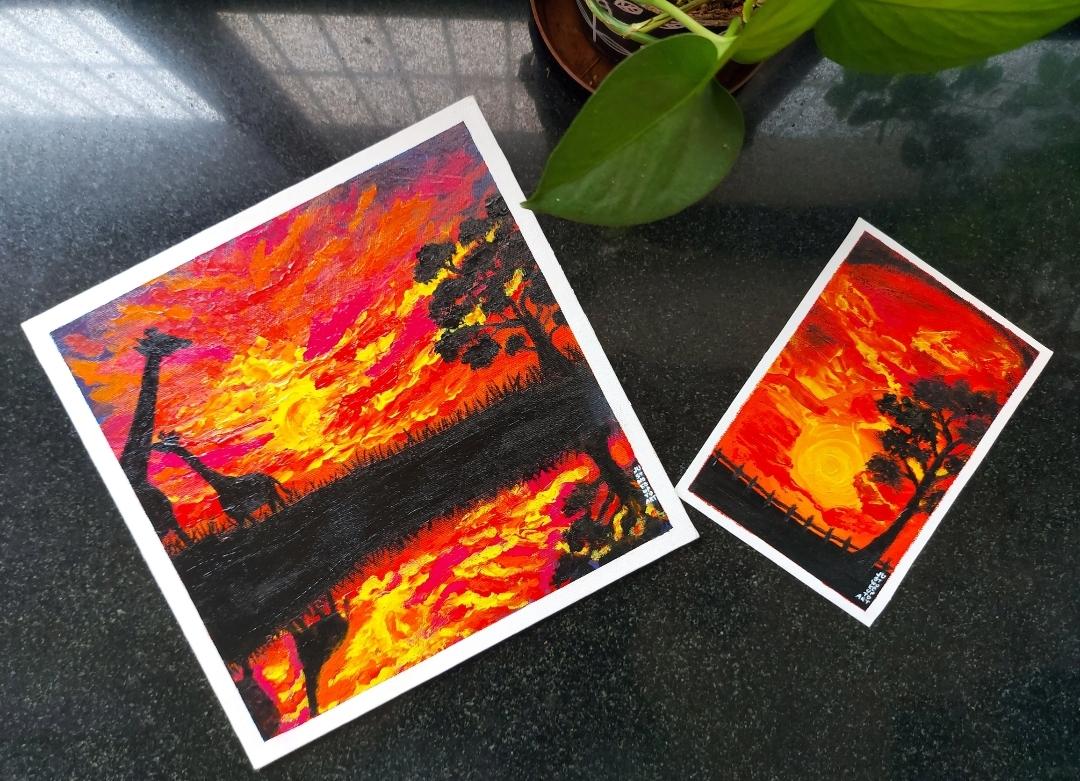
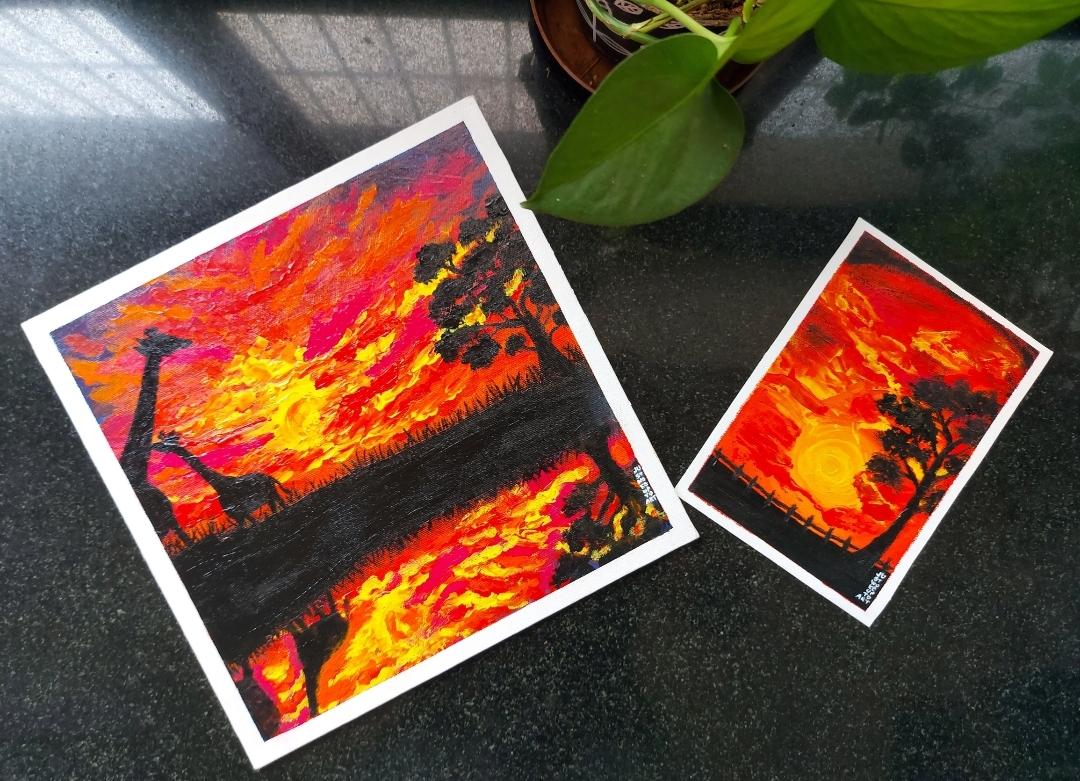
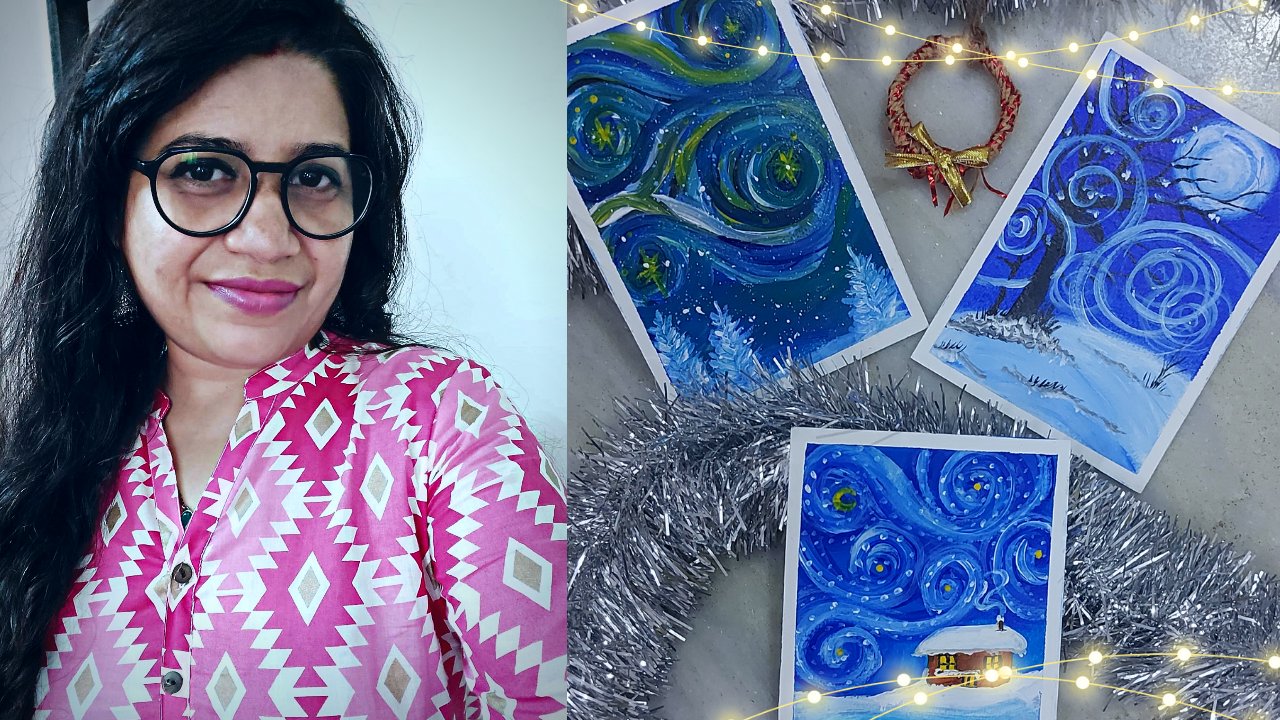
1. Welcome To The Class: Hello and welcome to the class. This is Phoenicia, an artist, an author from India. And in this class I'm going to teach you how you can paint these beautiful and gorgeous
African sunset on a canvas. No matter how
difficult it may look, I assure you that it's very easy and simple
to paint this. Before we begin, let's have a look at the
materials we need. First thing is the canvas. You can use a stretched canvas or a canvas board like this one, where the canvas sheet
is stuck to a headboard. Or you can even use a loose
canvas sheet like this one. You will need two of them, one for the final project
and one for the practice. Next, we will need
the acrylic colors. I'm using midrange to
vectorially colors. So you can use mid-range or artist grade
tube acrylic colors. For the brushes I'm using number six flat brush
and number three, round brush, both from Rousseau. This is for the final project
and for the practice. I will be using a
smaller flat brush and a round brush and
a detailing brush. Apart from that, we will
also need a pallet knife. If you don't happen to have one, you can use your butter knife. And of course we will be using
our fingers for painting. With that, we will also
need a jar of water, a sketchbook, and pencil for practicing the
silhouette sketch. And we will also need masking tape for this crisp border
around the painting. And Rogoff clot. That's it. These are all the supplies
we need for the class. I cannot wait to see
you in the next lesson where we will paint this
beautiful painting, grab all your supplies, and meet me in the next lesson. I will see you in the class.
2. Practice Part 1: Welcome back. I'm so
happy to see you here. In this lesson, we
will be practicing and discussing the basic techniques
of acrylic paintings, especially the ones we need
for this final project. We will be discussing
blending, brush strokes, use of nice layering
and silhouettes. Then first-off, let's begin
with taping the canvas. If you're using
the Canvas board, just simply tape the all
sides of the canvas. But if you're using a
canvas seat like this, tape it to a hard
surface like this. 11. For the colors
we need, orange, crimson, permanent yellow,
lighter shade of yellow. That will be the lemon yellow. We will also need white
just in case for blending. And a darker red
that is colored. With these, we will need
black for the salivate. And these are all the
colors we're going to use. Suggests sled. Quickly put all the colors on the canvas in
the right order. The right order meaning
that you want darkness on top and slowly I want the
colors to become lighter. So from red to yellow, I want a radiation. In that order, I will be putting the colors
on the Canvas. And if you are using
smaller canvas, make sure to use little
amount of colors. This tube is new, so I'd have to open it false. And there it's the permanent
yellow. There it goes. Finally, the lemon yellow. It's a smaller canvas, so I will use a small
flat brush for this. And before starting to paint, I will dip it in
water and pat it dry. Like so. Remember we don't
mix the water in acrylic. It's only to make it easier for the brush to
glide on the surface. Here, holding my brush
fire at the handle. And loosely, I am just making left-to-right strokes and
painting my way up to down. You have to keep
in mind not to put a lot of pressure because that will only scratch
the paint off the canvas. And we don't want that. We want nice gradation,
a nice blending. And for that we
have to gently and softly blend the colors. I'm sorry that on camera, it's not clear that there is a gradation of dark to light. I'm sure at your end, if you're painting
along with me, you can see that gradation. It's only though limitation of camera that it's
not showing here. Now as you see, I'm
leaving the center part uncolored with red because
I want it to be light. And if I go on painting red, I won't achieve that effect. And now I changed my strokes
from horizontal to circular. Kind of making an upside down U near the horizon line because that's where
I want my son. Now time to clean the
brush thoroughly. First, I'll wipe
it on the clot and then clean it in the water. And again, wipe it on
the Cloud to make sure I don't have any red
left in the brush. And with that clean brush, I will work on yellows. You see that this is
the effect I want, but now I will show you what over blending can
do. Keep watching. We ended up in almost flat wash. So here to get it back, I am bringing in some more
orange and yellow to fix it. It was just a
demonstration to show you how you don't
have to over blend. Now I'm trying to
bring that son back. It will take some time, but since it's acrylic, so we can always cover up our mistakes and
correct mistakes. Okay, so we've got
this glow over here. Let it be for some
time, let it dry. And meanwhile, we will
bring our palette knife and take some paint
directly on it and put it on the canvas exactly the way you put butter on your
bread aisle, right? Again, don't press too much, just do it lightly. Once again, it's not
very clear on camera, but I'm sure if you're
painting along with me, you can see the
Friends of colors. Now take the lighter yellow over the globe we have created. And video finger spread
it in circular motion. Again gently and not
with a lot of pressure. Now, let's put some
yellow around it. Again with a palette knife, I'll be using some orange. Now it's time for the darker
red to break the monotony. Whenever you feel like
there's only one color, like a big chunk of that color. You can break that with the addition of different
colors randomly here. And they're also don't put the edge of the palette
knife on the surface. It will only make scratches. Put it flat, and keep varying your strokes the direction of your strokes don't follow
a particular pattern. Make some strokes going upwards, I'm going downwards and keep
reading them like that. Now let's use some yellow. And finally, we can see something
very clearly on camera. I mean, it's only the
limitation of technology. I'm sure at your end, if you are painting right now, you can see the textures
and colors very clearly. There. We see the
sky coming to life. I don't like the sun being very round because it's so
low at the horizon. At this R, It can't be so round. It should be like
the melting zone, melting at the horizon. So to do that, I'm going
to distort it a bit. I'm going to add
some darker red hues around it and on top of it. Now, I'm going to call it
done for the background led. Be mindful of not overdoing this step because then
you will just keep on creating something and
erasing it to let this dry. And I will see you in the next lesson where we
will practice getting.
3. Understanding Silhouettes: So by the time the first layer of our practice painting dries, let us sketch some
silhouettes of the animals. It's very easy to draw the silhouettes because when
we are drawing silhouettes, we don't look for the
details, the final details, we just look for the
overall shape of any animal or person
or, or any object. All right, so here
I start with a rounded, mostly
oval-shaped belly. I like to start all
the animals like this. So to the belly, I attach the other accessories. By accessories, I mean the particular head
of that animal, the trunk in this case, because I'm drawing an
elephant and the legs. All right, so these are all
the accessories which go with that belly and make it look like the animal I
want it to look. I hope that makes sense. It will, when I will draw
the next animal here, as you see in no time, I have drawn an elephant. The overall shape
of the elephant, it's not a realistic one and
that's not what we want. Also, we just want the
overall shape of the animal. The silhouette. Here,
another oval belly. The accessories now, guinea
stick like legs, long neck, slightly curved pen, and a small head that sits
on top of it and a beak. And now there you go. It's an ostrich. That's how simple it is to draw the silhouette of the
animals or anything because you're just looking
at the overall shape. Here is another rounded
belly, oval-shaped. And they come those stick
like legs which broad enough at the point where they
are attached to the belly. You already have an
idea, I don't want you. There are the legs, forelegs, and there goes the long
neck, slanting neck. That tapers on top. Here is a small head, which point, which is
point D towards this node. Two horns, characteristic horns. They have blob shape on
top. And there we go. We have a giraffe. That's how simple it is to draw the silhouette
of the animals. But for your reference, I have also attached
the example of other silhouettes of the
animals and of the trees. So make sure to check it
out in the resources. Here if you're still feeling
unconfident about how the legs look and how the
body proportion looks. You can simply draw the
tall grass or other foliage and hide your animal
partly behind that. And trust me, even if you
hide the parts of its body, just let the characteristic path show like the trunk in case of the elephant or the neck and head in
case of the giraffe. And it will still look great and the viewer will have an idea
of what animal is that. If you are not confident
about the legs, hide them behind the
foliage or tall grass. So I hope this
lesson was helpful. And now you're ready
to draw the syllabus. And by the time the first
layer must have dried also. So let's move on
to the next lesson and work on the second lab. I'll see you in the lesson.
4. Practice Part 2: Welcome back. In the
previous lesson, we practice drawing
the silhouettes, and now it's time to paint it on the first layer of our
practice painting, which has now dried. There it is. All right. I know it doesn't look like
anything at the moment, but you'll see how it will come to life right
in front of your eyes. As we add the silhouettes. There, I take black
acrylic color at the bottom of the canvas. I'm not mixing it anywhere on a ballot and taking it
directly on the canvas. And with my damp, clean brush, It's a
small filbert brush. I am blending the
black at the bottom. But simple left
and right motion. I don't have to
make it very broad. I don't have to go up, but I'm trying to give it
an uneven level like that. It looks more natural. I don't want to
keep it straight. So you see me dipping the brush in the
water jar time to time. That's because the black color is too thick and it's not
moving smoothly on the paper. And it's also giving
the dry brush effect, which I don't want here. So that is the reason
why I'm slightly dipping the brush in the
water to make it more easy to glide
on the surface. This but now I have
to add the fence. And for that I'm holding
the brush at an angle. And first of all,
starting with the tree, that if you are more comfortable drawing with a round brush,
you can take that. I'm continuing with this
brush only for the moment. I'm drawing a tree. As you see, I have not
drawn it with the pencil. There is no sketch to follow. But if you really want, you can draw on top of the
dried layer of acrylic. And then you can go over
the sketch with your brush. The skeleton of
the tree is ready. It's now dying to
add some foliage. For that, I'm using a
simple dabbing movement. It's very easy and simple. The tip here is not to have a
lot of paint in your brush. Because if you have
a lot of paint, it will not give you
the desired effect. It will become like a big blob of paint, which we don't want. Solid blob of paint. We want these edges and pokey edges do suggest
the foliage, the leaves. We don't want rounded
blobs. At the same ****. You shouldn't have very
little paint on your brush. So it gives you in transparent effect because
that's what we don't want. So you have to check that there is the right amount of paint on your brush tip. At any point, if you feel there's too much
paint or something, you can just wipe
the brush on a clot. And then again take some paint, little amount of paint on the tip and start dabbing again. Leave some gaps between
the depths of leaves. If you accidentally cover
the entire thing in black. It just let it dry and then add the orange or
yellow on top of black. Do bring your gaps back. Really quick. Can
easily do such things. Now with this almost dry brush which has little
the paint on it, I'm going on top of the painting and adding
in some darkness there. As you see, the brush is very dry and there's
very little paint, but that's the effect
I want I don't want to paint it in solid black. I just wanted to bring
in some darkness. Whenever I'm running out of paint and I'm taking some more, I'm first moving it on
the bottom black surface. If you think it's not bending properly
because it's too dry, you can totally use your
fingers to do that. Be mindful of not painting the dark off your landscape
into a solid black. Some streaks or flag here and
then bring in the darkness. And that's it. A couple of streets here and there
to add some more interest. Finally, time to add the fence. I'm using the side of
my brush to make these tiny but bookmarks to depict the stamps which are making the fence there. Now let's tie them together
with a logo. Like that. I'm using the tip of
my brush for this. It's just a horizontal line. Via done. At this point you can step back a little and
look at your painting from a distance to
see if you need some more details and
you can add them. I call it done. And
so I am removing the tape and reading
the final look of it. This is what we've made as a
practice or warm-up lesson. Isn't that beautiful? Here? I think I need some more
streaks of black here in there. And so I'm doing that with my finger only not
using the brush. Very dry and very smashed. Look. If you're not confident about this
step and you think you are going to ruin your
painting, just don't do that. It's absolutely fine. After all, this painting is what we
need as a practice lesson. The final project is
yet to be painted. And in the next lesson, we will move on
to the adamantly. At any point, if you think you
have added too much black, you can cover it up and bring in your yellows or oranges
back like this. You can keep on letting the details one on
top of the other. Just make sure not to
overwork your painting. Here I'm smudging the edges
of the yellow I've added. Let's add some light
peeking through the branches of the tree. Here I accidentally
added some black, so time to cover it up. Some crimson to the rescue. Now, I really need to stop adding any further
details and call it done. Really. That's the final look of our painting which we made vile practicing
the basic techniques. In the next lesson, we will start painting the
final project. So see you there.
5. Final Project Part 1: Welcome back. We are all set for the final
project. Let's begin. All the steps are going to
be very similar to vote. We have already practiced. This is a bigger
Canvas and as you see, I've already tipped the
four sides of the canvas. And here I start with
the blue, Prussian blue. Then I move on to
my orange and red and finally yellow because
it's a bigger Canvas. So I'm introducing the
darkness, the blues. Try it from the beginning. Not like the practice one
where I added darkness on the top of the sky in form
of black at the very end. Because we have a lot of
space here to play with. That's the only reason of all the things are just like
what we did in practice. Gambit putting the
colors on the canvas. Now it's time for exciting. Again, very gently and softly. We will be there canvas in left-to-right
movement like this. I've taken a bigger flat brush simply because the
canvas is fake. And right now, I'm
only working on the darkness, the blue color. Now moving on to
the orange and red. This is the first layer of the painting, the
background layer. And we are slowly
moving downwards. Blending the colors a bit. Blend in some yellow. At any point, if you seem to have lost any
color in bending, you can bring it back like this. Now I'm going to add some red in the areas of blue to
get a beautiful purple. I'm leaving the middle part of the painting uncolored
at the moment. Silhouettes and
directly moving on to the bottom area where there's water and we have to
be in the reflections. Whatever goes on top will
reflect the water down below. Here I'm painting the
first layer of the water. Orange, just like the sky. They do, we will
build the clouds as V do them in the top
part of the painting. Accordingly, we will follow down below to make some more blue and crimson on top of the painting to bring
that desired purple sky. Clean brush. Now, I've been blend the two
colors together. I think we are almost done
with the blending parts. Now it's time to bring
in the palette knife and add some texture
and led to the sky. The overall painting. We have already discussed and practiced the palette knife. How to use it, how to hold
it in the practice session. Vr. Confident about it. Simply just like we spread
the butter on the bread. That's how we have to
spread the colors on the canvas with
the palette knife. And here as you see, I'm bringing in
some crimson hues. This guy adding some more
drama and making it look natural. Gums the yellow. Unlike the practice, the ending, we have water in this
one. Down below. Everything that is above
will reflect on the water. Now, it's time to paint the reflections of
the sky, the water. We don't have to go
exactly the same way. You don't have to follow
the sheets just to give the impression to use, assume same colors at the
similar places like this. And just use similar strokes, pulling in similar
directions. And that's it. Your mind will lead you to think that it's the
reflection of this guy only. Don't actually have to paint the exact opposite
of what is on top. Now I think there's a
monopoly of yellow. I'm going to cut that bit. The addition of some orange
and some other guidelines. Now I'm also filling in the middle part which I had
left for the silhouette, but it's okay, we can add the silhouette
on top of orange. If you're painting
along with me, you don't have to do
exactly what I'm doing. You can observe your painting, how it's coming along. And you can work on the layers, you can work on the clouds
where you want them, which color Cloud you want, and all of that. So you have to observe your own output and
work accordingly. And if you are actually managing to do what
exactly I'm doing, it is very difficult though, because every person
is different. Their V0 for holding
the duals is different. So no two persons can
use similar strokes. But still, if you are actually doing it the
way I am doing it, I invite you to observe this spot carefully
and follow along. Here. I'm using the brush pretty much like a
pallet knife only. So no audit all
blending long strokes, just laying the color, just putting the color on
the canvas with the brush. That's what I'm doing here. Here comes the finger. I just can't think of not
using my finger when painting. And he comes here, comes the sun and thens
reflection in the water down below is all about the process, not about the outcome really. Painting is supposed
to be happy. It's supposed to meet you
happy, make you free. So don't judge yourself. Don't worry about the outcome. Just enjoy the process. And you'll see something beautiful only will
come out of it. And even if it doesn't, at least you will
have learned a lot. Now. I think the
first There is done. I will leave it for drying. And once it's dried completely, we will work on the second day. I'll see you in the next lesson.
6. Final Project Part 2: We have finally reached
a final step of the project that is
adding the silhouettes. It's going to be very
simple and easy. One, because we have
already practiced it. And second, because, because it's simple,
adding silhouettes. Here, the first layer has completely dried
and on top of that, I take my black
directly on the Canvas, just like the practice session. And first of all, I build
on the grassland, right? So here I'm trying to
paint exact shape. As I'm painting it above, the same way I'm going
to paint it down below. Do depict the
reflection of the land. You see the curvature, you see the slope going in exact opposite rate down
below in the water. And see how this transform the
painting from an abstract. Mixes colors, do actually
a landscape in a way, even if we don't add
anything at this moment, it looks like a landscape. At here. We have to add
so many things that I've taken the black
color on my palette, which is not a planet actually, it's just the lid
off my water jar. I've taken the color
and that only, and with my round brush, I am now painting in the tree. We have already practiced
painting the tree as a silhouette through following the same steps I am adding a
three node sketch to follow, just following my intuition, I am playing the
painting the branches. Now let's add the foliage using the same dabbing
movement like that. Ducts of leaves here and there. Just a dab, dab, dab off your brush. They're the tree
looks pretty good. Now, let's move on to
adding the animals. And I have chosen giraffes. We had practiced giraffe
or stretch and elephant. You can choose any of them. I have chosen my match it
off and a baby's it up. So I will be adding them to
build the tree a little more. It looks quite small. So I'm just adding another layer of branches
and leaves on top. The ground here
looks okay as it is, but I chose to add some
grass on top and down below. If you don't want it,
you can simply avoid this step because the
ground is good to go. I just want to add some grass or the
texture for interests. I'm adding the grass here with the flake off
my brush upwards. And the same thing I'd add
down below for the reflection. Now let's leave this all for drying for some time and then
we will add the animals. But here's an option for
you for the final project. If you don't want
to add the animals, you really like the
sky and the water, and you don't want to
add anything else, you can completely do that. But I'm going to
add the animals. So as you see, even after the
painting was tried, I added some yellow
here and there. Do because I thought my sky
was hiding behind the tree. So I did, I added some yellow. You can also do that if you feel like you can add any
color anywhere you like. That's the beauty of
acrylic painting. You can keep on adding the list. Now finally, the time
to add the giraffe. And as we practice, we will start with
the round belly. So the first, the
mother giraffe, I think is out of the frame. Her neck and front leg
will be in the frame. Front legs. First draw the outline. It's a fashion leader. Then I will fill in the shadow. I will add the BB. So I haven't started
the belly around it, Betty, as we practiced. Time to fill in the colors. Now you see it, guys, the BBC, it looked
like a practice or it doesn't actually, it's
just the silhouette. So guys looked like Giraph only. We will be fine tuning it, so don't fight it. Let's add the reflection of
the routes in the water. So again, I'm not going to
paint it exactly the same. I'm just going to give an
impression of the giraffes. The mind of the viewer leads them to think that it's
the reflection of giraffe. Only. Just keep in mind that it has to be the opposite way in equal
and opposite direction. There we have it, but it looks
dry there Dan the actions. So we can easily fix it by adding some yellows
and in any way around it. Since the painting
is completely dry, beginning of invited by the
Black course, the canvas. That's exactly what
I'm going to do here. I'm using a little bit
of water and rubbing it off my finger and beta blockers and they go
there, I fixed it. We are finally done dime to
remove the masking tape, but no, I will do that in the next lesson where
we will wrap it all up.
7. Thank You & Good Luck: We've reached the
end of this class, which means we've completed
the final project and it's time to reveal the
masterpiece. So here we go. If you liked this class, be sure to check out
my other classes. You can also follow
me here to be notified about my new classes. And we're almost done
wet revealing this. Many congratulations to you if you have finished
painting this with me. And a big thanks to you
for taking my class. I hope you learned something. I hope you enjoyed the
class as much as I did. Can't wait to see your paintings
in the project gallery, so be sure to upload them there
for me and others to see. Leave are constructed review for the class so others can find it. And I will see you in my
next class very soon. Till then, stay happy, stay blessed, and keep creating. Bye, bye. I'll see
you in my next class.
 Manishaa Shriivastava, Artist, Art Educator, Author